How to Cure a Zombie Villager for Insane Trading Discounts in 2026
Filed under Minecraft Economy & Trading · How we create content
Key Takeaways
| Point | Details |
|---|---|
| Permanent price drops | Curing a zombie villager in Java Edition can lock a single trade at up to 100% off, forever. |
| Stacking cures multiplies savings | Re-curing the same villager halves the price each time, capping at 1 emerald. |
| Librarians are the prime target | Enchanted book trades like Mending provide the highest absolute discount. |
| Build a trading hall | A dedicated curing and trading facility streamlines the process and keeps villagers safe. |
| Flip on Gaia Legends | Use cured villagers to buy cheap goods and sell at market rates for massive profit. |
Table of Contents
- What Is a Zombie Villager and Why Cure It?
- How Do You Cure a Zombie Villager in Minecraft?
- Why Should You Cure Zombie Villagers for Trading?
- How to Build a Zombie Villager Trading Hall for Stacking Discounts
- How to Put This Into Practice on Gaia Legends
- Conclusion
Learning how to cure a zombie villager in Minecraft unlocks some of the most insane trading discounts in the game — permanent price slashes that can drop a Mending book from 36 emeralds to just 1. With the right setup, you can turn a hostile undead mob into your personal discount machine, stacking cures until high-value trades cost next to nothing. Whether you’re building a single-cure villager hall or an industrial-scale trading emporium, mastering the zombie villager curing discount mechanic is the fastest route to an emerald-rich economy.
What Is a Zombie Villager and Why Cure It?
A zombie villager is a hostile undead variant of a regular villager that spawns when a village is attacked by zombies or when a normal villager is killed by a zombie; curing it restores the villager’s trades and permanently lowers prices.
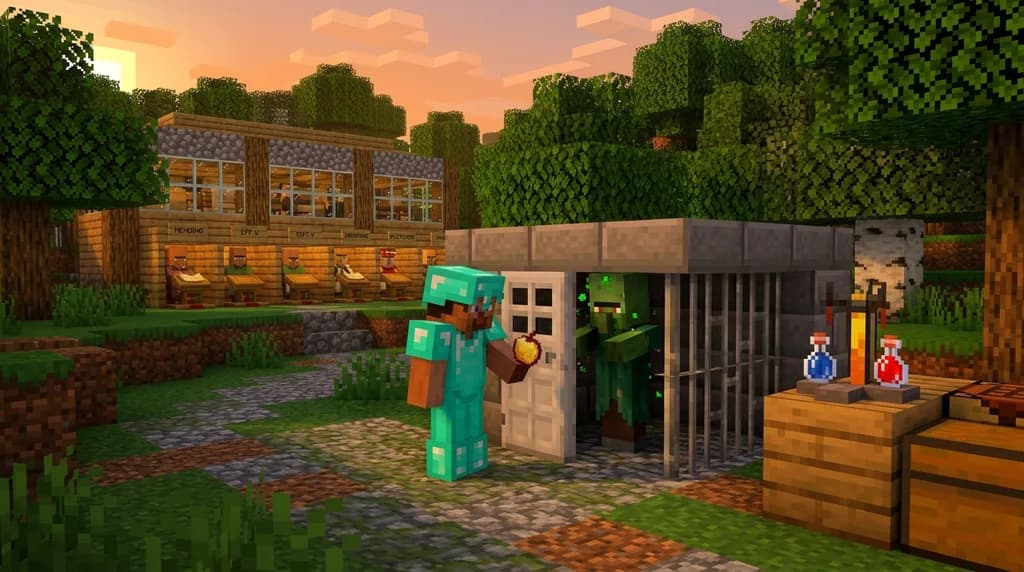
Zombie villager curing is the process of using a splash potion of Weakness and a golden apple on a zombie villager to convert it back into a normal villager. This mechanic, available in both Java and Bedrock editions, is one of the most rewarding player actions in Minecraft’s trading system. Unlike temporary reputation from trading or hero of the village, the discount from curing is permanent and stacks multiplicatively.
In Java Edition, a cured zombie villager offers a permanent discount of up to 100% for one trade. That means a Mending book priced at 36 emeralds can drop to 1 emerald after several cures (via Minecraft Wiki). In Bedrock Edition, the mechanic works differently: instead of a single-trade lock, all trades get a small permanent discount, plus a massive temporary discount that decays over a few in-game days (via Minecraft Wiki). Understanding these version differences is crucial when planning your trading hall.
How Do You Cure a Zombie Villager in Minecraft?
To cure a zombie villager, first trap it safely, then splash it with a Potion of Weakness, and right-click with a Golden Apple — the curing process begins immediately and takes 2 to 5 minutes.
Step-by-step curing process
- Find or create a zombie villager. These spawn naturally at night, but a reliable method is to lure a normal villager into a trap and have a zombie kill it. Alternatively, you can search for abandoned villages where zombie villagers spawn as part of a siege event. For mass production, pair this with a villager breeder — but that's beyond this guide.
- Contain the zombie villager. Use iron bars or a boat to keep it in place. Avoid attacking it; you'll want it at full strength before conversion. A 2x1 space with a trapdoor on the ceiling works well for repeated infections.
- Apply Weakness. Brew a splash potion of Weakness by adding a fermented spider eye to a water bottle, then a gunpowder to make it splashable (via Minecraft Wiki). Throw the potion directly at the zombie villager to give it the Weakness effect, indicated by gray swirls.
- Feed the golden apple. Right-click the zombie villager with a golden apple while it has the Weakness effect. It will start shaking and red particles will appear, signaling curing has started. Make sure you're in survival mode and the apple is consumed.
- Wait and protect. The curing process takes 2–5 minutes. Stay within 128 blocks to keep the chunk loaded, or the zombie villager may despawn (via Minecraft Wiki). During curing, the zombie villager still attracts other zombies, so seal the area completely. Once cured, the new villager will have a profession if it was one before infection.
Pro Tip: Use a weakness-tipped arrow if you want precision, but the splash potion is cheaper for mass curing. For large-scale operations, set up a dispenser array.
Warning: Never cure a zombie villager without securing it first — a stray creeper can ruin your day and waste a golden apple. Also, splash potions damage the zombie villager for half a heart, so on low health it could die before you feed the apple.
Common mistakes to avoid
- Forgetting to lock the profession: Immediately after curing, block the villager's pathfinding so it doesn't wander off and take a random job. Use a workstation in a separate cell.
- Not tracking cures: Use a naming scheme or a sign to keep count of how many times each villager has been cured, as discounts are based on total cures.
- Ignoring difficulty settings: On Easy, the zombie villager won't infect a villager, so you need to find one naturally. On Hard, zombies can break wooden doors, so use iron doors for infection rooms.
Why Should You Cure Zombie Villagers for Trading?
Curing zombie villagers creates permanent, stacking trade discounts that can reduce high-cost enchanted book trades to 1 emerald, making it the most efficient way to build an emerald fortune.
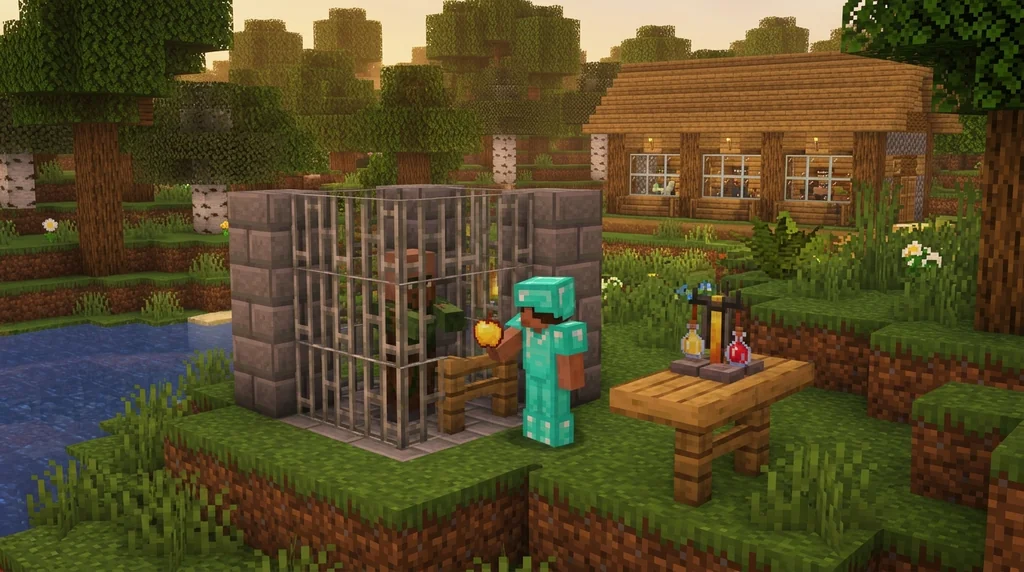
The primary reason to cure is economic. When you cure a zombie villager, the discount applies to all its trades initially, but after you trade with it, the discount locks onto the next trade you make until the next cure. This means you can strategically lock a high-value trade like Mending or Protection IV to an absurdly low price.
Repeatedly infecting and curing the same villager multiplies the discount. In Java Edition, after two cures, the permanent discount on the cured trade is 50% of the original; after three, 25%; capping at a minimum price of 1 emerald (via Minecraft Wiki). So three cures on a librarian can turn a 36-emerald book into a 1-emerald book.
Compare that to other emerald-earning methods like piglin bartering or wandering trader flipping, which require ongoing material costs. Cured villagers offer a one-time setup cost with perpetual profit. If you automate trading, you can scale this even further.
Here's a quick comparison of emerald costs for a Mending book after different numbers of cures in Java Edition:
| Number of Cures | Mending Book Price (emeralds) |
|---|---|
| 0 (base) | 36 |
| 1 cure | 1–36 (random) |
| 2 cures | ≤ 18 |
| 3 cures | ≤ 9 |
| 4 cures | 1 |
Note: The exact discount distribution after one cure is random and ties to the villager's profession. Always trade to lock the low price, as it may revert otherwise.
How to Build a Zombie Villager Trading Hall for Stacking Discounts
A well-designed zombie villager trading hall includes separate curing chambers, a safe infection zone, and a clear route to locking high-value trades, letting you mass-produce 1-emerald deals.
Building a trading hall optimizes the curing process. Start with a villager breeder to generate a steady supply of librarians, then move them into individual 1x1 cells with their own beds and workstations. Design an adjacent curing area where you can repeatedly expose a villager to a zombie — use a protected zombie in its own cell — and then cure it.
Key components for an efficient trading hall
- Infection station: A 1x2 space with a zombie separated by an open trapdoor on the ceiling, allowing villagers to be attacked but not killed.
- Weakness dispenser: A redstone circuit that drops a splash potion of Weakness onto the villager with a single button press.
- Apple feeder: A player-facing slot to easily apply golden apples after weakening.
- Containment rails: Use minecart tracks to move villagers in and out without breaking line of sight.
If you want to go fully automated, check out our guide on building an auto villager trading machine. Pair it with a dedicated trading post for a clean setup.
To avoid scams when trading these bargains, always use a secure trading method as outlined in our scam-avoidance guide. Pricing your discounted items requires understanding server economy dynamics, but curing gives you a huge margin.
Optimizing infection and curing cycles
- Use a zombie spawner: Convert a zombie spawner into a XP farm with a villager conversion chamber nearby for a steady flow of infected villagers.
- Pre-load golden apples: Craft stacks of golden apples from your gold farm or piglin bartering and keep them in a nearby chest.
- Bulk cure sessions: Cure multiple villagers at once by splashing Weakness in an area and throwing apples rapid-fire, then wait out the curing timers collectively.
How to Put This Into Practice on Gaia Legends
Gaia Legends is a Minecraft survival multiplayer server where economic creativity is rewarded. The server’s player-run market, accessible at spawn, lets you sell items directly to other players. By setting up a zombie villager curing hall, you can produce ultra-cheap enchanted books, weapons, and armor, then sell them at competitive prices.
Specific Gaia Features that enhance your curing setup:
- Player Shops: Set up your own shop plot at spawn using the ChestShop plugin, selling mending books at 10 emeralds instead of 36.
- Community Jobs: The job system offers daily quests like “Enchanter” that reward you for enchanting and selling, doubling your profit from cured librarian trades.
- No Pay-to-Win: All discounts are earned purely through gameplay—no donor perks disrupt the economy.
Gaia Legends is free to join, non-pay-to-win, and supports Java + Bedrock crossplay. Join at gaialegends.pro and start your legend today.
Conclusion
- Curing zombie villagers grants permanent trading discounts that stack with repeated cures, potentially dropping high-cost trades to 1 emerald.
- A dedicated trading hall with a safe infection-and-cure pipeline lets you mass-produce cheap enchanted books and equipment.
- On Gaia Legends, these discounts translate directly into market dominance—buy low, sell at standard rates, and amass emeralds faster than any other method.
Curing might feel daunting at first, but the results are transformative for your Minecraft economy. Grab some potions and golden apples, and start building your discount empire.
Ready to play? Join Gaia Legends today — no pay-to-win, Java + Bedrock crossplay.
- Java:
join.gaialegends.pro - Bedrock:
join.gaialegends.pro— Port19132
Frequently Asked Questions
How do I cure a zombie villager for trading discounts?
To cure a zombie villager, trap it in a secure space, splash it with a Potion of Weakness, then right-click with a Golden Apple. The curing process takes 2–5 minutes. Once cured, the villager will offer a permanent discount on its trades. In Java Edition, this discount can reach 100% for one trade after multiple cures.
Can you stack zombie villager cures for even cheaper trades?
Yes, in Java Edition, repeatedly infecting and curing the same villager multiplies discounts. Each cure halves the current price, making trades like Mending cost 1 emerald after about 4 cures. Bedrock Edition gives a flat 5% permanent discount plus a temporary one.
What is the best villager profession to cure for discounts?
Librarians are the best target because they offer enchanted books, which have the highest base emerald costs. Curing a librarian with Mending, Unbreaking III, or Protection IV can save hundreds of emeralds over time. Toolsmiths and weaponsmiths are also good for diamond gear.
How long does it take to cure a zombie villager?
The curing process takes between 2 and 5 minutes of real time, during which you must stay within 128 blocks to keep the chunk loaded. Using an iron bars cage or moving the villager toward your base ensures you don't lose progress.
Do zombie villager discounts stay after the villager dies?
No, once a cured villager dies, the discounts are lost. Always protect your discounted villagers with enclosed trading cells and iron doors. Consider naming them with a name tag to prevent despawning.
Can zombie villager curing discounts be stacked with Hero of the Village?
Yes, Hero of the Village grants a temporary discount on top of the permanent curing discount, but it decays over several in-game days. The curing discount remains forever, so you'll get even lower prices temporarily after a raid victory.
Related guides
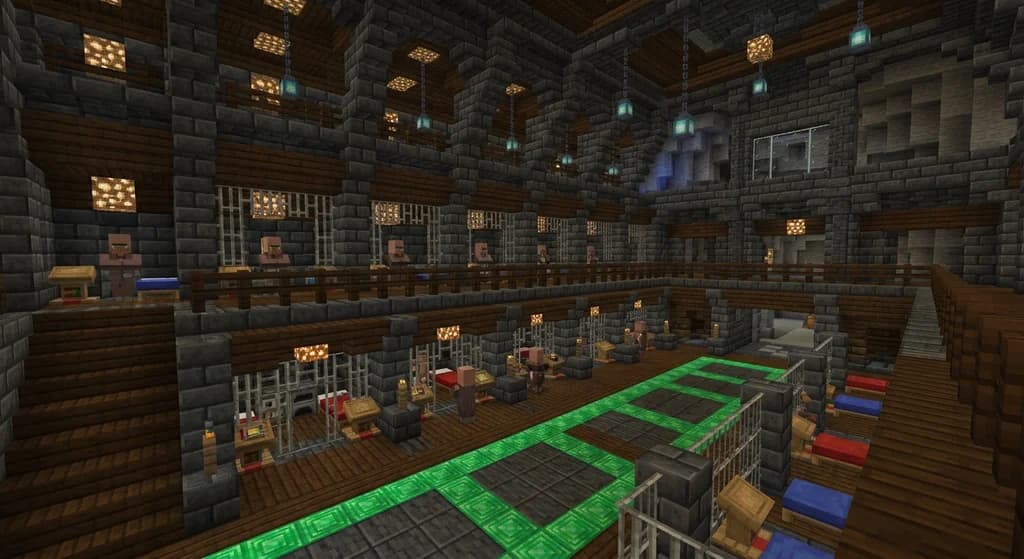
How to Build a High-Efficiency Minecraft Trading Hall: 2026 Guide
Learn how to build a high-efficiency Minecraft trading hall in 2026 — from villager job sites to zombie curing discounts and layout tips that maximize...
Minecraft Economy 101: How Supply and Demand Work on Player-Driven Servers
Learn how supply and demand shape Minecraft economies, from vanilla villager trading mechanics to player-driven server markets. Includes inflation control...
How to Build a Command Block Currency Exchange for Your Minecraft Server
Build a fully vanilla command block currency exchange for your Minecraft server. No plugins needed—just redstone and command blocks. Step-by-step guide...
How to Profit from Minecraft Wandering Trader Deals in 2026
Learn how to profit from Minecraft wandering trader deals in 2026. Discover the best trades, trapping techniques, and server economy strategies to earn...
Have a question or another approach?
Compare notes with other readers. Include your edition and version when discussing mechanics.