Player Shops vs Villager Trading: Which Economy Fits Your Server?
Filed under Minecraft Economy & Trading · How we create content
Version scope: Java Edition 1.14+ / Bedrock Edition 1.11.0+
Key Takeaways
| Point | Details |
|---|---|
| Player shops offer complete | Player shops offer complete pricing freedom and can stock any item, but they rely on player activity and trust. |
| Villager trading provides renewable, | Villager trading provides renewable, predictable trades that are always available once set up, but you cannot customize prices or stock. |
| The Village & Pillage | The Village & Pillage update (1.11.0 for Bedrock) revamped villager trading with a supply system, experience levels, and demand mechanics. |
| A hybrid approach—using villagers | A hybrid approach—using villagers for basics and player shops for rares—creates a healthy multiplayer economy. |
| Player shops encourage community | Player shops encourage community interaction and can become social hubs, as seen on servers like Hermitcraft. |
So you're setting up a multiplayer server and wondering how players should trade. Should you rely on the trusty villager trading hall, or let your community build their own shops? The answer isn't one-size-fits-all. Both systems have strengths, and the best server economies often use a mix of both.
What Makes Villager Trading Reliable?
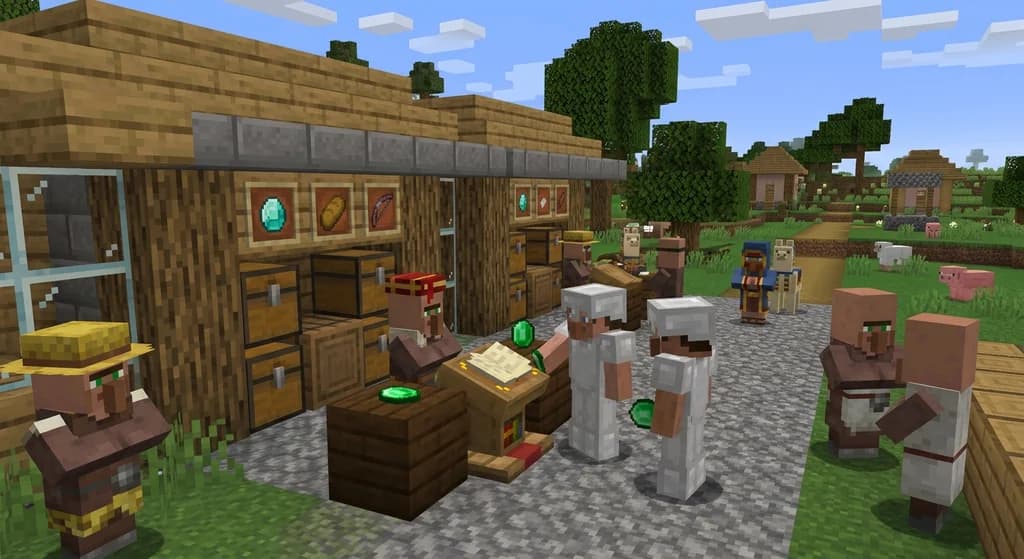
Villager trading is Minecraft's built-in barter system. Since the Village & Pillage update, it's become much more sophisticated. In Bedrock Edition 1.11.0, the first full release of Village & Pillage, the trading system was revamped with an experience bar for each villager, a supply system, and demand mechanics.
Added villager economy supply system: The supply of trades is only restored when the villager is given the opportunity to work at their job site block.
The supply of trades is only restored when the villager is given the opportunity to work at their job site block, up to twice per day. This means you can't spam trades indefinitely—you have to let your villagers restock. And if you clear out a popular trade, the price goes up due to demand.
When the villager's trades are restored to full, it takes whatever supply was used up (number of trades), and converts that into a price increase called "demand".
This system creates a natural, predictable economy. You know exactly what a librarian will offer if you cure a zombie villager, and you can plan your resource gathering around those trades. Villagers are also renewable—breed them, cure them, and you have an unlimited supply of traders.
The Freedom of Player-Run Shops
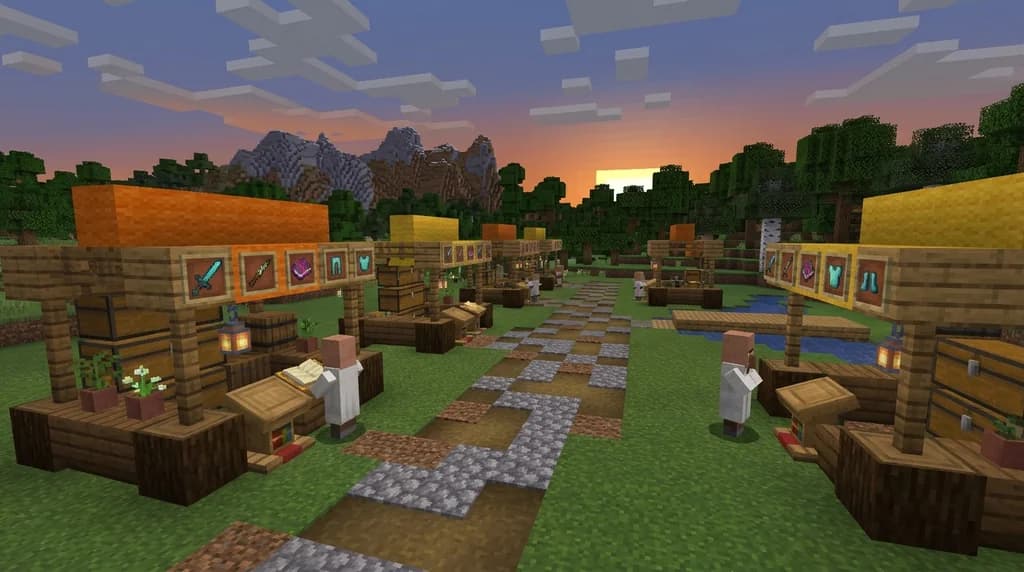
Player shops are the wild west of Minecraft economy. On a multiplayer server, players often establish in-game economies by building shops to trade valuable resources like diamonds and enchanted items.
Players often establish in-game economy by building shops to trade valuable resources like diamonds and enchanted items.
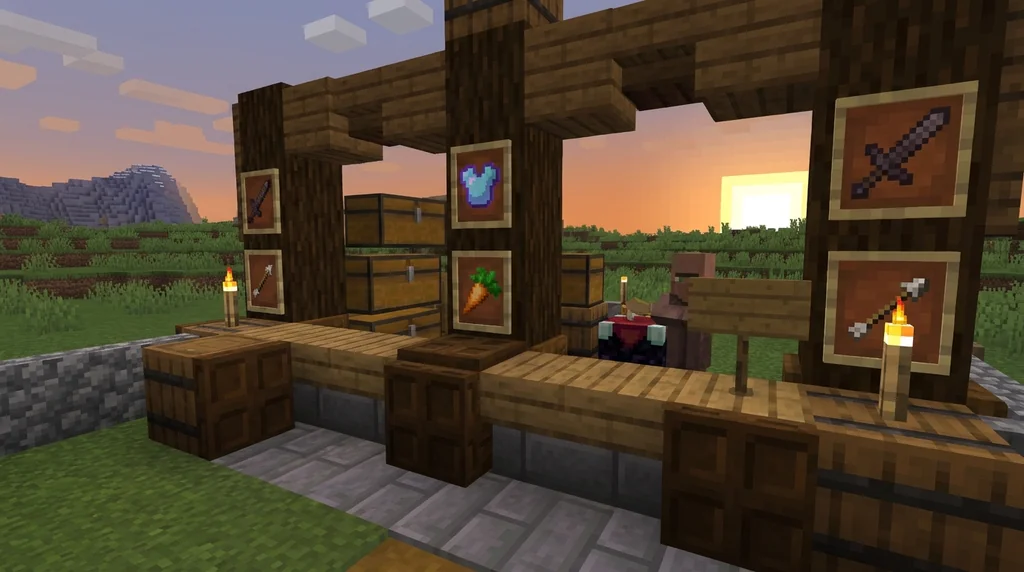
Unlike villagers, player shops can sell anything: custom-named gear, rare blocks, even services like building or redstone contraptions. You set the price, you decide the stock, and you can run sales or negotiate. This dynamic creates a living economy where supply and demand are real.
On servers like Hermitcraft, shopping districts are a cornerstone of the community experience. As noted during a MINECON panel, community games like shopping districts are invaluable to the multiplayer experience—they foster interaction and give players a reason to visit each other's bases.
After that they talk about fostering friendships through multiplayer Minecraft and how community games like Grian’s tag and shopping districts are invaluable to the multiplayer experience.
Comparing the Two Systems Across Key Criteria
Control Over Pricing
- Villager Trading: Fixed prices set by the game. You can get discounts by curing zombie villagers or earning Hero of the Village, but you cannot set your own prices.
- Player Shops: Complete freedom. You decide the cost in diamonds, emeralds, or any barter item.
Availability and Restocking
- Villager Trading: Trades restock twice per day when the villager works at their job site. If you use up a trade, the price increases due to demand, then decreases as supply goes unused.
- Player Shops: Restocking depends entirely on the player. If the shop owner stops playing, the shop goes empty.
Item Variety
- Villager Trading: Limited to the villager's profession and level. You can get enchanted books, tools, armor, food, and building blocks, but not every item in the game.
- Player Shops: Any item that exists in the game can be sold, including custom-named gear, rare drops, and even non-stackable items.
Community Impact
- Villager Trading: Convenient but solitary. You trade with a mob, not a person. It doesn't build community.
- Player Shops: Encourages interaction. Players visit each other's shops, leave signs, and negotiate trades. It turns the server into a living, breathing world.
When to Use Each System
Use villager trading for:
- A stable baseline economy for essential items like emeralds, enchanted books, and tools.
- Servers with low player counts where player shops might sit empty.
- Single-player worlds where you need reliable trades.
Use player shops for:
- Servers with active communities that enjoy trading and interaction.
- Selling rare or custom items that villagers don't offer.
- Creating a shopping district that becomes a social hub.
Building a Hybrid Economy
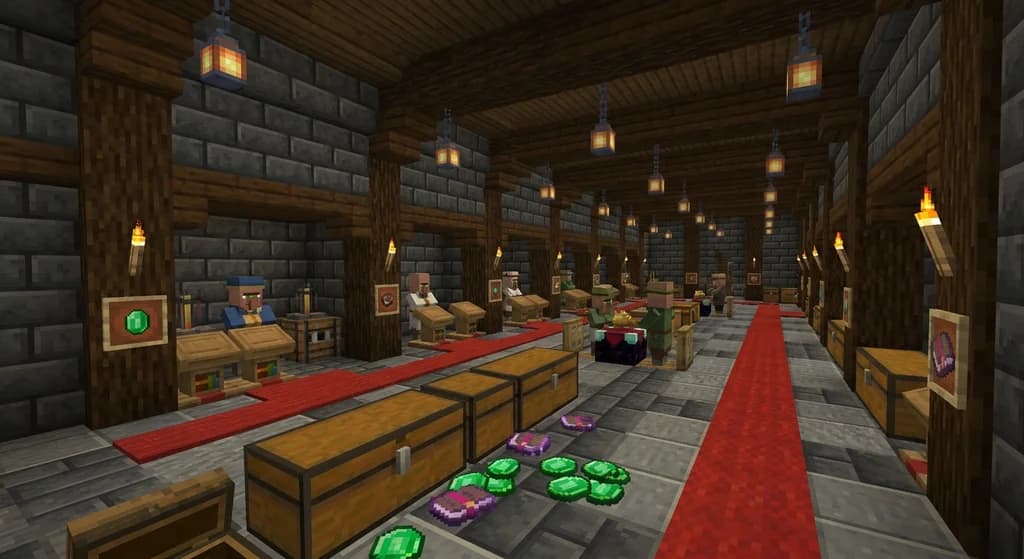
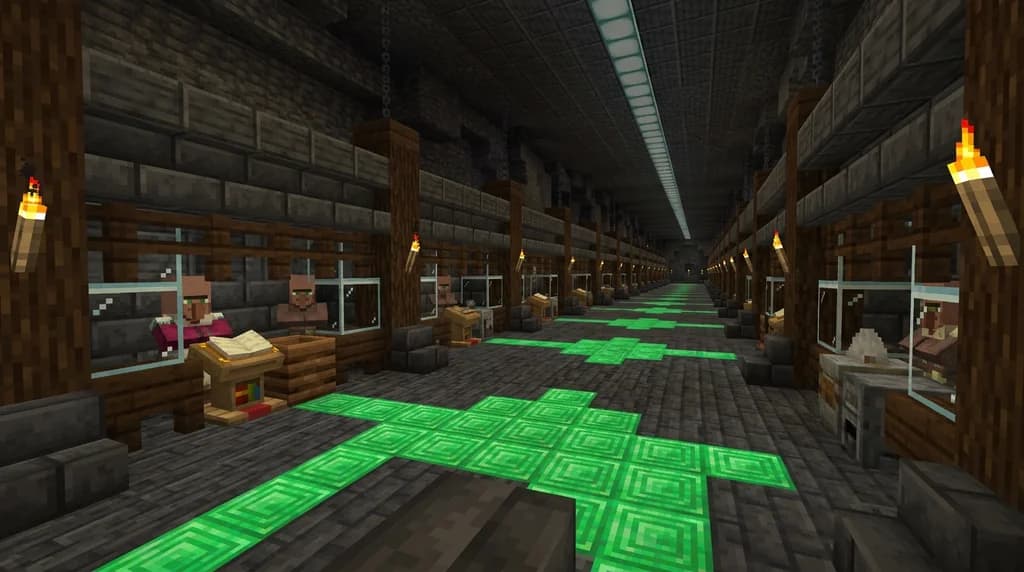
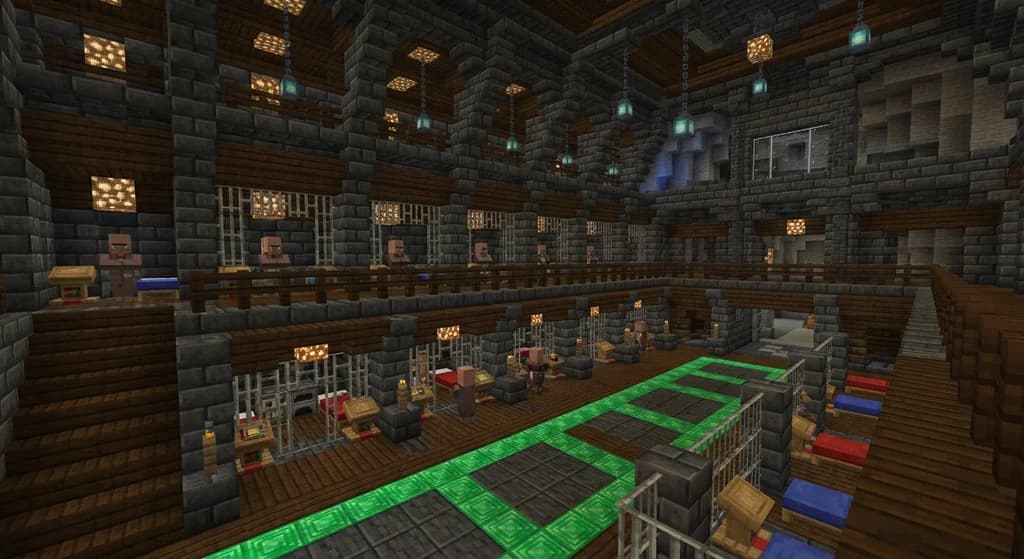
The most successful multiplayer servers combine both systems. Set up a villager trading hall near spawn so new players can get basic gear. Then designate an area for player shops where experienced players can sell their high-end loot. This gives everyone access to essentials while keeping the economy dynamic.
Remember that player shops need rules to prevent griefing and scams—consider using a plugin like ChestShop or Shopkeepers if you're running a modded server. And keep your villager trading hall safe from raids and zombies!
Final Thoughts
Neither system is inherently better. Villager trading is reliable and predictable, perfect for a stable economy. Player shops are creative and social, perfect for an active community. The best approach? Embrace both. Let villagers handle the boring stuff, and let your players build the marketplace of their dreams.
For a deeper dive into villager mechanics, check out our Understanding Minecraft's Vanilla Trading System guide. And if you're curious about other server economy options, our Minecraft Server Archetypes: Quick Reference for Admins covers different server styles.
Sources
- Added villager economy supply system: The supply of trades is only restored when the villager is given the opportunity to work at their job site block. — Bedrock Edition 1.11.0
- When the villager's trades are restored to full, it takes whatever supply was used up (number of trades), and converts that into a price increase called "demand". — Bedrock Edition 1.11.0
- Players often establish in-game economy by building shops to trade valuable resources like diamonds and enchanted items. — Multiplayer
- After that they talk about fostering friendships through multiplayer Minecraft and how community games like Grian’s tag and shopping districts are invaluable to the multiplayer experience. — Mumbo Jumbo
Frequently Asked Questions
Can I combine player shops and villager trading on the same server?
Absolutely. In fact, this is the most common setup. Use a villager trading hall near spawn for basic goods like emeralds, enchanted books, and tools. Then designate a shopping district where players can build their own shops to sell rare items, custom gear, or building materials. This gives you the best of both worlds.
Do player shops need plugins to work?
In vanilla Minecraft, player shops rely on trust and manual trading. Players can use chests and item frames to display items, then trade directly. For a more automated experience, many servers use plugins like ChestShop or Shopkeepers that allow players to set up chest shops that handle transactions automatically.
How do I prevent villagers from restocking too fast?
Villagers restock up to twice per day when they have access to their job site block. If you want to slow down restocking, you can break the job site block or move the villager away from it. Alternatively, you can use the `/resupply` command to force a restock instantly if needed.
Which system is better for a small server with only a few players?
Villager trading is often better for small servers because it doesn't depend on player activity. Player shops on a small server may sit empty for long periods. Set up a villager trading hall to provide a stable economy, and let player shops develop organically as the community grows.
Related guides
Minecraft Economy 101: How Supply and Demand Work on Player-Driven Servers
Learn how supply and demand shape Minecraft economies, from vanilla villager trading mechanics to player-driven server markets. Includes inflation control...
How to Use a Minecraft Villager Trading Chart for Max Profit 2026
Master the Minecraft villager trading chart in 2026. Learn trade prices, zombie curing discounts, piglin bartering, and how to flip items for max profit.
How to Build the Most Efficient Minecraft Trading Hall in 2026
Learn how to build the most efficient Minecraft trading hall in 2026 — layouts, zombie curing, best villager professions, and emerald farming tips.
How to Build a High-Efficiency Minecraft Trading Hall: 2026 Guide
Learn how to build a high-efficiency Minecraft trading hall in 2026 — from villager job sites to zombie curing discounts and layout tips that maximize...
Have a question or another approach?
Compare notes with other readers. Include your edition and version when discussing mechanics.