How to Build a High-Efficiency Minecraft Trading Hall: 2026 Guide
Filed under Minecraft Economy & Trading · How we create content
Key Takeaways
| Point | Details |
|---|---|
| Cure zombie villagers first | Curing a zombie villager gives that villager a permanent discount, reducing most trades to 1 emerald. |
| Lock trades before exploring | Break and replace a villager's job-site block to reroll offers until you get the trade you want — then never move the block again. |
| Separate each villager | Give every villager its own isolated cell with a bed and job-site block to prevent trade-offer shuffling between neighbors. |
| Use the right job-site blocks | Librarians (lectern), Farmers (composter), Clerics (brewing stand), and Armourers (blast furnace) cover the four most profitable trade trees. |
| Stack your layout vertically | A two-story hall with trapdoor access fits 16+ villagers in a footprint smaller than 10×10 blocks. |
| Emerald farming fuels everything | Pair your trading hall with crop farms and a fishing farm to generate a steady emerald income before you start buying enchanted books. |
Table of Contents
- What Is a Minecraft Trading Hall?
- Why Build a Trading Hall Instead of Trading Naturally?
- How to Cure Zombie Villagers for Maximum Discounts
- Best Layout for a High-Efficiency Trading Hall
- How to Lock Villager Trades
- Top Villager Jobs and Their Most Valuable Trades
- Tips for Automating Emerald Income
- How to Put This Into Practice on Gaia Legends
- Conclusion
- Frequently Asked Questions
- Recommended
A poorly placed villager in a random village is almost useless. A cured, job-locked villager inside a well-designed Minecraft trading hall is one of the most powerful tools in the entire game — capable of producing mending books, efficiency V axes, and full sets of enchanted armor for a handful of emeralds each.
Most players skip the setup and wonder why trading feels slow and expensive. This guide fixes that. You'll learn the exact steps to build a compact, high-efficiency trading hall in 2026 — from curing your first zombie villager to locking the trades that matter most.
What Is a Minecraft Trading Hall?
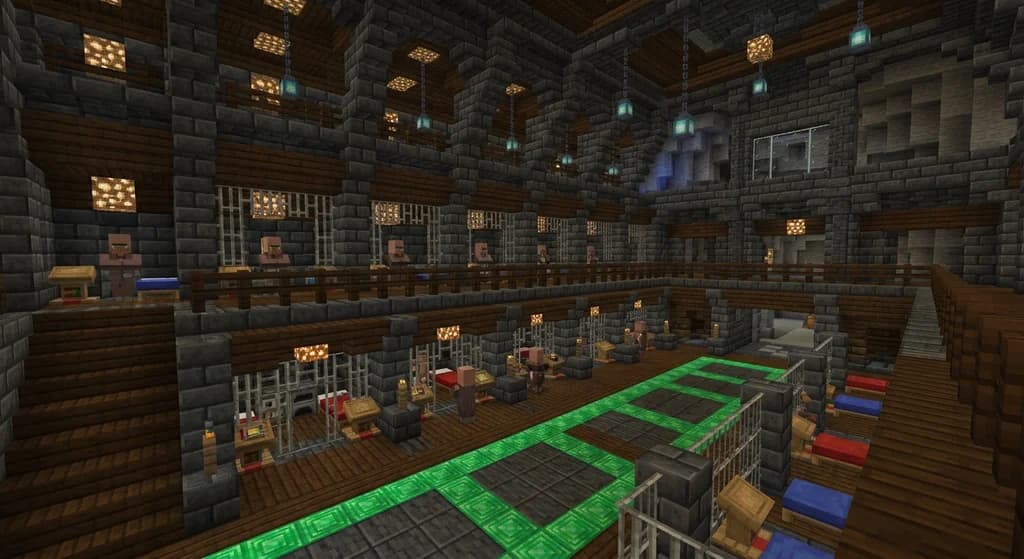
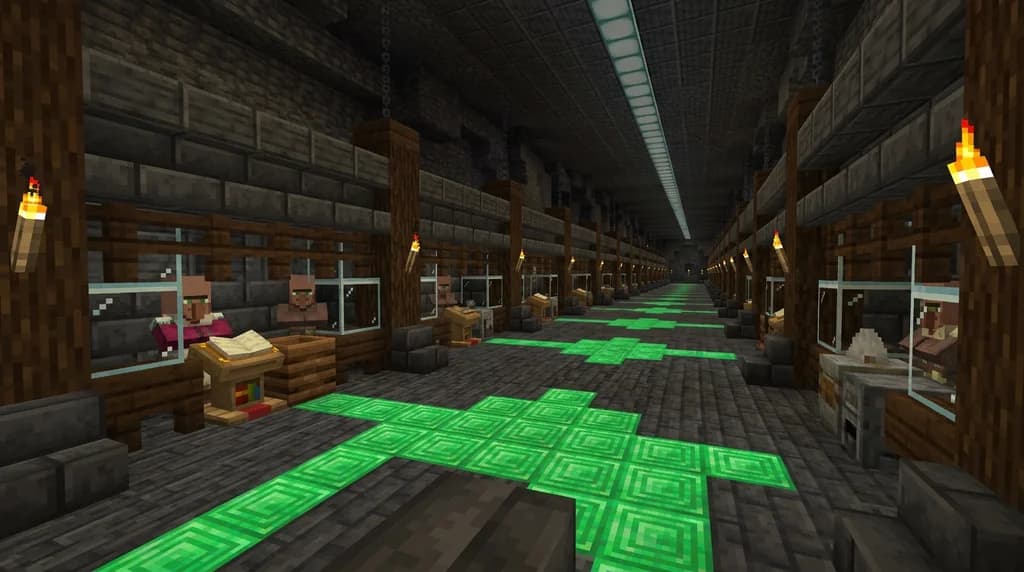
A Minecraft trading hall is a purpose-built structure that houses multiple villagers in individual cells, each assigned to a specific job-site block, so you can access dozens of trades quickly, reroll offers without interference, and apply permanent discounts through zombie curing.
Unlike a natural village, a trading hall gives you full control. Every villager has its own bed, its own job-site block, and its own cell — so trades never shuffle unexpectedly and villagers never wander off.
Why Build a Trading Hall Instead of Trading Naturally?
Trading with random village villagers works in early game, but it breaks down fast. Villagers wander, claim wrong beds, and lose their jobs when blocks get removed. You end up chasing the same librarian across three houses hoping it still has that Mending trade.
A dedicated trading hall solves all of that:
- Permanent trade locks — no accidental job changes
- Discount stacking — cured villagers sell most items for 1 emerald
- Time efficiency — all trades in one room, zero searching
- Scalability — add new cells as you need new trades
Note: Villagers need line-of-sight to their job-site block and must be able to path to their bed each night. If either condition fails, they'll lose their profession. Always test pathing before you seal a cell.
How to Cure Zombie Villagers for Maximum Discounts
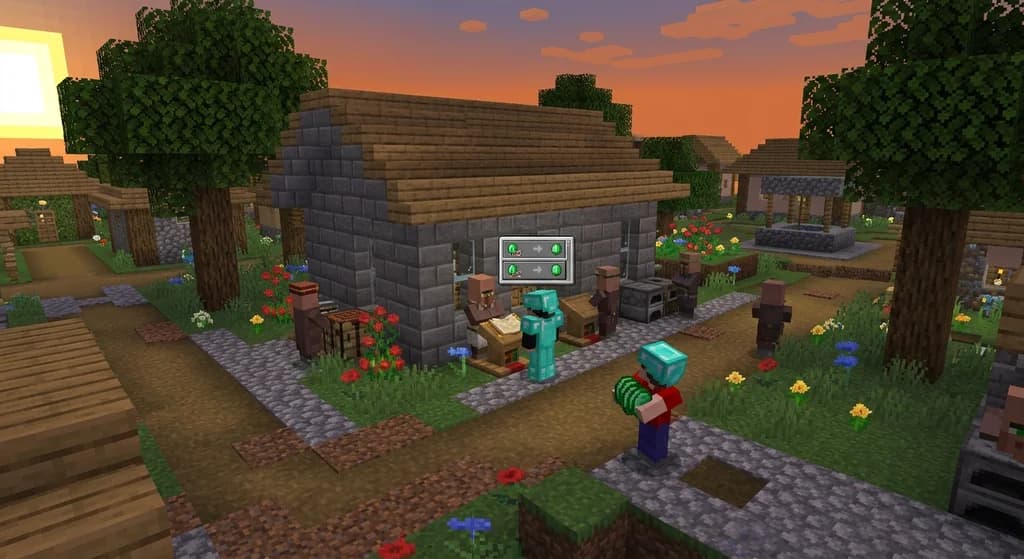
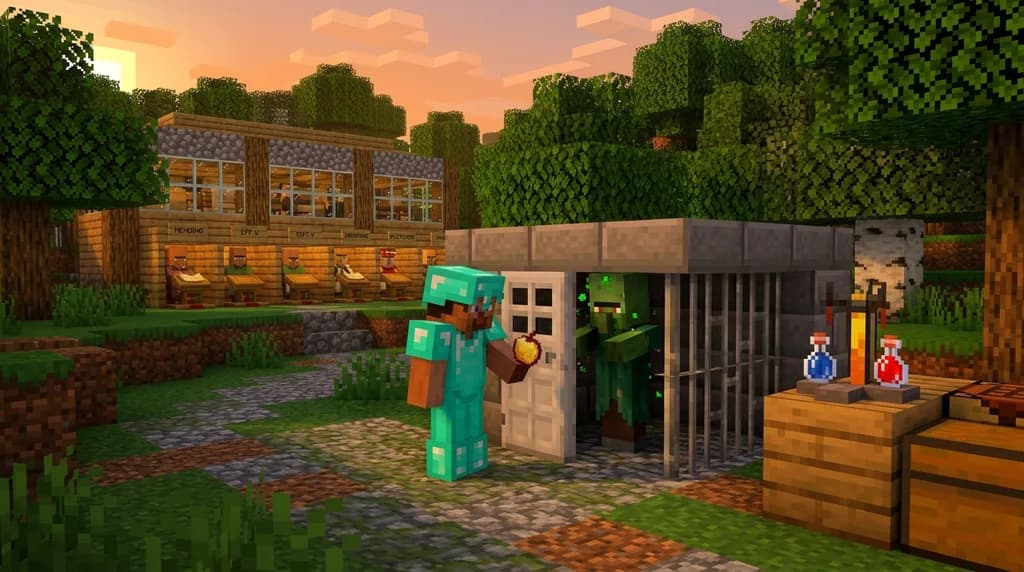
This is the single most impactful step in the entire process. According to the Minecraft Wiki, curing a zombie villager applies a "Cured" gossip that gives that specific villager a substantial, permanent discount on all of its trades — most trades drop to just 1 emerald after a single cure.
The Curing Process Step by Step
- Trap a zombie villager in a secure enclosure (a pit or a small room with no escape).
- Throw a Splash Potion of Weakness at it.
- Feed it a Golden Apple (not Enchanted — the regular one works).
- Wait approximately 2–5 minutes while it shakes and converts.
- The villager emerges cured, with deep discounts locked in permanently.
Pro Tip: You can cure the same villager multiple times to stack discounts even further, though the discount caps out after a few cures. Two cures is usually enough to bring every trade to its minimum cost.
Warning: Don't cure a villager before you've locked in the trade you want. Assign the job-site block, reroll until you see your target trade, THEN cure. Curing first wastes the discount on a bad trade pool.
Best Layout for a High-Efficiency Trading Hall
Cell Design
Each cell needs exactly three things: a bed, a job-site block, and enough space for the villager to path between them. A 1×2 footprint with a half-slab ceiling works perfectly — it's tight enough to prevent wandering while still satisfying the villager's AI.
Use iron bars on the front wall instead of a full block. Iron bars let you open the trade UI without entering the cell, and they look clean in any build style.
Compact Two-Story Layout
A two-story hall fits 16 villagers in roughly a 9×5 footprint:
| Floor | Villager Count | Access Method |
|---|---|---|
| Ground floor | 8 villagers | Walk-up iron bar windows |
| Upper floor | 8 villagers | Trapdoor ladder, shift-click trade |
| Total footprint | 16 traders | ~9×5 blocks |
Polished deepslate walls and dark oak trim hold up visually at any scale. Use sea lanterns or glowstone under slabs for lighting — you want every cell bright enough (light level 8+) to prevent mob spawns inside.
Nametag Your Villagers
Always nametag each villager before sealing the cell. If a villager dies and you haven't named it, you lose the cured discount permanently. A nametag costs one level at an anvil and saves hours of recuring.
How to Lock Villager Trades
Locking a villager's trades means preventing the game from resetting that villager's offer pool. Here's how it works:
- A villager only generates its trade offers the first time it claims a job-site block.
- If you break and replace the job-site block, the villager resets its offers — giving you a new random pool.
- Once you trade with a villager at least once, its offers are permanently locked and won't change even if the job-site block is removed.
Use this loop to reroll for target trades:
- Place the job-site block near the villager.
- Check the trade menu.
- If the trade you want isn't there, break and replace the block.
- Repeat until you see your target trade.
- Complete one trade to lock it forever.
Pro Tip: Some trades — like Mending — only appear at the Librarian's highest trade tier. You may need to level up the villager by trading lower-tier items first before the Mending offer unlocks.
Top Villager Jobs and Their Most Valuable Trades
Not all villager jobs are worth a cell. Focus on these four first:
| Job | Job-Site Block | Best Trade | Why It Matters |
|---|---|---|---|
| Librarian | Lectern | Mending, Efficiency V, Fortune III | Enchanted books for any tool |
| Armourer | Blast Furnace | Enchanted Diamond/Netherite armor | Cheap max-gear upgrades |
| Cleric | Brewing Stand | Ender Pearls, Glowstone, Bottles o' Enchanting | XP and Nether materials |
| Farmer | Composter | Emeralds for crops, bread, apples | Fast emerald generation |
Librarians are the crown jewel of any trading hall. A single cured Librarian with a Mending book trade is worth more than almost any other resource in survival Minecraft — it lets you maintain every tool and armor piece indefinitely without hunting for enchantment table combinations.
Tips for Automating Emerald Income
A trading hall only works if you have emeralds to spend. Here's how to keep them flowing:
- Farmer villagers accept wheat, carrots, potatoes, and beetroot for emeralds. A simple auto-farm feeding a Farmer cell generates emeralds passively.
- Fisherman villagers buy string and cod — both easy to obtain in bulk.
- Fletcher villagers buy sticks and string, which are trivially farmable.
- Shepherd villagers buy wool — pair with a sheep farm on a timer.
According to the Minecraft Wiki, a single Farmer villager trade can accept up to 20 wheat per trade and resets after the villager sleeps, meaning one well-stocked Farmer cell can process hundreds of wheat per in-game day.
Pair your trading hall with a dedicated crop farm to keep the emerald pipeline full. If you want a deep dive on passive resource generation, check out our guide on How to Build an Efficient Minecraft Fishing Farm in 2026 — fishing is one of the fastest early-game emerald sources before your crop farms scale up.
How to Put This Into Practice on Gaia Legends
Everything in this guide translates directly to the Gaia Legends server economy. Gaia Legends features a player-driven marketplace and auction house where enchanted books, max-gear armor, and rare materials trade hands constantly. A well-stocked trading hall gives you a repeatable production line for high-value items that sell fast.
A few Gaia-specific features make this even more powerful:
- Player Auction House — list cured-villager outputs like Mending books and enchanted armor directly for server currency.
- Trading District — claim a plot in the server's dedicated economy zone to set up a permanent trading hall that other players can visit.
- Cross-play support — whether you're on Java or Bedrock, the trading mechanics work identically, so your hall serves the whole community.
Gaia Legends is free to join, non-pay-to-win, and supports Java + Bedrock crossplay. Join at gaialegends.pro and start your legend today.
Conclusion
Building a high-efficiency Minecraft trading hall is one of the best investments you can make in any survival world. Three things matter most:
- Cure your villagers before you start spending emeralds — the discounts are game-changing.
- Lock trades deliberately by rerolling job-site blocks before you ever trade once.
- Pair the hall with passive farms so emeralds flow in automatically while you focus on other goals.
Start with four cells — one Librarian, one Armourer, one Cleric, one Farmer — and expand from there. Once you've tasted a 1-emerald Mending book, you'll never go back to hunting enchantment tables again.
Ready to play? Join Gaia Legends today — no pay-to-win, Java + Bedrock crossplay.
- Java:
join.gaialegends.pro - Bedrock:
join.gaialegends.pro— Port19132
Further reading
These references were recorded with the article; specific claims have not been matched to source excerpts.
Frequently Asked Questions
What is a Minecraft trading hall and why should I build one?
A Minecraft trading hall is a structured building that houses multiple villagers in individual cells, each locked to a specific job-site block. You should build one because it lets you access dozens of trades in one place, apply permanent discounts through zombie curing, and reroll trade offers reliably — making it the most efficient way to obtain enchanted books, max-tier armor, and rare materials in survival mode.
How do I get the best discounts on villager trading hall trades?
The best discounts come from curing zombie villagers. Splash a zombie villager with a Potion of Weakness, feed it a Golden Apple, and wait for it to convert. The cured villager receives a permanent discount gossip that reduces most trades to 1 emerald. You can cure the same villager more than once to stack discounts further, though the reduction caps at a minimum trade cost.
How do I stop villager trades from resetting in my trading hall?
Trade with a villager at least once to permanently lock its offer pool. Before that first trade, breaking and replacing the job-site block rerolls the offers — which is useful for targeting specific trades. Once you've traded even once, the offers are locked forever regardless of what happens to the job-site block. Always complete one trade immediately after finding the offer you want.
What is the best villager to have in a trading hall for enchanted books?
The Librarian is the best villager for enchanted books. Assign a Librarian to a lectern, then reroll by breaking and replacing the lectern until the book you want appears. Librarians can offer almost every enchantment in the game, including Mending, Fortune III, and Efficiency V. After curing, most Librarian book trades drop to 1 emerald, making them the most cost-effective enchantment source in the game.
How many villagers should a good trading hall have?
A solid starter trading hall needs at least 4 villagers: one Librarian (enchanted books), one Armourer (armor), one Cleric (ender pearls and XP bottles), and one Farmer (emerald generation). From there, expand by adding a second Librarian for different books, a Fletcher for cheap emeralds from sticks, and a Toolsmith for pickaxe and axe trades. Most endgame halls run 12–20 villagers.
Can I build a trading hall in Minecraft Bedrock Edition?
Yes — Minecraft trading hall mechanics work in Bedrock Edition just like Java. Zombie curing discounts, job-site block rerolling, and trade locking all function identically. The main difference is that Bedrock villagers use a slightly different pathfinding system, so make sure each cell has a clear, unobstructed path between the bed and the job-site block or the villager may fail to claim its profession overnight.
Related guides
How to Build the Most Efficient Minecraft Trading Hall in 2026
Learn how to build the most efficient Minecraft trading hall in 2026 — layouts, zombie curing, best villager professions, and emerald farming tips.
Minecraft Bedrock Villager Economy: Supply and Demand System
Learn how the supply and demand system works for villager trading in Minecraft Bedrock Edition 1.11.0. Understand price increases, restocking, and...
Minecraft Economy 101: How Supply and Demand Work on Player-Driven Servers
Learn how supply and demand shape Minecraft economies, from vanilla villager trading mechanics to player-driven server markets. Includes inflation control...
How to Cure a Zombie Villager for Insane Trading Discounts in 2026
Master the art of curing zombie villagers for massive, permanent trading discounts in Minecraft 2026. Step-by-step guide, trading hall designs, and...
Have a question or another approach?
Compare notes with other readers. Include your edition and version when discussing mechanics.