How to Build the Most Efficient Minecraft Trading Hall in 2026
Filed under Minecraft Economy & Trading · How we create content
Key Takeaways
| Point | Details |
|---|---|
| Lock villagers in cells | Individual cells with a bed and job-site block prevent wandering and trade resets. |
| Cure zombies for discounts | Zombie-curing a villager reduces its trade prices permanently, stacking with repeated cures. |
| Prioritize top professions | Librarians, farmers, and toolsmiths offer the highest emerald-per-trade value in any efficient hall. |
| Use a trading chart | Cross-referencing a trading chart before building saves hours of trial-and-error resetting. |
| Scale in modules | Build your hall in repeatable 2-wide modules so you can expand without demolishing existing cells. |
| Transport villagers safely | Use a minecart or boat to move villagers without triggering pathfinding bugs that can corrupt professions. |
Table of Contents
- What Is a Minecraft Trading Hall?
- Why Build an Efficient Trading Hall?
- Best Villager Professions for Your Trading Hall
- How to Design the Most Efficient Layout
- How to Cure Zombie Villagers for Maximum Discounts
- Tips for Transporting and Locking Villagers
- How to Put This Into Practice on Gaia Legends
- Conclusion
- Frequently Asked Questions
- Recommended
Most players build their first minecraft trading hall by shoving a few villagers into a dirt room and calling it a day. Then they wonder why trades reset, villagers wander off, and the whole thing collapses after a server restart. Sound familiar?
A truly efficient trading hall is one of the highest-leverage builds in all of Minecraft. Done right, it becomes your single best source of enchanted books, emeralds, and rare gear — passively, forever. This guide walks you through every decision: layout, profession selection, zombie curing, villager transport, and scaling. By the end, you'll have a hall that runs like a machine.
What Is a Minecraft Trading Hall?
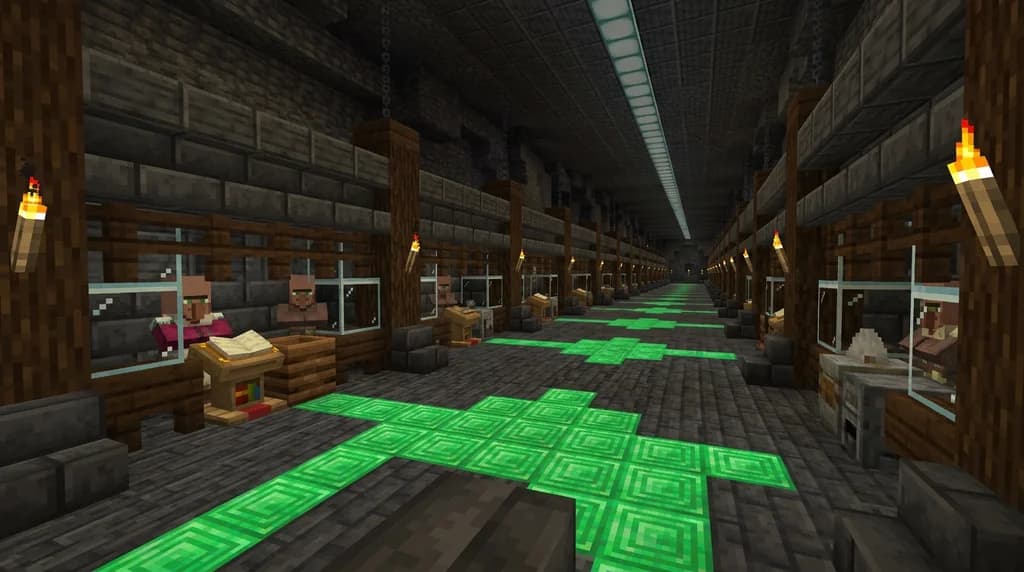
A Minecraft trading hall is a purpose-built structure that houses multiple villagers in individual, locked cells — each assigned to a specific profession — so players can trade efficiently without villagers wandering, resetting professions, or escaping.
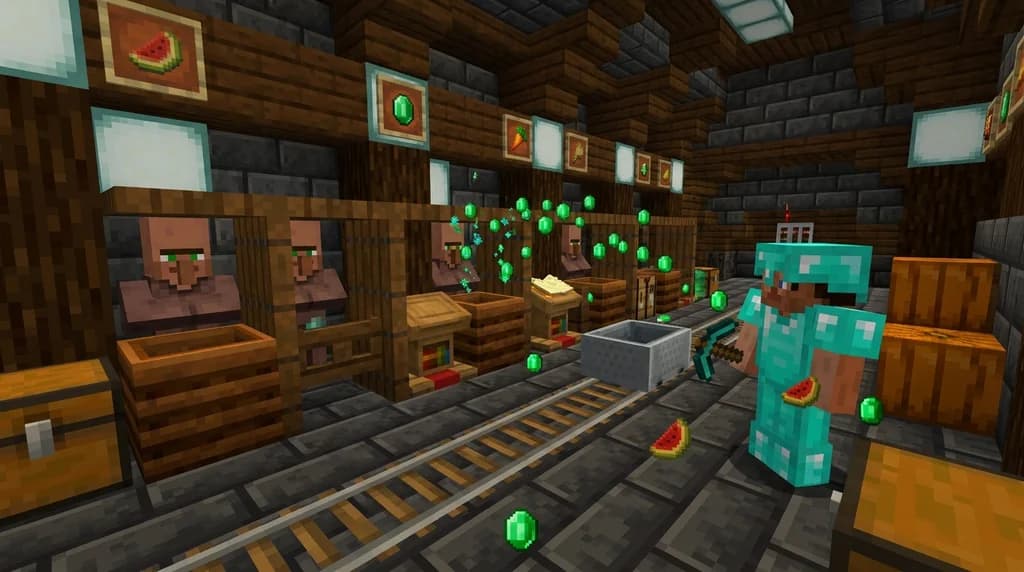
Unlike a loose village setup, a proper trading hall gives you full control. Each cell contains exactly one bed and one job-site block. The villager sleeps, works, and trades in that cell permanently. You interact through a small opening (typically a trapdoor or a single block gap) so the villager can't path out.
The core principle: control the environment, control the trades.
Why Build an Efficient Trading Hall?
Emeralds are the backbone of Minecraft's in-game economy. A well-designed hall lets you convert cheap, farmable resources — wheat, paper, sticks — into emeralds at scale. Those emeralds then buy enchanted books, diamond tools, and rare items you'd otherwise spend hours hunting.
According to the Minecraft Wiki, a librarian can offer up to 64 enchanted books across its trade slots, making it the single most versatile profession for gear progression. A hall with 10 librarians covers virtually every enchantment in the game.
Note: Trade prices are not fixed — they fluctuate based on your reputation with a village, demand, and whether you've cured the villager. Plan your hall around the cured-price baseline, not the default price.
For a deep dive into which trades give the best emerald rates, check the Best Minecraft Trading Chart for Optimized Villager Prices 2026 — it maps out exact input-to-emerald ratios for every profession.
Best Villager Professions for Your Trading Hall
Not all professions are equal. Here's a quick-reference table of the top picks and what they offer:
| Profession | Job-Site Block | Top Trade Value |
|---|---|---|
| Librarian | Lectern | Enchanted books (any enchant) |
| Farmer | Composter | Emeralds for wheat/carrots/potatoes |
| Toolsmith | Smithing Table | Diamond tools at discount |
| Armorer | Blast Furnace | Diamond armor at discount |
| Cleric | Brewing Stand | Emeralds for rotten flesh; buys bottles |
| Fletcher | Fletching Table | Emeralds for sticks/string; sells bows |
Why Librarians Deserve Their Own Row
Librarians are the crown jewel of any trading hall. Each librarian's enchanted book trade is randomly assigned when the villager first picks up a lectern. If you don't like the book offered, break and replace the lectern before the villager locks in — this resets the trade offer. Keep resetting until you land the enchantment you need.
Pro Tip: Place the lectern outside the cell, let the villager claim it, check the trade, then break it if the enchantment is wrong. Once you get the book you want, move the lectern inside the locked cell permanently.
Farmers and Fletchers: The Emerald Factories
Farmers buy wheat, carrots, potatoes, and beetroot. Combined with a simple crop farm, one farmer cell can generate dozens of emeralds per harvest cycle. Fletchers buy sticks — one of the cheapest items to mass-produce with a bamboo or wood farm — making them an underrated emerald source.
How to Design the Most Efficient Layout
The most efficient trading hall layout uses 2-wide modular cells arranged in a single corridor. Each cell is 1 block wide, 2 blocks tall, and 2 blocks deep — just enough for a bed and a job-site block. A shared hallway runs along the front.
Step-by-Step Cell Construction
- Dig or build a corridor at least 3 blocks tall and as long as you need.
- Mark off 2-block-wide slots along one or both walls.
- Inside each slot, place a bed at the back and a job-site block in front of it.
- Cap the front of the cell with a trapdoor (open position) — this creates a 1-block gap you can trade through without the villager escaping.
- Light every cell with a torch or sea lantern. Darkness spawns hostile mobs and panics villagers.
Double-Sided vs. Single-Sided Halls
| Layout | Space Efficiency | Best For |
|---|---|---|
| Single-sided | Lower | Small halls, 5–10 villagers |
| Double-sided | High | Large halls, 20+ villagers |
| U-shaped | Medium | Compact builds with a central trading aisle |
Double-sided halls fit more villagers per corridor block, but require careful lighting on both walls. For halls with more than 15 villagers, double-sided is almost always worth the extra planning.
Warning: Never build your trading hall inside or adjacent to a naturally generated village. Village AI can cause your hall's villagers to attempt to pathfind to village beds, breaking profession locks and causing chaos.
For a full visual breakdown of layouts including measurements, see How to Build a High-Efficiency Minecraft Trading Hall: 2026 Guide.
How to Cure Zombie Villagers for Maximum Discounts
This is the single biggest efficiency multiplier in the entire trading hall system. When you cure a zombie villager, that villager permanently offers heavily discounted trade prices. Multiple cures on the same villager stack further discounts.
According to the Minecraft Wiki, curing a zombie villager gives it the "Hero of the Village" equivalent discount effect — trades that normally cost 20–30 emeralds can drop to as low as 1 emerald after curing.
How to Cure a Zombie Villager
- Trap a zombie villager in a small enclosed space (a 1×1 pit works).
- Throw a Splash Potion of Weakness at it.
- Feed it a Golden Apple (right-click).
- Wait 3–5 minutes while it shakes and converts back.
- Move the cured villager into its cell and let it claim the job-site block.
Pro Tip: Build a dedicated curing station next to your hall — a 2×2 room with a trapdoor roof. Cure all villagers there before placing them in cells. It's faster than curing in-cell and keeps your hall tidy.
Once your hall is stocked with discounted villagers, you'll want to know exactly what to spend those emeralds on. The 7 Best Items to Sell on Minecraft SMP Servers: 2026 Market Guide covers which items command the highest player-to-player value on active servers.
Tips for Transporting and Locking Villagers
Getting villagers from the wild to your hall is where most players lose progress. Villagers are fragile, slow, and prone to profession-resetting if you're not careful.
Safest Transport Methods
- Minecart: Place a minecart on rails, push the villager in, and ride the rail network to your hall. Works over long distances.
- Boat on land: Boats can be pushed across flat terrain. Slow but reliable for short moves.
- Nether portal shortcut: If your hall is far from the nearest village, a Nether portal reduces travel distance by a factor of 8.
Warning: Do not use leads to drag villagers long distances. Leads can snap, and a villager left in the open overnight will be killed by mobs — wasting your curing effort.
Locking Professions
A villager only locks its profession after completing its first trade with you. Until then, breaking and replacing the job-site block resets the trade offer. Once you've made one trade, the profession is permanent. This is intentional — use it during librarian resetting, but remember it means you can't change your mind after that first trade.
For tips on turning your emerald surplus into a player-facing shop, see How to Set Up a Profitable Minecraft Chest Shop: 2026 Guide.
How to Put This Into Practice on Gaia Legends
Everything in this guide applies directly to building wealth on Gaia Legends, where the server economy rewards players who control their own supply chains. A fully operational trading hall gives you a consistent emerald income that fuels the global shop system, letting you list high-value items before other players even have the materials.
Gaia Legends features a player-driven chest shop economy where emeralds and enchanted books are among the most traded commodities. A hall with 10+ cured librarians puts you in a position to dominate the enchanted book market from day one. The server's cross-play support means your trading hall is accessible whether you're on Java or Bedrock — no platform lock-in.
Gaia Legends is free to join, non-pay-to-win, and supports Java + Bedrock crossplay. Your trading hall progress carries forward with your character, and the economy is entirely player-driven — no admin shops inflating or deflating prices.
Join at gaialegends.pro and start your legend today.
Conclusion
A great Minecraft trading hall comes down to three things:
- Control the environment — locked cells with beds and job-site blocks stop profession resets cold.
- Cure every villager — the discount from zombie curing is the highest single-action efficiency gain in the game.
- Choose the right professions — librarians, farmers, and fletchers generate the most emerald value per trade slot.
Build it once, build it right, and your trading hall will fund every other project on your server for as long as you play. Start with five cells, get comfortable with the curing process, then scale up in modules. The emeralds will follow.
Ready to play? Join Gaia Legends today — no pay-to-win, Java + Bedrock crossplay.
- Java:
join.gaialegends.pro - Bedrock:
join.gaialegends.pro— Port19132
Frequently Asked Questions
What is the most efficient Minecraft trading hall design?
The most efficient Minecraft trading hall uses individual 2-wide cells with a bed and job-site block per villager, a trapdoor trade window, and zombie-cured villagers for maximum price discounts. A double-sided corridor layout maximizes villager density. Prioritize librarians, farmers, and fletchers for the best emerald-per-trade ratios.
How do you stop villagers from resetting their professions?
Villagers reset professions if they can't reach their job-site block or if they haven't made their first trade with you yet. Lock each villager in a cell with its job-site block inside, make at least one trade to lock the profession permanently, and ensure no other job-site blocks are nearby that the villager could claim instead.
What is the best villager profession for getting emeralds fast?
Farmers are the fastest emerald source because they buy wheat, carrots, and potatoes — all of which are easy to mass-farm. Fletchers buying sticks are a close second. For gear progression, librarians are the most valuable overall since they sell enchanted books that would otherwise take hours to obtain through enchanting tables.
How many times can you cure a zombie villager for discounts?
You can cure a villager multiple times, and each cure stacks additional discounts on that villager's trades. After one or two cures, most trades drop to their minimum price — often just 1 emerald. There is a cap on how low prices can go, but even a single cure dramatically reduces costs compared to default trading prices.
What blocks do I need to build a trading hall in Minecraft?
You need beds (one per villager), job-site blocks matching each profession (lecterns for librarians, composters for farmers, etc.), trapdoors for trade windows, and lighting blocks like torches or sea lanterns. Optionally, use glass or slabs to create visible but escape-proof cell fronts. Rails and minecarts help with villager transport.
Can you build a trading hall on a Minecraft SMP server?
Yes — trading halls are one of the best investments on any SMP server. They give you a reliable emerald income and access to enchanted books, which are high-value trade goods in player economies. On servers with chest shop plugins, a stocked trading hall lets you list enchanted books and tools before most other players have the materials to compete.
Related guides
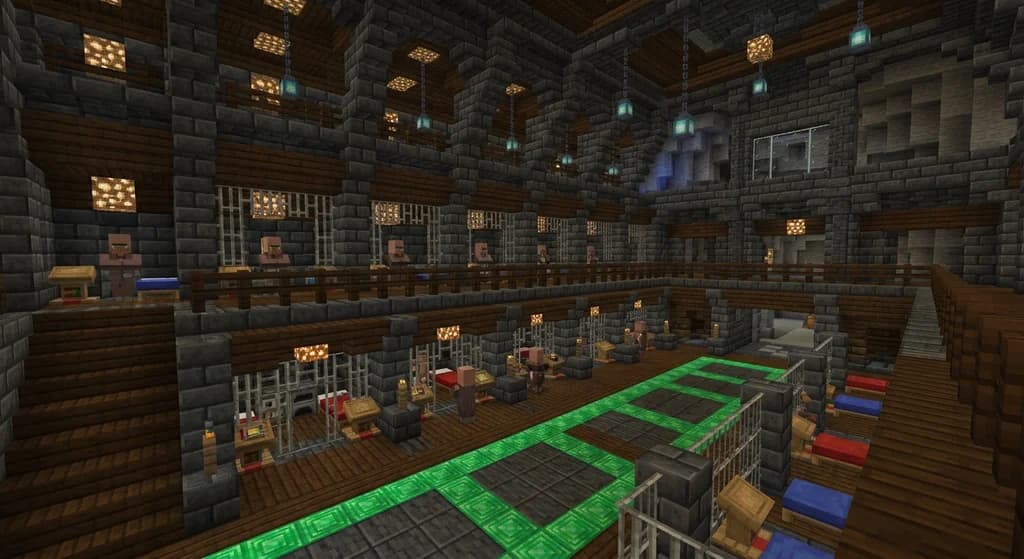
How to Build a High-Efficiency Minecraft Trading Hall: 2026 Guide
Learn how to build a high-efficiency Minecraft trading hall in 2026 — from villager job sites to zombie curing discounts and layout tips that maximize...
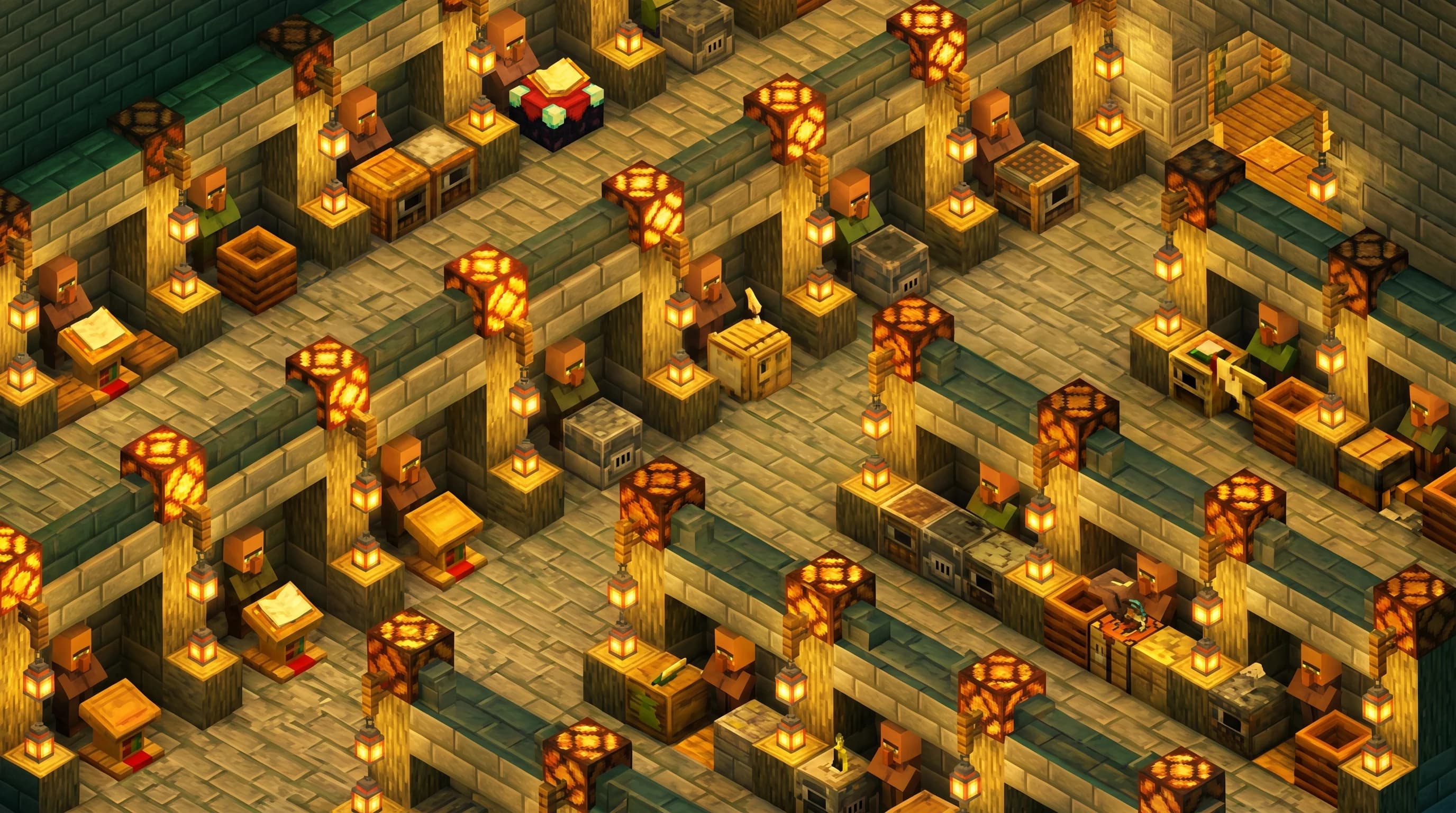
How to Build a Pro Minecraft Trading Hall (2026 Layouts)
Learn how to build a pro Minecraft trading hall in 2026 — layouts, best villager trades, zombie curing, and economy tips for Java & Bedrock.
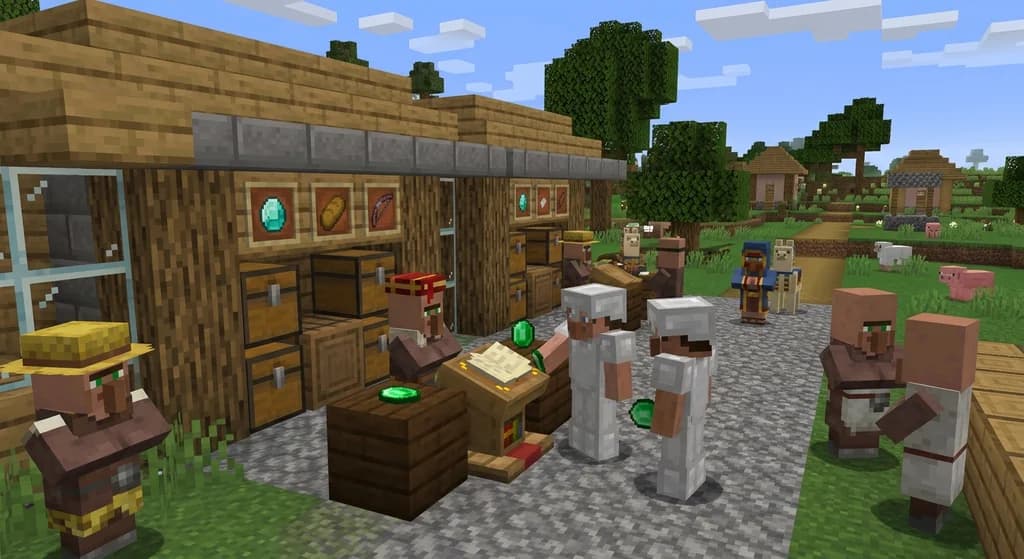
Minecraft Economy 101: How Supply and Demand Work on Player-Driven Servers
Learn how supply and demand shape Minecraft economies, from vanilla villager trading mechanics to player-driven server markets. Includes inflation control...
How to Make Emeralds Fast with Minecraft Villager Professions in 2026
Learn the fastest ways to farm emeralds using Minecraft villager professions in 2026. Optimize trading halls, cure zombies, and master crop trading for...
Have a question or another approach?
Compare notes with other readers. Include your edition and version when discussing mechanics.