7 Best Items to Sell on Minecraft SMP Servers: 2026 Market Guide
Filed under Minecraft Economy & Trading · How we create content
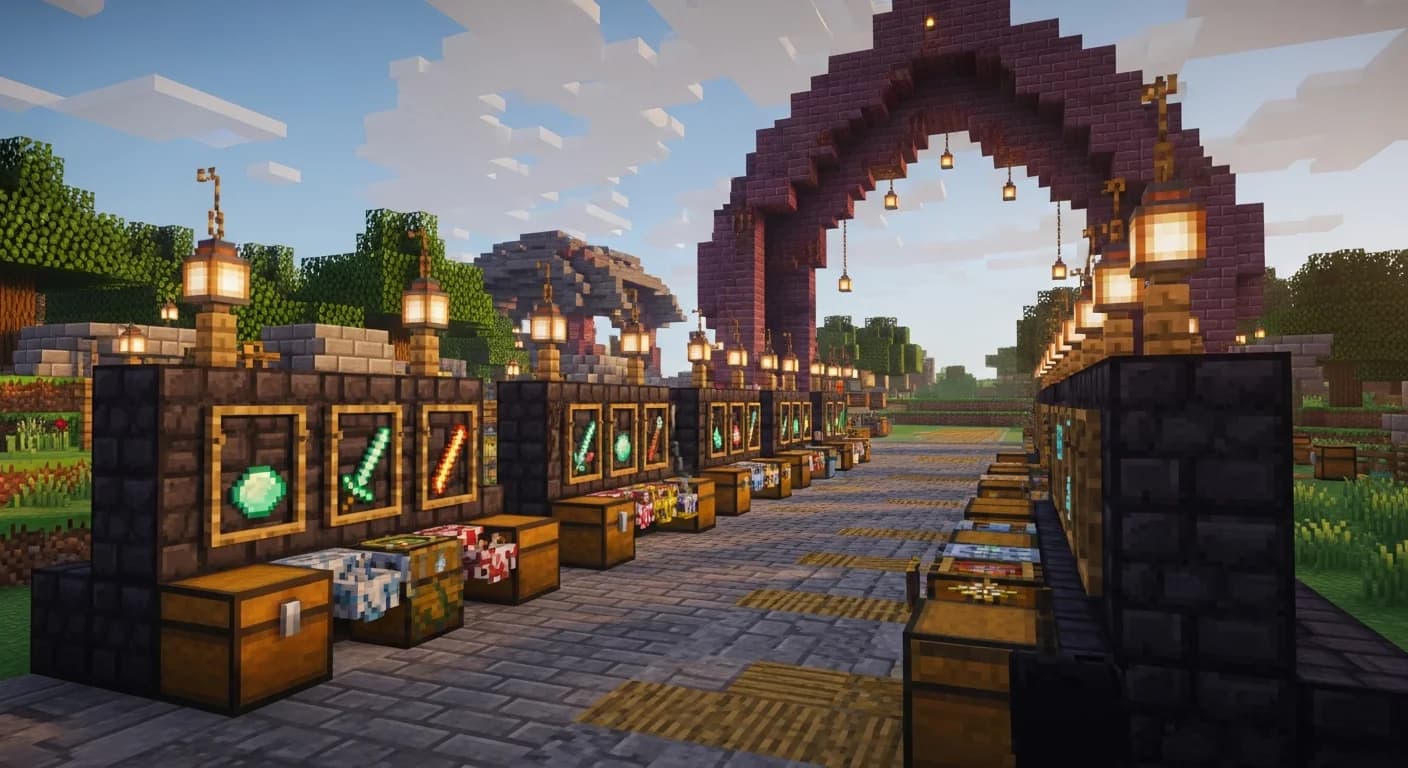
Key Takeaways
| Point | Details |
|---|---|
| Enchanted gear sells best | Fully enchanted tools and armor command premium prices because most players want to skip the grind. |
| Mob drops are evergreen | Slime balls, blaze rods, and ender pearls are always in demand because farms take real setup effort. |
| Bulk beats rare sometimes | Selling a chest of terracotta or concrete powder in bulk can outperform single rare items if you time the market. |
| Potions are underrated | Brewing stands are tedious — players will pay well for ready-made Strength II, Regeneration, and Slow Falling potions. |
| Diversify your shop | Running 3–5 product lines protects you when one market saturates, especially on active SMPs with 50+ players. |
| Location matters on chest shops | Shops near spawn or the trade hub get dramatically more foot traffic and sell faster than remote chests. |
Table of Contents
- What Is a Minecraft SMP Economy?
- Why Choosing the Right Items to Sell Matters
- Top 7 Best Items to Sell on Minecraft SMP Servers
- How to Price Your Items Competitively
- Tips for Running a Successful Chest Shop
- How to Put This Into Practice on Gaia Legends
- Conclusion
- Frequently Asked Questions
- Recommended
Most players on Minecraft SMP servers leave serious money on the table. They mine diamonds, hoard them, and never sell a single one — while the player two plots over is quietly getting rich selling slime balls and potions. If you want to know the best items to sell on Minecraft servers and actually build wealth in a player-driven economy, this guide covers everything: what sells, why it sells, and how to price it right in 2026.
What Is a Minecraft SMP Economy?
A Minecraft SMP economy is a player-driven trading system where participants buy and sell in-game resources using a shared currency — typically diamonds, emeralds, or a plugin-based coin system — through chest shops, auction houses, or direct trades.
Unlike creative servers or minigames, SMP economies reward effort and strategy. Supply and demand are real. If twelve players all sell cobblestone, the price collapses. If you're the only one selling Slow Falling potions, you name your price.
The health of an SMP economy depends on:
- Player count — more players means more demand and more competition
- Plugin setup — chest-shop plugins, auction houses, and anti-grief protections shape how trades happen
- Resource scarcity — servers with limited nether access or hard mob-farm rules create natural price floors
Understanding these factors helps you pick the right products before you mine a single block.
Why Choosing the Right Items to Sell Matters
Not all items are worth your time. The best items to sell share three traits: they're time-consuming to obtain, consumed regularly, or needed for progression. Items that players can grab in five minutes have no market value. Items that require a 40-minute nether run or a complex farm setup? Those sell.
Warning: Don't build a shop around items you can only supply inconsistently. Running out of stock kills your reputation faster than bad pricing. Stock up before you open.
A good rule of thumb: if you'd rather buy it than farm it yourself, so would everyone else.
Top 7 Best Items to Sell on Minecraft SMP Servers
Here's a ranked breakdown of the most profitable items across active SMP servers in 2026. Profitability is based on demand consistency, farm difficulty, and observed player behavior.
| Item | Demand Level | Farm Difficulty | Profit Potential |
|---|---|---|---|
| Enchanted Tools & Armor | Very High | Medium-High | ⭐⭐⭐⭐⭐ |
| Diamonds / Ancient Debris | High | High | ⭐⭐⭐⭐⭐ |
| Mob Drops (Slime, Blaze) | High | Medium | ⭐⭐⭐⭐ |
| Bulk Building Blocks | Medium-High | Low | ⭐⭐⭐ |
| Rare Crops & Food | Medium | Low-Medium | ⭐⭐⭐ |
| Potions | High | Medium | ⭐⭐⭐⭐ |
| Elytra & Rockets | Very High | Very High | ⭐⭐⭐⭐⭐ |
1. Enchanted Tools and Armor
Enchanted gear is the single most reliable seller on any active SMP. Players always need replacements, upgrades, or specific enchantment combos. Fortune III pickaxes, Efficiency V shovels, and Protection IV armor sets move fast.
The key is consistency. Learn the most-wanted enchantment combos and stock them reliably. A Fortune III + Unbreaking III + Mending diamond pickaxe is worth far more than its raw materials.
Pro Tip: Sell gear sets (helmet, chestplate, leggings, boots) as a bundle at a slight discount. Players love the convenience and you move more inventory per transaction.
2. Diamonds and Ancient Debris
Raw materials are the backbone of any economy. Diamonds remain a universal currency on many servers, and ancient debris (the precursor to netherite) is always in demand for gear upgrades.
According to the Minecraft Wiki, ancient debris generates most commonly at Y-level 15 in the Nether, with a maximum of 2 blobs per chunk at that layer. That scarcity is exactly why it commands premium prices.
3. Mob Drops: Slime Balls, Blaze Rods, and Ender Pearls
Mob drops are the unsung heroes of SMP trading. Slime balls are needed for sticky pistons and slime blocks — essential for redstone farms. Blaze rods fuel brewing stands and are required for the End portal. Ender pearls are consumed constantly for teleportation and Eye of Ender crafting.
The catch: building efficient mob farms takes real time and knowledge. Most players would rather buy a stack of blaze rods than spend an hour in a nether fortress. That's your profit margin.
4. Bulk Building Blocks
Don't underestimate volume. Terracotta, concrete powder, smooth stone, and glazed terracotta in large quantities are exactly what builders need. Individual blocks are cheap, but a double-chest of a single color? That's a service.
Target builders working on large projects. They don't want to mine 3,000 blocks of diorite themselves — they'll pay a fair price for convenience.
5. Rare Crops and Food
Beetroot seeds, sweet berries, glow berries, and chorus fruit are harder to mass-produce than wheat or carrots. On servers with active PvP or survival challenges, golden carrots and golden apples sell well because they're used for healing and horse taming.
Honey bottles and cake are niche but surprisingly popular for roleplay and decoration-focused players.
6. Potions
Brewing is tedious. The nether wart grind, the blaze powder cost, the multi-step recipes — most players skip it entirely. That's your opening.
Stock Strength II, Regeneration II, Fire Resistance, Slow Falling, and Night Vision potions. These cover the most common use cases: combat, exploration, and building in dangerous biomes. Splash and lingering variants fetch even more.
Pro Tip: Bundle potions in sets of 8 (a full brewing stand batch). It signals professionalism and saves buyers the math.
7. Elytra and Firework Rockets
Elytra are the most coveted mobility item in the game. They're locked behind End Cities, which require defeating the Ender Dragon and exploring a dangerous dimension. On servers where End access is gated or competitive, a single elytra can be worth a fortune.
Pair them with firework rockets (3-star duration for maximum boost distance) and you have a high-margin combo that active players will always want.
How to Price Your Items Competitively
Pricing on an SMP is part science, part social awareness. Here's a simple framework:
- Survey the market first. Check existing chest shops or the auction house before setting prices. Undercutting by 10–15% moves stock fast; matching the market builds long-term trust.
- Factor in your time cost. If it takes you 30 minutes to farm a stack of blaze rods, price them so that 30 minutes feels worth it.
- Adjust for server age. New servers have inflated prices (scarcity). Mature servers have compressed prices (supply caught up). Adapt your product mix accordingly.
- Use round numbers. Prices like 5 diamonds or 32 emeralds are easier to remember and encourage impulse buys.
Note: On servers using plugin-based currency (coins, tokens), watch for inflation. If the server has been running for 6+ months, early players may have hoarded thousands of coins. Price accordingly — don't leave money on the table by pricing like it's launch week.
Tips for Running a Successful Chest Shop
Location Is Everything
Shops near spawn, the trade hub, or high-traffic paths get dramatically more foot traffic. A perfectly stocked shop in a remote forest sells nothing. If you can't get a prime spot, advertise your coordinates in chat regularly.
Keep Stock Consistent
An empty shop is worse than no shop. Players who visit and find nothing in stock won't come back. Set a restocking schedule and stick to it — even twice a week is enough on most servers.
Specialize, Then Diversify
Start with one or two items you can supply reliably. Once you've got steady income, add complementary products. A potion seller who also stocks blaze rods and nether wart becomes a one-stop brewing shop — and that loyalty is worth more than any single sale.
How to Put This Into Practice on Gaia Legends
Everything in this guide becomes easier with the right server infrastructure behind you. Gaia Legends is built specifically for players who want a thriving, fair economy.
The server's global trade hub sits at spawn — high foot traffic, organized shop districts, and easy browsing for buyers. Your chest shop gets seen by every new player who logs in. There's no grinding for a good location; the layout is designed so active sellers get visibility.
Gaia's secure chest-shop protections mean your inventory is safe from grief and theft. You can stock up, log off, and come back to sales waiting — not an empty chest. That peace of mind changes how you play.
The economy is genuinely non-pay-to-win: no admin shops undercutting players, no pay-to-win kits flooding the market with free gear. Every diamond in circulation was earned. That makes your hustle actually mean something.
Gaia Legends is free to join, non-pay-to-win, and supports Java + Bedrock crossplay. Join at gaialegends.pro and start your legend today.
Conclusion
Building wealth on a Minecraft SMP server isn't about luck — it's about picking the right products, pricing them smartly, and showing up consistently. Here are the three things to take away:
- Sell what's hard to farm: Enchanted gear, mob drops, elytra, and potions command premium prices because they cost players time and effort to obtain themselves.
- Location and consistency beat everything: A well-stocked shop in a high-traffic spot will always outperform a perfectly priced shop that nobody finds or finds empty.
- Diversify once you're stable: Starting with one reliable product line, then expanding, is the proven path to becoming a top trader on any active SMP.
Pick one item from this list, build your supply, and open your first shop this week. The market is waiting.
Ready to play? Join Gaia Legends today — no pay-to-win, Java + Bedrock crossplay.
- Java:
join.gaialegends.pro - Bedrock:
join.gaialegends.pro— Port19132
Further reading
These references were recorded with the article; specific claims have not been matched to source excerpts.
Frequently Asked Questions
What are the best items to sell on Minecraft servers for beginners?
The best items to sell on Minecraft servers for beginners are bulk building blocks and basic mob drops like string or gunpowder. They're easy to farm, always in demand, and don't require advanced setups. Once you've built up some capital, graduate to potions and enchanted tools — those carry the highest profit margins on most active SMP servers.
How do I set up a chest shop on a Minecraft SMP server?
Most SMP servers use a chest-shop plugin like ChestShop or ShopGUI+. The basic process: place a chest, attach a sign with your item name, quantity, and price, then stock the chest. Exact commands vary by server — check your server's /help or rules board for the specific format. Always place shops near high-traffic areas like spawn for maximum visibility.
Are diamonds still the best currency on Minecraft SMP servers in 2026?
Diamonds remain the most widely accepted informal currency on vanilla-adjacent SMPs, but many servers in 2026 use plugin-based coin systems for cleaner transactions. On plugin-economy servers, diamonds shift from currency to a high-value commodity — meaning you can actually sell them for coins rather than use them as money. Check your server's economy setup before pricing anything.
Why do potions sell so well on Minecraft SMP servers?
Potions sell well because brewing is genuinely tedious. Players need nether wart, blaze powder, specific ingredients, and multiple brewing steps for each batch. Most players would rather pay a fair price for ready-made Strength II or Fire Resistance potions than set up the infrastructure themselves. That time-cost gap is exactly where your profit margin lives.
How do I avoid losing money on a Minecraft SMP player market?
Survey the market before opening a shop — don't stock items that are already oversupplied. Keep your shop restocked consistently, because an empty chest drives buyers to competitors permanently. Avoid pricing too low out of generosity; undervaluing your goods trains buyers to expect low prices and hurts the whole market. Start with two reliable product lines, not ten.
What makes elytra so valuable on Minecraft SMP economy servers?
Elytra are locked behind End Cities, which require defeating the Ender Dragon and navigating a dangerous, loot-competitive dimension. On servers where End access is gated, contested, or simply time-consuming, elytra are genuinely scarce. Paired with firework rockets for flight, they're the top mobility item in the game — and scarcity plus high demand equals the highest price tags in any SMP market.
Related guides
7 Best Items to Sell in Minecraft Player Chest Shops in 2026
Discover the 7 best items to sell in Minecraft chest shops in 2026. Maximize your SMP economy profits with this data-backed shop profit guide.
How to Set Up a Profitable Minecraft Chest Shop: 2026 Guide
Master the Minecraft chest shop guide for 2026. Learn plugin setup, best items to sell, pricing strategy, and layout tips to dominate any SMP economy server.
How to Price Items on a Minecraft Player Economy Server (2026)
Learn how to price items on a Minecraft player economy server in 2026. Master supply & demand, base costs, and market correction with tips from Gaia Legends.
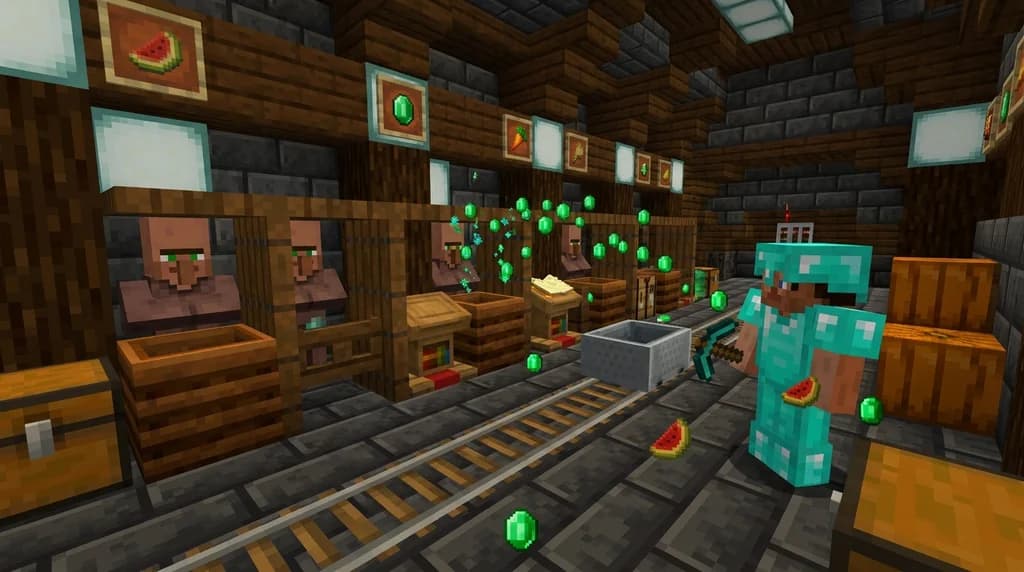
How to Make Emeralds Fast with Minecraft Villager Professions in 2026
Learn the fastest ways to farm emeralds using Minecraft villager professions in 2026. Optimize trading halls, cure zombies, and master crop trading for...
Have a question or another approach?
Compare notes with other readers. Include your edition and version when discussing mechanics.