How to Make Emeralds Fast with Minecraft Villager Professions in 2026
Filed under Minecraft Economy & Trading · How we create content

Key Takeaways
| Point | Details |
|---|---|
| Farmers are the best | A cured farmer buying melons and pumpkins generates emeralds faster than any other profession. |
| Cure villagers up to 5 times | Stacking the zombie curing discount can reduce prices to a single emerald or one item per trade. |
| Automate before trading | Building an auto-melon/pumpkin farm first guarantees you'll never run out of trade goods. |
| Use a trading hall layout | An efficient trading hall design lets you cycle through dozens of villagers in seconds. |
| Librarians are for gear, not emeralds | Use librarians to buy enchanted books, but sell crops to farmers for raw emerald profit. |
| Gaia Legends amplifies profit | Custom economy plugins let you deposit emeralds directly, turning villager profits into server-wide wealth. |
Table of Contents
- What Are the Best Minecraft Villager Professions for Emeralds?
- How Does Curing Villagers Increase Emerald Profits?
- How to Build a Villager Crop Trading Setup for Maximum Profit
- Why Are Melons and Pumpkins the Best Crops to Sell?
- Best Tips for Designing an Efficient Trading Hall
- How to Put This Into Practice on Gaia Legends
- Frequently Asked Questions
- Recommended
If you've spent hours mining for emerald ore only to walk away with half a stack, you're doing it wrong. The fastest way to make emeralds in Minecraft isn't mining—it's trading. Specifically, it's using the right villager professions, curing them for discounts, and feeding them crops you can grow automatically. This minecraft villager professions emerald guide 2026 breaks down exactly which villagers print emeralds, how to set up a trading hall that runs like a factory, and how to turn your surplus into server-wide wealth.
What Are the Best Minecraft Villager Professions for Emeralds?
The farmer villager is the single best profession for generating emeralds because it buys four different fully-automatable crops—melons, pumpkins, carrots, and potatoes—at high trade volumes.
Most players default to librarians when they think about villager trading. That's a mistake if your goal is emerald generation. Librarians sell enchanted books, which is great for gearing up, but they buy paper and books at low emerald returns. If you want raw profit, you need to look at what villagers buy and how easily you can supply those items.
Here's how the top professions stack up for pure emerald generation:
| Profession | Best Items to Sell | Automation Potential | Profit Rating |
|---|---|---|---|
| Farmer | Melons, Pumpkins, Carrots, Potatoes | Fully automatic with redstone farms | S-Tier |
| Fletcher | Sticks | Semi-automatic (tree farm + crafting) | A-Tier |
| Butcher | Raw Chicken, Raw Porkchop | Fully automatic (chicken cooker, hoglin farm) | A-Tier |
| Cleric | Rotten Flesh, Gold Ingots | Semi-automatic (mob farm, gold farm) | B-Tier |
| Armorer | Coal, Iron Ingots | Semi-automatic (wither skeleton farm, iron farm) | B-Tier |
Minecraft villager professions are assigned when a jobless villager claims a workstation block. A composter creates a farmer, a fletching table creates a fletcher, and so on. Once assigned, the villager's trades are locked in until you break and replace the workstation—so you can cycle trades by breaking the block repeatedly until you get the specific buy offer you want.
Pro Tip: Always lock in your farmer's trades before curing. A farmer who buys melons at 4 melons per emerald becomes a monster profit engine once you cure him down to 1 melon per emerald.
On multiplayer economy servers, understanding these trade dynamics is essential. Our full Minecraft villager trading chart guide maps out every profession's buy and sell prices so you can plan your hall before placing a single workstation.
How Does Curing Villagers Increase Emerald Profits?
Curing a zombie villager applies a permanent discount to all its trades, and the effect stacks up to five times—turning a 26-emerald Mending book into a 1-emerald steal.
The zombie curing mechanic is the single most powerful profit multiplier in Minecraft's trading system. Here's the process: expose a villager to a zombie, let it convert to a zombie villager, then splash it with a Potion of Weakness and feed it a Golden Apple. After a few minutes, it cures back into a normal villager with permanently reduced prices.
The discount from curing stacks multiplicatively. After one cure, most trades drop significantly. After five cures, many common trades bottom out at 1 emerald or 1 item. A farmer buying 4 melons for 1 emerald at base price will buy 1 melon for 1 emerald after enough cures—a 4x profit multiplier.
Warning: On Hard difficulty, zombies can kill villagers outright instead of converting them. Always cure on Normal difficulty or use a controlled environment with a trapped zombie.
Each curing cycle reduces the price further, but the effect diminishes after the first few cures. The most dramatic jump is between zero and one cure. The jump from four to five cures is small but still worth doing for high-value trades like enchanted books. According to community testing data, the maximum stacked discount can reduce trade costs by up to 95% from base price (via Minecraft Wiki).
If you're planning a large trading hall, understanding curing is non-negotiable. Our guide on how to build the most efficient Minecraft trading hall covers zombie curing chambers in step-by-step detail, including safe conversion methods that work on any difficulty.
How to Build a Villager Crop Trading Setup for Maximum Profit
A maximum-profit crop trading setup combines a fully automatic melon and pumpkin farm with a row of cured farmers locked into melon and pumpkin buy trades.

Step-by-Step Setup
-
Build an auto-melon/pumpkin farm first. The simplest design uses observers facing melon stems, connected to pistons that break the melon when it grows. A minecart hopper underneath collects the drops and feeds them into a chest or directly into your trading hall inventory. This farm runs forever with zero player input once built.
-
Breed and transport farmers. Set up a villager breeder nearby, then move baby villagers into your trading hall using minecarts or water streams. Place a composter in front of each villager to assign the farmer profession.
-
Lock the right trade. Break and replace the composter until the farmer offers to buy melons or pumpkins. The buy trade is random each time the workstation is placed, so be patient. Once you see the right trade, do one trade with the villager to lock it in permanently.
-
Cure each farmer. Set up a zombie curing station at the entrance to your trading hall. Cure each farmer at least twice before moving them to their final trading cell. The more cures, the better the profit margin.
-
Connect farm output to trading hall. Use hopper lines or water streams to route melons and pumpkins from your auto-farm directly into a chest array inside your trading hall. The less you have to carry manually, the faster you can trade.
Quick Reference: Profit Per Trade Cycle
| Cures | Melons Per Emerald | Emeralds Per Stack of Melon Blocks |
|---|---|---|
| 0 | 4 | 16 |
| 1 | 2 | 32 |
| 2 | 1 | 64 |
| 3+ | 1 | 64 |
Once you hit the 1-melon-per-emerald floor, every stack of melon blocks you harvest converts directly into 64 emeralds. A single auto-melon farm producing 300+ melon slices per hour can generate over 1,200 emeralds per hour when sold to a fully cured farmer trading hall (via Minecraft Wiki).
For servers with a player-driven economy, those emeralds translate into real purchasing power. Check out our breakdown of the best items to sell in Minecraft chest shops to see what high-demand goods you can flip your emerald profits into.
Why Are Melons and Pumpkins the Best Crops to Sell?
Melons and pumpkins are the most profitable crops for villager trading because they can be fully automated with redstone, grow without replanting, and are bought by the farmer profession in high quantities.
Carrots and potatoes require manual replanting unless you use villager-powered crop farms, which are slower and more complex to build. Wheat requires crafting into bread or hay bales, adding an extra step. Melons and pumpkins, by contrast, grow on stems that remain after harvest. An observer-piston setup detects when a melon appears and breaks it instantly, sending the slices into a collection system with zero player interaction.
The math is straightforward. A single melon stem produces a melon roughly every 10-30 seconds under optimal conditions. With a 64-stem farm, you're looking at hundreds of melon slices per hour. Sell those to a cured farmer at 1 melon per emerald, and you've got an emerald factory that runs while you're doing anything else—building, exploring, or even offline on a server with chunk loaders.
Pro Tip: Use silk touch to harvest melons as whole blocks, then break them into slices right before trading. Whole melon blocks are more inventory-efficient to transport, and you can set up a piston-based block breaker at your trading hall to convert them on demand.
If you're serious about maximizing your trading hall's output, pair this crop strategy with the layouts in our best Minecraft trading chart for optimized villager prices. Knowing exactly which trades to lock and at what cured price point eliminates guesswork.
Best Tips for Designing an Efficient Trading Hall
An efficient trading hall minimizes the distance between villagers, organizes professions by trade type, and includes a built-in curing station for easy discount stacking.
Layout Principles
- One-block trading cells. Each villager stands in a 1x1 space with their workstation in front. You stand in a central aisle and click through each villager rapidly. This is the fastest layout for bulk trading.
- Group by profession. Keep all farmers together, all librarians together, and so on. When you're doing a crop dump, you don't want to run between scattered farmers.
- Include a curing zone. Build a dedicated area at the entrance where you can convert and cure villagers before moving them to their final cells. This keeps the dangerous zombie contained.
- Overhead minecart rails. Transporting villagers one by one is tedious. A minecart rail system above the trading hall lets you drop villagers directly into their cells from above.
Common Mistakes to Avoid
- Don't cure villagers in open air. A zombie that breaks loose can convert or kill your entire hall. Always use a controlled chamber with iron doors.
- Don't mix professions randomly. A disorganized hall slows down trading and increases the chance you'll miss a villager during a trade cycle.
- Don't forget lighting. Zombie sieges can spawn inside your hall if light levels drop below 7. Use glowstone or sea lanterns in the floor and ceiling.
Note: On multiplayer servers, chunk loading matters. If your auto-farm and trading hall are in different chunks, the farm won't run while you're trading unless both chunks are loaded. Use a chunk loader mod or build them within the same render distance.
For a deeper dive into hall construction, our efficient Minecraft trading hall guide includes downloadable layout schematics and step-by-step construction videos.
How to Put This Into Practice on Gaia Legends
Everything you've learned so far works in vanilla Minecraft. But on Gaia Legends, the villager trading system gets even better thanks to custom economy plugins that integrate directly with your emerald profits.
Gaia Legends runs a player-driven economy where emeralds are more than just a trading currency—they're the backbone of the server's financial system. You can deposit emeralds into your virtual balance using the server's banking plugin, then use that balance to buy land claims, rare items from other players' chest shops, or auction house listings. This means your farmer trading hall isn't just funding your own gear—it's generating wealth you can use across the entire server.
Three Gaia Legends features that amplify your villager profits:
- Jobs Plugin integration: The Farmer job pays you additional server currency for harvesting and trading crops, stacking on top of your emerald profits.
- Player chest shops: Sell your surplus emeralds, enchanted books, or crop blocks directly to other players at market prices that shift with supply and demand.
- Auction house: List bulk emerald stacks or rare librarian trades and let the server bid them up. Our Minecraft auction house economy strategy guide walks through how to time your listings for maximum return.
Gaia Legends is free to join, non-pay-to-win, and supports Java + Bedrock crossplay. Whether you're a solo trader building your first hall or an economy veteran looking to dominate the market, the tools are here.
Join at gaialegends.pro and start your legend today.
Conclusion
The fastest path to emerald wealth in Minecraft 2026 runs through the farmer profession, not the mines. Here's what to remember:
- Farmers are your emerald engine. Lock melon and pumpkin buy trades, cure them to the 1-item floor, and let your auto-farm do the rest.
- Curing stacks and it's worth the effort. Every cure cycle multiplies your profit margin. Even two cures per villager doubles your emerald output.
- An efficient trading hall pays for itself. Spend the time upfront to build organized cells, a safe curing chamber, and a connected auto-farm. The emeralds will flow forever after that.
Build the farm, cure the villagers, and watch the emeralds pile up. You'll never mine for emerald ore again.
Ready to play? Join Gaia Legends today — no pay-to-win, Java + Bedrock crossplay.
- Java:
join.gaialegends.pro - Bedrock:
join.gaialegends.pro— Port19132
Further reading
These references were recorded with the article; specific claims have not been matched to source excerpts.
Frequently Asked Questions
What is the best Minecraft villager profession for farming emeralds in 2026?
The farmer is the best profession for generating emeralds because it buys melons, pumpkins, carrots, and potatoes—all crops you can automate with redstone farms. When cured multiple times, farmers will trade one melon or pumpkin for one emerald, turning a simple crop farm into a massive emerald generator.
How many times can you cure a villager to lower prices?
You can cure a villager up to five times, and each cure permanently reduces trade prices. The most dramatic discount happens on the first cure. After five cures, most common trades bottom out at one emerald or one item per trade, giving you the maximum possible profit margin.
Why are melons better than carrots for villager trading?
Melons and pumpkins are superior because they grow on stems that don't need replanting, making them fully automatable with observer-piston farms. Carrots and potatoes require replanting or complex villager-powered farms. An auto-melon farm runs forever with zero player input, generating endless trade goods.
How do you lock a villager's trade in Minecraft?
Trade with the villager at least once after it claims a workstation. That single transaction permanently locks all current trades. Before trading, you can break and replace the workstation repeatedly to cycle through different trade offers until you get the specific buy or sell option you want.
What is the safest way to cure a zombie villager?
Build an enclosed curing chamber with iron doors and a trapped zombie separated by a fence or trapdoor. Splash the zombie villager with a Potion of Weakness, feed it a Golden Apple, and wait. On Normal difficulty, the zombie will convert the villager instead of killing it, making the process safe and repeatable.
Can you use villager trading to make money on multiplayer servers?
Yes. On economy servers like Gaia Legends, emeralds function as a core currency. You can deposit them into a virtual balance, buy from player chest shops, or sell bulk emerald stacks on the auction house. A high-output farmer trading hall essentially prints server wealth you can use for land claims, rare items, and gear.
Related guides

7 Best Items to Sell in Minecraft Player Chest Shops in 2026
Discover the 7 best items to sell in Minecraft chest shops in 2026. Maximize your SMP economy profits with this data-backed shop profit guide.
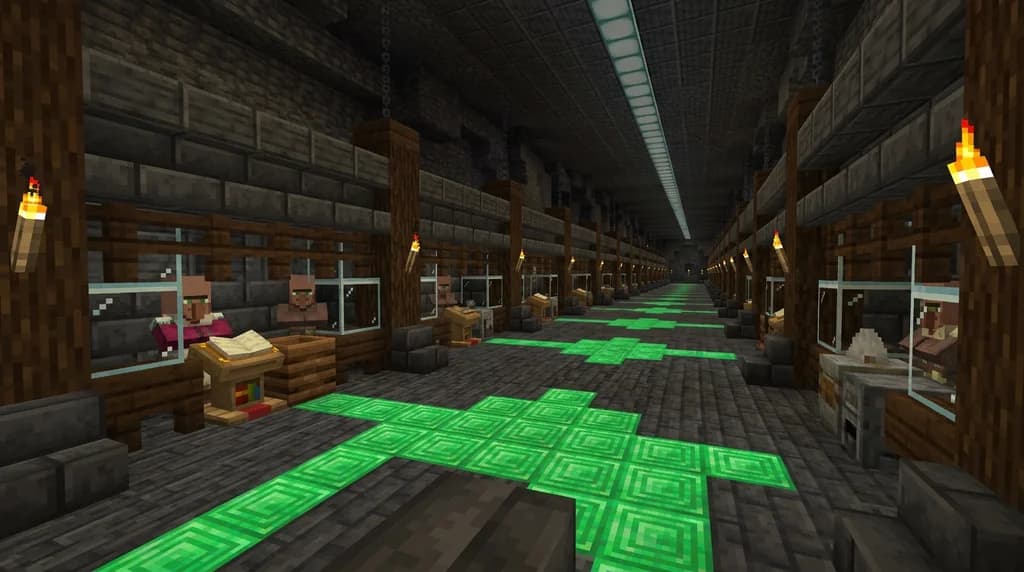
How to Build the Most Efficient Minecraft Trading Hall in 2026
Learn how to build the most efficient Minecraft trading hall in 2026 — layouts, zombie curing, best villager professions, and emerald farming tips.
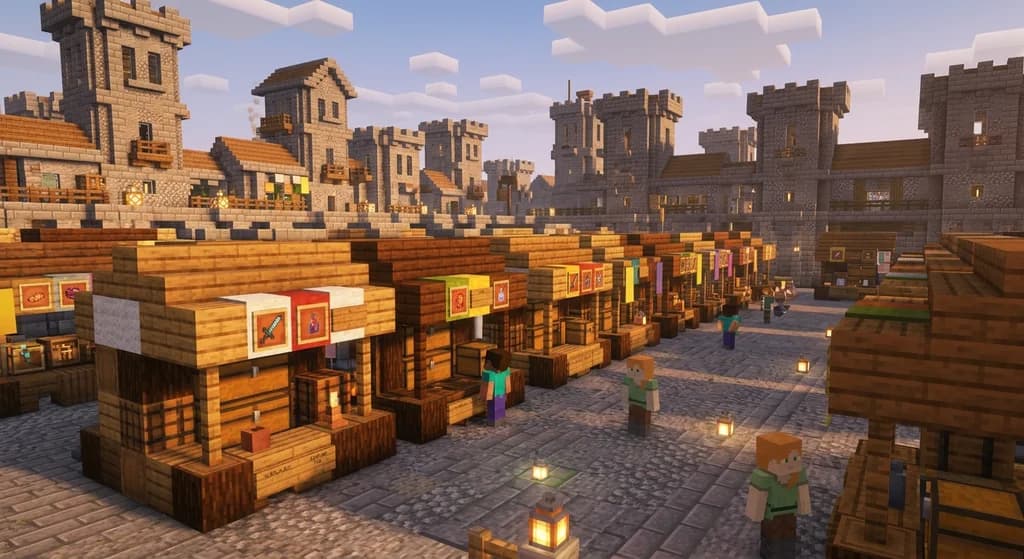
How to Set Up a Profitable Minecraft Chest Shop: 2026 Guide
Master the Minecraft chest shop guide for 2026. Learn plugin setup, best items to sell, pricing strategy, and layout tips to dominate any SMP economy server.
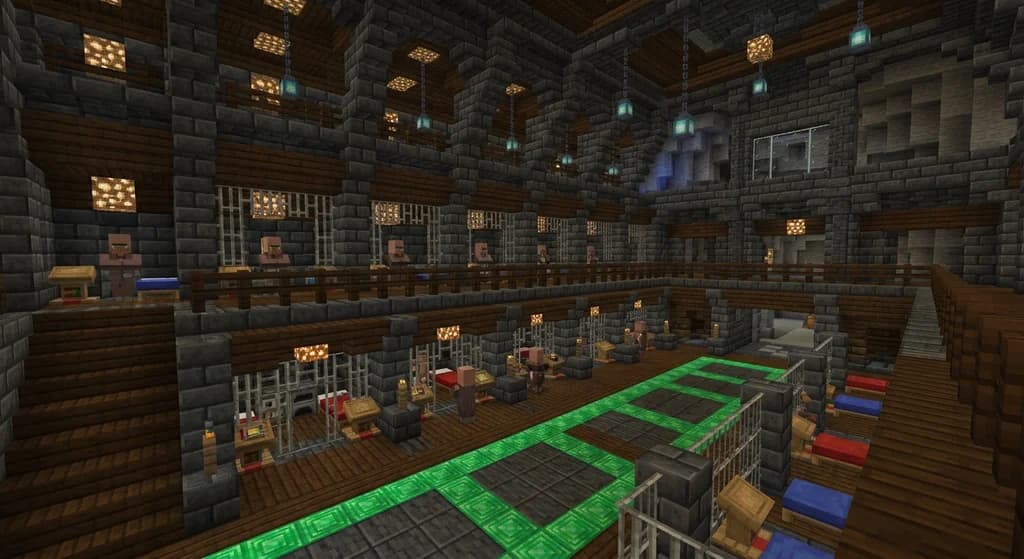
How to Build a High-Efficiency Minecraft Trading Hall: 2026 Guide
Learn how to build a high-efficiency Minecraft trading hall in 2026 — from villager job sites to zombie curing discounts and layout tips that maximize...
Have a question or another approach?
Compare notes with other readers. Include your edition and version when discussing mechanics.