How to Use the Minecraft Trading Wiki to Maximize Villager Deals in 2026
Filed under Minecraft Economy & Trading · How we create content
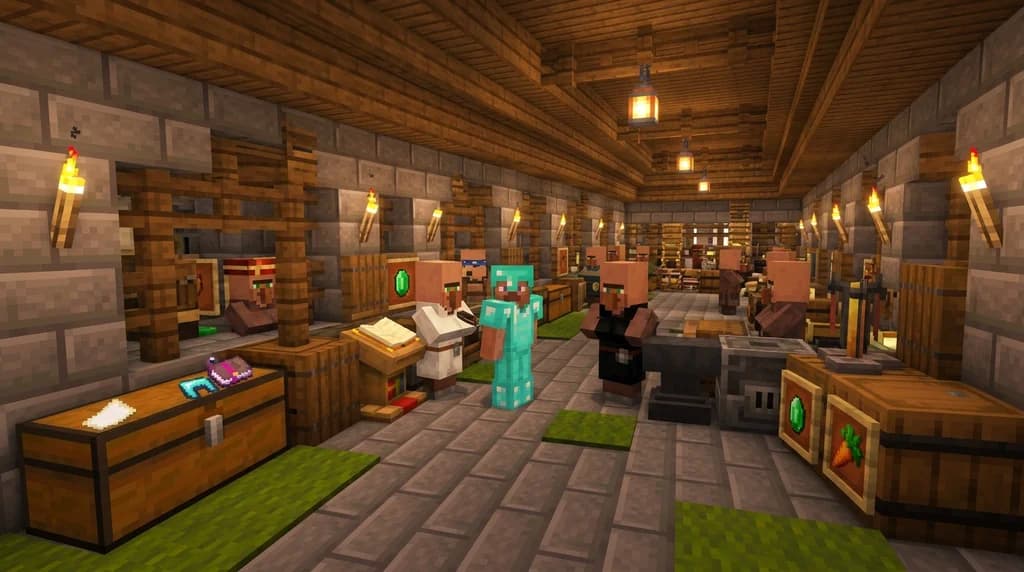
Key Takeaways
| Point | Details |
|---|---|
| Wiki as your blueprint | The Minecraft trading wiki organizes trades by profession and level, making it simple to compare deals at a glance. |
| Discount stacking matters | Curing zombie villagers applies a permanent 20% discount per cure, up to 80% total, which transforms high-cost trades into bargains. |
| Price awareness saves emeralds | Knowing average prices for enchanted books and armor helps you avoid overpaying in survival or server economies. |
| Cross-reference always | Wiki data can vary by version; always verify in-game using the trading UI and apply local server rules. |
| Server synergy | On Gaia Legends, combining wiki knowledge with the auction house maximizes profit margins and keeps your economy healthy. |
Table of Contents
- What Is the Minecraft Trading Wiki?
- Why Use the Minecraft Trading Wiki for Villager Trades?
- How to Find the Best Villager Trades Using the Wiki
- Which Villager Professions Offer the Most Value in 2026?
- How to Cross-Reference Trades with In-Game Mechanics
- Tips for Maximizing Emeralds Using the Wiki
- How to Put This Into Practice on Gaia Legends
- Recommended
Ever spent hours trading with villagers only to realize you paid 30 emeralds for a book you could have gotten for 12? The Minecraft trading wiki guide is your secret weapon to avoid overpaying and lock in the best deals every time. In this guide, you'll learn how to navigate the Minecraft trading wiki, find the most profitable trades per profession, and cross-reference wiki data with in-game mechanics to maximize your emerald output. Whether you're a solo survival player or running an SMP economy, these strategies will transform your trading game. By the end, you'll have a step-by-step system for using the wiki to plan your villager hall and never miss a bargain again.
What Is the Minecraft Trading Wiki?
The Minecraft Trading Wiki is a community-maintained database that catalogs every villager trade across all professions, levels, and game versions, allowing players to compare prices, items, and availability at a glance.
The Minecraft Trading Wiki is exactly what it sounds like: a dedicated section of the broader Minecraft Wiki that lists every trade a villager can offer, organized by profession (armorer, librarian, farmer, etc.) and rank (Novice through Master). Each entry shows the inputs, outputs, average price range, and any special conditions like Hero of the Village discounts. This resource is invaluable for anyone serious about building an efficient trading hall.
For example, if you want to understand how to make villagers restock faster, check out our guide on How to Make Villagers Restock Faster in Minecraft (2026).
Minecraft Java Edition features 13 distinct villager professions, each with a unique trading tree that spans 5 levels (via Minecraft Wiki). Knowing which profession offers what is the first step to using the wiki effectively.
Pro Tip: Bookmark the main Villager page on the wiki and use Ctrl+F to search for specific trade items — it's faster than scrolling through the entire table.
Why Use the Minecraft Trading Wiki for Villager Trades?
Using the wiki instead of guessing or memorizing trades saves time, reduces emerald waste, and helps you plan your villager hall around the most valuable professions.
When you're building a trading hall, you need to decide which workstations to place. Without the wiki, you might waste materials on unprofitable setups. The wiki gives you exact data points: for instance, a novice farmer trades 20 wheat for 1 emerald, while a master farmer trades 1 pumpkin or melon for 2-4 emeralds. These numbers help you prioritize.
Curing a zombie villager provides a permanent 20% discount per cure, stacking up to 5 times for an 80% maximum reduction in trade costs (via Minecraft Wiki). The wiki's mechanics page explains this and lets you calculate exact savings.
For a deeper dive into the curing process, read How to Cure a Zombie Villager for Insane Trading Discounts in 2026.
How to Find the Best Villager Trades Using the Wiki
To find the best trades, open the wiki's villager page, identify the profession you're interested in, scroll to its trade table, and read across the columns for level, input, output, and average price.
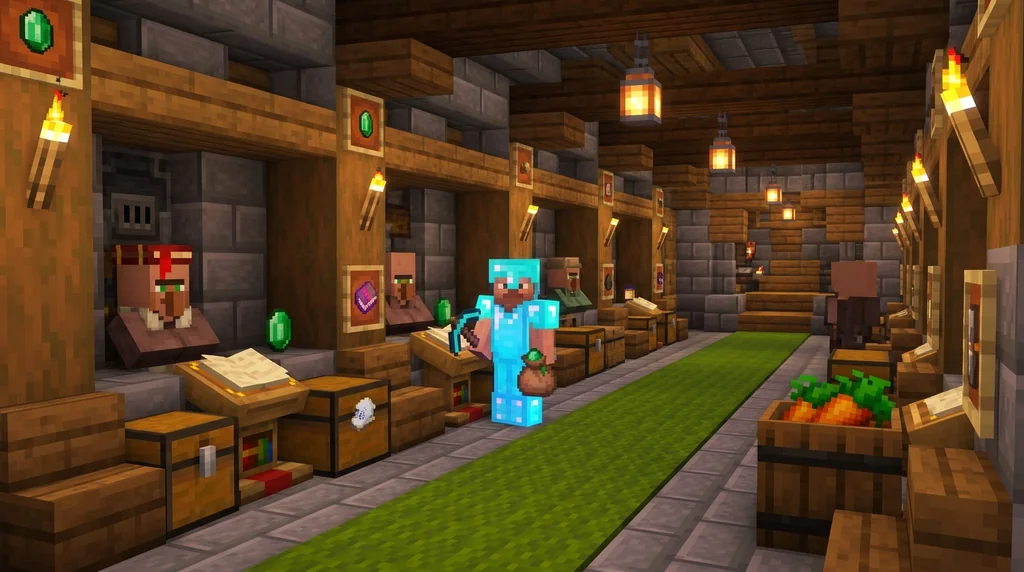
The wiki organizes trades in a clean table. For each profession, you'll see a header row with "Level", "Input", "Output", and "Price (Emeralds)". Here's how to interpret it:
| Level | Input | Output | Price (avg) |
|---|---|---|---|
| Novice Farmer | 20 Wheat | 1 Emerald | 1 |
| Apprentice Farmer | 1 Pumpkin | 1-3 Emeralds | 2 |
| Master Farmer | 1 Golden Carrot | 4-6 Emeralds | 5 |
Note: Prices can fluctuate based on trade difficulty, village popularity, and your personal reputation. The wiki gives average values. Always check in-game before committing.
Warning: The wiki may show data for the latest version, but some servers run older or modified economies. Always cross-reference with the server's rules — especially on an SMP like Gaia Legends where auction house pricing may differ.
Which Villager Professions Offer the Most Value in 2026?
The most valuable professions in 2026 remain the librarian (for enchanted books), the armorer (for diamond armor), and the farmer (for easy emerald generation), but the wiki reveals subtle nuances in trade values.
Librarian
Librarians offer enchanted books at every level. A master librarian can trade any enchantment from I to V. The price varies wildly: Mending costs 10-30 emeralds, while Fortune III may cost 30-50. The wiki lists the price ranges for each book.
Silk Touch from a master librarian costs an average of 33 emeralds (via Minecraft Wiki). Compare that to an anvil cost, and you see the savings.
Armorer
Diamond armor with Protection IV from a master armorer costs around 40 emeralds per piece. That's a steal compared to enchanting your own.
A master armorer trades diamond leggings enchanted with Protection IV for 40 emeralds (via Minecraft Wiki). Combined with a cure discount, you can get them for 8 emeralds.
Farmer
Farmers are the best emerald generators. Master farmers trade crops for emeralds at rates that can be automated. For automation, see How to Build an Auto Villager Trading Machine in Minecraft (2026).
A master farmer trades 24 golden carrots for 22 emeralds, providing a steady food-to-emerald conversion (via Minecraft Wiki).
Pro Tip: Use the wiki's "Loot" section on the Wandering Trader page to compare deals. Sometimes a wandering trader's offer beats a villager's. Read our How to Profit from Minecraft Wandering Trader Deals in 2026 for more.
How to Cross-Reference Trades with In-Game Mechanics
Cross-referencing means checking the wiki's trade data against your actual in-game villager's offers, reputation modifiers, and difficulty settings to ensure you're getting the expected price.
The wiki provides base prices, but many factors affect them: Hero of the Village (reduces prices by 1-2 emeralds), cured discount (multiplicative), and difficulty (on Hard, prices are higher). By using the wiki as a reference, you can calculate the expected price after applying these modifiers. For example, if the wiki says a master librarian sells Mending for 20 emeralds, and you have a cured villager with 80% discount, you'd pay 4 emeralds.
Learn more about the discount mechanics in How to Cure a Zombie Villager for Insane Trading Discounts in 2026.
Tips for Maximizing Emeralds Using the Wiki
Maximize your emerald yield by focusing on professions with high-value outputs (librarian books, diamond gear) and cheap, renewable inputs (paper, rotten flesh, sticks).
- Paper for books: Novice librarian buys 24 paper for 1 emerald. Automate sugar cane farms.
- Rotten flesh to emeralds: Novice cleric buys 32 rotten flesh for 1 emerald. Combine with a zombie farm.
- Sticks to emeralds: Novice fletcher buys 32 sticks for 1 emerald. Skeleton farms provide infinite arrows and sticks.
- Iron to emeralds: Novice weaponsmith buys 4 iron ingots for 1 emerald. Use an iron golem farm.
The main tip: Use the wiki to identify which profession has the best return on investment for your available resources. For instance, a cartographer's maps can be sold to other players for profit on multiplayer servers.
How to Put This Into Practice on Gaia Legends
On Gaia Legends, the Minecraft trading wiki becomes even more powerful when combined with the server's auction house and player-driven economy.
Gaia Legends is free to join, non-pay-to-win, and supports Java + Bedrock crossplay. The server features a robust auction house where you can list items for emeralds, and the wiki helps you set fair prices. For example, if the wiki says a Mending book costs 27 emeralds on average, you can list yours for 25 to sell quickly.
Additionally, Gaia Legends has a player-run bank system. You can deposit emeralds and earn interest. By using the wiki to identify profitable trades, you can generate a steady income and grow your bank balance. For details on the bank system, read How to Set Up a Minecraft Server Bank with Player Deposits (2026).
Join at gaialegends.pro and start your legend today.
Conclusion
- The Minecraft trading wiki is the ultimate reference for villager trade data, profession tables, and price ranges.
- Always cross-reference wiki data with in-game modifiers like curing discounts and Hero of the Village.
- On a server like Gaia Legends, combine wiki knowledge with the auction house to maximize your profits.
Put these strategies into practice on your next gaming session. Your emerald wallet will thank you.
Recommended
- What is the Michael Reeves Minecraft Modpack? (2026 Guide)
- How to Master the Gaia Legends Fishing Minigame in 2026: Tips & Tricks
- How to Use Speedrun Timers for Better Splits in Minecraft (2026 Guide)
- How to Find the Best Minecraft Community for You in 2026
Ready to play? Join Gaia Legends today — no pay-to-win, Java + Bedrock crossplay.
- Java:
join.gaialegends.pro - Bedrock:
join.gaialegends.pro— Port19132
Further reading
These references were recorded with the article; specific claims have not been matched to source excerpts.
Frequently Asked Questions
What is the Minecraft trading wiki guide and how do I use it?
The Minecraft trading wiki guide is a section of the Minecraft Wiki that lists every villager trade by profession and level. Use it by searching for a profession, finding the trade table, and reading the input, output, and average price columns to plan your trading hall.
How do I find the best villager trades on the wiki?
Look for professions with high-value outputs like enchanted books (librarian), diamond armor (armorer), or cheap inputs like paper or sticks. The wiki's price ranges help you spot which trades give the most emeralds per input.
Can I trust the prices on the Minecraft trading wiki?
Yes, but treat them as averages. Actual in-game prices vary based on difficulty, Hero of the Village, and curing discounts. Always check a villager's current offers before making a large trade.
How do curing discounts affect wiki prices?
Each cure reduces the base wiki price by 20%, up to 80% after five cures. For example, an item listed at 40 emeralds on the wiki would cost only 8 emeralds with an 80% discount.
What if the wiki trade doesn't match what I see in-game?
First check the game version and any server modifications. Then verify you're looking at the correct profession and level. If discrepancies persist, report them to the wiki community — they keep it updated.
How can I use the wiki on a multiplayer server like Gaia Legends?
On Gaia Legends, use the wiki to research fair market prices for items you want to sell in the auction house. Cross-referencing wiki averages helps you price items competitively and avoid undercutting yourself.
Related guides

Minecraft China Edition: Variants and Platforms Overview
Learn about the variants of Minecraft China Edition, including the Mobile Edition and Desktop Edition. Covers platforms, features, development cycle, and registered accounts.

Bedrock Edition 1.18.30 Development Changes Summary
A quick reference to the development changes in Bedrock Edition 1.18.30 beta/preview versions, including technical tweaks, frog and tadpole updates, and GameTest Framework additions.
Minecraft Options Menu Quick Reference
A complete quick reference to the Minecraft Java Edition Options menu. Covers Video Settings, Controls, Language, Telemetry Data, the hidden options.txt file, and the upcoming Ore UI redesign.
GenWars Server Generator Income System
Learn how the GenWars server generator income system works in Minecraft Bedrock Edition. Discover tower capture, raids, and prestige progression.
Have a question or another approach?
Compare notes with other readers. Include your edition and version when discussing mechanics.