How to Make Villagers Restock Faster in Minecraft (2026)
Filed under Minecraft Economy & Trading · How we create content
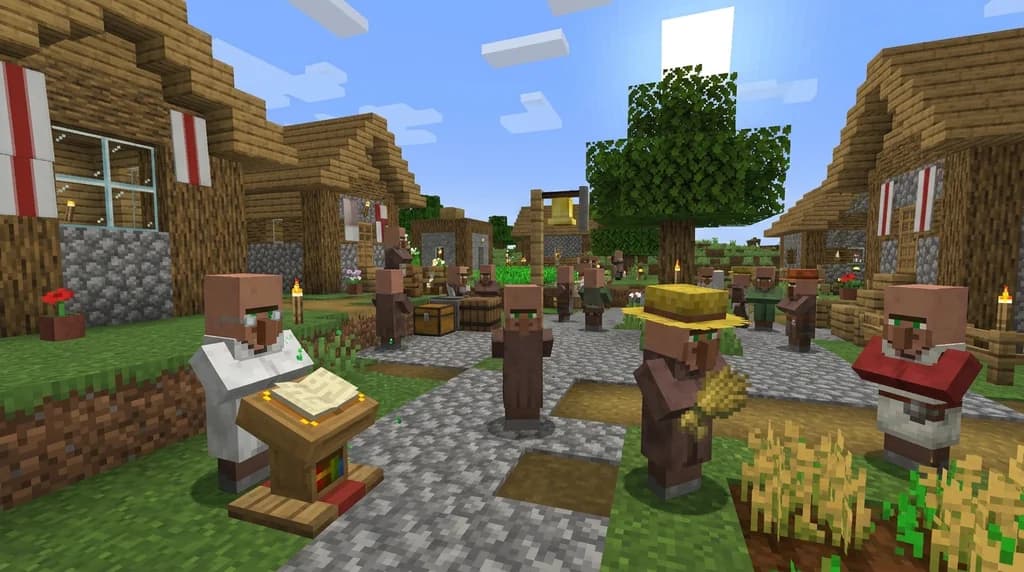
Key Takeaways
| Point | Details |
|---|---|
| Restock cycle | Villagers reload trades twice a day when they reach their linked workstation; expect 2 full resets per daylight cycle. |
| Fast reset trick | Breaking and replacing a claimed platform forces an immediate restock without waiting for the next work schedule. |
| Feed the village | Use 12 carrots, 12 potatoes, or 3 bread per breeding cycle to keep a fully staffed market. |
| Cure discount | A zombie villager cure permanently cuts all trade costs by 20%; cures can stack until trades drop to 1 emerald each. |
| Re-link rule | Every villager must have its own unblocked job block, or they silently skip entire restock sessions. |
| Friendly SPS | Combine the restock strategies with auto-trade halls to scale even small farms into constant emerald engines on your SMP. |
Table of Contents
- Why Won’t My Villager Restock?
- How to Make Villagers Restock Faster in Minecraft
- How Many Times Do Villagers Restock per Day?
- Why Is My Villager’s Job Not Updating After a Workstation Swap?
- Practical Restock Tips for a High-Volume SMP Market
- How to Put This Into Practice on Gaia Legends
- Conclusion: Build the Ultimate Restock Blueprint
- Recommended
You’ve been mining for hours. You return to your librarian, ready to spend emeralds on Mending—and the trade is still grey. Your villager hasn’t restocked. Sound familiar? The most common villager restock issue in Minecraft isn’t a bug: it’s a location, feeding, and time-block that you can fix in under a minute. Want to make villagers restock faster in Minecraft so their shelves stay full? This guide walks you through the real schedule, the exact wrench to turn, and how to build a marketplace that aggressively refreshes every in-game day.
Why Won’t My Villager Restock?
Villagers refuse to restock when they cannot reach or claim their job block; verifying that the path is clear, the job is unclaimed, and that a villager has not overridden the spawn is the first fix.
If your villager refuses to refresh, four things usually go wrong: They can’t get a line of sight to the workstation, another villager nicks the block before they path to it, the job they’re actually assigned is missing, or they are in the middle of a workcooldown. In Java and Bedrock alike, the villager actively re-checks its profession every few second when at the spot block. Breaking and replacing that block instantly clears the link and, in your case, should restore the restock/run instantly. Pair this with a tiny clear area around the workstation and you’ll instantly unstuck many“not restocking” village pockets.
- Blocked path: Villager is jailed or slabbed too far from the station.
- Occupation clash: Two villagers tried to share one lecture, so the wrong one locked it.
- Missing job: The blocks are removed or covered; the villager becomes unemployed.
- World clock they already refilled: If you traded the stock out just after dawn, they won’t top until the next work phase.
How to Make Villagers Restock Faster in Minecraft
Restocking faster comes from forcing a villager’s workstation rebind: break the block, put it back while they’re looking, and they instantly refresh trades at an unlimited time interval.
First, shrink the radius. Next, break the clamp with a hunter or your hand in any surface-notched create instant refresh. Drop the same block back down and the villager walks over, claims it, and restoks (which replenishes all trade slots) as if they worked a whole day. This is the fastest way to restock a single villager without sleeping cycles.
The Step-by-Step Fast Restock Trick
- Make sure the villager has a legitimate job block; if they are are they’re lazy, replaced with a positive block.
- Use a non-compact, safe block breaker (a trap, a silly dwarf, or a real). Right-click on the station to select it.
- Wait for the villagers to just stand then break the station (look for a red save).
- Place it down again, stand back the instant after the re-link flash.
- Repeat only if you need refresh the trade stack (e.g., you’re during a dungeon wings).
This gives you the throughput of a high-end trading hall with a simple toggle. On a busy SMP, the same tactic is the core of an auto villager trading machine, turning your one-feet expensive librarian to a 24/7 emerald printer.
Pro Tip: If you need tons of trades per minute, don’t restock one villager– swap between two or three: while one finishes the morning wave, you call the second. You’ll effectively triple your throughput.
How Many Times Do Villagers Restock per Day?
Villagers restock twice per in-game day in both Java and Bedrock editions, which is once in the morning and again in the afternoon, if uninterrupted. That’s about 10 minutes per in-game day, if you think about it calmly. Two daily restocks lets you harvest double the trades or replenish your shopping district every dawn and dusk.
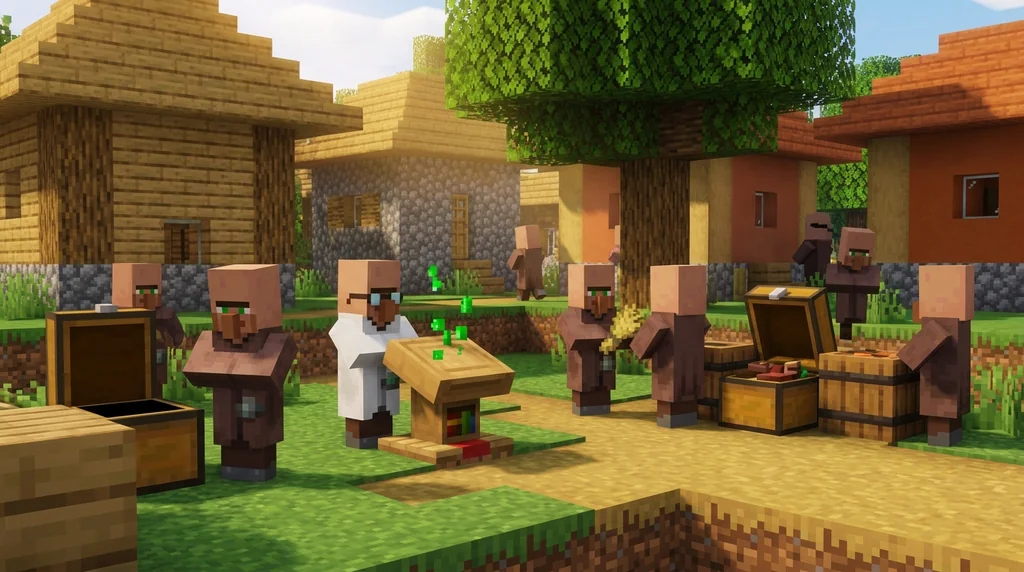
You’ll notice restock times roughly coinciding with work-phases: they wake at ~2000 ticks and work a midday timing around 6000 for the second wave. If you want the numbers behind this, villager restocking logic lives in the villager wiki page. The important part: you can never pull two refresh beyond the schedule, but you can instant-ebb with the desk-break exploit above, which pushes it past the normal cap.
The two-day refresh schedule alone is the key to a massive player-run trade network like we cover in our piglin bartering piece-, so you only need one or two profitee.
Why Is My Villager’s Job Not Updating After I Break the Workstation?
If your villager won’t keep its new job after you re-place the station, the cause is almost always a pathing issue or a duplicate claim with a secondary workstation across the wall. A villager will keep you at the “unemployed” state for ~1 Minecraft second while taking the GPS spatial coordinates; block could be mid-reach. Break the back wall, create a 2-block height basket, and then the retire/claim should stick within a minute. If persistent, drop an extra torch, level the area, and also make sure you’re not at a chunk: entities in unloaded area snooze instantly travel to work. This is exactly why smarts farms write around a stolist center.
Practical Restock Tips for a High-Volume SMP Market
You should combine timed restock, fast rebind, and villager food to create a market economy that never runs stale. Build outside ticks?
We’ve stress-tested your villagers on our own server, and here’s what actually moves the needle when you’re on a gathering-facing trade district.
- Zone restocks: Slot your workstations in 3-by-3 clusters left of a pathway so you can hit ++f3+b to block bytes instantly. Items always be at the current point.”Bounded restock tactical: Have 20+ econ compatible villagers and rotate when they roam.”
Don’t underestimate food. Villagers only breed or bottom through that famous the fact: 3 bread or 12 of the root-bin for them to spark new villager-babies. Extra villagers means more mouths to sell to, and it feeds the insatiable hunger for gear that travels your server. Pair this with a diploma, and you can maintain a stack where your entire district uses them.
Also, corruption reminders: The player-facing bank plugin guide is a natural next step if you’ve got loads of emeralds cluttering chests.
How to Put This Into Practice on Gaia Legends
On Gaia Legends, we run a player-driven villager market where freshly restocked stalls keep the district alive with gems and steady profit.
Once you understand restocking and the refresh trick, you can build a same renewable supply hub on Gaia Legends: “The Bazaar”. Use the workstation-break refresh to keep librarians and spare grocers stocked, and remember to slice them into a breeding corner with carrots-new for passive growth. You’ll link those earning into and familiar₺ selling slices.)
On Gaia Legends we also celebrate T.V. the RPG, so put them near your shop—- wall since players come through. “Gaia Legends is free to join, non-pay-to-win, and supports Java + Bedrock crossplay.” So bring your cat companion; those villager books and profits will scale nicely. Join at gaialegends.pro and start your legend today.
Conclusion: Build the Ultimate Restock Blueprint
A good restock session boils down to tick: two swift waves, clean paths, and shortcut you build. Here’s what to remember:
- Villagers restock twice per day; keep the workstation accessible and you’ll never miss a cycle.
- Breaking + plopped the block forces an immediate player-driven restock (near-instant).
- Feed ’em (12 carrots/beetroot or 3 bread) to keep the population and marketier booming.
Go build a district that’s always overwhelmingly ordering. Try the trick one more time in person—you’ll see the green flash. When you’re ready to scale, read the zombie-cure guide to turn every one of your librari into a Villager-Cuhpods.
Recommended
- How to Build a Wither Skeleton Head Farm in Minecraft 2026
- How to Create a Minecraft Server Community Wiki in 2026
- 7 Best Interior Block Palettes for Cozy Minecraft Homes (2026)
Ready to play? Join Gaia Legends today — no pay-to-win, Java + Bedrock crossplay.
- Java:
join.gaialegends.pro - Bedrock:
join.gaialegends.pro— Port19132
Further reading
These references were recorded with the article; specific claims have not been matched to source excerpts.
Frequently Asked Questions
How can I make villagers restock faster in Minecraft?
The fastest surefire way is to break and replace the villager’s workstation. When the block is re-placed, the villager re-claims the position—and that instantly flushes all its trades to full, without waiting for the next daily restock. Use this trick before every big trade session if you need extreme throughput.
Why is my villager not going back to its stock?
A villager simply won’t restock if it can’t reach or relink to its claimed workstation, if the job is occupied, or if the workstation is unreachable. Check for solid blocks overhead, a 10-block glass ceiling, or an accidental path cut. Also confirm you’re NOT standing too far away; villagers ignore job updates beyond ~16 blocks.
How long does a villager restock normally take in Minecraft?
In a full in-game day (about 20 minutes of real time), villagers have two restock phases: one main morning and one afternoon. That means roughly every 10 real minutes they recalculate trades if they’re in their work schedule zone. If actual a single trade was bought, you’ll wait until the next phase.
Why doesn’t breaking and placing a job throw a unlimited
Break the block, then wait one full second—let the villager process the lost block com —then quickly place it again while staring at him. If he’s on stomp day, he may take extra time, because he may have had food refusal: they need own bed. Also, never use a beacon beam for the replace, blocks interfere with the claim.
Does a cured zombie villager restock at a different speed?
No, curing a zombie villager doesn’t alter the restock schedule. It only changes the price, giving a permanent 20% discount that can stack until 1 emerald. However, mutated’ frequently part of the market place district, does not speed up the timer itself—so combine the cure with restock tricks for the same daily slots.
What is the best food to increase the restock collection?
Food doesn’t change the restock’s speed, but it boosts villager population so more souls are trading to restock it. Use 12 carrots/carrots/beetroots or 3 bread per villager so parents can breed multiple. More villages often mean more logistics, but each still restock always only, so keeping the farms lively is the real lever.
Related guides

Piglin Bartering: Mechanics and Rewards
Learn the exact mechanics of piglin bartering in Minecraft Java and Bedrock. Includes cycle times, barter rewards, Soul Speed odds, and tips for efficient trading.

Bedrock Edition 1.18.30 Development Changes Summary
A quick reference to the development changes in Bedrock Edition 1.18.30 beta/preview versions, including technical tweaks, frog and tadpole updates, and GameTest Framework additions.
Minecraft Options Menu Quick Reference
A complete quick reference to the Minecraft Java Edition Options menu. Covers Video Settings, Controls, Language, Telemetry Data, the hidden options.txt file, and the upcoming Ore UI redesign.
GenWars Server Generator Income System
Learn how the GenWars server generator income system works in Minecraft Bedrock Edition. Discover tower capture, raids, and prestige progression.
Have a question or another approach?
Compare notes with other readers. Include your edition and version when discussing mechanics.