What is a Minecraft Economy Server? 5 Types of SMP Markets 2026
Filed under Minecraft Economy & Trading · How we create content
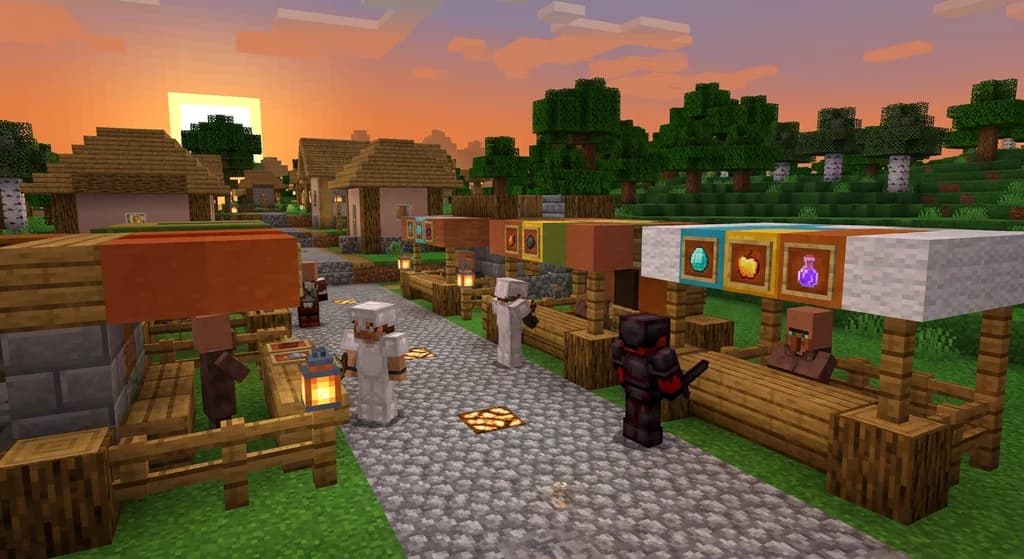
Key Takeaways
| Point | Details |
|---|---|
| Virtual Currency | Plugins like Vault and EssentialsX replace physical barter with streamlined digital cash systems. |
| Market Variety | Servers use five primary market types, ranging from infinite admin shops to competitive auction houses. |
| Passive Income | Setting up automated player chest shops allows you to earn money even while you are logged offline. |
| Smart Automation | Building high-efficiency resource farms is the most reliable way to secure consistent trading stock. |
| Balanced Play | Hybrid economies combine physical items and virtual currencies to keep long-term survival engaging. |
Table of Contents
- What is a Minecraft Economy Server?
- Why Economy Plugins Are Essential for Modern Servers
- The 5 Core Types of Minecraft SMP Markets
- How Do You Choose the Best Economy Type for Your Playstyle?
- Essential Tips for Dominating Minecraft Server Markets
- How to Put This Into Practice on Gaia Legends
- Recommended
Have you ever logged into a multiplayer Minecraft server, opened a chest of diamonds, and realized you have absolutely nothing to spend them on? In single-player, hoarding resources is the ultimate goal, but on multiplayer servers, wealth only truly comes alive when it moves. That is where economy servers step in. This guide to minecraft economy servers will teach you how virtual markets transform standard survival into a dynamic, player-driven strategy game.
Whether you want to build a massive commercial empire or just find a reliable way to buy rare materials, understanding how server economies function is key to your success. Let's break down how these virtual financial systems work, explore the five major market types you will encounter, and look at the plugins that make it all possible.
What is a Minecraft Economy Server?
A Minecraft economy server is a multiplayer world where players trade items, earn virtual currency, and build financial empires using structured market plugins.
At its core, a Minecraft economy server is any multiplayer server that introduces a standardized system of value. Instead of relying purely on vanilla bartering, these servers implement a unified currency—either virtual or physical—to facilitate trade. This allows players to assign exact prices to items, accumulate wealth, and buy goods even when the seller is offline.
A Minecraft economy server is a specialized multiplayer environment that uses server-side plugins to establish a virtual marketplace, allowing players to buy, sell, and trade blocks or services using a standardized currency. The Vault plugin remains the industry-standard API for linking economy systems, supporting dozens of different economy engines across Bukkit platforms (via CurseForge). By using commands like /balance and /pay, you can manage your funds instantly without needing to carry heavy blocks of gold or diamonds in your inventory. Learning best items to sell on Minecraft servers is the first step toward turning those digital numbers into real power.
Why Economy Plugins Are Essential for Modern Servers
Economy plugins prevent runaway inflation, automate tedious trading processes, and provide players with clear incentives to collaborate and build massive automated farms.
Without plugins, a server's economy is highly inefficient. Imagine having to wait online for hours just to trade ten iron ingots with another player. Plugins solve this by automating the transaction process. They allow you to set up shops that run 24/7, track market prices, and establish stable financial systems that survive even when the player base fluctuates.
Furthermore, vanilla Minecraft mechanics are not built for massive multiplayer trading. For example, a standard Minecraft hopper can transfer exactly 2.5 items per second, which limits the speed of automated trade collection systems (via Minecraft Wiki). By utilizing economy plugins, servers bypass physical transfer bottlenecks, allowing millions of virtual dollars to change hands instantly. This automation encourages players to build massive farms, knowing they can easily sell their surplus to the community. If you want to optimize your production, learning how to build a high-efficiency Minecraft trading hall is a fantastic way to acquire valuable enchanted books to sell on the market.
The 5 Core Types of Minecraft SMP Markets
Modern survival servers utilize five primary market structures—admin shops, player chest shops, auction houses, physical item barter, and hybrid digital-physical economies—to drive trade.
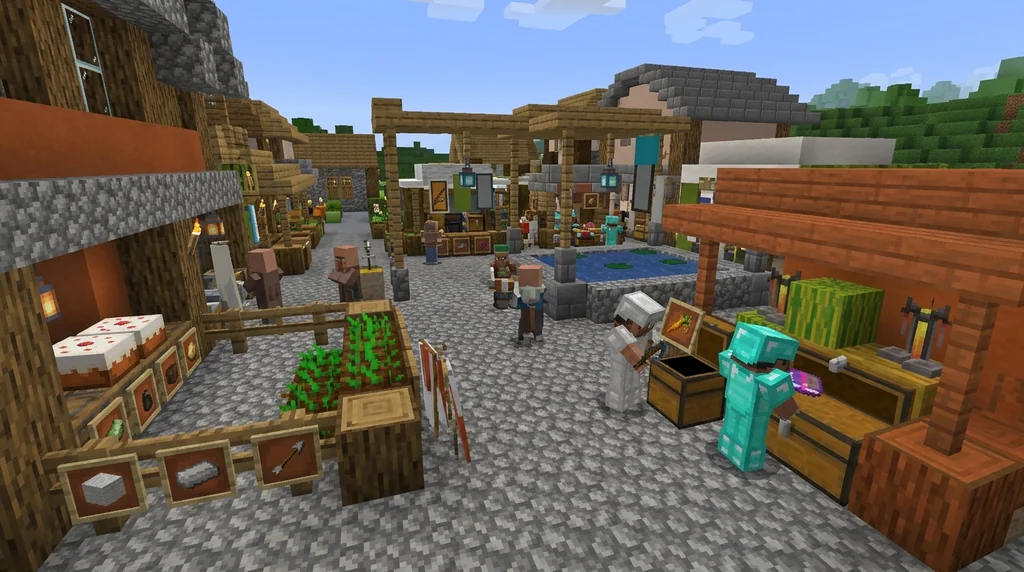
No two server economies are exactly alike. Depending on the server's design, you will encounter different market types that dictate how items are valued and traded.
1. Admin Shops (Server-to-Player)
Admin shops are static storefronts created by the server staff. They have infinite stock and fixed prices. Players can sell raw materials (like cobblestone or crops) to the server to generate money, or buy rare items (like spawner eggs or bedrock) that are otherwise unobtainable. While reliable, admin shops can cause massive inflation if the sell prices are set too high.
2. Player Chest Shops
Player chest shops are decentralized, player-owned shops built using signs and chests. By placing a sign on a chest, a player can configure it to automatically sell or buy specific items. A single double chest holds 54 slots of items, allowing a player chest shop to stock up to 3,456 block items before requiring a manual restock (via Minecraft Wiki). This is the ultimate way to set up passive income. If you want to get started, check out this guide on how to set up a profitable Minecraft chest shop to maximize your layout. You should also research the best items to sell in Minecraft player chest shops to target high-demand goods.
3. Global Auction Houses
The Auction House (often accessed via /ah) is a server-wide virtual catalog where players list items for sale. Other players can browse the catalog from anywhere in the world and purchase items instantly. This creates a high-velocity, highly competitive market where prices fluctuate rapidly based on supply and demand. Learning how to master the Minecraft auction house economy is crucial if you want to flip items for quick profits.
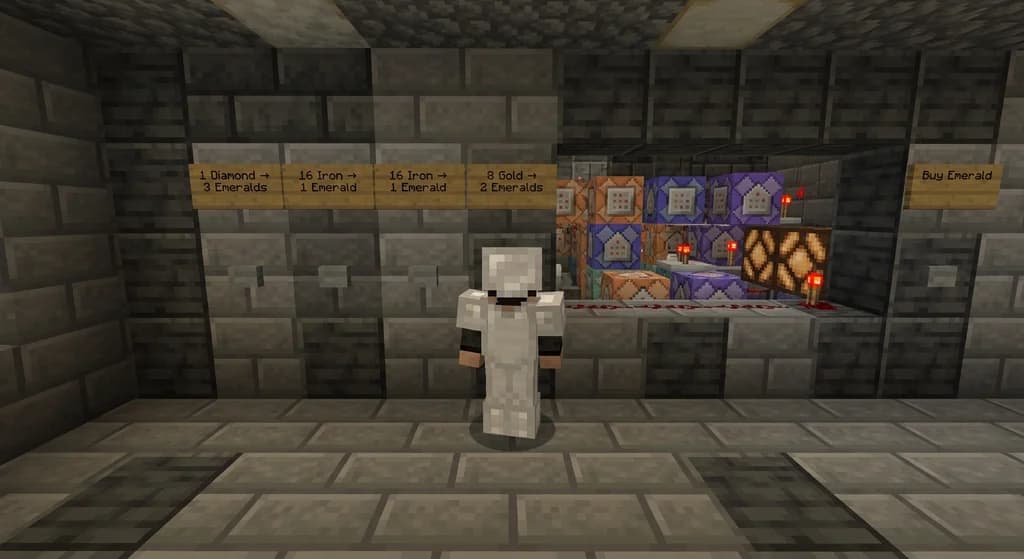
4. Pure Barter / Physical Economies
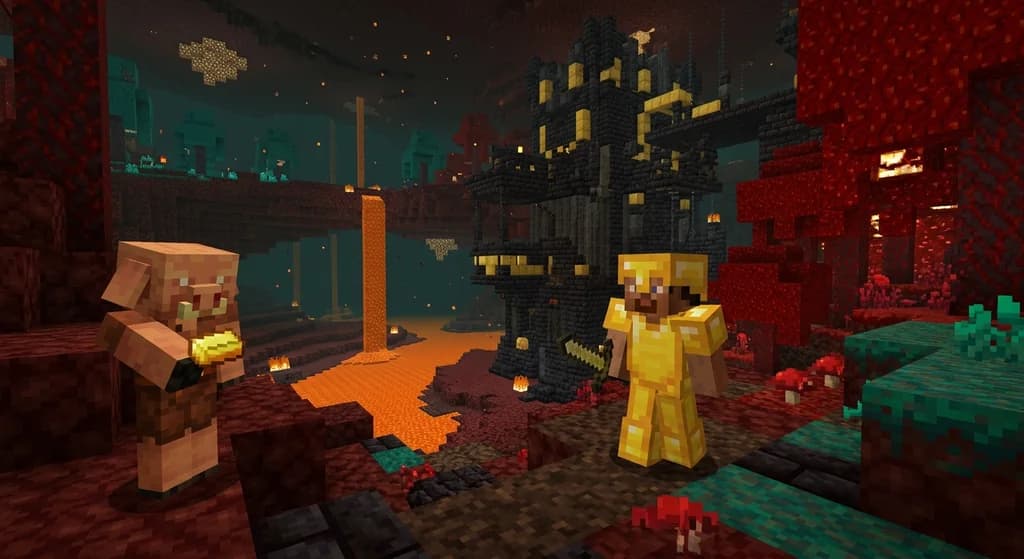
Some servers prefer a vanilla feel and reject virtual currency entirely. Instead, they use physical items—usually diamonds, emeralds, or gold ingots—as the standard medium of exchange. Players build physical shopping districts and trade face-to-face or via physical chest shops. While highly immersive, physical economies are limited by storage space and player availability. For instance, under default game rules, piglins have a 1.89% chance to barter a potion of fire resistance when given a gold ingot (via Minecraft Wiki), demonstrating how physical RNG elements can influence resource availability in barter-heavy worlds.
5. Hybrid Economies
Hybrid economies combine the best of both worlds. They might feature a virtual currency for everyday trades, but require physical items for high-tier purchases, or use a player-driven auction house alongside a limited admin shop to keep prices stable.
| Market Type | Currency Used | Transaction Speed | Setup Complexity | Best For |
|---|---|---|---|---|
| Admin Shop | Virtual | Instant | High (Staff only) | Resource sinks & price floors |
| Chest Shop | Virtual or Physical | Semi-Instant | Medium | Passive income & base shops |
| Auction House | Virtual | Instant | Low (Command-based) | High-speed item flipping |
| Barter Market | Physical (Diamonds/Gold) | Manual | Low | Immersive vanilla gameplay |
| Hybrid Market | Both | Instant to Manual | High | Balanced, long-term SMPs |
How Do You Choose the Best Economy Type for Your Playstyle?
Choosing the right economy depends on whether you prefer hands-off virtual trading, immersive physical bartering, or competitive real-time auction house flipping.
Your enjoyment of an SMP server often hinges on its economic style. If you love building massive, automated redstone farms and generating millions in passive income, you will thrive on servers with virtual currencies and global auction houses. These systems reward automation and scale.
On the other hand, if you prefer a slower, more community-focused experience, a physical barter economy might be your calling. Here, trading is a social event. You will visit player-built shopping malls, negotiate deals face-to-face, and use tools like the best Minecraft trading chart for optimized villager prices to manage your local trade routes. Keep in mind that Mojang's mechanics also heavily influence local trading; for example, the experimental trade rebalance distributes master-level enchantments across 7 distinct biomes to encourage exploration and regional trading (via Minecraft Wiki). This means your physical trading routes may require traveling across vast distances to secure the best deals.
Essential Tips for Dominating Minecraft Server Markets
To build a massive fortune, you must master supply and demand, locate high-traffic shopping districts, and automate your production of high-value resources.
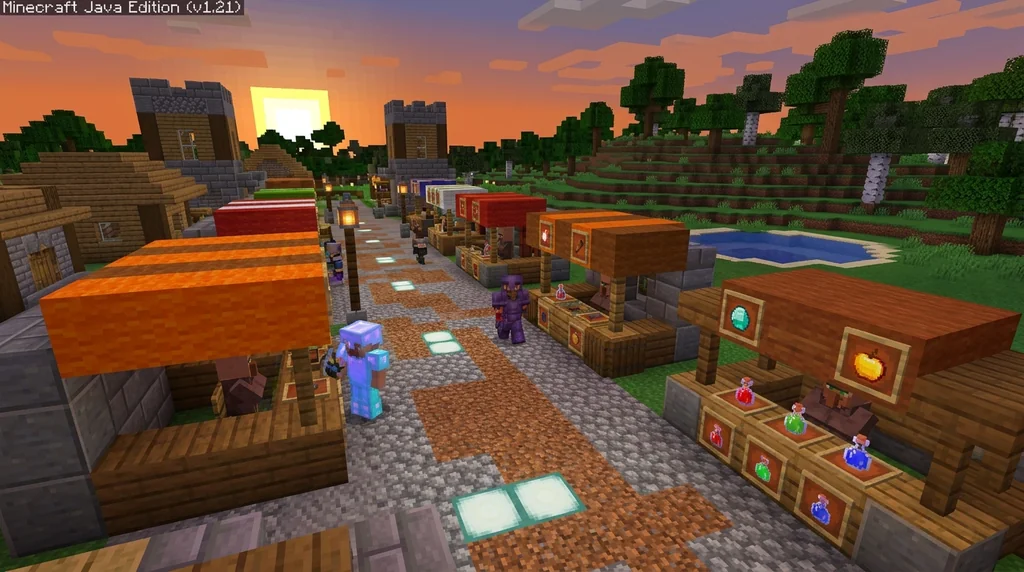
No matter which economy style you play, certain timeless economic principles will help you outsmart your competition and stack up wealth.
- Automate Everything: The players who control the automated farms control the market. Focus on building high-yield farms for iron, gunpowder, sugarcane, and gold.
- Location is King: If your server uses physical chest shops, secure a plot near the spawn point or the main warp hub. High foot traffic always leads to higher sales.
- Diversify Your Inventory: Do not rely on selling just one type of block. Keep your shop stocked with building materials, redstone components, and rare enchantments.
- Watch the Competition: Keep an eye on other players' prices. If someone is undercutting you, consider buying out their stock and relisting it at your higher price, or pivot to a different item entirely.
Warning: Watch out for market saturation! If every player builds an automated iron farm, iron prices will crash to zero. Always diversify your inventory to protect your wealth from sudden market crashes.
Pro Tip: Keep an eye on the server's peak hours. Listing high-demand items on the auction house right before the weekend crowd logs on maximizes visibility and sales.
How to Put This Into Practice on Gaia Legends
On Gaia Legends, we have designed a balanced, player-driven hybrid economy that caters to all playstyles. Our server features a robust virtual currency system, a global auction house, and beautiful player-managed shopping districts where you can set up your own customized chest shops. This setup gives you the freedom to trade your way, whether you are a casual farmer or a hardcore market flipper.
We actively monitor our market to prevent runaway inflation, ensuring that new players can always find a foothold and veterans always have something new to strive for. Gaia Legends is free to join, non-pay-to-win, and supports Java + Bedrock crossplay. Join at gaialegends.pro and start your legend today.
Conclusion
Mastering a Minecraft server economy requires understanding the market structure, automating your production, and trading smart with your fellow players.
To recap, here are the most important lessons to take with you on your economic journey:
- Identify the system: Determine whether your server uses an admin-led, player-driven, physical, or hybrid market.
- Leverage automation: Build efficient farms to keep your shops stocked without constant manual grinding.
- Trade strategically: Use tools like auction houses and chest shops to build passive income streams.
Now that you understand the mechanics of virtual trade, it is time to log in, set up your first shop, and start building your financial empire!
Recommended
- 7 Essential Mods for Immersive Minecraft MMO Gameplay 2026 | Gaia Legends
- How to Beat Minecraft Ocean Monuments: Elder Guardian Guide 2026 | Gaia Legends
- How to Find Every Minecraft Armor Trim: 2026 Location Guide | Gaia Legends
- How to Catch Fish Faster in Minecraft: 7 Expert Speed Tips 2026 | Gaia Legends
Ready to play? Join Gaia Legends today — no pay-to-win, Java + Bedrock crossplay.
- Java:
join.gaialegends.pro - Bedrock:
join.gaialegends.pro— Port19132
Further reading
These references were recorded with the article; specific claims have not been matched to source excerpts.
Frequently Asked Questions
Where can I find a complete guide to minecraft economy servers?
This guide to minecraft economy servers is your ultimate resource for understanding virtual currencies, auction houses, and shop setups. To get started, join a trusted economy SMP like Gaia Legends, gather basic resources, and use commands like `/ah` or `/balance` to explore the player-driven market.
What is the most popular Minecraft economy plugin?
The most popular Minecraft economy plugin is EssentialsX, which provides the core currency system, combined with Vault, which acts as a bridge between your balance and other gameplay plugins. Together, they allow players to use commands like `/balance` and `/pay` to manage their virtual funds seamlessly.
How do player chest shops work on Minecraft servers?
Player chest shops allow you to sell items automatically even when you are offline. By placing a sign on a chest and formatting it with your player name, the item quantity, the price, and the item ID, the server plugin automates transactions, transferring items to buyers and virtual money to your account.
What are the best items to sell on an economy SMP?
The best items to sell are high-demand resources that players need in large quantities but hate grinding for. This includes gunpowder for firework rockets, iron ingots for crafting, redstone components, quartz for building, and highly sought-after enchanted books like Mending and Unbreaking.
Can you play on Minecraft economy servers for free?
Yes, almost all reputable Minecraft economy servers are completely free to join. While some servers offer optional cosmetic ranks, high-quality SMPs like Gaia Legends are strictly non-pay-to-win, ensuring that every player has an equal opportunity to build an empire through hard work and smart trading.
What is the difference between a virtual and a physical economy?
A virtual economy uses digital currency managed by plugins, allowing instant transactions via commands. A physical economy relies on actual in-game items like diamonds or gold ingots stored in chests, requiring physical space and face-to-face trading, which offers a more traditional and immersive vanilla feel.
Related guides
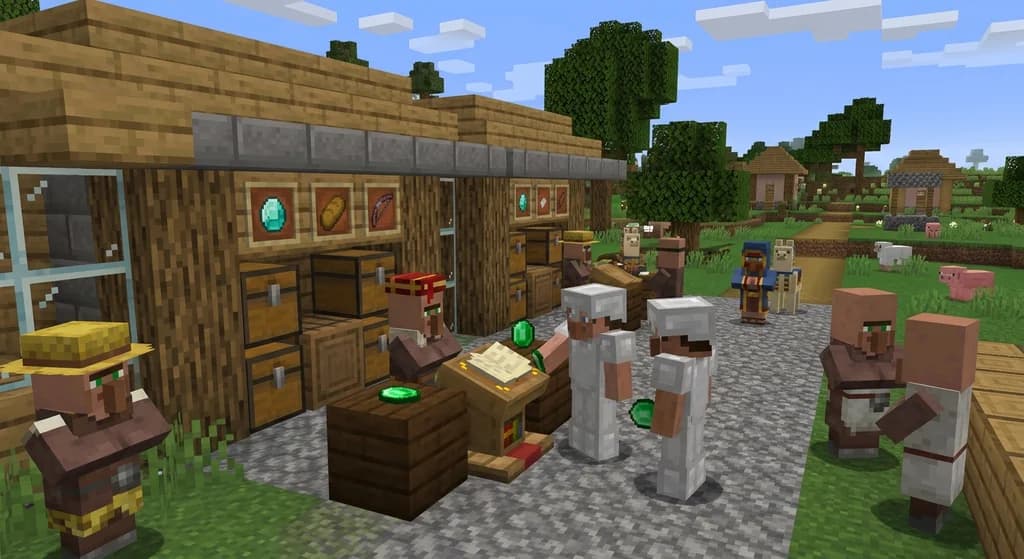
Minecraft Economy 101: How Supply and Demand Work on Player-Driven Servers
Learn how supply and demand shape Minecraft economies, from vanilla villager trading mechanics to player-driven server markets. Includes inflation control...
Piglin Bartering: Mechanics and Rewards
Learn the exact mechanics of piglin bartering in Minecraft Java and Bedrock. Includes cycle times, barter rewards, Soul Speed odds, and tips for efficient trading.
How to Build a Command Block Currency Exchange for Your Minecraft Server
Build a fully vanilla command block currency exchange for your Minecraft server. No plugins needed—just redstone and command blocks. Step-by-step guide...
How to Cure a Zombie Villager for Insane Trading Discounts in 2026
Master the art of curing zombie villagers for massive, permanent trading discounts in Minecraft 2026. Step-by-step guide, trading hall designs, and...
Have a question or another approach?
Compare notes with other readers. Include your edition and version when discussing mechanics.