7 Best Triadic Color Palettes for Unique Minecraft Builds (2026)
Filed under Minecraft Build Palette & Block Harmony · How we create content
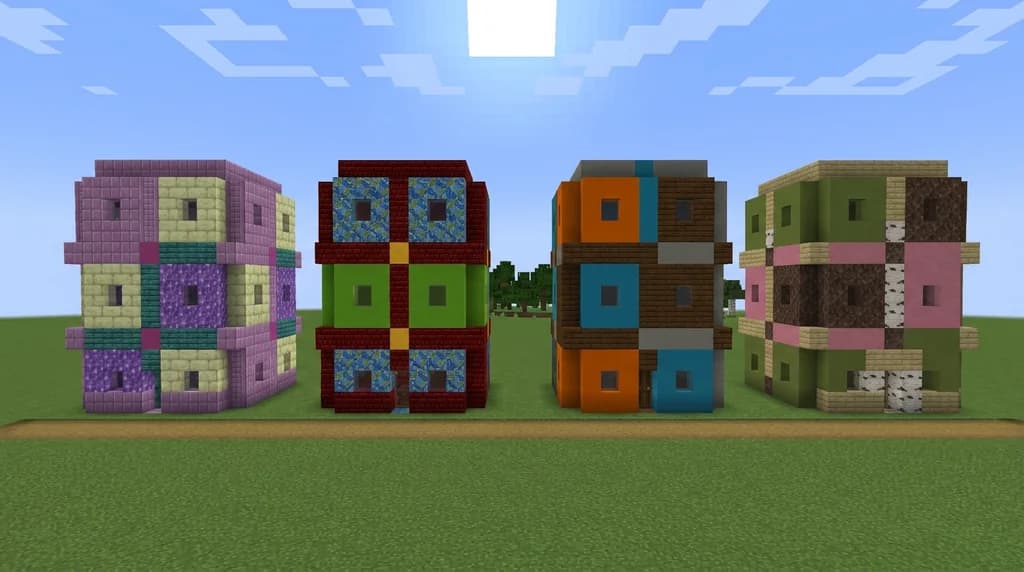
Key Takeaways
| Point | Details |
|---|---|
| Triadic harmony defined | A triadic palette uses three colors evenly spaced on the color wheel, producing vibrant contrast without visual chaos. |
| Start with one dominant block | Use your primary color on 60% of the build, secondary on 30%, and accent on 10% for balanced results. |
| Concrete and terracotta are your best friends | These two block families cover nearly every hue on the color wheel in Minecraft. |
| Glazed terracotta adds texture | Its patterned surface breaks up flat color fields and adds depth to large walls. |
| Test at scale | A palette that looks good in a 5×5 test wall may need adjustment when applied to a 50-block facade. |
| Gaia Legends competitions reward palette originality | Judges consistently score triadic builds higher for visual impact than monochrome entries. |
Table of Contents
- What Are Triadic Color Palettes in Minecraft?
- Why Triadic Palettes Work So Well for Minecraft Builds
- The 7 Best Triadic Color Palettes for Minecraft
- How to Apply a Triadic Palette to Any Build
- Triadic vs Other Color Schemes: Quick Comparison
- How to Put This Into Practice on Gaia Legends
- Conclusion
- Recommended
Most builders pick blocks by feel. That's fine for survival shacks — but if you want a build that stops people mid-scroll, you need a system. Triadic color palettes are that system. They're the secret behind the most eye-catching Minecraft builds you've seen on Reddit and YouTube, and they're easier to use than you think.
This guide breaks down the 7 best triadic color palettes for Minecraft builds in 2026, with exact block names, usage ratios, and tips for applying them at any scale.
What Are Triadic Color Palettes in Minecraft?
A triadic color palette is a set of three colors positioned at equal intervals (120° apart) on the color wheel, creating a naturally balanced yet high-contrast combination. In traditional art, the classic triadic set is red, yellow, and blue. In Minecraft, you translate those hues into block families.
Because Minecraft's palette is block-based rather than pixel-based, you're working with approximations of hue. Concrete, terracotta, glazed terracotta, and stained glass give you the widest color range. Organic blocks like Purpur, Warped Stem, and Crimson Planks add natural texture alongside their color contribution.
Note: Triadic schemes are inherently bold. If you want a calmer look, consider an analogous palette instead — those use neighboring colors for a softer feel.
Why Triadic Palettes Work So Well for Minecraft Builds
Minecraft's block grid is unforgiving. Flat walls of a single color look dull fast. Triadic palettes solve this by giving you three distinct hue zones to work with, so every face of a build has visual interest without becoming chaotic.
The key is proportion. Designers use the 60-30-10 rule: 60% dominant color, 30% secondary, 10% accent. Apply this to your block choices and your build will feel intentional rather than random.
According to the Minecraft Wiki, there are 16 concrete colors, 16 terracotta colors, and 16 glazed terracotta variants available in the base game — giving builders an enormous hue range to construct true triadic schemes without any mods. According to the Minecraft Wiki, the game includes 16 concrete powder and concrete color variants covering the full spectrum from white to black.
The 7 Best Triadic Color Palettes for Minecraft
1. Purple, Green, and Orange — The Fantasy Royale
- Dominant (60%): Purpur Block, Purpur Pillar
- Secondary (30%): Warped Planks, Mossy Cobblestone
- Accent (10%): Orange Terracotta, Acacia Planks
Best for: Fantasy castles, wizard towers, enchanted forests. The purple-green-orange triad hits the color wheel at near-perfect 120° intervals and reads as magical without being garish.
2. Red, Yellow, and Blue — The Classic Primary
- Dominant (60%): Red Nether Bricks, Crimson Planks
- Secondary (30%): Yellow Concrete, Honey Block
- Accent (10%): Blue Glazed Terracotta, Lapis Lazuli Block
Best for: Market stalls, festival builds, bold city districts. This is the most recognizable triadic set and the easiest to execute because the hues are far apart.
3. Cyan, Magenta, and Yellow — The Neon Futurist
- Dominant (60%): Cyan Concrete, Prismarine Bricks
- Secondary (30%): Magenta Glazed Terracotta, Pink Concrete
- Accent (10%): Yellow Concrete, Sea Lanterns
Best for: Cyberpunk cities, sci-fi labs, neon districts. Pair this with cyberpunk block palettes for a full neon-city aesthetic.
Pro Tip: Sea Lanterns as your yellow accent serve double duty — they light your build from within and add the third triadic hue simultaneously.
4. Orange, Green, and Violet — The Autumn Witch
- Dominant (60%): Orange Concrete, Terracotta
- Secondary (30%): Moss Block, Fern (as decoration)
- Accent (10%): Purple Concrete, Amethyst Block
Best for: Autumn cottages, witch huts, harvest festival builds. The warm-cool tension between orange and violet gives this palette drama.
5. Blue, Red, and Yellow — The Viking Hall
- Dominant (60%): Blue Terracotta, Packed Ice
- Secondary (30%): Red Terracotta, Bricks
- Accent (10%): Yellow Terracotta, Raw Gold Block
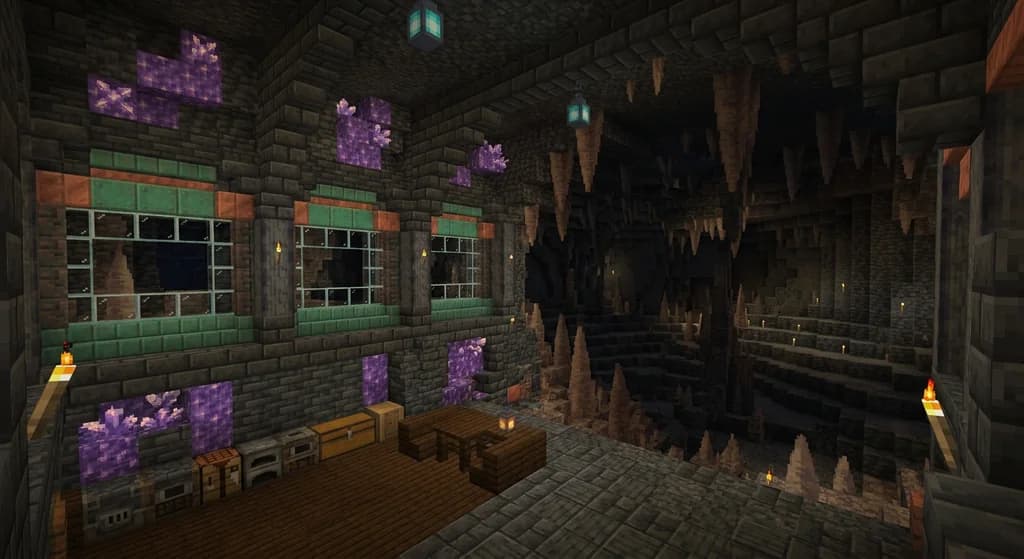
Best for: Nordic longhouses, underground throne rooms, cave bases. The terracotta versions of these hues are muted enough to feel ancient. This pairs beautifully with underground cave base palettes if you're building below ground.
6. Lime, Purple, and Orange — The Jungle Temple
- Dominant (60%): Lime Concrete, Slime Block
- Secondary (30%): Purpur Block, Amethyst Cluster
- Accent (10%): Orange Glazed Terracotta, Copper Block
Best for: Jungle ruins, alien biomes, overgrown temples. The lime-purple contrast is striking, and oxidized copper adds an aged patina that sells the "ancient ruin" story.
7. Teal, Coral, and Gold — The Ocean Palace
- Dominant (60%): Prismarine, Dark Prismarine
- Secondary (30%): Pink Terracotta, Coral Blocks
- Accent (10%): Gold Block, Raw Gold Block
Best for: Underwater palaces, beach resorts, tropical builds. Coral blocks are only placeable underwater without dying, so plan your build location carefully.
Warning: Coral blocks outside of water will die and lose their color within seconds. Always build coral-accent structures in or directly adjacent to water source blocks.
How to Apply a Triadic Palette to Any Build
The 60-30-10 Rule in Practice
- Choose your dominant block family — this covers walls, floors, and the majority of your roof.
- Pick your secondary family — use it for trim, window surrounds, and secondary roof layers.
- Reserve your accent — doors, banners, lanterns, and decorative details only.
Test Before You Commit
Build a 10×10 sample wall using your three chosen block types at the 60-30-10 ratio. Step back 50 blocks and evaluate. Adjust if any color feels too loud or too quiet before scaling up.
Using a Minecraft palette generator can speed up this testing phase significantly — you can preview ratios digitally before placing a single block in-game.
Texture Matters as Much as Color
Two blocks can share the same hue but read completely differently based on texture. Glazed terracotta has a busy pattern that breaks up flat color fields. Smooth stone and concrete read as clean and modern. Cobblestone and mossy variants feel organic. Mix textures within a single hue to add depth without adding more colors.
Triadic vs Other Color Schemes: Quick Comparison
| Scheme | Colors Used | Visual Feel | Difficulty |
|---|---|---|---|
| Triadic | 3 (120° apart) | Bold, vibrant, balanced | Medium |
| Analogous | 3 (adjacent) | Calm, cohesive, natural | Easy |
| Complementary | 2 (opposite) | High contrast, dramatic | Easy |
| Tetradic | 4 (90° apart) | Complex, rich | Hard |
If you're new to color theory in Minecraft, start with complementary pairs — check out how to use complementary colors in Minecraft builds before stepping up to triadic schemes.
How to Put This Into Practice on Gaia Legends
Gaia Legends runs monthly creative building competitions where palette originality is a scored criterion — and triadic builds consistently earn higher visual impact scores than single-tone entries. The competition plot system gives you a dedicated flat canvas to test these palettes at full scale without interference from terrain.
The server's block palette showcase channel lets you share 10×10 sample walls before committing to a full build, so you can get community feedback on your triadic combo early. Players on Gaia have used the Jungle Temple palette (Palette #6 above) to win back-to-back monthly competitions.
Gaia Legends is free to join, non-pay-to-win, and supports Java + Bedrock crossplay. Whether you're refining your first triadic build or going for a competition podium finish, the community and tools are there to help.
Join at gaialegends.pro and start your legend today.
Conclusion
Triadic color palettes give your Minecraft builds the visual punch that monochrome and random-block approaches simply can't match. Here are the three things to take away:
- Use the 60-30-10 rule — one dominant color, one secondary, one accent. This single habit transforms amateur builds into polished ones.
- Concrete and terracotta are your palette anchors — they cover the full color wheel and blend well with organic blocks for texture.
- Test at scale before committing — a 10×10 sample wall saves hours of rebuilding later.
Pick one palette from this list, build your test wall today, and see the difference for yourself.
Recommended
- Top 4 topg.org Alternatives 2026 | Gaia Legends
- How to Climb MCSR Ranked ELO: 2026 Competitive Strategy Guide | Gaia Legends
- 7 Best Forge Minecraft Mods for Vanilla+ Gameplay in 2026 | Gaia Legends
- How to Unlock Rare Minecraft Items via Server Ranks (2026) | Gaia Legends
Ready to play? Join Gaia Legends today — no pay-to-win, Java + Bedrock crossplay.
- Java:
join.gaialegends.pro - Bedrock:
join.gaialegends.pro— Port19132
Further reading
These references were recorded with the article; specific claims have not been matched to source excerpts.
Frequently Asked Questions
What are triadic color palettes in Minecraft and how do I use them?
Triadic color palettes in Minecraft are sets of three block colors spaced equally on the color wheel — about 120° apart — creating bold, balanced contrast. To use them, pick three block families (like Purpur, Warped Planks, and Orange Terracotta), then apply the 60-30-10 rule: 60% dominant, 30% secondary, 10% accent. Test on a 10×10 sample wall before building at full scale.
Which Minecraft blocks have the best color range for triadic schemes?
Concrete and terracotta are the best choices — both come in all 16 dye colors, covering the full color wheel. Glazed terracotta adds pattern and texture alongside color. For organic builds, Purpur, Warped Stem, Crimson Planks, and Moss Block provide natural-feeling hues that slot into triadic combos without looking artificial.
How is a triadic color scheme different from a complementary one in Minecraft?
A complementary scheme uses two colors directly opposite on the color wheel for maximum contrast — like blue and orange. A triadic scheme uses three colors equally spaced, giving you more variety and a livelier build. Complementary is simpler and great for accents; triadic takes more planning but produces more visually complex and rewarding results.
What is the 60-30-10 rule for Minecraft building?
The 60-30-10 rule is a color proportion guideline: use your dominant block color on 60% of the build surface, your secondary color on 30%, and your accent color on just 10%. This prevents any single color from overwhelming the build and ensures all three triadic hues read clearly without competing for attention.
Can I use triadic palettes in survival Minecraft or only in creative mode?
You can absolutely use triadic palettes in survival. Concrete requires a crafting step (concrete powder plus water), and some blocks like Purpur need End access. Plan your palette around what you can realistically farm. Terracotta is the easiest triadic-ready material — it generates naturally in badlands biomes and can be smelted from clay.
What are some beginner-friendly triadic block combinations for Minecraft?
The easiest starting point is the Classic Primary triad: Red Nether Bricks (dominant), Yellow Concrete (secondary), and Blue Glazed Terracotta (accent). All three are straightforward to obtain, the hues are far apart so mistakes are forgiving, and the combination works for almost any build style from market stalls to city walls.
Related guides
7 Best Triadic Block Palettes for Vibrant Minecraft Builds 2026
Discover the 7 best triadic block palettes for Minecraft builds in 2026. Master triadic color harmony with vibrant block combos, pro tips, and build...
7 Best Complementary Block Palettes for Minecraft Builds (2026)
Discover the 7 best complementary color palettes for Minecraft builds in 2026. Master high-contrast block combos like orange & blue for standout survival...
How to Use Natural Palettes: A 2026 Minecraft Build Guide
Master natural Minecraft build palettes in 2026. Learn earthy block combinations, color harmony theory, and pro tips for stunning wilderness retreats.
7 Best Underground Block Palettes for Minecraft Cave Bases (2026)
Discover the 7 best underground block palettes for Minecraft cave bases in 2026. Master deepslate combos, cave base block harmony, and subterranean build...
Have a question or another approach?
Compare notes with other readers. Include your edition and version when discussing mechanics.