7 Best Underground Block Palettes for Minecraft Cave Bases (2026)
Filed under Minecraft Build Palette & Block Harmony · How we create content
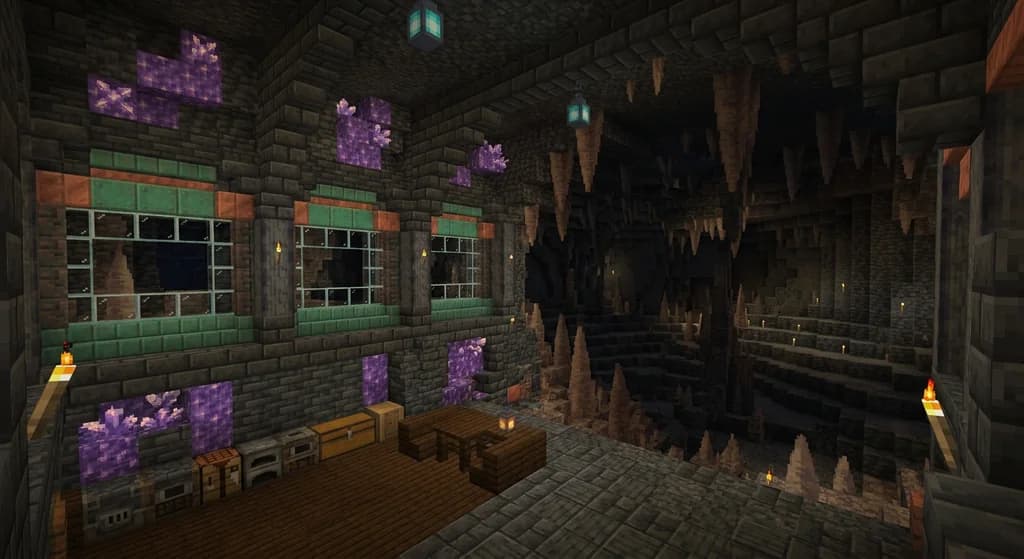
Key Takeaways
| Point | Details |
|---|---|
| Three-block rule | Every strong cave palette uses a base, a mid-tone, and an accent block — never fewer than three distinct types. |
| Deepslate dominates | Deepslate bricks, cobbled deepslate, and deepslate tiles are the most versatile underground base blocks in the game. |
| Lighting is a palette element | Amethyst clusters, sea lanterns, and shroomlights count as accent blocks AND solve your cave lighting problem simultaneously. |
| Tuff is underrated | The 1.21 Tuff block family (tuff bricks, chiseled tuff) adds a warm-grey mid-tone that pairs with almost every dark cave palette. |
| Avoid monotone builds | Using only one block type underground creates a dungeon feel — add slabs, stairs, and slab ceilings to break up flat surfaces. |
| Crossplay-friendly showcase | Gaia Legends supports Java + Bedrock crossplay, so your cave build can be seen and voted on by the entire community. |
Table of Contents
- What Are Underground Block Palettes?
- Why Cave Base Block Harmony Matters
- Best 7 Underground Block Palettes for Cave Bases
- How to Choose the Right Palette for Your Cave
- Tips for Perfecting Your Underground Build
- How to Put This Into Practice on Gaia Legends
- Conclusion
- Frequently Asked Questions
- Recommended
Most cave bases look like a hole with a bed in it. Yours doesn't have to. The players who build genuinely jaw-dropping underground bases all share one secret: they treat the cave itself as a canvas and choose their block palette before they place a single stone. If you've been struggling with minecraft underground build ideas that feel flat or monotone, this guide gives you seven ready-to-use palettes — each tested for visual depth, lighting synergy, and block availability in survival mode.
What Are Underground Block Palettes?
A Minecraft underground block palette is a curated set of two to five block types chosen to work together visually inside a cave or subterranean build. Unlike surface builds where natural light and biome colors do half the work, underground spaces rely entirely on your block choices and artificial lighting to create atmosphere. A well-chosen palette controls contrast, warmth, and texture all at once.
The best palettes follow a simple three-layer structure:
- Base block — covers 60–70% of walls and floors (e.g., deepslate bricks)
- Mid-tone block — covers 20–30% for contrast and detail (e.g., tuff bricks)
- Accent block — covers 5–10% for focal points and lighting (e.g., amethyst clusters)
Stick to this ratio and your cave will look intentional, not chaotic.
Why Cave Base Block Harmony Matters
Cave base block harmony is the principle that every block in your underground build should feel like it belongs to the same visual family — sharing a similar hue range, value (light vs. dark), or texture grain. Without harmony, a cave base reads as random rubble. With it, the same space feels like an ancient ruin, a crystal sanctum, or a high-tech bunker.
The introduction of the Tuff block family in Java Edition 1.21 massively expanded underground palette options. Tuff bricks, chiseled tuff, and tuff brick slabs give builders a warm-grey mid-tone that was previously missing from the underground block set, making it far easier to build harmonious cave palettes without venturing to the Nether.
Note: All seven palettes below are fully obtainable in survival mode. No creative-only blocks are listed.
Best 7 Underground Block Palettes for Cave Bases
Here's a quick reference table before we dig into each palette:
| Palette | Base Block | Mid-Tone | Accent | Vibe |
|---|---|---|---|---|
| 1. Crystal Sanctum | Deepslate Bricks | Polished Deepslate | Amethyst Cluster | Mystical |
| 2. Tuff & Copper Foundry | Tuff Bricks | Deepslate Tiles | Oxidized Copper | Industrial |
| 3. Nether Fortress Annex | Blackstone Bricks | Nether Bricks | Magma Block | Dark & Ominous |
| 4. Ancient Ruin | Cobbled Deepslate | Mossy Cobblestone | Sculk Vein | Abandoned |
| 5. Frozen Vault | Packed Ice | Deepslate Bricks | Blue Ice | Arctic |
| 6. Mushroom Grotto | Dripstone Block | Mud Bricks | Shroomlight | Organic |
| 7. Gilded Depths | Polished Blackstone | Gilded Blackstone | Gold Block | Opulent |
Palette 1: Crystal Sanctum
Blocks: Deepslate Bricks · Polished Deepslate · Amethyst Clusters · Calcite
This is the most popular underground palette in 2026 for good reason. Deepslate bricks provide a dark, rough-hewn base that reads as ancient and solid. Polished deepslate on floors and ceilings adds a sleek contrast. Then amethyst clusters — placed in wall niches and ceiling geodes — do double duty: they glow faintly (light level 5), solving your ambient lighting, and they add a gorgeous purple accent that no other block replicates.
Calcite works as a trim block around windows and archways, lightening the palette just enough to prevent it from feeling oppressive.
Palette 2: Tuff & Copper Foundry
Blocks: Tuff Bricks · Deepslate Tiles · Oxidized Copper · Chiseled Tuff
If you want an industrial, steampunk-adjacent cave base, this palette delivers. Tuff bricks form a warm-grey shell, deepslate tiles add a darker geometric floor pattern, and oxidized copper panels on the walls give a weathered, factory-aged feel. Chiseled tuff works perfectly as decorative column caps.
Pair this with lanterns and chains hanging from the ceiling — they fit the industrial theme and provide the warm-orange light that contrasts beautifully with the cool grey-green copper.
Pro Tip: Stagger oxidized copper and regular copper blocks in a checkerboard strip along your walls to simulate uneven weathering. It looks far more realistic than a flat oxidized surface.
Palette 3: Nether Fortress Annex
Blocks: Blackstone Bricks · Nether Bricks · Magma Block · Crimson Stem
This palette works best when your cave base connects to a Nether portal room or acts as a villain's lair. Blackstone bricks are the darkest structural block in the game, and pairing them with nether bricks creates a subtle texture shift that keeps the walls interesting. Magma blocks embedded in the floor (with a non-flammable block beneath) glow orange-red and create a lava-pit aesthetic without the danger.
Warning: Magma blocks deal 1 damage per second to players walking on them without Fire Resistance. Place carpets, trapdoors, or slabs on top if you want the glow without the hazard.
Palette 4: Ancient Ruin
Blocks: Cobbled Deepslate · Mossy Cobblestone · Sculk Vein · Deepslate Brick Stairs
The Ancient Ruin palette leans into the lore of the deep dark. Cobbled deepslate forms crumbling walls, mossy cobblestone adds organic decay, and sculk veins creeping across surfaces sell the abandoned-for-centuries feeling. Use deepslate brick stairs as broken archways and partial roofing.
This palette pairs naturally with candles (in place of torches) for a dim, eerie atmosphere. It's the most lore-rich option for roleplay servers.
Palette 5: Frozen Vault
Blocks: Packed Ice · Deepslate Bricks · Blue Ice · Dripstone Block
A cold-storage or arctic-themed underground base uses packed ice as the primary wall block — it's non-slippery unlike blue ice, so it's actually livable. Deepslate bricks frame doorways and support columns, grounding the icy palette with dark contrast. Blue ice panels on the floor create a frozen-lake illusion.
For lighting, sea lanterns are the only correct choice here — their cool white light matches the palette perfectly. If you enjoy snowy and icy aesthetics above ground too, check out our guide on 7 Best Cool-Tone Palettes for Minecraft Snowy Biome Builds (2026) for complementary surface palette ideas.
Palette 6: Mushroom Grotto
Blocks: Dripstone Block · Mud Bricks · Shroomlight · Brown Mushroom Block
The Mushroom Grotto is the most organic-feeling cave palette on this list. Dripstone block forms rough, cave-like walls with natural texture. Mud bricks add a warm-brown earthen floor. Shroomlights embedded in ceiling clusters act as the primary light source — they emit a full light level 15 and look like naturally growing fungi.
Brown mushroom blocks scattered across the ceiling complete the illusion of a living underground ecosystem. This palette has strong visual overlap with swamp aesthetics — if you enjoy that direction, our 7 Best Mangrove and Mud Block Palettes for Swamp Bases (2026) guide covers complementary above-ground styles.
Palette 7: Gilded Depths
Blocks: Polished Blackstone · Gilded Blackstone · Gold Block · Polished Blackstone Bricks
This is your opulent, treasure-vault palette. Polished blackstone is one of the smoothest dark blocks in the game, and gilded blackstone — with its embedded gold flecks — creates a naturally glittering accent when scattered through walls. Gold block pillars and trim elevate the whole build into royalty territory.
For a similar bold-color approach above ground, the 7 Best Triadic Block Palettes: A Minecraft Build Tutorial (2026) guide shows how to push contrast even further using three-color harmony.
How to Choose the Right Palette for Your Cave
Not every palette fits every cave. Use these questions to narrow it down fast:
- What's your cave's purpose? Storage and utility → Tuff & Copper Foundry. Living space → Crystal Sanctum. Lore/roleplay → Ancient Ruin.
- How big is your cave? Large caverns need high-contrast palettes (dark base, bright accent). Small rooms work better with mid-tone bases to avoid feeling cramped.
- What biome are you in? Match or contrast deliberately. A frozen vault in a lush caves biome creates fun cognitive dissonance.
If you want algorithmic help picking complementary blocks, the How to Use a Minecraft Palette Generator for Block Harmony (2026) guide walks you through digital tools that suggest block combinations based on color theory.
Tips for Perfecting Your Underground Build
Break Up Flat Surfaces
Never leave a wall as a single flat plane. Use slabs, stairs, and trapdoors to add depth. Even a 1-block-deep alcove every 5 blocks transforms a flat wall into something architectural.
Light as a Design Element
Every light source has a color temperature. Torches are warm orange. Sea lanterns are cool white. Shroomlights are warm yellow. Amethyst clusters emit a dim purple-tinted glow. Choose your light source as part of the palette, not as an afterthought.
Use Variation Within Your Base Block
Instead of pure deepslate bricks everywhere, mix in cracked deepslate bricks and deepslate brick slabs at a roughly 80/20 ratio. This mimics natural wear and prevents the "tiled bathroom" look that kills underground builds.
Pro Tip: Place your base block, mid-tone, and accent blocks side-by-side in a creative test world before committing in survival. What looks good in the inventory often clashes at scale.
For inspiration on how palette theory applies across completely different biomes and build types, the How to Build Desert Masterpieces: 2026 Block Harmony Guide is a great contrast study — warm desert palettes use the same three-layer structure but in an entirely different value range.
How to Put This Into Practice on Gaia Legends
Gaia Legends is the perfect place to test these cave palettes with real community feedback. The server's build gallery lets you submit your underground base for peer voting — you'll know within 48 hours which palette elements are landing and which need work. Players regularly leave specific block-level feedback, not just thumbs up or down.
Beyond the gallery, Gaia Legends features survival-mode cave systems that are intentionally left undeveloped, giving you a blank canvas to claim and build in without clearing terrain manually. The server's active Discord build channel hosts weekly underground build challenges with themed palette restrictions — a great way to push your creativity.
Gaia Legends is free to join, non-pay-to-win, and supports Java + Bedrock crossplay, so your cave build can reach the entire community regardless of platform.
Join at gaialegends.pro and start your legend today.
Conclusion
Building a great underground base comes down to three decisions made before you place a single block:
- Choose a palette with a clear base, mid-tone, and accent block
- Pick lighting that belongs to the palette — it's a design element, not an afterthought
- Break up flat surfaces with slabs, stairs, and intentional variation within your base block
The seven palettes above give you a starting point for every mood and playstyle. Pick one, gather the materials in survival, and commit to it fully. Half-finished palette experiments are the #1 reason cave bases look unpolished. Start small — one room, one palette — then expand outward. Your cave will look intentional, atmospheric, and genuinely impressive.
Ready to play? Join Gaia Legends today — no pay-to-win, Java + Bedrock crossplay.
- Java:
join.gaialegends.pro - Bedrock:
join.gaialegends.pro— Port19132
Further reading
These references were recorded with the article; specific claims have not been matched to source excerpts.
Frequently Asked Questions
What are the best minecraft underground build ideas for survival mode in 2026?
The best minecraft underground build ideas for survival mode in 2026 center on themed block palettes: the Crystal Sanctum (deepslate bricks + amethyst clusters), the Tuff & Copper Foundry (tuff bricks + oxidized copper), and the Ancient Ruin (cobbled deepslate + sculk veins) are all fully obtainable in survival. Choose a base block, a mid-tone, and a glowing accent block, then use slabs and stairs to add architectural depth to your walls and ceilings.
What blocks work best for cave base block harmony in Minecraft?
Cave base block harmony works best when you pair deepslate variants (deepslate bricks, cobbled deepslate, polished deepslate) with a warm-grey mid-tone like tuff bricks, then add a glowing accent such as amethyst clusters, shroomlights, or sea lanterns. The 1.21 Tuff block family — including tuff bricks and chiseled tuff — dramatically expanded underground palette options by providing a warm-grey mid-tone previously missing from the underground block set.
How do I use deepslate block combinations without my cave base looking too dark?
Balance deepslate's dark value by pairing it with lighter mid-tone blocks like calcite, tuff bricks, or polished deepslate, which reflect more light. Use high-output light sources — sea lanterns (light level 15) or shroomlights (light level 15) — rather than torches alone. Placing light sources inside wall alcoves or ceiling clusters distributes light more evenly and prevents the flat, dungeon-like darkness that makes all-deepslate builds feel oppressive.
What is the best lighting block for an underground Minecraft base?
The best lighting block depends on your palette's color temperature. Sea lanterns emit cool white light (level 15) and suit frozen or crystal palettes. Shroomlights emit warm yellow light (level 15) and suit organic or mushroom grottos. Amethyst clusters emit dim purple-tinted light (level 5) and work as ambient accent lighting in mystical builds. Lanterns and soul lanterns add warm orange or blue-teal light for industrial and haunted aesthetics respectively.
Are tuff bricks good for underground Minecraft builds?
Yes — tuff bricks introduced in Java Edition 1.21 are excellent for underground builds. They provide a warm-grey mid-tone that pairs naturally with deepslate's cool dark grey, creating contrast without clashing. Chiseled tuff adds decorative detail for column caps and wall panels. Because tuff generates naturally in underground blobs, it's also easy to farm in survival, making it one of the most accessible mid-tone blocks for cave base construction.
How many block types should I use in a Minecraft cave base palette?
Three to five block types is the sweet spot for a Minecraft cave base palette. Use one base block (60–70% of surfaces), one mid-tone block (20–30%), and one to two accent blocks (5–10% combined). Fewer than three types creates a monotone dungeon feel. More than five types makes the build look chaotic and unplanned. Within each category, you can mix variants — for example, deepslate bricks, cracked deepslate bricks, and deepslate brick slabs all count as one 'base block' family.
Related guides
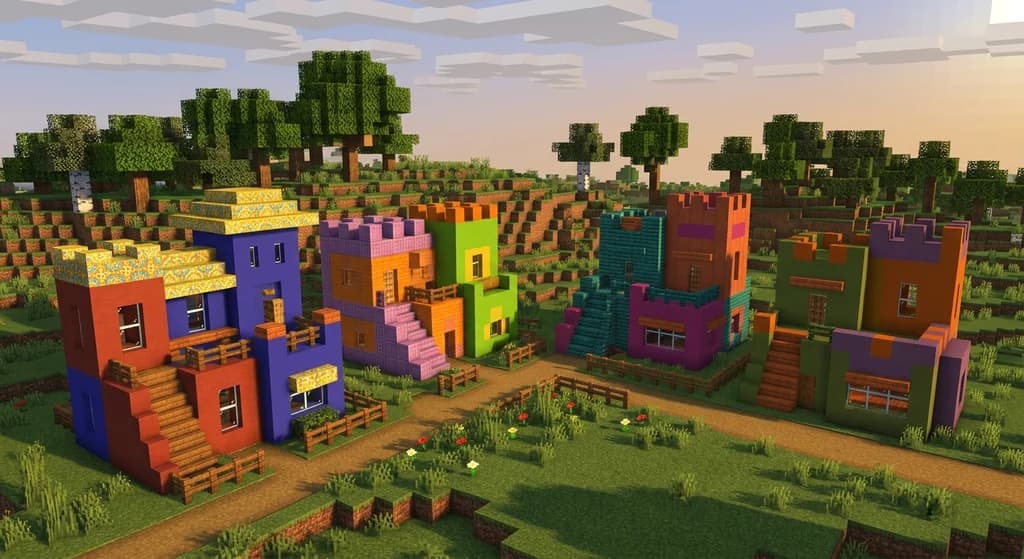
7 Best Triadic Color Palettes for Vibrant Minecraft Builds 2026
Discover the 7 best triadic color palettes for Minecraft builds in 2026. Master triadic color harmony with vibrant block combos, pro tips, and design rules.
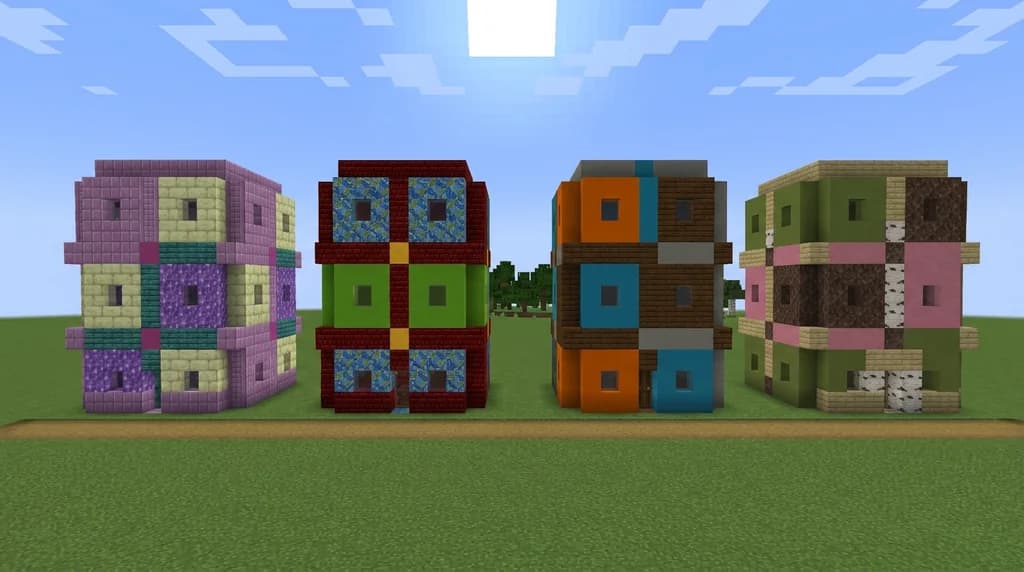
7 Best Triadic Color Palettes for Unique Minecraft Builds (2026)
Discover the 7 best triadic color palettes for Minecraft builds in 2026. Master block harmony with vibrant triadic combos that make your builds unforgettable.
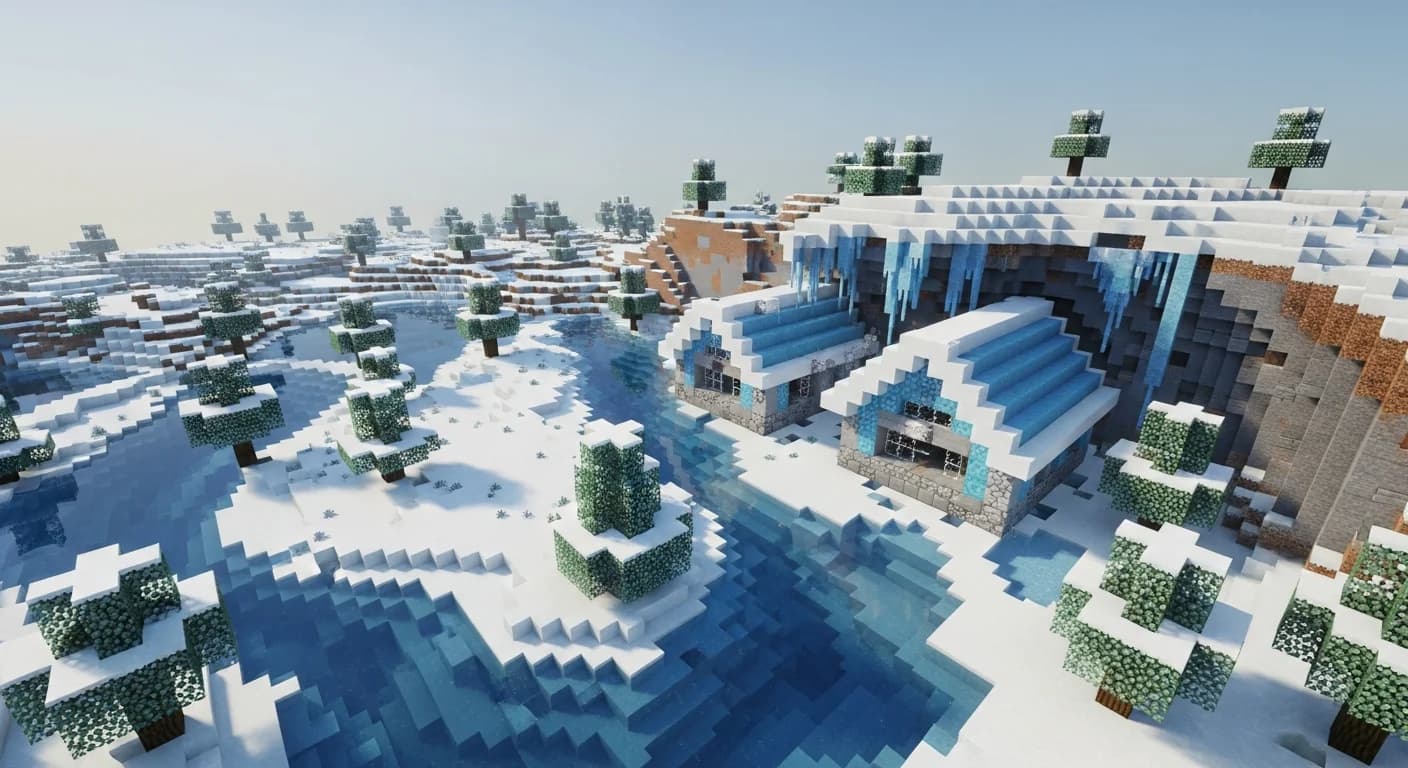
7 Best Cool-Tone Palettes for Minecraft Snowy Biome Builds (2026)
Discover 7 stunning cool-tone palettes for Minecraft snowy biome builds. Master blue, white & icy block combos with packed ice, spruce, and deepslate in 2026.
Froglight: The Brightest Light Block in Minecraft
Discover why the froglight is Minecraft's brightest light block. Learn how to get all three froglight colors, their unique melting properties, and the best ways to use them in your builds.
Have a question or another approach?
Compare notes with other readers. Include your edition and version when discussing mechanics.