7 Best Mangrove and Mud Block Palettes for Swamp Bases (2026)
Filed under Minecraft Build Palette & Block Harmony · How we create content
Minecraft version varies by section · Updated 2026-08-16
Key Takeaways
- Mangrove wood's reddish-brown hue sits in the warm spectrum, so it pairs best with cool-neutral blocks like mud bricks, mossy cobblestone, and deepslate.
- Mud bricks are crafted from packed mud (mud + wheat), giving you a renewable, stackable texture block that complements mangrove perfectly.
- Analogous color harmony — choosing blocks within the same warm-to-neutral range — is the fastest way to make a swamp build look cohesive.
- Mangrove roots and propagules act as free organic detail blocks that break up flat walls without any extra effort.
- A single accent block (oxidized copper, terracotta, or soul sand) adds visual interest without clashing with the warm-brown base palette.
- All seven palettes in this guide are fully survival-obtainable and work on Java and Bedrock editions.
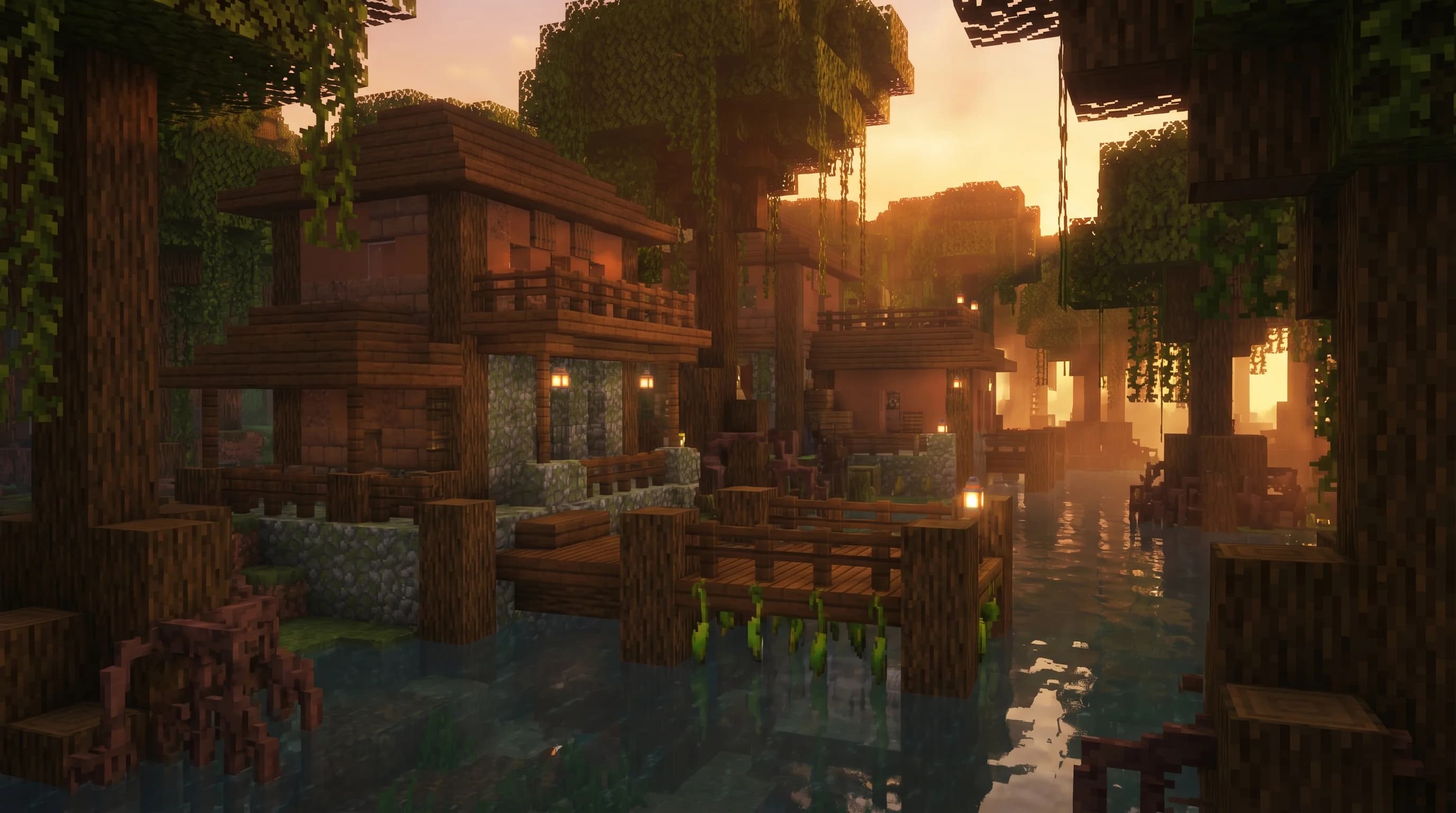
Most builders treat the mangrove swamp as a place to pass through, not a place to build. That's a mistake. The blocks you find there — deep-red mangrove wood, chalky mud bricks, tangled roots — form one of the richest mangrove palettes in the entire game. Once you understand how to layer them, your swamp base will look like it grew there naturally.
This guide breaks down seven specific palettes, explains the color theory behind each one, and tells you exactly which blocks to combine. No guesswork, no "just experiment" advice.
What Are Mangrove Block Palettes and Why Do They Work?
A mangrove block palette is a curated set of Minecraft blocks centered on mangrove wood and its biome-native companions — mud, mud bricks, packed mud, mangrove roots, and mangrove leaves — arranged to create visual harmony in a build.
Mangrove wood has a distinctive reddish-brown hue that sits firmly in the warm spectrum. That warmth is your anchor. Every palette below uses it as the primary block and builds outward with principles from color harmony theory for houses to build in Minecraft.
Why Mud Bricks Are the Perfect Partner
Mud bricks are crafted by converting packed mud (mud + wheat in a recipe) and are fully renewable. Their pale, chalky tan color acts as a natural contrast to mangrove's deep red-brown — light against dark, smooth against grainy. According to the Minecraft Wiki, mud bricks generate naturally only ruins structures, making player-crafted mud brick walls feel intentional and rare.
Note: Mud and packed mud are different blocks. Only packed mud (mud + wheat) can be crafted into mud bricks. Plain mud cannot.
For large builds, plan a compact wheat farm near the same site — each packed mud needs a full piece of wheat, so it becomes the key renewable material to stockpile.
Best 7 Mangrove Block Palettes for Swamp Bases
Here are seven proven palettes, ordered from simplest to most complex. Each one lists a primary block, secondary block, accent, and detail layer.
Palette 1 — Classic Swamp Cottage
The most approachable starting point. Warm, earthy, and readable from a distance.
- Primary: Mangrove planks + mangrove log
- Secondary: Mud bricks
- Accent: Mossy cobblestone
- Detail: Mangrove roots, hanging propagules
Palette 2 — Deepslate Contrast Cabin
Add drama by introducing a dark, cool-toned base.
- Primary: Mangrove planks
- Secondary: Deepslate bricks + deepslate tiles
- Accent: Mud bricks (trim only)
- Detail: Mangrove roots, iron bars
The dark gray of deepslate bricks creates a complementary temperature contrast against mangrove's warmth. Use deepslate for the foundation and lower walls, mangrove for the upper structure. The result reads as a cabin built into the swamp floor — grounded and intentional.
Pro Tip: Mix deepslate bricks and deepslate tiles on the same wall face. The subtle texture variation breaks up monotony without introducing a new color.
3 — Oxidized Copper Wetlands
Copper's blue-green oxidation is the single best accent for mangrove builds.
- Primary: Mangrove log (stripped and unstripped mixed)
- Secondary: Mud bricks
- Accent: Oxidized copper + oxidized copper stairs (roofing)
- Detail: Moss blocks, azalea leaves
Oxidized copper reaches its blue-green patina after roughly 20 in-game days of exposure, giving your roof a lived-in, weathered look that fits the swamp mood. The warm red-brown of mangrove logs and the cool teal of oxidized copper sit opposite each other on the color wheel, creating a split-complementary tension that's visually striking without being chaotic.
2021.21 update tip: Now you can place copper bulbs along the roofline — they give off warm, long‑light when powered, perfect for candle‑lit evenings in the thick swamp air.
4 — Terracotta Bayou
Unglazed terracotta brings a sun-baked, southern bayou energy.
- Primary: Mangrove planks
- Secondary: Brown terracotta + orange terracotta
- Accent: Packed mud
- Detail: Dead bushes, soul sand (path only)
Keep terracotta to walls and floors — never the roof.
Tip: Soul sand on pathways adds a subtle dark anchor without pulling the eye away from the structure.
5 — Mossy Stone Manor
For builders who want a larger, more imposing swamp structure.
- Primary: Mangrove log (structural columns)
- Secondary: Mossy stone bricks + cracked stone bricks
- Accent: Mangrove planks (interior floors and trim)
- Detail: Vines, mangrove root, lanterns
This palette scales up beautifully. The aged stone bricks carry the visual weight of a large wall, while mangrove logs define the structural skeleton. Cracked stone bricks mixed into mossy stone bricks add age and history. See how similar layering techniques work in the best medieval Minecraft block combinations for 2026 builds — the principles translate directly to swamp architecture.
6 — Mud and Bone Minimalist
A stripped‑back palette for builders who prefer simple geometry.
- Primary: Mud bricks
- Secondary: Packed mud
- Accent: Mangrove planks (window frames and doors only)
- Detail: Mangrove roots (exterior only)
This palette flips the formula — mud bricks become the star, mangrove becomes the accent. The result is a pale, almost adobe‑style structure that reads as ancient and hand‑built. Keep the silhouette simple: flat roofs, small windows, and irregular block faces for texture.
Note: Because mud bricks are pale, this palette needs light sources. Use lanterns, shroomlights, or sea lanterns placed inside windows to keep the build warm at night.
You can also wasn’t afraid to pair in a few mossy stone bricks on the lower part of the wall to anchor the adobe feel to the swamp.
7 — Full Biome Immersion
This last one uses every swamp‑native block in one coherent build.
- Primary: Mangrove planks + mangrove log
- Secondary: Mud bricks + packed mud + mud
- Accent: Moss blocks + moss frog light
- Detail: Mangrove roots, propagules, lily pads, mangrove leaves (overhead canopy)
The trick here is layering by elevation: mud and packed mud at ground level (feels wet and low), mangrove planks and logs at mid‑height (the structure), and moss and leaves at the top (organic canopy). Each layer reads as a distinct zone, but the warm‑green family connects them.
Comparison Table: All 7 Palettes at a Glance
| Palette | Primary Block | Best For | Difficulty |
|---|---|---|---|
| Classic Swamp Cottage | Mangrove planks | First swamp build | Beginner |
| Deep Prison Contrast Cabin | Mangrove + deepslate | Dramatic contrast | Beginner |
| Oxidized Copper Wetlands | Mangrove log | Weathered look | Intermediate |
| Terracotta Bayou | Mangrove planks | Warm, dry look | Beginner |
| Mossy Stone Manor | Mangrove log + stone bricks | Large structures | Intermediate |
| Mud and Bone Minimalist | Mud bricks | Clean geometry | Beginner |
| Full Biome Immersion | All swamp blocks | Maximum realism | Advanced |
How to Apply Color Harmony to Swamp Builds
Analogous color harmony in Minecraft is selecting blocks whose hues are adjacent on the color wheel — for example, red‑brown (mangrove), orange‑tan (mud bricks), and yellow‑green (moss) — to create a feeling of unity and naturalness.
This is the key to swamp building. Because mangrove biomes already cluster in the warm‑brown‑to‑green range, you’re working with a biome with built‑in harmony. Your job is to not break it.
The most frequent mistake is bringing in a high‑saturation block — like bright yellow concrete or neon lime — that slides out of the palette’s temperature range. For a deeper study of color theory applied to Minecraft, read our full guide on 7 Minecraft block palettes for pro builders (2026 guide).
What Blocks to Avoid in Swamp Palettes
Avoid these unless you have a clear reason to use them first:
- Bright concrete (white, yellow, lime heading) — too saturated
- Nether bricks — too dark and aggressive
- Smooth quartz — clean and sterile; doesn’t match organic textures
- Prismarine — reads as water, not swamp
How to Put This Into Practice on Gaia Legends
In Minecraft, farming mangrove wood and packed mud for large builds is resource‑intensive — unless you’re on a server with a dedicated resource world.
On Gaia Legends (gaialegends.pro), the resource world resets regularly, so mangrove swamps, clay deposits, and mossy cave biomes are always fresh and fully loaded. You can easily farm hundreds of mangrove logs, mud, and moss blocks without touching your main biomes.
We also feature:
- Resource world access — dedicated territory crafted for bulk snapping, reset on a schedule
- Java + Bedrock crossplay — build with friends wherever you choose
- Non‑pay‑to‑win economy — every block is earned through gameplay, not shopping
Community‑Tested: Swamp‑themed builds using mangrove+copper combos are some of the most‑voted in our showcase. Proof it isn’t just theory.
Gaia Legends is free to join and supports both platforms. Join at gaialegends.pro and start your legend today.
Wrap‑Up: Your Swamp Build Starts Here
The mangrove biome has everything for a stunning base — it’s about how you stack the materials. These are the three takeaways:
- Anchor in mangrove’s warm red‑brown — build outward with mud bricks, moss, and deepslate for contrast
- Analogous harmony is your best friend — stay within warm‑brown‑to‑green and the build looks natural
- One accent is enough — oxidized copper, terracotta, soul sand, or a copper bulb brings the flair
Pick one of the seven palettes above, stockpile your materials, and place that first log. The swamp is ready.
Ready to play? Join Gaia Legends today — no pay‑to‑win, Java + Bedrock crossplay.
- Java:
join.gaialegends.pro - Bedrock:
join.gaialegends.pro— Port19132
Further reading
These references were recorded with the article; specific claims have not been matched to source excerpts.
Frequently Asked Questions
What are the best mangrove block palettes for a survival swamp base?
The best mangrove block palettes for survival swamp bases combine mangrove planks or logs with mud bricks as a secondary block, then add moss, deepslate, or oxidized copper as accents. The Classic Swamp Cottage palette (mangrove planks + mud bricks + mossy cobblestone) is the most beginner-friendly, while the Full Biome Immersion palette layers every swamp-native block for maximum realism. All seven palettes in this guide are fully survival-obtainable.
How do you craft mud bricks in Minecraft?
To craft mud bricks, first combine mud with wheat in your inventory crafting grid to create packed mud. Then place four packed mud blocks in a 2×2 crafting grid to produce four mud bricks. Mud is found naturally in mangrove swamp biomes, and wheat is grown from seeds. Mud bricks can also be crafted into mud brick slabs, stairs, and walls for more detailed builds.
What blocks pair well with mangrove wood in Minecraft builds?
Mangrove wood pairs best with mud bricks, packed mud, mossy cobblestone, mossy stone bricks, deepslate bricks, and oxidized copper. These blocks share or complement mangrove's warm red-brown hue through analogous or complementary color harmony. Avoid high-saturation blocks like bright concrete or smooth quartz, which clash with mangrove's earthy, organic feel.
What is analogous color harmony in Minecraft building?
Analogous color harmony in Minecraft is the practice of selecting blocks whose colors sit adjacent on the color wheel — such as red-brown mangrove, tan mud bricks, and yellow-green moss — to create a palette that looks naturally unified. It's the easiest color theory principle to apply and is especially effective in biome-themed builds like swamp or jungle bases, where the environment already provides a cohesive color range.
Can you use mangrove and mud blocks together in Bedrock Edition?
Yes, mangrove wood and mud blocks are fully available in both Java and Bedrock editions of Minecraft. Both block families were introduced in the Wild Update (Java 1.19, Bedrock 1.19.0), so all seven palettes in this guide work on either platform. Mud bricks, packed mud, mangrove roots, and mangrove propagules all behave identically across editions.
How do I make a swamp house look realistic in Minecraft?
To make a swamp house look realistic, use mangrove roots and propagules as exterior detail blocks, mix mossy and cracked stone bricks to suggest age, and elevate the structure on stilts over water using mangrove log pillars. Layer your palette by elevation — mud and packed mud at ground level, planks and logs at mid-height, and moss or leaves overhead. Avoid symmetrical shapes; irregular rooflines and overhangs read as more organic.
Related guides
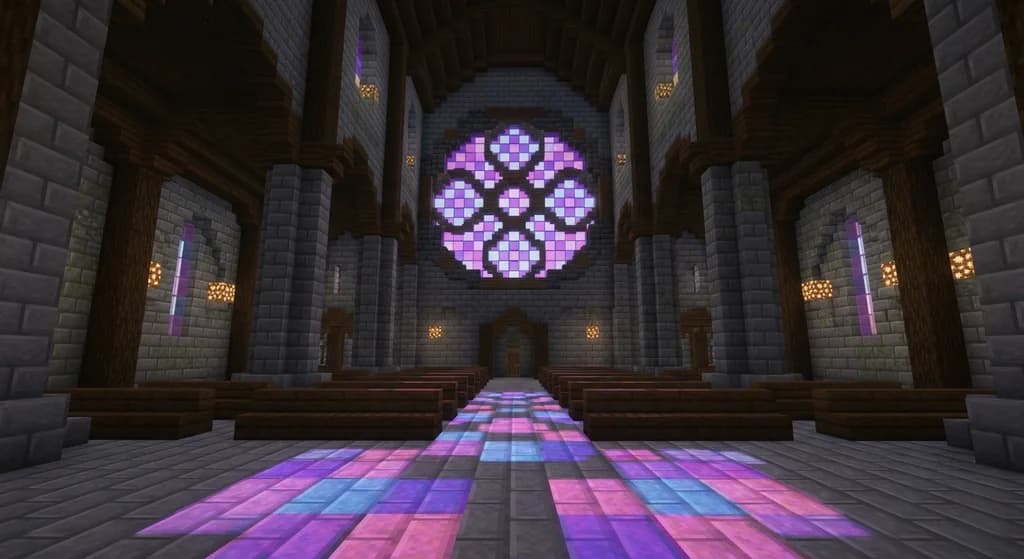
How to Design Stained Glass Windows in Minecraft: 7 Palettes (2026)
Learn how to design stunning Minecraft stained glass windows with 7 unique palettes. Combine glass colors and blocks for beautiful builds in 2026.
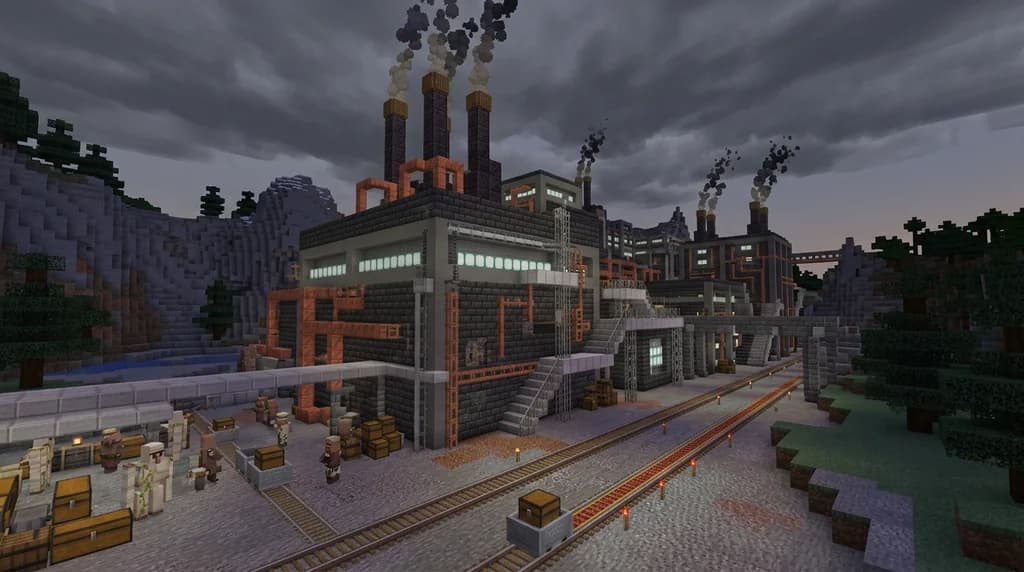
7 Best Industrial Block Palettes for Minecraft Builds in 2026
Discover the 7 best industrial Minecraft block palettes for 2026. Master factory building blocks, modern color schemes, and pro tips for stunning...
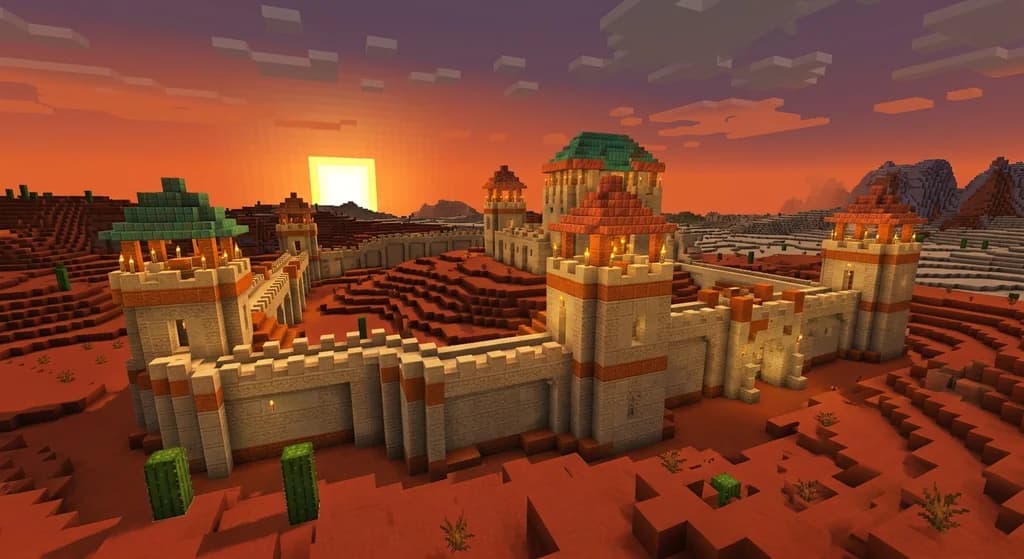
7 Best Desert Block Combinations for Stunning Minecraft Bases 2026
Discover the 7 best desert block combinations for Minecraft bases in 2026. Master sandstone, terracotta, and warm-tone palettes for stunning arid builds.
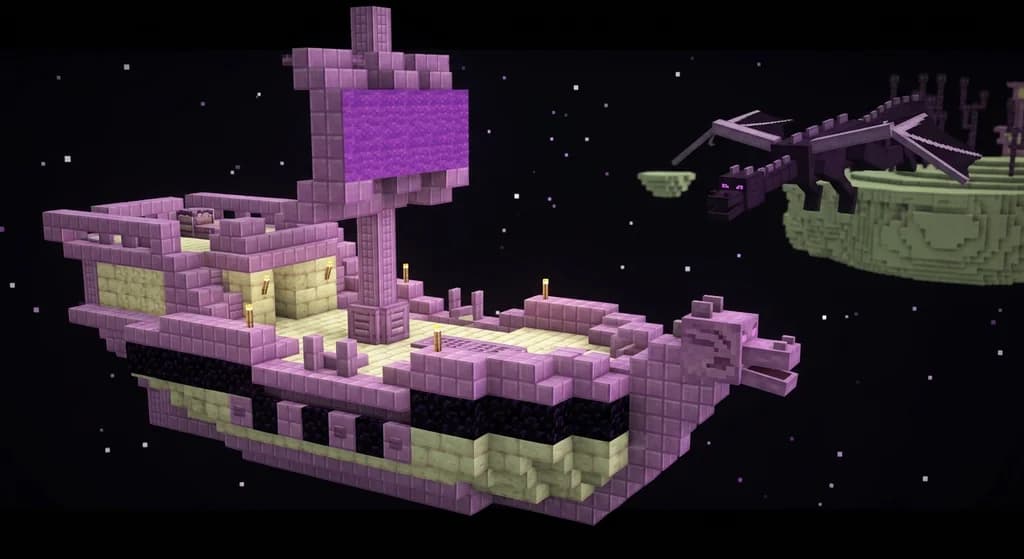
Minecraft Dragon Head: How to Obtain and Use It
Learn exactly how to get a dragon head in Minecraft, from looting End ships to using Creative mode. Discover its unique redstone animation, practical stealth benefits, and decorative uses.
Have a question or another approach?
Compare notes with other readers. Include your edition and version when discussing mechanics.