7 Minecraft Block Palettes for Pro Builders (2026 Guide)
Filed under Minecraft Build Palette & Block Harmony · How we create content
Minecraft version varies by section · Updated 2026-05-24
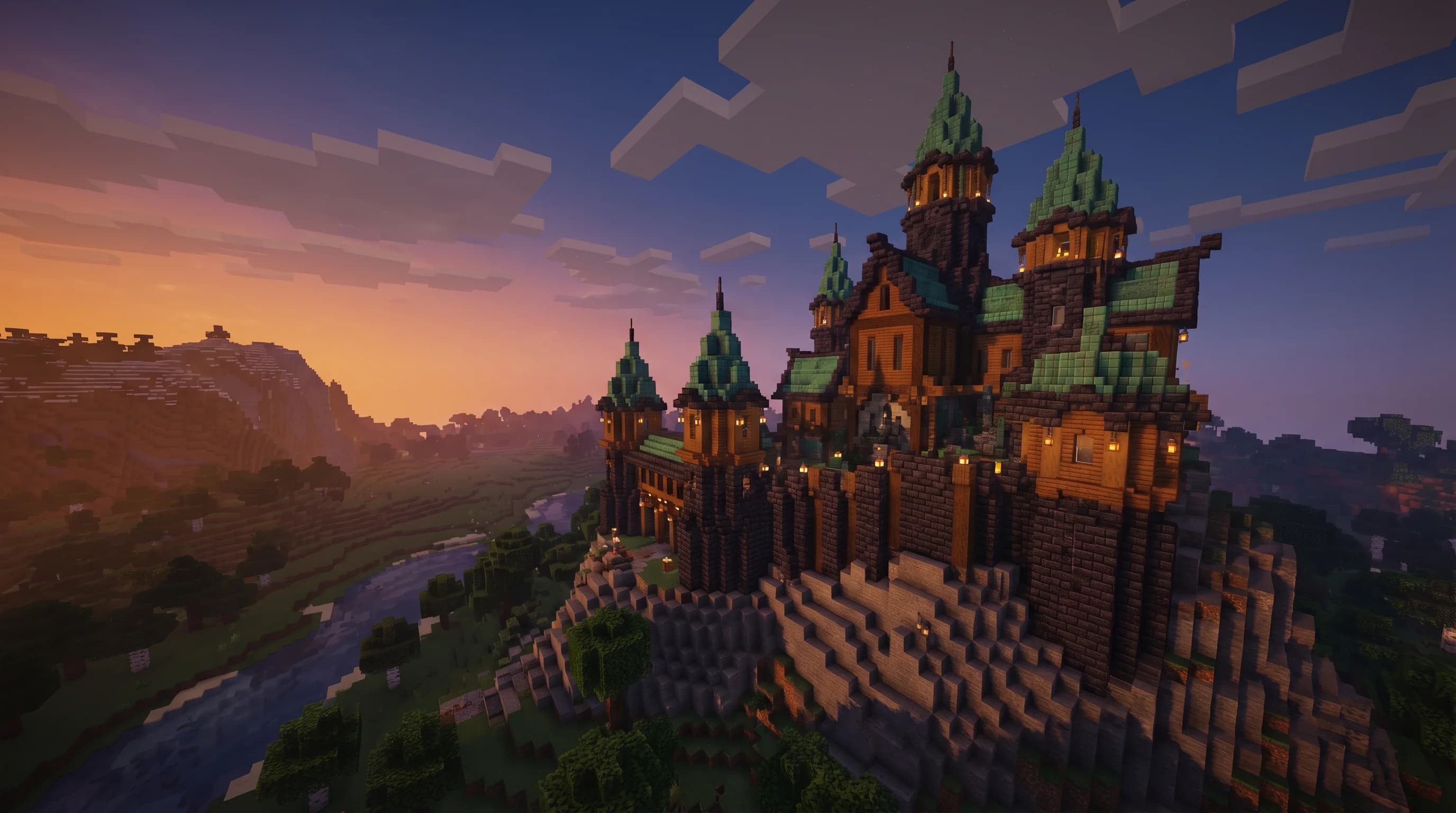
Key Takeaways
- A block palette should consist of a primary base, a secondary accent, and a detail trim.
- Analogous color schemes use blocks next to each other on the color wheel for natural blending.
- Triadic palettes create high contrast by using three blocks spaced equally on the color wheel.
- Depth is just as important as color; use slabs and stairs to create micro-shadows.
- Texture transitions, or gradients, help blend disparate blocks like stone and wool.
- Desaturated blocks like Pale Oak and Tuff variants are essential for modern, moody 2026 gradients.
- Lighting placement should be integrated into the palette to avoid breaking the aesthetic.
Building in Minecraft has evolved far beyond the days of simple cobblestone boxes. Today, the difference between a 'good' build and a 'pro' build often comes down to the selection of blocks before the first one is even placed. If you have ever looked at a massive megastructure and wondered why it looks so cohesive, the answer is almost always a strictly followed block palette.
In this guide, we are going to break down the science of color harmony and provide you with seven specific palettes that are trending for 2026. Whether you are building a futuristic skyscraper or a cozy cottage, these combinations will help you achieve a level of detail that catches the eye of every player on your server. We will explore how to balance texture, saturation, and value to ensure your builds never look flat or messy again.
What is a Minecraft Block Palette?
Minecraft block palettes are curated selections of blocks used to create a cohesive aesthetic in a build. They typically consist of a primary structural block, a secondary accent block, and a detail or trim block. Think of a palette as your building's DNA; it dictates the mood, the era, and the complexity of the project.
When you select a palette, you aren't just picking colors. You are picking textures. Minecraft features over 150 unique blocks that can be placed in a standard survival world without cheats. This massive variety means that even within a single color—like gray—you have the choice between the smooth texture of Stone, the rough grain of Cobblestone, or the industrial feel of Tuff Bricks and Polished Andesite. A professional palette uses these variations to add depth without overwhelming the viewer's eyes.
How to Build with Professional Palettes
To use a palette effectively, you must understand the '60-30-10' rule. This is a classic interior design principle that works perfectly for Minecraft exterior design.
- 60% Primary Block: This is your main wall material (e.g., White Concrete or Stone Bricks).
- 30% Secondary Block: This is your roof or large accents (e.g., Dark Oak Planks or Deepslate).
- 10% Accent Block: This is for window trims, buttons, and fences (e.g., Gold Blocks or Copper).
According to official documentation, there are 16 colors of wool, terracotta, and concrete available for use in palettes. This provides a massive range of options for color-blocking. Limiting your choices forces you to use stairs, slabs, and walls to create detail through geometry rather than color noise.
Pro Tip: Always test your palette in different lighting conditions. Light levels below 1 now allow for hostile mob spawning in most biomes. This means your palette must include 'hidden' lighting like froglights under carpets or the adjustable glow of Copper Bulbs to stay safe without ruining the atmospheric look of your build.
Best 7 Minecraft Block Palettes for 2026
Here are the top-tier combinations that professional builders are using to define the 2026 aesthetic. These palettes focus on high-contrast and unique material pairings.
| Palette Name | Primary Blocks | Best Use Case |
|---|---|---|
| The Paleo-Modern | Deepslate, Pale Oak, Moss | Underground Bases |
| The Cyber-Punk | Warped Planks, Blackstone, Sea Lanterns | Futuristic Cities |
| The Mediterranean | White Terracotta, Sandstone, Copper | Coastal Villages |
| The Industrialist | Tuff Bricks, Mud Bricks, Dark Oak | Steampunk Factories |
| The Ethereal | Quartz, Amethyst, Tinted Glass | Magic Towers |
| The Deep Forest | Mud, Mangrove Roots, Birch | Organic Structures |
| The Royal Guard | Blue Wool, Gold, Stone Bricks | Medieval Castles |
1. The Paleo-Modern
2. The Cyber-Punk
By mixing the neon-blue of Warped Planks with the matte black of Blackstone, you create a high-contrast environment. Use Sea Lanterns as your 10% accent to mimic neon lights. This works best in builds with lots of verticality.
3. The Mediterranean
White Terracotta provides a slightly warmer tone than White Concrete. When paired with Cut Sandstone and the orange/green transition of weathering Copper, it creates a perfect sun-soaked villa vibe.
Why Color Theory Improves Your Builds
Understanding analogous color schemes minecraft builders love is the secret to natural-looking builds. Analogous colors are those that sit next to each other on the color wheel, such as yellow, yellow-orange, and orange. In Minecraft, this might look like a gradient from Sandstone to Birch to White Terracotta.
Conversely, triadic build palettes use three colors that are equally spaced on the color wheel. This is much harder to pull off but results in high-energy builds. For example, using Red (Brick), Blue (Prismarine), and Yellow (Yellow Terracotta) can create a vibrant, comic-book style aesthetic.
Color theory also helps you manage 'Value.' Value refers to how light or dark a block is. If your palette only consists of blocks with the same value (e.g., all medium-grays), your build will look like a blurry blob from a distance. You need high-value blocks (light) and low-value blocks (dark) to define the silhouette of your structure.
How to Put This Into Practice on Gaia Legends
Once you have mastered your block palette, you need a place to showcase it where your hard work won't be ruined by lag or technical limitations. Our high-performance Gaia nodes ensure that even the most complex block palettes and detailed builds render flawlessly with zero lag for your community. Whether you are building a massive city using thousands of entities or a high-detail interior with complex lighting, our infrastructure is designed to handle it.
At Gaia Legends, we pride ourselves on being a builder-friendly environment. We offer tools and a community that appreciates the effort that goes into color theory and architectural design. Gaia Legends is free to join, non-pay-to-win, and supports Java + Bedrock crossplay. This means you can show off your pro palettes to friends on any device.
Join at gaialegends.pro and start your legend today.
Conclusion
Choosing the right minecraft block palettes is the most effective way to elevate your building skills from amateur to professional. By understanding the relationship between color, texture, and value, you can create structures that feel intentional and immersive.
To recap the most important steps:
- Stick to the 60-30-10 rule for block distribution.
- Use analogous colors for natural builds and triadic colors for high-contrast projects.
- Always account for lighting and mob spawning when finalizing your block choices.
Grab your blocks and start experimenting with these palettes in your next world!
Further reading
These references were recorded with the article; specific claims have not been matched to source excerpts.
Frequently Asked Questions
What are the best minecraft block palettes for survival?
The best survival palettes use easily renewable materials like Spruce wood, Cobblestone, and Moss. The 'Paleo-Modern' palette is particularly popular because Deepslate and Moss are abundant in the 1.20+ versions. For a cleaner look, use White Terracotta and Dark Oak, as both can be farmed efficiently through masonry villagers and tree farms.
How do I choose a block palette for a house?
Start by picking a primary block that fits the environment. For a forest, try Oak and Stone Bricks. For a desert, try Sandstone and Acacia. Once you have your base, add a contrasting roof color and a detail block like trapdoors or fences that provide a third color to break up the flat surfaces.
What is an analogous color scheme in Minecraft?
An analogous color scheme uses blocks that are close to each other in hue. For example, using a gradient of Orange Shulker Boxes, Orange Terracotta, and Red Sandstone creates a smooth transition. This technique is often used for 'dithering' or creating realistic shadows and highlights on large-scale builds.
Why does my Minecraft build look flat?
Flatness usually comes from a lack of 'Value' contrast or depth. If your palette uses blocks that are all the same brightness, the human eye can't distinguish shapes. Try adding a much darker block for the trim or using stairs and slabs to create physical depth that generates shadows on the walls.
Can I use more than 5 blocks in a palette?
While you can use more, professional builders usually limit their primary palette to 3-5 blocks to maintain cohesion. You can add 'sub-palettes' for interiors or specific rooms, but the exterior should remain consistent so the building is recognizable as a single architectural unit from a distance.
How do I incorporate lighting into my palette?
Lighting should be an extension of your palette. If you are using a warm palette (Wood/Stone), use Lanterns or Glowstone. For a cool palette (Prismarine/Quartz), use Sea Lanterns or Froglights. Hide light sources under carpets or leaves to maintain the aesthetic while preventing mob spawns.
Related guides
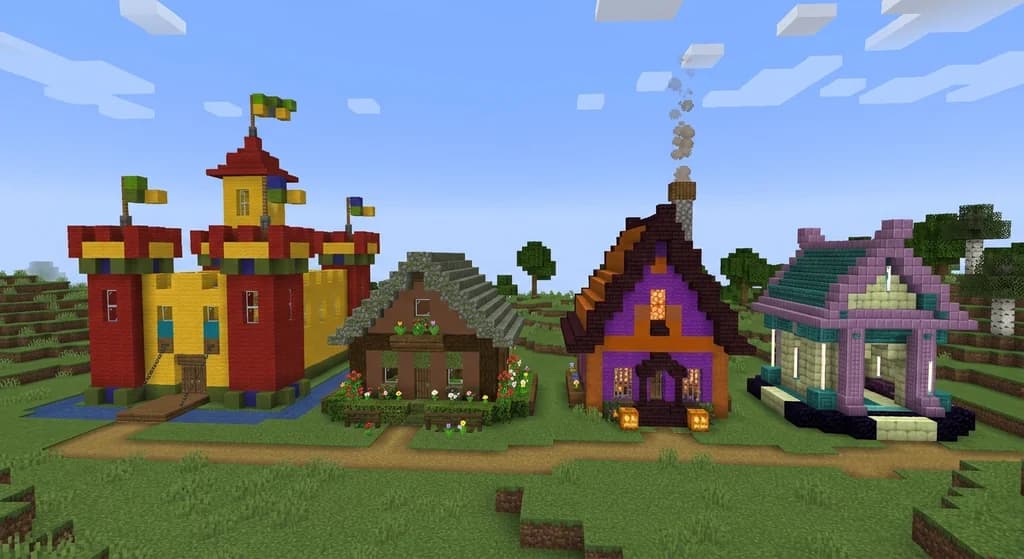
7 Best Tetradic Block Palettes for Minecraft Builds (2026)
Discover 7 tetradic Minecraft block palettes for 2026 builds. Learn color theory, block combos, and how to use four-color harmony for stunning structures.
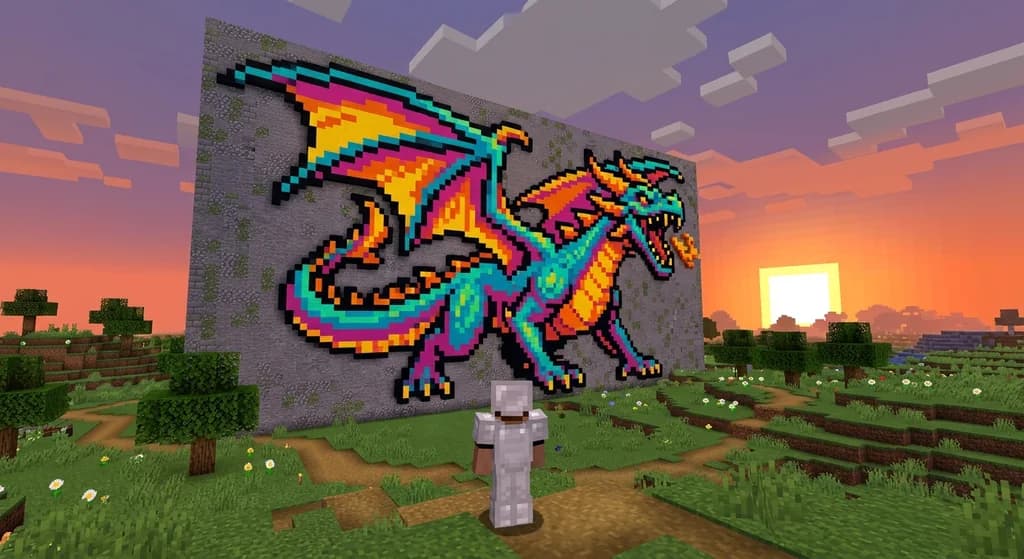
7 Best Block Palettes for Minecraft Pixel Art in 2026
Discover the 7 best block palettes for Minecraft pixel art in 2026. Learn how to choose blocks, create color schemes, and build stunning pixel art in...
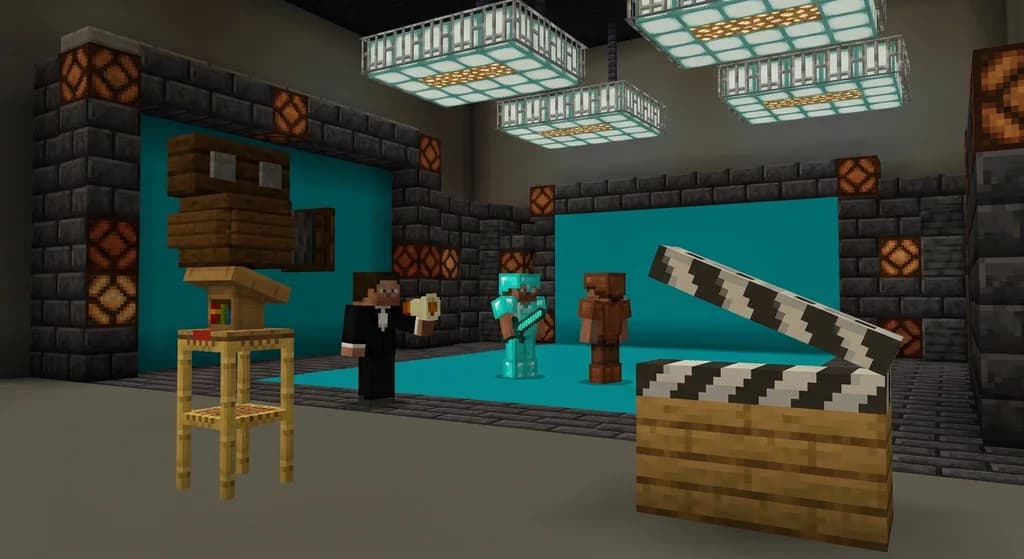
7 Best Block Palettes for the Minecraft Movie Build Challenge (2026)
Discover 7 best block palettes for the Minecraft Movie Build Challenge 2026. Cinematic combos for sci-fi, fantasy, horror & more. Build like a director on...
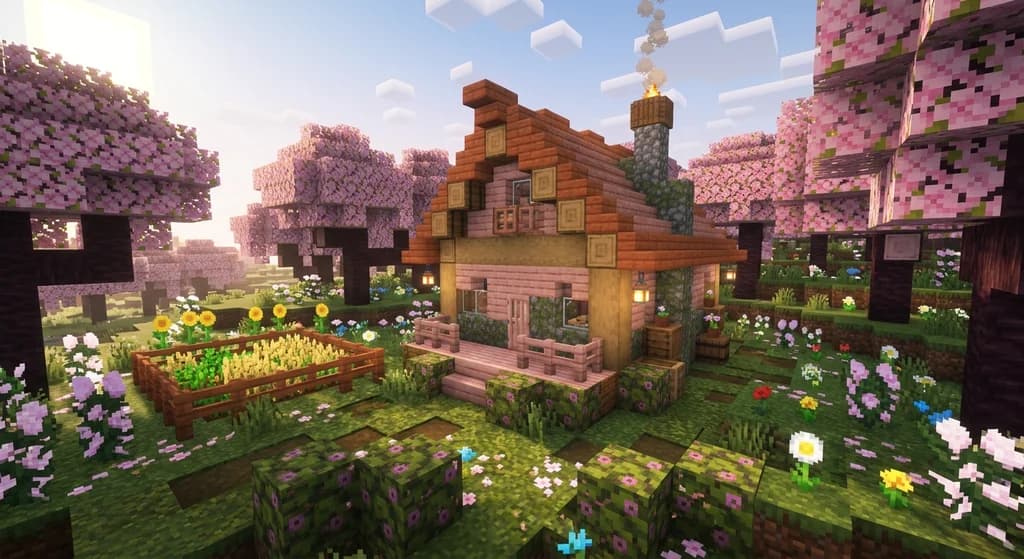
Top 7 Aesthetic Cottagecore Block Palettes for Minecraft 2026
Discover the top 7 aesthetic cottagecore building blocks for Minecraft 2026. Expert fairycore palettes, pastel combos, and cozy forest house block guides.
Have a question or another approach?
Compare notes with other readers. Include your edition and version when discussing mechanics.