Best Medieval Minecraft Block Combinations for 2026 Builds
Filed under Minecraft Build Palette & Block Harmony · How we create content
Minecraft version varies by section · Updated 2026-07-12
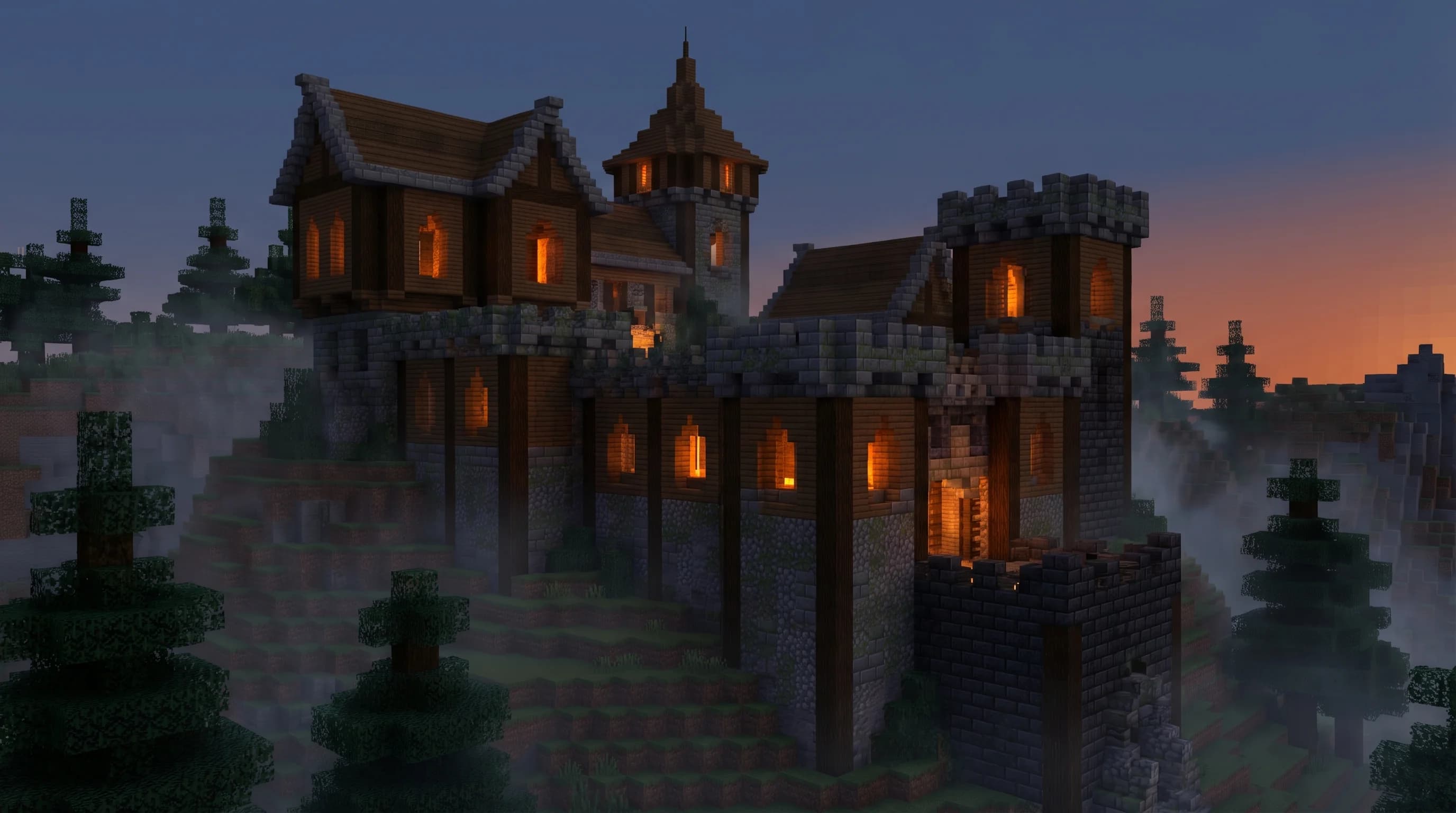
Key Takeaways
- Dark oak paired with stone bricks and mossy cobblestone is the single most versatile medieval palette in Minecraft.
- Deepslate bricks and cracked deepslate tiles add a weathered, aged look that standard cobblestone can't match.
- Limiting your palette to 4–6 block types prevents visual noise and makes builds look intentional and professional.
- Trapdoors, stairs, and slabs used as decorative trim dramatically increase perceived detail without extra blocks.
- Spruce wood is a strong alternative to dark oak for lighter medieval styles like Nordic longhouses or timber-frame cottages.
- Andesite and smooth stone work as neutral transition blocks between darker wood and rougher stone surfaces.
- Since the 1.21 update, copper blocks and tuff bricks have become powerful new tools for medieval builders, with oxidized copper mimicking historic green-patina roofing and tuff adding a darker stone texture.
If you've ever finished a medieval Minecraft build and thought "it looks… fine, but flat" — the problem is almost always your block palette. Choosing the right medieval Minecraft block combinations is the single biggest lever you can pull to go from "okay structure" to "screenshot-worthy landmark." This guide breaks down the palettes that actually work in 2026, why they work, and exactly how to layer them for maximum visual impact.
What Are Medieval Minecraft Block Combinations?
A medieval Minecraft block combination is a curated set of 4–6 block types chosen to work together in color, texture, and visual weight to evoke the look of real-world medieval architecture — think stone castles, timber-frame cottages, mossy ruins, and fortified towers.
Getting this right isn't about using every stone variant you own. It's about restraint. Real medieval buildings used whatever local materials were cheapest and most durable. Your palette should feel like it came from the same quarry and the same forest.
Why Palette Restraint Matters
The Minecraft Wiki documents over 70 stone-variant blocks and more than 9 wood types currently in the game (as of 2026), which means the temptation to over-mix is real. Resist it.
Best Block Combinations for Medieval Builds
Here are the top palettes, tested and ranked by versatility, authenticity, and how well they photograph for sharing.
Palette 1: Dark Oak + Stone Bricks (The Classic Castle)
This is the gold standard. Dark oak brings deep brown warmth, while stone bricks provide the gray structural backbone. Add mossy stone bricks and cracked stone bricks for age, and cobblestone for rough lower walls or foundations.
- Primary structure: Stone bricks + cracked stone bricks
- Wood accents: Dark oak planks, dark oak logs, dark oak trapdoors
- Aged detail: Mossy stone bricks, mossy cobblestone
- Trim: Stone brick stairs and slabs for cornices and window ledges
Pro Tip: Never use plain cobblestone as your primary wall block — it reads as "starter base," not "medieval fortress." Reserve it for foundations, pathways, and rough outer walls only.
Palette 2: Spruce + Andesite (The Nordic Longhouse)
For lighter, Scandinavian-style medieval builds, spruce replaces dark oak. It's warmer and less imposing, perfect for villages, longhouses, and timber-frame inns.
- Primary structure: Andesite + smooth stone
- Wood accents: Spruce planks, stripped spruce logs, spruce trapdoors
- Roofing: Spruce slabs layered for a thatched silhouette
- Detail: Andesite walls (the wall block variant) for parapet-style tops
Note: Andesite can look washed-out in flat lighting. Use it alongside darker blocks like stone bricks or deepslate to give it contrast and definition.
Palette 3: Deepslate + Dark Oak (The Fortress Dungeon)
Deepslate bricks and cracked deepslate tiles are the most underused medieval blocks in Minecraft. They read as ancient, heavy, and imposing in a way that stone bricks simply don't. Pair them with dark oak for a fortress or dungeon aesthetic.
- Primary structure: Deepslate bricks + cracked deepslate tiles
- Transition block: Cobbled deepslate for rough sections
- Wood accents: Dark oak logs, dark oak planks, dark oak fences
- Accent: Chiseled deepslate for decorative panels
For an even more rugged fortress feel, consider incorporating tuff bricks (added in 1.21) — their darker, pitted texture blends seamlessly with deepslate and dark oak. Tuff bricks are also easier to obtain in bulk if you have a mountain biome nearby, making them a practical alternative for large dungeon walls.
According to the Minecraft Wiki, deepslate generates naturally between Y=0 and Y=-64, which is why it carries that underground, ancient feeling — players associate it with depth and danger before they even consciously think about it.
How to Layer Blocks for Depth and Texture
A good palette on paper can still fall flat if you apply it like wallpaper. Layering is everything.
The Three-Zone Rule
Divide any wall into three horizontal zones:
- Foundation (bottom 2–4 blocks): Roughest texture. Use cobblestone, cobbled deepslate, or mossy cobblestone. This zone "grounds" the structure.
- Main wall (middle): Your primary stone block — stone bricks, deepslate bricks, or andesite. Keep it relatively consistent.
- Upper detail (top, trim, and roof transitions): Slabs, stairs, and trapdoors. This is where wood appears most prominently.
Using Trapdoors as Medieval Detail
Trapdoors are one of the most powerful decorative tools in medieval building. Placed on the sides of blocks, they read as shutters, arrow slits, wooden reinforcements, and decorative panels. Dark oak trapdoors on a stone brick wall immediately suggest a fortified medieval structure.
Spruce trapdoors on an andesite wall create a timber-frame cottage effect that no other block combination replicates cleanly.
If you're working with copper blocks from the 1.21 update, oxidized cut copper makes an excellent green roof material that echoes historic European cathedrals. Use copper trapdoors as ornate shutters on windows for a metallic accent that weathers over time and adds a unique medieval character.
Comparison: Top Medieval Palettes at a Glance
| Palette | Primary Stone | Primary Wood | Best For | Difficulty |
|---|---|---|---|---|
| Classic Castle | Stone Bricks + Mossy | Dark Oak | Castles, towers, walls | Beginner |
| Nordic Longhouse | Andesite + Smooth Stone | Spruce | Villages, inns, halls | Beginner |
| Fortress Dungeon | Deepslate Bricks | Dark Oak | Keeps, dungeons, crypts | Intermediate |
| Ruined Keep | Mossy Cobblestone + Mossy Stone Bricks | Spruce (weathered) | Ruins, overgrown structures | Intermediate |
| Grand Cathedral | Stone Bricks + Chiseled Stone | Birch (interior) | Chapels, large halls | Advanced |
Tips for Choosing Your Medieval Wood and Stone Palette
Getting the palette right before you place a single block saves you hours of teardown later. Here's how to choose.
Match the Biome to the Build
Your build's setting should inform your palette:
- Forests and plains: Dark oak or spruce feel native and grounded
- Mountains and taigas: Spruce + andesite or deepslate reads as carved from the landscape
- Deserts or badlands: Sandstone + spruce creates an unusual but effective desert-fort aesthetic
- Swamps or dark forests: Mossy cobblestone + dark oak leans into the gloomy, overgrown vibe naturally
Start with Three Blocks, Then Add
A reliable method: pick one stone, one wood, and one "age" block (mossy, cracked, or weathered variant). Build a 10×10 test wall. If it reads as medieval, you're on the right track. Then add a fourth block as a trim or accent — never start with six and try to cut back.
Pro Tip: Screenshot your test wall and convert it to grayscale. If the values (lights and darks) are all the same tone, your palette will look flat in-game. You want at least three distinct value levels across your chosen blocks.
How to Put This Into Practice on Gaia Legends
Gaia Legends is a survival SMP where your builds actually matter — they're permanent, visible to hundreds of players, and part of a living world that grows over time. That makes palette decisions real stakes, not just creative exercises.
The server's free plot and town system lets you claim land and build at your own pace, so you can experiment with the palettes above without pressure. Our community showcase channel highlights standout builds every week, and medieval architecture consistently dominates the top spots — because the block combinations above are proven crowd-pleasers.
We've also seen players use the cross-server trade economy to source rarer blocks like deepslate bricks and mossy stone bricks faster than solo mining allows, which means you can get your palette materials without spending 10 hours in a cave first.
Whether you're building a solo fortress or contributing to a collaborative player town, these medieval palettes translate directly into builds that get noticed.
Gaia Legends is free to join, non-pay-to-win, and supports Java + Bedrock crossplay. Join at gaialegends.pro and start your legend today.
Wrapping Up
Medieval building in Minecraft is one of the most rewarding creative challenges the game offers — and it all starts with your blocks. Here are the four things to walk away with:
- Dark oak + stone bricks + mossy variants is your safest, most versatile medieval palette and the best starting point for any castle or fortress build.
- Deepslate bricks are criminally underused — they add instant age and weight that stone bricks alone can't deliver.
- Restraint wins. Four to six block types, applied with intention across foundation, wall, and trim zones, will always outperform a chaotic mix of twenty.
- Newer block additions like copper and tuff can expand your palette creatively — oxidized copper roofs and tuff brick foundations are especially effective for adding historic character.
Pick one palette from this guide, build a test wall, and commit. Your next medieval build will be the one you actually want to share.
Ready to play? Join Gaia Legends today — no pay-to-win, Java + Bedrock crossplay.
- Java:
join.gaialegends.pro - Bedrock:
join.gaialegends.pro— Port19132
Further reading
These references were recorded with the article; specific claims have not been matched to source excerpts.
Frequently Asked Questions
What are the best medieval Minecraft block combinations for beginners?
The best medieval Minecraft block combinations for beginners are dark oak planks and logs paired with stone bricks, mossy stone bricks, and cracked stone bricks. This palette is forgiving, widely available in survival mode, and immediately reads as medieval without requiring rare materials. Start with stone bricks as your main wall block, dark oak for wooden accents, and mossy stone bricks to add age and character.
What blocks go well with dark oak in a Minecraft medieval build?
Dark oak pairs best with stone bricks, mossy cobblestone, cracked stone bricks, and deepslate bricks. Its deep brown tone contrasts well with cool-gray stones, giving walls a warm-cold balance that feels authentically medieval. Use dark oak trapdoors on stone brick walls to simulate wooden reinforcements or shutters, and dark oak fences for railings and window frames.
How do I make my Minecraft medieval build look less flat?
Break flat surfaces by mixing at least three texture variants — for example, stone bricks, cracked stone bricks, and mossy stone bricks — rather than using a single block type across an entire wall. Add depth with stairs and slabs as trim, use trapdoors as decorative panels, and apply the three-zone rule: rough foundation blocks at the base, clean primary blocks in the middle, and detailed trim at the top.
Is deepslate good for medieval Minecraft builds?
Yes — deepslate bricks and cracked deepslate tiles are excellent for medieval builds, especially fortresses, dungeons, and keeps. They carry a naturally ancient, heavy feeling because players associate deepslate with deep underground. Pair deepslate bricks with dark oak for a dark-fortress aesthetic, or mix cracked deepslate tiles into stone brick walls to simulate centuries of wear and damage.
What wood type is best for medieval Minecraft architecture?
Dark oak is the most popular wood for medieval Minecraft architecture because its deep brown color evokes aged timber, heavy beams, and fortified structures. Spruce is the best alternative for lighter styles like Nordic longhouses or timber-frame cottages. Avoid jungle wood and acacia in medieval builds — their colors read as tropical or modern and clash with stone-heavy medieval palettes.
How many block types should I use in a Minecraft medieval palette?
Stick to 4–6 block types per medieval build. Using fewer than four can make a structure look monotonous, while using more than six typically creates visual noise that makes the build feel chaotic rather than intentional. A solid formula: one primary stone, one secondary or aged stone variant, one wood type, one trim block (slabs or stairs), and one accent or detail block like chiseled stone or trapdoors.
Related guides
7 Best Block Palettes for Minecraft Pixel Art in 2026
Discover the 7 best block palettes for Minecraft pixel art in 2026. Learn how to choose blocks, create color schemes, and build stunning pixel art in...
7 Best Block Palettes for the Minecraft Movie Build Challenge (2026)
Discover 7 best block palettes for the Minecraft Movie Build Challenge 2026. Cinematic combos for sci-fi, fantasy, horror & more. Build like a director on...
Top 7 Aesthetic Cottagecore Block Palettes for Minecraft 2026
Discover the top 7 aesthetic cottagecore building blocks for Minecraft 2026. Expert fairycore palettes, pastel combos, and cozy forest house block guides.
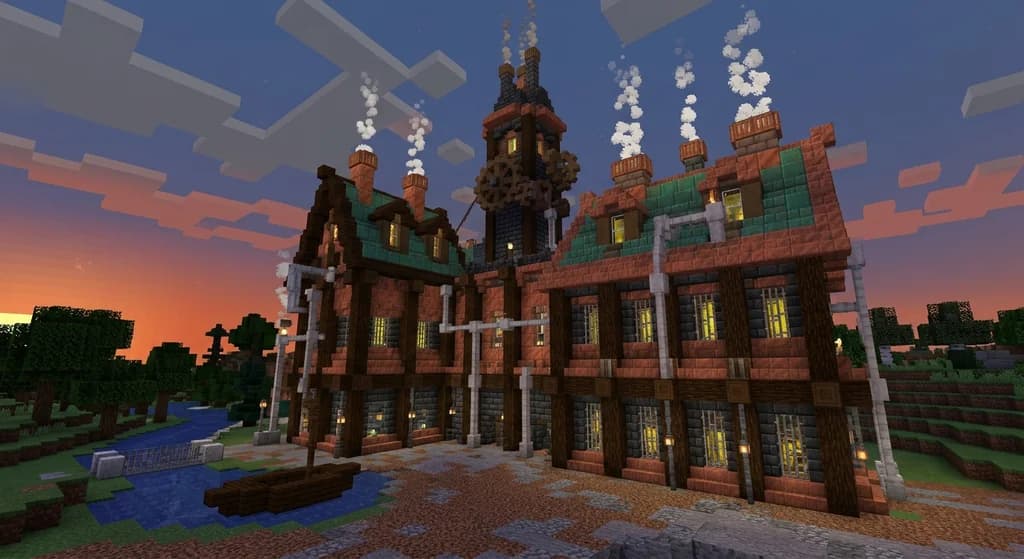
7 Best Steampunk Block Palettes for Copper Minecraft Builds 2026
Discover 7 expert steampunk Minecraft block palettes using copper, deepslate, and dark oak. Build vintage machinery and industrial towers with perfect...
Have a question or another approach?
Compare notes with other readers. Include your edition and version when discussing mechanics.