How to Use Complementary Colors: A Minecraft Build Guide (2026)
Filed under Minecraft Build Palette & Block Harmony · How we create content
Key Takeaways
| Point | Details |
|---|---|
| Complementary pairs pop | Orange + blue, red + cyan, and yellow + purple are the three most impactful complementary block pairings in Minecraft. |
| Use the 60-30-10 rule | 60% dominant block, 30% complement, 10% neutral accent keeps builds balanced and avoids visual noise. |
| Texture matters as much as color | Pair smooth blocks with rough ones (e.g., polished deepslate with warped planks) to add depth alongside color contrast. |
| Neutral blocks are your safety net | Stone, white concrete, and stripped oak bridge any complementary pair without clashing. |
| Test in daylight AND at night | Minecraft's lighting engine shifts block hues dramatically — always preview your palette under both conditions. |
| Blueprint libraries save time | Downloading pre-built schematics lets you study proven complementary palettes before committing to a full build. |
Table of Contents
- What Are Complementary Colors in Minecraft Building?
- Why Complementary Colors Make Builds Look Professional
- Best Complementary Block Palettes for Minecraft
- How to Apply the 60-30-10 Rule to Your Build
- Tips for Avoiding Common Color Mistakes
- How to Put This Into Practice on Gaia Legends
- Conclusion
- Frequently Asked Questions
- Recommended
Most Minecraft builders don't have a color problem — they have a contrast problem. They pick blocks they individually like, place them next to each other, and wonder why the build feels flat. The fix is simpler than you think: complementary colors in Minecraft building. Once you understand which block pairs create natural contrast, every build you touch will look intentional and polished.
What Are Complementary Colors in Minecraft Building?
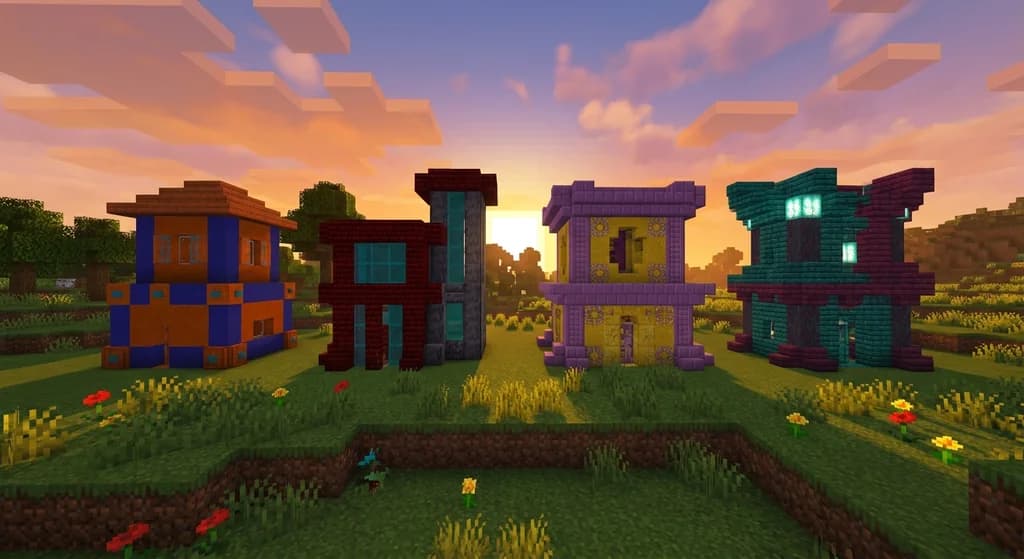
Complementary color theory is the practice of pairing hues that sit directly opposite each other on the color wheel to create maximum visual contrast. In Minecraft, this translates directly to block selection: orange terracotta opposite blue concrete, red nether bricks opposite cyan stained glass, yellow glazed terracotta opposite purple purpur blocks.
The reason complementary pairs work so well is physics. When two opposite hues sit next to each other, each one makes the other look more vivid. Your orange wall doesn't just look orange — it looks intensely orange because the blue trim next to it pushes that perception.
This is different from simply picking colors you like. Complementary pairing is deliberate contrast, and contrast is what separates a build that gets screenshots from one that gets ignored.
Note: Minecraft's 16 concrete colors, 16 terracotta colors, and 8 wood types give you a surprisingly complete color wheel to work with. You don't need mods to achieve professional complementary palettes.
Why Complementary Colors Make Builds Look Professional
Here's what most builders miss: the human eye is wired to seek contrast. A build with zero contrast reads as a blob. A build with too much contrast reads as chaos. Complementary pairs hit the exact sweet spot — high contrast, but harmonious because the colors are mathematically related.
The Science Behind the Pop
Minecraft's block renderer uses flat textures with subtle noise. That means color does more heavy lifting than in games with realistic lighting. When you place a blue concrete wall next to orange terracotta trim, the contrast is doing the job that shadow and ambient occlusion would do in a AAA game. It creates perceived depth.
According to the Minecraft Wiki, the game renders block colors using a fixed palette tied to biome tint and block ID — meaning the hue you see in a plains biome is consistent and predictable, which makes color planning reliable.
Pro Tip: Build your palette test wall in a plains biome at noon. Plains biome lighting is the most neutral in the game, so what you see there is closest to the "true" block color.
Best Complementary Block Palettes for Minecraft
Here are the three highest-impact complementary pairings you can use right now, with specific block recommendations for each.
| Palette | Dominant Block | Complement Block | Neutral Bridge |
|---|---|---|---|
| Ocean Sunset | Orange terracotta | Blue concrete | White concrete |
| Nether Contrast | Red nether bricks | Cyan stained glass | Blackstone |
| Forest Royal | Warped planks | Crimson wood | Stripped oak |
| Arcane Tower | Purpur blocks | Yellow glazed terracotta | Polished deepslate |
Orange and Blue: The Classic Pair
This is the most versatile complementary pair in the game. Orange terracotta as your wall material, blue concrete for trim and window frames, and white concrete as a neutral spacer. It reads as warm and inviting without being garish.
Use it for: cottages, market stalls, coastal builds, and desert outposts.
If you want to explore how warm-toned blocks behave in arid environments, the How to Build Desert Masterpieces: 2026 Block Harmony Guide breaks down sandstone combos that pair perfectly with blue accents.
Red and Cyan: High Drama
Red nether bricks paired with cyan stained glass creates the most dramatic complementary contrast available in vanilla Minecraft. Use this for fortresses, villain lairs, or any build that needs to feel powerful. The blackstone neutral keeps it from tipping into chaos.
Warning: Cyan stained glass transmits colored light in Minecraft. If you're building near a light source, the cyan tint will bleed onto surrounding blocks and shift your palette. Test your lighting before committing to large glass sections.
Warped and Crimson: Nature's Complement
The Nether update handed builders a ready-made complementary pair: warped planks (teal-blue) and crimson wood (deep red). These two wood types are literally complementary on the color wheel, and they come pre-textured with organic grain that adds depth automatically.
This palette shines in cave bases and underground builds. For more underground palette ideas, check out the 7 Best Underground Block Palettes for Minecraft Cave Bases (2026).
How to Apply the 60-30-10 Rule to Your Build
The 60-30-10 rule is the single most useful framework for applying complementary colors without making your build look like a circus.
- 60% dominant block — your main wall, floor, or roof material. This is your "base" color.
- 30% complement block — trim, accents, window frames, and secondary surfaces.
- 10% neutral block — connective tissue. Stone bricks, white concrete, stripped wood. This is what stops the two dominant colors from fighting each other.
Step-by-Step: Applying the Rule to a House
- Choose your dominant block (e.g., orange terracotta for walls).
- Build the full shell in your dominant block.
- Replace every trim piece — corners, window surrounds, roof edge — with your complement (blue concrete).
- Add your neutral (white concrete) as a thin band between wall and trim wherever the two colors meet directly.
- Step back and assess. If it feels too loud, increase the neutral percentage. If it feels flat, reduce it.
If you want a tool to preview palette ratios before placing a single block, the How to Use a Minecraft Palette Generator for Block Harmony (2026) guide walks you through the best free options.
Tips for Avoiding Common Color Mistakes
Even with the right pair, builders make predictable errors. Here's how to dodge them.
Don't Use Full-Saturation Blocks for Both Colors
Lime green concrete next to magenta concrete is technically complementary — and it's also an eyesore. Full-saturation complements fight each other at equal intensity. Instead, desaturate one side: use moss block (muted green) with pink terracotta (muted pink). The contrast is still there; the aggression isn't.
Match Texture Weight, Not Just Color
Rough blocks next to rough blocks create visual noise even if the colors are perfect. Pair a rough block (nether bricks, cobblestone) with a smooth block (polished deepslate, concrete) to let the color contrast breathe.
Always Test Under Multiple Lighting Conditions
Minecraft's lighting engine shifts perceived hue significantly between noon, dusk, and torchlight. A blue concrete wall looks almost purple under warm torchlight. Preview your palette at multiple times of day before finalizing. The 7 Best Cool-Tone Palettes for Minecraft Snowy Biome Builds (2026) covers how cool-toned blocks behave specifically under snowy biome lighting — worth reading if your build is in a cold environment.
Pro Tip: Place a row of sea lanterns behind your test wall at night. If the palette still reads cleanly under that warm-neutral light, it'll work in any lighting condition.
How to Put This Into Practice on Gaia Legends
Reading about complementary colors is one thing. Actually placing blocks and seeing the result is where the learning sticks. That's exactly what the Gaia Legends Blueprint Library is designed for.
The Blueprint Library gives you downloadable schematics of builds that already use proven complementary palettes — orange-and-blue coastal cottages, warped-and-crimson cave bases, purpur-and-yellow arcane towers. You can paste them into your plot, walk around inside them, and study exactly how the 60-30-10 rule plays out at full scale.
Beyond schematics, Gaia Legends runs monthly Build Palette Challenges where the community votes on the best complementary color execution. It's the fastest feedback loop available — real players telling you in real time what works.
Gaia Legends is free to join, non-pay-to-win, and supports Java + Bedrock crossplay. Whether you're on a PC or mobile, you can load a blueprint schematic and start experimenting today.
Join at gaialegends.pro and start your legend today.
Conclusion
Complementary colors are the fastest upgrade available to any Minecraft builder. Here's what to take away:
- Pick opposite pairs: Orange + blue, red + cyan, warped + crimson are your three best starting points.
- Use the 60-30-10 rule: Dominant block, complement accent, neutral bridge — in that ratio.
- Test your palette under multiple lighting conditions before committing to a full build.
Now go place some blocks. The theory only becomes skill when it's in your hands.
Frequently Asked Questions
What are the best complementary colors for Minecraft building?
The three most effective complementary color pairings for Minecraft building are orange terracotta with blue concrete, red nether bricks with cyan stained glass, and warped planks with crimson wood. Each pair sits opposite on the color wheel, creating natural contrast. Use the 60-30-10 rule — 60% dominant, 30% complement, 10% neutral — to keep the palette balanced rather than chaotic.
How do I stop my Minecraft build from looking too colorful?
Desaturate one side of your complementary pair. Instead of full-saturation lime green, use moss block. Instead of magenta concrete, use pink terracotta. Also increase your neutral block percentage — white concrete, stone bricks, and stripped oak are excellent bridges that calm any palette down without removing the contrast.
Can I use complementary colors in survival mode Minecraft?
Absolutely. Most of the best complementary blocks are easy to obtain in survival: terracotta bakes in a furnace from clay, concrete requires gravel + sand + dye, and warped/crimson wood grows in Nether biomes. You don't need rare or late-game materials to build a strong complementary palette.
What is the 60-30-10 rule in Minecraft building?
The 60-30-10 rule means using your dominant block for 60% of the build's surface area, your complementary accent block for 30% (trim, window frames, roof edges), and a neutral block for the remaining 10% to bridge the two colors. This ratio prevents either color from overwhelming the build while maintaining strong visual contrast.
How does Minecraft lighting affect block color palettes?
Minecraft's lighting engine applies a warm tint to blocks under torchlight and a cool tint at high altitudes or in snowy biomes. Blue concrete can appear purple under warm torchlight. Always preview your complementary palette at noon in a plains biome for the truest color reading, then test again at night with your planned light sources active.
Do complementary colors work for all Minecraft build styles?
Yes. Complementary pairs adapt to any style. Medieval builds benefit from red-and-cyan (stone + stained glass). Modern builds shine with orange-and-blue (terracotta + concrete). Organic/nature builds work best with warped-and-crimson wood. The underlying principle — opposite hues create contrast — is style-agnostic. Adjust the specific blocks to match your theme, keep the ratio consistent.
Recommended
- What is a Minecraft SMP? How to Choose the Best Server in 2026
- How to Master Minecraft MMORPG Profession Systems in 2026
- Top 4 Serverlist.net Alternatives 2026
- How to Set Up a Profitable Minecraft Chest Shop: 2026 Guide
Ready to play? Join Gaia Legends today — no pay-to-win, Java + Bedrock crossplay.
- Java:
join.gaialegends.pro - Bedrock:
join.gaialegends.pro— Port19132
Further reading
These references were recorded with the article; specific claims have not been matched to source excerpts.
Frequently Asked Questions
What are the best complementary colors for Minecraft building?
The three most effective complementary color pairings for Minecraft building are orange terracotta with blue concrete, red nether bricks with cyan stained glass, and warped planks with crimson wood. Each pair sits opposite on the color wheel, creating natural contrast. Use the 60-30-10 rule — 60% dominant, 30% complement, 10% neutral — to keep the palette balanced rather than chaotic.
How do I stop my Minecraft build from looking too colorful?
Desaturate one side of your complementary pair. Instead of full-saturation lime green, use moss block. Instead of magenta concrete, use pink terracotta. Also increase your neutral block percentage — white concrete, stone bricks, and stripped oak are excellent bridges that calm any palette down without removing the contrast.
Can I use complementary colors in survival mode Minecraft?
Absolutely. Most of the best complementary blocks are easy to obtain in survival: terracotta bakes in a furnace from clay, concrete requires gravel + sand + dye, and warped/crimson wood grows in Nether biomes. You don't need rare or late-game materials to build a strong complementary palette.
What is the 60-30-10 rule in Minecraft building?
The 60-30-10 rule means using your dominant block for 60% of the build's surface area, your complementary accent block for 30% (trim, window frames, roof edges), and a neutral block for the remaining 10% to bridge the two colors. This ratio prevents either color from overwhelming the build while maintaining strong visual contrast.
How does Minecraft lighting affect block color palettes?
Minecraft's lighting engine applies a warm tint to blocks under torchlight and a cool tint at high altitudes or in snowy biomes. Blue concrete can appear purple under warm torchlight. Always preview your complementary palette at noon in a plains biome for the truest color reading, then test again at night with your planned light sources active.
Do complementary colors work for all Minecraft build styles?
Yes. Complementary pairs adapt to any style. Medieval builds benefit from red-and-cyan (stone + stained glass). Modern builds shine with orange-and-blue (terracotta + concrete). Organic/nature builds work best with warped-and-crimson wood. The underlying principle — opposite hues create contrast — is style-agnostic. Adjust the specific blocks to match your theme, keep the ratio consistent.
Related guides

7 Best Christmas Village Block Palettes for Minecraft (2026)
Discover the 7 best Christmas village block palettes for Minecraft in 2026. Learn festive block combos, color theory, snow textures, and winter lighting tips.
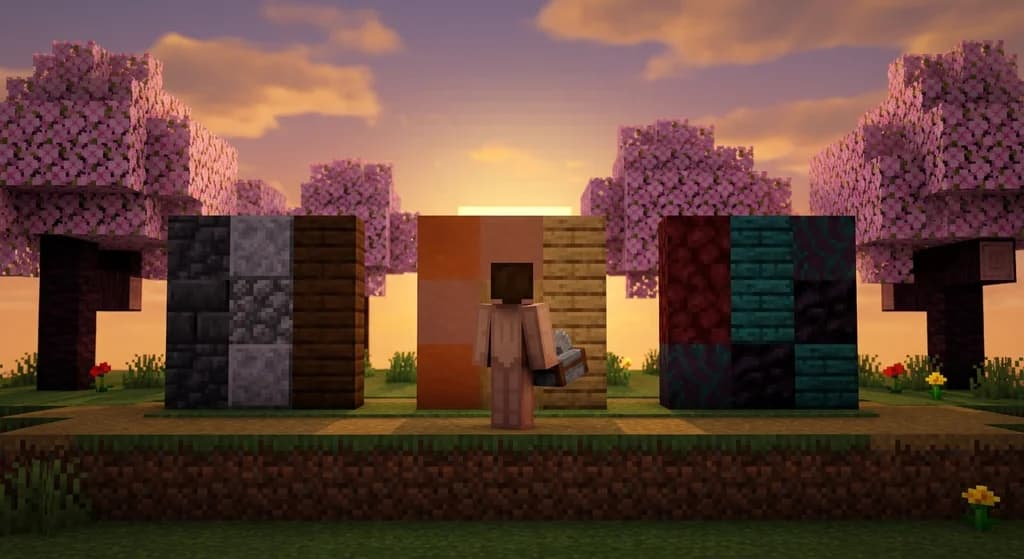
How to Create Your Own Block Palettes in Minecraft (2026)
Learn how to create your own Minecraft block palettes in 2026. This step-by-step guide covers color theory, block combinations, and testing techniques for...
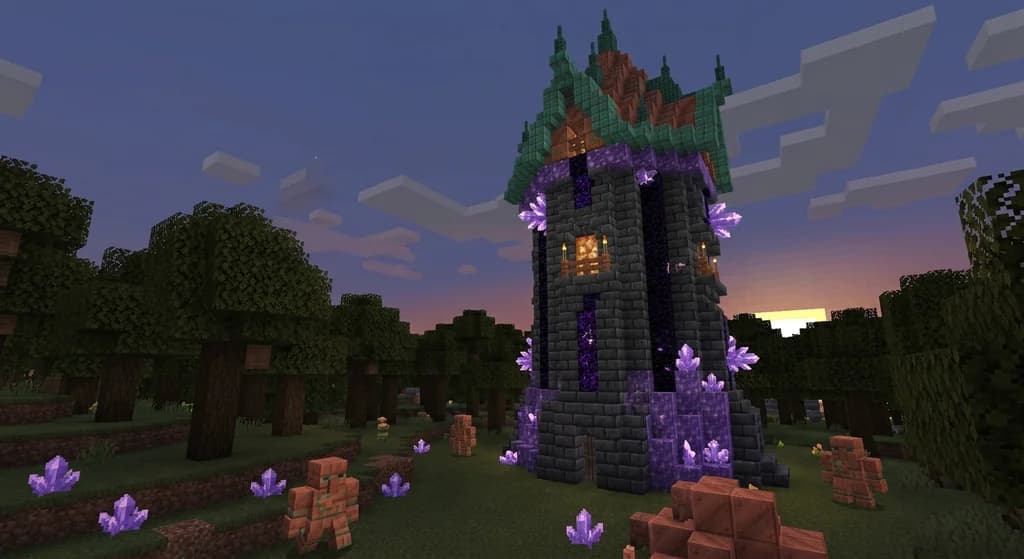
Best Minecraft Block Palette for a Wizard Tower in 2026
Discover the best Minecraft wizard tower block palette for 2026. Learn how to combine deepslate, amethyst, copper, and crying obsidian for a magical...
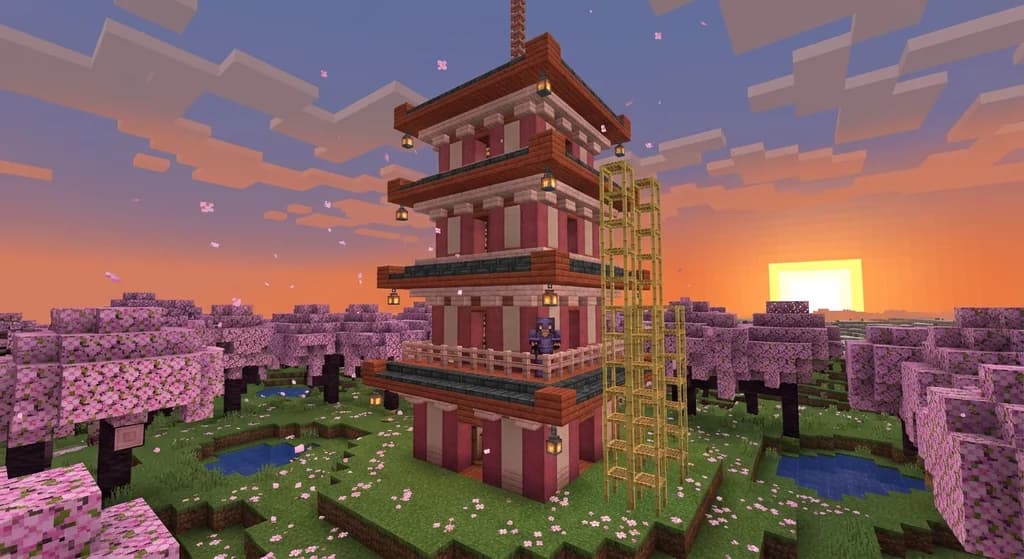
How to Build a Japanese Pagoda in Minecraft 2026: Block Palette Guide
Learn the best block palette for a Japanese pagoda in Minecraft 2026. Complete guide with step-by-step survival build tutorial and palette combos.
Have a question or another approach?
Compare notes with other readers. Include your edition and version when discussing mechanics.