How to Master Archaeology in Minecraft 2026: Tools & Tips
Filed under Minecraft Tips & Tricks · How we create content
Key Takeaways
| Point | Details |
|---|---|
| Craft the brush first | Combine a feather, copper ingot, and stick to make your essential excavation tool. |
| Target trail ruins | These underground structures in taiga and jungle biomes hold the most pottery sherd varieties. |
| Master pottery sherds | Collect all 20 patterns to decorate pots and tell ancient stories. |
| Hatch sniffer eggs | Find them in warm ocean ruins, then hatch a sniffer to dig up torchflower and pitcher plant seeds. |
| Join a community museum | On Gaia Legends, players contribute sherds to a shared museum and earn custom archaeology-themed rewards. |
Table of Contents
- What Is Minecraft Archaeology and Why Should You Care?
- How Do You Craft and Use the Brush Tool?
- Where Are the Best Places to Dig for Archaeology Loot?
- How to Master Pottery Sherds and Sniffer Eggs
- Tips for Efficient Archaeology Expeditions
- How to Put This Into Practice on Gaia Legends
- Frequently Asked Questions
- Recommended
Since Minecraft 1.20, the world has been hiding ancient treasures beneath your feet—not just ores, but pottery sherds, sniffer eggs, and relics of long-lost civilizations. This minecraft archaeology guide 2026 will teach you everything you need to master the brush tool, hunt down all 20 pottery sherd patterns, and hatch your own sniffer. Whether you're a seasoned explorer or just starting, you'll learn where to dig, what to bring, and how to turn dusty fragments into a museum-worthy collection.
What Is Minecraft Archaeology and Why Should You Care?
Minecraft archaeology is the 1.20 feature that lets you excavate suspicious sand and gravel blocks with a brush to uncover pottery sherds, sniffer eggs, and other rare treasures.
Archaeology turns the ground itself into a loot table. Instead of just mining, you now carefully dust off suspicious blocks found in specific structures. These blocks look slightly different from normal sand or gravel—they have a subtle cracked texture. When you brush them, they reveal hidden items. The system rewards patience and exploration, and it adds a new layer of storytelling to your world through decorative pottery sherds and the adorable sniffer mob.
How Do You Craft and Use the Brush Tool?
The brush is your primary archaeology tool; crafted from a feather, copper ingot, and stick, it's used to gently dust off suspicious blocks to reveal their hidden loot.
To craft a brush, place a feather, copper ingot, and stick in a vertical line in a crafting table. Feathers drop from chickens, copper ingots are smelted from raw copper, and sticks are basic. Once you have it, walk up to a suspicious sand or gravel block and hold right-click (or the use key) until the item pops out. Brushing a suspicious block takes exactly 4.8 seconds with a brush (via Minecraft Wiki).
Warning: If you break the suspicious block with a tool or your fist, the loot is destroyed. Always use a brush.
A brush can be used 64 times before breaking (via Minecraft Wiki), so bring a few extras on long expeditions. You can also enchant it with Unbreaking and Mending to extend its life, just like any tool.
Where Are the Best Places to Dig for Archaeology Loot?
Trail ruins, desert pyramids, desert wells, and ocean ruins each contain unique suspicious blocks with different loot tables, making trail ruins the richest source of pottery sherds.
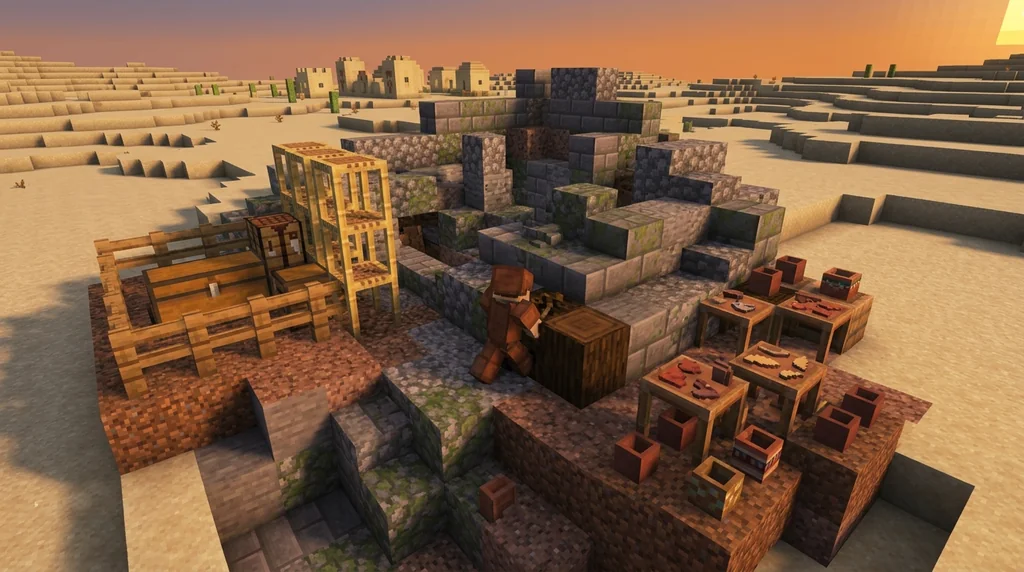
Here’s a quick breakdown of where to find suspicious blocks and what they can drop:
| Structure | Biome | Suspicious Block Type | Key Loot |
|---|---|---|---|
| Trail Ruins | Taiga, Snowy Taiga, Old Growth Taiga, Jungle | Suspicious Gravel | Pottery Sherds, Sniffer Egg, Emerald, Dye |
| Desert Pyramid | Desert | Suspicious Sand | Pottery Sherds, Gunpowder, TNT, Diamond |
| Desert Well | Desert | Suspicious Sand | Pottery Sherds, Brick, Emerald |
| Warm Ocean Ruin | Warm Ocean | Suspicious Sand | Sniffer Egg, Pottery Sherds, Coal |
Trail ruins generate in taiga, snowy taiga, old growth taiga, and jungle biomes (via Minecraft Wiki). Use the debug screen (press F3) to check your biome—check out our 10 F3 Debug Screen Shortcuts for more. Taiga biomes are also home to wolves—learn how to find every Minecraft wolf variant to spot them while you dig.
Suspicious sand has a 12.5% chance to drop a pottery sherd when brushed (via Minecraft Wiki). The exact loot depends on the structure, so visiting multiple sites is key to completing your collection.
How to Master Pottery Sherds and Sniffer Eggs
Pottery sherds are decorative fragments that tell a story of ancient builders, while sniffer eggs hatch into mobs that dig up ancient seeds for new plants.
There are 20 unique pottery sherd patterns, each found in specific structures (via Minecraft Wiki). You can combine four sherds into a decorated pot, which acts as a decorative block. The patterns range from archer and prize to miner and howl, each hinting at the culture that left them behind. Collecting all 20 is a long-term goal that encourages exploring every corner of your world.
Sniffer eggs have a 6.25% chance to be found in suspicious sand in warm ocean ruins (via Minecraft Wiki). Once you have an egg, place it on a moss block to hatch it faster. The sniffer mob will then wander and dig up ancient seeds—torchflower seeds and pitcher plant pods—which you can farm. Once you have seeds, you can automate crop farming with villagers to grow them efficiently.
Pro Tip: Build a dedicated sniffer pen with moss blocks and let it roam; it will dig up seeds over time without needing any input.
Tips for Efficient Archaeology Expeditions
A successful dig requires preparation: bring multiple brushes, a shovel to clear sand, and a fast mount to cover vast distances between dig sites.
- Pack extra brushes: Each brush breaks after 64 uses, and you'll go through them quickly when excavating entire ruins.
- Use a mount: Tame a horse or camel to travel faster between sites—see our guide to taming every rideable mob.
- Bring a water bucket: Trail ruins can be flooded; a bucket helps clear water quickly.
- Mark locations: Use banners or lodestone compasses to remember where you found ruins for return trips.
- Watch your step: Suspicious gravel obeys gravity; if you break the block below, it falls and breaks, destroying potential loot.
For climbing out of trail ruins quickly, wind charges can boost you up without needing blocks.
Note: Archaeology loot is not affected by Fortune, so don't waste enchantment slots on your brush for that.
How to Put This Into Practice on Gaia Legends
On Gaia Legends, archaeology isn't just a solo pursuit—it's a community-driven adventure. Our server features custom archaeology-themed items and a shared museum where you can donate your found pottery sherds to complete the server's collection. Every sherd you contribute earns you unique rewards and bragging rights.
Gaia Legends is free to join, non-pay-to-win, and supports Java + Bedrock crossplay. Whether you want to dig solo or join a team expedition, there's always a new ruin to uncover and a new friend to meet. Join at gaialegends.pro and start your legend today.
Conclusion
Mastering archaeology in Minecraft 2026 opens up a whole new layer of exploration and creativity. Remember these three essentials:
- Craft and maintain a brush to safely excavate suspicious blocks.
- Visit trail ruins, desert pyramids, and ocean ruins to collect all 20 pottery sherds and sniffer eggs.
- Build a museum or join a community like Gaia Legends to share your discoveries.
Grab your brush, head to the nearest taiga, and start digging—ancient treasures are waiting just beneath the surface.
Recommended
- How to Find the Perfect Vanilla-Enhanced Minecraft Modpack in 2026 | Gaia Legends
- What Is the Best Minecraft Version for Speedrunning in 2026? | Gaia Legends
- How to Create a Minecraft Server Staff Application Form (2026) | Gaia Legends
- How to Use Minecraft Loot Filters to Find Valuable Server Items in 2026 | Gaia Legends
Ready to play? Join Gaia Legends today — no pay-to-win, Java + Bedrock crossplay.
- Java:
join.gaialegends.pro - Bedrock:
join.gaialegends.pro— Port19132
Further reading
These references were recorded with the article; specific claims have not been matched to source excerpts.
Frequently Asked Questions
What is the best minecraft archaeology guide 2026 for beginners?
This guide covers everything you need to start, from crafting a brush to finding trail ruins. Focus on desert pyramids first, as they're easy to locate and have good loot. Practice brushing suspicious sand until you get comfortable, then move on to trail ruins for the full collection.
How do I find trail ruins quickly in Minecraft?
Trail ruins generate in taiga, snowy taiga, old growth taiga, and jungle biomes. Use the F3 debug screen to identify your biome, then explore those areas. They are underground, so look for terracotta and gravel patches on the surface. A fast mount like a horse speeds up the search.
Can I get more than one sniffer egg?
Yes, sniffer eggs have a 6.25% chance to drop from suspicious sand in warm ocean ruins, and you can find multiple eggs in different ruins. Once you hatch one sniffer, it won't lay eggs, so you'll need to keep exploring to collect more.
What are the rarest pottery sherds in Minecraft?
Rarity depends on the structure they spawn in. Sherds from trail ruins have many patterns, but some like 'Howl' or 'Prize' can be rare because they only appear in specific chests or suspicious blocks. Collecting all 20 requires visiting every structure type.
Do I need a special tool for suspicious gravel?
No, the brush works on both suspicious sand and gravel. The only difference is that gravel obeys gravity, so you must be careful not to break the supporting block below it, or the suspicious gravel will fall and break, destroying the loot.
Can I automate pottery sherd collection?
You can't automate the brushing itself, but you can speed up exploration with elytra and rockets. Once you collect sniffer seeds, you can automate crop farming with villagers. For sherds, the best strategy is to mark ruins and return periodically with fresh brushes.
Related guides
Minecraft Structures: A Reference Guide to Generated Formations
Learn everything about Minecraft generated structures. This quick reference covers structure types, generation mechanics, structure-like features, and how to use /locate in Java and Bedrock Editions.
Minecraft Spyglass Scouting: Mechanics and Usage
A complete quick reference guide to the Minecraft spyglass. Covers crafting, exact FOV mechanics (7° Java / 6° Bedrock), the square overlay, and scouting limitations.
Minecraft Food Mechanics: Eating, Hunger, and Saturation
Learn how eating, hunger, and saturation work in Minecraft. This quick reference covers consumption time, health regeneration, sprinting limits, and starvation damage.
How to Get and Use Nether Wart Blocks in Minecraft: Quick Reference
Learn how to get and use Nether Wart Blocks in Minecraft. This quick reference covers mining, crafting, composting, and mob spawning prevention in the Nether.
Have a question or another approach?
Compare notes with other readers. Include your edition and version when discussing mechanics.