How to Find Every Minecraft Wolf Variant and Best Spawn Locations in 2026
Filed under Minecraft Tips & Tricks · How we create content
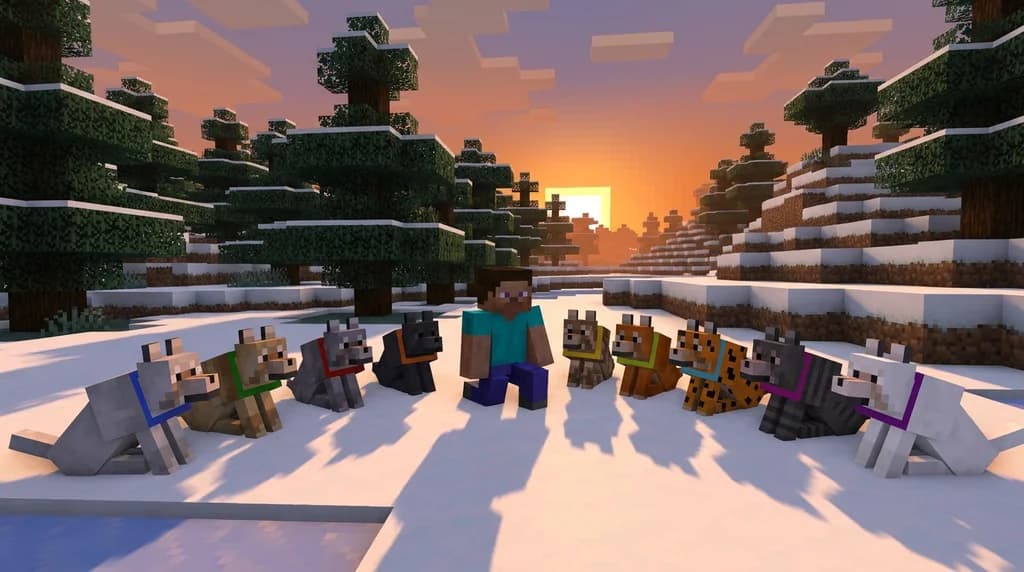
Key Takeaways
| Point | Details |
|---|---|
| All 9 variants mapped | Every wolf type — Pale, Woods, Ashen, Black, Chestnut, Rusty, Spotted, Striped, and Snowy — spawns in a unique biome. |
| Taming is universal | Bone-taming mechanics are identical across all 9 wolf variants — you need 1-5 bones per wolf regardless of type. |
| Rare wolves need specific biomes | The Snowy Wolf only spawns in groves, the Striped Wolf in wooded badlands, and the Rusty Wolf in sparse jungles. |
| Transport safely with leads | Wolves teleport to you but can get stuck — use a lead to pull them through tricky terrain or nether portals. |
| Gaia Legends adds depth | The server's custom wolf companion system and wolf-related quests give tamed wolves expanded utility and personality. |
Table of Contents
- What Are Minecraft Wolf Variants?
- Complete List of All 9 Wolf Variants and Their Spawn Biomes
- Where Do Wolves Spawn in Minecraft?
- How to Tame Every Wolf Variant
- How to Transport Wolves Across Biomes
- Tips for Building a Complete Wolf Collection
- How to Put This Into Practice on Gaia Legends
- Frequently Asked Questions
- Recommended
You've tamed a wolf before — bones, hearts, a red collar. But in 2026, Minecraft wolves are no longer just one pale-grey model. Mojang has introduced nine distinct wolf variants, each tied to a specific biome, and finding all of them means exploring parts of your world you might never have visited. This guide maps every minecraft wolf variant spawn location, so you can track down the rare Rusty Wolf hiding in sparse jungles or the elusive Snowy Wolf prowling groves without wasting hours in the wrong biomes.
What Are Minecraft Wolf Variants?
Minecraft wolf variants are biome-specific visual variations of the tamed wolf, introduced in the Armored Paws update (1.20.5), with nine distinct fur patterns and colors that spawn only in their assigned biomes.
Before the update, every wolf in Minecraft looked identical: pale grey fur, dark legs, a drooping tail. The Armored Paws drop changed that entirely. Wolves now reflect the environment they come from — a wolf from a snowy grove looks nothing like one from a wooded badlands mesa. All variants share identical behavior, health (20 HP, or 10 hearts when wild; 40 HP, or 20 hearts when tamed), and taming mechanics. The only difference is appearance, but that appearance tells a story about where you found your companion.
Each variant spawns in packs of 1-8 wolves within its assigned biome. The spawn rate is consistent — wolves are not rare in their home biome, but finding the biome itself can be the real challenge. If you're already hunting rare structures, knowing how to locate ancient cities fast in 2026 without cheats can help you develop the exploration mindset needed for wolf hunting too.
Complete List of All 9 Wolf Variants and Their Spawn Biomes
Every wolf variant has exactly one or two assigned biomes where it naturally spawns — memorize this table and you'll never waste bones on the wrong pack again.
| Wolf Variant | Spawn Biome(s) | Fur Description | Rarity (Biome Rarity) |
|---|---|---|---|
| Pale Wolf | Forest, Taiga, Birch Forest | Classic pale grey with dark legs | Common |
| Woods Wolf | Dark Forest | Darker grey with brown undertones | Common |
| Ashen Wolf | Snowy Taiga | Light silver-grey, almost white | Uncommon |
| Black Wolf | Old Growth Pine Taiga | Solid black fur, yellow eyes | Rare |
| Chestnut Wolf | Old Growth Spruce Taiga | Rich brown with cream muzzle | Rare |
| Rusty Wolf | Sparse Jungle | Reddish-brown, like iron-rich soil | Rare |
| Spotted Wolf | Savanna Plateau | White with black spots, hyena-like | Uncommon |
| Striped Wolf | Wooded Badlands | Tan with dark horizontal stripes | Rare |
| Snowy Wolf | Grove | Pure white, blends into snow | Uncommon |
Packs spawn on grass blocks, dirt, coarse dirt, and podzol at light level 7 or higher. The Pale Wolf is the one you've known for years — it's still the default wolf in forests and taigas, and it remains the most common variant by a wide margin. The Black Wolf, Chestnut Wolf, Rusty Wolf, and Striped Wolf are tied to rarer biome subtypes, making them the hardest to find in a typical seed (via Minecraft Wiki).
Why Biome Hunting Matters for Rare Variants
Old growth pine taigas and sparse jungles are not biomes most players stumble into accidentally. You'll need to travel — sometimes thousands of blocks — to find them. The Spotted Wolf's savanna plateau biome is particularly tricky because savanna plateaus often generate as small patches inside larger savanna biomes. If you've already mastered elytra flight with rocket boosting, biome-hopping becomes dramatically faster.
Pro Tip: Use the
/locate biomecommand in a creative test world to learn how far these rare biomes typically generate from spawn on your seed type. Sparse jungles often generate adjacent to regular jungles — fly the jungle border and you'll spot the transition when the trees thin out.
Where Do Wolves Spawn in Minecraft?
Wolves spawn naturally in nine specific biome types across the Overworld, always on solid blocks with a light level of 7 or higher, and never in water, caves, or the Nether.
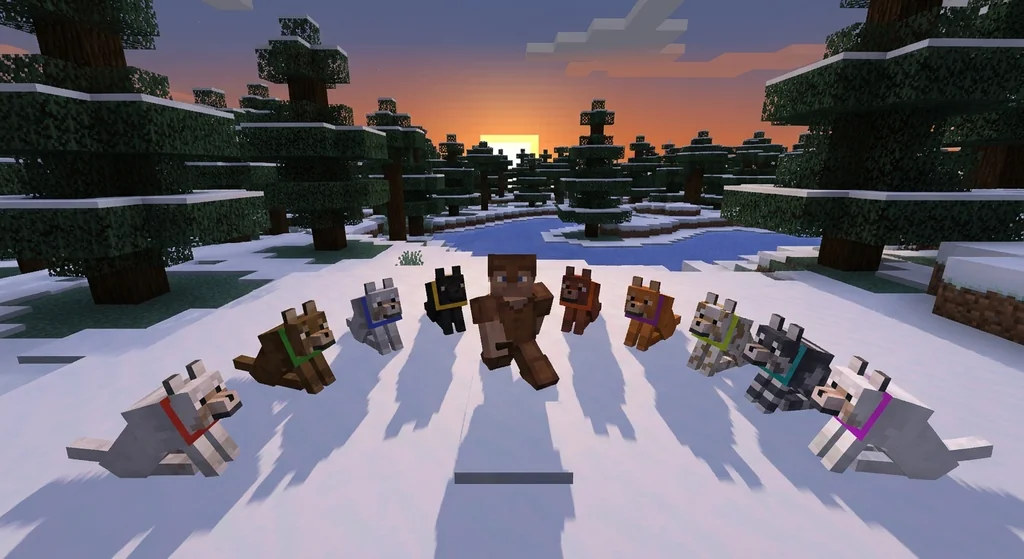
This is the question every new wolf hunter asks. The short answer: wolves spawn in forest, taiga, and mountain-adjacent biomes — but the full answer requires understanding which variant lives where. Each variant is biome-locked. If you want a Black Wolf, you must find an old growth pine taiga. No other biome will spawn it.
How to Find the Right Biome Fast
- Check your seed. Use a seed mapping tool like Chunkbase to locate rare biomes before you travel.
- Fly, don't walk. An elytra with rockets covers 1,000 blocks in under 30 seconds. If you need help with flight mechanics, our elytra flight tips guide covers speed optimization.
- Follow biome edges. Rare biomes often border their common counterparts — old growth taigas sit inside regular taigas, sparse jungles hug jungle edges.
- Bring a bed. Wolves spawn at any light level above 7, but sleeping through the night prevents hostile mob interference while you search.
Warning: Wolves despawn if you leave the chunk and they haven't been tamed or name-tagged. If you find a rare variant, tame it immediately or tag it with a name tag — don't risk losing it while you go get bones.
How to Tame Every Wolf Variant
Taming any wolf variant requires 1-5 bones, fed by right-clicking until hearts appear and the wolf's collar turns red — the process is identical across all nine variants.
Taming mechanics haven't changed with the variant update. You still need bones (dropped by skeletons and skeleton horses, or found in dungeon, desert temple, and ancient city chests), and you still right-click the wolf repeatedly until hearts appear. The average number of bones needed is 2-3, but the RNG can demand up to 5. Each bone has a 33% chance to tame the wolf (via Minecraft Wiki).
Taming Step-by-Step
- Approach carefully. Wolves are neutral unless you hit them. Walk, don't sprint.
- Hold bones in your main hand. Your character holds them out visibly.
- Right-click the wolf. If hearts appear, it's tamed. If black particles appear, try again.
- The collar turns red. This confirms the wolf is yours. You can dye the collar any color by right-clicking with dye.
- Right-click to sit. A sitting wolf won't teleport or follow you — useful when you're organizing a pack.
Once tamed, the wolf has 20 hearts (double its wild health), will attack any mob you attack or that attacks you (except creepers), and teleports to you if you move more than 12 blocks away. Tamed wolves won't attack creepers, which makes them safer base guards than you might expect.
Pro Tip: Bring at least 10 bones per wolf-hunting expedition. Nothing is worse than finding a rare Black Wolf and running out of bones on the fourth failed tame attempt.
How to Transport Wolves Across Biomes
Tamed wolves teleport to you when you move more than 12 blocks away, but they can get stuck on terrain, water, or unloaded chunks — use leads, boats, or nether portals for safe long-distance transport.
Getting your new wolf home is often harder than finding it. Wolves teleport reliably over short distances, but long journeys through forests, oceans, or nether portals introduce problems. A wolf stuck in water won't teleport. A wolf in an unloaded chunk simply sits there until you return.
Transport Methods Ranked
| Method | Best For | Risk Level |
|---|---|---|
| Walking with teleport | Short distances (<500 blocks) | Low — but slow |
| Lead | Medium distances, rough terrain | Low — wolf follows exactly |
| Boat | Ocean crossings | None — wolves sit in boats |
| Nether portal | Long distances (8x speed) | Medium — wolf must enter portal |
| Elytra + lead | Fastest method | High — wolf takes fall damage |
For nether portal travel, push your wolf into the portal frame or use a lead to pull it through. Once in the Nether, the wolf follows you on packed ice paths or via teleport. Just make sure the destination portal is lit before you arrive — a wolf spawning alone in the dark Nether is a dead wolf.
Warning: Never fly with a wolf on a lead using an elytra unless you're flying low and slow. Wolves take fall damage, and a 50-block drop will kill even a tamed wolf at full health. If you're working on your flight technique, review our elytra flight guide before attempting wolf airlifts.
Tips for Building a Complete Wolf Collection
Collecting all nine wolf variants requires systematic biome exploration, a safe transport infrastructure, and a dedicated wolf enclosure at your base.
This is a long-term project. Most players collect 4-5 variants naturally and then need to hunt the remaining rare ones. Here's how to approach it efficiently:
- Build a wolf kennel first. A fenced area with water, lighting, and individual sitting spots for each variant keeps your pack organized. Wolves that sit won't teleport, so you can display all nine variants like a living museum.
- Use name tags immediately. A named wolf won't despawn. Name each wolf after its variant ("Black," "Rusty," etc.) for easy identification.
- Dye collars for quick visual sorting. Assign each variant a unique collar color — blue for Snowy, orange for Rusty, green for Woods — so you can identify wolves at a glance.
- Breed extras for backups. Two tamed wolves fed any meat (including rotten flesh) produce a puppy. The puppy's variant always matches one parent — so two Black Wolves always produce Black Wolf puppies. Breed a backup of each rare variant in case of accidents.
- Map your hunting route. Plot the biomes you need on a seed map and plan a route that visits them in order. If you're already comfortable finding distant structures, the same skills that help you locate ancient cities apply directly to rare biome hunting.
How to Put This Into Practice on Gaia Legends
Everything you've learned about wolf variants applies on Gaia Legends — but our server adds layers that make wolf companions even more rewarding. Gaia Legends features a custom wolf companion system that gives tamed wolves expanded utility beyond vanilla mechanics. Your wolf can earn companion XP through combat, exploration, and completing wolf-related quests designed specifically around the variant system.
Imagine tracking down a rare Rusty Wolf in a sparse jungle, then leveling it up through server quests until it gains unique perks no vanilla wolf has. Our community has built shared wolf kennels at spawn where players show off their full variant collections, trade rare-breed puppies, and collaborate on biome-hunting expeditions. The server's economy includes wolf-related items — custom collars, companion food, and cosmetic upgrades — all earnable through gameplay.
Gaia Legends is free to join, non-pay-to-win, and supports Java + Bedrock crossplay. Whether you're a solo wolf collector or want to run pack-hunting parties with friends, there's a place for you here. Join at gaialegends.pro and start your legend today.
Frequently Asked Questions
Where can I find all Minecraft wolf variant spawn locations?
Each of the nine wolf variants spawns in a specific biome. Pale Wolves appear in forests and taigas, Woods Wolves in dark forests, Ashen Wolves in snowy taigas, Black Wolves in old growth pine taigas, Chestnut Wolves in old growth spruce taigas, Rusty Wolves in sparse jungles, Spotted Wolves in savanna plateaus, Striped Wolves in wooded badlands, and Snowy Wolves in groves. Use a seed mapper to locate rare biomes before traveling.
How many bones does it take to tame a wolf in Minecraft?
Taming a wolf requires 1-5 bones, with each bone having a 33% chance of success. On average, players use 2-3 bones per wolf, but bad RNG can push it to 5. Always carry at least 10 bones when hunting rare variants — running out mid-tame on a Black or Rusty Wolf is a painful experience that's easily avoided.
Can you breed different wolf variants together?
Yes, any two tamed wolves can breed regardless of variant. Feed both wolves any meat (raw or cooked, including rotten flesh) to produce a puppy. The puppy's variant always matches one of the parents — two Black Wolves produce a Black Wolf puppy, while a Black Wolf and a Snowy Wolf produce either a Black or Snowy puppy at random.
Do wolf variants have different stats or abilities?
No. All nine wolf variants have identical stats: 20 HP (10 hearts) when wild, 40 HP (20 hearts) when tamed, and the same attack damage of 4 HP (2 hearts) per bite. Variants are purely cosmetic. The only gameplay difference is where they spawn, which makes rare variants a collection challenge rather than a combat advantage.
How do I stop my tamed wolf from teleporting to me?
Right-click your tamed wolf to make it sit. A sitting wolf will not teleport, follow you, or move from its spot until you right-click it again to stand it up. Use this to keep wolves safe at your base while you explore dangerous areas, or to display wolves in a kennel without them clustering around you.
What happens if my tamed wolf dies?
A tamed wolf that dies is gone permanently — there is no way to revive it in vanilla Minecraft. This is why breeding backup puppies for rare variants is essential. On multiplayer servers like Gaia Legends, some communities offer wolf insurance or replacement programs, but in single-player, the only protection is keeping your wolves safe from creepers, lava, and fall damage.
Recommended
- How to Master JEI: The Ultimate Crafting Guide for Minecraft 2026 | Gaia Legends
- How to Get an Elytra in Hardcore Minecraft Without Dying (2026) | Gaia Legends
- How to Route the Deep Dark in Minecraft Speedruns (2026 Guide) | Gaia Legends
- How to Unlock Hidden Item Passives on Minecraft Servers in 2026 | Gaia Legends
Ready to play? Join Gaia Legends today — no pay-to-win, Java + Bedrock crossplay.
- Java:
join.gaialegends.pro - Bedrock:
join.gaialegends.pro— Port19132
Further reading
These references were recorded with the article; specific claims have not been matched to source excerpts.
Frequently Asked Questions
Where can I find all Minecraft wolf variant spawn locations?
Each of the nine wolf variants spawns in a specific biome. Pale Wolves appear in forests and taigas, Woods Wolves in dark forests, Ashen Wolves in snowy taigas, Black Wolves in old growth pine taigas, Chestnut Wolves in old growth spruce taigas, Rusty Wolves in sparse jungles, Spotted Wolves in savanna plateaus, Striped Wolves in wooded badlands, and Snowy Wolves in groves. Use a seed mapper to locate rare biomes before traveling.
How many bones does it take to tame a wolf in Minecraft?
Taming a wolf requires 1-5 bones, with each bone having a 33% chance of success. On average, players use 2-3 bones per wolf, but bad RNG can push it to 5. Always carry at least 10 bones when hunting rare variants — running out mid-tame on a Black or Rusty Wolf is a painful experience that's easily avoided.
Can you breed different wolf variants together?
Yes, any two tamed wolves can breed regardless of variant. Feed both wolves any meat (raw or cooked, including rotten flesh) to produce a puppy. The puppy's variant always matches one of the parents — two Black Wolves produce a Black Wolf puppy, while a Black Wolf and a Snowy Wolf produce either a Black or Snowy puppy at random.
Do wolf variants have different stats or abilities?
No. All nine wolf variants have identical stats: 20 HP (10 hearts) when wild, 40 HP (20 hearts) when tamed, and the same attack damage of 4 HP (2 hearts) per bite. Variants are purely cosmetic. The only gameplay difference is where they spawn, which makes rare variants a collection challenge rather than a combat advantage.
How do I stop my tamed wolf from teleporting to me?
Right-click your tamed wolf to make it sit. A sitting wolf will not teleport, follow you, or move from its spot until you right-click it again to stand it up. Use this to keep wolves safe at your base while you explore dangerous areas, or to display wolves in a kennel without them clustering around you.
What happens if my tamed wolf dies?
A tamed wolf that dies is gone permanently — there is no way to revive it in vanilla Minecraft. This is why breeding backup puppies for rare variants is essential. On multiplayer servers like Gaia Legends, some communities offer wolf insurance or replacement programs, but in single-player, the only protection is keeping your wolves safe from creepers, lava, and fall damage.
Related guides

How to Use the Smithing Table to Upgrade to Netherite in 2026
Learn the Minecraft smithing table netherite upgrade process in 2026. Complete guide on using netherite upgrade templates, diamond gear, and ancient debris.

Top 7 Best Minecraft Guide Books Every Player Needs in 2026
Discover the 7 best Minecraft guide books for 2026. From official survival handbooks to redstone bibles, find the perfect book to level up your gameplay fast.

Minecraft Spyglass Scouting: Mechanics and Usage
A complete quick reference guide to the Minecraft spyglass. Covers crafting, exact FOV mechanics (7° Java / 6° Bedrock), the square overlay, and scouting limitations.
Minecraft Food Mechanics: Eating, Hunger, and Saturation
Learn how eating, hunger, and saturation work in Minecraft. This quick reference covers consumption time, health regeneration, sprinting limits, and starvation damage.
Have a question or another approach?
Compare notes with other readers. Include your edition and version when discussing mechanics.