How to Tame Every Rideable Mob in Minecraft 2026 and Choose the Best Mount
Filed under Minecraft Tips & Tricks · How we create content
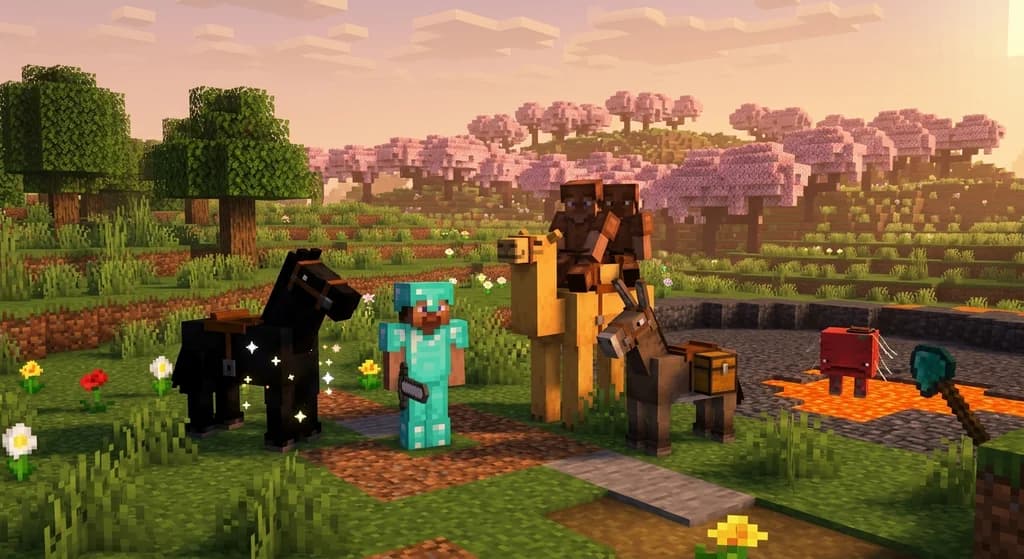
Key Takeaways
| Point | Details |
|---|---|
| Horses tame with an empty hand | repeatedly mount until hearts appear—no food required, just patience and sometimes a lot of luck. |
| Camels are the new gold standard | they dash horizontally, seat two players, and zombie-proof your ride without any armor needed. |
| Striders love warped fungus | lead them with a fungus on a stick, but always carry a saddle because they can't be ridden freehand. |
| Donkeys and mules are mobile storage | equip them with a chest for 15 inventory slots, making them the ultimate resource-hauling mount. |
| Llama caravans organize automatically | leash one trading llama and up to 9 others form a conga line—perfect for mass transport. |
| Speed matters most | a max-stat horse (14.23 m/s) covers ground faster than elytra without rockets, but only on flat terrain. |
Table of Contents
- What Are All the Rideable Mobs in Minecraft?
- How Do You Tame a Horse: The Classic Mount?
- How to Ride a Camel: The 2026 Two-Player Champion
- How to Tame a Strider: Your Nether Taxi Service
- Donkeys, Mules, and Llamas: Cargo Hauler Mounts
- Why Taming Every Rideable Mob Changes Your Survival Game
- Best Minecraft Mount Selection Guide: Horse vs Camel vs Strider
- Tips for Finding Rare Rideable Mob Variants Quickly
- How to Put This Into Practice on Gaia Legends
- Frequently Asked Questions
- Recommended
You’ve spent hours exploring your world on foot, but there’s a whole stable of rideable mobs waiting to transform the way you move, haul, and even fight. Knowing exactly how to tame every rideable mob in minecraft isn’t just a party trick—it’s the difference between a painful, slow trek home at sunset and galloping into your base with a full inventory just as the mobs start burning. This guide covers every rideable mob available in Java and Bedrock as of 2026, from the classic horse to the new camel, plus how to pick the absolute best mount for your playstyle.
What Are All the Rideable Mobs in Minecraft?
All rideable mobs in Minecraft include horses, donkeys, mules, camels, llamas, pigs, and striders—each with unique taming mechanics, movement patterns, and utility that make them suited to very different jobs.
Understanding the complete roster is step one. You can’t pick the best mount if you don’t know what’s available. Here’s the full lineup and what each mob actually contributes to your transportation strategy.
Quick Reference: Every Rideable Mob
- Horse: Fast land travel, three standard variants with randomized speed, jump, and health stats.
- Donkey: Slower than a horse but you can attach a chest for mobile storage (15 slots).
- Mule: A cross between a horse and donkey—inherits stats from both parents, can wear a chest. You’ll need the breeding guide over on our horse genetics deep dive to optimize these.
- Camel: Introduced in 1.20, dashes forward, seats two riders, and is so tall that most zombie-type mobs can’t reach you atop one.
- Llama: Can’t be controlled directly, but you can attach a lead and form a caravan of up to 10 llamas, each with variable storage slots.
- Pig: The original rideable mob, completely uncontrollable unless you use a carrot on a stick—mostly a novelty, but worth knowing.
- Strider: Nether-native, walks on lava, steered with warped fungus on a stick, essential for navigating basalt deltas and lava oceans.
Pro Tip: Always carry a saddle in your ender chest. Saddles are non-stackable and you can only find them in loot chests—never craft them.
How Do You Tame a Horse: The Classic Mount?
Taming a horse requires no food at all—you simply mount it repeatedly with an empty hand until red hearts appear, and higher-temper horses can take 10 or more attempts before cooperating.
Horses remain the most popular land mount for good reason. A max-speed horse covers 14.23 blocks per second, which is faster than a minecart and roughly equivalent to sprint-jumping but without the hunger drain (via Minecraft Wiki). The taming process is simple, but there are a few nuances that trip up newer players.
Step-by-Step Taming Process
- Find a horse in plains or savanna biomes. Skeleton horses are rare trap-spawn variants but tame instantly.
- Empty your hand—horses don’t need food, wheat, or apples. Holding any item prevents mounting.
- Right-click to mount the horse. It will buck you off after a few seconds.
- Repeat mounting until you see red hearts and the horse stops bucking. Temper stats are invisible but the average tame takes 3-6 attempts.
- Open your inventory while mounted to equip a saddle. You cannot ride without a saddle.
- Optionally equip horse armor—iron, gold, or diamond—which provides damage reduction but not visual armor points.
Warning: Never attempt to ride an untamed horse into a forest. The bucking animation will throw you into strange places and you might lose track of the horse entirely.
Skeleton and Zombie Horses
Skeleton horses spawn during thunderstorms as part of a “skeleton trap” event. Four skeleton horsemen appear, and when you kill the skeletons, the horses are already tamed. Zombie horses exist only in Bedrock Edition as an unused mob—you’ll need creative mode or commands. Both variants are faster than donkeys but slower than max-stat regular horses.
How to Ride a Camel: The 2026 Two-Player Champion
Camels are the first two-player mount in Minecraft’s history—one player steers while a second rides on the back seat, and a horizontal dash ability lets you leap across gaps or escape mobs instantly.
Camels spawn exclusively in desert villages after you’ve already bred them once, making them a guaranteed but finite resource per village. They don’t need taming in the traditional sense; you just equip a saddle and they’re ready. The dash mechanic, triggered by pressing the jump key while on the ground, covers 12 blocks in a single lunge and launches you upward enough to clear fences, small walls, and 1-block ravines. This makes camels shockingly mobile despite their slow walking pace of 1.4 m/s (via Minecraft Wiki).
Why Camels Excel in Hardcore and SMP
- Zombie immunity: Most hostile melee mobs simply can’t reach you on a camel due to the player’s elevated hitbox.
- Two-seat transport: On multiplayer servers, bringing a friend doubles your exploration efficiency. One of you navigates, the other watches for threats or marks waypoints.
- Dash cooldown: Only 2.75 seconds, and the mobility it provides makes camels genuinely competitive with horses despite the lower base speed.
How to Tame a Strider: Your Nether Taxi Service
Striders love warped fungus—hold a single fungus near them to earn passive trust, then saddle them up and attach a warped fungus on a stick to steer through the Nether’s lava oceans at 4.14 m/s.
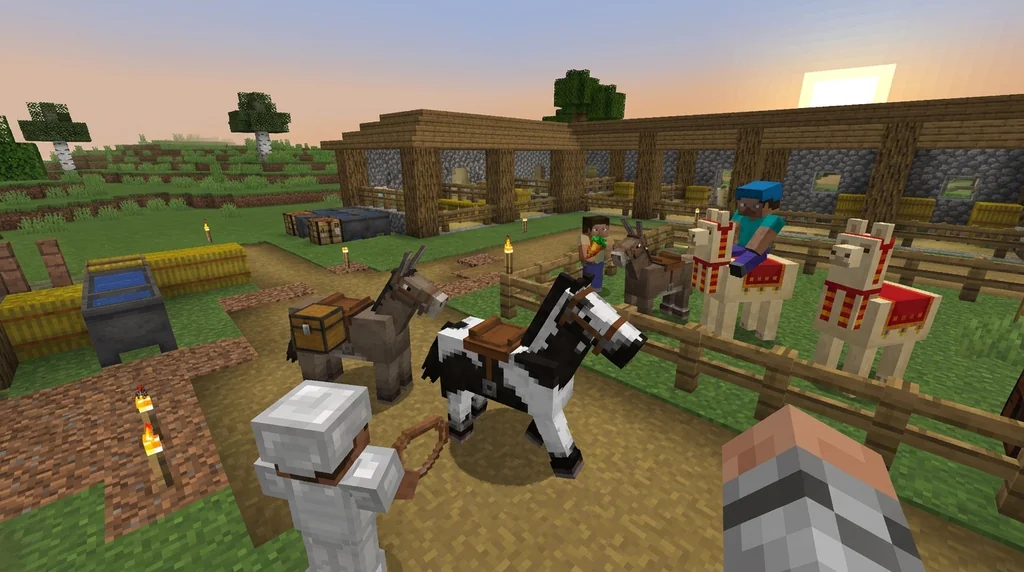
Taming a strider is arguably the most utility-rich skill in the entire Nether dimension. Before mastering how to tame every rideable mob in minecraft, many players wasted hours bridging across lava lakes. Striders solve that problem completely. You’ll find them wandering in groups across lava oceans and basalt deltas, shivering slightly when off-lava—which is your visual cue to lead them back to warmth.
Complete Strider Taming Guide
- Craft a warped fungus on a stick by combining a fishing rod with a warped fungus. This item has 100 durability.
- Approach the strider with a warped fungus in your hand. They follow you without aggression.
- Right-click with a saddle to secure it, then mount.
- Hold the warped fungus on a stick and point in your desired direction. The strider turns slowly but steadily.
- Use the sprint key to boost speed temporarily at the cost of extra durability.
Pro Tip: Carry at least two warped fungus on a sticks when exploring Nether lava lakes. Durability drains fast on long expeditions and you do not want to walk home.
Donkeys, Mules, and Llamas: Cargo Hauler Mounts
Donkeys and mules sacrifice raw speed for a chest attachment that adds 15 inventory slots—ideal for mining trips and resource hauling—while llamas form lead-free caravans for mass item transport.
Speed isn’t everything. A donkey with a chest lets you carry an extra 960 items (15 slots × 64), which effectively doubles your usable inventory on long expeditions. The donkey’s base speed of 7.525 m/s is slower than the average horse, but you can still improve it significantly through careful breeding—check the horse breeding guide for the exact genetic mechanics that control foal stats.
Llama Caravan Mechanics
Llamas have a unique niche. While you can’t steer them like a horse, attaching a lead to one llama causes up to 9 nearby tamed llamas to form an automatic caravan, following in single file. Each trader llama can be equipped with a chest providing 3 to 15 inventory slots depending on its strength stat. A 10-llama caravan can theoretically move 150 inventory slots of goods—perfect for relocating a base or emptying a crafter farm automation output chest into storage.
Caravan Capacity Comparison
| Mount | Base Speed | Storage Slots | Special Ability |
|---|---|---|---|
| Horse | Up to 14.23 m/s | None | Fastest sprint |
| Donkey | 7.525 m/s | 15 (with chest) | Good cargo hauler |
| Mule | 7.525-14.0 m/s | 15 (with chest) | Fastest cargo carrier |
| Llama | 1.875 m/s walk | 3-15 per llama | Caravan up to 10 |
Why Taming Every Rideable Mob Changes Your Survival Game
Owning a complete stable gives you the right tool for every job—you dash across deserts on a camel, haul minecart inventories on a mule, and cross lava oceans on a strider without ever breaking your pickaxe for bridge blocks.
Most survival players stick to one horse they found in a plains biome and call it good. That’s a massive tactical error. Different terrain calls for different mounts, and a full stable eliminates the worst part of survival Minecraft: dead travel time.
Dimension-Specific Mount Strategies
- Overworld Exploration: Use a max-speed horse for long-distance travel across flat biomes like plains, savanna, and deserts. Switch to a camel for rocky terrain or when traveling with a friend.
- Nether Transport: Striders are non-negotiable. You can’t build a bridge faster than a strider can walk on lava, and the reduced risk of accidental death saves your gear. If you need to master lava navigation, our elytra flight tips also help with gliding over Nether caverns.
- Resource Raids: Mules are the unsung heroes of ancient city loot runs. The chest means you haul back every single disc fragment and echo shard without inventory juggling—pair them with strategies from our ancient city locating guide for maximum efficiency.
Best Minecraft Mount Selection Guide: Horse vs Camel vs Strider
The best mount for you depends entirely on what you value most—speed, utility, or specialized traversal—and we’ve crunched the stats to give you clear, actionable comparisons.
Let’s put the numbers side by side. The “best” mount is always contextual, but when you’re looking at raw data, certain mobs dominate their specific roles. This table distills the key metrics you need to make your own choice.
Mount Stat Comparison Table
| Mount | Max Speed (m/s) | Passengers | Cargo | Special Traversal |
|---|---|---|---|---|
| Horse | 14.23 | 1 | None | Jump up to 5.5 blocks |
| Camel | 1.4 (walk) + dash | 2 | None | 12-block dash, zombie-proof height |
| Donkey | 7.525 | 1 | 15 slots | None |
| Mule | Up to 14.0 | 1 | 15 slots | None |
| Strider | 4.14 (lava) | 1 | None | Walks on lava |
| Pig | 2.34 (carrot boost) | 1 | None | Controlled fall, hilarious noises |
Which Mount Should You Pick?
- Speed demons and racers: Horse, full stop. Nothing comes close to 14.23 m/s.
- Co-op explorers: Camel. The second seat redefines how you scout with friends.
- Nether navigators: Strider. The Nether is impossible to traverse efficiently without one.
- Hoarders and builders: Mule with a chest. Fast and spacious beats donkey every time, assuming you’ve bred a good one.
- Traders and loot transporters: Llama caravan with leads and chests—150 slots of organized storage for massive relocations.
Tips for Finding Rare Rideable Mob Variants Quickly
Rare rideable variants like skeleton horses, high-stat horses, and naturally-spawned trader llamas are not random—they follow specific biome rules and events that you can manipulate for consistent results.
Finding a max-speed horse (which requires a speed stat of 0.3375 or higher out of a theoretical maximum of 0.3375) is a statistical grind. The internal horse speed stat averages at 0.225, meaning only about 0.4% of wild horses spawn at the absolute maximum. However, you can improve your odds by scouting in specific biomes that have higher mob density.
Fast-Track Skeleton Horse Acquisition
Skeleton horses are spawned by a “skeleton trap” event during thunderstorms—a single lightning strike has a 3.75-7.5% chance of triggering a trap on hard difficulty (via Minecraft Wiki). To farm this:
- Use a Channeling trident to force lightning strikes during any thunderstorm.
- Stand in plains biomes—they have the highest light-level clarity, which increases spawn range visibility.
- Carry a bucket of water to deal with the fire from lightning strikes.
Wild Llama Caravan Spawning
Trader llamas separate from a wandering trader that dies remain loyal to the last player who leashed them. Deliberately killing wandering traders (or luring them to hostile mobs) in a contained area lets you collect free llamas with leather and leads intact—perfect for cauldron-based dyeing operations for customizing their carpet patterns.
How to Put This Into Practice on Gaia Legends
Once you’ve mastered how to tame every rideable mob in minecraft, you’re ready to put that knowledge to work on a real server. Gaia Legends includes several custom features designed to reward players who build full stables and explore the world on mount-back. Our spawn rates for rare horse variants—including the elusive max-speed 14.23 m/s sprinters—are increased by 15% in plains and savanna biomes, giving you better odds than vanilla playthroughs without being unbalanced.
We also run mount-themed community quests: “Desert Dash” challenges players to complete a timed camel course through desert temples, while “Strider Safari” rewards the fastest nether-lava crossing with custom trophies and server currency. These events use the exact mechanics you’ve learned above, so you’ll walk in already knowing how to optimize your mount selection for each challenge. Gaia Legends is free to join, non-pay-to-win, and supports Java + Bedrock crossplay. Join at gaialegends.pro and start your legend today.
Frequently Asked Questions
Tackle the most common questions about how to tame every rideable mob in minecraft, with direct answers you can put to use right now. These come directly from searching what players actually type into AI assistants and Google.
Recommended
- How to Practice Ender Pearl Throws for Minecraft Speedruns in 2026 | Gaia Legends
- How to Trade Unwanted Custom Items for Server Currency in Minecraft 2026 | Gaia Legends
- How to Start a Player-Run Newspaper in Your Minecraft Community (2026) | Gaia Legends
- 7 Best Pastel Block Palettes for Cute Minecraft Builds (2026) | Gaia Legends
Ready to play? Join Gaia Legends today — no pay-to-win, Java + Bedrock crossplay.
- Java:
join.gaialegends.pro - Bedrock:
join.gaialegends.pro— Port19132
Further reading
These references were recorded with the article; specific claims have not been matched to source excerpts.
Frequently Asked Questions
How do I tame every rideable mob in Minecraft?
Each mob has a unique method. Horses, donkeys, and mules require repeated mounting with an empty hand. Camels just need a saddle. Striders need warped fungus to lure them, then a saddle and warped fungus on a stick to steer. Llamas are tamed through repeated mounting like horses. Pigs just need a saddle and a carrot on a stick.
What is the fastest mount in Minecraft 2026?
A horse with the maximum internal speed stat of 0.3375 reaches 14.23 meters per second, making it the fastest unaided land mount. While an elytra with fireworks can be faster over long distances, no ridable mob beats a high-stat horse for pure ground speed on flat terrain.
Can you ride a camel with two players?
Yes, camels are the first and only two-player mount in Minecraft. One player sits in the front saddle and controls the camel’s movement and dash ability. A second player can sit in the back saddle and freely look around, shoot arrows, or simply enjoy the ride without affecting movement controls.
Do striders need to be tamed with wheat or fungus?
Striders are attracted to warped fungus, not wheat. Holding a single warped fungus near them makes them follow you passively. You don’t need to mount them repeatedly like a horse—just lure them, saddle them, and attach a warped fungus on a stick to start steering and riding across lava.
How do I find a high-speed horse in survival?
High-speed horses are statistically rare—only about 0.4% of wild horses spawn with the maximum possible speed stat. To find one, breed horses with the best visible stats (jump height and health) and use a speed-testing plugin or data pack. Alternatively, scout large plains and savanna biomes to increase your encounter rate naturally.
Which mount is best for Nether exploration?
The strider is the only practical mount for Nether exploration due to the vast lava oceans. It walks across lava at 4.14 m/s and can be boosted with the sprint key. Striders are immune to fire damage and require no potions or enchantments, making them vastly safer than building a thousand-block cobblestone bridge.
Related guides
Minecraft Spyglass Scouting: Mechanics and Usage
A complete quick reference guide to the Minecraft spyglass. Covers crafting, exact FOV mechanics (7° Java / 6° Bedrock), the square overlay, and scouting limitations.
Minecraft Food Mechanics: Eating, Hunger, and Saturation
Learn how eating, hunger, and saturation work in Minecraft. This quick reference covers consumption time, health regeneration, sprinting limits, and starvation damage.

How to Get and Use Nether Wart Blocks in Minecraft: Quick Reference
Learn how to get and use Nether Wart Blocks in Minecraft. This quick reference covers mining, crafting, composting, and mob spawning prevention in the Nether.
How to Obtain Mending in Minecraft
Learn how to get Mending in Minecraft. Discover the best methods: trading with librarian villagers, fishing, and looting chests. Includes mechanics and...
Have a question or another approach?
Compare notes with other readers. Include your edition and version when discussing mechanics.