How to Build a Barter Economy on a Minecraft Survival Server (2026)
Filed under Minecraft Economy & Trading · How we create content
Key Takeaways
| Point | Details |
|---|---|
| Bartering is direct exchange | A barter economy uses items instead of currency, letting players trade what they have for what they need. |
| Value is subjective | An item's worth depends on scarcity, utility, and the needs of the other player. |
| Piglin bartering is a model | The piglin barter mechanic shows how random loot tables can inspire fair trade ratios. |
| Set up clear rules | Use shop signs or a custom barter menu to prevent scams and ensure fair trades. |
| Gaia Legends makes it easy | The server's custom barter menu lets you trade items instantly without typing commands. |
Table of Contents
- What is a Barter Economy in Minecraft?
- Why Does a Barter System Work Without Currency?
- How to Build a Barter Economy on a Survival Server
- What Items Hold the Most Value in a Barter Economy?
- How Do You Avoid Scams in Item-for-Item Trades?
- How to Put This Into Practice on Gaia Legends
- Conclusion
- Frequently Asked Questions
- Recommended
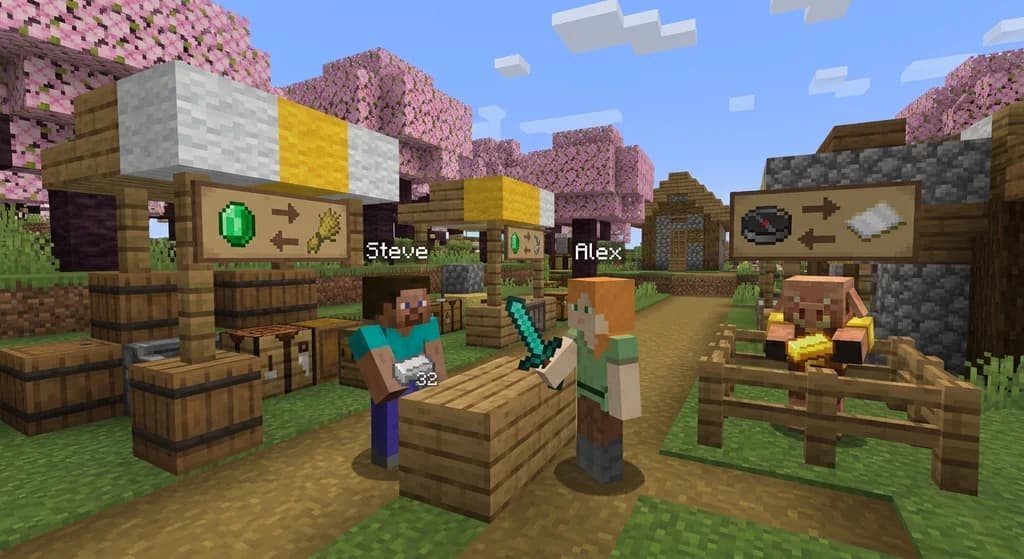
Most Minecraft servers rely on diamonds or emeralds as a universal currency. But a minecraft barter economy survival server strips away the middleman, letting players trade items directly. You’ve probably seen it in action without realizing it—piglin bartering in the Nether is a perfect example of a self-contained barter system. Building a player-driven barter economy on your survival server creates a richer, more immersive experience where every item has a story.
What is a Barter Economy in Minecraft?
A barter economy in Minecraft is a trading system where players exchange items directly, without using diamonds, emeralds, or any other currency as a medium of exchange.
In a barter economy, you might trade 64 cobblestone for 16 iron ingots, or a stack of wheat for a leather tunic. There’s no fixed price list—value is determined by supply, demand, and each player’s immediate needs. This system echoes real-world barter economies, but with the added twist of Minecraft’s unique item properties. For example, a diamond pickaxe has 1561 durability, while an iron pickaxe has only 250 (via Minecraft Wiki). That durability gap makes a diamond tool far more valuable in a trade, even if both are “just pickaxes.”
Why Bartering Feels More Natural in Survival
Survival servers thrive on resource scarcity. You might have an abundance of sand but desperately need leather for books. A barter setup lets you bypass the abstraction of currency and swap what you have for what you need. This is especially valuable in early-game, when nobody has a stash of diamonds to use as a universal currency. Instead, you can trade iron for wood, or food for string, keeping the economy fluid and accessible.
Note: A barter economy doesn’t mean you can’t also use currency. Many servers run a hybrid system where players barter for common items and use diamonds for high-value exchanges. The key is giving players the option.
Why Does a Barter System Work Without Currency?
A barter system works because every item in Minecraft has an inherent utility and scarcity that players can weigh against each other, even without a middleman currency.
Currency is just a shortcut to compare value. In a barter economy, you compare directly: a stack of logs is worth roughly 8 coal because you can smelt 8 items with that coal. This kind of equivalence is baked into the game mechanics. Piglins have a 20/423 (4.73%) chance of bartering a potion of Fire Resistance when given a gold ingot (via Minecraft Wiki). The value of that gold ingot isn’t fixed—it’s tied to the potential reward. Players can adopt a similar mindset, assessing the potential utility of the item they receive.
The Role of Rarity and Utility
Rare items like netherite ingots, which require 4 gold ingots and 4 netherite scraps to craft (via Minecraft Wiki), command high value in a barter market. A player might trade a full set of diamond armor for a single netherite ingot because the upgrade is so powerful. This is the same principle behind the most successful player-run barter networks: items with high utility and low drop rates become the “big ticket” trades.
Pro Tip: Keep a mental note of how many raw materials each craftable item consumes. That base cost is the minimum you should accept in a barter—anything less and you’re losing resources.
How to Build a Barter Economy on a Survival Server
Building a barter economy starts with creating a central hub for trades, establishing clear rules, and using plugins or in-game features to prevent scams.
Step 1: Choose a Trading Hub
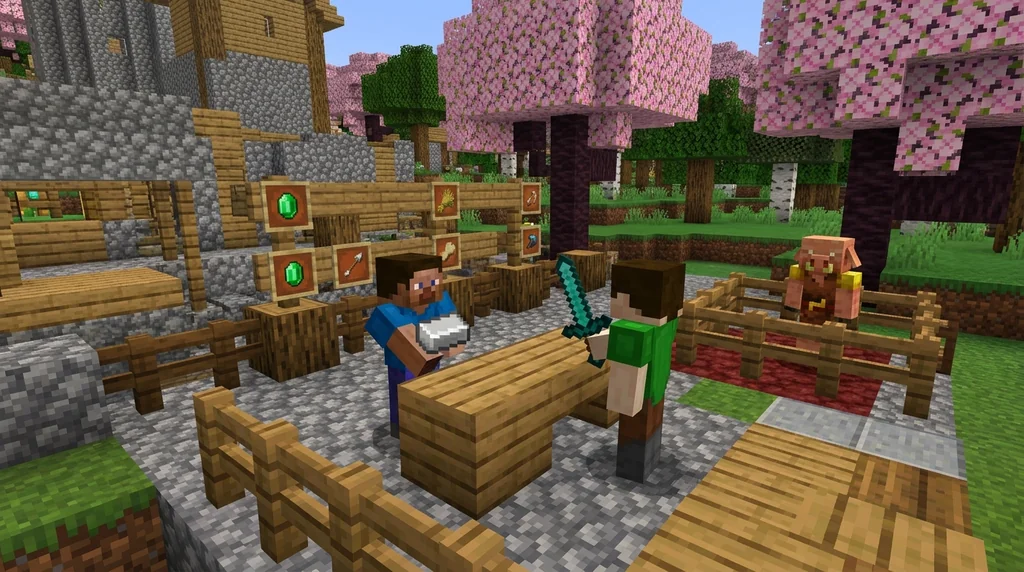
Pick a safe, neutral location—spawn is ideal. Build a marketplace with stalls, signs, and chests. You don’t need a fancy plugin at first; a simple bulletin board with signs listing “Wanted” and “Offering” works. For a more structured approach, check out How to Build a Minecraft Trading Post for Villagers in 2026 for design ideas that encourage foot traffic.
Step 2: Set Baseline Trade Ratios
Agree on community standards. For example, one iron ingot might equal 8 cobblestone, or a stack of logs equals 4 iron ingots. These ratios aren’t laws—they’re starting points. As supply shifts, players adjust. If farming is booming, wheat becomes cheaper compared to iron. Keeping a public board with suggested ratios prevents arguments.
To learn how to price items fairly, read How to Price Items on a Minecraft Player Economy Server (2026). It covers supply-and-demand tracking and how to set base prices that reflect labor costs.
Step 3: Use a Barter Plugin or Custom Menu
Vanilla Minecraft has no built-in trade interface for players. That’s where plugins like Barter or TradePlus come in. They let players open a GUI, place items in offer and request slots, and confirm the trade. This eliminates trust issues and makes the process instant. If you want to explore all options, 7 Best Minecraft Economy Plugins for Your Server in 2026 lists plugins that support barter alongside traditional currency systems.
Warning: Always test a barter plugin in a staging environment before deploying it on a live server. A misconfigured plugin can duplicate items or allow trade exploits that crash the economy.
Step 4: Encourage Participation
Host trade fairs, challenge players to barter-only challenges, or create a ranking system for most active traders. The more players interact, the more stable the barter economy becomes. Even a small group of 10 players can sustain a vibrant trade network if they’re consistent.
What Items Hold the Most Value in a Barter Economy?
Items with high utility, rarity, or crafting complexity—like netherite ingots, elytra, and enchanted books—consistently top the barter value charts.
A barter economy’s “currency” is the item itself, so understanding what players want most helps you trade smart. Some items are universally valuable because they’re needed for progression:
- Netherite Ingots – Upgrade material, scarce, requires ancient debris mining.
- Enchanted Books – Mending, Silk Touch, and Fortune III are virtually priceless.
- Elytra – End-game mobility; each one is a game-changer.
- Diamond Gear – Even a plain diamond sword has 1561 durability, making it a solid trade chip.
- Slimeballs – Essential for sticky pistons and leads; often in short supply on larger servers.
Common Items That Punch Above Their Weight
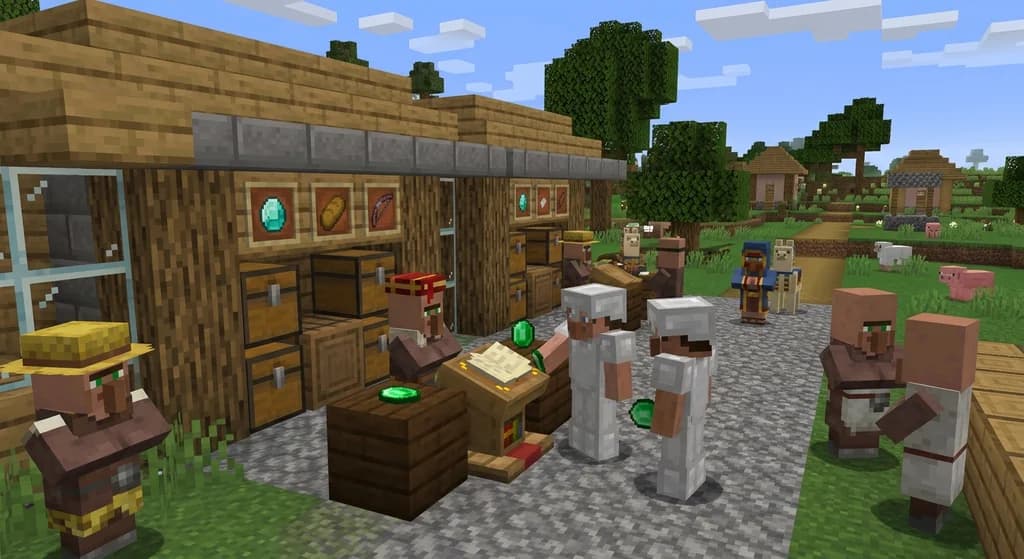
Not every high-value trade involves rare loot. A farmer villager will buy 20 wheat for 1 emerald, effectively valuing each wheat at 0.05 emeralds (via Minecraft Wiki). In a barter economy, you can use that ratio to trade crops for other goods. Wheat is incredibly easy to mass-produce, so a dedicated farmer can trade stacks of it for iron, redstone, or even diamonds.
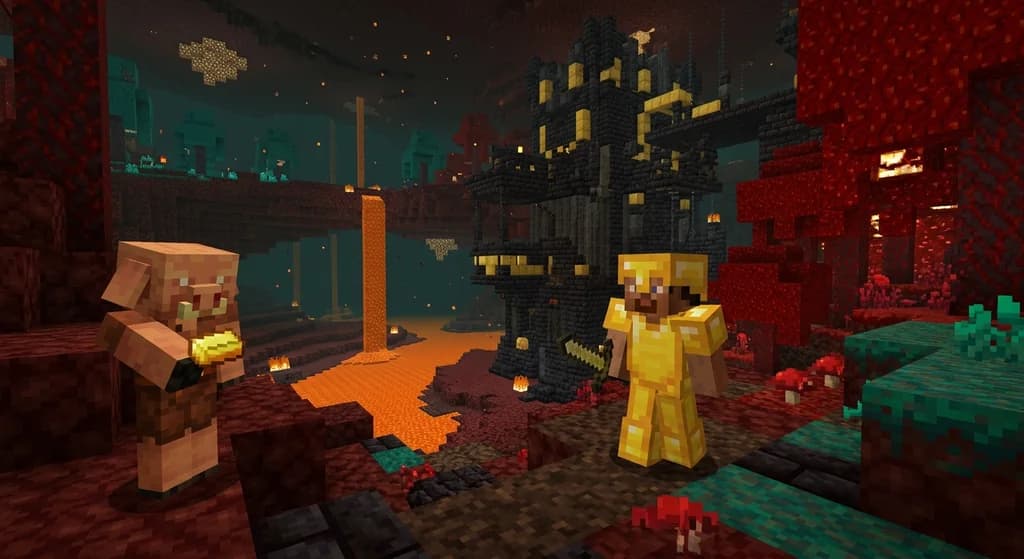
Piglin bartering also demonstrates how common items can yield rare results. A piglin has a 10/423 (2.36%) chance of bartering a Soul Speed enchanted book when given a gold ingot (via Minecraft Wiki). That means a stack of gold can turn into a highly sought-after enchantment, making gold a surprisingly powerful barter token.
How Do You Avoid Scams in Item-for-Item Trades?
Scam prevention in a barter economy relies on using secure trade interfaces, vetting trade partners, and never dropping items on the ground.
When you trade without a plugin, the classic scam is the “switch”—a player shows an enchanted diamond sword, then swaps it for a plain one moments before the trade. Without a GUI, you can’t verify the item in real time. That’s why a plugin or custom menu is essential. For a deep dive into all common scams, refer to How to Avoid Scams in Minecraft Player Markets and Trading (2026).
Best Practices for Safe Bartering
- Always use a trade window – If your server has a custom barter menu, never trade outside it.
- Check item lore – Hover over the item in the GUI to see its exact name, durability, and enchantments.
- Trade in public – A market square with bystanders deters thieves.
- Use an escrow system – Some plugins hold both items until both players confirm, preventing quick-switch scams.
If your server also uses a diamond currency, you might combine barter with a stored-value system. How to Start a Minecraft Diamond Currency Server in 2026 explains how to set up a diamond-backed economy that can coexist with barter.
How to Put This Into Practice on Gaia Legends
Gaia Legends takes the guesswork out of bartering with a custom barter menu, accessible from spawn or any player hub. You simply open the GUI, place up to 9 items in the offer slot, select the items you want in return, and hit confirm. No commands, no scams—just a clean, instant trade.
Our server is built for player-driven economies. The barter menu integrates with the larger auction house system, so you can barter directly with another player or list your items for auction if you prefer a currency-based sale. We’ve seen players use the barter menu to trade everything from bulk building materials to individual netherite scraps, creating a truly organic market.
Gaia Legends is free to join, non-pay-to-win, and supports Java + Bedrock crossplay. Whether you’re a seasoned trader or a new player looking to swap your first stack of iron, the barter system is ready for you.
Join at gaialegends.pro and start your legend today.
Conclusion
- A barter economy removes the need for a universal currency, letting players trade items directly based on utility and scarcity.
- Successful barter systems rely on secure trade interfaces, community-agreed ratios, and a central hub to keep the market active.
- You can start simple—with a few signs and chests—and scale up to a custom plugin like the one on Gaia Legends.
Whether you’re building a small community server or joining an established world, bartering adds a layer of depth that currency alone can’t match. Grab your surplus items, head to the market, and make your next trade a story worth telling.
Ready to play? Join Gaia Legends today — no pay-to-win, Java + Bedrock crossplay.
- Java:
join.gaialegends.pro - Bedrock:
join.gaialegends.pro— Port19132
Further reading
These references were recorded with the article; specific claims have not been matched to source excerpts.
Frequently Asked Questions
What is a minecraft barter economy survival server?
It’s a survival server where players trade items directly—without diamonds or emeralds as currency—based on mutual agreement. A barter economy relies on item-for-item exchanges, often supported by plugins or custom menus that prevent scams and make trading seamless.
How do I barter with other players in Minecraft without a plugin?
You can drop items in a safe location, but that’s risky. Safer methods include trading in a locked chest with a key, using a trusted middleman, or building a simple redstone trade machine that exchanges items through hoppers. A plugin is still the most secure option.
What items are best for bartering in Minecraft survival?
High-utility items like enchanted books, netherite ingots, elytra, and diamond gear top the list. Common resources like iron, gold, and slimeballs also trade well because they’re always needed for recipes and redstone contraptions.
How do I prevent scams when bartering?
Always use a trade GUI if your server offers one. Check item lore carefully, never drop items on the ground, and trade in public areas. Some barter plugins hold both offers until both players confirm, eliminating switch scams entirely.
Can I use diamonds as currency alongside a barter system?
Absolutely. Many servers run a hybrid economy: diamonds act as a universal store of value for large trades, while bartering handles everyday exchanges. This gives players flexibility and keeps the market dynamic.
How do I start a barter economy on a brand new server?
Begin by setting up a central market at spawn with signs and chests. Publish suggested trade ratios based on material costs. Then introduce a barter plugin—like TradePlus or Barter—to add a secure GUI. Encourage players with trading events to build momentum.
Related guides
Piglin Bartering: Mechanics and Rewards
Learn the exact mechanics of piglin bartering in Minecraft Java and Bedrock. Includes cycle times, barter rewards, Soul Speed odds, and tips for efficient trading.
Minecraft Economy 101: How Supply and Demand Work on Player-Driven Servers
Learn how supply and demand shape Minecraft economies, from vanilla villager trading mechanics to player-driven server markets. Includes inflation control...
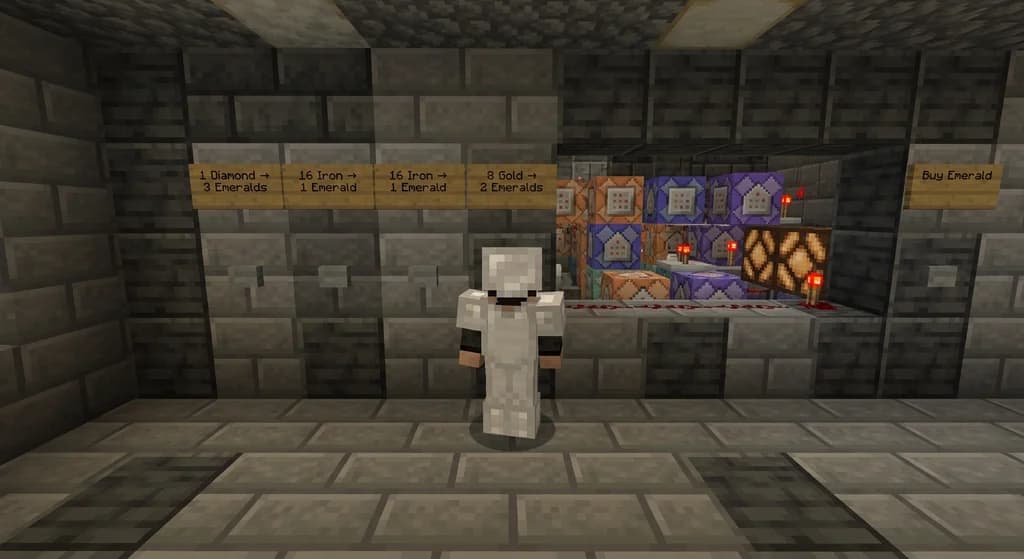
How to Build a Command Block Currency Exchange for Your Minecraft Server
Build a fully vanilla command block currency exchange for your Minecraft server. No plugins needed—just redstone and command blocks. Step-by-step guide...
How to Cure a Zombie Villager for Insane Trading Discounts in 2026
Master the art of curing zombie villagers for massive, permanent trading discounts in Minecraft 2026. Step-by-step guide, trading hall designs, and...
Have a question or another approach?
Compare notes with other readers. Include your edition and version when discussing mechanics.