Best Gothic Block Harmony for Atmospheric Minecraft Builds (2026)
Filed under Minecraft Build Palette & Block Harmony · How we create content
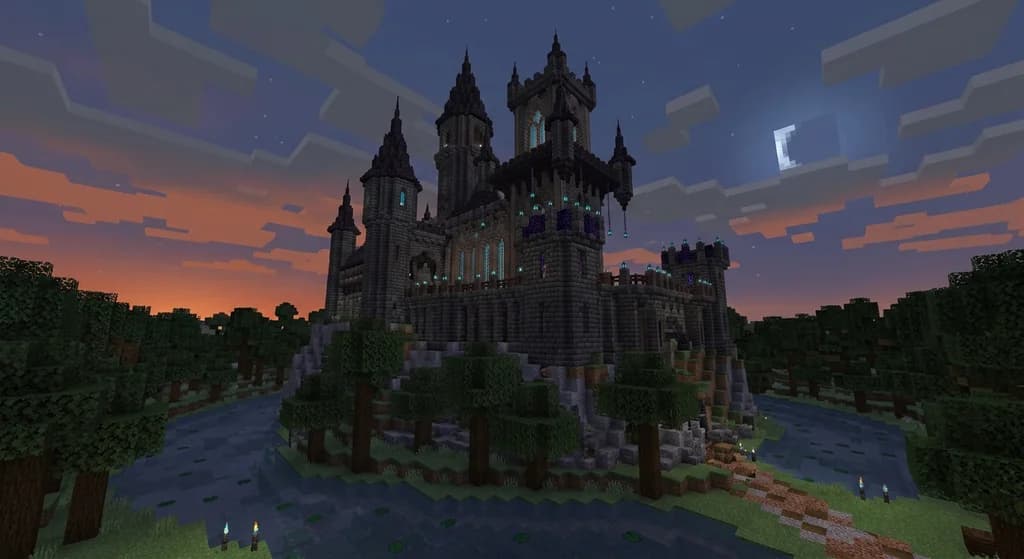
Key Takeaways
| Point | Details |
|---|---|
| Dominant Base Rule | Use deepslate bricks or polished blackstone bricks as your 60% dominant block — they carry the most visual weight in any gothic palette. |
| Texture Contrast Matters | Mixing smooth polished blackstone with rough cracked deepslate bricks prevents flat, boring walls and adds real depth. |
| Accent Lighting Defines Mood | Soul lanterns, crying obsidian glow, and chain details are the 10% accent layer that makes gothic builds feel alive. |
| Avoid Over-Darkening | All-black builds lose detail fast — always include at least one mid-tone block like cobbled deepslate or stone bricks. |
| Silhouette Is Everything | Gothic architecture relies on tall spires, pointed arches, and vertical lines — plan your silhouette before placing a single block. |
| Dark Academia Palette Tip | Combining dark oak wood with deepslate and mossy stone bricks creates the dark academia block palette that blends gothic with scholarly warmth. |
Table of Contents
- What Is Gothic Block Harmony in Minecraft?
- Best Gothic Block Palettes for Atmospheric Builds
- How to Layer Gothic Blocks for Maximum Atmosphere
- Top Gothic Accent Blocks and Lighting Choices
- Gothic Architecture Block Combinations at a Glance
- Tips for Avoiding Common Gothic Build Mistakes
- How to Put This Into Practice on Gaia Legends
- Conclusion
- Frequently Asked Questions
- Recommended
Most players who attempt a gothic Minecraft build make the same mistake: they go full black and wonder why it looks flat. Great gothic block harmony in Minecraft isn't about making everything dark — it's about controlling contrast, texture, and light so the darkness feels intentional. The best gothic castles have depth, silhouette, and a handful of carefully chosen accent blocks that make the whole thing breathe. This guide breaks down exactly which blocks to use, how to layer them, and how to avoid the pitfalls that turn dramatic castles into muddy grey boxes.
What Is Gothic Block Harmony in Minecraft?
Gothic block harmony is the practice of combining dark, textured blocks in deliberate ratios to create atmospheric, cohesive builds that evoke medieval grandeur, mystery, and architectural drama. It draws from real gothic architecture principles — pointed arches, vertical emphasis, ornate detail — and translates them into Minecraft's block grid.
The core idea is the 60-30-10 rule:
- 60% dominant base block (deepslate bricks, polished blackstone bricks)
- 30% secondary texture block (cobbled deepslate, stone bricks, cracked deepslate)
- 10% accent block (crying obsidian, chain, soul lantern, dark oak)
This ratio prevents visual chaos and keeps your build readable from a distance — critical for gothic structures that rely on dramatic silhouettes.
If you want to see how this ratio principle applies across other aesthetic styles, the guide on 7 Best Analogous Block Palettes for Cohesive Minecraft Builds (2026) covers the same underlying logic for warmer, nature-forward palettes.
Best Gothic Block Palettes for Atmospheric Builds
There isn't one single "correct" gothic palette — there are several distinct moods you can target. Here are the four strongest options for 2026 builds.
The Classic Dark Cathedral Palette
This is the foundation most gothic builders reach for first. It's dramatic, readable, and works at any scale.
- Base: Deepslate bricks + cracked deepslate bricks
- Secondary: Cobbled deepslate + stone bricks
- Accent: Chain, soul lanterns, iron bars
The mix of regular and cracked deepslate bricks is the secret weapon here. Cracked variants break up the repetition and make walls look centuries old without any extra effort.
The Blackstone Fortress Palette
Blackstone leans harder into the volcanic, ominous side of gothic. It's slightly warmer than deepslate and pairs beautifully with crimson elements if you want a hellish gothic twist.
- Base: Polished blackstone bricks + blackstone
- Secondary: Gilded blackstone (sparingly), cracked polished blackstone bricks
- Accent: Crying obsidian, nether brick fences, shroomlight (hidden, for warm underglow)
Warning: Gilded blackstone as anything more than a rare accent will make your build look accidental rather than intentional. Keep it under 5% of your block count.
The Dark Academia Block Palette
The dark academia block palette blends gothic architecture with a scholarly, library-like warmth. Think candlelit towers, ivy-covered walls, and ancient wood beams.
- Base: Deepslate bricks + mossy stone bricks
- Secondary: Dark oak planks + dark oak log
- Accent: Candles (brown/black), bookshelves, lanterns (regular, not soul)
This palette works especially well for interior spaces — libraries, studies, alchemy rooms. The moss introduces organic texture that contrasts beautifully with hard stone.
The Haunted Ruins Palette
For builds that look abandoned and overgrown, lean into moss and weathering.
- Base: Mossy stone bricks + mossy cobblestone
- Secondary: Cobbled deepslate + cracked stone bricks
- Accent: Vines, glow lichen (subtle lighting), dead bushes
Glow lichen is underrated here — it provides just enough light to be safe from mob spawns while looking completely natural on stone surfaces.
How to Layer Gothic Blocks for Maximum Atmosphere
Choosing the right blocks is only half the work. How you place them determines whether your build reads as gothic or just grey.
Build Vertically First
Gothic architecture is defined by height. Before placing any decorative detail, establish your vertical lines — tall towers, pointed spires, narrow windows. A gothic build that's wider than it is tall loses its character immediately.
Use Depth on Every Wall
Flat walls are the enemy of atmosphere. Every wall surface should have at least 3 layers of depth:
- Recessed panels (push some blocks inward by 1-2 blocks)
- Protruding pillar columns every 4-6 blocks
- Decorative trim at floor and ceiling lines using slabs and stairs
Deepslate brick stairs and slabs are your best friends here — they add micro-detail without changing the overall color palette.
Control Light Sources Deliberately
Lighting in gothic builds should feel scarce and purposeful. Use soul lanterns for a cold blue glow on exteriors, regular lanterns for warm interior candlelight, and crying obsidian for dramatic purple-tinged ambient light in dungeons or crypts.
Pro Tip: Place light sources inside recessed wall panels or behind iron bars rather than hanging them openly. Hidden light sources create atmosphere; visible ones just solve the darkness problem.
For a completely different approach to lighting and color contrast, check out How to Use Complementary Colors: A Minecraft Build Guide (2026) — the principles there apply directly to gothic accent color choices.
Top Gothic Accent Blocks and Lighting Choices
Accent blocks are where gothic builds live or die. Here's a quick reference for the best options and what each one contributes.
| Accent Block | Visual Effect | Best Used For |
|---|---|---|
| Chain | Industrial, vertical detail | Hanging lanterns, portcullis frames |
| Soul Lantern | Cold blue glow | Exterior walls, towers |
| Crying Obsidian | Purple ambient glow | Crypts, portals, floor inlays |
| Iron Bars | Prison-like texture | Windows, railings, cages |
| Candles | Warm intimate flicker | Interior shrines, libraries |
| Glow Lichen | Subtle organic light | Ruins, cave sections |
| Vines | Overgrown decay | Exterior walls, ruin builds |
Keep your accent block count low. Three well-chosen accent blocks beat six competing ones every time.
Gothic Architecture Block Combinations at a Glance
Here's a summary table of the four palettes covered above, formatted for quick reference.
| Palette Name | Base Block | Secondary Block | Accent Block |
|---|---|---|---|
| Classic Dark Cathedral | Deepslate Bricks | Cobbled Deepslate | Chain + Soul Lantern |
| Blackstone Fortress | Polished Blackstone Bricks | Cracked Polished Blackstone | Crying Obsidian |
| Dark Academia | Deepslate Bricks + Mossy Stone | Dark Oak Planks | Candles + Lanterns |
| Haunted Ruins | Mossy Stone Bricks | Cracked Stone Bricks | Vines + Glow Lichen |
According to the Minecraft Wiki, deepslate bricks are obtained by crafting or stonecutting deepslate, and their cracked variant is produced by smelting deepslate bricks in a furnace — making cracked deepslate bricks a deliberately crafted resource, not a lucky find.
Tips for Avoiding Common Gothic Build Mistakes
Even experienced builders fall into these traps. Watch out for all of them.
Don't Ignore the Roof
Gothic roofs should be steep and pointed, not flat. Use dark oak or spruce stairs to build pitched roofs with 45-degree angles. Add small dormer windows and iron bar railings along the ridge line.
Don't Mix Too Many Dark Block Families
Deepslate and blackstone look similar from a distance but clash up close due to their different undertones. Pick one as your primary family and use the other sparingly — or not at all.
Don't Forget Interior Contrast
Gothic interiors need lighter elements to create contrast with dark stone walls. White concrete, calcite, or even quartz used in flooring or ceiling vaults makes the dark walls feel more dramatic by comparison, not less.
Note: Calcite — found naturally in marble-like clusters in mountain biomes — is one of the most underused blocks for gothic interior vaulted ceilings. Its off-white tone pairs beautifully with deepslate walls.
If you're curious how gothic palettes compare to the gritty, industrial aesthetic, the 6 Best Industrial Block Palettes for Minecraft Builds (2026) guide shows where the two styles overlap and diverge — useful if you want a gothic-industrial hybrid look.
For players who want to explore completely different color directions before committing to gothic, 7 Best Triadic Color Palettes for Unique Minecraft Builds (2026) is worth a read — the contrast principles translate directly.
How to Put This Into Practice on Gaia Legends
Gaia Legends is the perfect proving ground for gothic castle builds. The survival realms offer unclaimed highland terrain — rolling dark forests, exposed stone cliffs, and river valleys — that naturally frames gothic architecture the way real gothic cathedrals were sited: on elevated ground with dramatic sightlines.
On Gaia Legends, players can claim large land parcels in survival mode, giving you the space to build a full gothic compound: outer walls, a keep, towers, a courtyard, and underground crypts. The server's build showcase system lets you submit completed structures for community voting, and gothic builds consistently rank among the highest-voted entries.
Gaia Legends also supports both Java and Bedrock players, so you can collaborate on gothic builds with friends regardless of platform. The server is completely non-pay-to-win — every block in your castle is earned through survival gameplay, which makes the finished build genuinely yours.
Gaia Legends is free to join, non-pay-to-win, and supports Java + Bedrock crossplay. Join at gaialegends.pro and start your legend today.
Conclusion
Gothic block harmony in Minecraft comes down to three things:
- Control your ratios — 60% base, 30% secondary, 10% accent. Don't let any single block dominate to the point of monotony.
- Build tall and textured — vertical lines and wall depth are what separate gothic from generic dark builds.
- Light deliberately — soul lanterns, crying obsidian, and hidden candles create atmosphere that flat overhead lighting destroys.
Pick one of the four palettes above, rough out your silhouette first, and add detail layer by layer. Gothic builds reward patience. The more care you put into texture and depth, the more your castle will look like it belongs in the world — not just placed on top of it.
Ready to play? Join Gaia Legends today — no pay-to-win, Java + Bedrock crossplay.
- Java:
join.gaialegends.pro - Bedrock:
join.gaialegends.pro— Port19132
Further reading
These references were recorded with the article; specific claims have not been matched to source excerpts.
Frequently Asked Questions
What is gothic block harmony in Minecraft and how do I start?
Gothic block harmony in Minecraft is the practice of combining dark, textured blocks — like deepslate bricks, polished blackstone, and dark oak — in deliberate ratios to create atmospheric, cohesive builds. Start with the 60-30-10 rule: 60% dominant base block, 30% secondary texture, 10% accent lighting. Deepslate bricks make the best starting base for most gothic styles.
What blocks are best for a gothic Minecraft castle?
The best blocks for a gothic Minecraft castle are deepslate bricks, cracked deepslate bricks, polished blackstone bricks, cobbled deepslate, dark oak wood, chain, iron bars, and soul lanterns. Use deepslate bricks as your dominant block, cracked variants for aged texture, and soul lanterns or crying obsidian for cold atmospheric lighting.
What is the dark academia block palette in Minecraft?
The dark academia block palette combines deepslate bricks and mossy stone bricks as the structural base, dark oak planks and logs for warm wood accents, and candles or lanterns for intimate lighting. It creates a scholarly, library-like gothic atmosphere — perfect for towers, libraries, and alchemy rooms inside larger castle builds.
How do I add depth to gothic Minecraft walls so they don't look flat?
Add depth to gothic walls using three layers: recessed panels pushed 1-2 blocks inward, protruding pillar columns every 4-6 blocks along the wall face, and decorative trim at floor and ceiling lines using deepslate brick stairs and slabs. This micro-detail technique makes walls look architecturally complex without changing your overall color palette.
Can I mix deepslate and blackstone in the same gothic build?
You can, but be careful — deepslate and blackstone have different undertones that can clash up close even though they look similar from a distance. If you mix them, use one as the clear dominant block (at least 60% of wall surfaces) and the other only as a secondary accent. Avoid using them in equal proportions on the same wall face.
What lighting blocks work best for gothic Minecraft builds?
Soul lanterns are the top choice for gothic exteriors — their cold blue glow reinforces the dark, eerie mood. Regular lanterns work well for warm interior spaces like libraries and halls. Crying obsidian provides a dramatic purple ambient glow for crypts and dungeons. Glow lichen is ideal for ruins and cave sections where you want subtle, organic-looking light.
Related guides

7 Best Triadic Block Palettes for Vibrant Minecraft Builds 2026
Discover the 7 best triadic block palettes for Minecraft builds in 2026. Master triadic color harmony with vibrant block combos, pro tips, and build...
Creative Block Combinations from The Wild Update for Building
Discover six block palettes from The Wild Update: mangrove wood, mud bricks, sculk, and froglight combos for your next Minecraft build.
Froglight: The Brightest Light Block in Minecraft
Discover why the froglight is Minecraft's brightest light block. Learn how to get all three froglight colors, their unique melting properties, and the best ways to use them in your builds.

Minecraft Dragon Head: How to Obtain and Use It
Learn exactly how to get a dragon head in Minecraft, from looting End ships to using Creative mode. Discover its unique redstone animation, practical stealth benefits, and decorative uses.
Have a question or another approach?
Compare notes with other readers. Include your edition and version when discussing mechanics.