7 Best Triadic Block Palettes for Vibrant Minecraft Builds 2026
Filed under Minecraft Build Palette & Block Harmony · How we create content
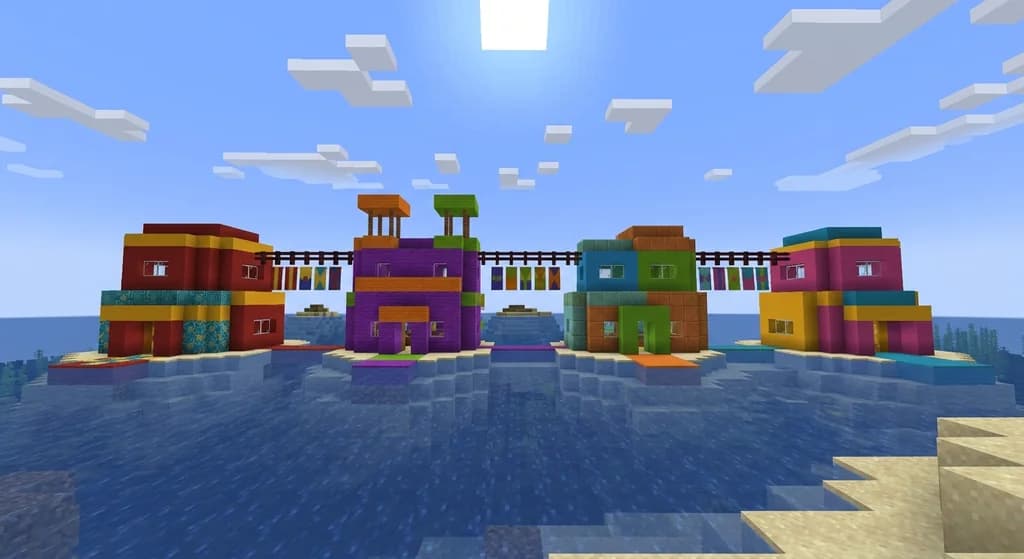
Key Takeaways
| Point | Details |
|---|---|
| Triadic harmony defined | A triadic palette uses three hues equally spaced on the color wheel, producing the most vibrant contrast possible without clashing. |
| 60-30-10 rule | Use your dominant block for 60% of the build, secondary for 30%, and accent for just 10% to keep triadic builds balanced. |
| Best starter combo | Terracotta (red-orange), yellow concrete, and cyan concrete powder is the most beginner-friendly triadic trio in vanilla Minecraft. |
| Texture matters | Pair smooth blocks with rough ones (e.g., polished andesite with jungle planks) so triadic colors don't visually compete with each other. |
| Biome matching | Triadic palettes shine brightest in flat or ocean biomes where the landscape doesn't fight your color choices. |
| Gaia Legends advantage | Showcasing triadic builds in Gaia Legends' community build galleries gives instant feedback from hundreds of active players. |
Table of Contents
- What Are Triadic Block Palettes for Minecraft?
- Why Triadic Color Harmony Works in Minecraft Builds
- The 7 Best Triadic Block Palettes
- How to Balance Triadic Colors in Any Build
- Tips for Applying Triadic Palettes Like a Pro
- How to Put This Into Practice on Gaia Legends
- Conclusion
- Frequently Asked Questions
- Recommended
Most Minecraft builders default to stone, wood, and maybe some glass — and then wonder why their builds feel lifeless. The secret that top builders use? Triadic block palettes for Minecraft. Three colors, equally spaced on the color wheel, create instant visual energy without the chaos of random color mixing. This guide breaks down the 7 best triadic combos available in vanilla Minecraft for 2026, with exact block names, ratios, and pro strategies you can use today.
What Are Triadic Block Palettes for Minecraft?
A triadic block palette is a set of three Minecraft block colors positioned at equal intervals (120° apart) on the color wheel, producing maximum vibrancy with natural balance. Unlike complementary palettes — which pit two opposites against each other — triadic harmony gives you three distinct hues that all "agree" on brightness and saturation levels.
The classic triadic sets in Minecraft terms are:
- Red / Yellow / Blue — the primary triad
- Orange / Green / Purple — the secondary triad
- Red-Orange / Yellow-Green / Blue-Violet — the tertiary triad
Each trio creates a completely different mood. Red/yellow/blue feels bold and festive. Orange/green/purple reads as natural yet exotic. Mastering which triad fits your build theme is half the battle.
Note: Minecraft's block palette doesn't map perfectly onto a painter's color wheel, but the principle holds — choose blocks whose base hues sit roughly 120° apart and your build will feel intentional rather than accidental.
For more on how color relationships work in builds, see our guide on 7 Best Complementary Block Palettes for Minecraft Builds (2026) and 7 Best Analogous Block Palettes for Minecraft Builds (2026).
Why Triadic Color Harmony Works in Minecraft Builds
Triadic palettes are the go-to choice for builders who want vibrancy without visual noise. Here's why they work so well in Minecraft specifically:
- Minecraft's block textures are already busy — triadic hues provide clear color "zones" that help the eye navigate a build.
- The 60-30-10 rule (60% dominant, 30% secondary, 10% accent) maps perfectly onto walls, roofs, and trim — three architectural layers, three colors.
- Triadic combos photograph well in screenshots, which matters for community showcases and build competitions.
According to the Minecraft Wiki, Minecraft currently contains over 900 unique block types as of recent major updates, giving builders an enormous palette to work with when hunting for the perfect triadic trio.
The 7 Best Triadic Block Palettes
1. Terracotta Red / Yellow Concrete / Cyan Glazed Terracotta
The friendliest starter triad. Terracotta (warm red-orange) anchors the build, yellow concrete pops on rooflines and floors, and cyan glazed terracotta adds a patterned accent that rewards close inspection. Perfect for market stalls, desert towns, or festival builds.
| Role | Block | Hex Approximation |
|---|---|---|
| Dominant (60%) | Terracotta | #985F45 |
| Secondary (30%) | Yellow Concrete | #F2B233 |
| Accent (10%) | Cyan Glazed Terracotta | #158991 |
2. Jungle Wood / Purple Wool / Orange Concrete
A tropical-fantasy triad. Jungle planks bring a warm, mid-green base, purple wool (or purple concrete) adds mystical depth, and orange concrete punches through as bright trim. Use this for treehouse villages or wizard towers hidden in the jungle.
3. Warped Nether Wood / Crimson Nether Wood / Yellow Concrete
This is the Nether builder's triad. Warped stem is a blue-green, crimson stem is a deep red-pink, and yellow concrete bridges them with a warm neutral. All three blocks are naturally found in the Nether, so the palette feels lore-accurate.
Pro Tip: Replace yellow concrete with shroomlight for a glowing accent that works as both light source and color pop — no extra lamp blocks needed.
4. Prismarine / Orange Terracotta / Lime Concrete
An ocean-inspired triad that feels fresh and breezy. Prismarine bricks deliver a teal-blue, orange terracotta warms up the midtones, and lime concrete adds a punchy tropical accent. Ideal for seaside resorts, coral reef builds, or underwater domes.
5. Deepslate Bricks / Copper Block / Amethyst Block
For builders who want triadic harmony with a darker, more sophisticated mood. Deepslate bricks sit in the blue-grey zone, oxidized copper lands in a muted teal-green, and amethyst block brings a violet accent. The result is an ancient-ruins aesthetic with surprising vibrancy.
Warning: Raw copper and deepslate can look muddy together without the amethyst accent — don't skip the third color or the palette collapses into a near-monochrome.
6. Birch Planks / Blue Concrete / Red Nether Bricks
A bold primary triad for those who aren't afraid of contrast. Birch planks stand in for yellow (they're the lightest, warmest wood), blue concrete is a clean primary blue, and red nether bricks anchor the red corner. This combo works brilliantly for fantasy castles or Nordic longhouses.
7. Mangrove Wood / Lime Concrete / Blue Ice
The most adventurous triad on this list. Mangrove planks (deep red-brown), lime concrete (bright yellow-green), and blue ice (vivid icy blue) form a high-saturation triad that looks almost painterly. Best used for large statement builds where you have room to breathe between each color zone.
For more inspiration on mangrove-based palettes, check out 7 Best Mangrove and Bamboo Build Ideas for Minecraft 2026.
How to Balance Triadic Colors in Any Build
The 60-30-10 Rule in Practice
The single biggest mistake builders make with triadic palettes is using all three colors equally. That creates visual chaos. Instead:
- 60% of your block count should be your dominant color (usually walls or ground)
- 30% goes to your secondary color (roofs, floors, large trim bands)
- 10% is your accent (window frames, corner pillars, decorative details)
This ratio keeps the palette vibrant without overwhelming the eye.
Texture as a Separator
When two triadic colors sit next to each other, texture difference prevents them from clashing. Pair a smooth block (polished granite, smooth stone) with a rough one (cobblestone, oak log) so the eye reads them as distinct layers even before it processes the color difference.
For a deeper look at how natural textures interact with color, see How to Use Natural Palettes: A 2026 Minecraft Build Guide.
Tips for Applying Triadic Palettes Like a Pro
- Test in a flat creative world first. Build a 10×10 swatch of each color at the ratios you plan to use. Step back and evaluate before committing to a full structure.
- Use slabs and stairs to blend transitions. A hard edge between yellow concrete and cyan terracotta looks jarring. A stair-step gradient softens the boundary naturally.
- Light your accents. Sea lanterns, shroomlights, or glowstone behind your 10% accent blocks make them pop at night without needing extra light sources.
- Match saturation levels. Bright lime concrete next to muted terracotta creates imbalance. Either saturate both (concrete + concrete) or desaturate both (terracotta + terracotta).
- Limit your palette strictly. Three colors means three — adding a fourth "just for the roof" breaks the harmony every time.
| Palette | Best Build Type | Difficulty |
|---|---|---|
| Terracotta / Yellow / Cyan | Market, Desert Town | Beginner |
| Jungle / Purple / Orange | Treehouse, Wizard Tower | Intermediate |
| Warped / Crimson / Yellow | Nether Base | Intermediate |
| Prismarine / Orange / Lime | Seaside, Underwater | Intermediate |
| Deepslate / Copper / Amethyst | Ruins, Cave Build | Advanced |
| Birch / Blue / Red Nether | Castle, Longhouse | Advanced |
| Mangrove / Lime / Blue Ice | Statement Build | Expert |
How to Put This Into Practice on Gaia Legends
Knowing your triadic palette is one thing — building it in front of a live community is another level entirely. Gaia Legends gives you the perfect arena to put these palettes to the test.
Our creative competition zones run weekly themed build challenges where triadic and other color-harmony builds are judged by the community. Submit a build using any of the seven palettes above, and you'll get real-time feedback from hundreds of active players who know their blocks. The community build gallery lets you browse thousands of player creations, filter by style, and steal inspiration from builders who've already cracked triadic harmony.
Beyond building, Gaia Legends' plot system gives you a dedicated space to experiment without griefing risk — ideal for testing that 60-30-10 ratio before scaling up. You can also collaborate with other builders in real time, which accelerates your palette instincts faster than solo practice.
Gaia Legends is free to join, non-pay-to-win, and supports Java + Bedrock crossplay. Join at gaialegends.pro and start your legend today.
Conclusion
Triadic block palettes are one of the most powerful tools in a Minecraft builder's kit. Here are the three things to walk away with:
- Choose your triad intentionally — red/yellow/blue for bold energy, orange/green/purple for natural exotica, or one of the seven specific combos above for a ready-made starting point.
- Apply the 60-30-10 rule — dominant walls, secondary roofs, accent trim. Never split colors equally.
- Use texture to separate colors — smooth blocks next to rough ones prevent triadic hues from clashing even when they're vibrant.
Pick one palette from this list, open a flat creative world, and build a small test structure today. You'll see the difference immediately.
Frequently Asked Questions
What are triadic block palettes for Minecraft and how do they work?
Triadic block palettes for Minecraft use three block colors spaced equally (120° apart) on the color wheel — such as red, yellow, and blue — to create vibrant, balanced builds. The three colors naturally complement each other without clashing because they share equal visual weight. Applying them with the 60-30-10 ratio (dominant, secondary, accent) keeps the build energetic but readable.
What is the easiest triadic palette for beginner Minecraft builders?
The easiest triadic palette for beginners is terracotta (red-orange), yellow concrete, and cyan glazed terracotta. All three blocks are available in vanilla Minecraft without any special farming or crafting chains, and the glazed terracotta's built-in pattern adds detail automatically, reducing the need for complex texturing techniques.
How many blocks should I use in a triadic Minecraft build?
Stick to exactly three primary block types for your color zones, then add one or two neutral blocks (stone, gravel, glass) as structural fillers that don't count toward your triadic colors. Using more than three colored blocks breaks triadic harmony and shifts the palette toward a split-complementary or tetradic scheme, which requires more advanced balancing.
Can triadic palettes work for Nether or End builds in Minecraft?
Yes — the Warped Wood / Crimson Wood / Yellow Concrete triad is specifically designed for Nether builds and uses blocks native to that dimension. For End builds, try a triad of End stone bricks (pale yellow), purple shulker boxes or wool, and chorus flower accents to maintain triadic harmony in that biome's limited palette.
How is a triadic palette different from a complementary palette in Minecraft?
A complementary palette uses two colors directly opposite on the color wheel (e.g., orange and blue), creating high contrast between just two hues. A triadic palette uses three equally spaced hues, which spreads the visual energy more evenly and feels more festive or playful. For a detailed comparison, see our 7 Best Complementary Block Palettes for Minecraft Builds (2026).
What biomes are best for showcasing triadic Minecraft builds?
Flat biomes (plains, desert, ocean) work best because the landscape doesn't compete with your block colors. Avoid dense forest biomes where leaf canopy casts green shadows that shift how your palette reads. Savanna biomes pair particularly well with warm triadic combos like terracotta/yellow/cyan because the grass tone acts as a neutral base.
Recommended
- What is the Best Minecraft Custom Items List for Servers 2026
- 10 Best Minecraft RPG Servers for Immersive Roleplay in 2026
- Top 5 Hardest Minecraft Boss Mobs and How to Solo Them (2026)
- How to Master Minecraft Survival: 12 Best Tips for Beginners 2026
Ready to play? Join Gaia Legends today — no pay-to-win, Java + Bedrock crossplay.
- Java:
join.gaialegends.pro - Bedrock:
join.gaialegends.pro— Port19132
Frequently Asked Questions
What are triadic block palettes for Minecraft and how do they work?
Triadic block palettes for Minecraft use three block colors spaced equally (120° apart) on the color wheel — such as red, yellow, and blue — to create vibrant, balanced builds. The three colors naturally complement each other without clashing because they share equal visual weight. Applying them with the 60-30-10 ratio (dominant, secondary, accent) keeps the build energetic but readable.
What is the easiest triadic palette for beginner Minecraft builders?
The easiest triadic palette for beginners is terracotta (red-orange), yellow concrete, and cyan glazed terracotta. All three blocks are available in vanilla Minecraft without any special farming or crafting chains, and the glazed terracotta's built-in pattern adds detail automatically, reducing the need for complex texturing techniques.
How many blocks should I use in a triadic Minecraft build?
Stick to exactly three primary block types for your color zones, then add one or two neutral blocks (stone, gravel, glass) as structural fillers that don't count toward your triadic colors. Using more than three colored blocks breaks triadic harmony and shifts the palette toward a split-complementary or tetradic scheme, which requires more advanced balancing.
Can triadic palettes work for Nether or End builds in Minecraft?
Yes — the Warped Wood / Crimson Wood / Yellow Concrete triad is specifically designed for Nether builds and uses blocks native to that dimension. For End builds, try a triad of End stone bricks (pale yellow), purple shulker boxes or wool, and chorus flower accents to maintain triadic harmony in that biome's limited palette.
How is a triadic palette different from a complementary palette in Minecraft?
A complementary palette uses two colors directly opposite on the color wheel (e.g., orange and blue), creating high contrast between just two hues. A triadic palette uses three equally spaced hues, which spreads the visual energy more evenly and feels more festive or playful. The key difference is that triadic builds feel balanced across all three color zones rather than pulling tension between two poles.
What biomes are best for showcasing triadic Minecraft builds?
Flat biomes — plains, desert, and ocean — work best because the landscape doesn't compete with your block colors. Avoid dense forest biomes where leaf canopy casts green shadows that shift how your palette reads. Savanna biomes pair particularly well with warm triadic combos like terracotta/yellow/cyan because the grass tone acts as a neutral base that lets all three colors shine.
Related guides
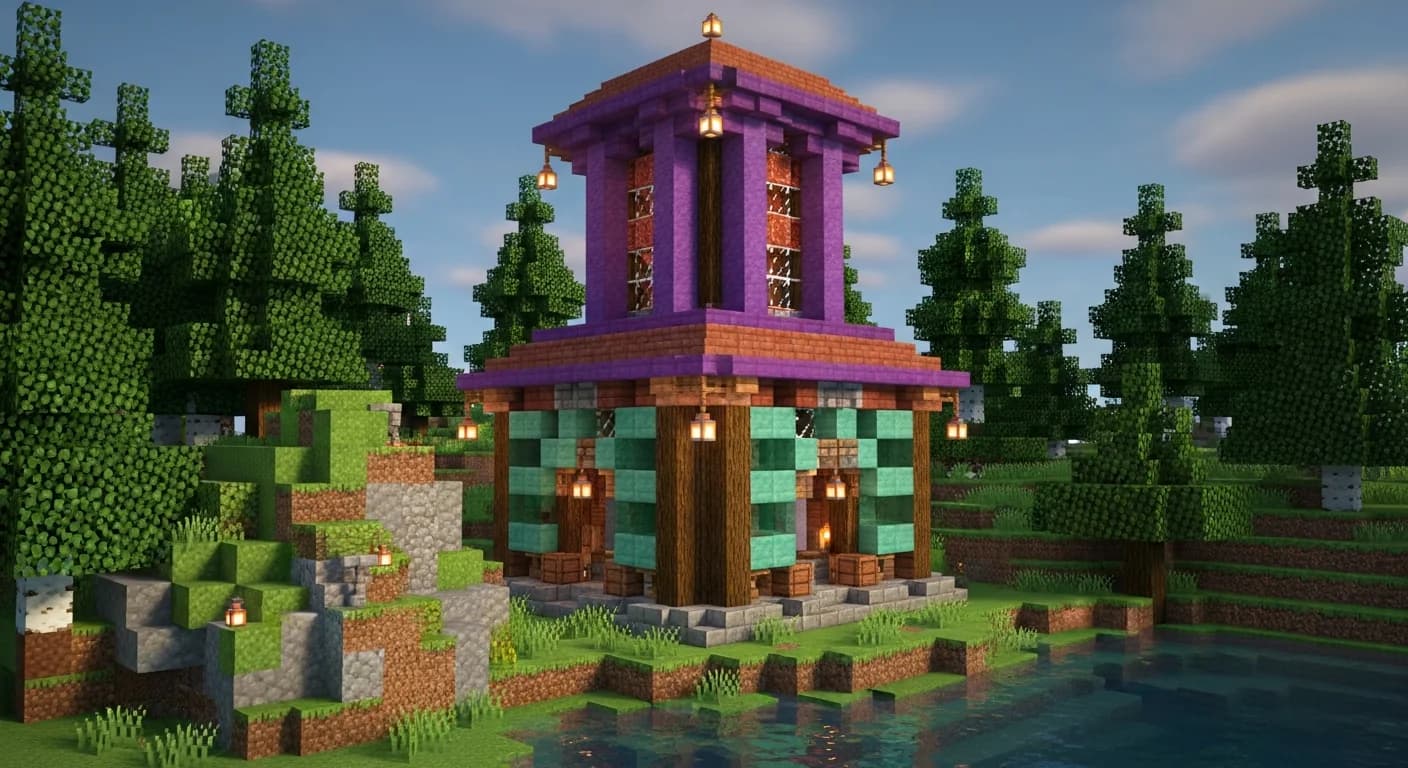
7 Best Triadic Block Palettes: A Minecraft Build Tutorial (2026)
Master triadic color harmony in Minecraft with 7 stunning block palettes for 2026. Learn how to combine Purpur, Moss, and Copper for builds that truly pop.
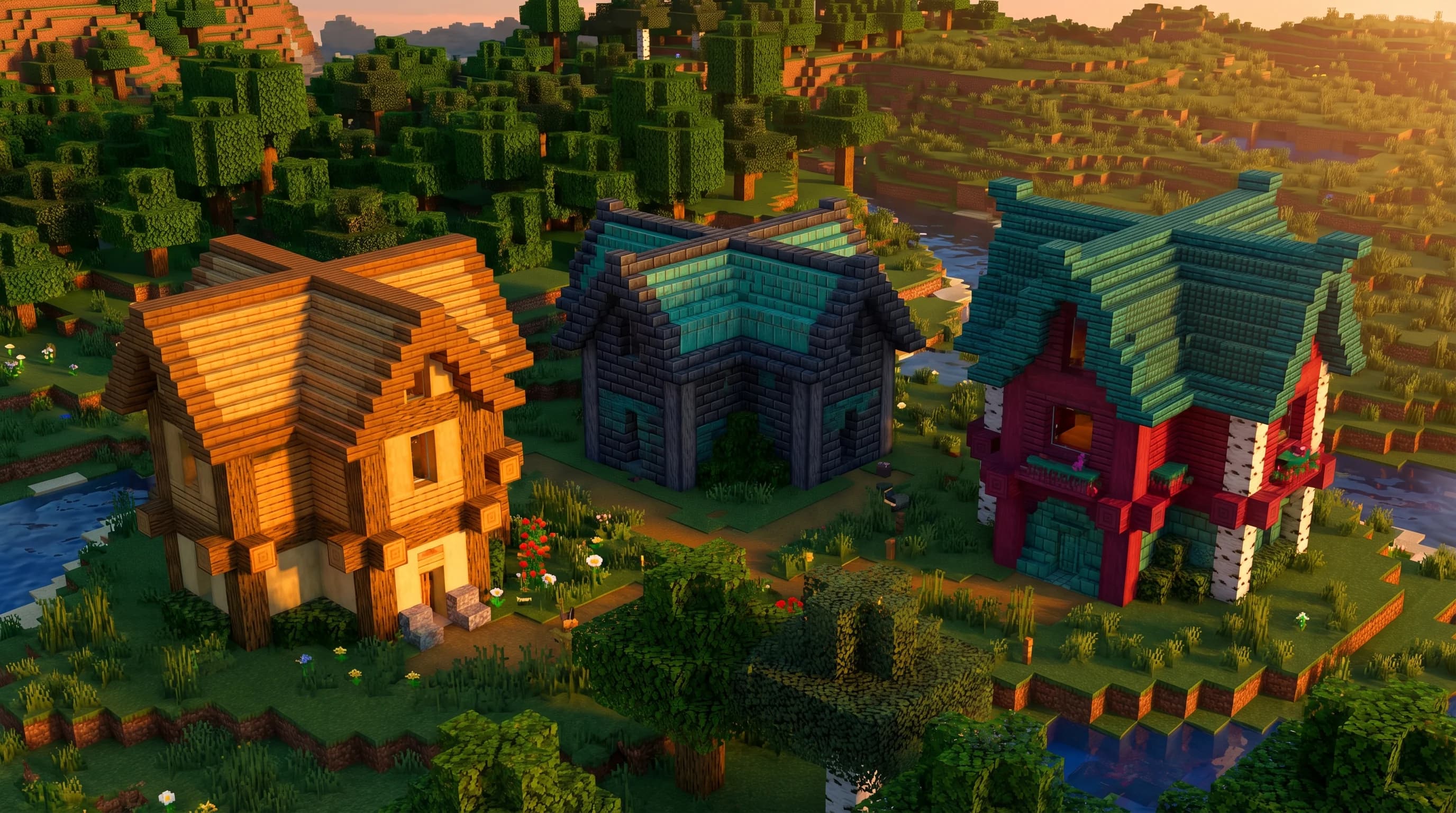
How to Use Color Harmony for Houses to Build in Minecraft (2026)
Learn color harmony theory for houses to build in Minecraft. Master analogous, complementary, and triadic block palettes to make every build look stunning.
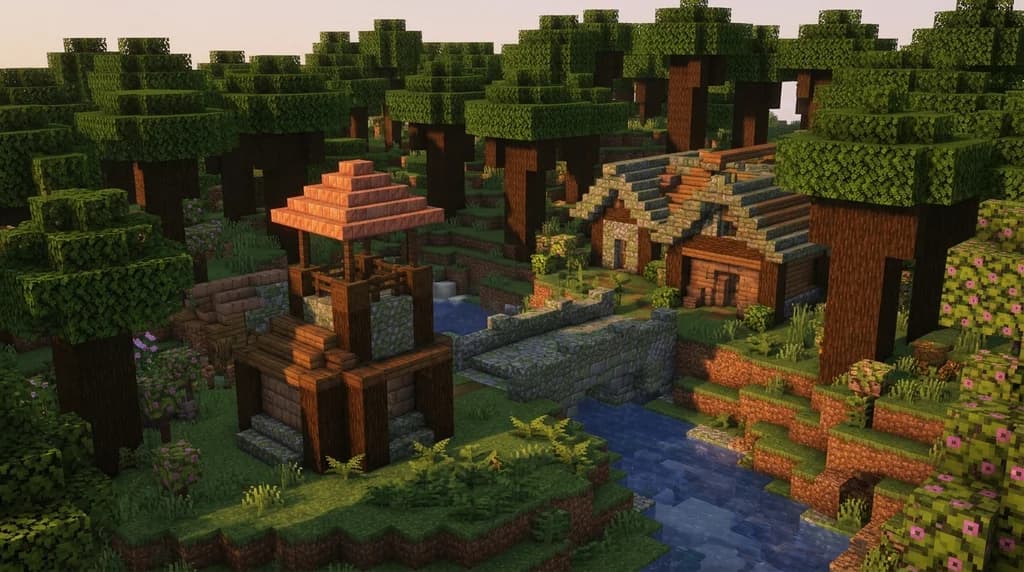
How to Use Natural Palettes: A 2026 Minecraft Build Guide
Master natural Minecraft build palettes in 2026. Learn earthy block combinations, color harmony theory, and pro tips for stunning wilderness retreats.
Best Gothic Block Harmony for Atmospheric Minecraft Builds (2026)
Master gothic block harmony in Minecraft with the best dark palettes, block combos, and atmospheric tips for stunning gothic castle builds in 2026.
Have a question or another approach?
Compare notes with other readers. Include your edition and version when discussing mechanics.