7 Best Complementary Block Palettes for Minecraft Builds (2026)
Filed under Minecraft Build Palette & Block Harmony · How we create content
Key Takeaways
| Point | Details |
|---|---|
| Complementary contrast defined | Complementary palettes pair opposite-wheel colors (orange + blue, red + cyan) for the highest visual contrast of any color harmony method. |
| Orange & Blue leads the pack | Terracotta with orange stained clay paired against blue ice or blue concrete is the single most striking combo in vanilla Minecraft. |
| Availability matters | Always check that both palette blocks generate naturally or craft easily — nothing kills a build faster than running out of a key accent block mid-project. |
| Accent ratio rule | Use roughly 70% dominant color, 20% complement, and 10% neutral trim to keep builds vibrant without visual chaos. |
| Distance visibility | High-contrast complementary palettes remain readable at 64+ blocks — ideal for shop fronts, landmarks, and server spawn markers. |
| Neutral bridges work | Deepslate, stone bricks, or stripped wood between complementary colors prevents clashing and unifies the palette. |
Table of Contents
- What Are Complementary Color Palettes in Minecraft?
- Why High-Contrast Builds Stand Out
- The 7 Best Complementary Block Palettes
- How to Apply the 70-20-10 Accent Ratio
- Complementary vs. Other Color Harmonies
- Tips for Sourcing Complementary Blocks
- How to Put This Into Practice on Gaia Legends
- Conclusion
- Frequently Asked Questions
- Recommended
When most builders hit a creative wall, it's not because they lack ideas — it's because their block choices are fighting each other instead of working together. Learning to use complementary color palettes in Minecraft is the single fastest way to go from "looks okay" to "how did you build that?"
This guide breaks down seven proven complementary pairings, explains which specific blocks carry each palette, and gives you a practical ratio so your builds stay bold without turning into a visual mess. No color theory degree required.
What Are Complementary Color Palettes in Minecraft?
A complementary color palette is a pairing of two colors that sit directly opposite each other on the color wheel, producing the highest natural contrast of any color harmony method. In traditional art, that means red + green, orange + blue, or yellow + violet. In Minecraft, you translate those relationships into block families.
Because Minecraft's dye system maps closely to standard color theory — with 16 dye colors covering most of the wheel — the complementary principle transfers almost perfectly. The result is builds that pop at a distance, read clearly in screenshots, and feel intentional rather than random.
For a deeper foundation before you apply these palettes, the How to Use Complementary Colors: A Minecraft Build Guide (2026) covers the underlying theory in full.
Why High-Contrast Builds Stand Out
High contrast isn't just aesthetic — it's functional. A build with strong complementary contrast is visible from 64+ blocks away, making it perfect for landmarks, market stalls, and base entrances that need to be spotted quickly.
Note: Complementary contrast works best when one color dominates. Equal 50/50 splits between two opposing hues can feel jarring. Aim for imbalance — let one color lead.
Contrast also affects how depth reads. A blue doorframe against an orange wall pushes the entrance forward visually, making even a flat façade look three-dimensional without extra detailing.
The 7 Best Complementary Block Palettes
Here are the seven pairings ranked by visual impact, block accessibility, and how well they hold up at survival scale.
1. Orange + Blue — The Classic Powerhouse
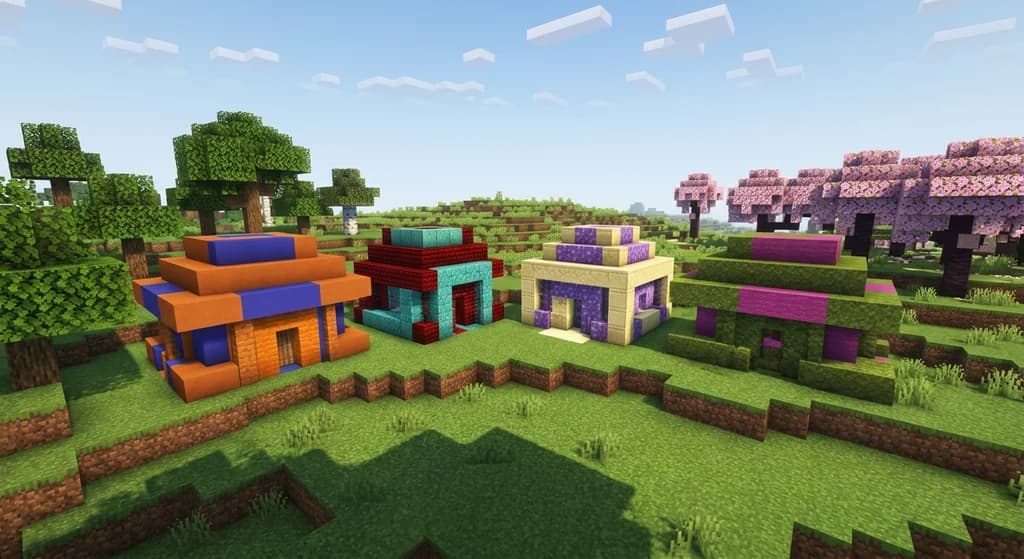
The most reliable complementary palette in the game. Orange terracotta, orange concrete, and orange glazed terracotta pair against blue ice, blue concrete, and blue stained glass to create instant drama.
Use orange terracotta as your primary wall material. Run blue concrete in window frames, trim, and roof accents. Add white concrete as a neutral separator to keep the contrast from overwhelming the eye.
2. Red + Cyan — Nether Meets Ocean
Red nether bricks and crimson planks are your base. Accent with cyan concrete and cyan glazed terracotta. This palette reads as fiery-but-refined and works especially well for fortress-style builds or market towers.
Pro Tip: Cyan glazed terracotta has a built-in geometric pattern that adds free texture detail — you don't need to vary block types as much when this block is in your accent layer.
3. Yellow + Purple — Desert Royalty
Yellow sandstone, yellow concrete, and cut sandstone pair against purple concrete, amethyst blocks, and purple stained glass. This combo feels regal and ancient — perfect for desert temples, trading posts, or wizard towers.
Amethyst blocks bring a subtle shimmer that sandstone's matte surface complements beautifully.
4. Lime + Magenta — Tropical Pop
Lime concrete and moss blocks against magenta concrete and magenta glazed terracotta create a vibrant, almost tropical energy. This is a bold palette — use it for smaller accent builds, market stalls, or decorative banners rather than full-scale bases.
If you enjoy tropical block pairings, 7 Best Mangrove and Bamboo Build Ideas for Minecraft 2026 shows how warm-toned jungle blocks can anchor similarly vivid palettes.
5. Green + Red — Forest Fortress
Mossy cobblestone, moss blocks, and green concrete against red nether bricks and red concrete. This is the most naturally occurring complementary palette in Minecraft — mossy ruins with red accents feel like they belong in the world.
Warning: Avoid mixing too many green block variants (moss, mossy cobble, green concrete, jungle planks) in the same build — the slight hue differences between them create muddiness rather than depth. Pick two green block types maximum.
6. Light Blue + Orange — Sky and Sunset
Light blue concrete, light blue stained glass, and blue ice paired with orange terracotta and orange concrete. Where palette #1 leans dramatic, this version reads as airy and optimistic. It's excellent for coastal builds, open-air markets, and tall glass towers.
The light blue stained glass lets sunlight filter through in a warm amber tone at golden hour, creating a natural color blend that makes the complementary contrast feel earned rather than forced.
7. Pink + Teal — Cherry Blossom Contrast
Cherry planks, pink concrete, and pink stained glass against cyan concrete and warped planks. This is the newest palette archetype in Minecraft, made possible by the cherry blossom biome blocks added in Java 1.20.
The warm blush of cherry wood against the cool teal of warped planks is a soft complementary contrast — less aggressive than orange + blue, but just as readable at distance.
For builds that lean into single-color depth alongside these contrasting palettes, 7 Best Monochromatic Block Palettes for Minecraft Builds (2026) is a great companion read.
| Palette | Primary Blocks | Complement Blocks | Best Use |
|---|---|---|---|
| Orange + Blue | Orange terracotta, orange concrete | Blue ice, blue concrete | Bases, landmarks |
| Red + Cyan | Red nether bricks, crimson planks | Cyan concrete, cyan glazed terracotta | Fortress, market towers |
| Yellow + Purple | Yellow sandstone, cut sandstone | Amethyst blocks, purple concrete | Desert builds, wizard towers |
| Lime + Magenta | Lime concrete, moss blocks | Magenta concrete, glazed terracotta | Market stalls, accents |
| Green + Red | Moss blocks, mossy cobblestone | Red nether bricks, red concrete | Forest ruins, fortresses |
| Light Blue + Orange | Light blue concrete, blue ice | Orange terracotta, orange concrete | Coastal builds, glass towers |
| Pink + Teal | Cherry planks, pink concrete | Cyan concrete, warped planks | Modern homes, garden builds |
How to Apply the 70-20-10 Accent Ratio
The 70-20-10 rule is a color distribution principle used by builders and designers alike: 70% of your build uses the dominant color, 20% uses the complementary accent, and 10% uses a neutral bridge block.
In practice for Minecraft:
- 70% — Dominant: Your main wall, floor, or roof material (e.g., orange terracotta).
- 20% — Complement: Window frames, trim, staircase blocks, and accent panels (e.g., blue concrete).
- 10% — Neutral: Deepslate bricks, stone bricks, stripped oak, or white concrete as separators and foundations.
This ratio prevents the "candy wrapper" effect where equal amounts of two bright colors fight each other. The neutral 10% acts as a visual rest point, letting both main colors breathe.
Complementary vs. Other Color Harmonies
Complementary palettes aren't the only tool available. Knowing when to reach for a different harmony makes you a more flexible builder.
- Analogous palettes use colors that sit next to each other on the wheel (e.g., orange, yellow, red). They're harmonious and calming but lack the punch of complementary contrast. See 7 Best Analogous Block Palettes for Cohesive Minecraft Builds (2026) for those combinations.
- Triadic palettes use three colors spaced equally around the wheel for vibrant, balanced variety.
- Monochromatic palettes use one hue in multiple shades for a unified, sophisticated look.
- Complementary palettes create the highest contrast of any harmony — use them when you need a build to be noticed.
Tips for Sourcing Complementary Blocks
Running out of a key accent block mid-build is one of the most frustrating experiences in survival Minecraft. Here's how to plan ahead:
- Concrete is the most reliable complementary block family — every color is craftable from sand, gravel, and dye. Stock up on dye before you start.
- Terracotta generates naturally in badlands biomes in six color variants. Mining a full badlands mesa gives you thousands of orange, red, and brown terracotta blocks.
- Glazed terracotta requires smelting stained terracotta — set up a blast furnace array before you need large quantities.
- Blue ice is renewable via packed ice smelting chains but slow to farm. If blue ice is your complement, plan your supply chain early or use blue concrete as a substitute.
- Amethyst blocks are farmable from amethyst geodes — locate one near your base if purple is in your palette.
According to the Minecraft Wiki, the badlands biome contains six naturally-occurring terracotta color variants — orange, red, yellow, white, light gray, and brown — making it the single richest source of warm-toned palette blocks in the game.
How to Put This Into Practice on Gaia Legends
Gaia Legends is a survival SMP where your base and shop front are your calling card. With players spread across a large world map, the builds that get visited are the ones that stand out at a distance — and complementary palettes are your best tool for that.
The server's player economy system means your market stall competes visually with dozens of others. An orange + blue or red + cyan shop front is visible from across the market district in a way that a single-material build simply isn't. Use the land claim system to lock down enough space to build a proper landmark, not just a box.
The build showcase channel on the Gaia Legends Discord is active daily, and high-contrast complementary builds consistently generate the most engagement — give your palette a name and post your process shots.
Gaia Legends is free to join, non-pay-to-win, and supports Java + Bedrock crossplay. Join at gaialegends.pro and start your legend today.
Conclusion
Complementary color palettes are the fastest upgrade available to any Minecraft builder. Here are the three things worth remembering:
- Opposite colors create maximum contrast — orange + blue, red + cyan, and yellow + purple are your most powerful pairings.
- The 70-20-10 ratio keeps builds readable — let one color dominate, use the complement as accent, and bridge with a neutral.
- Block sourcing is part of the plan — concrete is the most flexible complementary block family; terracotta from badlands is the richest natural source.
Pick one palette from the seven above, gather your materials, and build something people can spot from across the world. That's the whole game.
Ready to play? Join Gaia Legends today — no pay-to-win, Java + Bedrock crossplay.
- Java:
join.gaialegends.pro - Bedrock:
join.gaialegends.pro— Port19132
Further reading
These references were recorded with the article; specific claims have not been matched to source excerpts.
Frequently Asked Questions
What are the best complementary color palettes for Minecraft builds?
The best complementary color palettes for Minecraft builds are orange + blue (terracotta and blue concrete), red + cyan (nether bricks and cyan glazed terracotta), yellow + purple (sandstone and amethyst), lime + magenta, green + red, light blue + orange, and pink + teal using cherry and warped planks. Orange and blue is the most universally effective because both block families are easy to source and the contrast reads clearly at any distance.
What blocks work best for an orange and blue Minecraft build?
For orange, use orange terracotta, orange concrete, or orange glazed terracotta as your primary wall material. For blue, use blue concrete for solid trim and frames, blue stained glass for windows, and blue ice for accent surfaces. Bridge the two with white concrete or stone bricks as a neutral separator. This combo works at any scale from small market stalls to full-size bases.
How do I use the 70-20-10 ratio in a Minecraft build palette?
Apply 70% of your build's surface area to the dominant color (your main wall material), 20% to the complementary accent (window frames, trim, stair details), and 10% to a neutral bridge block like deepslate bricks or stripped wood. This prevents the two opposing colors from clashing equally and gives your build a clear visual hierarchy that reads well in screenshots and at distance.
What is the difference between complementary and analogous block palettes in Minecraft?
Complementary palettes pair colors from opposite sides of the color wheel for maximum contrast — great for landmarks and shop fronts that need to stand out. Analogous palettes use colors that sit next to each other on the wheel (like orange, yellow, and red) for a harmonious, calming look. Complementary builds grab attention; analogous builds feel cohesive and natural. Most experienced builders use both depending on the build's purpose.
Are complementary palettes good for survival Minecraft builds?
Yes — complementary palettes are excellent for survival because they maximize visual impact with blocks that are craftable or farmable without commands. Concrete (all 16 colors) is craftable from sand, gravel, and dye. Terracotta generates naturally in badlands biomes. You don't need rare or hard-to-obtain blocks to execute a strong complementary palette, making it one of the most practical high-impact choices for survival builders.
How do I stop two complementary colors from clashing in a Minecraft build?
The most effective fix is to add a neutral bridge block — deepslate bricks, stone bricks, white concrete, or stripped wood — between the two complementary colors wherever they meet. Also follow the 70-20-10 ratio so one color clearly dominates. Avoid placing large flat panels of both colors directly adjacent. Staircase blocks, slabs, and trapdoors used as trim naturally break up the boundary and soften the transition.
Related guides
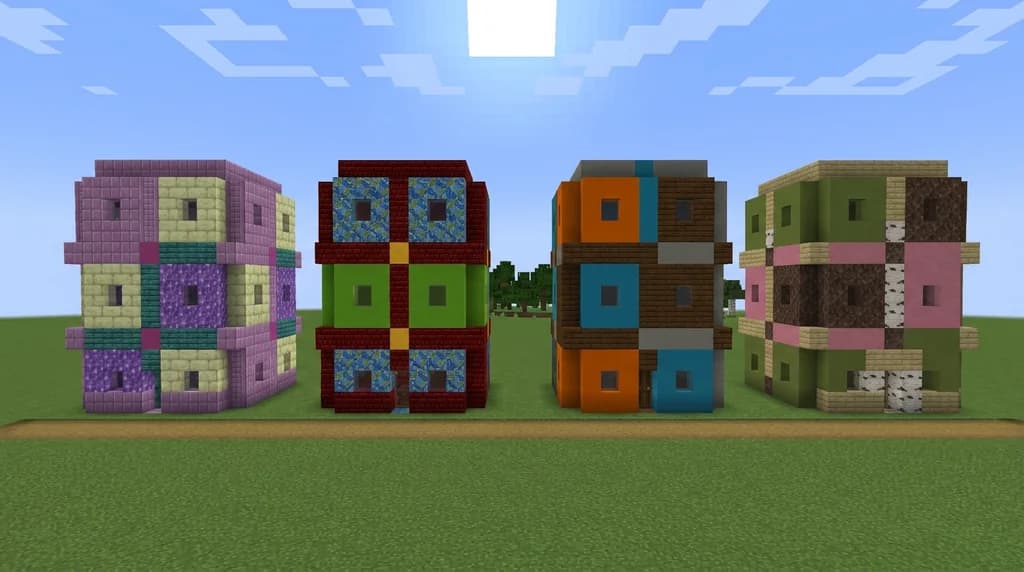
7 Best Triadic Color Palettes for Unique Minecraft Builds (2026)
Discover the 7 best triadic color palettes for Minecraft builds in 2026. Master block harmony with vibrant triadic combos that make your builds unforgettable.
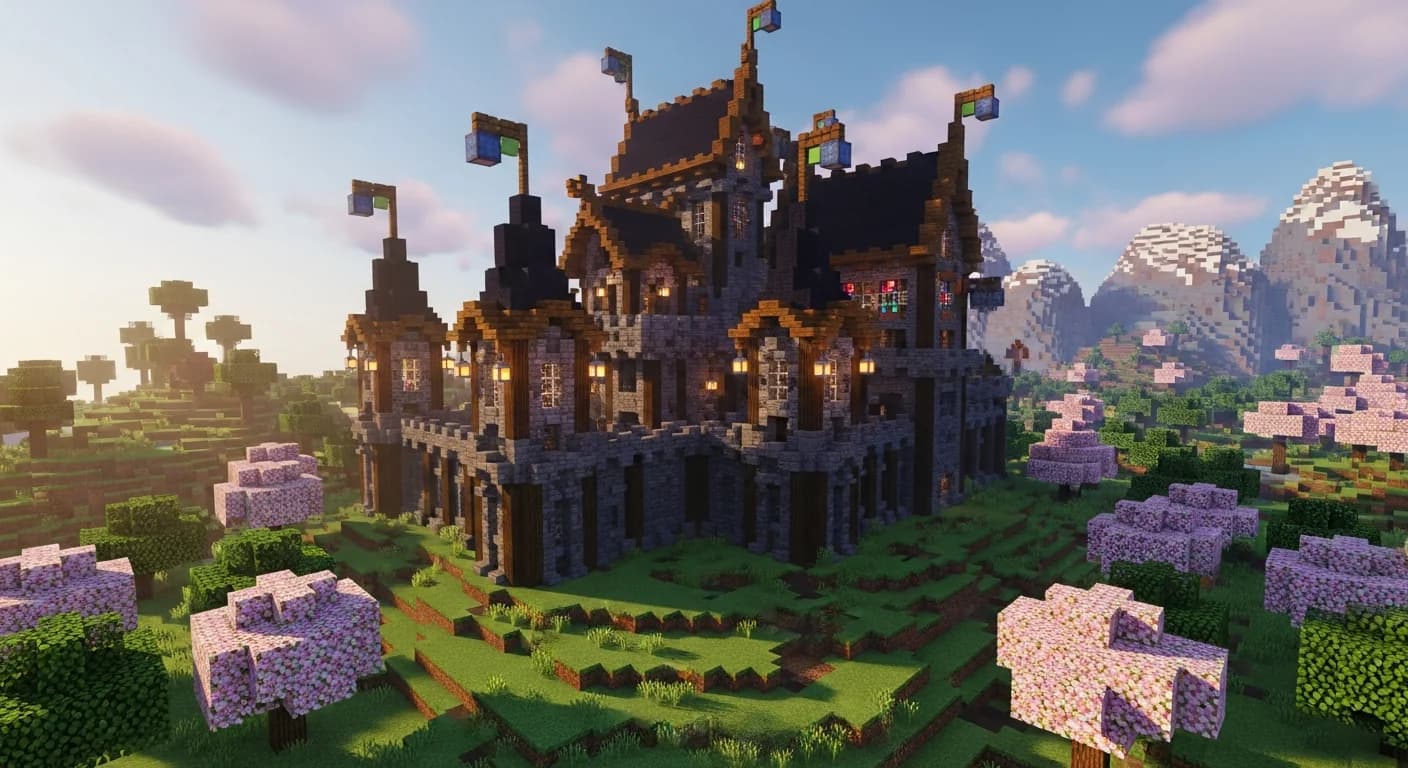
7 Best Castle Minecraft Build Palettes for Fantasy Kingdoms (2026)
Discover the 7 best castle Minecraft build palettes for fantasy kingdoms in 2026. Master color harmony, block combos, and triadic schemes for stunning...
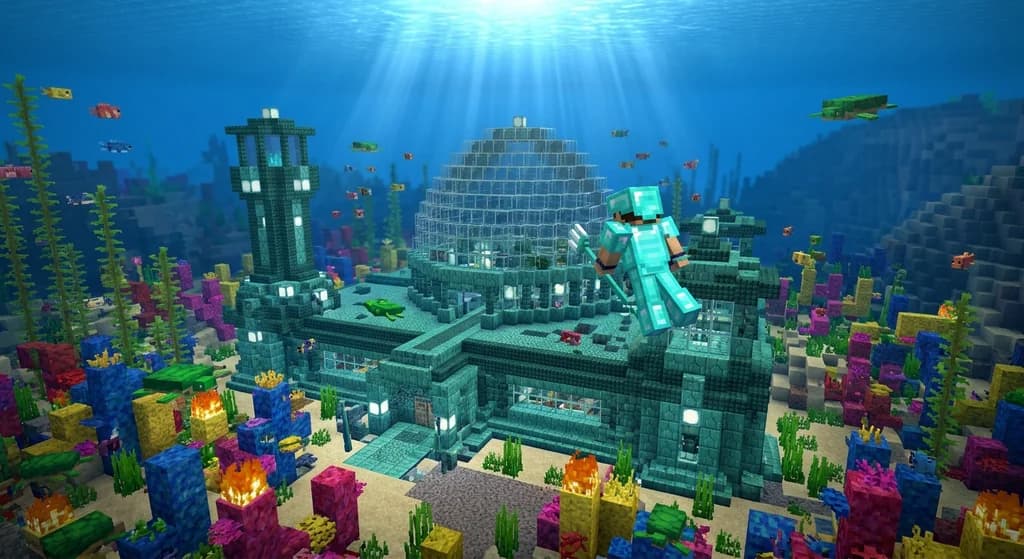
Best Block Palettes for Underwater Bases in Minecraft
Build a stunning underwater base with the best block palettes for ocean builds. From prismarine to copper, find the perfect aquatic block combinations here.
Creative Block Combinations from The Wild Update for Building
Discover six block palettes from The Wild Update: mangrove wood, mud bricks, sculk, and froglight combos for your next Minecraft build.
Have a question or another approach?
Compare notes with other readers. Include your edition and version when discussing mechanics.