7 Best Monochromatic Block Palettes for Minecraft Builds (2026)
Filed under Minecraft Build Palette & Block Harmony · How we create content
Key Takeaways
| Point | Details |
|---|---|
| Monochromatic defined | A monochromatic palette uses one color family across 3–5 blocks with varying texture and value, not just one single block. |
| Grayscale is king | Deepslate, polished blackstone, and smooth stone create the most cited high-prestige monochromatic builds on survival servers. |
| Texture beats color | Mixing smooth, cobbled, brick, and slab variants of the same stone family adds depth without breaking color unity. |
| Accent rule | One contrasting trim block (like sea lanterns in a white palette) is allowed — it acts as a highlight, not a second color. |
| Layer by value | Always plan base (darkest), mid-tone, and highlight (lightest) blocks before placing a single piece. |
| Avoid over-matching | Using only one block type looks flat — 3 minimum variants per palette is the builder's golden rule. |
Table of Contents
- What Are Monochromatic Minecraft Block Palettes?
- Why Monochromatic Palettes Work So Well in Minecraft
- The 7 Best Monochromatic Block Palettes for 2026
- How to Build a Monochromatic Palette From Scratch
- Monochromatic vs Other Color Strategies
- How to Put This Into Practice on Gaia Legends
- Conclusion
- Frequently Asked Questions
- Recommended
Most builders who struggle with cohesion are actually using too many colors, not too few. Monochromatic Minecraft block palettes solve that problem at the root. By committing to a single color family and varying only texture and value, you can produce builds that look intentional, mature, and genuinely impressive — without needing a design degree or a hundred hours of practice.
This guide walks you through the 7 best monochromatic palettes available in Minecraft right now, explains the underlying block harmony logic, and gives you a repeatable framework for building with them.
What Are Monochromatic Minecraft Block Palettes?
A monochromatic Minecraft block palette is a curated set of 3–5 blocks drawn from a single color family, differentiated by texture, brightness, and finish rather than hue.
The key distinction is that you're not using one block — you're using one color. Deepslate bricks, cobbled deepslate, deepslate tiles, and polished deepslate are all gray-blue, but each has a distinct texture that adds visual richness. That layering is what separates a flat, boring build from something that reads as architectural.
Monochromatic is different from using random blocks that happen to share a vague color. It's a deliberate system. You pick a hue family (gray, warm tan, icy white, deep brown), then select blocks that sit within that family at different value levels — dark, mid, light — and assign each a structural role.
Note: Monochromatic doesn't mean boring. Some of the most upvoted builds on Minecraft community showcases are entirely grayscale. Restraint reads as confidence.
Why Monochromatic Palettes Work So Well in Minecraft
Minecraft's block grid is unforgiving. Every surface is a flat 16×16 pixel tile, and when you mix too many colors, the eye has nowhere to rest. Monochromatic palettes solve this by giving the viewer a single visual thread to follow across the entire build.
The Science of Visual Cohesion
Color theory tells us that hue contrast draws attention, while value contrast (light vs. dark) creates depth. In a monochromatic build, you eliminate hue contrast entirely — so every bit of visual interest comes from texture and value. That's exactly how professional architects work with materials like concrete, stone, and timber.
According to the Minecraft Wiki, there are over 800 unique block types available in Java Edition 1.21, which means choice paralysis is a real building problem. Monochromatic palettes cut that decision space down to a manageable shortlist.
Pro Tip: Before placing any block, assign each one a role: base (covers 50%+ of the surface), mid (30%), and highlight (20%). This ratio keeps the palette from looking scattered.
The 7 Best Monochromatic Block Palettes for 2026
Here are the seven palettes that deliver the best results for survival and creative builders right now. Each palette lists its blocks, best use case, and one key mistake to avoid.
1. Deep Gray — The Deepslate Palette
Blocks: Deepslate bricks, cobbled deepslate, deepslate tiles, polished deepslate, deepslate brick slabs/stairs
Best for: Fortresses, dungeons, underground bases, gothic towers
Deepslate is the single most versatile monochromatic family in the game. The four main variants span a wide value range from near-black cobbled deepslate to the smoother, slightly lighter deepslate tiles. Pair with gothic block harmony techniques to push this palette into full atmospheric territory.
Warning: Don't use regular stone or cobblestone as a substitute — the warm gray undertone clashes with deepslate's cool blue-gray and breaks the palette immediately.
2. Warm Tan — The Sandstone Palette
Blocks: Sandstone, cut sandstone, smooth sandstone, sandstone stairs/slabs, chiseled sandstone
Best for: Desert palaces, Egyptian-inspired builds, warm-climate estates
Sandstone's three main variants (regular, cut, smooth) give you a natural light-to-mid range. Chiseled sandstone adds a decorative accent. This palette pairs beautifully with the desert build strategies covered in the Minecraft desert build guide.
3. Icy White — The Quartz and Calcite Palette
Blocks: Quartz block, smooth quartz, quartz bricks, quartz pillar, calcite
Best for: Modern mansions, futuristic labs, winter palaces
Calcite (added in 1.17) is a subtle off-white that plays beautifully against the brighter, crisper quartz. The quartz pillar adds vertical texture. Sea lanterns work as a permitted accent here — their pale blue-white glow counts as a highlight, not a second color.
4. Warm Brown — The Mud Brick and Terracotta Palette
Blocks: Mud bricks, packed mud, terracotta (uncolored), coarse dirt, brown concrete powder
Best for: Village expansions, rustic cottages, clay-earth biome builds
This is an underrated palette. Mud bricks (added in 1.19) have a handmade, textured look that gives warm-brown builds an organic quality no other palette matches. Uncolored terracotta sits in the same warm-tan-brown family and adds a smoother contrast surface.
5. Charcoal Black — The Blackstone Palette
Blocks: Blackstone, polished blackstone, polished blackstone bricks, gilded blackstone, blackstone slabs/stairs
Best for: Nether fortresses, villain lairs, dramatic accent towers
Polished blackstone bricks are among the darkest fully opaque blocks in the game. Gilded blackstone introduces a subtle gold fleck that acts as a natural highlight without introducing a new color family. This palette pairs well with industrial build palettes for a dark-factory aesthetic.
6. Forest Green — The Moss and Deepslate Palette
Blocks: Moss block, mossy cobblestone, mossy stone bricks, moss carpet, oxidized copper
Best for: Ancient ruins, overgrown temples, druidic structures
Fully oxidized copper reaches a muted teal-green that sits close enough to moss green to work within the same monochromatic family. This palette is one of the most photogenic in the game — the varied textures of moss, cobble, and brick create enormous visual complexity from a single hue.
7. Pale Birch — The Light Wood Palette
Blocks: Birch planks, birch logs, stripped birch log, birch slabs/stairs, white concrete
Best for: Scandinavian-style homes, light cottagecore, modern minimalist builds
Birch is the lightest wood in the game, and its pale yellow-cream tone pairs naturally with white concrete for a clean, airy result. Stripped birch log introduces a subtle grain pattern that breaks up flat plank walls.
Palette Quick Reference
| Palette | Color Family | Key Blocks | Best Build Type |
|---|---|---|---|
| Deep Gray | Cool gray-blue | Deepslate variants | Fortresses, dungeons |
| Warm Tan | Sandy beige | Sandstone variants | Desert palaces |
| Icy White | Bright white | Quartz + calcite | Modern, futuristic |
| Warm Brown | Earthy tan | Mud bricks + terracotta | Cottages, villages |
| Charcoal Black | Near-black | Blackstone variants | Nether, villain builds |
| Forest Green | Muted green | Moss + oxidized copper | Ruins, temples |
| Pale Birch | Cream-yellow | Birch + white concrete | Minimalist homes |
How to Build a Monochromatic Palette From Scratch
You don't need to memorize these seven palettes. You need a repeatable process.
Step-by-Step Palette Building
- Choose your anchor block. This is your most textured, most interesting block — it sets the hue family. Example: deepslate bricks.
- Find your darkest variant. Usually cobbled or raw form. This becomes your base (50%+ of surfaces).
- Find your lightest variant. Smooth or polished form. This becomes your highlight (15–20% of surfaces).
- Add one mid-tone. A brick or tile variant bridges the two extremes.
- Pick a trim block. Slabs and stairs of the same family create rooflines and edges without adding a new color.
- Test on a 10×10 wall. Place all five blocks in rough proportions before committing to a full build.
Pro Tip: The Minecraft Wiki's block pages list every variant for each stone type — use them as your palette shopping list. Deepslate alone has 7 craftable variants.
For more approaches to building color systems, the analogous block palettes guide covers the next step up in complexity — two adjacent hues instead of one.
Monochromatic vs Other Color Strategies
A monochromatic palette uses one hue family with value variation. It's the most beginner-friendly advanced technique because it eliminates hue-matching decisions entirely.
| Strategy | Hues Used | Difficulty | Best For |
|---|---|---|---|
| Monochromatic | 1 | Low | Elegant, focused builds |
| Analogous | 2–3 adjacent | Medium | Natural, organic builds |
| Triadic | 3 evenly spaced | High | Bold, vibrant builds |
| Complementary | 2 opposite | Medium-High | High-contrast focal points |
According to the Minecraft Wiki, quartz blocks were introduced in Java Edition 1.5 (the Redstone Update), making them one of the longest-standing dedicated "builder blocks" in the game — a testament to how central clean, single-tone building has always been to Minecraft's creative culture.
If you want to explore more complex color relationships after mastering monochromatic, check out the triadic color palettes guide for a higher-energy approach.
How to Put This Into Practice on Gaia Legends
Gaia Legends is a survival SMP where your base is your reputation. The server's build showcase system lets you submit your base for community review — and monochromatic builds consistently score higher on cohesion ratings than mixed-palette attempts. Players who commit to a single color family tend to earn more plot prestige points, which unlock expanded claim areas.
The server's block trading economy makes sourcing full monochromatic palettes easier than in vanilla. You can trade surplus resources for deepslate, quartz, or calcite without grinding every block yourself. This means you can execute a polished palette build in your first week of play.
Gaia also runs monthly build competitions with themed categories — monochromatic builds have won or placed in the top three in every competition that didn't restrict the style. If you want to compete seriously, this is your highest-percentage strategy.
Gaia Legends is free to join, non-pay-to-win, and supports Java + Bedrock crossplay. Join at gaialegends.pro and start your legend today.
Conclusion
Monochromatic block palettes are the fastest way to make your Minecraft builds look intentional and polished. Here's what to take away:
- Pick one color family and commit — resist the urge to add "just one more color."
- Layer 3–5 variants at different value levels (dark base, mid-tone fill, light highlight) to create depth without chaos.
- Use the palette quick reference table above to match a palette to your build type before you place a single block.
Try one palette this session. Build a 10×10 test wall. You'll immediately see the difference restraint makes.
Ready to play? Join Gaia Legends today — no pay-to-win, Java + Bedrock crossplay.
- Java:
join.gaialegends.pro - Bedrock:
join.gaialegends.pro— Port19132
Further reading
These references were recorded with the article; specific claims have not been matched to source excerpts.
Frequently Asked Questions
What are the best monochromatic Minecraft block palettes for beginners?
The best monochromatic Minecraft block palettes for beginners are the Deep Gray (deepslate variants) and Warm Tan (sandstone variants) palettes. Both have 4–5 easily craftable block types, a clear light-to-dark value range, and are available in survival mode without rare materials. Start with a 10×10 test wall using three variants before committing to a full build.
How many blocks should a monochromatic Minecraft palette have?
A monochromatic Minecraft palette should have 3–5 blocks minimum. One block is too flat and reads as unfinished. More than five risks visual noise even within a single color family. Aim for a dark base block (50% of surfaces), a mid-tone fill block (30%), and a lighter highlight block (20%). Slabs and stairs of the same family count as separate texture variants.
Can you use colored blocks in a monochromatic Minecraft build?
Yes, with one rule: stick to a single hue family. Uncolored terracotta, brown concrete, and packed mud all belong to the warm-brown family and can coexist in a monochromatic palette. Avoid introducing a second distinct hue — even a small amount of a contrasting color (like green moss in a gray build) breaks the monochromatic effect unless used as a deliberate accent trim.
What is the difference between a monochromatic and analogous Minecraft palette?
A monochromatic palette uses one hue family with value and texture variation. An analogous palette uses two or three adjacent hues on the color wheel — for example, green, yellow-green, and teal. Monochromatic is simpler and more elegant; analogous feels more natural and organic. Beginners should master monochromatic first before moving to analogous combinations.
Which Minecraft biome blocks are best for a grayscale monochromatic palette?
The best grayscale Minecraft blocks are deepslate bricks, cobbled deepslate, deepslate tiles, polished deepslate, smooth stone, and stone bricks. All sit in a cool gray-blue family. For a warmer gray, use andesite, polished andesite, and stone. Avoid mixing deepslate (cool blue-gray) with andesite (warm gray) in the same palette — the undertone clash breaks cohesion.
How do you add depth to a single-color Minecraft build without breaking the palette?
Add depth through texture variation, not color. Use slab and stair variants to create shadow lines, alternate between smooth and rough block faces on the same wall, and introduce pillar blocks for vertical rhythm. Lighting also helps — sea lanterns or shroomlights in a matching color family add glow contrast without introducing a new hue. Value contrast (dark vs. light blocks) does all the work color would otherwise do.
Related guides
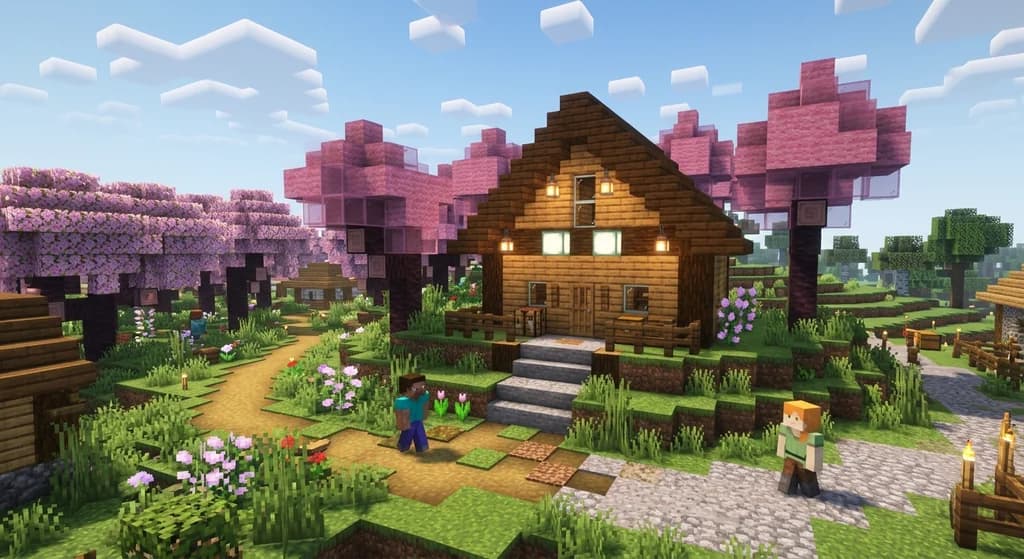
How to Use the 60-30-10 Rule for Balanced Minecraft Builds (2026)
Learn how to use the 60-30-10 rule for Minecraft builds with simple layers: 60% dominant, 30% contrast, 10% accent for balanced bases.
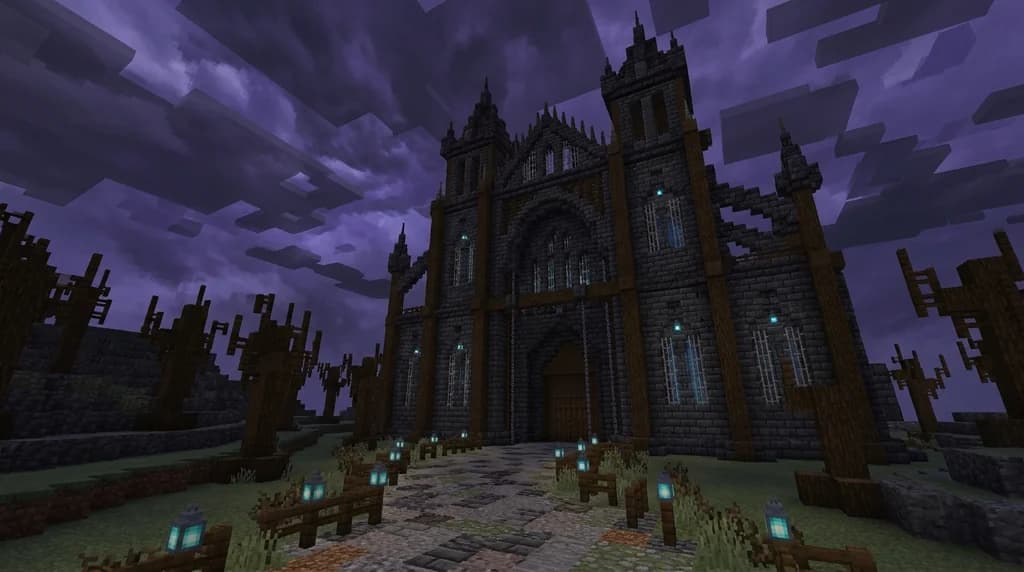
Best Gothic Block Combinations for Minecraft Builds in 2026
Master the best gothic block combinations for Minecraft in 2026. Expert dark fantasy palettes, deepslate architecture tips, and material lists for...
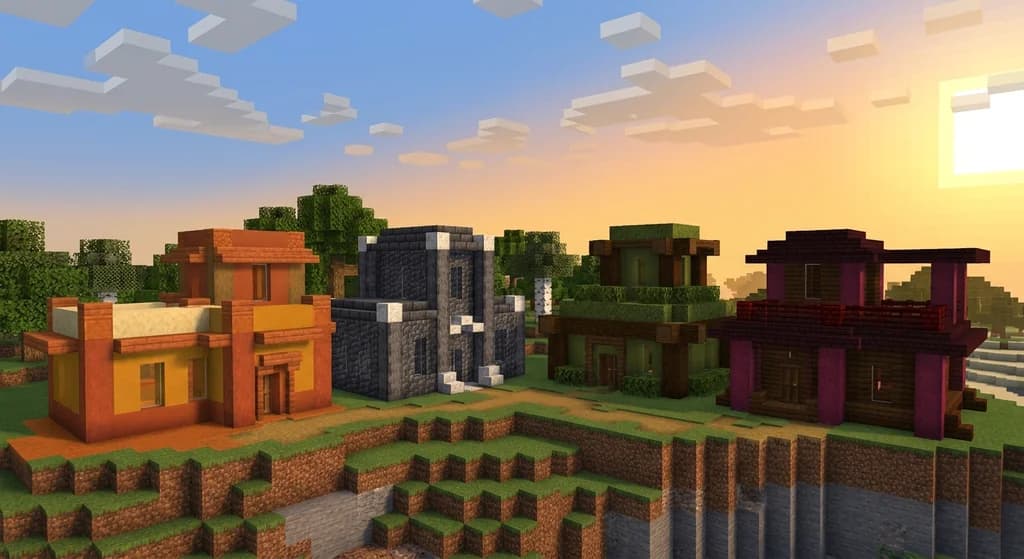
7 Best Analogous Block Palettes for Cohesive Minecraft Builds (2026)
Discover the 7 best analogous block palettes for cohesive Minecraft builds in 2026. Master color harmony with expert block combos, pro tips, and real...
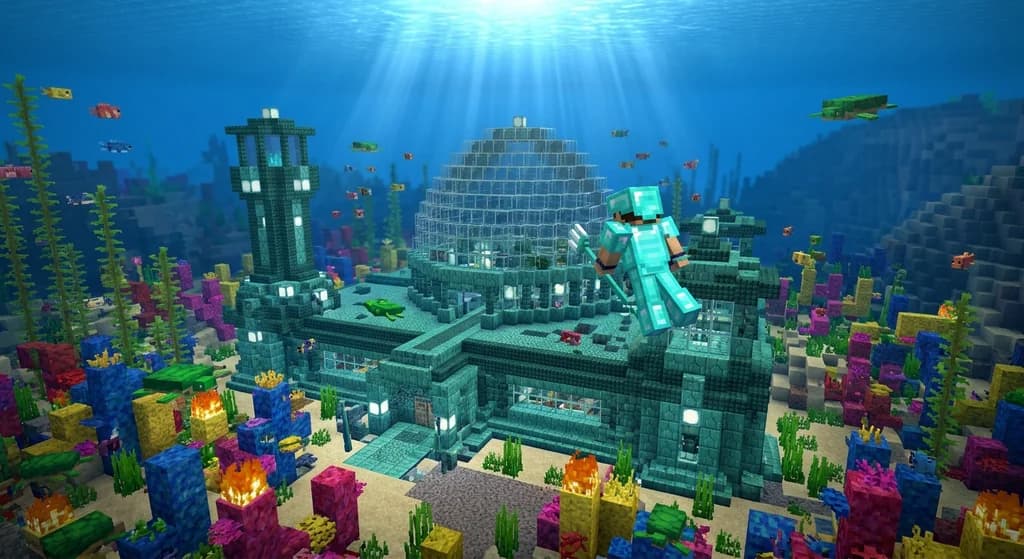
Best Block Palettes for Underwater Bases in Minecraft
Build a stunning underwater base with the best block palettes for ocean builds. From prismarine to copper, find the perfect aquatic block combinations here.
Have a question or another approach?
Compare notes with other readers. Include your edition and version when discussing mechanics.