How to Use Natural Palettes: A 2026 Minecraft Build Guide
Filed under Minecraft Build Palette & Block Harmony · How we create content
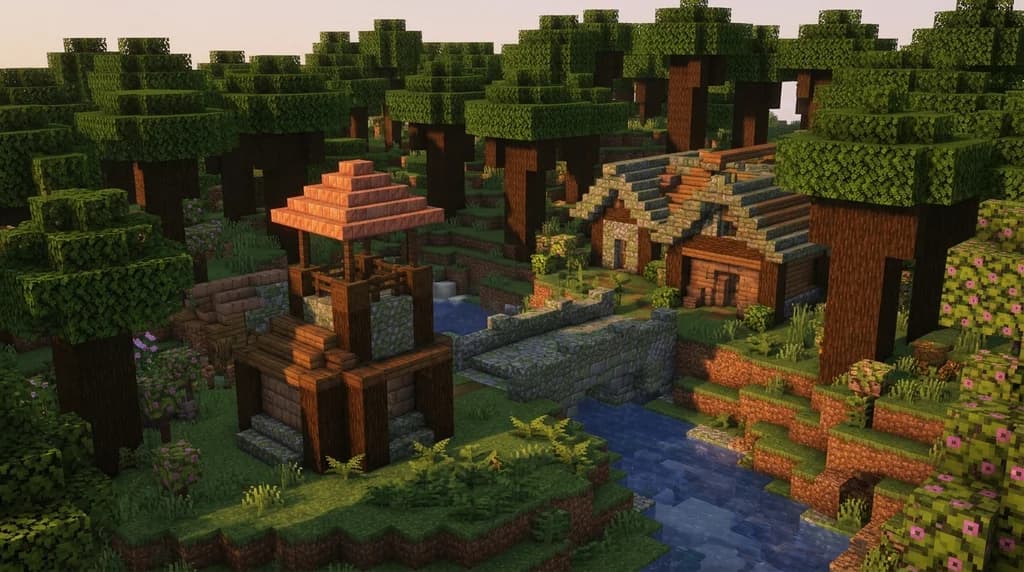
Key Takeaways
| Point | Details |
|---|---|
| Anchor to a biome | Choosing a real Minecraft biome as your palette source (forest, swamp, badlands) instantly gives your build visual coherence. |
| The 3-5 block rule | Limiting your palette to 3–5 earthy blocks prevents visual noise and makes every surface read cleanly. |
| Texture contrast matters | Pairing smooth blocks (mud bricks) with rough ones (mossy cobblestone) adds depth without adding new colors. |
| Accent sparingly | One pop of color — copper oxidation, flowering azalea, or orange terracotta — elevates a natural palette without breaking it. |
| Layer your greens | Mixing moss blocks, fern carpets, and leaf blocks creates organic ground cover that looks genuinely wild. |
| Avoid pure white and neon | Calcite and quartz read as artificial next to earthy tones — save them for interior highlights only. |
Table of Contents
- What Is a Natural Minecraft Build Palette?
- Why Natural Palettes Work So Well in Minecraft
- How to Choose Your Anchor Biome
- Best Earthy Block Combinations for Natural Builds
- How to Apply Minecraft Color Harmony Theory to Natural Palettes
- Tips for Avoiding Common Natural Palette Mistakes
- How to Put This Into Practice on Gaia Legends
- Conclusion
- Frequently Asked Questions
- Recommended
Most Minecraft builds don't fail because the builder lacks skill — they fail because the palette fights the landscape. If you've ever placed a polished granite wall next to a spruce forest and felt something was off, you already understand the core problem this natural minecraft build guide 2026 edition solves. Natural palettes are the secret weapon of builders whose work looks like it belongs in the world, not dropped onto it. This guide gives you the exact system to build that way.
What Is a Natural Minecraft Build Palette?
A natural Minecraft build palette is a curated set of 3–5 blocks drawn from earthy, organic tones — browns, muted greens, warm greys, and desaturated reds — that mirror the colors found in real biomes. Instead of picking blocks you like in isolation, you pull them from the environment around your build site.
The goal isn't realism. It's coherence. When your walls echo the mossy boulders nearby and your roof matches the bark of surrounding trees, the build feels like it was always there.
Note: Natural palettes aren't limited to cottages or forest cabins. They work beautifully on ruins, underground entrances, cliff-side towers, and even large-scale fortresses — as long as the block selection stays grounded.
Why Natural Palettes Work So Well in Minecraft
Minecraft's default world generation is itself a natural palette. Every biome ships with a tightly controlled set of block types — the game's own artists already solved the color harmony problem for you. When you build with those choices instead of against them, your structure reads as part of the world.
There's also a practical reason: natural blocks are abundant. Spruce logs, cobblestone, dirt variants, and clay are survival-accessible from day one. You don't need to farm rare materials to build something stunning.
According to the Minecraft Wiki, the game currently features over 60 distinct biomes across the Overworld, Nether, and End — each with its own native block set you can borrow from. That's over 60 ready-made natural palettes waiting to be used.
How to Choose Your Anchor Biome
Your anchor biome is the single biome whose native blocks form the spine of your palette. Everything else is a supporting player.
Matching Build Type to Biome
| Build Type | Best Anchor Biome | Key Native Blocks |
|---|---|---|
| Forest cabin | Dark Oak Forest | Dark oak logs, moss blocks, rooted dirt |
| Riverside cottage | Mangrove Swamp | Mangrove wood, mud bricks, moss carpet |
| Desert outpost | Badlands | Red terracotta, orange terracotta, sandstone |
| Mountain keep | Stony Peaks | Calcite (sparingly), cobblestone, gravel |
| Jungle shrine | Bamboo Jungle | Bamboo planks, jungle logs, fern carpet |
Pick the biome closest to your build site first. If you're building in a plains biome but want a forest feel, choose the nearest forest variant and transplant its palette. The landscape will carry the rest.
Pro Tip: Walk 50 blocks in every direction from your build site and note which blocks appear most. Those are your free palette — use at least two of them as your primary wall material.
Best Earthy Block Combinations for Natural Builds
Here are five proven earthy block combinations that work in the natural minecraft build guide 2026 context. Each is tested for texture contrast, color temperature, and survival accessibility.
The Forest Floor Palette
- Primary: Spruce logs + spruce planks
- Secondary: Mossy cobblestone + mossy stone bricks
- Fill: Rooted dirt + coarse dirt
- Accent: Flowering azalea leaves
This palette suits cabins, ranger outposts, and woodland shrines. The azalea accent adds a pink-purple pop that reads as natural because azalea trees generate in lush caves and meadow borders.
The Swamp Witch Palette
- Primary: Mangrove logs + mangrove planks
- Secondary: Mud bricks + packed mud
- Fill: Moss blocks + moss carpet
- Accent: Dark prismarine (for water features)
If you want to explore mangrove and bamboo combinations further, the 7 Best Mangrove and Bamboo Build Ideas for Minecraft 2026 guide goes deep on tropical palettes that share DNA with this one.
The Badlands Ruin Palette
- Primary: Orange terracotta + red terracotta
- Secondary: Smooth sandstone + cut sandstone
- Fill: Gravel + coarse dirt
- Accent: Oxidized copper (aged green against warm red is striking)
The Highland Stone Palette
- Primary: Cobblestone + stone bricks
- Secondary: Mossy stone bricks + cracked stone bricks
- Fill: Andesite + gravel
- Accent: Brown mushroom blocks for organic texture
The Deep Green Palette
- Primary: Dark oak logs + stripped dark oak
- Secondary: Moss blocks + fern carpet
- Fill: Deepslate tiles + cobbled deepslate
- Accent: Glow lichen (for subtle light without lanterns)
For a completely different direction — all one tone — check out 7 Best Monochromatic Block Palettes for Minecraft Builds (2026) to see how single-color discipline creates its own powerful aesthetic.
Warning: Avoid mixing warm-toned terracotta palettes with cool-toned deepslate in the same wall. The temperature clash reads as unfinished, not rustic. Keep warm and cool blocks in separate structural zones (walls vs. foundations, for example).
How to Apply Minecraft Color Harmony Theory to Natural Palettes
Minecraft color harmony theory is the practice of selecting blocks whose hues, values (light/dark), and saturation levels work together according to design principles borrowed from traditional color theory — adapted for Minecraft's fixed block textures.
For natural palettes, two harmony types work best:
Analogous Harmony
Analogous palettes pull from colors that sit next to each other on the color wheel — browns, warm greens, and muted oranges. Most forest and swamp palettes are naturally analogous. You can read a full breakdown of this approach in 7 Best Analogous Block Palettes for Cohesive Minecraft Builds (2026).
The rule: if every block in your palette could plausibly grow from the same soil, you're in analogous territory. That's the sweet spot for natural builds.
Value Contrast
Even within an analogous palette, you need light-dark contrast or everything blurs together. Use a simple three-tier system:
- Dark anchor — deepslate, dark oak, black terracotta (foundations, frames)
- Mid tone — cobblestone, mud bricks, spruce planks (walls, roofs)
- Light highlight — calcite, white terracotta, light grey concrete (window surrounds, trim — used sparingly)
This three-tier structure is what separates builds that look "flat" from ones that read clearly at any distance.
Tips for Avoiding Common Natural Palette Mistakes
Even experienced builders trip on these. Keep this checklist close.
Mistake 1: Too Many Block Types
Five blocks is a ceiling, not a suggestion. Every block you add beyond five introduces a new texture and hue the eye has to process. The result feels cluttered, not organic.
Mistake 2: Ignoring the Ground Plane
Your floor matters as much as your walls. Bare grass next to a mossy cobblestone wall looks unfinished. Extend your palette downward: coarse dirt paths, moss carpet borders, gravel patches, and fern clusters tie the build to its ground.
Mistake 3: Symmetrical Vegetation
Real forests aren't symmetrical. Place leaf blocks, fern carpets, and flower pots in odd numbers and irregular clusters. Three small spruce trees of different heights beat two identical ones every time.
Mistake 4: Skipping Depth on Walls
A flat wall — even in a great palette — looks like a texture test. Add depth with:
- Recessed windows (push the glass 1 block inward)
- Pillar framing (log columns every 4–6 blocks)
- Stair detailing along rooflines and ledges
Pro Tip: Replace 10–15% of your primary wall block with its mossy, cracked, or chiseled variant. This micro-variation mimics natural weathering without changing your palette's color identity.
How to Put This Into Practice on Gaia Legends
Everything in this guide translates directly to building on Gaia Legends, our survival SMP where the world is hand-seeded with rich, varied biomes purpose-built for natural-palette builds.
Gaia Legends features custom terrain generation that produces dramatic dark oak forests, sprawling badlands canyons, and dense mangrove coastlines — all within reasonable travel distance of spawn. That means your anchor biome is never far away. Our community build showcases run weekly, and natural-palette wilderness retreats consistently dominate the top-rated submissions. We also run block trading markets where you can source rare palette materials — packed mud, moss blocks, and oxidized copper — without grinding solo for hours.
Gaia Legends is free to join, non-pay-to-win, and supports Java + Bedrock crossplay. Join at gaialegends.pro and start your legend today.
Conclusion
Natural palettes are the fastest way to go from "decent builder" to "how did you make that?" Here are the three things to remember:
- Anchor to your biome. Let the landscape hand you your palette — walk around, observe, and steal from what's already there.
- Use the 3-5 block rule. Restraint is a skill. Fewer blocks, more intentional placement.
- Add texture contrast, not color chaos. Pair smooth with rough, dark with mid, and save one accent block for the moment that earns it.
Now go find a biome, pick five blocks, and build something that looks like it grew there.
Ready to play? Join Gaia Legends today — no pay-to-win, Java + Bedrock crossplay.
- Java:
join.gaialegends.pro - Bedrock:
join.gaialegends.pro— Port19132
Further reading
These references were recorded with the article; specific claims have not been matched to source excerpts.
Frequently Asked Questions
What is a natural minecraft build guide 2026 and how is it different from regular build tutorials?
A natural minecraft build guide 2026 focuses specifically on earthy, biome-grounded block palettes rather than generic building techniques. Instead of teaching you how to shape structures, it teaches you which blocks to combine so your build feels like it belongs in the landscape. The 2026 editions incorporate newer blocks like mud bricks, packed mud, and bamboo planks that weren't available in earlier versions.
What are the best earthy block combinations for a natural Minecraft build?
The most reliable earthy combinations pair a wood type with a stone variant and a dirt or moss fill block. Top picks: spruce logs + mossy cobblestone + rooted dirt (forest), mangrove logs + mud bricks + moss blocks (swamp), and dark oak + cobbled deepslate + coarse dirt (highland). Add one accent block — flowering azalea, oxidized copper, or glow lichen — for visual interest without breaking the earthy feel.
How many blocks should be in a natural Minecraft palette?
Three to five blocks is the ideal range for a natural Minecraft palette. Three blocks create a tight, cohesive look that works well for smaller builds. Five blocks give you enough variety for large structures without losing coherence. Going beyond five typically introduces color or texture clashes that make the build feel cluttered rather than organic.
How does color harmony theory apply to Minecraft natural builds?
Color harmony theory in Minecraft means choosing blocks whose hues work together — for natural builds, that usually means analogous harmony (browns, warm greens, muted oranges) plus value contrast (dark foundations, mid-tone walls, light trim). The goal is a palette where every block could plausibly exist in the same real biome, creating visual unity across the entire structure.
Can natural palettes work for large Minecraft builds, not just small cottages?
Absolutely. Natural palettes scale well to large builds when you apply the three-tier value system: dark blocks for foundations and frames, mid-tone blocks for walls and roofs, and light blocks sparingly for trim. Large structures actually benefit more from natural palettes because the earthy tones reduce visual fatigue — your eye can travel across the build without getting overwhelmed.
Which Minecraft biomes are best for sourcing a natural build palette?
Dark Oak Forest, Mangrove Swamp, Badlands, and Stony Peaks are the four strongest biomes for natural palette sourcing. Each offers a distinct color temperature: forest (cool green-brown), swamp (warm red-brown), badlands (hot orange-red), and peaks (cool grey). Choose the biome closest to your build site and pull at least two of its native blocks as your primary palette materials.
Related guides
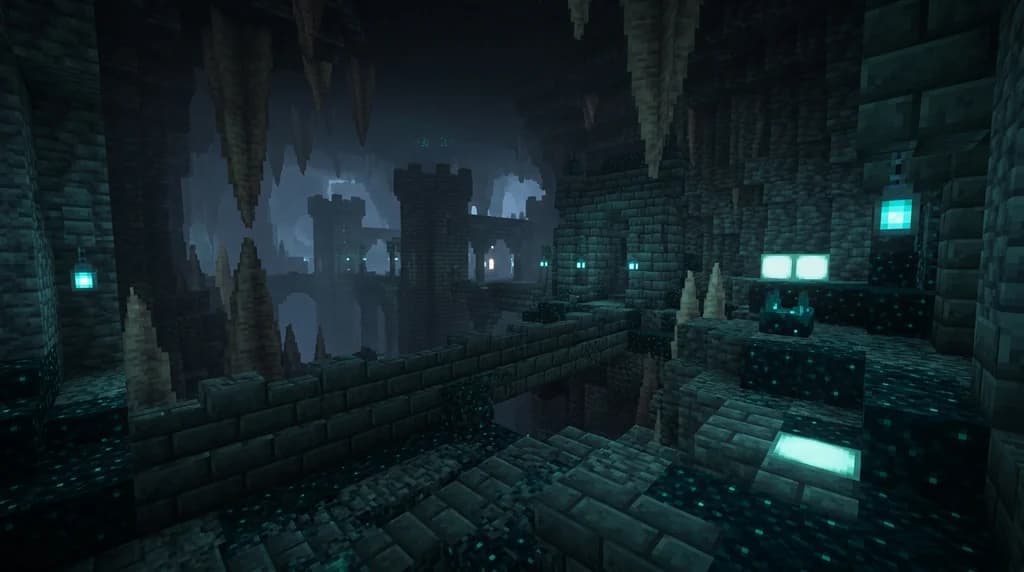
7 Best Deep Dark Block Palettes for Minecraft Builds (2026)
Discover the 7 best deep dark block palettes for Minecraft 2026. Learn sculk and deepslate combos, color theory, and how to build with the deep dark biome.
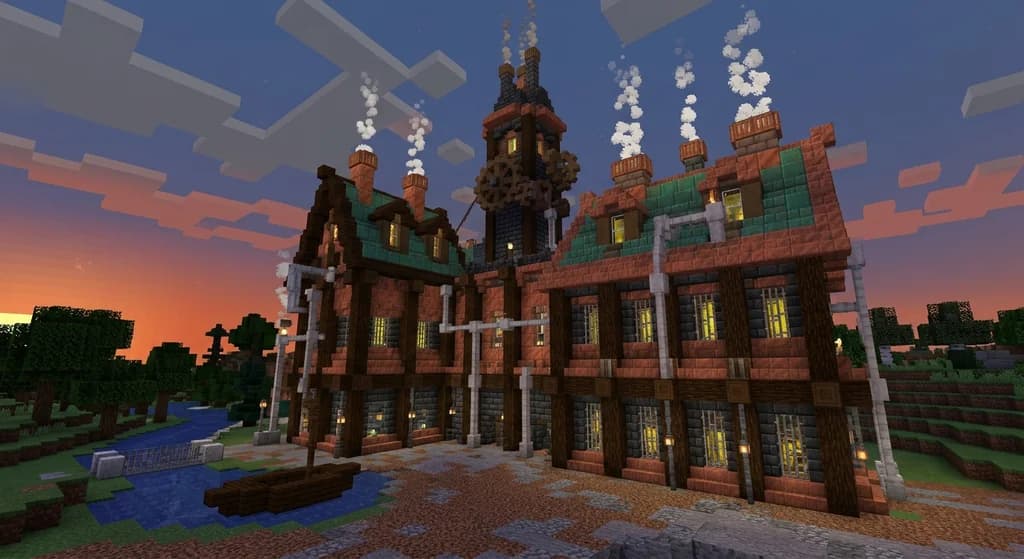
7 Best Steampunk Block Palettes for Copper Minecraft Builds 2026
Discover 7 expert steampunk Minecraft block palettes using copper, deepslate, and dark oak. Build vintage machinery and industrial towers with perfect...
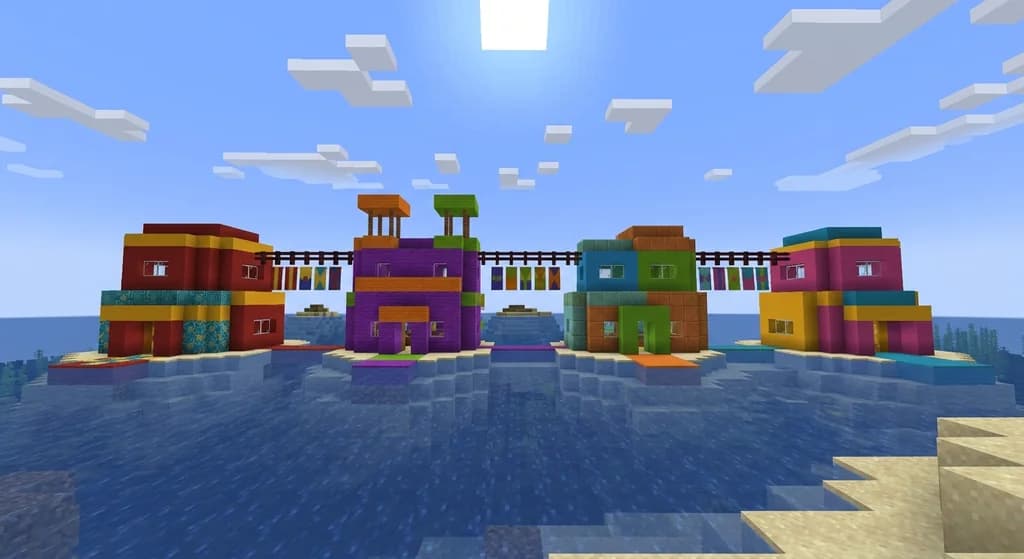
7 Best Triadic Block Palettes for Vibrant Minecraft Builds 2026
Discover the 7 best triadic block palettes for Minecraft builds in 2026. Master triadic color harmony with vibrant block combos, pro tips, and build...
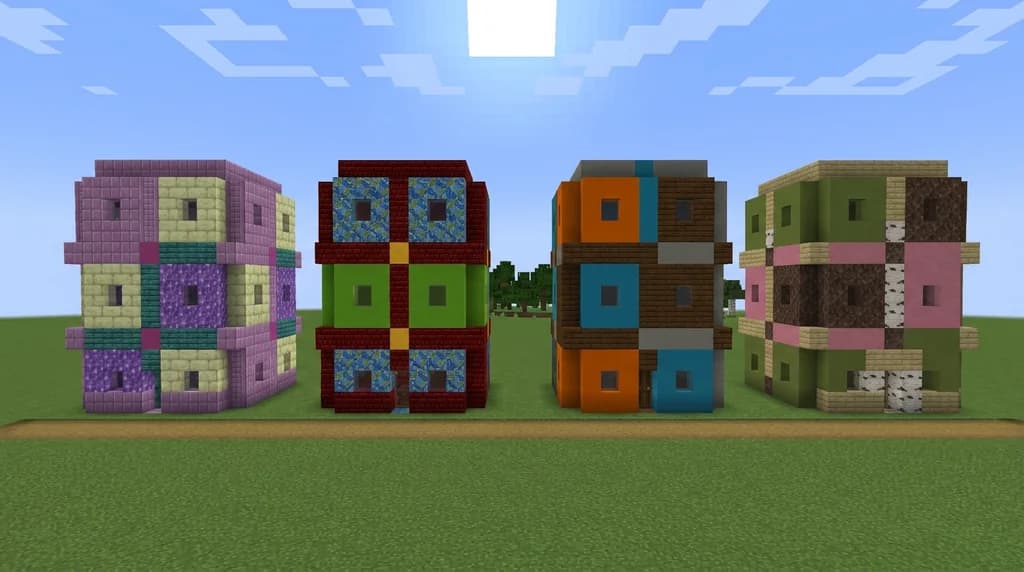
7 Best Triadic Color Palettes for Unique Minecraft Builds (2026)
Discover the 7 best triadic color palettes for Minecraft builds in 2026. Master block harmony with vibrant triadic combos that make your builds unforgettable.
Have a question or another approach?
Compare notes with other readers. Include your edition and version when discussing mechanics.