7 Best Castle Minecraft Build Palettes for Fantasy Kingdoms (2026)
Filed under Minecraft Build Palette & Block Harmony · How we create content
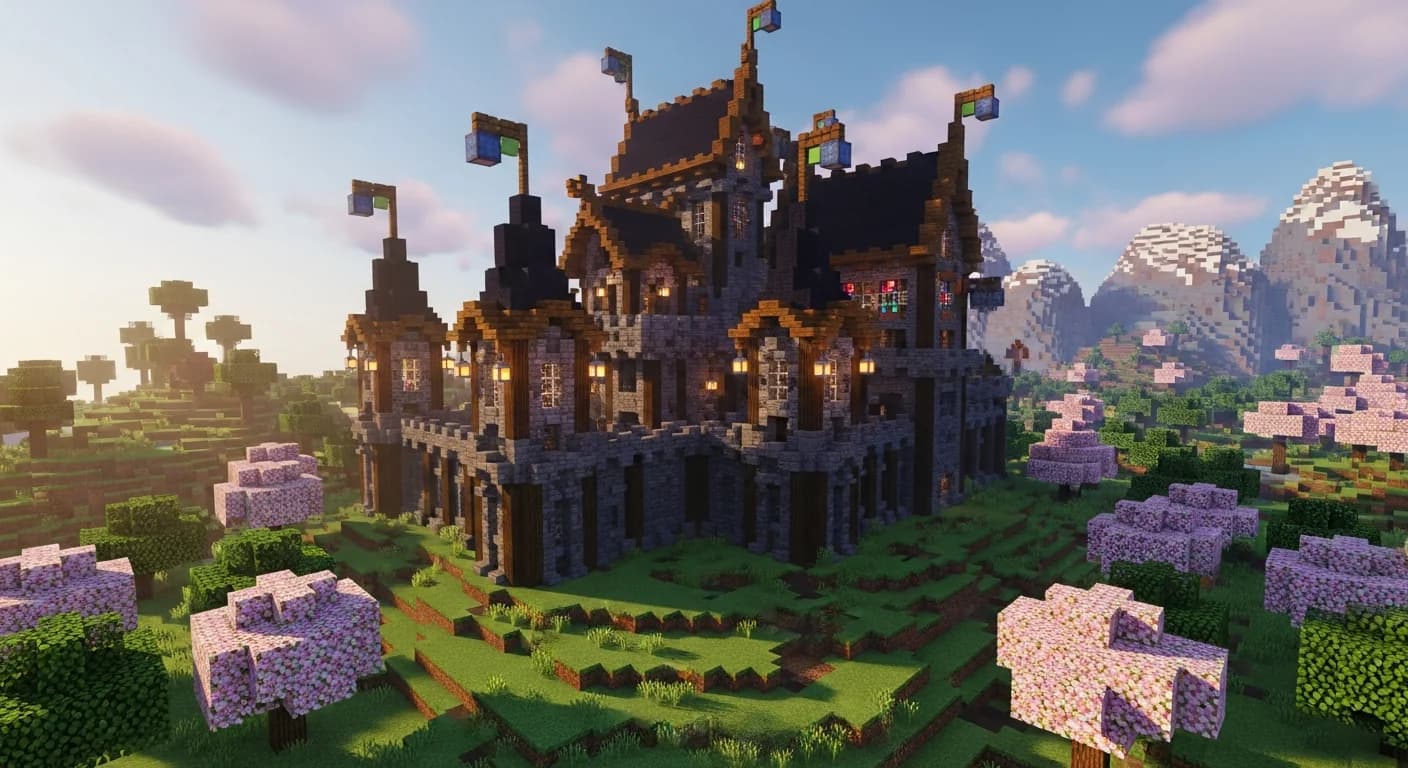
Key Takeaways
- Use a 60-30-10 color ratio: 60% base block, 30% accent, 10% detail — this single rule eliminates the 'flat wall' problem in most castle builds.
- Polished deepslate, stone bricks, and cracked stone bricks are the three most versatile base blocks for fantasy castle Minecraft build palettes.
- Triadic color harmony — three evenly spaced hues on the color wheel — creates visually striking castles without looking chaotic.
- Copper blocks in their three oxidation stages give you a built-in gradient accent that no other block can match.
- Layering slabs, stairs, and walls on flat surfaces adds depth that transforms a bland tower into a believable fortress.
- Entering your finished castle in a build competition is the fastest way to get expert feedback and sharpen your palette instincts.
Most Minecraft castles fail before the first block is placed — not because the builder lacks skill, but because they never chose a palette. They grab stone bricks, add some wood, slap on a cobblestone wall, and wonder why the result looks like a quarry accident. The fix is simpler than you think.
Choosing your castle Minecraft build palettes before you build is the single biggest upgrade you can make to your fantasy kingdom. This guide breaks down 7 proven palettes, explains the color theory behind each one, and gives you the exact block lists to start building today.
What Are Castle Minecraft Build Palettes?
A castle Minecraft build palette is a curated set of 3–5 blocks chosen before construction begins, organized by role: one dominant base block, one accent block, and one or two detail blocks. This mirrors how professional architects and concept artists plan structures — color and material first, geometry second.
Without a palette, your eye has no anchor point. With one, every block decision becomes easier, and the finished build reads as intentional rather than improvised.
The gold standard ratio borrowed from interior design and applied brilliantly to Minecraft is 60-30-10: 60% base block, 30% accent, 10% detail. Nail this split and your castle will look cohesive even before you add a single decoration.
For a deeper dive into how color theory works across all build types, check out our guide on How to Use Color Harmony for Houses to Build in Minecraft (2026).
Best 7 Castle Minecraft Build Palettes for Fantasy Kingdoms
Here are the seven palettes ranked by versatility, visual impact, and ease of sourcing materials in survival mode.
1. Obsidian Throne (Dark Royalty)
| Role | Block | Proportion |
|---|---|---|
| Base | Polished Deepslate | 60% |
| Accent | Blackstone Bricks | 30% |
| Detail | Gold Block / Gilded Blackstone | 10% |
This palette screams dark fantasy. The near-black tones of polished deepslate and blackstone bricks create a brooding, imposing silhouette. Gold details at window frames and battlements pop like candlelight against a storm. Best for: villain lairs, shadow kingdoms, necromancer towers.
Pro Tip: Mix cracked blackstone bricks into your blackstone brick walls at roughly a 1-in-5 ratio. The texture variation stops large flat walls from looking like a single grey rectangle.
2. Stormkeep (Classic Grey Stone)
| Role | Block | Proportion |
|---|---|---|
| Base | Stone Bricks | 60% |
| Accent | Cracked Stone Bricks | 25% |
| Detail | Iron Bars + Dark Oak | 15% |
The timeless medieval palette. Stone bricks carry the weight of centuries in a single block. Mixing in cracked stone bricks — roughly one cracked brick for every four regular — adds age and believability. Dark oak gates and iron bar windows close the deal. This is the palette that never goes out of style.
For more on pairing stone with wood in medieval contexts, our Best Medieval Minecraft Block Combinations for 2026 Builds guide goes deep on wood-stone harmony.
3. Verdant Citadel (Nature-Infused Fortress)
| Role | Block | Proportion |
|---|---|---|
| Base | Mossy Stone Bricks | 55% |
| Accent | Cobblestone / Mossy Cobblestone | 30% |
| Detail | Oak Leaves + Vines | 15% |
A castle reclaimed by nature — or one that was never fully separated from it. Mossy stone bricks give the impression of centuries of rainfall. Scatter real vines and oak leaf clusters along the walls and towers. This palette pairs beautifully with a forest biome backdrop and works especially well for elven or druid-themed kingdoms.
Note: Vines require a supporting block above them to stay placed. Plan your vine placement before finishing your roof or parapet layers, or you'll spend extra time scaffolding back up.
4. Ember Keep (Volcanic Fantasy)
| Role | Block | Proportion |
|---|---|---|
| Base | Nether Bricks | 60% |
| Accent | Red Nether Bricks | 25% |
| Detail | Magma Block + Chain | 15% |
Nether bricks are criminally underused in Overworld castles. Their dark red-grey tone is unique in the block palette and immediately signals danger. Magma blocks in the flooring or moat glow with an eerie heat. Chain details on portcullises and chandeliers add industrial menace. Perfect for fire kingdoms, demon lords, or any villain who means business.
5. Frostspire (Ice and Snow Kingdom)
| Role | Block | Proportion |
|---|---|---|
| Base | Packed Ice / Blue Ice | 55% |
| Accent | Smooth Quartz | 30% |
| Detail | Light Blue Stained Glass + Snow | 15% |
Cold, clean, and breathtaking when lit correctly. Packed ice has a subtle blue tint that smooth quartz walls amplify. Light blue stained glass in tall lancet windows catches torchlight and scatters it beautifully. This palette demands a snowy mountain biome — place it anywhere else and it loses half its magic.
Pro Tip: Use soul lanterns instead of regular lanterns for a blue-tinted ambient glow that matches the ice palette perfectly. The cooler light temperature ties the whole build together.
6. Copperclad Ramparts (Oxidized Elegance)
| Role | Block | Proportion |
|---|---|---|
| Base | Stone Bricks | 50% |
| Accent | Exposed / Weathered Copper | 35% |
| Detail | Waxed Cut Copper Stairs | 15% |
Copper's three natural oxidation stages — fresh orange, exposed brown-green, and weathered teal — give you a built-in gradient accent that no other block replicates. Use waxed copper at the top of towers (newest, brightest) and let unwaxed copper weather toward the base (oldest, most oxidized). The result looks like a castle that has stood for generations.
According to the Minecraft Wiki, copper blocks progress through four oxidation stages — Block of Copper, Exposed Copper, Weathered Copper, and Oxidized Copper — and oxidation can be permanently halted at any stage by waxing the block with a honeycomb.
7. Dawnforge (Warm Sandstone Kingdom)
| Role | Block | Proportion |
|---|---|---|
| Base | Sandstone / Cut Sandstone | 60% |
| Accent | Smooth Sandstone | 25% |
| Detail | Terracotta + Orange Stained Glass | 15% |
Desert kingdoms deserve more love. Cut sandstone walls with smooth sandstone trim create crisp, geometric lines that feel ancient and powerful. Terracotta accents in warm orange and red tie the palette to the desert biome. Orange stained glass domes catch the sun dramatically. Think Egyptian pharaoh meets fantasy emperor.
How to Choose the Right Palette for Your Fantasy Kingdom
Not every palette fits every location. Here's a quick decision framework:
- Pick your biome first. Your surroundings set the mood. A Frostspire castle in a jungle looks wrong. Match the palette to the landscape.
- Decide on your faction's personality. Dark and menacing? Go Obsidian Throne. Wise and ancient? Verdant Citadel. Powerful and wealthy? Dawnforge.
- Source check in survival. Some palettes (Frostspire, Ember Keep) require specific biome access. Plan your world exploration before committing.
- Test at small scale. Build a 10×10 sample wall with your full palette before scaling up. Palettes that look great in a screenshot can clash at castle scale.
For builders who want to understand the underlying color theory driving these palettes, our guide on 7 Minecraft Block Palettes for Pro Builders (2026 Guide) covers analogous, complementary, and triadic schemes in detail.
What Is Triadic Color Harmony in Minecraft Castle Builds?
Triadic color harmony is a color theory principle where three hues equally spaced on the color wheel are combined in a single build. In Minecraft, this translates to choosing blocks whose dominant tones sit roughly 120° apart in hue — for example, a warm orange (terracotta), a cool blue (blue stained glass), and a neutral green (mossy stone bricks).
Triadic palettes are the most visually dynamic option. They create energy and contrast without the harshness of pure complementary schemes. The risk is imbalance — if all three hues appear in equal proportion, the build looks chaotic. Apply the 60-30-10 rule strictly when using a triadic scheme.
The Dawnforge palette above is a soft triadic: sandstone (warm yellow), terracotta (orange-red), and blue sky reflected in orange glass. The Copperclad Ramparts palette edges toward triadic when paired with a blue-grey stone base and teal oxidized copper.
If you're building something more industrial than fantasy, the same triadic principles apply — see our Best Modern Industrial Build Tutorial: 2026 Block Harmony Guide for how deepslate, copper, and cyan terracotta work together in a completely different context.
Tips for Layering Texture in Castle Walls
Flat walls kill castles. Here's how to break them up:
- Pilasters: Place full-block columns every 5–7 blocks along a long wall. They create shadow lines that read as architectural detail.
- Slab courses: Run a slab layer at mid-wall height and at the parapet top. This horizontal banding is a classic castle detail.
- Recessed windows: Set windows one block deep into the wall rather than flush. The shadow makes them look real.
- Corner quoins: Use a different block (smoother or rougher) at wall corners to define edges and add visual weight.
- Randomized cracking: Swap 15–20% of your base block for its cracked or mossy variant. Never place two cracked blocks adjacent — scatter them.
How to Put This Into Practice on Gaia Legends
Gaia Legends runs seasonal build competitions where players submit their best structures for community and judge review. Castle builds are among the most entered categories — and palette quality is one of the top judging criteria every single season.
When you enter a castle build on Gaia Legends, judges evaluate three things: structural complexity, palette cohesion, and biome integration. A well-chosen palette from this guide directly addresses two of those three criteria before you place a single decorative block.
Winners of the build competition earn exclusive server titles — permanent cosmetic badges displayed next to your name — that signal your status as a serious builder. Past winning titles have included "Architect of the Realm" and "Master of Stone," both tied to castle category entries.
Gaia Legends is free to join, non-pay-to-win, and supports Java + Bedrock crossplay — so whether you're building on PC or console, you can enter the same competition and compete for the same titles.
Join at gaialegends.pro and start your legend today.
Conclusion
Choosing your palette before you build is the difference between a castle that looks planned and one that looks accidental. Here are the three things to take with you:
- Start with the 60-30-10 rule. One dominant base block, one accent, one detail. Every palette in this guide follows it.
- Match your palette to your biome and faction personality. The best block combination is the one that fits its surroundings.
- Layer texture on every flat wall. Pilasters, slab courses, and cracked block variation turn good palettes into great builds.
Pick one palette from this list, grab your blocks, and start with a single tower. You'll be surprised how fast the rest of the castle follows.
Ready to play? Join Gaia Legends today — no pay-to-win, Java + Bedrock crossplay.
- Java:
join.gaialegends.pro - Bedrock:
join.gaialegends.pro— Port19132
Further reading
These references were recorded with the article; specific claims have not been matched to source excerpts.
Frequently Asked Questions
What are the best castle Minecraft build palettes for beginners in 2026?
The best castle Minecraft build palettes for beginners are Stormkeep (stone bricks + cracked stone bricks + dark oak + iron bars) and Dawnforge (cut sandstone + smooth sandstone + terracotta). Both use blocks that are easy to farm in survival, have strong natural contrast, and follow the 60-30-10 color ratio without requiring complex sourcing. Start with Stormkeep if you're in a temperate biome, Dawnforge if you're near a desert.
What blocks should I use for a fantasy castle in Minecraft?
For a fantasy castle, your best base blocks are stone bricks, polished deepslate, or mossy stone bricks. Pair them with an accent like dark oak, copper, or blackstone bricks, then finish with iron bars, chains, or stained glass as detail blocks. Always choose your palette before building — three well-chosen blocks beat ten random ones every time. The 60-30-10 ratio (base-accent-detail) keeps everything cohesive.
How do I use triadic color harmony in a Minecraft castle build?
Triadic color harmony in Minecraft means picking three block tones that sit roughly 120° apart on the color wheel — for example, warm sandstone, teal oxidized copper, and a neutral grey stone. Apply the 60-30-10 rule strictly: your dominant hue gets 60% of the surface area, your second hue gets 30%, and your third gets just 10%. This prevents the visual chaos that triadic schemes can cause when all three colors appear in equal amounts.
What is the 60-30-10 rule in Minecraft building?
The 60-30-10 rule is a color-ratio guideline borrowed from interior design. In Minecraft, it means 60% of your build's surface uses your dominant base block, 30% uses your accent block, and 10% uses your detail block. This ratio creates visual hierarchy — your eye knows where to look first — and prevents the 'everything fights for attention' problem that plagues builds with too many equally weighted blocks.
How do I stop my Minecraft castle walls from looking flat?
Break up flat walls using five techniques: pilasters (full-block columns every 5–7 blocks), slab courses at mid-wall and parapet height, recessed windows set one block deep, corner quoins using a contrasting block, and scattered cracked or mossy block variants at roughly 15–20% of the wall surface. Never place two cracked blocks adjacent — scatter them randomly. These details create shadow lines that read as real architectural complexity at any viewing distance.
Can I use Nether blocks for an Overworld castle in Minecraft?
Absolutely — Nether bricks and red Nether bricks are excellent Overworld castle materials. Their dark red-grey tones are unique in the block palette and create an imposing, dangerous aesthetic that stone bricks can't match. Pair them with magma blocks in the moat or flooring and chain details on portcullises for a volcanic fantasy look. Just be aware that sourcing them requires Nether access, so plan your resource run before committing to this palette in survival mode.
Related guides
7 Best Triadic Block Palettes for Vibrant Minecraft Builds 2026
Discover the 7 best triadic block palettes for Minecraft builds in 2026. Master triadic color harmony with vibrant block combos, pro tips, and build...
7 Best Complementary Block Palettes for Minecraft Builds (2026)
Discover the 7 best complementary color palettes for Minecraft builds in 2026. Master high-contrast block combos like orange & blue for standout survival...
7 Best Triadic Block Palettes: A Minecraft Build Tutorial (2026)
Master triadic color harmony in Minecraft with 7 stunning block palettes for 2026. Learn how to combine Purpur, Moss, and Copper for builds that truly pop.
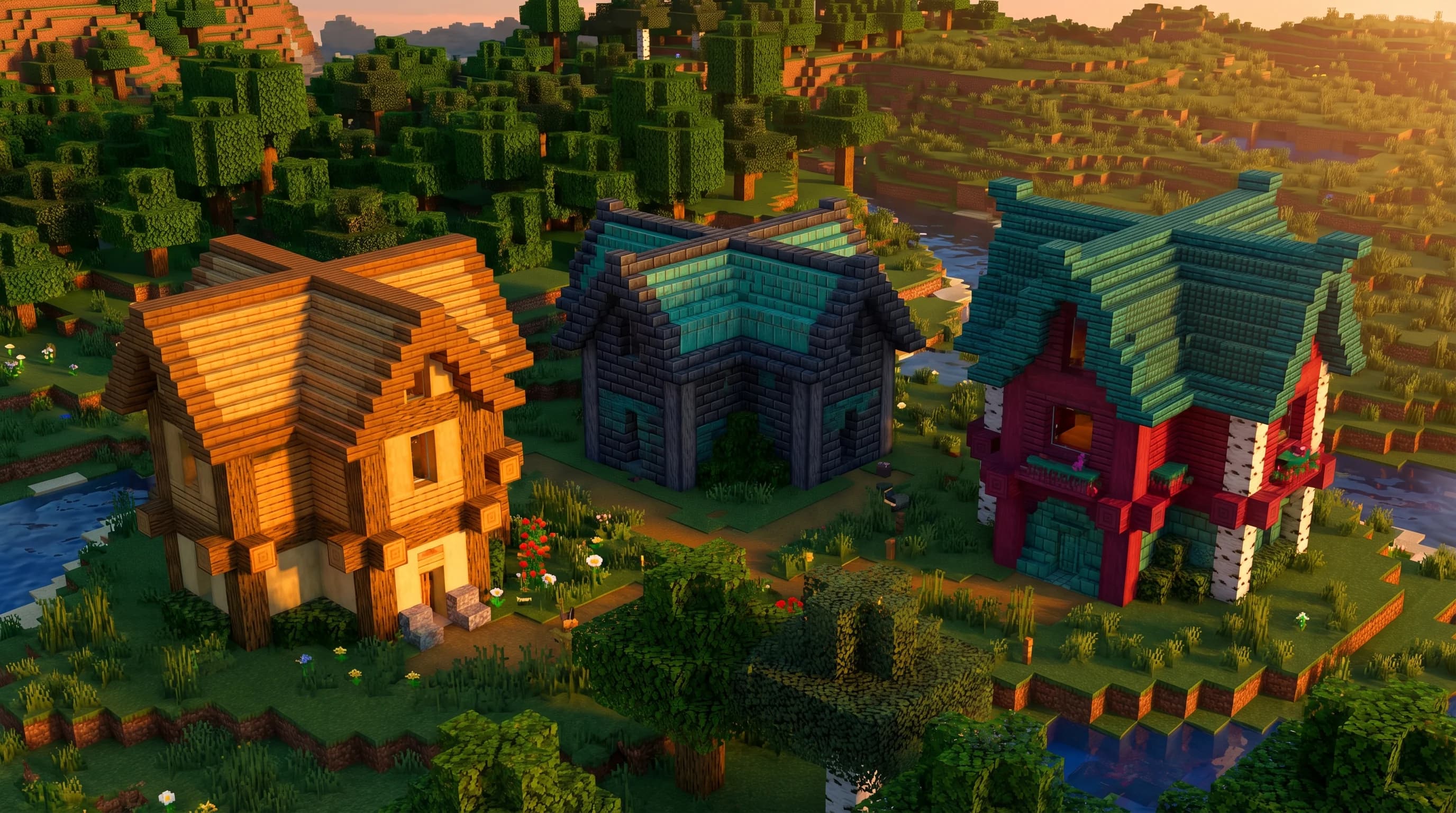
How to Use Color Harmony for Houses to Build in Minecraft (2026)
Learn color harmony theory for houses to build in Minecraft. Master analogous, complementary, and triadic block palettes to make every build look stunning.
Have a question or another approach?
Compare notes with other readers. Include your edition and version when discussing mechanics.