Top 7 Industrial Color Schemes for Minecraft Factory Builds 2026
Filed under Minecraft Build Palette & Block Harmony · How we create content
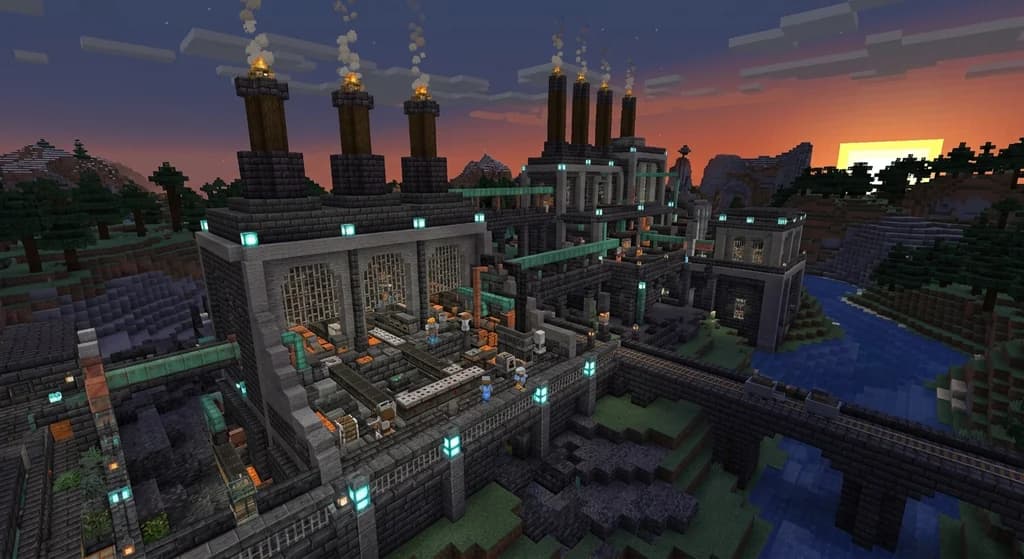
Key Takeaways
| Point | Details |
|---|---|
| Dark base, warm accent | Pair deepslate bricks or blackstone with oxidized copper or orange terracotta for instant industrial depth. |
| Concrete is your workhorse | Gray and light-gray concrete provide the neutral backbone every factory palette needs. |
| Texture contrast matters | Mixing polished and rough variants of the same block family (e.g., polished deepslate vs. cracked deepslate) adds realism without adding new colors. |
| Copper tells a story | Copper's four oxidation stages let you show age and wear across a single build, from fresh orange to teal-green. |
| Steampunk needs warmth | Stripped dark oak, exposed copper, and brown terracotta keep steampunk palettes from reading as cold or lifeless. |
| Accent sparingly | Limit bright accent blocks (glowstone, sea lanterns, yellow concrete) to 5–10% of total block count so they pop without overwhelming. |
Table of Contents
- What Are Industrial Color Schemes for Minecraft?
- Why Block Harmony Makes or Breaks a Factory Build
- Top 7 Industrial Color Schemes for Minecraft Factory Builds
- How to Choose the Right Industrial Palette for Your Build
- Tips for Applying Industrial Block Harmony
- How to Put This Into Practice on Gaia Legends
- Conclusion
- Frequently Asked Questions
- Recommended
Most factory builds fail before the first block goes down. The builder grabs gray concrete, slaps down some iron bars, and ends up with a flat, lifeless slab that looks more like a parking garage than a working industrial complex. The fix isn't more blocks — it's better industrial color schemes for Minecraft.
The right palette gives your factory grit, atmosphere, and visual storytelling. This guide breaks down seven proven schemes, from sleek modern manufacturing plants to grimy steampunk foundries, with exact block lists and pro strategies for each.
What Are Industrial Color Schemes for Minecraft?
An industrial color scheme for Minecraft is a curated set of blocks chosen to evoke the look and feel of real-world factories, warehouses, foundries, or mechanical workshops — using Minecraft's native block palette to simulate metal, rust, concrete, and aged materials.
Unlike natural or fantasy palettes, industrial schemes lean on:
- Neutral bases: gray, dark gray, and black tones
- Metallic accents: copper, iron bars, chains, and lanterns
- Textural contrast: mixing polished, cracked, and raw variants
- Controlled warmth: orange, brown, or amber accents to prevent the build from reading as cold or sterile
The goal is a palette that reads as "built for a purpose" — not decorative, but functional and worn.
Why Block Harmony Makes or Breaks a Factory Build
Block harmony is the principle that every block in a palette should feel like it belongs to the same visual world. In industrial builds, this means your darkest blocks (blackstone, deepslate) should share a cool undertone with your mid-tones (gray concrete, smooth stone), while your accent blocks (copper, glowstone, orange terracotta) provide controlled warmth.
When harmony breaks down — say, you mix bright blue wool with raw deepslate — the eye can't settle on a reading. Is this a factory or a carnival? Harmony gives your viewer a single, confident answer.
Note: Copper exists in four oxidation stages in Minecraft: block of copper, exposed copper, weathered copper, and oxidized copper. According to the Minecraft Wiki, copper blocks begin oxidizing after a random time and fully oxidize to teal after approximately 20 in-game days if left unwaxed. This four-stage progression is your single most powerful tool for adding age and realism to any industrial build.
For more on how color relationships work across block families, check out 7 Best Analogous Block Palettes for Minecraft Builds (2026) — the analogous harmony rules there translate directly to industrial schemes.
Top 7 Industrial Color Schemes for Minecraft Factory Builds
Here are the seven palettes, ranked from most accessible to most advanced.
1. Concrete Foundry (Modern Factory)
Primary: Gray concrete, light gray concrete Secondary: Smooth stone, polished deepslate Accent: Yellow concrete, sea lanterns
Clean, modern, and easy to source. This palette reads as a contemporary manufacturing plant. Use yellow concrete sparingly — one stripe along the floor edge or a single warning pillar — and it transforms flat gray into something with genuine visual intent.
2. Deepslate Refinery (Dark Industrial)
Primary: Deepslate bricks, cracked deepslate bricks Secondary: Blackstone, polished blackstone Accent: Exposed copper, chains, lanterns
This is the go-to palette for underground or subterranean factories. The mix of cracked and intact deepslate bricks simulates structural wear. Chains hanging from the ceiling and copper pipe-runs along the walls complete the look.
3. Steampunk Foundry (Warm Industrial)
Primary: Stripped dark oak logs, brown terracotta Secondary: Exposed copper, weathered copper Accent: Orange terracotta, glowstone
Steampunk building materials in Minecraft work best when you balance dark wood tones with copper's warm orange. Stripped dark oak provides the mechanical wood-and-metal feel, while glowstone tucked behind iron bars mimics furnace glow. Avoid polished blocks here — rough textures sell the era.
Pro Tip: Place glowstone one block behind iron bars to simulate glowing furnace windows without the harsh flat-light look of exposed glowstone.
4. Brutalist Warehouse (Raw Concrete)
Primary: Gray concrete, smooth stone Secondary: Stone bricks, cracked stone bricks Accent: Iron bars, white concrete
Brutalism is about mass and repetition. Keep your accent use minimal — iron bars for windows, white concrete for a single trim line — and let the raw concrete walls do the heavy lifting. This palette is fastest to build and one of the most readable from a distance.
5. Rusted Ironworks (Aged Metal)
Primary: Blackstone, polished blackstone bricks Secondary: Cracked deepslate bricks, mud bricks Accent: Oxidized copper, orange terracotta, brown mushroom blocks
This palette simulates a factory that's been abandoned and reclaimed by time. The orange terracotta and oxidized copper teal create a natural complementary contrast — rust orange against verdigris green — that reads as genuinely weathered. For more on using complementary contrast in builds, see 7 Best Complementary Block Palettes for Minecraft Builds (2026).
6. Arctic Processing Plant (Cold Industrial)
Primary: White concrete, light gray concrete Secondary: Smooth quartz, polished diorite Accent: Blue ice, cyan terracotta, sea lanterns
Cold, clinical, and striking. This palette works best for above-ground builds in snowy biomes. Blue ice floors under sea lanterns create an eerie refrigerated-facility atmosphere. Keep the accent blocks under 8% of total block count or the palette tips into "ice castle" territory.
Warning: Polished diorite can look overly shiny and out of place if overused. Limit it to trim and detail work — never use it as a primary wall block in industrial builds.
7. Nether Forge (Hellish Industrial)
Primary: Nether bricks, cracked nether bricks Secondary: Blackstone, basalt Accent: Magma blocks, shroomlight, red nether bricks
The Nether Forge palette is the most dramatic on this list. Magma blocks in the floor (with a non-flammable layer beneath) create a lava-channel effect. Shroomlights tucked into ceiling recesses provide ambient glow without the harsh orange of glowstone. This palette pairs beautifully with lava source blocks used as accent "windows."
For a completely different direction — one that leans into organic warmth rather than industrial grit — see 7 Best Mangrove and Bamboo Build Ideas for Minecraft 2026 for contrast inspiration.
How to Choose the Right Industrial Palette for Your Build
Use this quick-reference table to match your build's setting and mood to the right scheme:
| Palette | Best Setting | Mood | Difficulty |
|---|---|---|---|
| Concrete Foundry | Above-ground, plains | Clean, modern | Easy |
| Deepslate Refinery | Underground, caves | Dark, gritty | Easy |
| Steampunk Foundry | Any | Warm, mechanical | Medium |
| Brutalist Warehouse | Urban, flat terrain | Raw, imposing | Easy |
| Rusted Ironworks | Abandoned, overgrown | Aged, atmospheric | Medium |
| Arctic Processing Plant | Snowy biomes | Cold, clinical | Medium |
| Nether Forge | Nether dimension | Hellish, dramatic | Hard |
Tips for Applying Industrial Block Harmony
Control Your Block Count
Limit each palette to three primary blocks, two secondary blocks, and one to two accent blocks. More than that and the build loses cohesion. Industrial aesthetics reward restraint.
Use Texture Variants, Not New Colors
Instead of adding a new color to break monotony, switch to a texture variant of a block you're already using. Cracked deepslate bricks next to intact deepslate bricks reads as wear — not chaos. This is the single fastest way to add realism to a factory build.
Vertical vs. Horizontal Block Placement
Run your accent blocks horizontally (trim lines, floor stripes, pipe runs) rather than vertically. Horizontal lines make a factory feel grounded and wide. Vertical accent columns make it feel decorative — the opposite of industrial.
Lighting as a Palette Element
Don't treat lighting as an afterthought. Sea lanterns read as modern and clean. Lanterns (the hanging iron kind) read as aged and mechanical. Shroomlights read as organic-industrial. Match your light source to your palette's mood before you place a single lamp.
If you're exploring how color harmony principles apply more broadly, 7 Best Triadic Block Palettes for Vibrant Minecraft Builds 2026 is a great companion read — the triadic contrast principles there help you understand why accent color placement is so powerful.
How to Put This Into Practice on Gaia Legends
Gaia Legends is where these industrial palettes come alive in a multiplayer context. The server features custom technical blocks — including metallic pipe furniture, gear-wall decorations, and forge table items — that were specifically designed to harmonize with deepslate, blackstone, copper, and concrete block families. Drop a gear wall into a Deepslate Refinery build and it looks like it was always meant to be there.
The server also runs seasonal build competitions with industrial and steampunk themes, so your palette knowledge translates directly into competitive advantage. Past winners have consistently used the Rusted Ironworks and Steampunk Foundry palettes from this guide.
Gaia Legends is free to join, non-pay-to-win, and supports Java + Bedrock crossplay — so your whole friend group can build together regardless of platform.
Join at gaialegends.pro and start your legend today.
Conclusion
Getting industrial color schemes right in Minecraft comes down to three things:
- Start with a dark, neutral base — deepslate, blackstone, or gray concrete — and build up from there
- Add warmth through copper and terracotta accents, keeping them under 10% of your total block count
- Use texture variants (cracked, polished, exposed) to add visual complexity without adding new colors
Pick one palette from this guide, commit to it fully, and your next factory build will look like it was planned by an architect — not assembled block by block with whatever was in your inventory. Now go build something worth visiting.
Ready to play? Join Gaia Legends today — no pay-to-win, Java + Bedrock crossplay.
- Java:
join.gaialegends.pro - Bedrock:
join.gaialegends.pro— Port19132
Frequently Asked Questions
What are the best industrial color schemes for Minecraft factory builds?
The best industrial color schemes for Minecraft factory builds pair a dark neutral base — deepslate bricks, blackstone, or gray concrete — with metallic accent blocks like copper, chains, and iron bars. Top palettes include the Deepslate Refinery (deepslate + exposed copper), Concrete Foundry (gray concrete + yellow accent), and Steampunk Foundry (dark oak + weathered copper). Limit accent blocks to 5–10% of total block count for maximum visual impact.
What blocks should I use for a steampunk Minecraft build?
For a steampunk Minecraft build, use stripped dark oak logs and brown terracotta as your primary blocks, exposed or weathered copper for mechanical pipe details, and glowstone behind iron bars to simulate furnace glow. Avoid polished blocks — rough textures like raw wood and oxidized copper sell the steampunk era far better. Orange terracotta works as a warm accent to prevent the palette from reading as cold.
How do I make a Minecraft factory build look realistic?
To make a Minecraft factory build look realistic, mix texture variants of the same block family rather than adding new colors — for example, cracked deepslate bricks alongside intact deepslate bricks to simulate structural wear. Run accent blocks horizontally as trim lines or pipe runs, match your light source to your palette's mood (sea lanterns for modern, hanging lanterns for aged), and keep your total palette to three primary, two secondary, and one or two accent blocks.
What is the best concrete color for Minecraft industrial builds?
Gray concrete and light gray concrete are the best concrete colors for Minecraft industrial builds. They provide a neutral, mid-tone backbone that works with almost every accent color. White concrete works for cold or clinical factory aesthetics, while dark gray or black concrete (paired with blackstone) suits underground or brutalist designs. Avoid bright concrete colors as primary blocks — they undermine the industrial mood.
How does copper oxidation work in Minecraft builds?
Copper in Minecraft oxidizes through four stages: block of copper (orange), exposed copper (slightly weathered), weathered copper (green-gray), and oxidized copper (teal-green). Oxidation happens randomly over time if the copper is left unwaxed. You can stop oxidation at any stage by applying honeycomb to wax the block. For industrial builds, mixing multiple oxidation stages across the same structure creates a convincing aged-metal effect.
Can I use nether blocks for a factory-style Minecraft build?
Yes — nether blocks make excellent factory-build materials, especially for a 'hellish industrial' or underground forge aesthetic. Nether bricks, cracked nether bricks, blackstone, and basalt form a strong dark base. Add magma blocks for glowing floor channels and shroomlights for ambient ceiling lighting. This palette works best in the Nether dimension or in underground builds where the dark, heat-blasted aesthetic fits the environment.
Related guides
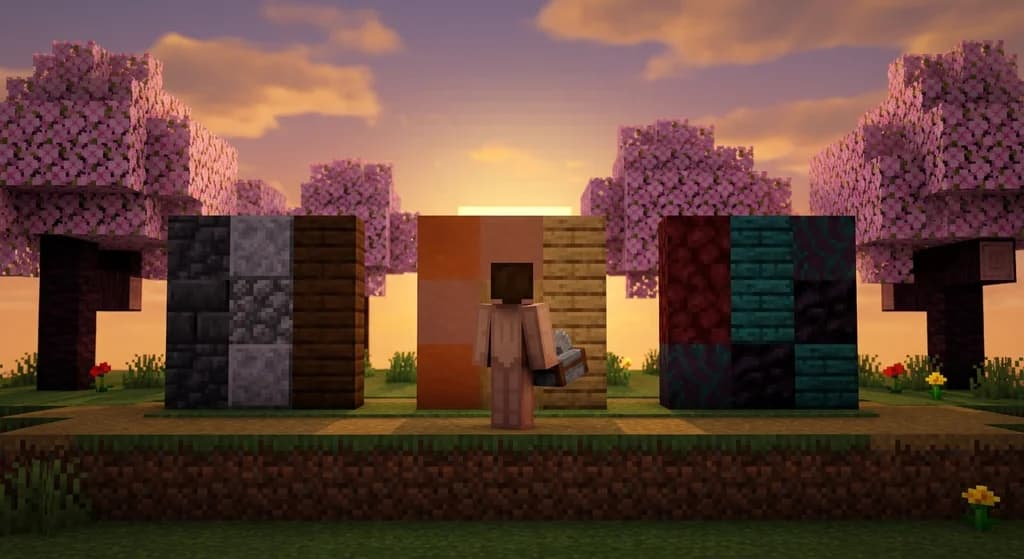
How to Create Your Own Block Palettes in Minecraft (2026)
Learn how to create your own Minecraft block palettes in 2026. This step-by-step guide covers color theory, block combinations, and testing techniques for...
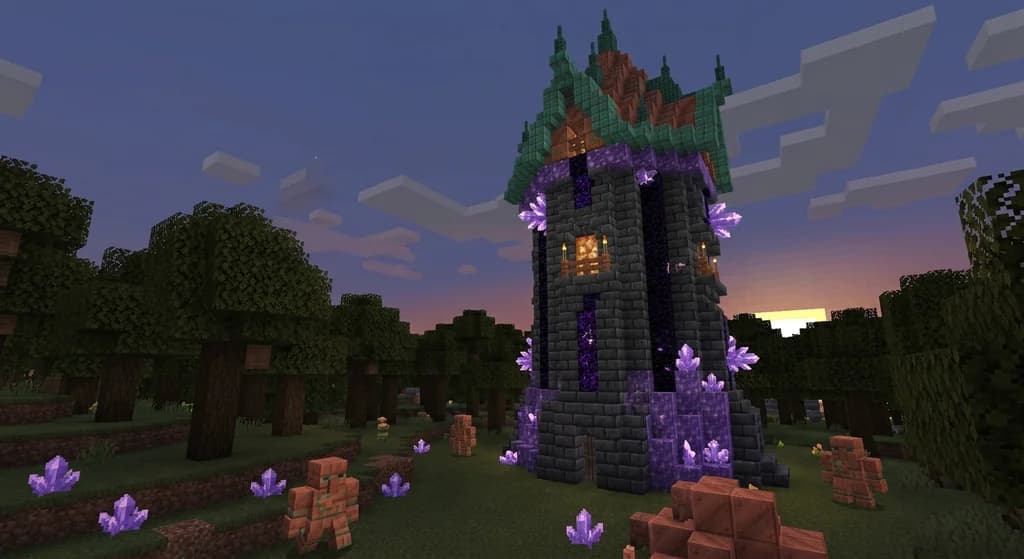
Best Minecraft Block Palette for a Wizard Tower in 2026
Discover the best Minecraft wizard tower block palette for 2026. Learn how to combine deepslate, amethyst, copper, and crying obsidian for a magical...
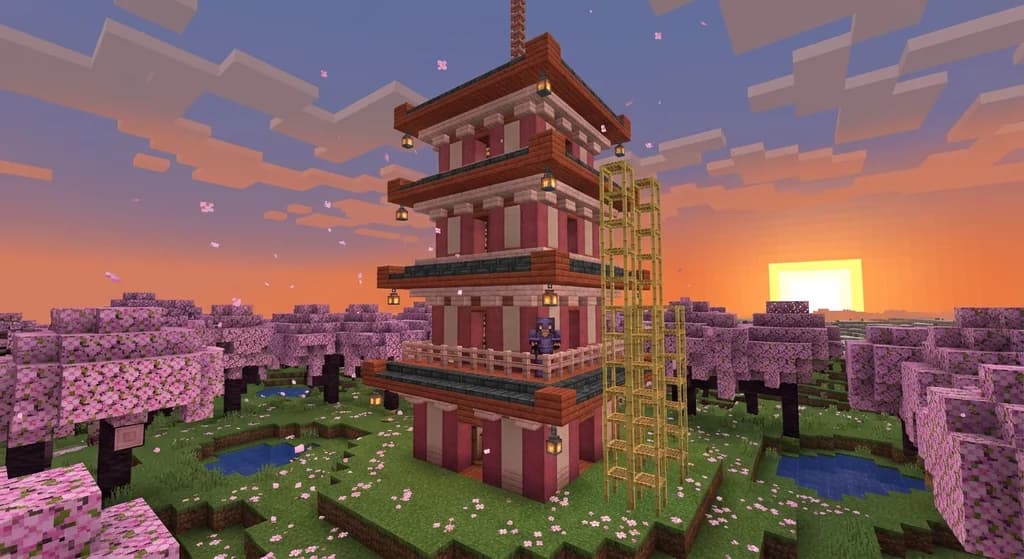
How to Build a Japanese Pagoda in Minecraft 2026: Block Palette Guide
Learn the best block palette for a Japanese pagoda in Minecraft 2026. Complete guide with step-by-step survival build tutorial and palette combos.
7 Best Coastal Block Palettes for Minecraft House Builds 2026
Discover the 7 best coastal block palettes for Minecraft house builds in 2026. Expert sandstone combos, beach house ideas, and seaside palette tips.
Have a question or another approach?
Compare notes with other readers. Include your edition and version when discussing mechanics.