Minecraft Bedrock Villager Economy: Supply and Demand System
Filed under Minecraft Economy & Trading · How we create content
Version scope: Bedrock Edition 1.11.0
Key Takeaways
| Point | Details |
|---|---|
| Villagers restore their trade | Villagers restore their trade supply only when they can access their job site block, up to twice per Minecraft day. |
| Each used trade increases | Each used trade increases 'demand', which raises the price for that item on the next restock. |
| Unused trades reduce demand | Unused trades reduce demand over time, gradually lowering prices back toward base. |
| Trading gives villagers experience; | Trading gives villagers experience; enough experience causes them to level up and unlock new trade slots. |
| The /resupply command can | The /resupply command can instantly reset all trades for a villager, bypassing the natural twice-daily limit. |
Villagers in Minecraft Bedrock Edition have a built-in supply and demand system that adjusts prices based on how often you trade with them. Introduced in version 1.11.0, this system makes the village economy feel more realistic: trade too much and prices go up; let them restock and prices come back down.
How the Supply and Demand System Works
The core idea is simple: every time you use a villager's trade, that trade's "supply" decreases. The villager can only restore its supply when it works at its job site block. According to the official wiki:
Added villager economy supply system: The supply of trades is only restored when the villager is given the opportunity to work at their job site block.
Additionally, villagers can restock only up to twice per day.
Up to twice per day.
When the villager's trades are fully restored, the game calculates a price increase called "demand" based on how many trades you used.
When the villager's trades are restored to full, it takes whatever supply was used up (number of trades), and converts that into a price increase called "demand".
Demand doesn't just climb forever. If you leave a trade alone, the unused supply actually reduces demand.
Demand goes up by the amount of supply used, and down by the amount of supply not used.
How Villagers Restock and Level Up
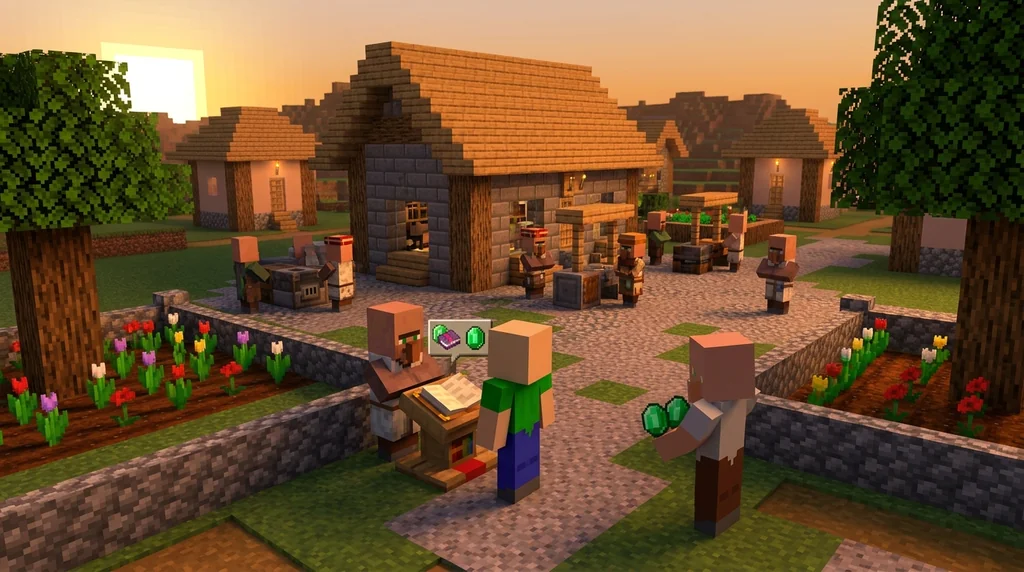
Beyond the supply-demand loop, trading also helps villagers grow their careers. Each successful trade grants the villager experience points, and once they accumulate enough, they level up.
When villagers make trades, they gain experience.
When they gain enough experience, they level up.
Leveling up unlocks new, often better, trade options and also refreshes the available trades — but the demand system still applies to each individual trade slot.
Practical Tips for Managing Prices
To keep villager trades cheap, you can:
- Let them restock without trading every slot fully — unused trades lower demand.
- Use the
/resupplycommand to instantly reset all trades (requires operator status). - Earn Hero of the Village after a raid — this gives a significant discount on all trades for three in-game days.
If you're building a large trading hall, plan your job site blocks so villagers can path to them easily. A locked trade slot (like a librarian's enchanted book) will gradually get more expensive if you keep buying the same book. Let it sit for a few restocks to bring the price back down.
For deeper strategies on restocking mechanics, check out our guide on how to make villagers restock faster. And if you're designing a player-driven server economy, read our Minecraft Economy 101 for broader insight into supply and demand in multiplayer worlds.
Sources
- Added villager economy supply system: The supply of trades is only restored when the villager is given the opportunity to work at their job site block. — Bedrock Edition 1.11.0
- Up to twice per day. — Bedrock Edition 1.11.0
- When the villager's trades are restored to full, it takes whatever supply was used up (number of trades), and converts that into a price increase called "demand". — Bedrock Edition 1.11.0
- Demand goes up by the amount of supply used, and down by the amount of supply not used. — Bedrock Edition 1.11.0
- When villagers make trades, they gain experience. — Bedrock Edition 1.11.0
- When they gain enough experience, they level up. — Bedrock Edition 1.11.0
Frequently Asked Questions
Why do villager prices increase after I trade a lot?
Each trade you use reduces the villager's supply for that item. When the villager restocks, that used supply is converted into a 'demand' surcharge, which raises the price. This is intentional to prevent infinite trading of a single cheap item.
How often can a villager restock?
Villagers can restock their trades up to twice per Minecraft day (about 20 minutes real time), provided they can reach their job site block. The restock happens when they work at the block during the day.
Can I force a villager to restock immediately?
Yes. If you have operator permissions, you can run the command `/resupply` on a villager to instantly restore all trade slots without waiting for the natural restock cycle.
Does Hero of the Village affect supply and demand?
Yes, Hero of the Village gives a flat discount on all trades, which stacks on top of the normal prices (including any demand increases). It lasts for 3 in-game days after a raid is defeated.
What happens to demand if I never use a trade?
If you leave a trade unused, its demand decreases over time when the villager restocks. This means prices will gradually fall back toward the base price, rewarding patience.
Related guides
Minecraft Economy 101: How Supply and Demand Work on Player-Driven Servers
Learn how supply and demand shape Minecraft economies, from vanilla villager trading mechanics to player-driven server markets. Includes inflation control...
How to Build a High-Efficiency Minecraft Trading Hall: 2026 Guide
Learn how to build a high-efficiency Minecraft trading hall in 2026 — from villager job sites to zombie curing discounts and layout tips that maximize...
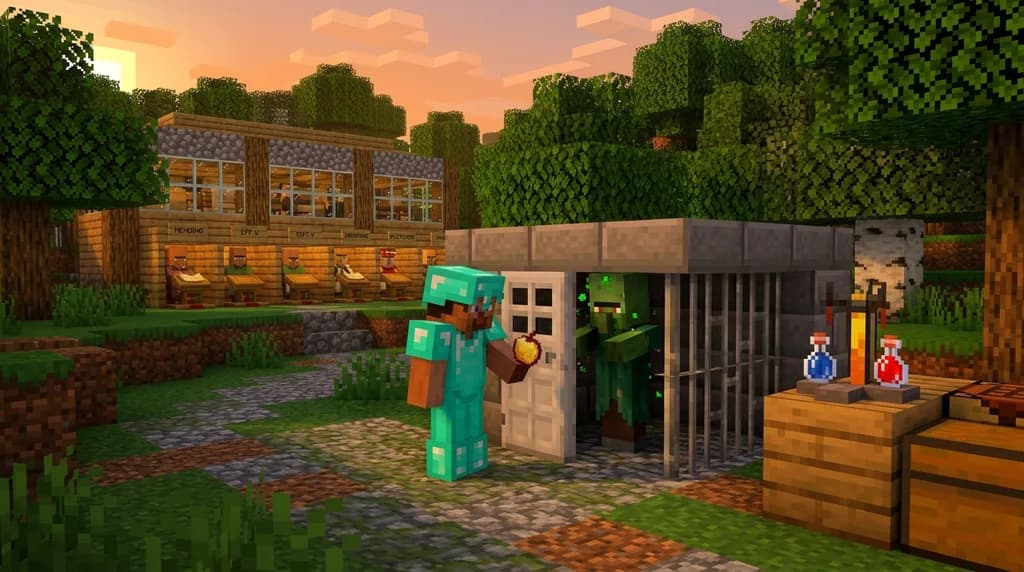
How to Cure a Zombie Villager for Insane Trading Discounts in 2026
Master the art of curing zombie villagers for massive, permanent trading discounts in Minecraft 2026. Step-by-step guide, trading hall designs, and...
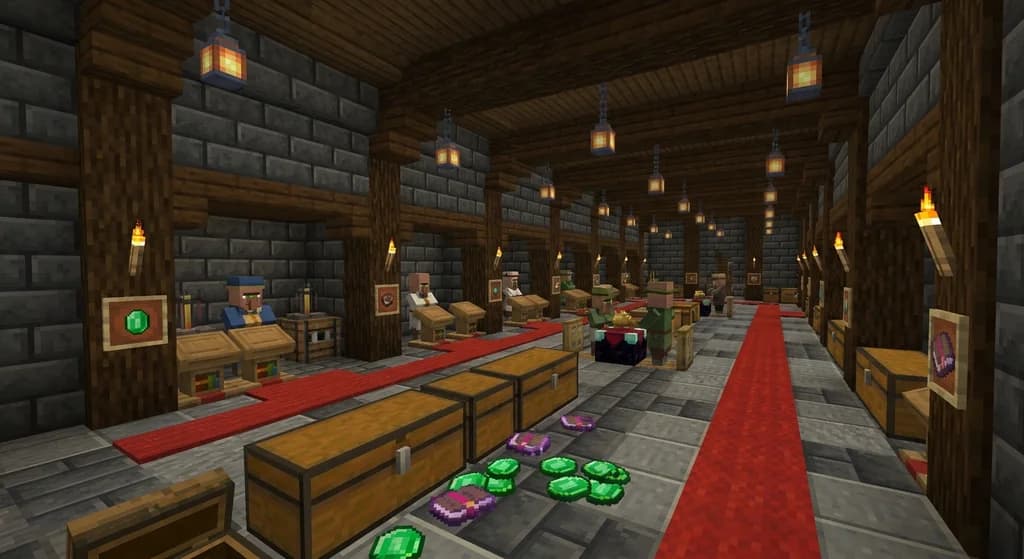
How to Use a Minecraft Villager Trading Chart for Max Profit 2026
Master the Minecraft villager trading chart in 2026. Learn trade prices, zombie curing discounts, piglin bartering, and how to flip items for max profit.
Have a question or another approach?
Compare notes with other readers. Include your edition and version when discussing mechanics.