7 Best Complementary Block Palettes for Minecraft Builds 2026
Filed under Minecraft Build Palette & Block Harmony · How we create content
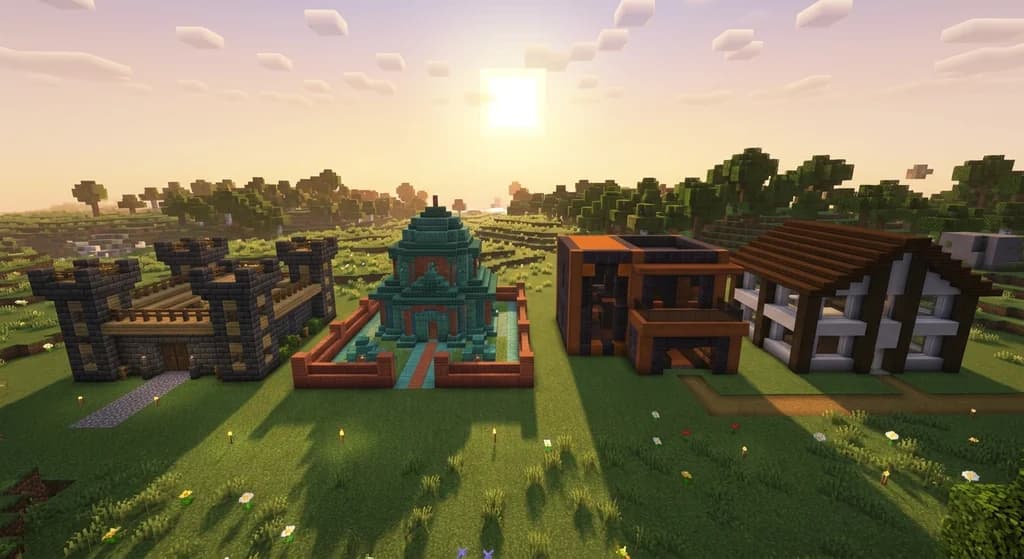
Key Takeaways
| Point | Details |
|---|---|
| Complementary contrast is the most powerful tool | Pairing blocks from opposite color families (cool vs. warm, dark vs. light) creates instant visual impact with minimal effort. |
| Follow the 70/20/10 rule | Use your dominant block for 70% of the structure, your secondary for 20%, and your accent block for just 10% to avoid visual chaos. |
| Texture matters as much as color | Combining smooth blocks with rough ones — like polished basalt next to stripped oak — adds depth even within a limited palette. |
| Deepslate is 2026's most versatile dark anchor | Its neutral cool-gray tone pairs cleanly with warm terracotta, copper, and pale oak without clashing. |
| Accent with light sources | Sea lanterns, shroomlights, and glow lichen don't just illuminate — they punch up contrast and tie complementary palettes together. |
| Test palettes in flat creative worlds first | Building a 5×5 swatch wall before committing to a full build saves hours of demolition work. |
Table of Contents
- What Are Complementary Block Palettes in Minecraft?
- Why High-Contrast Palettes Make Builds Stand Out
- The 7 Best Modern Minecraft Block Combinations for 2026
- How to Apply the 70/20/10 Rule to Any Palette
- Tips for Testing Your Palette Before You Build
- How to Put This Into Practice on Gaia Legends
- Conclusion
- Frequently Asked Questions
- Recommended
Most builders pick blocks by gut feel. They grab what's nearby, mix in whatever looks "close enough," and end up with a build that's technically fine but somehow forgettable. The problem isn't skill — it's system. The best modern Minecraft block combinations aren't random. They're built on complementary color theory: pairing blocks from opposite ends of the color spectrum to create tension, contrast, and visual punch. Once you understand this, your builds stop looking like a pile of blocks and start looking like architecture.
This guide breaks down the 7 best complementary palettes for 2026, explains the science behind why they work, and gives you a repeatable framework you can apply to any build from a tiny shop to a full city district.
What Are Complementary Block Palettes in Minecraft?
A complementary block palette is a curated set of Minecraft blocks chosen so that their dominant hues sit opposite each other on the color wheel — for example, warm orange terracotta against cool blue-gray deepslate, or teal prismarine against rust-red sandstone.
The "opposite colors attract" principle is borrowed directly from traditional color theory. When two complementary hues sit next to each other, each one makes the other look more vivid. In Minecraft, this translates to builds that read clearly from a distance, hold visual interest up close, and photograph beautifully for screenshots or server showcases.
This is different from analogous palettes (neighboring colors, like the moss-and-wood combos covered in our 7 Best Analogous Block Palettes for Minecraft Treehouses 2026 guide) or triadic palettes (three evenly-spaced hues, explored in 7 Best Triadic Color Palettes for Vibrant Minecraft Builds 2026). Complementary palettes are the highest-contrast option — which makes them ideal for builds that need to grab attention fast.
Why High-Contrast Palettes Make Builds Stand Out
The Visual Science Behind Contrast
Human eyes are drawn to contrast before they process detail. A build with strong light-dark or warm-cool contrast registers as interesting before a viewer consciously decides to look at it. That's why complementary palettes are the go-to choice for storefronts, landmark buildings, and anything you want players to notice in a crowded server environment.
Note: "Complementary" doesn't mean clashing. The key is controlling the ratio. Equal amounts of two opposite colors can feel jarring. Unequal ratios — especially the 70/20/10 rule — keep contrast exciting without becoming overwhelming.
Texture as a Second Contrast Layer
Color contrast is powerful, but texture contrast amplifies it further. Pairing a rough block (like cracked stone bricks or chiseled deepslate) with a smooth one (polished andesite, smooth quartz) adds a tactile dimension that makes the palette feel richer. The best complementary builds in 2026 layer both color contrast and texture contrast simultaneously.
The 7 Best Modern Minecraft Block Combinations for 2026
Here are seven proven complementary palettes, each tested for visual impact and block availability in both Java and Bedrock editions.
| Palette | Dominant Block | Secondary Block | Accent Block | Best For |
|---|---|---|---|---|
| 1. Deepslate & Pale Oak | Deepslate Bricks | Pale Oak Planks | Copper Grate | Modern townhouse |
| 2. Prismarine & Red Sandstone | Dark Prismarine | Cut Red Sandstone | Sea Lantern | Coastal market |
| 3. Polished Basalt & Acacia | Polished Basalt | Stripped Acacia | Orange Terracotta | Desert outpost |
| 4. Dark Oak & Smooth Quartz | Dark Oak Log | Smooth Quartz | White Concrete | Gothic manor |
| 5. Mud Brick & Calcite | Packed Mud | Calcite | Pale Moss Block | Ancient ruin |
| 6. Tuff Brick & Bamboo | Tuff Bricks | Bamboo Planks | Yellow Concrete | Asian-inspired build |
| 7. Blackstone & Birch | Polished Blackstone | Birch Planks | Light Gray Concrete | Minimalist shop |
Palette 1 — Deepslate & Pale Oak
Deepslate bricks anchor this palette with their cool, almost-blue-gray tone. Pale oak planks (added in 1.21) bring a warm, creamy counterpoint. The result is a modern, Scandinavian-influenced look that works equally well for residential builds and commercial storefronts. Add copper grates as an accent for a subtle industrial edge that oxidizes over time, shifting the palette's warmth naturally.
Palette 2 — Prismarine & Red Sandstone
This is the highest-energy palette on the list. Teal prismarine and rust-red sandstone sit almost directly opposite on the color wheel, creating maximum contrast. Keep prismarine as your dominant (70%) or the palette tips into chaos. Sea lanterns double as both light source and accent block, reinforcing the teal side of the equation. This palette also connects naturally to ocean-themed structures — see our 7 Best Underwater Block Palettes for Minecraft Builds 2026 guide for deeper inspiration.
Palette 3 — Polished Basalt & Acacia
Polished basalt's silver-black stripes contrast sharply with acacia's vivid orange-red grain. This palette reads as bold and slightly industrial — great for desert outposts, jungle trading posts, or any build that needs to feel weathered and lived-in. Orange terracotta as an accent ties the warm and cool tones together without introducing a third competing color family.
Palette 4 — Dark Oak & Smooth Quartz
Dark oak's near-black grain against smooth quartz's bright white is one of the cleanest high-contrast combinations in the game. It's a natural fit for gothic or manor-style builds (check out Best Gothic Block Combinations for Minecraft Builds in 2026 for full dark fantasy palettes). White concrete as an accent lets you add crisp geometric detail without the slight yellow tint of quartz.
Palette 5 — Mud Brick & Calcite
A softer complementary pair. Packed mud's warm brown-orange reads as earthy and ancient; calcite's cool off-white provides contrast without harshness. This palette is perfect for ruins, temples, or low-fantasy village builds where you want contrast that feels organic rather than designed.
Palette 6 — Tuff Brick & Bamboo
Tuff bricks (introduced in 1.21) brought a new mid-tone gray-green to the palette toolkit. Paired with bamboo planks' golden-yellow, you get a warm-cool complement with a distinctly natural, East Asian architectural feel. Yellow concrete as an accent keeps the warmth punchy without needing additional warm blocks.
Palette 7 — Blackstone & Birch
The most restrained palette on the list. Polished blackstone's deep near-black against birch's pale cream creates a high-contrast minimalist aesthetic that's incredibly versatile. This is the palette for builders who want their build's form — the silhouette, the windows, the roofline — to do the talking rather than the color.
Pro Tip: When using high-contrast palettes like Blackstone & Birch, vary the block types within each color family (polished blackstone, blackstone bricks, cracked blackstone bricks) to add texture depth without introducing new colors.
How to Apply the 70/20/10 Rule to Any Palette
The 70/20/10 rule is a proportion guideline borrowed from interior design: your dominant block covers roughly 70% of a build's surface area, your secondary block covers 20%, and your accent block covers just 10%.
Here's why this works in Minecraft specifically:
- 70% dominant — This is your structural block. Walls, floors, the bulk of the roof. It sets the overall tone.
- 20% secondary — Trim, window frames, secondary roof material, or flooring. This is where your complementary contrast lives.
- 10% accent — Light sources, decorative slabs, trapdoors, or detail blocks. This is where you add surprise and energy.
Warning: Flipping the ratio — using your high-contrast secondary block as the dominant — almost always looks overwhelming. If your build feels "too loud," check your proportions before changing your palette.
For industrial-style builds where raw materials dominate, this ratio framework pairs well with the strategies in 7 Best Industrial Block Palettes for Minecraft Builds in 2026.
Tips for Testing Your Palette Before You Build
Testing saves time. Before committing to a full build, spend five minutes on these steps:
- Build a swatch wall: Place a 5×5 section of each block in your palette side by side in a flat creative world. Step back 20 blocks and evaluate.
- Check in different lighting: View your swatch wall at noon, at dusk, and underground with torches. Blocks shift dramatically between lighting conditions.
- Test at scale: A single block of pale oak next to a single block of deepslate looks different from a 10-block wall of each. Build at least a 3×5 panel of each to see the true effect.
- Screenshot and compare: Take a screenshot, then adjust one block and screenshot again. Comparing side by side reveals differences your eye misses in real time.
Pro Tip: Minecraft's spectator mode lets you fly high above your swatch wall for a bird's-eye read of how the palette looks at build scale — extremely useful for large structures where ground-level testing misleads you.
How to Put This Into Practice on Gaia Legends
Gaia Legends runs a player-driven economy where your shop's visual identity directly affects foot traffic. A high-contrast complementary palette isn't just aesthetic — it's a competitive advantage. Players browsing the market district notice bold, well-composed builds first, and first impressions drive sales.
The Deepslate & Pale Oak palette (Palette 1) and the Blackstone & Birch palette (Palette 7) are particularly effective for shop builds because they read clearly at a distance and photograph well for server promotional screenshots. Pair either palette with sea lanterns or shroomlights to ensure your shop stays visible and inviting after dark — critical for evening shopping traffic.
Gaia Legends also supports Java + Bedrock crossplay, so every block on this list is available to all players regardless of platform. The 70/20/10 rule applies identically whether you're building on Java or Bedrock, and the server's non-pay-to-win economy means your build quality — not your wallet — is what sets you apart.
Gaia Legends is free to join, non-pay-to-win, and supports Java + Bedrock crossplay. Join at gaialegends.pro and start your legend today.
Conclusion
Complementary block palettes are one of the most effective tools in any Minecraft builder's kit. The key principles to carry forward:
- Opposite colors create energy: Warm-cool and dark-light pairings make builds visually memorable without requiring complex shapes.
- Proportion is everything: The 70/20/10 rule keeps contrast exciting rather than overwhelming — dominant, secondary, accent.
- Test before you commit: A five-minute swatch wall in creative mode saves hours of teardown later.
Pick one palette from this list, build a small test structure, and see how much more confident your builds feel when color is doing half the work for you.
Ready to play? Join Gaia Legends today — no pay-to-win, Java + Bedrock crossplay.
- Java:
join.gaialegends.pro - Bedrock:
join.gaialegends.pro— Port19132
Further reading
These references were recorded with the article; specific claims have not been matched to source excerpts.
Frequently Asked Questions
What are the best modern Minecraft block combinations for complementary color contrast?
The best modern Minecraft block combinations for complementary contrast in 2026 include Deepslate Bricks with Pale Oak Planks, Dark Prismarine with Cut Red Sandstone, and Polished Blackstone with Birch Planks. Each pair uses blocks from opposite ends of the warm-cool color spectrum. Apply the 70/20/10 proportion rule — dominant, secondary, accent — to keep the contrast bold without becoming chaotic.
What is a complementary color palette in Minecraft building?
A complementary color palette in Minecraft building uses two block families whose dominant hues sit opposite each other on the color wheel — such as warm orange terracotta against cool blue-gray deepslate. This creates maximum visual contrast, making structures easier to read at a distance and more visually engaging up close. It's one of the most reliable techniques for making builds look intentional and professional.
How do I use a Minecraft palette generator to find complementary blocks?
A Minecraft palette generator typically lets you pick a base block and suggests complementary, analogous, or triadic matches from the game's block library. For complementary results, look for blocks flagged as 'opposite hue' or filter by warm vs. cool tones. Tools like Nova Skin's palette picker and Minecraftpalette.com are popular options. Always test suggestions in-game — screen representations don't always match how blocks look in Minecraft's lighting engine.
What is the 70/20/10 rule for Minecraft build palettes?
The 70/20/10 rule is a proportion guideline for block palettes: use your dominant block for 70% of the build's surface area, your secondary (contrasting) block for 20%, and an accent block for just 10%. This keeps high-contrast complementary palettes visually exciting without becoming overwhelming. If your build feels too loud or chaotic, check your ratios — most over-busy builds have the dominant and secondary proportions reversed.
Which Minecraft blocks work best as dark anchors in a complementary palette?
Deepslate bricks, polished blackstone, polished basalt, and dark oak logs are the strongest dark anchor blocks for complementary palettes in 2026. Deepslate bricks are especially versatile because their neutral cool-gray pairs cleanly with warm blocks like terracotta, copper, and pale oak. Polished blackstone is the best choice when you want maximum contrast against light blocks like birch planks or smooth quartz.
How do I stop my Minecraft build palette from looking too busy or clashing?
If your palette looks cluttered, the most common fix is adjusting proportions — ensure your dominant block covers at least 60-70% of the build surface. Second, limit yourself to three block families per palette (dominant, secondary, accent). Third, use texture variation within a single color family (e.g., smooth, cracked, and chiseled versions of the same stone) rather than introducing new colors to add visual interest without adding contrast chaos.
Related guides
7 Best Analogous Block Palettes for Minecraft Builds (2026)
Master analogous color palettes in Minecraft with 7 expert block combos for 2026. Learn color harmony rules, pro tips, and block pairings that win build...
7 Best Tetradic Block Palettes for Minecraft Builds (2026)
Discover 7 tetradic Minecraft block palettes for 2026 builds. Learn color theory, block combos, and how to use four-color harmony for stunning structures.
7 Best Complementary Block Palettes for High-Contrast Builds 2026
Master complementary Minecraft block palettes in 2026. 7 expert high-contrast block combos, color theory tips, and pro building strategies for stunning...
7 Best Mangrove and Bamboo Build Ideas for Minecraft 2026
Discover 7 stunning Minecraft mangrove and bamboo build ideas for 2026. Master tropical house block palettes, vibrant wood combos, and jungle architecture...
Have a question or another approach?
Compare notes with other readers. Include your edition and version when discussing mechanics.