Best Gothic Block Combinations for Minecraft Builds in 2026
Filed under Minecraft Build Palette & Block Harmony · How we create content
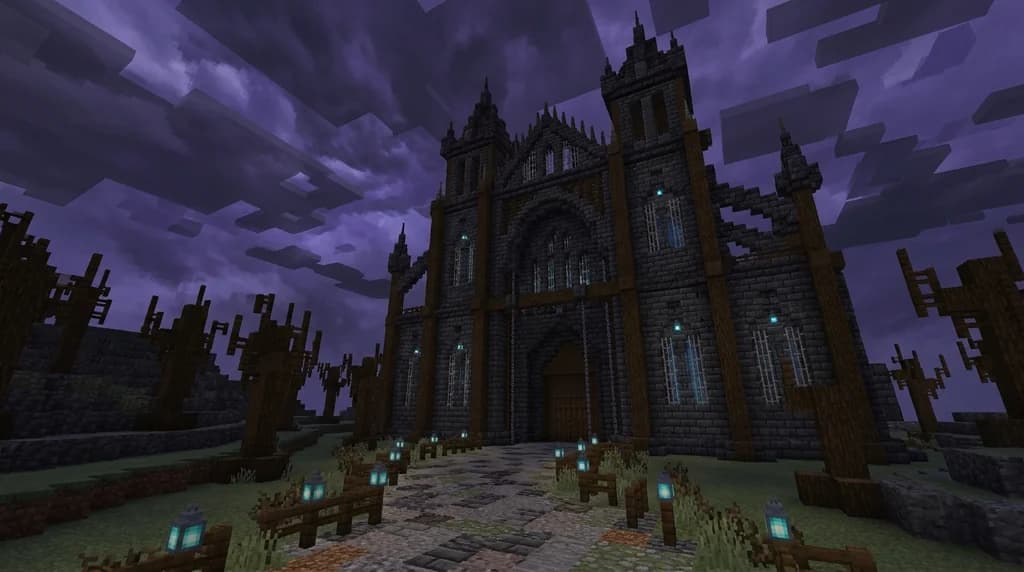
Key Takeaways
| Point | Details |
|---|---|
| Foundation First | Deepslate bricks and polished blackstone form the most convincing gothic base palette in Minecraft. |
| Texture Mixing | Combining chiseled stone bricks with cracked stone bricks adds authentic weathered detail to gothic walls. |
| Accent Lighting | Soul lanterns and candles cast blue and warm glows that reinforce a dark fantasy atmosphere without breaking immersion. |
| Ironwork Details | Iron bars, chains, and lanterns are the fastest way to add gothic verticality and ornamental flair to any build. |
| Roof Strategy | Dark oak slabs layered with blackstone stairs create steep gothic rooflines that look striking from a distance. |
| Avoid Overuse | Limiting crying obsidian to 5–10% of your palette prevents the purple glow from overwhelming the dark aesthetic. |
Table of Contents
- What Are Gothic Block Combinations in Minecraft?
- Best Gothic Block Combinations for Walls and Foundations
- How to Build Gothic Rooflines and Spires
- Best Accent and Detail Blocks for Dark Fantasy Builds
- Gothic Lighting: What Actually Works
- Tips for Avoiding Common Gothic Build Mistakes
- How to Put This Into Practice on Gaia Legends
- Conclusion
- Frequently Asked Questions
- Recommended
Most players who try to build gothic structures in Minecraft end up with something that looks more like a grey blob than a haunted cathedral. The problem isn't skill — it's palette. Choosing the right gothic block combinations from the start is what separates a forgettable stone tower from a genuinely imposing dark fortress. This guide breaks down every material choice you need: walls, roofs, accents, ironwork, and lighting. Whether you're building a solo survival castle or a server guild hall, these palettes will get you there.
What Are Gothic Block Combinations in Minecraft?
Gothic block combinations in Minecraft are curated sets of blocks chosen to evoke the visual language of Gothic architecture — pointed arches, dark stone, ornamental ironwork, and dramatic verticality. The style draws from real-world Gothic cathedrals: heavy masonry, deep shadow, and sharp silhouettes against the sky.
In Minecraft terms, this translates to a palette built around deepslate variants, polished blackstone, dark oak, and iron-based decorative blocks. The key principle is contrast — dark base materials against slightly lighter accent stones, with glowing elements used sparingly.
According to the Minecraft Wiki, deepslate generates naturally below Y=0 throughout the world, making it one of the most abundant dark stone variants available in survival play. That abundance makes it the natural backbone of any gothic palette.
Note: Gothic builds rely heavily on depth and shadow. Flat walls kill the aesthetic instantly — always plan for recesses, buttresses, and layered textures before you place the first block.
Best Gothic Block Combinations for Walls and Foundations
This is where your build lives or dies. The wall palette needs at least three blocks: a primary stone, a secondary texture, and a cracked or chiseled variant for detail.
The Core Gothic Wall Palette
| Role | Block | Why It Works |
|---|---|---|
| Primary stone | Deepslate Bricks | Dark, fine texture, reads as cut stone |
| Secondary texture | Polished Blackstone Bricks | Slightly smoother, creates subtle contrast |
| Weathered detail | Cracked Deepslate Bricks | Adds age and irregularity to large walls |
| Ornamental accent | Chiseled Deepslate | Perfect for archway keystones and pillar caps |
| Trim / border | Chiseled Stone Bricks | Lighter value breaks up the darkness |
| Floor | Polished Blackstone | Sleek, dark, easy to source |
The magic happens when you mix these in roughly a 60/25/15 ratio — 60% deepslate bricks, 25% polished blackstone bricks, 15% cracked and chiseled variants. That ratio gives you a wall that looks complex without being chaotic.
Pro Tip: Place chiseled deepslate every 4–6 blocks along a wall as a repeating motif. It mimics the carved stone panels found on real Gothic facades and breaks up visual monotony without requiring custom textures.
For players who enjoy high-contrast builds, the principles in 7 Best Complementary Block Palettes for High-Contrast Builds 2026 apply directly here — pairing your near-black deepslate with a lighter trim creates the same visual tension that makes Gothic architecture so striking.
How to Build Gothic Rooflines and Spires
Gothic roofs are steep, pointed, and dark. In Minecraft, you achieve this with stair blocks layered at sharp angles. The steeper the pitch, the more gothic it reads.
Recommended Roof Blocks
- Dark Oak Stairs and Slabs — the go-to for steeply pitched gothic roofs; the brown-black color sits perfectly against deepslate walls
- Blackstone Stairs — for fully stone roofs on towers and keeps; heavier and more fortress-like
- Polished Blackstone Brick Stairs — a refined option for cathedral-style rooflines
For spires, build a 1-block-wide column of polished blackstone or dark oak logs and cap it with a lightning rod — the rod's thin silhouette reads perfectly as a gothic finial. Chains hanging from the spire base add authentic detail.
Warning: Dark oak roofs can look muddy at small scales. If your build is under 20 blocks wide, switch to blackstone stairs for the roof — they read more crisply at close range and in screenshots.
If you're interested in how steep rooflines interact with color harmony, the strategies in 7 Best Castle Minecraft Build Palettes for Epic Fortresses 2026 cover similar medieval silhouette principles with specific block recommendations.
Best Accent and Detail Blocks for Dark Fantasy Builds
Dark fantasy block palettes live or die on their accent choices. Your walls can be perfect, but without the right detail blocks, the build looks unfinished.
Ironwork and Structural Accents
- Iron Bars — use these in windows and as balustrade railings; they create the pointed arch illusion when placed in a V-shape
- Chains — hang from ceilings, archways, and spire bases; one of the most underused gothic blocks in the game
- Lanterns and Soul Lanterns — mount on walls and ceilings for authentic period lighting
- Crying Obsidian — use as a highlight block in walls or floors for a subtle purple glow; limit to 5–10% of your palette
Organic and Decay Accents
- Soul Sand — use as a floor border or garden fill for an unsettling, sunken look
- Dead Bushes — scatter in courtyards and along pathways for environmental storytelling
- Cobwebs — place in corners, dungeons, and abandoned wings; one block goes a long way
- Mossy Stone Bricks — blend into deepslate walls near ground level to suggest age and moisture
Gothic Lighting: What Actually Works
Lighting is the most overlooked part of gothic builds. You want dim, directional, and colored — not bright and uniform.
Gothic Lighting Hierarchy
- Soul Lanterns (light level 10) — blue glow, perfect for crypts and corridors
- Candles (light level 3 per candle, up to 4 stacked for level 12) — warm flicker, ideal for altars and interior spaces
- Lanterns (light level 15) — use sparingly at entrances; too bright for deep interiors
- Shroomlights — avoid; the warm orange clashes with dark fantasy palettes
According to the Minecraft Wiki, a soul lantern emits a light level of 10, which is dim enough to preserve shadow depth while still preventing most hostile mob spawning on lit surfaces. That makes soul lanterns the practical and aesthetic choice for gothic interiors.
Pro Tip: Place candles inside cauldrons for a contained, eerie glow effect. The cauldron frame reads as a brazier and adds medieval atmosphere to throne rooms and ritual spaces.
Tips for Avoiding Common Gothic Build Mistakes
Even experienced builders fall into these traps with gothic palettes.
Common Mistakes and How to Fix Them
- All-black syndrome — using only blackstone or obsidian makes builds look flat and featureless. Always mix at least three block variants with different textures.
- Ignoring the Y-axis — gothic architecture is tall. If your walls are under 15 blocks high, the style won't read. Build up first, then detail.
- Symmetry overload — real gothic buildings have asymmetrical wings and additions. Break your build into unequal sections for a more organic, aged look.
- Wrong wood choice — spruce and oak logs look too rustic. Dark oak is the only wood that belongs in a gothic palette. Mangrove works as a secondary accent for its deep red-brown tone.
- Flat rooflines — add a secondary smaller roof over wings, dormers, and bay windows to create a complex skyline silhouette.
For comparison, the approach in 7 Best Modern Minecraft House Palettes for Sleek Builds 2026 deliberately avoids these layered textures — which shows exactly why palette rules differ so sharply by build style. What works for minimalist modern builds is the opposite of what works for gothic ones.
The same principle applies when you look at 7 Best Triadic Color Palettes for Vibrant Minecraft Builds 2026 — triadic palettes intentionally maximize color variety, while gothic palettes deliberately compress the value range toward dark neutrals. Knowing which mode you're in is half the battle.
How to Put This Into Practice on Gaia Legends
These gothic block combinations aren't just theory — they're the foundation of some of the most impressive guild halls on Gaia Legends, our free Java + Bedrock crossplay SMP server.
On Gaia Legends, players can claim land and construct permanent guild halls that other players visit, raid, and admire. A well-built gothic guild hall signals power and craftsmanship before anyone even steps inside. The palettes in this guide — deepslate bricks, polished blackstone, dark oak, chains, and soul lanterns — are exactly what our top builders use when they want their structure to command respect on the map.
The server's build showcase events give you a regular audience for your gothic projects, and the active community Discord means you can get palette feedback from experienced builders in real time. Gaia Legends also runs seasonal build competitions where dark fantasy and gothic themes frequently appear as featured categories.
Gaia Legends is free to join, non-pay-to-win, and supports Java + Bedrock crossplay. Join at gaialegends.pro and start your legend today.
Conclusion
Getting gothic builds right comes down to three decisions made before you place a single block:
- Choose your wall trio — deepslate bricks as your primary, polished blackstone bricks as your secondary, and cracked or chiseled deepslate for detail
- Commit to dark oak and blackstone for roofs — steep pitches and pointed spires define the silhouette
- Use soul lanterns and candles for lighting — dim, colored, and directional; never bright and uniform
The blocks are all available in vanilla survival. The palette is proven. Now go build something that makes other players stop and stare.
Frequently Asked Questions
Recommended
- How to optimize Minecraft gameplay for smoother, smarter play | Gaia Legends
- How to Spot and Avoid Pay-to-Win Minecraft Servers in 2026 | Gaia Legends
- 7 Best Minecraft Community Event Ideas for Your SMP in 2026 | Gaia Legends
- How to Solo Elite Dungeon Bosses on Minecraft MMORPG Servers 2026 | Gaia Legends
Ready to play? Join Gaia Legends today — no pay-to-win, Java + Bedrock crossplay.
- Java:
join.gaialegends.pro - Bedrock:
join.gaialegends.pro— Port19132
Further reading
These references were recorded with the article; specific claims have not been matched to source excerpts.
Frequently Asked Questions
What are the best gothic block combinations in Minecraft for beginners?
The best gothic block combinations for Minecraft beginners start with deepslate bricks as your primary wall block, polished blackstone bricks as a secondary texture, and dark oak slabs for roofing. Add iron bars for windows and soul lanterns for lighting. This four-block core is cheap to source in survival and immediately reads as gothic without needing rare or hard-to-craft materials.
What blocks give the best dark fantasy look in Minecraft?
For a dark fantasy block palette, combine deepslate bricks, polished blackstone, cracked stone bricks, soul sand, and crying obsidian. Accent with chains, cobwebs, dead bushes, and soul lanterns. The key is keeping your palette mostly dark neutrals — near-black and dark grey — with small amounts of glowing or textured accent blocks to prevent the build from looking flat.
How do I make gothic arches in Minecraft without mods?
Build gothic arches in vanilla Minecraft by placing stair blocks facing inward on both sides of an opening and meeting at a center block at the top. Use deepslate brick stairs or polished blackstone stairs for the arch frame, and fill the center with a single chiseled deepslate block as the keystone. Iron bars placed vertically inside the arch opening complete the window effect.
Is deepslate good for gothic builds in Minecraft?
Deepslate is the single best block for gothic Minecraft builds. It has a fine, cut-stone texture that reads as dressed masonry, it comes in bricks, chiseled, cracked, and polished variants for easy texture mixing, and its dark blue-grey color creates natural shadow depth. It generates abundantly below Y=0 in survival, making it practical as well as visually ideal for large-scale gothic projects.
What lighting should I use inside a gothic Minecraft build?
Soul lanterns are the best lighting choice for gothic Minecraft interiors — they emit a light level of 10, which is dim enough to preserve shadow depth while preventing most mob spawns. Supplement with candles on altars and in corridors for warm flicker. Avoid shroomlights and glowstone, which are too bright and warm-toned to fit a dark fantasy atmosphere.
How do I stop my gothic Minecraft build from looking too flat or plain?
Flatness is the most common problem in gothic Minecraft builds. Fix it by mixing at least three deepslate variants in your walls (bricks, cracked bricks, chiseled), adding pilasters and buttresses that project 1–2 blocks from the wall face, using stair and slab overhangs at floor transitions, and hanging chains from archways. Vary your wall height across different sections to break the roofline into a complex silhouette.
Related guides
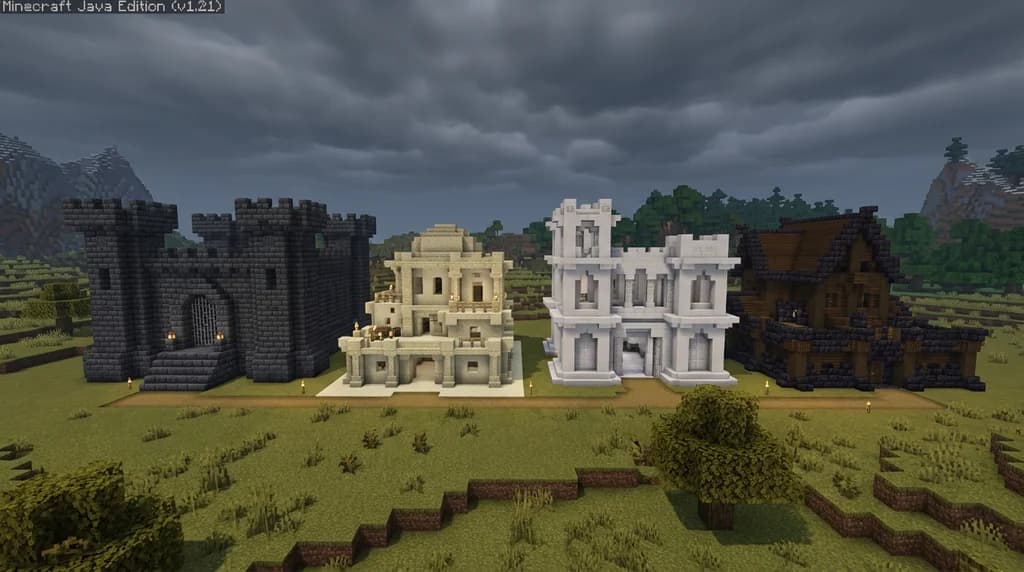
7 Best Monochromatic Block Palettes for Minecraft Builds (2026)
Discover the 7 best monochromatic Minecraft block palettes for 2026. Master single-color builds with expert block harmony tips, grayscale combos, and pro...
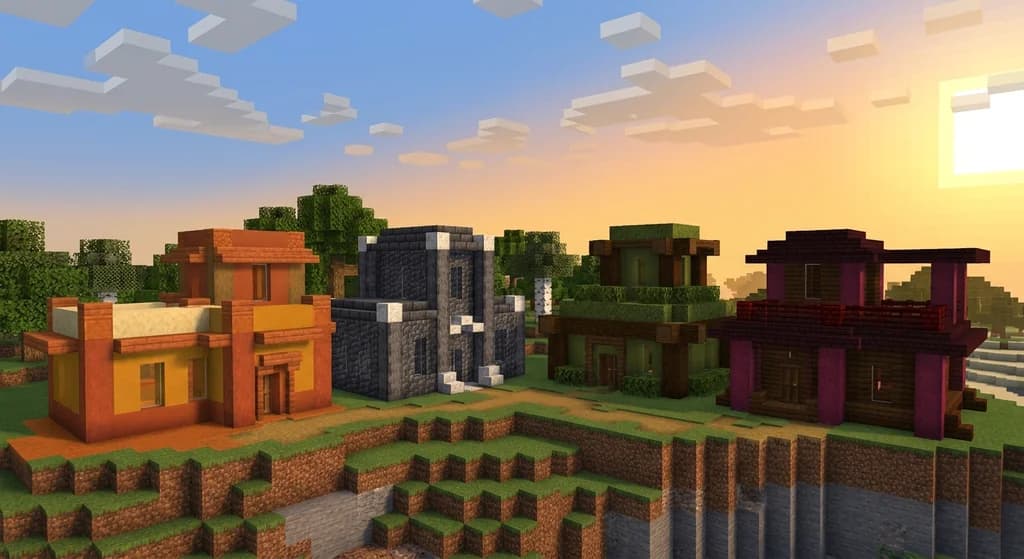
7 Best Analogous Block Palettes for Cohesive Minecraft Builds (2026)
Discover the 7 best analogous block palettes for cohesive Minecraft builds in 2026. Master color harmony with expert block combos, pro tips, and real...
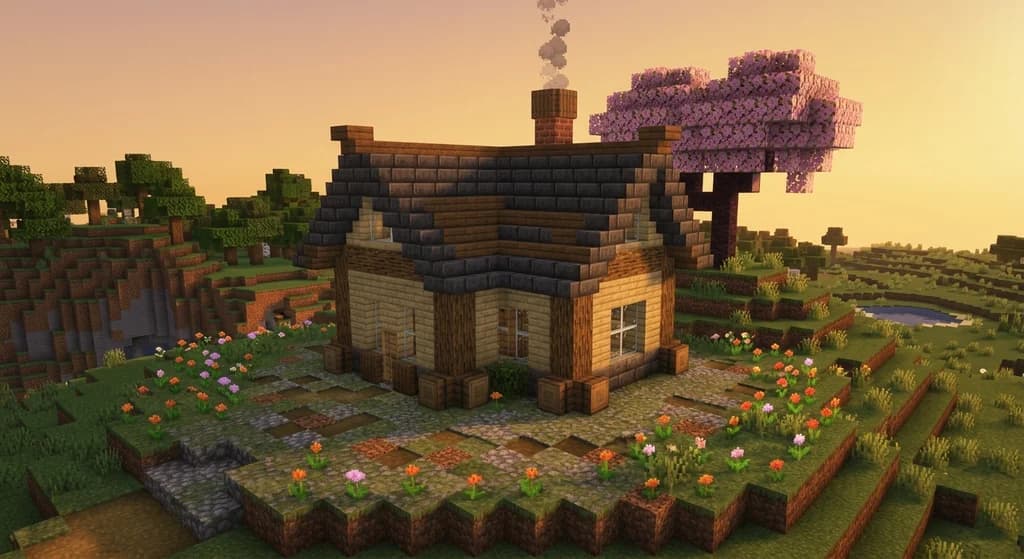
Using Minecraft: Guide to Creative for Building Tips
Learn how to use Minecraft: Guide to Creative for block palette inspiration and building tips. Discover tutorials, community builds, and color harmony techniques.

Lighthouses in Minecraft: Quick Reference
Discover how to build a lighthouse in Minecraft with this quick reference guide. Learn about the award-winning Lightning Rod Lighthouse build and the...
Have a question or another approach?
Compare notes with other readers. Include your edition and version when discussing mechanics.