7 Best Triadic Color Palettes for Vibrant Minecraft Builds 2026
Filed under Minecraft Build Palette & Block Harmony · How we create content
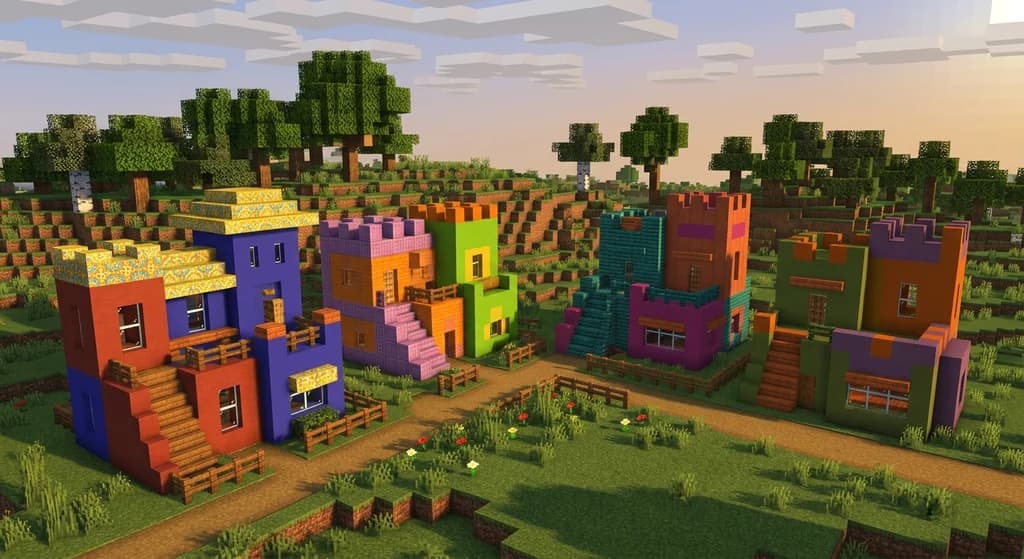
Key Takeaways
| Point | Details |
|---|---|
| Triadic = three equal parts | Triadic palettes space three hues 120° apart on the color wheel, producing vibrant but balanced builds. |
| Dominant-accent rule | Use one color for 60% of your build, the second for 30%, and the third as a 10% accent to avoid visual chaos. |
| Neutral bridges matter | Blocks like smooth stone, white concrete, or stripped oak logs act as visual breathing room between bold triadic hues. |
| Glazed terracotta is your secret weapon | Its patterned surface adds texture variety without introducing a fourth color that breaks triadic harmony. |
| All seven palettes work at any scale | Whether you're building a small market stall or a massive palace, triadic ratios scale proportionally. |
| Competition-ready combos | Each palette here has been chosen for visual impact in community build showcases, not just color theory textbooks. |
Table of Contents
- What Are Triadic Color Palettes in Minecraft?
- Why Triadic Palettes Make Minecraft Builds Pop
- The 7 Best Triadic Color Palettes for Minecraft Builds
- How to Apply Triadic Palettes Without Chaos
- Best Blocks for Triadic Color Harmony
- How to Put This Into Practice on Gaia Legends
- Conclusion
- Frequently Asked Questions
- Recommended
Most builders grab whatever blocks feel right and hope for the best. The results are often muddy, flat, or just forgettable. The builders whose work stops people mid-scroll? They're almost always working with triadic color palettes for Minecraft — whether they know it or not.
This guide breaks down the seven best triadic combos for 2026, the exact blocks that carry each palette, and the one ratio rule that keeps vibrant builds from looking like a circus tent.
What Are Triadic Color Palettes in Minecraft?
A triadic color palette is a set of three colors spaced equally around the color wheel — approximately 120° apart from each other. Classic examples include red-yellow-blue (the primary triad) and orange-green-violet (the secondary triad). Because the three hues are evenly distributed, they create natural tension and energy without any single color dominating by accident.
In Minecraft, you translate color wheel positions into block families. Red becomes red terracotta and red concrete. Yellow becomes yellow glazed terracotta and yellow concrete. Blue becomes blue concrete and blue stained glass. The game's block palette is surprisingly rich — over 60 dyed or naturally colored block types exist across concrete, terracotta, glazed terracotta, wool, and stained glass variants — which means you have plenty of material to work with for any triadic combination.
Note: Triadic palettes are not the same as random bright colors. The 120° spacing is what creates balance. Picking three colors that "feel close" usually produces a split-complementary palette instead, which has a different visual character.
Why Triadic Palettes Make Minecraft Builds Pop
Triadic harmony works because your eye naturally seeks balance. When three equally-spaced hues appear together, none of them looks out of place — they justify each other. The result is a build that reads as intentional and confident, not accidental.
Compare this to a monochromatic build (one hue, multiple shades), which feels calm but can look flat. Or a complementary build (two opposite hues), which is dramatic but can feel aggressive. Triadic sits in the sweet spot: vibrant, energetic, and still cohesive.
For competition entries and community showcases, that energy is exactly what judges and viewers respond to. Builds that use strong color theory principles consistently rank higher in player polls and screenshot shares.
If you want to explore other harmony types first, check out our guide to 7 Best Complementary Block Palettes for High-Contrast Builds 2026 for the two-color approach, or 7 Best Analogous Block Palettes for Minecraft Builds (2026) for a softer, blended look.
The 7 Best Triadic Color Palettes for Minecraft Builds
Here are the seven palettes ranked by versatility and visual impact. Each includes the primary triad, recommended blocks, and best build types.
| # | Palette Name | Primary Hues | Best For |
|---|---|---|---|
| 1 | Classic Primary | Red · Yellow · Blue | Markets, villages, town halls |
| 2 | Secondary Jewel | Orange · Green · Violet | Fantasy towers, magic builds |
| 3 | Warm Neon | Red · Yellow-Green · Blue-Violet | Modern bases, sci-fi builds |
| 4 | Earthy Triad | Terracotta Red · Sand Yellow · Slate Blue | Desert palaces, ruins |
| 5 | Forest Festival | Lime · Pink · Cyan | Treehouse villages, fairy builds |
| 6 | Royal Court | Purple · Gold · Teal | Throne rooms, end-dimension builds |
| 7 | Tropical Carnival | Orange · Blue · Green | Beach resorts, jungle temples |
Palette 1 — Classic Primary (Red · Yellow · Blue)
The most powerful triad in color theory is also one of the easiest to execute in Minecraft. Use red concrete for walls, yellow glazed terracotta for roofing accents and trim, and blue concrete or blue stained glass for windows and detail work. Separate each color zone with smooth stone or white concrete so the hues don't bleed into each other.
Palette 2 — Secondary Jewel (Orange · Green · Violet)
This triad feels magical and slightly otherworldly — perfect for fantasy builds. Orange terracotta handles the base structure, green concrete covers vegetation-style roofing and accent walls, and purple shulker box textures or magenta concrete (shifted slightly toward violet) add the mystical third note. Pair with dark oak for grounding.
Palette 3 — Warm Neon (Red · Yellow-Green · Blue-Violet)
A shifted triad that leans modern. Red concrete anchors the build, lime concrete brings the yellow-green, and blue concrete with purple glazed terracotta covers the blue-violet. This palette suits sleek bases and sci-fi aesthetics — see our 7 Best Modern Minecraft House Palettes for Sleek Builds 2026 for structural ideas that pair well with this combo.
Palette 4 — Earthy Triad (Terracotta Red · Sand Yellow · Slate Blue)
For builds grounded in natural materials, lean into red terracotta, sandstone, and blue-grey concrete or blue ice accents. This is the go-to for desert palaces and ancient ruins. The muted, dusty quality of terracotta softens the triadic energy into something that feels lived-in rather than electric.
Palette 5 — Forest Festival (Lime · Pink · Cyan)
Playful and eye-catching. Lime concrete covers large surfaces, pink concrete or pink glazed terracotta handles decorative trim, and cyan concrete fills windows and water features. This palette thrives in treehouse villages and fairy-garden builds — pair it with the techniques in 7 Best Analogous Block Palettes for Minecraft Treehouses 2026 for the surrounding greenery.
Palette 6 — Royal Court (Purple · Gold · Teal)
Rich, dramatic, and immediately readable as "important." Purple concrete or purple glazed terracotta dominates walls, yellow concrete or gold blocks accent trim and pillars, and cyan concrete handles flooring or water elements. This palette is exceptional for throne rooms, End-dimension builds, and grand entrance halls.
Palette 7 — Tropical Carnival (Orange · Blue · Green)
The most energetic palette on the list. Orange terracotta and orange concrete form the base, blue concrete covers roofing and banners, and green concrete fills in vegetation, flooring, and secondary walls. Beach resorts and jungle temples are natural homes for this combo.
How to Apply Triadic Palettes Without Chaos
The single most important rule for triadic builds is the 60-30-10 ratio:
- 60% of your build uses the dominant color (walls, large surfaces)
- 30% uses the secondary color (roofing, secondary walls, floors)
- 10% uses the accent color (trim, windows, small details)
Warning: Splitting your build evenly into three equal thirds of color almost always looks chaotic. The 60-30-10 rule is what separates a triadic build from a color explosion. Apply it before you place a single block.
Beyond the ratio, use neutral bridge blocks — smooth stone, white concrete, stripped logs, or blackstone — between color zones. These neutrals act like mortar: they let each color breathe without fighting its neighbors.
Pro Tip: Glazed terracotta is your best friend in triadic builds. Its built-in geometric patterns add surface texture without introducing a fourth color. Use it for 10-20% of any single color zone to break up flat surfaces.
Best Blocks for Triadic Color Harmony
Not all colored blocks behave the same way. Here's a quick reference for which block types work best in each role:
| Role | Best Block Types | Why |
|---|---|---|
| Dominant (60%) | Concrete, terracotta | Flat, saturated — holds large areas cleanly |
| Secondary (30%) | Glazed terracotta, wool | Texture variety breaks up repetition |
| Accent (10%) | Stained glass, shulker boxes, banners | Translucency and detail scale add sparkle |
| Neutral bridge | Smooth stone, white concrete, stripped oak | Zero hue — lets colors rest |
For magical and fantasy builds using the Jewel or Royal Court palettes, consider mixing in amethyst blocks and purpur blocks — their natural geometry adds richness without breaking your triadic discipline. You can see how these blocks perform in large-scale structures in our 7 Best Castle Minecraft Build Palettes for Epic Fortresses 2026 guide.
How to Put This Into Practice on Gaia Legends
Gaia Legends runs regular community build competitions where triadic palette mastery is one of the fastest ways to stand out. The server's creative plots give you unlimited blocks to experiment with any of the seven palettes above before committing to a survival build — no resource grind required.
The build showcase channels let you post screenshots for community feedback, so you can test whether your 60-30-10 ratio reads correctly at thumbnail scale before competition day. Our moderators and veteran builders actively comment on palette choices, and the feedback is specific and actionable.
The seasonal competitions often include themed categories — like "Fantasy Build" or "Tropical Escape" — that map directly to palettes like Secondary Jewel and Tropical Carnival. Entering with a deliberate triadic strategy gives you a measurable edge over builders working without a color plan.
Gaia Legends is free to join, non-pay-to-win, and supports Java + Bedrock crossplay. Join at gaialegends.pro and start your legend today.
Conclusion
Triadic color palettes are one of the most powerful tools in a Minecraft builder's kit — and one of the most underused. Here's what to take away:
- Use the 60-30-10 ratio every time you start a triadic build. Even distribution creates chaos; intentional hierarchy creates impact.
- Neutral bridge blocks are not optional — they're the glue that holds bold triadic hues together without muddying them.
- Start with Palette 1 (Classic Primary) if you're new to triadic design. Red, yellow, and blue are the most forgiving combination and the easiest to source in survival mode.
Pick one palette from this list, sketch your build on a flat creative plot, and apply the ratio before you go vertical. You'll be surprised how fast your builds start turning heads.
Frequently Asked Questions
What are the best triadic color palettes for Minecraft builds?
The seven best triadic color palettes for Minecraft are: Classic Primary (red, yellow, blue), Secondary Jewel (orange, green, violet), Warm Neon (red, lime, blue-violet), Earthy Triad (terracotta red, sandstone, slate blue), Forest Festival (lime, pink, cyan), Royal Court (purple, gold, teal), and Tropical Carnival (orange, blue, green). Each maps directly to available Minecraft block types including concrete, terracotta, and glazed terracotta.
How do I stop my triadic Minecraft build from looking too chaotic?
Apply the 60-30-10 rule: 60% dominant color on large surfaces, 30% secondary color on roofing and secondary walls, and 10% accent color on trim and windows. Add neutral bridge blocks — smooth stone, white concrete, or stripped logs — between color zones. This ratio is the single most important technique for keeping triadic builds vibrant without becoming overwhelming.
Which Minecraft blocks work best for triadic color palettes?
Concrete blocks are ideal for dominant colors because they're fully saturated and flat. Glazed terracotta works well as a secondary because its geometric patterns add texture. Stained glass and banners are perfect accents at 10% because their translucency adds sparkle. Smooth stone and white concrete serve as neutral bridges between color zones.
Can I use triadic palettes in survival Minecraft without rare blocks?
Yes. The Classic Primary triad (red, yellow, blue) is entirely achievable in survival using red concrete, yellow concrete, and blue concrete — all craftable from sand, gravel, and dye. Terracotta variants require smelting clay, which is abundant near rivers. You don't need any rare or end-game blocks to execute a strong triadic palette.
What is the difference between triadic and complementary color palettes in Minecraft?
A triadic palette uses three colors spaced 120° apart on the color wheel, creating vibrant, balanced energy. A complementary palette uses two colors directly opposite each other (180° apart), creating dramatic high-contrast tension. Triadic builds feel festive and rich; complementary builds feel bold and graphic. Both are powerful — the right choice depends on the mood of your build.
How many blocks should I use in a triadic Minecraft palette?
Stick to three primary hues plus one or two neutral bridge blocks. Adding a fourth hue breaks triadic harmony and moves you into tetradic territory, which is much harder to balance. Within each hue, you can use 2-3 block variants (e.g., red concrete, red terracotta, and red glazed terracotta) to add texture depth without introducing new colors.
Recommended
- How to Build the Perfect God-Tier Minecraft Fishing Rod in 2026
- 7 Best Items to Sell in Minecraft Player Chest Shops in 2026
- 25 Inspiring Minecraft builds for every skill level
- How to Survive 100 Days in Hardcore Minecraft: 2026 Pro Guide
Ready to play? Join Gaia Legends today — no pay-to-win, Java + Bedrock crossplay.
- Java:
join.gaialegends.pro - Bedrock:
join.gaialegends.pro— Port19132
Further reading
These references were recorded with the article; specific claims have not been matched to source excerpts.
Frequently Asked Questions
What are the best triadic color palettes for Minecraft builds?
The seven best triadic color palettes for Minecraft are: Classic Primary (red, yellow, blue), Secondary Jewel (orange, green, violet), Warm Neon (red, lime, blue-violet), Earthy Triad (terracotta red, sandstone, slate blue), Forest Festival (lime, pink, cyan), Royal Court (purple, gold, teal), and Tropical Carnival (orange, blue, green). Each maps directly to available Minecraft block types including concrete, terracotta, and glazed terracotta.
How do I stop my triadic Minecraft build from looking too chaotic?
Apply the 60-30-10 rule: 60% dominant color on large surfaces, 30% secondary color on roofing and secondary walls, and 10% accent color on trim and windows. Add neutral bridge blocks — smooth stone, white concrete, or stripped logs — between color zones. This ratio is the single most important technique for keeping triadic builds vibrant without becoming overwhelming.
Which Minecraft blocks work best for triadic color palettes?
Concrete blocks are ideal for dominant colors because they're fully saturated and flat. Glazed terracotta works well as a secondary because its geometric patterns add texture. Stained glass and banners are perfect accents at 10% because their translucency adds sparkle. Smooth stone and white concrete serve as neutral bridges between color zones.
Can I use triadic palettes in survival Minecraft without rare blocks?
Yes. The Classic Primary triad (red, yellow, blue) is entirely achievable in survival using red concrete, yellow concrete, and blue concrete — all craftable from sand, gravel, and dye. Terracotta variants require smelting clay, which is abundant near rivers. You don't need any rare or end-game blocks to execute a strong triadic palette.
What is the difference between triadic and complementary color palettes in Minecraft?
A triadic palette uses three colors spaced 120° apart on the color wheel, creating vibrant, balanced energy. A complementary palette uses two colors directly opposite each other (180° apart), creating dramatic high-contrast tension. Triadic builds feel festive and rich; complementary builds feel bold and graphic. Both are powerful — the right choice depends on the mood of your build.
How many blocks should I use in a triadic Minecraft palette?
Stick to three primary hues plus one or two neutral bridge blocks. Adding a fourth hue breaks triadic harmony and moves you into tetradic territory, which is much harder to balance. Within each hue, you can use 2-3 block variants (e.g., red concrete, red terracotta, and red glazed terracotta) to add texture depth without introducing new colors.
Related guides
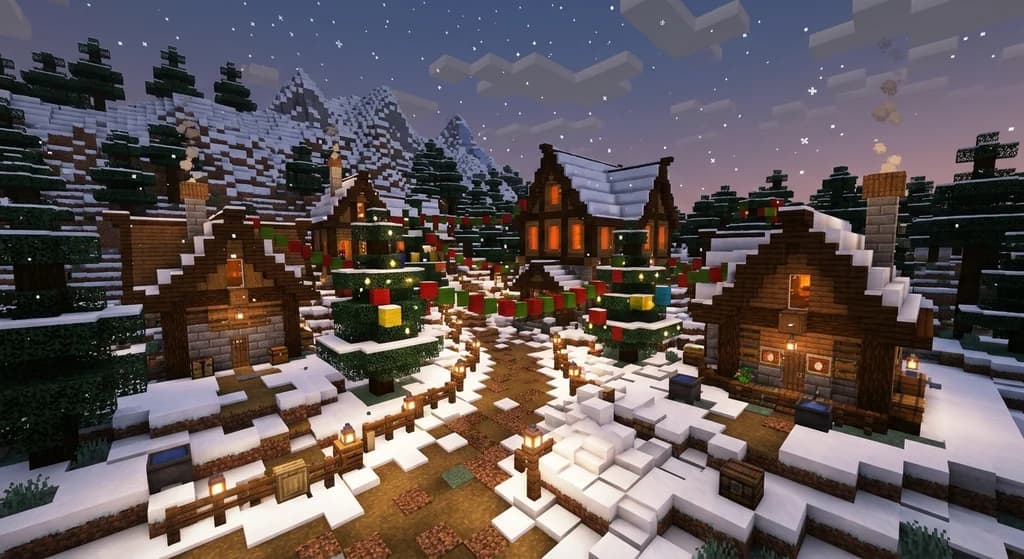
7 Best Christmas Village Block Palettes for Minecraft (2026)
Discover the 7 best Christmas village block palettes for Minecraft in 2026. Learn festive block combos, color theory, snow textures, and winter lighting tips.
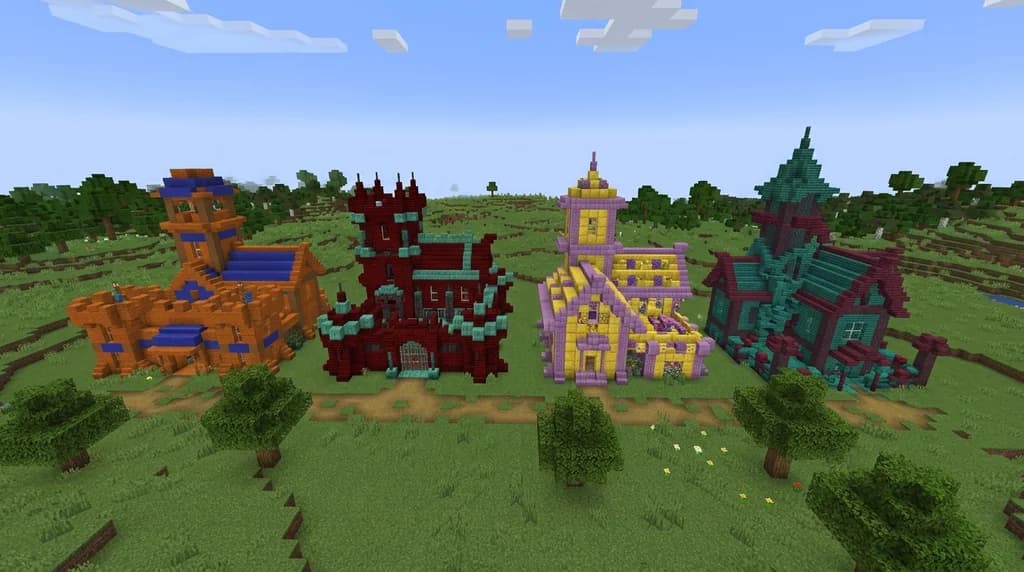
7 Best Complementary Block Palettes for High-Contrast Builds 2026
Master complementary Minecraft block palettes in 2026. 7 expert high-contrast block combos, color theory tips, and pro building strategies for stunning...
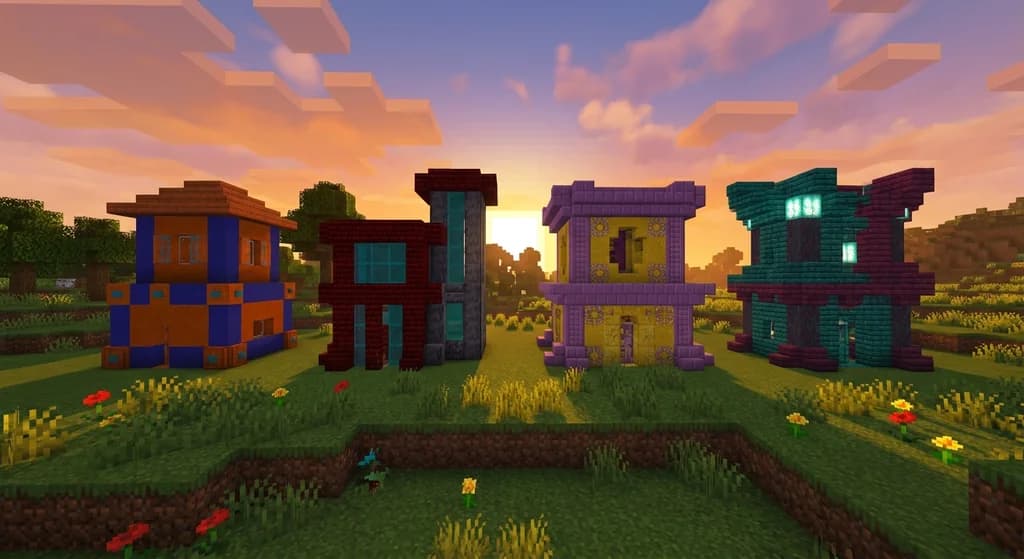
How to Use Complementary Colors: A Minecraft Build Guide (2026)
Master complementary colors in Minecraft building. Learn the best block pairings, color theory basics, and pro palette tips for stunning builds in 2026.
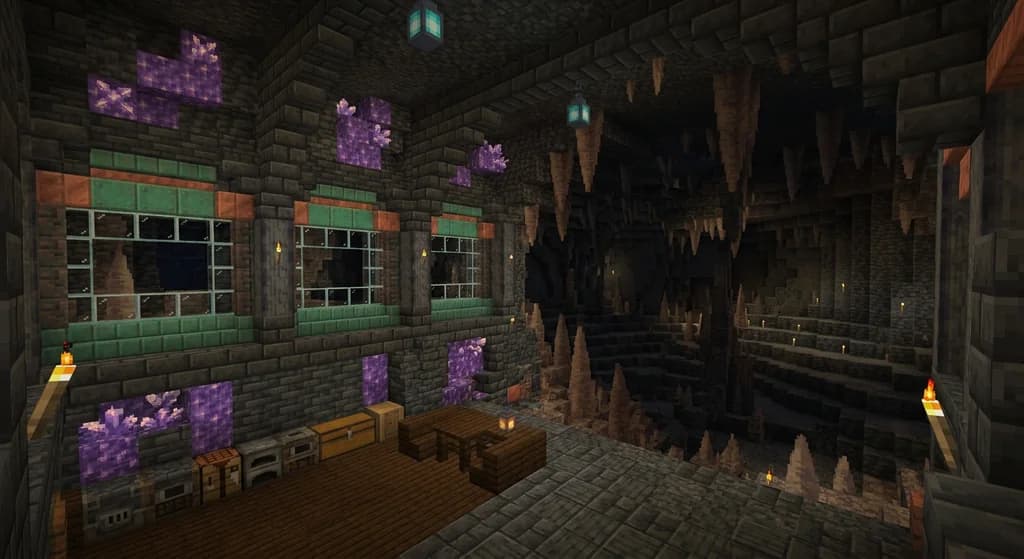
7 Best Underground Block Palettes for Minecraft Cave Bases (2026)
Discover the 7 best underground block palettes for Minecraft cave bases in 2026. Master deepslate combos, cave base block harmony, and subterranean build...
Have a question or another approach?
Compare notes with other readers. Include your edition and version when discussing mechanics.