7 Best Analogous Block Palettes for Minecraft Treehouses 2026
Filed under Minecraft Build Palette & Block Harmony · How we create content
Key Takeaways
| Point | Details |
|---|---|
| Analogous harmony defined | Analogous palettes use 2–4 colors adjacent on the color wheel, making treehouses look organic and cohesive without clashing. |
| Dominant + mid-tone + accent | Always build your palette in three layers — one primary structural block, one supporting tone, and one detail accent. |
| Moss is your best friend | Moss blocks, moss carpet, and mossy cobblestone are the most versatile green-family blocks for natural treehouse builds. |
| Avoid same-value blocks | Even within an analogous palette, mixing blocks of identical brightness creates a flat, muddy look — vary your value (light vs. dark). |
| Mangrove is underrated | Mangrove wood's warm reddish-brown sits perfectly adjacent to jungle green, making it ideal for canopy-level accents. |
| Layer your textures | Combine smooth blocks (stripped logs) with rough ones (cobblestone, rooted dirt) to add visual depth even within a tight analogous palette. |
Table of Contents
- What Are Analogous Block Palettes for Minecraft Treehouses?
- Why Analogous Palettes Work So Well for Treehouses
- Best 7 Analogous Block Palettes for Minecraft Treehouses
- How to Layer Textures Within an Analogous Palette
- Tips for Choosing the Right Palette for Your Biome
- How to Put This Into Practice on Gaia Legends
- Conclusion
- Frequently Asked Questions
- Recommended
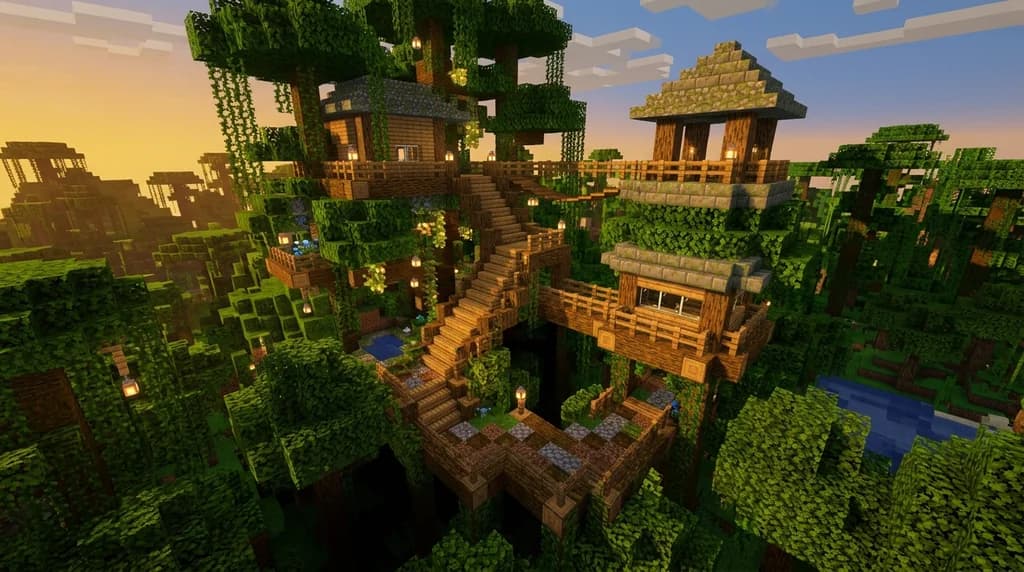
Most treehouse builders pick wood and call it a day. Then they wonder why their build looks like a lumber yard fell out of the sky. The secret to a treehouse that actually looks alive? Analogous block palettes for Minecraft treehouses — a color strategy that mimics how nature actually works.
This guide breaks down 7 of the best analogous palettes you can use right now in 2026, plus the theory behind why they work, so you can adapt them to any biome or build style.
What Are Analogous Block Palettes for Minecraft Treehouses?
An analogous block palette is a set of 2–4 Minecraft blocks whose colors sit adjacent to each other on the color wheel, producing a harmonious, low-contrast look that feels organic and intentional. For treehouses specifically, this almost always means working within the green-yellow-brown family — the natural color range of living wood, canopy leaves, and forest floor.
Unlike complementary palettes that use opposing colors for high contrast, analogous palettes keep everything in the same neighborhood. The result is a build that reads as a single cohesive object rather than a collection of competing parts.
The three-block rule is your starting point:
- Dominant block — covers 60–70% of the structure (e.g., jungle logs)
- Mid-tone block — covers 20–30% (e.g., moss blocks)
- Accent block — covers 5–10% (e.g., flowering azalea leaves)
Note: Staying within three blocks per palette isn't a creative limitation — it's what separates builders who get compliments from builders who get confused silence.
Why Analogous Palettes Work So Well for Treehouses
Treehouses live inside nature, not beside it. Every real-world tree has bark, lichen, leaves, and soil — all variations of green, brown, and yellow-green. Minecraft's block library mirrors this surprisingly well if you know where to look.
The key insight is value contrast within hue similarity. You want blocks that share a color family but differ in brightness. Moss blocks (medium-dark green) next to jungle leaves (bright green) next to rooted dirt (warm brown) — same family, different values. That's what creates depth.
Pro Tip: Before placing a single block, lay your palette out flat on the ground and step back 10–15 blocks. If the three blocks blur together into one muddy tone, you need more value contrast. If they clash, you've drifted outside the analogous range.
If you're curious how the same principle plays out in a completely different build context, check out the 7 Best Modern Minecraft House Palettes for Sleek Builds 2026 — the value-contrast logic applies equally there.
Best 7 Analogous Block Palettes for Minecraft Treehouses
Here are the 7 palettes ranked by versatility, visual impact, and ease of sourcing materials in survival mode.
| Palette | Dominant Block | Mid-Tone Block | Accent Block |
|---|---|---|---|
| 1. Classic Jungle Canopy | Jungle Log | Moss Block | Azalea Leaves |
| 2. Spruce Forest Dusk | Spruce Log | Rooted Dirt | Mossy Cobblestone |
| 3. Mangrove Sunrise | Mangrove Log | Jungle Planks | Moss Carpet |
| 4. Birch & Fern | Birch Log | Fern (large) | Grass Block |
| 5. Dark Oak Hollow | Dark Oak Log | Mossy Stone Bricks | Cobbled Deepslate |
| 6. Cherry Blossom Canopy | Cherry Log | Pink Petals | Flowering Azalea |
| 7. Bamboo Zen | Bamboo Block | Stripped Bamboo | Moss Block |
Palette 1 — Classic Jungle Canopy
This is the foundational analogous treehouse palette. Jungle logs provide a warm, saturated brown-green core. Moss blocks pull the palette toward cooler green. Azalea leaves (flowering or plain) add a lighter, airier canopy tone. The three blocks span yellow-green to cool green — textbook analogous range.
Use stripped jungle logs for interior floors to lighten the value without leaving the palette.
Palette 2 — Spruce Forest Dusk
Spruce logs read as a dark, desaturated brown-green in most biomes. Pair them with rooted dirt (warm, earthy mid-tone) and mossy cobblestone (cool grey-green). This palette works exceptionally well in dark oak forests or taiga biomes where the ambient lighting is already cool and shadowed.
Warning: Avoid mixing regular cobblestone with mossy cobblestone in the same wall — the color difference is subtle enough to look like a mistake rather than a choice.
Palette 3 — Mangrove Sunrise
Mangrove wood is criminally underused in treehouses. Its reddish-brown hue sits right between jungle green and warm orange on the color wheel — adjacent to both, clashing with neither. Pair it with jungle planks (yellow-green) and moss carpet as a floor detail. The result is a warm, sunrise-lit canopy feel.
Palette 4 — Birch & Fern
For builders who want a lighter, airy treehouse, birch logs (near-white with grey flecks) anchor a pale analogous palette. Add large ferns as decorative fill and grass blocks on platform edges. This palette reads as spring-morning green — soft and inviting.
Palette 5 — Dark Oak Hollow
This is the moody option. Dark oak logs are nearly black-brown, which anchors the palette in deep value. Mossy stone bricks add a middle-value green-grey, and cobbled deepslate provides a dark cool accent. Use glow lichen inside crevices for subtle lighting that doesn't break the palette.
Palette 6 — Cherry Blossom Canopy
Cherry logs (pink-tinted wood) sit adjacent to rose and warm green on the color wheel. Pair them with pink petals scattered on floors and flowering azalea for canopy coverage. This is the most feminine and whimsical of the seven — perfect for builds that lean into fantasy aesthetics.
Palette 7 — Bamboo Zen
Introduced in Java 1.20, bamboo blocks and stripped bamboo offer a tight analogous pair — both yellow-green but with distinct texture patterns. Add moss blocks as a grounding third tone. This palette suits minimalist, Japanese-inspired treehouse builds and is surprisingly fast to source in bamboo jungles.
According to the Minecraft Wiki, bamboo blocks were added in Java Edition 1.20 (the Trails & Tales update), giving builders a new warm-toned wood family to work with in natural builds.
How to Layer Textures Within an Analogous Palette
Choosing the right blocks is half the job. Placing them well is the other half. Here's how to build depth without leaving your palette.
Use Logs Vertically, Planks Horizontally
This mimics real timber-frame construction and creates natural visual rhythm. Vertical jungle logs on corners, horizontal jungle planks between them. The grain direction change adds texture without adding a new color.
Mix Smooth and Rough Surfaces
Every palette above includes at least one rough block (mossy cobblestone, rooted dirt, cobbled deepslate). Place rough blocks at the base and transitions, smooth blocks (stripped logs, planks) at eye level and above. This grounds the build visually.
Depth Through Offset Layers
Push some wall blocks one step back, pull others one step forward. Even a single-block depth variation catches light differently and makes the surface read as complex — not flat.
If you want to see how texture layering works in a completely different palette style, the 7 Best Triadic Block Palettes for Vibrant Minecraft Builds 2026 covers the same principle with higher-contrast color sets.
Tips for Choosing the Right Palette for Your Biome
Your biome's ambient lighting and surrounding blocks will interact with your palette. Here's a quick reference:
- Jungle biome → Palettes 1, 3, or 7. The dense green canopy light reinforces warm greens.
- Taiga / dark forest → Palettes 2 or 5. Cool ambient light suits darker, desaturated palettes.
- Plains / meadow → Palette 4 or 6. Bright open light makes lighter palettes pop.
- Swamp → Palette 3 (mangrove). The muddy water and fog complement warm reddish-brown tones.
Pro Tip: Screenshot your build at three times of day — dawn, noon, and dusk. Analogous palettes shift dramatically with lighting. If it looks good at all three, you've nailed it.
For a broader look at how color theory applies across different Minecraft build types, the 7 Best Analogous Block Palettes for Minecraft Builds (2026) covers the full spectrum beyond treehouses.
How to Put This Into Practice on Gaia Legends
Ready to build? Gaia Legends survival realms are one of the best places to test these palettes because our community worlds feature custom flora textures that expand the green-tone range beyond vanilla — think richer moss variants and deeper jungle leaf shades that make analogous palettes even more impactful.
Our build showcase system lets you submit your treehouse for community review, so you get real feedback on whether your palette reads as cohesive or muddy. The showcase resets monthly, giving you a fresh competitive slate every time.
We also run biome-specific survival realms — jungle, taiga, and swamp — so you can test each palette in its natural environment without creative-mode cheating. That's the best way to learn what actually works under survival lighting and terrain constraints.
Gaia Legends is free to join, non-pay-to-win, and supports Java + Bedrock crossplay. Join at gaialegends.pro and start your legend today.
Conclusion
Getting your analogous block palette right transforms a treehouse from a pile of logs into something that feels like it grew there. Three things to remember:
- Pick blocks from the same color family — greens, yellow-greens, and warm browns are your core range for treehouses.
- Vary the value (light vs. dark) even when the hues are similar — this is what creates depth.
- Use the three-block rule (dominant, mid-tone, accent) and resist the urge to add a fourth until you've mastered the first three.
Pick one palette from the list above, gather your materials in survival, and commit to it for your next build. You'll be surprised how much a deliberate color strategy changes the final result.
Frequently Asked Questions
What are the best analogous block palettes for Minecraft treehouses in 2026?
The 7 best analogous block palettes for Minecraft treehouses in 2026 are: Classic Jungle Canopy (jungle log + moss + azalea leaves), Spruce Forest Dusk (spruce + rooted dirt + mossy cobblestone), Mangrove Sunrise (mangrove + jungle planks + moss carpet), Birch & Fern, Dark Oak Hollow, Cherry Blossom Canopy, and Bamboo Zen. Each uses adjacent color-wheel tones for a natural, cohesive look.
What is an analogous color palette in Minecraft building?
An analogous color palette in Minecraft building is a set of 2–4 blocks whose colors sit next to each other on the color wheel, creating a harmonious and organic feel. For treehouses, this typically means working within the green-yellow-brown family. The palette avoids high contrast and instead creates unity — making the build look like a single cohesive structure rather than mismatched parts.
Which Minecraft blocks work best for a green block harmony treehouse build?
Moss blocks, jungle logs, azalea leaves, moss carpet, mossy cobblestone, and rooted dirt are the strongest blocks for a green harmony treehouse. They span a range of green and brown tones that sit adjacent on the color wheel. Glow lichen and hanging roots are excellent accent additions that stay within the palette while adding texture and subtle lighting.
How many blocks should I use in a Minecraft treehouse palette?
Stick to 3 blocks for most treehouse builds — one dominant (60–70% of the structure), one mid-tone (20–30%), and one accent (5–10%). Adding a fourth block is possible once you're confident with value contrast, but beginners who use 4+ blocks often end up with a muddy or chaotic result. Constraint is a feature, not a limitation.
Can I use analogous palettes in biomes other than jungle?
Absolutely. Analogous palettes work in every biome — you just shift the dominant hue. Taiga builds favor darker, cooler greens (spruce + mossy stone bricks). Plains builds suit lighter yellow-greens (birch + ferns). Swamp builds pair naturally with mangrove's warm reddish-brown. The key is matching your palette's temperature (warm vs. cool) to your biome's ambient lighting.
What's the difference between analogous and complementary palettes for Minecraft builds?
Analogous palettes use colors adjacent on the color wheel for a harmonious, low-contrast look — ideal for natural builds like treehouses. Complementary palettes use opposing colors (e.g., orange and blue) for high visual contrast and dramatic impact — better for statement builds or accent details. Most experienced builders use analogous palettes as their base and add a single complementary accent for focal points.
Recommended
- Minecraft combat mastery: strategies for survival and PvP | Gaia Legends
- How to Survive 100 Days in Hardcore Minecraft: 2026 Pro Guide | Gaia Legends
- How to Improve Your MCSR Ranked ELO: Competitive Guide 2026 | Gaia Legends
- 7 Best Minecraft QoL Mods That Improve Your Vanilla World in 2026 | Gaia Legends
Ready to play? Join Gaia Legends today — no pay-to-win, Java + Bedrock crossplay.
- Java:
join.gaialegends.pro - Bedrock:
join.gaialegends.pro— Port19132
Further reading
These references were recorded with the article; specific claims have not been matched to source excerpts.
Frequently Asked Questions
What are the best analogous block palettes for Minecraft treehouses in 2026?
The 7 best analogous block palettes for Minecraft treehouses in 2026 are: Classic Jungle Canopy (jungle log + moss + azalea leaves), Spruce Forest Dusk (spruce + rooted dirt + mossy cobblestone), Mangrove Sunrise (mangrove + jungle planks + moss carpet), Birch & Fern, Dark Oak Hollow, Cherry Blossom Canopy, and Bamboo Zen. Each uses adjacent color-wheel tones for a natural, cohesive look.
What is an analogous color palette in Minecraft building?
An analogous color palette in Minecraft building is a set of 2–4 blocks whose colors sit next to each other on the color wheel, creating a harmonious and organic feel. For treehouses, this typically means working within the green-yellow-brown family. The palette avoids high contrast and instead creates unity — making the build look like a single cohesive structure rather than mismatched parts.
Which Minecraft blocks work best for a green block harmony treehouse build?
Moss blocks, jungle logs, azalea leaves, moss carpet, mossy cobblestone, and rooted dirt are the strongest blocks for a green harmony treehouse. They span a range of green and brown tones that sit adjacent on the color wheel. Glow lichen and hanging roots are excellent accent additions that stay within the palette while adding texture and subtle lighting.
How many blocks should I use in a Minecraft treehouse palette?
Stick to 3 blocks for most treehouse builds — one dominant (60–70% of the structure), one mid-tone (20–30%), and one accent (5–10%). Adding a fourth block is possible once you're confident with value contrast, but beginners who use 4+ blocks often end up with a muddy or chaotic result. Constraint is a feature, not a limitation.
Can I use analogous palettes in biomes other than jungle?
Absolutely. Analogous palettes work in every biome — you just shift the dominant hue. Taiga builds favor darker, cooler greens (spruce + mossy stone bricks). Plains builds suit lighter yellow-greens (birch + ferns). Swamp builds pair naturally with mangrove's warm reddish-brown. The key is matching your palette's temperature (warm vs. cool) to your biome's ambient lighting.
What's the difference between analogous and complementary palettes for Minecraft builds?
Analogous palettes use colors adjacent on the color wheel for a harmonious, low-contrast look — ideal for natural builds like treehouses. Complementary palettes use opposing colors (e.g., orange and blue) for high visual contrast and dramatic impact — better for statement builds or accent details. Most experienced builders use analogous palettes as their base and add a single complementary accent for focal points.
Related guides
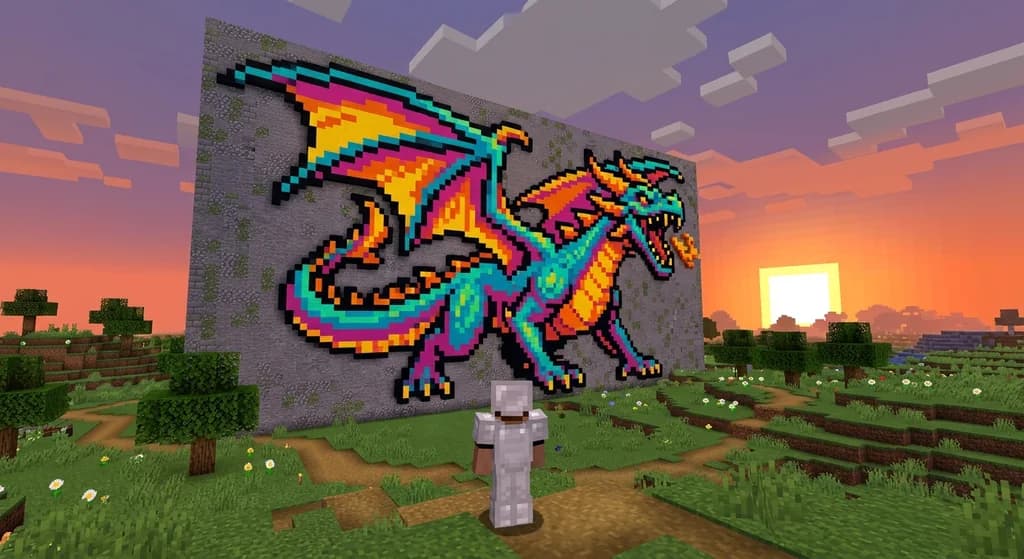
7 Best Block Palettes for Minecraft Pixel Art in 2026
Discover the 7 best block palettes for Minecraft pixel art in 2026. Learn how to choose blocks, create color schemes, and build stunning pixel art in...
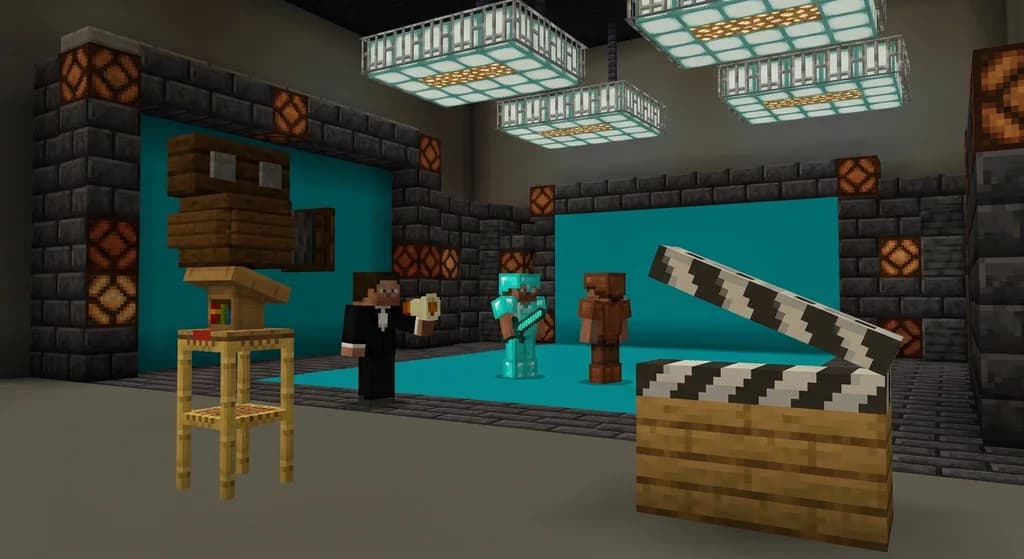
7 Best Block Palettes for the Minecraft Movie Build Challenge (2026)
Discover 7 best block palettes for the Minecraft Movie Build Challenge 2026. Cinematic combos for sci-fi, fantasy, horror & more. Build like a director on...
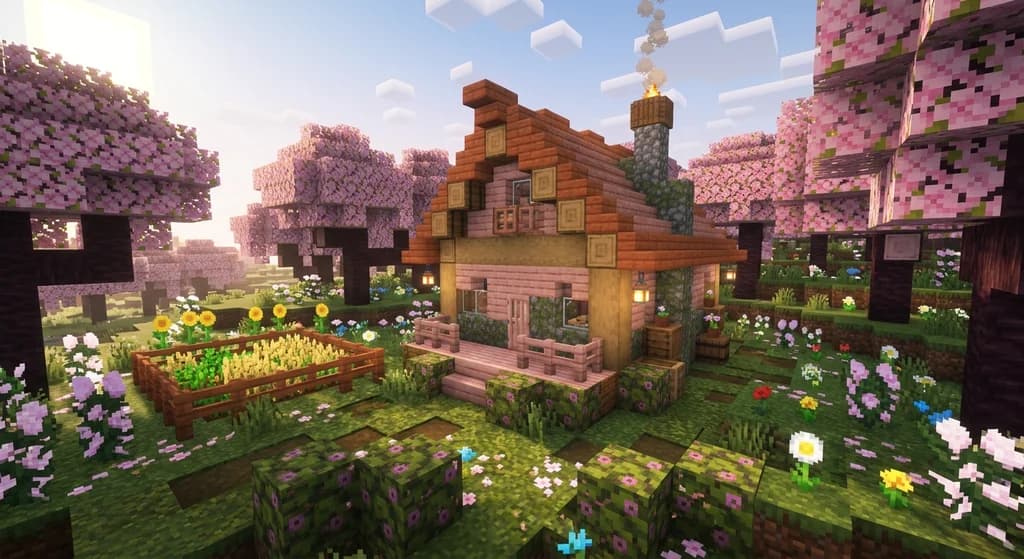
Top 7 Aesthetic Cottagecore Block Palettes for Minecraft 2026
Discover the top 7 aesthetic cottagecore building blocks for Minecraft 2026. Expert fairycore palettes, pastel combos, and cozy forest house block guides.
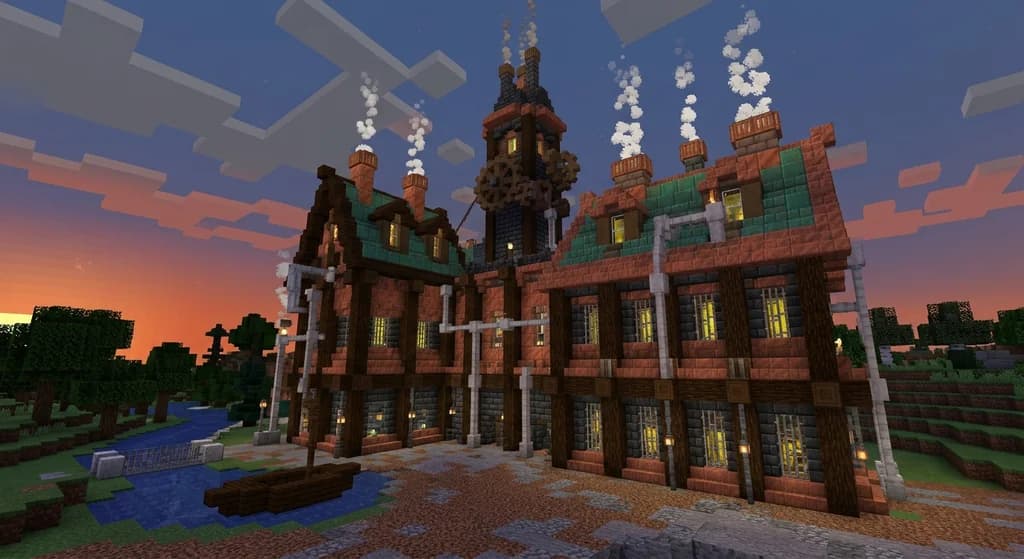
7 Best Steampunk Block Palettes for Copper Minecraft Builds 2026
Discover 7 expert steampunk Minecraft block palettes using copper, deepslate, and dark oak. Build vintage machinery and industrial towers with perfect...
Have a question or another approach?
Compare notes with other readers. Include your edition and version when discussing mechanics.