7 Best Desert Block Combinations for Stunning Minecraft Bases 2026
Filed under Minecraft Build Palette & Block Harmony · How we create content
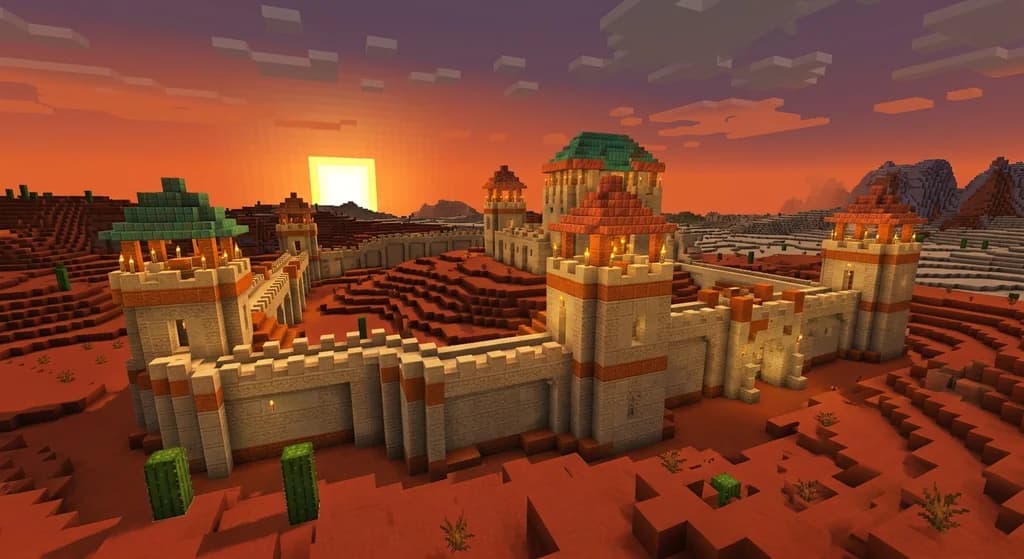
Key Takeaways
| Point | Details |
|---|---|
| Sandstone is your foundation | Regular, cut, and chiseled sandstone together create instant depth without clashing hues. |
| Terracotta adds color harmony | The 16 terracotta variants span a warm analogous range that slots perfectly into desert palettes. |
| Copper ages beautifully in desert builds | Oxidized copper's teal-green provides the only cool accent a warm palette needs. |
| Contrast is king | Pairing light sandstone walls with dark oak or blackstone trim prevents flat, washed-out desert builds. |
| Texture beats color alone | Mixing smooth and rough block variants — like smooth sandstone with chiseled panels — adds visual interest without changing the hue. |
| Dead coral fans and sea lanterns | These underused blocks add organic texture and warm glow to desert interior lighting. |
Table of Contents
- What Are Desert Block Combinations in Minecraft?
- Why Warm-Tone Blocks Work So Well Together
- Best 7 Desert Block Combinations for Minecraft Bases
- How to Choose the Right Desert Palette for Your Build
- Tips for Avoiding Flat, Washed-Out Desert Builds
- How to Put This Into Practice on Gaia Legends
- Conclusion
- Frequently Asked Questions
- Recommended
Most desert builds look flat, pale, and forgettable — not because the builder lacks skill, but because they reached for sandstone and stopped there. The best desert block combinations in Minecraft go far beyond a single material. They layer warm terracotta tones, rough-cut textures, and strategic dark accents to create bases that feel alive under the harsh desert sun.
This guide breaks down seven proven desert block palettes, explains the color theory behind each one, and gives you the exact block lists you need to start building today.
What Are Desert Block Combinations in Minecraft?
Desert block combinations are curated groups of blocks whose colors, textures, and tones work together to evoke an arid, sun-baked aesthetic in Minecraft builds. The best palettes draw from the game's natural warm spectrum — yellows, oranges, reds, and tans — while using contrasting accents to prevent visual monotony.
The desert biome itself hands you a starting palette: sandstone, red sand, dead bushes, and cacti. But relying only on what spawns naturally produces dull results. The real craft is knowing which additional blocks to pull in — and why they work.
Why Warm-Tone Blocks Work So Well Together
Warm-tone Minecraft blocks occupy a tight analogous range on the color wheel, which is why they naturally harmonize. According to the Minecraft Wiki, there are 16 terracotta color variants available in the game, spanning from white and light gray through orange, red, and brown — every single one fitting comfortably into a desert palette without clashing.
That built-in harmony is your biggest advantage. You can mix five or six terracotta variants in a single wall and it will still read as cohesive. Compare that to a forest palette, where mixing too many greens quickly turns muddy.
Note: Red sandstone and regular sandstone share the same texture family but have distinct hue values. Using both in the same build adds depth without breaking harmony — a trick professional builders use constantly.
For a deeper look at how analogous color rules apply across all Minecraft biomes, check out 7 Best Analogous Block Palettes for Minecraft Builds (2026).
Best 7 Desert Block Combinations for Minecraft Bases
Here are seven field-tested desert palettes, from beginner-friendly to advanced.
1. Classic Sandstone Trio
Blocks: Sandstone · Cut Sandstone · Chiseled Sandstone
The entry-level palette. All three blocks share the same base hue but differ in texture, giving you instant depth through surface variation alone. Use regular sandstone for bulk walls, cut sandstone for trim and framing, and chiseled sandstone as decorative panels above doorways.
2. Terracotta Gradient
Blocks: Orange Terracotta · Yellow Terracotta · White Terracotta · Smooth Sandstone
Layer these from bottom (orange) to top (white) to mimic the natural sediment banding you'd see in real desert canyon walls. The smooth sandstone cap ties the gradient back to the surrounding biome.
3. Red Desert Fortress
Blocks: Red Sandstone · Red Terracotta · Brown Terracotta · Blackstone
This is your aggressive, high-contrast palette. The blackstone trim reads as deep shadow against the red tones, making the build feel imposing rather than bleached. Great for defensive structures and towers.
Pro Tip: Replace some blackstone with blackstone bricks to add micro-texture variation that you'll appreciate up close but won't disrupt the silhouette from a distance.
4. Copper-Capped Oasis
Blocks: Smooth Sandstone · Cut Sandstone · Exposed Copper · Oxidized Copper · Jungle Wood
Copper is the only block in Minecraft that changes appearance over time — it progresses through four oxidation stages. The teal-green of fully oxidized copper is the perfect cool-tone counterpoint to a warm sandstone base. Pair it with jungle wood beams for an organic, lived-in feel.
5. Mud Brick Outpost
Blocks: Mud Bricks · Sandstone · Terracotta · Stripped Acacia Log
Mud bricks were added in the Wild Update (Java Edition 1.19) and their rough, earthy texture is tailor-made for desert builds. They're slightly darker and more textured than sandstone, making them ideal for lower walls and ground-level details while sandstone handles the upper structure.
Warning: Mud bricks have a slightly different color temperature than sandstone — test a small section before committing to a full wall, or the tonal mismatch will be obvious at a distance.
6. Warm Monochrome Sandstone
Blocks: Sandstone · Smooth Sandstone · Sandstone Stairs · Sandstone Slabs · Sand
A single-material palette pushed to its limit through shape variation. Stairs and slabs break up flat surfaces dramatically. This approach works best for smaller builds — a market stall, a desert shrine, or a buried ruin aesthetic. For more on mastering single-color depth, see 7 Best Monochromatic Block Palettes for Minecraft Builds (2026).
7. Triadic Desert Accent Palette
Blocks: Orange Terracotta · Smooth Sandstone · Cyan Terracotta · Dark Oak Wood
This is the advanced pick. Cyan terracotta sits roughly opposite orange on the Minecraft color spectrum, creating a complementary pop without screaming "out of place." Dark oak provides a neutral bridge. Use the cyan sparingly — window frames, banners, or a single accent wall — and the warm tones stay dominant. For more triadic palette strategies, 7 Best Triadic Block Palettes for Vibrant Minecraft Builds 2026 has you covered.
Quick Comparison Table
| Palette | Difficulty | Best For | Standout Block |
|---|---|---|---|
| Classic Sandstone Trio | Beginner | Any desert build | Chiseled Sandstone |
| Terracotta Gradient | Beginner | Canyon walls, towers | Yellow Terracotta |
| Red Desert Fortress | Intermediate | Fortresses, keeps | Blackstone |
| Copper-Capped Oasis | Intermediate | Outposts, villas | Oxidized Copper |
| Mud Brick Outpost | Intermediate | Rustic camps, ruins | Mud Bricks |
| Warm Monochrome | Beginner | Small structures | Sandstone Slabs |
| Triadic Desert Accent | Advanced | Statement builds | Cyan Terracotta |
How to Choose the Right Desert Palette for Your Build
Scale matters most. A triadic accent palette that looks stunning on a 60-block fortress will look chaotic on a 15-block hut. Here's a simple rule: the smaller the build, the fewer distinct block types you need.
For small builds (under 20 blocks wide): stick to 2–3 block types maximum. The Classic Sandstone Trio or Warm Monochrome are your best friends.
For medium builds (20–60 blocks wide): 3–5 block types. The Terracotta Gradient and Mud Brick Outpost shine here.
For large builds (60+ blocks): 5–7 block types. The Triadic Desert Accent or Red Desert Fortress give you enough visual variety to fill the scale without repetition.
Tips for Avoiding Flat, Washed-Out Desert Builds
Desert palettes are naturally light and bright. That's a double-edged sword: beautiful in the right light, painfully flat at midday. Here's how to fight it.
Use Dark Accents Intentionally
Every desert palette needs at least one dark anchor block. Blackstone, dark oak, or even brown terracotta can serve this role. Place them at the base of walls, around windows, or as roof trim to ground the build visually.
Vary Block Depth, Not Just Color
Stairs, slabs, and walls all share the same texture as their full-block equivalents but create physical shadow lines. A wall built entirely from flat sandstone blocks reads as a single plane. The same wall with sandstone stairs as a cornice and slab window sills suddenly has dimension.
Light From Within
Sea lanterns and shroomlights emit warm light that complements sandy tones perfectly. Tuck them inside alcoves or behind slab overhangs so the light glows without the source block being visible. This technique transforms a daytime build into something magical at night.
For more on pairing dark medieval accents with light stone — useful when building desert fortresses — 7 Best Castle Minecraft Build Palettes for Epic Fortresses 2026 has transferable techniques worth borrowing.
How to Put This Into Practice on Gaia Legends
These palettes aren't just theory — they're immediately usable on the Gaia Legends survival map, which features expansive desert and badlands biomes ripe for outpost building. The server's resource-rich world means you can gather terracotta, copper, and sandstone in bulk without grinding for hours.
Gaia Legends features a player build showcase where your desert base can be voted on by the community each week — the perfect motivation to push your palette beyond plain sandstone. The server also runs seasonal build events where desert-themed structures earn exclusive cosmetic rewards.
Whether you're staking out a solo outpost or building a faction headquarters in the arid wastes, these seven palettes give you the aesthetic framework to make it memorable.
Gaia Legends is free to join, non-pay-to-win, and supports Java + Bedrock crossplay. Join at gaialegends.pro and start your legend today.
Conclusion
Desert builds reward builders who think beyond the obvious. Here are the three things to take away:
- Layer texture before you layer color. Cut sandstone, chiseled panels, and slab cornices add depth that a flat color change can't replicate.
- Every warm palette needs one dark anchor. Blackstone, dark oak, or brown terracotta prevents the washed-out look that kills desert builds.
- Copper is your secret weapon. Its natural oxidation arc from orange-brown to teal-green gives desert builds a living quality no other block can match.
Pick one palette from this list, gather your materials, and build a 10×10 test wall before committing to a full structure. You'll be surprised how quickly the right combination clicks into place.
Frequently Asked Questions
What are the best desert block combinations in Minecraft?
The best desert block combinations pair sandstone variants (regular, cut, and chiseled) with terracotta, mud bricks, and a dark accent like blackstone or dark oak. For advanced builds, adding oxidized copper as a cool-tone contrast and sea lanterns for warm interior lighting elevates any desert palette from flat to striking.
What blocks go well with sandstone in Minecraft?
Sandstone pairs best with cut sandstone, smooth sandstone, orange and yellow terracotta, mud bricks, stripped acacia logs, and blackstone for contrast. Exposed or oxidized copper makes an excellent roof material. Avoid pure white blocks like quartz — they're too cold and bright against sandstone's warm tan hue.
How do I use terracotta for color harmony in Minecraft builds?
Terracotta color harmony works best when you pick 2–3 adjacent warm variants — such as orange, red, and brown terracotta — and use them in a gradient from base to top. Avoid jumping across the color spectrum (e.g., mixing cyan and orange terracotta in equal amounts) unless you intentionally want a triadic accent effect.
What warm-tone Minecraft blocks work for desert builds?
The best warm-tone Minecraft blocks for desert builds include sandstone, red sandstone, all terracotta variants (especially orange, yellow, red, and brown), mud bricks, stripped acacia log, exposed copper, and sand itself as a ground cover. Dead coral fans and coral blocks also add organic warm texture to interior spaces.
How many block types should I use in a desert Minecraft base?
For small builds under 20 blocks wide, use 2–3 block types. Medium builds (20–60 blocks) can handle 3–5 types comfortably. Large fortresses and sprawling bases can use 5–7 block types before the palette starts feeling incoherent. The key rule: always have one dominant block that covers at least 50% of the surface area.
Can I mix red sandstone and regular sandstone in the same build?
Yes — mixing red sandstone and regular sandstone in the same build is one of the most effective desert techniques. They share the same texture family but differ in hue, creating natural contrast that mimics real desert rock strata. Use regular sandstone for upper walls and red sandstone for lower sections or foundations for the most convincing result.
Recommended
- How to Optimize Minecraft Fishing for Rare Loot: 2026 Guide
- 7 Best Minecraft Organization Tips for Inventory Management 2026
- How to Find Non-Toxic Minecraft Communities to Join in 2026
- How to Build the Most Efficient Minecraft Trading Hall in 2026
Ready to play? Join Gaia Legends today — no pay-to-win, Java + Bedrock crossplay.
- Java:
join.gaialegends.pro - Bedrock:
join.gaialegends.pro— Port19132
Frequently Asked Questions
What are the best desert block combinations in Minecraft?
The best desert block combinations pair sandstone variants (regular, cut, and chiseled) with terracotta, mud bricks, and a dark accent like blackstone or dark oak. For advanced builds, adding oxidized copper as a cool-tone contrast and sea lanterns for warm interior lighting elevates any desert palette from flat to striking.
What blocks go well with sandstone in Minecraft?
Sandstone pairs best with cut sandstone, smooth sandstone, orange and yellow terracotta, mud bricks, stripped acacia logs, and blackstone for contrast. Exposed or oxidized copper makes an excellent roof material. Avoid pure white blocks like quartz — they're too cold and bright against sandstone's warm tan hue.
How do I use terracotta for color harmony in Minecraft builds?
Terracotta color harmony works best when you pick 2–3 adjacent warm variants — such as orange, red, and brown terracotta — and use them in a gradient from base to top. Avoid jumping across the color spectrum (e.g., mixing cyan and orange terracotta in equal amounts) unless you intentionally want a triadic accent effect.
What warm-tone Minecraft blocks work for desert builds?
The best warm-tone Minecraft blocks for desert builds include sandstone, red sandstone, all terracotta variants (especially orange, yellow, red, and brown), mud bricks, stripped acacia log, exposed copper, and sand itself as a ground cover. Dead coral fans and coral blocks also add organic warm texture to interior spaces.
How many block types should I use in a desert Minecraft base?
For small builds under 20 blocks wide, use 2–3 block types. Medium builds (20–60 blocks) can handle 3–5 types comfortably. Large fortresses and sprawling bases can use 5–7 block types before the palette starts feeling incoherent. The key rule: always have one dominant block that covers at least 50% of the surface area.
Can I mix red sandstone and regular sandstone in the same build?
Yes — mixing red sandstone and regular sandstone in the same build is one of the most effective desert techniques. They share the same texture family but differ in hue, creating natural contrast that mimics real desert rock strata. Use regular sandstone for upper walls and red sandstone for lower sections or foundations for the most convincing result.
Related guides
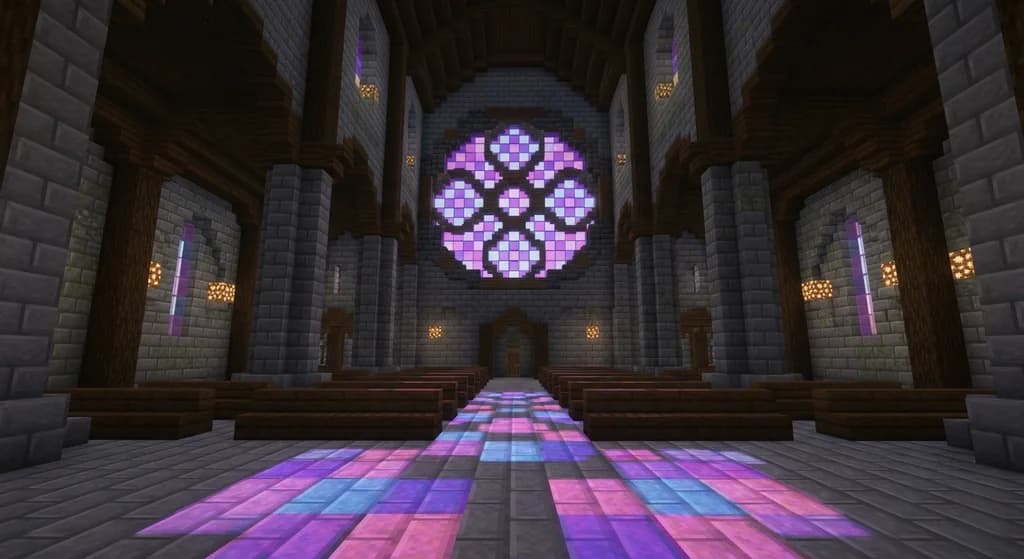
How to Design Stained Glass Windows in Minecraft: 7 Palettes (2026)
Learn how to design stunning Minecraft stained glass windows with 7 unique palettes. Combine glass colors and blocks for beautiful builds in 2026.
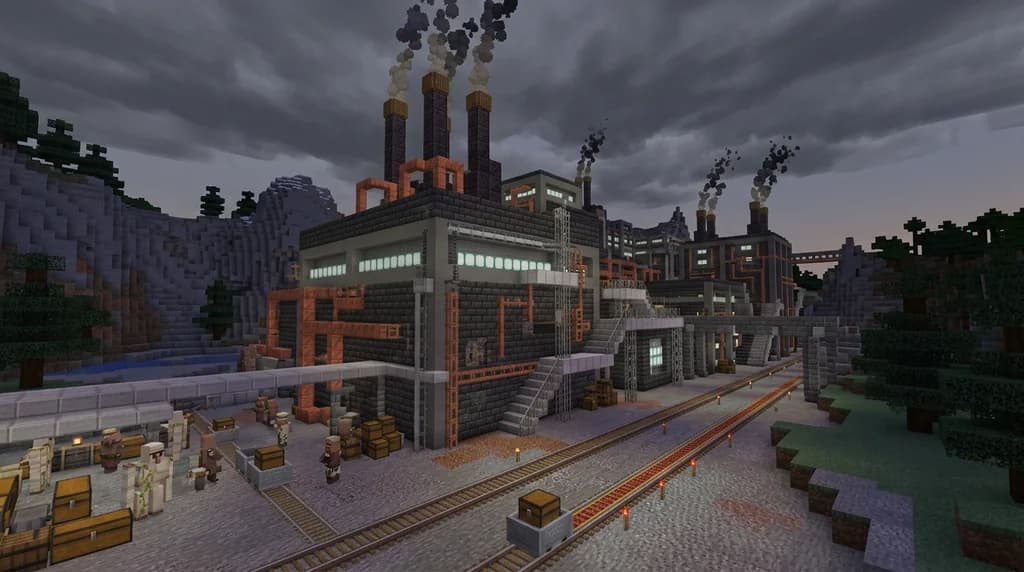
7 Best Industrial Block Palettes for Minecraft Builds in 2026
Discover the 7 best industrial Minecraft block palettes for 2026. Master factory building blocks, modern color schemes, and pro tips for stunning...
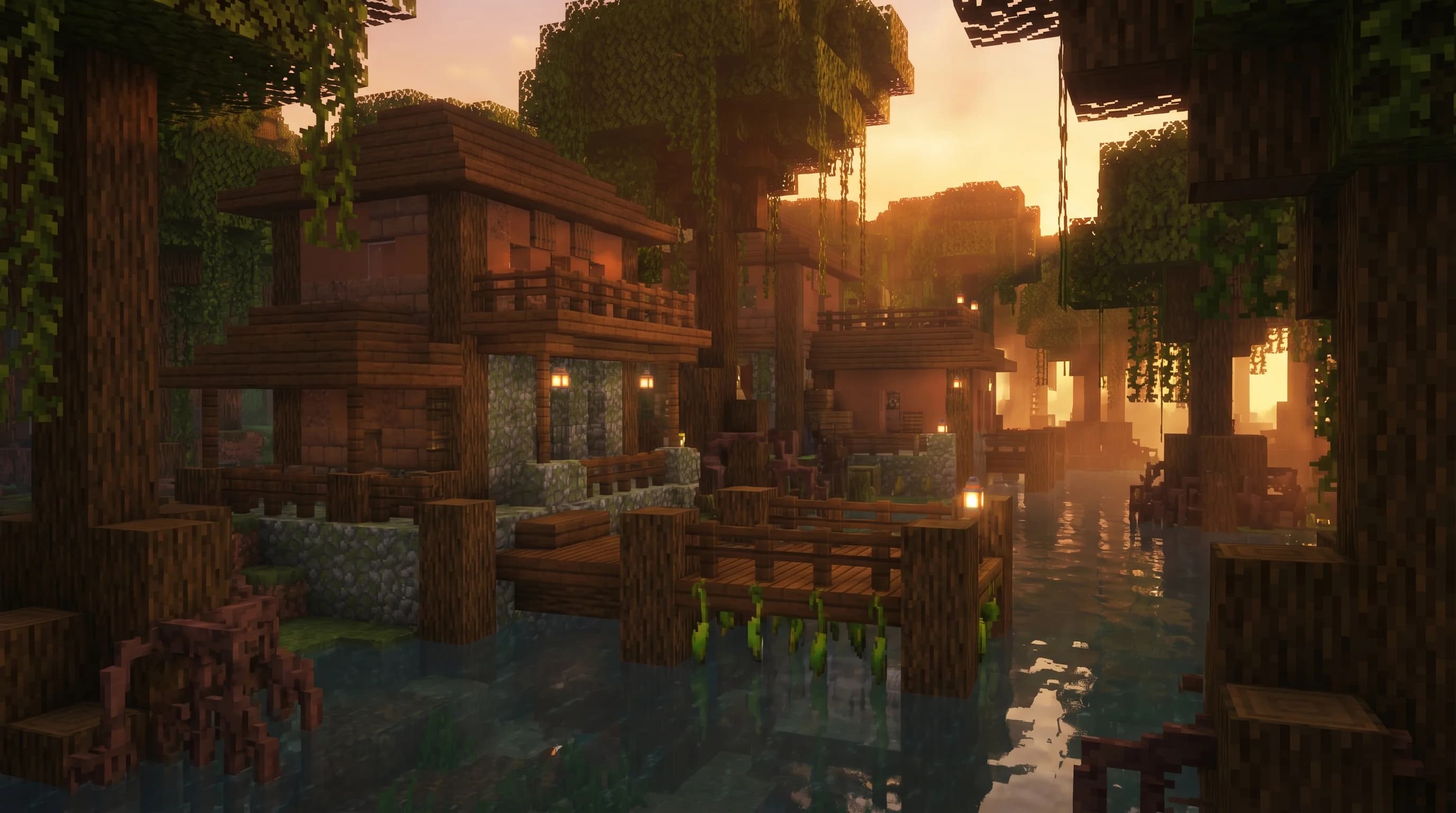
7 Best Mangrove and Mud Block Palettes for Swamp Bases (2026)
Discover 7 stunning mangrove block palettes for swamp bases in 2026. Learn mud and mangrove build ideas, color harmony tips, and survival-friendly...
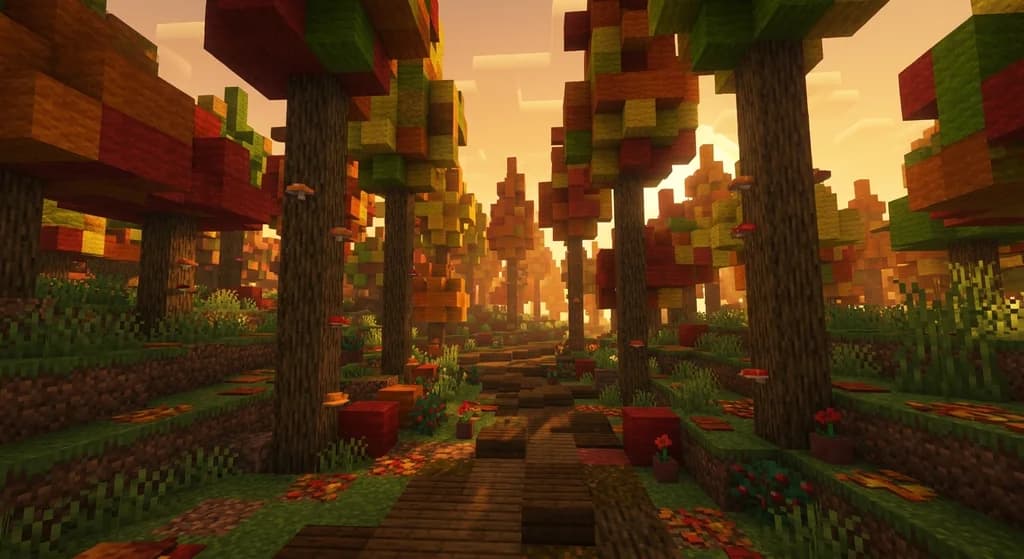
Shelf Mushrooms and Red Shrubs: New Dappled Forest Decor Blocks
Discover the new shelf mushrooms and red shrubs from the dappled forest biome in Minecraft 26.3. Learn how to use these decorative blocks for...
Have a question or another approach?
Compare notes with other readers. Include your edition and version when discussing mechanics.