7 Best Rustic Farm Block Palettes for Minecraft (2026)
Filed under Minecraft Build Palette & Block Harmony · How we create content
Key Takeaways
| Point | Details |
|---|---|
| Warm woods anchor the look | Oak, spruce, and dark oak provide the cozy base every rustic farm needs. |
| Weathered stone adds authenticity | Mossy cobblestone, cracked stone bricks, and tuff create that aged, lived-in feel. |
| Contrast makes builds pop | Pair light woods like birch with dark accents like deepslate for visual depth. |
| Survival sourcing matters | Every palette uses blocks you can gather in the first few hours of a new world. |
| Terracotta brings color | Glazed and plain terracotta add subtle earth tones without breaking the rustic theme. |
| Texture beats color | Mix stripped logs, planks, and raw stone for a tactile, handcrafted look. |
Table of Contents
- What Is a Rustic Farm Block Palette?
- How Do You Choose the Right Block Palette for Your Farm?
- Top 7 Rustic Farm Block Palettes
- Why Do Contrast and Texture Matter in Farm Builds?
- How to Put This Into Practice on Gaia Legends
- Conclusion
- Recommended
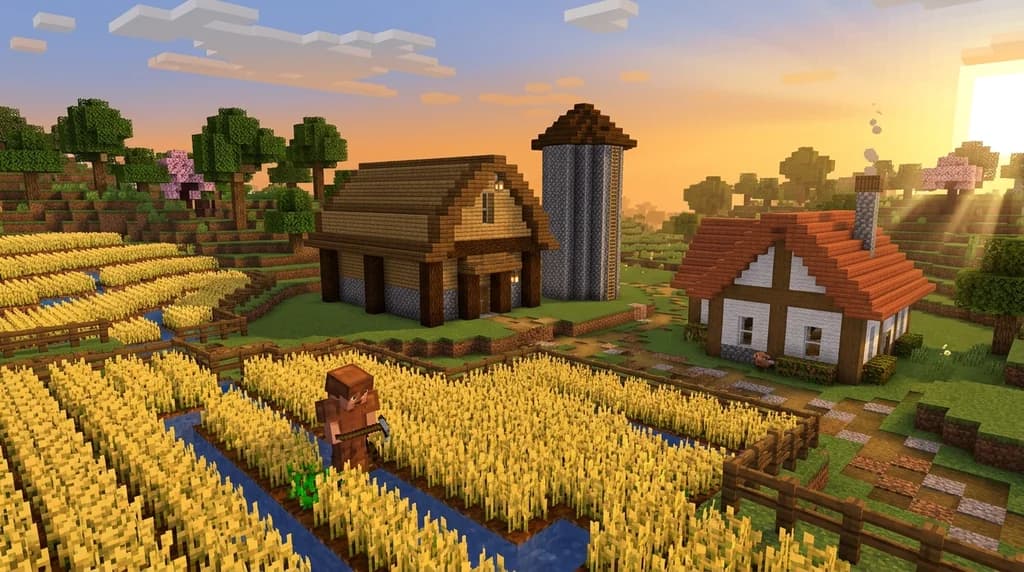
Building a farm in Minecraft is more than just placing crops—it’s about crafting an entire rustic atmosphere. The right block palette can turn a simple wheat field into a storybook homestead. In this guide, I’ll walk you through 7 rustic farm block palettes that work in survival, look amazing, and are easy to gather early on. Whether you're designing a barn, a farmhouse, or a cozy crop field, these combinations will give your build that warm, weathered charm. Let’s dig in.
What Is a Rustic Farm Block Palette?
A rustic farm block palette is a curated set of 4–7 Minecraft blocks that together evoke a warm, weathered, and handcrafted agricultural aesthetic, using natural materials like wood, stone, and earth. Unlike modern or fantasy palettes, rustic palettes avoid bright synthetic colors and instead lean into browns, greens, grays, and muted terracottas. The goal is to make your build look like it’s been standing for generations—think mossy cobblestone foundations, stripped log beams, and dark oak roof tiles. A well-chosen palette also simplifies building because you have a consistent material list, reducing decision fatigue as you expand your farm.
How Do You Choose the Right Block Palette for Your Farm?
Choose a palette by considering your biome’s native blocks, the farm’s function (barn, farmhouse, or crop field), and the level of contrast you want—light woods for sunny plains, dark woods for moody taigas. Start by looking around your build site: if you’re in a spruce forest, use spruce as your primary wood; if you’re in a savanna, acacia and terracotta fit naturally. Next, decide what feeling you want. A working barn benefits from heavy, dark woods and stone, while a farmhouse might welcome brighter birch and a pop of flower boxes. Finally, always include at least one contrasting element—a dark roof against light walls, or a stone chimney against wood siding—to avoid a flat, muddy look. If you’re aiming for a build that could star in a Minecraft movie, our Movie Build Challenge palettes offer complementary cinematic combos.
Top 7 Rustic Farm Block Palettes
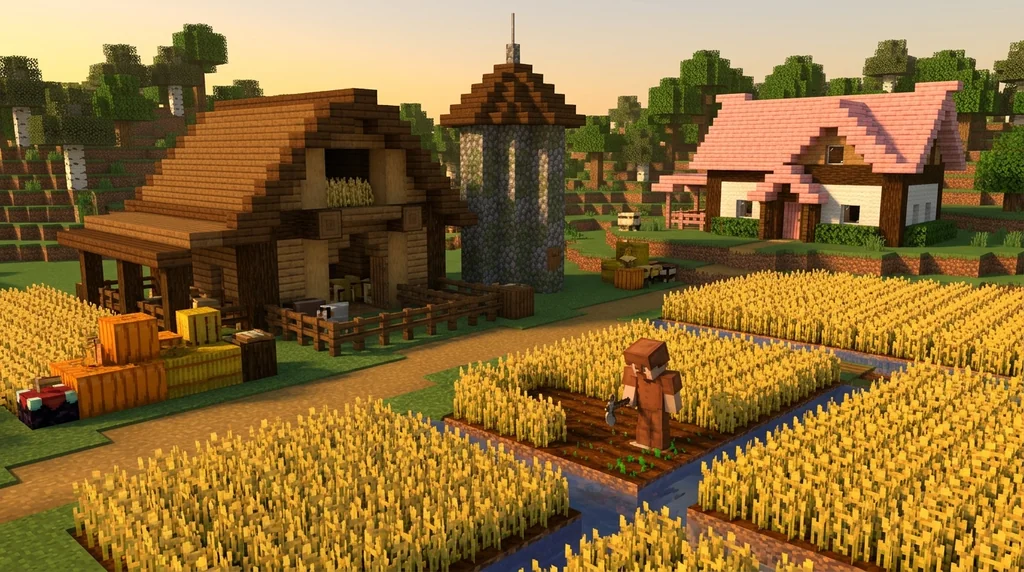
These seven palettes have been tested in survival worlds and Gaia Legends’ building contests, each offering a distinct rustic feel using blocks you can gather within your first few hours of play. Below is a quick comparison, then I’ll break down each palette with exact block lists and tips.
| Palette Name | Key Blocks | Best For | Contrast Level |
|---|---|---|---|
| Classic Oak & Cobble | Oak logs, cobblestone, oak planks, spruce stairs | Starter barns, fences | Low |
| Spruce & Deepslate | Spruce planks, deepslate tiles, stripped spruce, stone bricks | Large barns, silos | High |
| Birch & Mossy Stone | Birch planks, mossy cobblestone, sandstone, dark oak accents | Farmhouses, animal pens | Medium |
| Dark Oak & Terracotta | Dark oak logs, white terracotta, brick, spruce trapdoors | Cozy farmhouses, kitchens | Medium |
| Cherry & Copper | Cherry planks, copper blocks, mud bricks, pink petals | Orchard barns, decorative fields | Low |
| Jungle & Mud | Jungle wood, mud bricks, moss blocks, bamboo | Tropical farms, rice paddies | Medium |
| Mangrove & Tuff | Mangrove planks, tuff, rooted dirt, glow lichen | Swamp farms, fisher huts | High |
Classic Oak & Cobble
This is the quintessential starter palette. Oak logs for framing, cobblestone for foundations, and oak planks for walls create a timeless look. Add spruce stairs for roof detailing to warm up the greys. Pro Tip: Use stripped oak logs for interior beams—they add texture without overpowering the space. This palette pairs beautifully with a warm-tone spruce cabin aesthetic if you swap the roof to spruce.
Spruce & Deepslate
For a more imposing barn, combine spruce planks with deepslate tile roofs and stone brick accents. The dark, cool tones of deepslate contrast sharply with the rich brown of spruce, giving your build a sturdy, medieval feel. Deepslate can be mined at Y=0 and below, making it accessible once you have an iron pickaxe. Warning: Deepslate takes longer to mine than stone, so bring extra pickaxes. This palette also works well for Nether base builds if you swap in crimson wood.
Birch & Mossy Stone
Birch’s light, creamy planks brighten up any farm, while mossy cobblestone adds that aged, overgrown charm. Use sandstone for pathways and dark oak fences for contrast. This palette is perfect for a sunny plains farmhouse. Mossy cobblestone generates naturally in dungeons and jungle temples, but you can also craft it by combining cobblestone with vines, making it a renewable weathered stone (via Minecraft Wiki). For a tutorial on mixing terracotta into light palettes, see our terracotta palettes guide.
Dark Oak & Terracotta
Dark oak’s deep brown pairs elegantly with white terracotta walls, creating a striking farmhouse with a modern rustic twist. Add brick chimneys and spruce trapdoors for window boxes. Terracotta can be found in badlands biomes in massive quantities—up to 64 layers deep—and can be dyed any of the 16 colors, with glazed terracotta adding patterned textures (via Minecraft Wiki). This palette shines in roofed forest biomes where dark oak is plentiful. You can also incorporate glazed terracotta patterns for a subtle decorative touch.
Cherry & Copper
The cherry blossom biome introduced a soft pink wood that, when combined with oxidized copper and mud bricks, creates a dreamy orchard farm. Use cherry planks for walls, copper for roofing (let it age naturally for that weathered green), and pink petals scattered on the ground. Copper blocks oxidize through four stages over 50–82 in-game days per stage, giving farm builds an evolving, weathered look without any player intervention (via Minecraft Wiki). Pro Tip: Bees love cherry trees, so add beehives for a functional apiary. See our cherry blossom building guide for more inspiration.
Jungle & Mud
Jungle wood’s reddish-brown hue pairs wonderfully with mud bricks and moss blocks for a lush, tropical farm. Bamboo scaffolding can serve as trellises for vines. This palette works great for rice paddy builds or a farm integrated into a jungle biome. Note: Mud bricks are crafted from packed mud, which you make by using a water bottle on dirt—a simple early-game recipe.
Mangrove & Tuff
Mangrove planks have a unique reddish-brown color that contrasts with tuff’s grey-green texture. Rooted dirt and glow lichen add an earthy, swampy vibe. This palette is ideal for a witchy farm or a fisher’s hut. Tuff generates in blobs underground, so it’s easy to stockpile. For a cinematic twist, you might adapt this palette for a Minecraft Movie Build Challenge set in a swamp.
Why Do Contrast and Texture Matter in Farm Builds?
Contrast and texture transform a flat, monochrome build into a dynamic structure that catches the eye—dark beams against light plaster, rough stone against smooth planks—making even a simple barn look professionally designed. In rustic farms, contrast often comes from pairing light and dark woods, or wood and stone. For example, a birch wall with dark oak roof trusses creates a clear visual separation. Texture is equally important: mixing stripped logs with regular planks and raw stone adds tactile depth. Minecraft 1.21 includes 11 wood types, each with log, stripped log, planks, slabs, stairs, fences, and doors, giving builders over 70 distinct wooden blocks to mix and match (via Minecraft Wiki). Stripped logs, introduced in 1.13, have a smoother, cleaner texture that contrasts beautifully with raw stone, and can be obtained by right-clicking any log with an axe (via Minecraft Wiki). This variety is why even a simple palette can feel rich. For a deeper dive into block harmony, our Japanese pagoda block palette guide shows how contrast elevates intricate builds.
How to Put This Into Practice on Gaia Legends
On Gaia Legends, our monthly building contest often features farm themes, and the server’s custom crop economy rewards players who create efficient, beautiful farms. You can grow over 20 unique crops, including custom ones like cloudberries and glowshrooms, and sell them at the player-run market. Using the palettes above, you can design a farm that not only produces resources but also becomes a landmark on the server. Many players have found that the Cherry & Copper palette attracts visitors because of its unique look, boosting their market stall sales. Gaia Legends is free to join, non-pay-to-win, and supports Java + Bedrock crossplay. Join at gaialegends.pro and start your legend today.
Conclusion
Rustic farm builds thrive on thoughtful block choices. Remember these three takeaways:
- Warm woods and weathered stone are your foundation—oak, spruce, and mossy cobblestone never fail.
- Contrast is key—pair light and dark elements to avoid a flat, muddy look.
- Let your biome guide you—use local materials for an authentic feel and easier gathering. Grab your axe, pick a palette, and turn that empty field into a rustic masterpiece.
Recommended
- How to Unlock Hidden Item Passives on Minecraft Servers in 2026
- How to Start a Minecraft Roleplay Character Backstory in 2026
- How to Use Tamed Wolves in Minecraft Boss Fights (2026)
- How to Customize Minecraft MMORPG HUDs and Action Bars in 2026
Ready to play? Join Gaia Legends today — no pay-to-win, Java + Bedrock crossplay.
- Java:
join.gaialegends.pro - Bedrock:
join.gaialegends.pro— Port19132
Further reading
These references were recorded with the article; specific claims have not been matched to source excerpts.
Frequently Asked Questions
What are the best rustic farm Minecraft block palettes?
The best rustic farm palettes combine warm woods like oak and spruce with weathered stone like mossy cobblestone and deepslate, plus earthy accents like terracotta or mud bricks. The seven palettes in this guide—ranging from Classic Oak & Cobble to Mangrove & Tuff—offer something for every biome and style.
How do I make my Minecraft farm look rustic?
Use a mix of wood and stone blocks, incorporate mossy or cracked variants, add depth with overhanging roofs and trapdoors, and avoid bright synthetic colors. Stripped logs, hay bales, and cobblestone walls instantly add rustic charm.
What blocks should I use for a Minecraft barn?
Spruce planks, dark oak logs, and cobblestone or deepslate are excellent for barns. Add a hay bale interior and use fences for animal pens. The Spruce & Deepslate palette in this guide is a perfect barn combination.
Can I build a rustic farm in survival mode without rare blocks?
Absolutely. All palettes in this guide use blocks obtainable in the first few hours—oak, spruce, cobblestone, sandstone, and basic terracotta. Mossy cobblestone is craftable with vines, and deepslate is common at low Y-levels.
What is the best wood for a rustic farmhouse?
Dark oak and spruce are top choices for their rich, warm tones, but birch works well for a brighter, airy farmhouse. Pair with white terracotta or sandstone for a classic farmhouse look.
How do I add contrast to my farm build?
Use light walls with dark roofs, or mix stone and wood in equal measure. For example, a birch plank wall with a deepslate roof creates strong contrast. Adding stripped logs as trim also breaks up flat surfaces.
Related guides
How to Use a Minecraft Palette Generator for Block Harmony (2026)
Learn how to use a Minecraft palette generator to create stunning block harmony in your builds. Step-by-step guide for 2026 with tips, tables, and real...
Dirt Paths: A Useful Block for Minecraft Pathways
Learn everything about dirt paths in Minecraft: how to make them, where they generate naturally, their unique properties like mob prevention and height, and creative uses for pathways and farms.
Froglight Block Guide: Properties, Colors, and Build Suggestions
Discover the three froglight colors in Minecraft — pearlescent, verdant, and ochre. Learn how to get them, their unique properties, and creative build ideas for your next project.
Understanding Copper Oxidation in Minecraft
Learn how copper blocks oxidize in Minecraft from raw orange to weathered green. A quick reference covering stages, waxing, and building with weathered copper.
Have a question or another approach?
Compare notes with other readers. Include your edition and version when discussing mechanics.