Understanding Player-Driven Economies in Minecraft Multiplayer
Filed under Minecraft MMORPG & RPG Servers · How we create content
Version scope: Java Edition 1.21+, Bedrock Edition 1.21+
Key Takeaways
| Point | Details |
|---|---|
| Player-driven economies are built | Player-driven economies are built on player-to-player trading, often facilitated by plugins that add currency, shops, and auction houses. |
| Vanilla Minecraft's villager trading | Vanilla Minecraft's villager trading system includes supply and demand mechanics that affect prices, introduced in the Village & Pillage update. |
| Common server currencies include | Common server currencies include diamonds, emeralds, or plugin-based virtual coins. |
| Server economies can be | Server economies can be simple barter systems or complex markets with fluctuating prices and player-run businesses. |
| Understanding the local economy | Understanding the local economy helps you trade efficiently and avoid overpaying for common items. |
Player-driven economies turn a Minecraft server from a simple survival world into a living, breathing community. Instead of everyone mining their own diamonds, players specialize: one becomes a farmer, another an enchanter, a third a builder. They trade their goods and services, and the server hums along.
How Player-Driven Economies Start
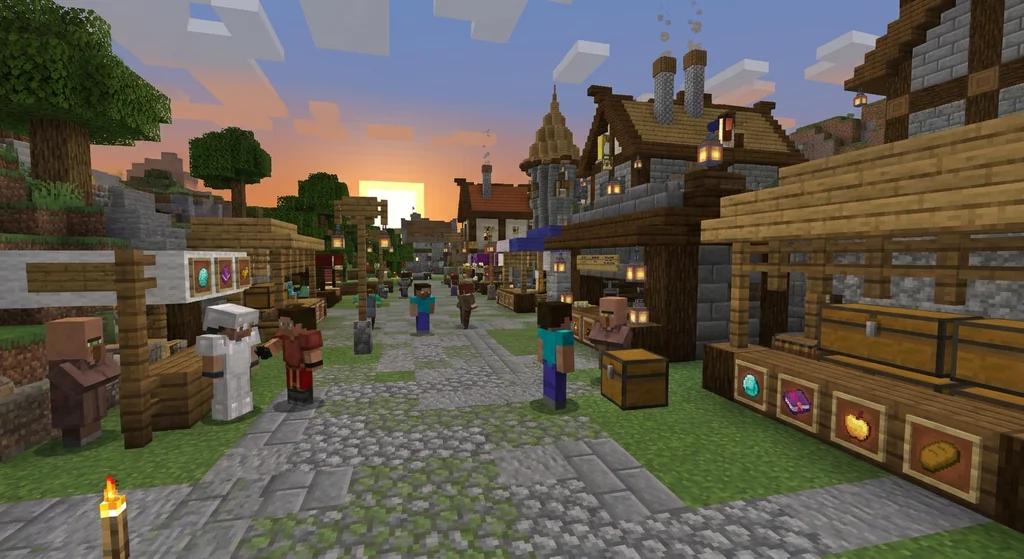
On most multiplayer servers, the economy begins organically. Players trade items directly—diamonds for enchanted gear, wheat for iron, or building services for rare blocks. As the server grows, players often establish in-game economy by building shops to trade valuable resources like diamonds and enchanted items.
Players often establish in-game economy by building shops to trade valuable resources like diamonds and enchanted items.
This simple barter system works for small groups, but larger servers usually introduce plugins that add a currency system. Common currencies include:
- Diamonds – the classic, universally valued resource.
- Emeralds – often used because of their connection to villager trading.
- Virtual coins – plugin-based currency with no physical item.
The Role of Villager Trading in Vanilla Economy
Even without plugins, vanilla Minecraft has a built-in economy: villager trading. The Village & Pillage update (Bedrock Edition 1.11.0, released April 23, 2019) revamped the trading system, adding a supply and demand mechanic that makes prices dynamic.
1.11.0, the first full release of Village & Pillage, is a major update to Bedrock Edition that was released on April 23, 2019.
Here is how it works:
- Supply: A villager's trades are restored when they work at their job site block, up to twice per day.
- Demand: When you use a trade, the villager increases the price for that item. Demand goes up by the amount of supply used, and down by the amount of supply not used.
Demand goes up by the amount of supply used, and down by the amount of supply not used.
This means if everyone buys the same enchanted book from a librarian, the price rises. Wait a few days without trading, and the price drops again. It is a miniature economy that rewards patience and variety.
Common Server Economy Plugins and Features
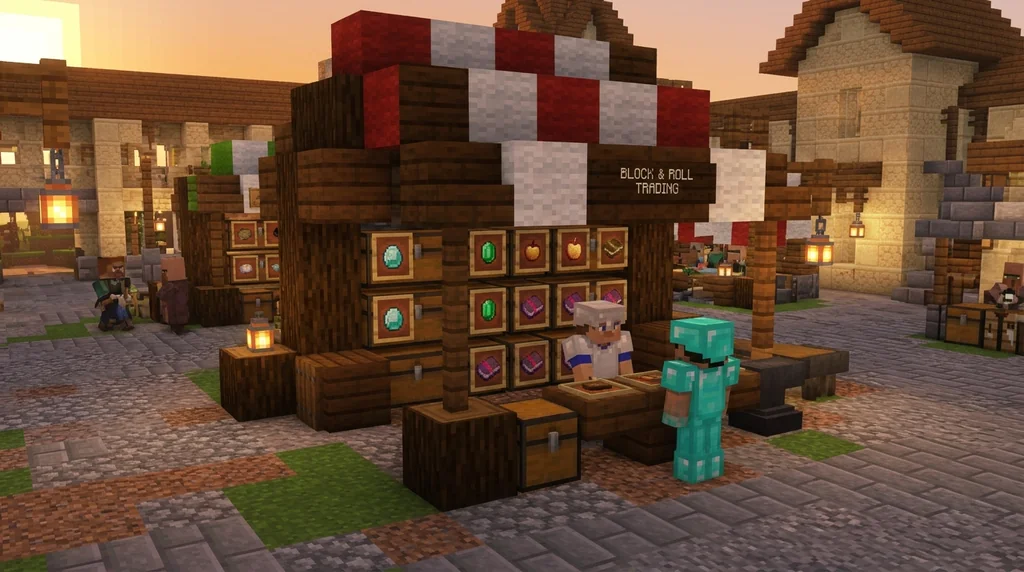
Most economy-focused servers use plugins to expand beyond villager trading. Common features include:
- Player shops: Chest shops or NPC shops where players buy and sell items for a set price.
- Auction houses: Players list items for auction, and others bid over time.
- Jobs plugins: Players earn currency by performing tasks like mining, farming, or fishing.
- Bank systems: Players can store currency, earn interest, or take loans.
These plugins create a robust economy where prices fluctuate based on supply and demand. A server with a thriving economy often has players who specialize in trading, farming rare items, or running large-scale shops.
How to Thrive in a Player-Driven Economy
Whether you are new to a server or a seasoned trader, a few strategies help:
- Learn the local currency – Is it diamonds, emeralds, or virtual coins? Check the server's rules or ask veteran players.
- Find niche markets – If everyone mines diamonds, try farming blaze rods or brewing potions. Niche items often sell for a premium.
- Use villager trading – Even on plugin-heavy servers, villagers offer consistent prices for items like paper, books, and emeralds. Use them to generate steady income.
- Build relationships – Player economies run on trust. A reputation for fair trading leads to better deals and exclusive access to rare items.
A Quick Comparison: Vanilla vs Plugin Economies
| Aspect | Vanilla Economy | Plugin Economy |
|---|---|---|
| Currency | Emeralds, items | Diamonds, virtual coins |
| Price setting | Fixed by villagers, with supply/demand | Player-set or admin-set |
| Shops | Villager trading only | Chest shops, NPC shops, auction houses |
| Complexity | Low | High – jobs, banks, taxes |
| Best for | Small servers, singleplayer | Large servers, MMO-style gameplay |
Final Thoughts
Player-driven economies are one of the most engaging parts of Minecraft multiplayer. They turn a solitary survival game into a collaborative world where everyone has a role. Whether you prefer the simplicity of villager trading or the depth of a plugin-powered market, understanding the basics helps you make the most of any server.
For more on how Minecraft's RPG roots influence modern servers, check out Minecraft's RPG Roots: How Early Games Shaped the Game. And if you are interested in roleplaying within these economies, see How to Roleplay in Minecraft MMORPGs (2026 Guide).
Sources
- Players often establish in-game economy by building shops to trade valuable resources like diamonds and enchanted items. — Multiplayer
- 1.11.0, the first full release of Village & Pillage, is a major update to Bedrock Edition that was released on April 23, 2019. — Bedrock Edition 1.11.0
- Demand goes up by the amount of supply used, and down by the amount of supply not used. — Bedrock Edition 1.11.0
Frequently Asked Questions
What is a player-driven economy in Minecraft?
It is an economic system where players trade items, services, or currency with each other, rather than relying solely on villager trading. This often involves player-built shops, auction houses, and currency plugins.
Do I need plugins to have an economy?
No. Vanilla Minecraft's villager trading system includes supply and demand mechanics that create a basic economy. However, plugins add more features like custom currency, player shops, and jobs.
What is the best currency for a server economy?
Diamonds are the most common because they are rare and useful. Emeralds work well for servers focused on villager trading. Virtual coins offer the most flexibility but require plugins.
How does villager supply and demand work?
When you trade with a villager, the price for that item increases temporarily. The price decreases when the trade is not used. This encourages variety in trading and prevents overuse of a single trade.
Can I make a living from trading on a server?
Yes. Many players specialize in farming, enchanting, or building to earn currency. With a good understanding of the market, you can accumulate wealth and buy rare items.
Related guides
Herobrine: Community Creepypasta Reference
Herobrine is a community creepypasta, not a Minecraft entity. A quick reference to where the myth started in 2010, how the story evolved, and why players still report sightings on modded servers.
Understanding Minecraft Mods and Customization
Explore the world of Minecraft mods and customization. Learn what mods are, how they differ from official features, and how they transform gameplay.
Minecraft's RPG Roots: How Early Games Shaped the Game
Discover how Legend of the Chambered, RubyDung, and Rubylands shaped Minecraft's RPG DNA. Explore the origins of its textures, quest systems, and MMORPG servers.
The Herobrine Myth: Origins and Reality
Uncover the truth behind Minecraft's most famous creepypasta. Learn where the Herobrine myth came from, why it persists, and why he never actually existed in the game.
Have a question or another approach?
Compare notes with other readers. Include your edition and version when discussing mechanics.