Minecraft's RPG Roots: How Early Games Shaped the Game
Filed under Minecraft MMORPG & RPG Servers · How we create content
Version scope: Not edition-specific
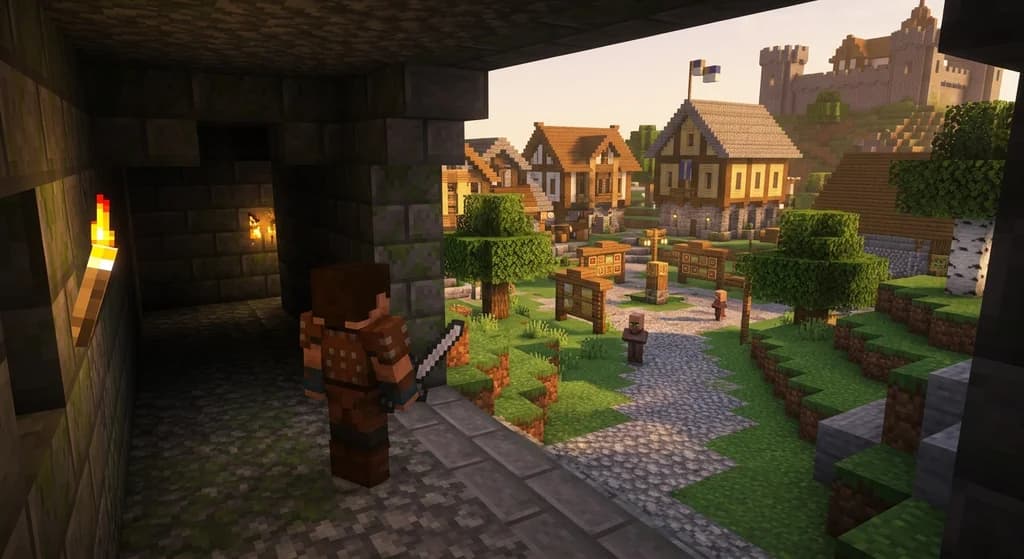
Key Takeaways
| Point | Details |
|---|---|
| Minecraft's RPG roots come | Minecraft's RPG roots come directly from Markus Notch Persson's earlier games, including Legend of the Chambered, RubyDung, and Rubylands. |
| Legend of the Chambered | Legend of the Chambered (2001/2008) was a raycaster dungeon crawler that provided many of Minecraft's textures, its inventory system, and its font (Mojangles). |
| RubyDung was an unreleased | RubyDung was an unreleased strategy sandbox game whose codebase was reused to create Minecraft. |
| Rubylands was a prototype | Rubylands was a prototype quest and leveling system that directly prefigures the progression mechanics found in modern Minecraft MMORPG servers. |
| The official Minecraft Dungeons | The official Minecraft Dungeons spinoff is a direct nod to the classic dungeon crawler genre that inspired Notch. |
If you've ever grinded for levels on a Minecraft MMORPG server, joined a guild for a raid, or simply admired the pixel art of an apple in your inventory, you've touched the surface of Minecraft's deep RPG roots. These roots aren't a happy accident. They are a direct inheritance from the early game projects of its creator, Markus "Notch" Persson. Before a single block was placed in the world of Minecraft, Notch was building dungeon crawlers and strategy sandboxes that would lay the very foundation for the game we know today.
The Dungeon Crawler That Started It All: Legend of the Chambered
The most direct line from classic RPGs to Minecraft runs through Legend of the Chambered (LoC). This is a series of raycaster-styled dungeon crawler games created by Notch where the player must explore winding stone chambers, fight monsters, and reach the end of the dungeon.
Legend of the Chambered (LoC), or simply Chambered, is a series of raycaster-styled dungeon crawler games created by Markus "Notch" Persson where the player must explore winding stone chambers, fight monsters, and reach the end of the dungeon. Legend of the Chambered (LoC), or simply Chambered, is a series of raycaster-styled dungeon crawler games created by Markus "Notch" Persson where the player must explore winding stone chambers, fight monsters, and reach the end of the dungeon.
The first game was made in 2001, with a more well-known version released on May 24, 2008. These games were heavily inspired by classic dungeon crawlers like Dungeon Master, Eye of the Beholder, and Ultima Underworld.
The visual DNA is undeniable. Notch reused many item textures from the 2008 versions of Legend of the Chambered as textures for items in Minecraft, including the iconic looks for leather armor, studded armor, chainmail armor, iron armor, iron swords, apples, and quivers.
Notch reused many item textures from the 2008 versions of Legend of the Chambered as textures for items in Minecraft, those being the textures for leather armor, studded armor, chainmail armor, iron armor, iron swords, apples, and quivers, as well as the armor slot sprites. Notch reused many item textures from the 2008 versions of Legend of the Chambered as textures for items in Minecraft, those being the textures for leather armor, studded armor, chainmail armor, iron armor, iron swords, apples, and quivers, as well as the armor slot sprites.
Furthermore, the font used in Minecraft, Mojangles, was first used in these games, and Minecraft's inventory menu was based on a modified version of the LoC inventory. Even the four monster types present in the 2008 versions bear a strong resemblance to the first four monsters added to Minecraft.
The Canceled Sandbox That Became a Phenomenon: RubyDung
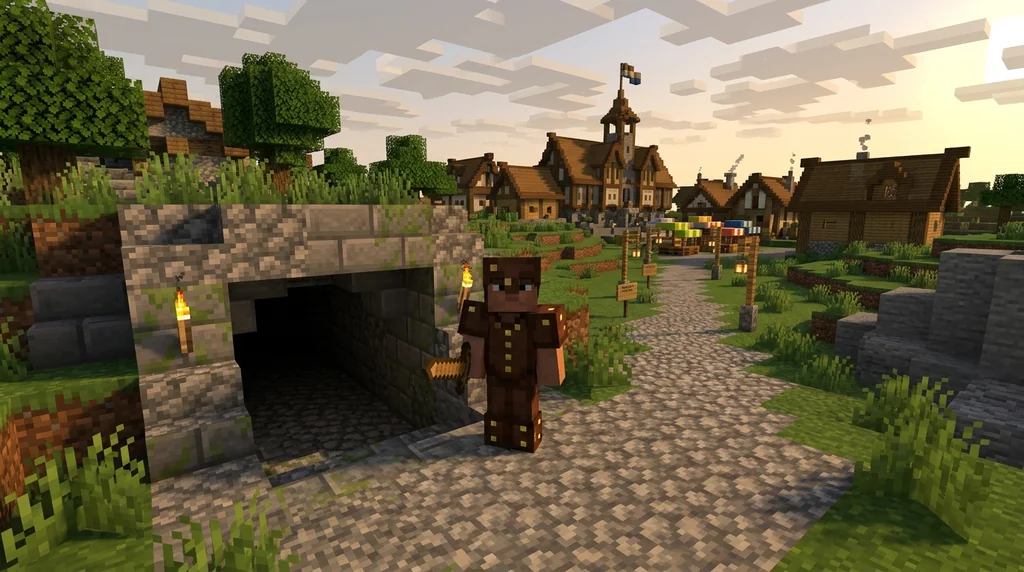
Before Minecraft, Notch worked on RubyDung, an unreleased strategy sandbox game that was in development from February 2009 or earlier until May 2009 at the latest. The name was a placeholder for a "dungeon game in the rubylands," a rough idea for a game world he had.
It was influenced by Dwarf Fortress, but was meant to be much easier to play with a focus on accessibility. While most of its gameplay features are unknown, the game featured a 3D isometric perspective with varied terrain containing bumps, hills, and monoliths.
Notch's next game would be Minecraft (later known as Minecraft: Java Edition), which is based on RubyDung's codebase. Notch's next game would be Minecraft (later known as Minecraft: Java Edition), which is based on RubyDung's codebase.
This is a crucial point. The very code that powers Minecraft was born from this canceled RPG sandbox. The grass and cobblestone block textures that appear in the screenshots of the later versions of RubyDung would also appear in the earliest builds of Minecraft.
The Quest and Leveling System Prototype: Rubylands
RubyDung would likely have reused some gameplay elements from a related unreleased project by Notch, Rubylands.
This was going to be a group manager where players would assemble, equip, level up, and pay heroes. This was going to be a group manager where players would assemble, equip, level up, and pay heroes.
A local town would provide quests for the heroes, which the player could send them on. When they returned, a replay animation of the quest would show, and the player would distribute, sell, or equip any loot gathered. The player would gain experience points to level up, and the player's level determined the size and the number of the groups one could have.
This is the direct blueprint for the quest and progression systems found in today's custom Minecraft MMORPG servers. If you enjoy a server with a deep quest system, you are experiencing a direct evolution of Notch's original RPG vision. For a deeper look at how these systems work today, check out our guide on Quest Systems in Official Minecraft Event and Featured Servers.
The Legacy Continues: From Creepypasta to Official Spinoff
The RPG influence didn't stop at the code. The community's imagination, fueled by the game's mysterious early days, created community icons like Herobrine, a myth born from early graphical bugs and creepypasta stories. (For the full story, see The Herobrine Myth: Origins and Reality).
Officially, Mojang explored the RPG genre directly with Minecraft Dungeons, a dungeon crawler RPG developed by Mojang and Double Eleven.
Originally conceived as a singleplayer game for the Nintendo 3DS, Minecraft Dungeons takes inspiration from classic dungeon crawlers. Originally conceived as a singleplayer game for the Nintendo 3DS, Minecraft Dungeons takes inspiration from classic dungeon crawlers.
This brings the journey full circle, paying homage to the very games that inspired Notch in the first place. Understanding this history enriches the experience for anyone playing on a modern MMORPG server or building custom dungeons.
Sources
- Legend of the Chambered (LoC), or simply Chambered, is a series of raycaster-styled dungeon crawler games created by Markus "Notch" Persson where the player must explore winding stone chambers, fight monsters, and reach the end of the dungeon. — Legend of the Chambered
- Notch reused many item textures from the 2008 versions of Legend of the Chambered as textures for items in Minecraft, those being the textures for leather armor, studded armor, chainmail armor, iron armor, iron swords, apples, and quivers, as well as the armor slot sprites. — Legend of the Chambered
- Notch's next game would be Minecraft (later known as Minecraft: Java Edition), which is based on RubyDung's codebase. — RubyDung
- This was going to be a group manager where players would assemble, equip, level up, and pay heroes. — RubyDung
- Originally conceived as a singleplayer game for the Nintendo 3DS, Minecraft Dungeons takes inspiration from classic dungeon crawlers. — Minecraft Dungeons
Frequently Asked Questions
Was Minecraft originally an RPG?
No, Minecraft was originally released as a sandbox survival game. However, its creator's previous games were heavily RPG-focused, and they directly influenced Minecraft's design, textures, inventory system, and even its codebase.
What is Legend of the Chambered?
Legend of the Chambered is a series of raycaster-styled dungeon crawler games created by Markus Notch Persson before Minecraft. The first game was made in 2001, and a well-known version was released in 2008. It is the most direct ancestor of Minecraft's RPG elements.
How did RubyDung influence Minecraft?
RubyDung was an unreleased strategy sandbox game by Notch. Its codebase was directly reused to create Minecraft. Many of the early textures, like grass and cobblestone, were also taken from RubyDung.
Did Herobrine really exist in the game?
No, Herobrine has never existed in any official version of Minecraft. He was a community-made creepypasta that originated from forum posts and a graphical bug in the game's early alpha versions.
Related guides
The Herobrine Myth: Origins and Reality
Uncover the truth behind Minecraft's most famous creepypasta. Learn where the Herobrine myth came from, why it persists, and why he never actually existed in the game.
Quest Systems in Official Minecraft Event and Featured Servers
Explore how quests work in official Minecraft servers like the A Minecraft Movie Live Event and SoulSteel. Analysis of progression, rewards, and design...
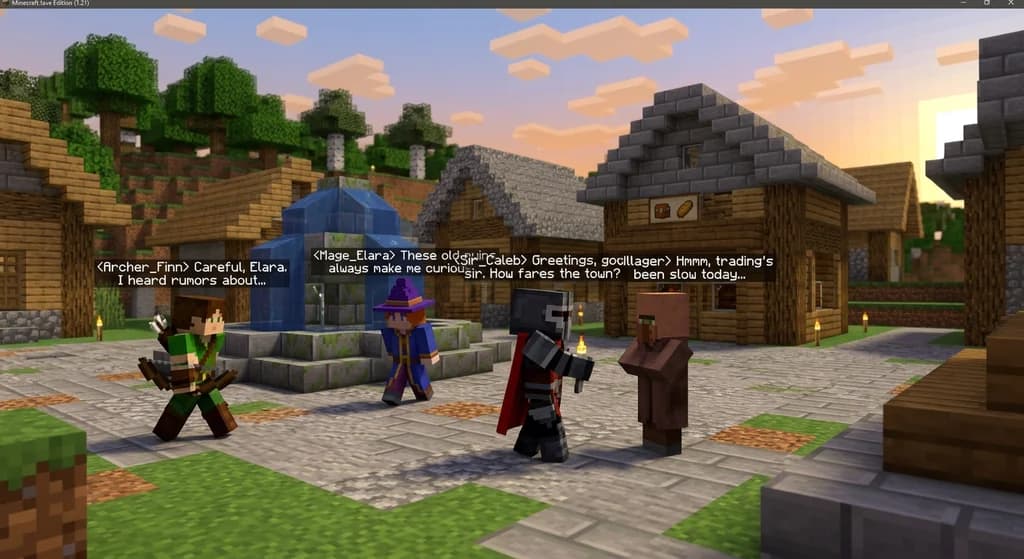
How to Roleplay in Minecraft MMORPGs (2026 Guide)
Learn how to roleplay in Minecraft MMORPGs with our 2026 guide. Master character backstory, in-game actions, and find the best roleplay servers on Gaia...
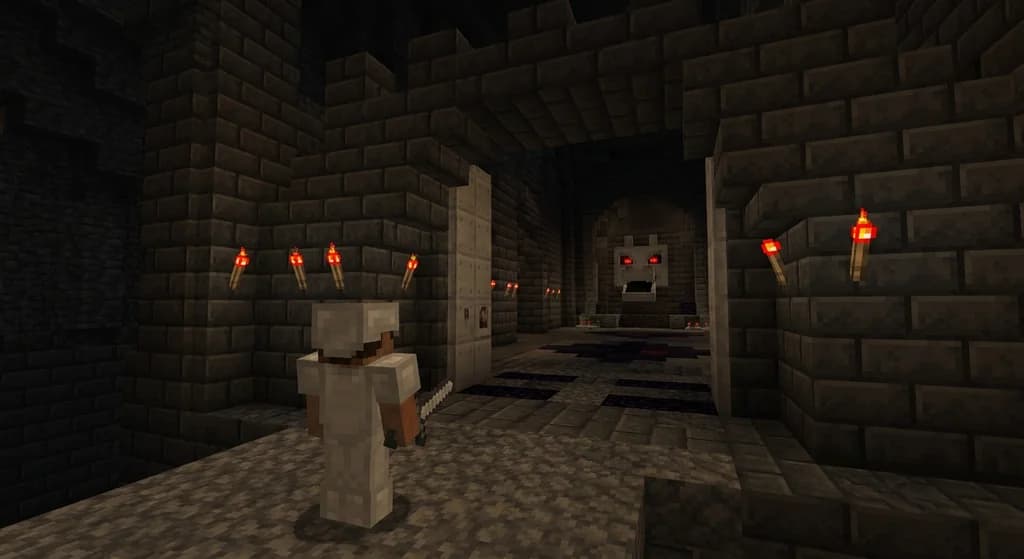
How to Build Custom Dungeons for Minecraft MMORPGs (2026)
Learn how to build custom dungeons for Minecraft MMORPGs in 2026. Design layouts, balance bosses, and create adventures with command blocks and plugins....
Have a question or another approach?
Compare notes with other readers. Include your edition and version when discussing mechanics.