How to Master the Eternal Baby Mob Copper Orchestra (2026)
Filed under Minecraft Gameplay Remix · How we create content
TL;DR
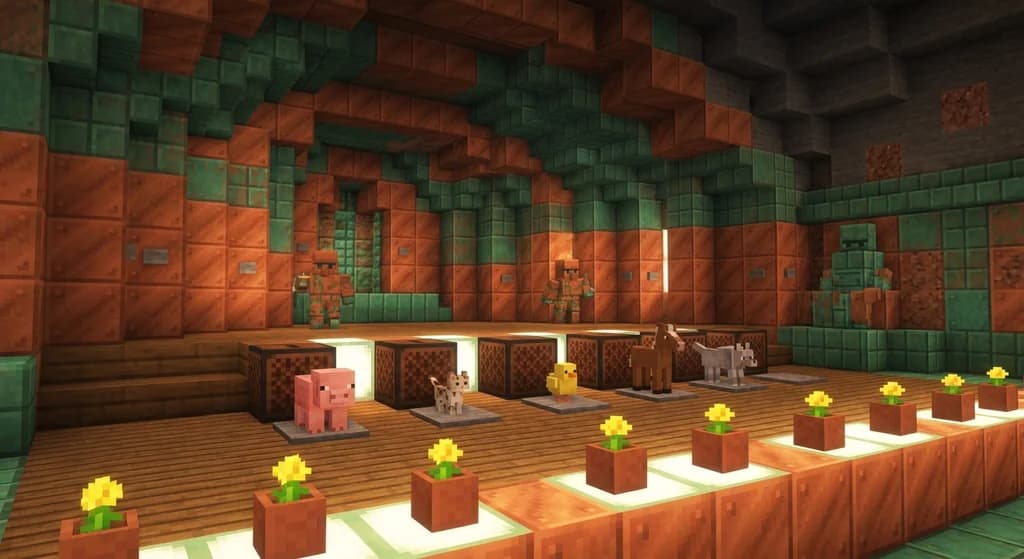
Bored in Minecraft? Here's how to build the Eternal Baby Mob Copper Orchestra — a living, automated music machine that combines Golden Dandelion age-freezing, oxidation-dependent Trumpet Note Block pitches, and Copper Golem randomized button-pressing. After reading this guide, you'll be able to design a fully functional, self-playing orchestra where eternally young baby mobs trigger perfectly tuned copper instruments forever.
Table of Contents
- What is the Eternal Baby Mob Copper Orchestra?
- How to Set Up Your Copper Orchestra
- Best Strategies for the Copper Orchestra
- Why the Copper Orchestra Works
- How to Put This Into Practice on Gaia Legends
- Conclusion
- FAQ
- Recommended
What is the Eternal Baby Mob Copper Orchestra?
You know that feeling. You've mined every ore, built a mega-base, slain the dragon twice. You log into Minecraft and just… stand there. The world is infinite, but somehow it feels small.
Here's your antidote: the Eternal Baby Mob Copper Orchestra.
This is one of the most inventive innovative Minecraft gameplay ideas to emerge from the 2026 update cycle — and it's entirely possible with vanilla mechanics introduced in Java Edition 26.1 and 1.21.9. It fuses three distinct systems into something that feels genuinely alive: a concert hall that plays itself, staffed by baby mobs that will never grow up, accompanied by copper instruments that change pitch as they age.
The Eternal Baby Mob Copper Orchestra is a redstone-powered, mob-driven music installation where age-locked baby animals trigger Trumpet Note Blocks placed on Copper Blocks at different oxidation stages, while Copper Golems automate the button-pressing to keep the whole performance running indefinitely — no player input required after setup.
This isn't just a build. It's a game design challenge, a redstone puzzle, and a creative showcase all at once. Technical builders will love the layered automation. Casual players will love watching tiny piglets accidentally compose jazz.
Note: This concept uses mechanics from Java Edition 26.1 (Golden Dandelion, Trumpet Note Blocks) and Java Edition 1.21.9 (Copper Golem). Make sure your world or server is running 26.1 or later before attempting this build.
The Three Pillars of the Orchestra
Every great orchestra has sections. Yours has three:
- The Choir — Baby mobs age-locked with Golden Dandelions, each assigned to a specific pressure plate or tripwire zone
- The Instruments — Trumpet Note Blocks placed on Copper Blocks at carefully chosen oxidation levels to produce specific pitches
- The Conductor — One or more Copper Golems randomly pressing buttons to introduce spontaneous variation into the performance
Together, these three pillars create a system with emergent complexity. You design the rules; the game plays the music.
How to Set Up Your Copper Orchestra
Materials Checklist
Before you lay a single block, gather everything you need. Here's the full shopping list:
- Golden Dandelions — at least one per baby mob (found in flower biomes or crafted; see 26.1 patch notes)
- Baby mobs — Pigs, Cats, Wolves, Horses, and Chickens all received new baby sounds in 26.1; collect at least 2–3 of each for a full ensemble
- Copper Blocks — in four oxidation states: fresh, exposed, weathered, and oxidized (craft or age naturally)
- Note Blocks — one per copper block instrument station
- Copper Golems — minimum 2; craft from copper blocks and carved pumpkins per the 1.21.9 recipe
- Pressure plates (stone or wooden) — one per mob station
- Redstone dust, repeaters, and comparators — for signal routing
- Wax (Honeycomb) — to lock copper oxidation at desired stages
- Name Tags — optional but highly recommended for naming your performers
World Settings
- Set the world to Survival or Creative — both work, but Survival adds stakes.
- If playing on a server, ensure mob griefing is on and mob despawning is off (use
/gamerule doMobSpawning falseand keep mobs in named, enclosed areas). - Build in a closed underground space to prevent baby mobs from wandering. A 20×20 room is a solid starting footprint.
Step-by-Step Build Guide
Follow these steps in order. Skipping ahead will cause redstone headaches.
- Lay your orchestra floor. Use a mix of copper block types as your stage surface — this doubles as visual design and instrument foundation.
- Place Note Blocks on top of copper blocks. One Note Block per copper block. Right-click to tune each Note Block to your desired pitch. The trumpet sound is different based on the oxidation level of the Copper Block beneath it, so place them intentionally.
- Assign oxidation levels to pitch roles. Fresh copper = bright, high trumpet. Oxidized copper = deep, mellow brass. Exposed and weathered fill the middle register. You now have 4 distinct trumpet timbres from a single instrument type.
- Wax the copper blocks at their target oxidation stages using honeycomb. This locks the sound permanently — no more drifting pitches.
- Place pressure plates in front of or on top of each Note Block station.
- Introduce your baby mobs into the enclosure. Use leads or fencing to loosely guide them toward their designated zones.
- Apply Golden Dandelions to each baby mob. Interact while holding the flower — you'll see green particles moving downwards confirming the age-lock is active. That baby will never grow up.
- Position Copper Golems near button arrays on the walls. Each Copper Golem will randomly press buttons, sending redstone pulses to Note Block stations on a schedule you don't fully control — which is the magic.
- Wire everything together with redstone. Pressure plates feed into Note Blocks directly; button signals can be routed through repeaters to add delay and rhythm.
- Name your performers with Name Tags. "Piccolo Pete" the piglet. "Bass Clef" the foal. Make it yours.
Pro Tip: Use redstone repeaters set to 4-tick delays between Copper Golem button outputs and Note Block inputs to prevent the entire orchestra from firing simultaneously. Staggered delays create rhythm; simultaneous triggers create noise.
Best Strategies for the Copper Orchestra
Difficulty Tiers
Not everyone wants to wire a full 20-instrument orchestra on day one. Here's how to scale the challenge:
| Tier | Name | Setup Complexity | Mob Count | Copper Golem Count | Goal |
|---|---|---|---|---|---|
| Casual | The Trio | Low | 3 baby mobs | 1 Golem | Play a recognizable 3-note loop |
| Standard | The Chamber Ensemble | Medium | 8–10 baby mobs | 2 Golems | Build a 4-oxidation-level trumpet section |
| Hardcore | The Full Philharmonic | High | 20+ baby mobs | 4+ Golems | Compose a 16-note sequence with timed delays |
| Insane | The Eternal Conductor | Expert | 30+ baby mobs, all sound variants | 8 Golems | Automate a full song using only mob movement and Golem randomness |
The "Sound Variant Sorting" Strategy
Here's where the Golden Dandelion age-freezing for sound-based mob sorting technique gets really clever.
In Java 26.1, animals like Pigs, Cats, Cows, and Chickens each have multiple adult sound variants — but baby mobs have their own distinct sounds too. By age-locking specific babies and positioning them near Note Blocks tuned to complementary pitches, you create a harmonic pairing between the mob's ambient sounds and the instrument it triggers.
A baby chicken's high-pitched peep pairs beautifully with a fresh-copper trumpet (bright and cutting). A baby horse's low whinny complements an oxidized-copper trumpet (warm and resonant). Sort your mobs by their sound profile, not just their species.
Multiplayer vs. Solo Variations
Solo: You're the architect and the audience. Focus on getting one clean 8-note loop running before expanding. The satisfaction of hearing your first automated musical phrase is genuinely euphoric.
Multiplayer: Assign each player a "section" of the orchestra to design and wire. One player handles the brass (copper trumpet stations), another handles mob wrangling and age-locking, a third manages Copper Golem placement and button arrays. Hold a premiere night where everyone logs on to hear the full orchestra play for the first time.
Scoring and Progression Ideas
Turn the orchestra into an ongoing Minecraft challenge with these progression milestones:
- Bronze Conductor: 4 Note Blocks firing in sequence, at least 2 oxidation levels represented
- Silver Maestro: 8 Note Blocks, all 4 oxidation levels present, at least 3 mob species age-locked
- Gold Virtuoso: 16 Note Blocks, full Copper Golem automation, named performers, decorated concert hall
- Legendary Eternal Maestro: 30+ performers, all 5 baby mob species (Wolf, Cat, Pig, Horse, Chicken), a composed song recognizable to listeners
Why the Copper Orchestra Works
The Mechanics Combo Is Genuinely Elegant
On paper, these three systems — age-locking, oxidation-based pitch, and randomized automation — have nothing to do with each other. Mojang added them in separate updates for completely different reasons. But when you put them together, something clicks.
The Golden Dandelion solves the orchestra's biggest logistical problem: baby mobs grow up. Without age-locking, your carefully positioned "Piccolo Pete" becomes an adult pig in 20 minutes and wanders off-script. The Golden Dandelion makes your performers permanent. It's the thing that turns a fun afternoon experiment into an eternal installation.
The oxidation-dependent trumpet pitch gives you a tuning system that's physical rather than abstract. Instead of right-clicking Note Blocks to cycle through pitches, you're choosing which oxidation stage of copper to build on. The trumpet sound is different based on the oxidation level — meaning your instrument choices are architectural decisions. That's brilliant design, and it makes the building process feel like scoring a film.
The Copper Golem's randomized button-pressing introduces controlled chaos. You can't predict exactly when it'll fire. That unpredictability means the orchestra never plays the same performance twice. It's generative music, Minecraft-style. The Copper Golem randomly presses buttons it finds nearby — so your layout directly shapes the "composition" it can produce.
What Makes It Replayable
Three words: emergent musical variation. Because Copper Golems don't follow a script, every session is a new performance. Add a new baby mob, change an oxidation stage, reposition a Golem — and the music shifts. Players who love optimization will spend hours tuning the system. Players who love aesthetics will spend hours decorating the concert hall. Both are valid.
Pro Tip: Leave one Copper Block unwaxed in your orchestra. Let it slowly oxidize over real time, gradually shifting that instrument's timbre from bright to mellow. Your orchestra will literally age and evolve over weeks of play — a living soundtrack to your world.
How Recent Updates Make This Possible
None of this existed before 2025–2026. The Copper Golem arrived in Java 1.21.9 as part of the Copper Age drop. The Golden Dandelion, baby mob sounds, and Trumpet Note Blocks all landed in Java 26.1's Tiny Takeover update. The convergence of these two updates in the same game version is what makes the Eternal Baby Mob Copper Orchestra achievable right now, in 2026, for the first time ever.
This is genuinely one of the most exciting windows for innovative Minecraft gameplay ideas in years. The tools are fresh, the community hasn't exhausted the design space, and the builds you make now will feel pioneering.
How to Put This Into Practice on Gaia Legends
Everything described above works in vanilla Minecraft — but Gaia Legends takes the Eternal Baby Mob Copper Orchestra to a level that's simply not possible in a solo world.
Gaia's exclusive Chrono-Zones mechanic is the game-changer here. Chrono-Zones allow you to selectively freeze copper oxidation within a designated area while still allowing baby mobs to move and trigger Note Blocks indefinitely. In a vanilla world, you'd need to manually wax every copper block to lock oxidation. On Gaia, you designate a Chrono-Zone around your orchestra, and the server handles oxidation control automatically — freeing you to focus on composition, layout, and performance design.
This means you can build an evolving orchestra with some sections waxed (locked pitch) and some sections inside a Chrono-Zone (server-managed oxidation pace), creating a dynamic soundscape that shifts on a schedule you control at the zone level.
Beyond Chrono-Zones, Gaia's collaborative building tools mean your orchestra can be a community installation — a landmark that other players visit, contribute to, and perform in. Imagine a server-wide premiere night where dozens of players crowd into your copper concert hall.
Gaia Legends is free to join, non-pay-to-win, and supports Java + Bedrock crossplay. Your orchestra is open to every player, on every platform.
Join at gaialegends.pro and remix your Minecraft experience today.
Conclusion
The Eternal Baby Mob Copper Orchestra is proof that Minecraft in 2026 has more creative depth than ever. Here are the three things to take away:
- Golden Dandelions are the key to permanence — age-lock your performers and your orchestra lives forever
- Oxidation-dependent trumpet pitches give you a physical, architectural tuning system unlike anything else in the game
- Copper Golem randomness is a feature, not a bug — it makes every performance unique and keeps the build endlessly replayable
Try building your first Trio (3 Note Blocks, 3 baby mobs, 1 Copper Golem) tonight. Share your first automated musical phrase with the Minecraft community. Tag it #EternalOrchestra and let the world hear what you've built.
The stage is set. The dandelions are golden. The golems are ready to conduct.
FAQ
Q1: What are the most innovative Minecraft gameplay ideas using the 2026 update mechanics?
The most innovative Minecraft gameplay ideas in 2026 combine the Tiny Takeover and Copper Age updates. The Eternal Baby Mob Copper Orchestra — using Golden Dandelion age-locking, oxidation-dependent Trumpet Note Block pitches, and Copper Golem automation — is one of the deepest. It layers mob management, redstone engineering, and generative music into a single build that never plays the same way twice.
Q2: What should I do when I'm bored in Minecraft and have already done everything?
When you've exhausted standard Minecraft goals, shift from surviving to designing systems. The Eternal Baby Mob Copper Orchestra is a perfect boredom-breaker: it gives you a multi-stage engineering project, a creative composition challenge, and a living installation to show off. Set a tier goal (Bronze Conductor → Legendary Eternal Maestro) and work toward it across multiple sessions.
Q3: How does the Golden Dandelion work for keeping baby mobs young?
Interacting with a baby mob while holding a Golden Dandelion stops it from aging. You'll see green particles moving downward as confirmation. Interacting again with the Golden Dandelion on an already-frozen baby will resume its aging. This makes Golden Dandelions the perfect tool for permanently stationing baby mobs in your orchestra — just apply once and your performer stays a baby indefinitely.
Q4: How does the Trumpet Note Block pitch change with copper oxidation?
Placing a Note Block on top of a Copper Block produces a trumpet sound — and that sound is different based on the oxidation level of the Copper Block beneath it. Fresh copper produces a bright, cutting tone. Oxidized copper produces a deeper, mellower brass sound. Exposed and weathered copper fill the middle register. Wax your copper blocks with honeycomb to lock each instrument at its target oxidation stage and pitch.
Q5: Do I need a Copper Golem for the Eternal Baby Mob Copper Orchestra, or can I automate it another way?
You don't strictly need a Copper Golem — you could use clock circuits or observer chains to trigger Note Blocks on a fixed schedule. But the Copper Golem's randomized button-pressing is what makes the orchestra feel alive rather than mechanical. It introduces genuine unpredictability. If you want a perfectly composed, repeating loop, use redstone clocks. If you want generative, ever-changing music, use Copper Golems.
Q6: What are the server requirements for building a Copper Orchestra on a multiplayer server?
Your server needs to be running Java Edition 26.1 or later to support Golden Dandelions and Trumpet Note Blocks, and 1.21.9 or later for Copper Golems. You'll also want mob despawning disabled for named performers (use Name Tags), and a protected claim or plot to prevent other players from accidentally triggering or disrupting your redstone. Gaia Legends meets all of these requirements out of the box.
Recommended
Frequently Asked Questions
What are the most innovative Minecraft gameplay ideas using the 2026 update mechanics?
The most innovative Minecraft gameplay ideas in 2026 combine the Tiny Takeover and Copper Age updates. The Eternal Baby Mob Copper Orchestra — using Golden Dandelion age-locking, oxidation-dependent Trumpet Note Block pitches, and Copper Golem automation — is one of the deepest. It layers mob management, redstone engineering, and generative music into a single build that never plays the same way twice.
What should I do when I'm bored in Minecraft and have already done everything?
When you've exhausted standard Minecraft goals, shift from surviving to designing systems. The Eternal Baby Mob Copper Orchestra is a perfect boredom-breaker: it gives you a multi-stage engineering project, a creative composition challenge, and a living installation to show off. Set a tier goal (Bronze Conductor → Legendary Eternal Maestro) and work toward it across multiple sessions.
How does the Golden Dandelion work for keeping baby mobs young?
Interacting with a baby mob while holding a Golden Dandelion stops it from aging. You'll see green particles moving downward as confirmation. Interacting again with the Golden Dandelion on an already-frozen baby will resume its aging. This makes Golden Dandelions the perfect tool for permanently stationing baby mobs in your orchestra — just apply once and your performer stays a baby indefinitely.
How does the Trumpet Note Block pitch change with copper oxidation?
Placing a Note Block on top of a Copper Block produces a trumpet sound — and that sound is different based on the oxidation level of the Copper Block beneath it. Fresh copper produces a bright, cutting tone. Oxidized copper produces a deeper, mellower brass sound. Exposed and weathered copper fill the middle register. Wax your copper blocks with honeycomb to lock each instrument at its target oxidation stage and pitch.
Do I need a Copper Golem for the Eternal Baby Mob Copper Orchestra, or can I automate it another way?
You don't strictly need a Copper Golem — you could use clock circuits or observer chains to trigger Note Blocks on a fixed schedule. But the Copper Golem's randomized button-pressing is what makes the orchestra feel alive rather than mechanical. It introduces genuine unpredictability. If you want a perfectly composed repeating loop, use redstone clocks. If you want generative, ever-changing music, use Copper Golems.
What are the server requirements for building a Copper Orchestra on a multiplayer server?
Your server needs to be running Java Edition 26.1 or later to support Golden Dandelions and Trumpet Note Blocks, and 1.21.9 or later for Copper Golems. You'll also want mob despawning disabled for named performers, and a protected claim to prevent disruption. Gaia Legends meets all of these requirements out of the box, and its Chrono-Zones feature adds exclusive oxidation-freeze control.
Related guides
How to Create a Sound-Locked Copper Vault: 2026 Pro Guide
Discover the best new Minecraft gameplay ideas 2026: build a Sound-Locked Copper Vault using oxidized Trumpet Note Blocks, Golden Dandelion alarms, and Copper Golem security.
How to Master the Golden Dandelion Micro-Mob Challenge (2026)
Master the Minecraft micro-mob challenge using Golden Dandelion age-freezing, baby mob breeding, and Copper Golem automation to build the rarest frozen specimen zoo in 2026.
How to Master the End-Synced Copper Golem Orchestra (2026)
Discover unique things to do in Minecraft 2026: sync Copper Golem trumpet triggers to End dimension light flashes for a procedurally generated symphony. Full guide inside.
How to Master the Eternal Baby Mob Shepherd Challenge 2026
Discover unique Minecraft playstyles 2026: master the Eternal Baby Mob Shepherd Challenge using Golden Dandelion stasis, Copper Golem tactics, and escort mechanics.
Have a question or another approach?
Compare notes with other readers. Include your edition and version when discussing mechanics.