How to Flip Items on the Gaia Legends Auction House (2026)
Filed under Minecraft Economy & Trading · How we create content
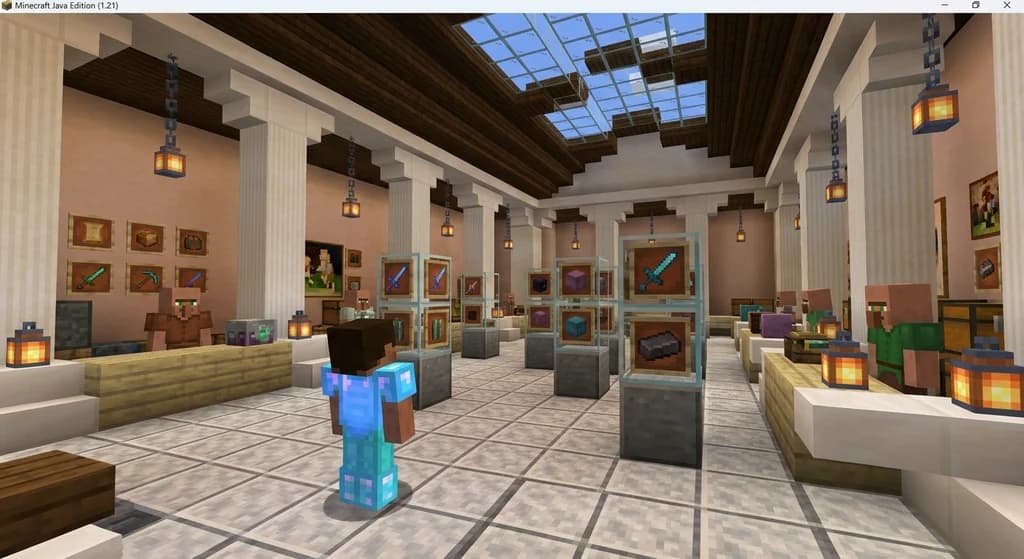
Key Takeaways
| Point | Details |
|---|---|
| Start by watching, not buying | Spend your first session just recording prices before you risk a single diamond. |
| Flipping is pure profit multiplication | Turning a 500-dollar snipe into a 2,000-dollar sale builds wealth faster than any in-game job. |
| Diversify your flips across categories | Spread risk across enchanted books, rare blocks, and mob drops so one market crash doesn't wipe you out. |
| Timing is everything | List items during peak player hours (Friday and Saturday evenings) for the fastest sales and highest bids. |
| Never flip what you can't afford to lose | Every flip carries risk, and markets shift when new players join or updates drop. |
Table of Contents
- What is Auction House Flipping?
- Why Does Item Flipping Work So Well on SMP Servers?
- How to Identify Undervalued Items for Maximum Profit
- Top 5 Item Categories for Flipping on Gaia Legends
- Tips for Timing Your Flips and Avoiding Common Pitfalls
- How to Put This Into Practice on Gaia Legends
- Conclusion
- Frequently Asked Questions
- Recommended
You log into your favorite SMP, check your auction house listings, and see 50,000 dollars in your balance from overnight sales. You didn't mine a single block or kill a single mob. That's the power of a solid minecraft auction house flipping guide put into practice. While other players grind for emeralds or strip-mine for diamonds, smart traders build empires by simply moving items from one listing to another. This post will teach you exactly how to flip items on the Gaia Legends auction house in 2026, from spotting underpriced goods to timing your sales for maximum profit.
What is Auction House Flipping?
Auction house flipping is the practice of buying items listed below their average market price and immediately relisting them at a higher price to capture the spread as pure profit.
At its core, flipping is the oldest merchant strategy in any game with a player-driven economy. On a Minecraft economy server, the auction house acts as a centralized marketplace where hundreds of players list items every day. Many sellers prioritize speed over profit—they need quick cash for gear repairs, a shop rent payment, or they simply don't know the true value of what they're selling. That's where you step in. You provide liquidity to the market by buying these rushed listings, and you earn your margin by patiently relisting at the correct price.
Note: Flipping is not scamming. You're paying the seller's asking price willingly. The profit comes from your knowledge of market values and your willingness to wait for the right buyer.
How Flipping Differs From Regular Trading
Regular trading involves producing goods yourself—farming crops, mining ores, or crafting gear—and selling the results. Flipping skips production entirely. Your inventory is the auction house itself. You scan listings, identify mispriced items, and execute trades. The skill isn't in clicking fast or grinding hard; it's in knowing what everything is worth.
Why Does Item Flipping Work So Well on SMP Servers?
Player-run economies are naturally inefficient because sellers have different levels of patience, knowledge, and urgency, creating constant pricing gaps that flippers can exploit.
In a perfectly efficient market, every item would sell for exactly what it's worth. But Minecraft SMP servers are anything but efficient. A new player who just unlocked their first Mending book might list it for 500 dollars because they've never seen one sell before. A veteran player rushing to pay their town upkeep might dump a stack of diamond blocks at 60% of market value. These pricing errors happen constantly, and on an active server, they can appear dozens of times per day.
The Three Sources of Flipping Profit
- Impatience discounts: Sellers who want instant cash accept lower prices. You provide the cash; they provide the discount.
- Knowledge gaps: Players unfamiliar with an item's rarity or utility underprice it. Your expertise closes that gap.
- Bulk arbitrage: Large quantities of common items (like cobblestone or oak logs) often sell for less per unit in bulk than in smaller, convenient stacks. You buy in bulk, split into retail-sized stacks, and profit on the repackaging.
Understanding these dynamics is the foundation of any successful minecraft auction house economy strategy. Once you see the auction house as a stream of mispriced opportunities rather than a simple shop, you'll never look at it the same way again.
How to Identify Undervalued Items for Maximum Profit
The single most important skill in auction house flipping is developing a mental price list for high-volume items so you can instantly recognize a deal when you see one.
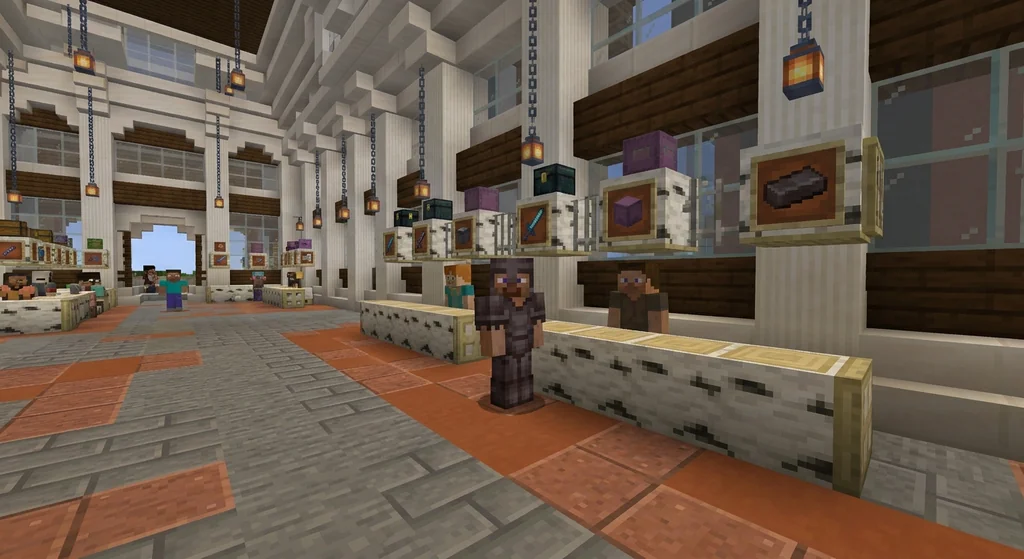
You can't flip what you can't price. Before you spend a single dollar, you need to build your internal database of item values. The best flippers can look at any listing and know within seconds whether it's a snipe, fair-priced, or overpriced.
Building Your Price Knowledge Base
Start with a simple spreadsheet or even a book and quill in-game. Track the following for every item you're interested in flipping:
- Lowest observed price in the last 48 hours
- Average price across 10+ recent listings
- Peak selling price during high-demand periods (weekends, after updates)
- Buy-it-now vs. auction price differences
Spend your first two or three play sessions just watching. Don't buy anything. Record prices for enchanted books, rare mob drops, building blocks, and high-demand gear. After a week, you'll have a reliable baseline. This groundwork is what separates profitable flippers from gamblers.
The 70% Rule for Quick Decisions
A simple heuristic used by experienced traders: if an item is listed at 70% or less of its known average price, it's almost always a safe flip. This margin covers the auction house listing fees, the risk of price fluctuation, and still leaves room for a healthy profit. For example, if Mending books consistently sell for 5,000 dollars on your server, any Mending book listed at 3,500 or below is an automatic buy.
Pro Tip: Sort auction house listings by "Newest First" rather than "Cheapest First" when hunting for snipes. The best deals get bought within seconds—you want to see them the moment they're listed, not after they've already been picked over.
Using External Tools and Community Data
Many successful flippers on larger servers use price-checking Discord bots or community-maintained spreadsheets. If your server has an active Discord community, check if there's a price-check channel. On Gaia Legends, the in-game economy is transparent enough that dedicated players can track prices manually, but for broader market patterns, understanding what a minecraft economy server is and how its markets function gives you a huge analytical edge.
Top 5 Item Categories for Flipping on Gaia Legends
The most reliably profitable flipping categories combine high demand, limited supply, and price volatility—enchanted books, rare mob drops, and bulk building materials consistently top the list.
Not all items are created equal for flipping. Some categories are too stable (basic stone, dirt) to offer meaningful spreads. Others are too niche (specific map art, named items) to sell quickly. The sweet spot is items that many players need, but not everyone wants to farm.
| Category | Why It Flips Well | Risk Level | Example Flip |
|---|---|---|---|
| Enchanted Books | High demand for Mending, Silk Touch, Efficiency V; prices swing wildly | Low-Medium | Buy Mending at 3,000, sell at 5,500 |
| Rare Mob Drops | Trident, wither skulls, shulker shells require grinding most players avoid | Medium | Buy trident at 8,000, sell at 14,000 |
| Bulk Building Blocks | Players pay premium for convenience stacks of quartz, concrete, glass | Low | Buy 64 quartz at 200, sell 16 at 80 each |
| Gear & Tools | Enchanted diamond/netherite gear sells fast; buy unenchanted, enchant, resell | Medium-High | Buy plain diamond pick at 1,000, add Efficiency IV, sell at 3,500 |
| Niche Consumables | Golden apples, potions, fireworks for elytra—steady demand, low competition | Low | Buy god apples at 500, sell at 1,200 |
Enchanted Books: The Bread and Butter
Mending books are the closest thing to a universal currency on most SMP servers. Every player needs them, they're tedious to obtain from villagers, and their price is well-established. A minecraft auction house flipping guide would be incomplete without emphasizing Mending as the safest starting flip. Other high-demand enchants include Unbreaking III, Protection IV, and Efficiency V. If you want to understand the underlying villager mechanics that produce these books, check out our guide on how to use a minecraft villager trading chart.
Rare Mob Drops: High Risk, High Reward
Tridents, elytra, nether stars, and wither skeleton skulls occupy a unique market position. They're valuable enough that sellers want top dollar, but the supply is inconsistent enough that prices fluctuate dramatically. A trident might sell for 8,000 dollars on a Tuesday when few players are online and 14,000 on a Saturday when demand peaks. Flippers who stockpile during slow periods and release during peak hours capture enormous spreads.
Warning: Avoid flipping items immediately after a major server update or reset. New features or balance changes can crash previously stable markets overnight. Wait at least 72 hours after any update before making large flipping investments.
Tips for Timing Your Flips and Avoiding Common Pitfalls
Successful flipping is 30% about finding good deals and 70% about patience—rushing to relist or overinvesting in a single item category are the fastest ways to lose your bankroll.
Even the best snipe becomes a loss if you can't sell it. Understanding when and how to relist is just as critical as knowing what to buy.
Peak Hours and Weekend Premiums
Player populations on most SMP servers peak between Friday evening and Sunday afternoon. During these windows, more buyers are browsing the auction house, competition for desirable items increases, and prices naturally rise. List your flipped items on Friday at 6 PM server time to capture the weekend rush. If you're selling commodity items like bulk building blocks, this timing alone can add 15-25% to your final sale price.
The Dangers of Overconcentration
Putting all your capital into one item type is the classic new-flipper mistake. If you buy 20 Mending books at 3,500 each and a new villager trading hall opens on the server, the price could crash to 2,000 overnight. You've just lost 30,000 dollars in theoretical value. Spread your investments across at least three different categories. If enchanted books dip, your rare drops or building blocks might hold steady or even rise. This principle mirrors the advice in our best items to sell in minecraft chest shops guide—diversification protects your income stream.
Recognizing Market Manipulation
Some players will attempt to artificially inflate or deflate prices. Watch for patterns: the same player repeatedly listing an item far below market value might be trying to crash the price so they can buy out competitors. Conversely, someone buying every listing of a specific item might be attempting a corner on the market. Don't get caught on the wrong side of these plays. If a price moves sharply without an obvious reason (new update, server event, well-known farm being built), be suspicious.
Pro Tip: Set a personal stop-loss rule. If an item you're flipping hasn't sold within 72 hours, consider lowering your price to break-even and moving on. Tied-up capital is the silent killer of flipping profits.
How to Put This Into Practice on Gaia Legends
Gaia Legends gives you the perfect sandbox to test every strategy in this minecraft auction house flipping guide. Our player-run auction house sees hundreds of daily listings across every category, from enchanted books to bulk concrete. The economy is active enough to provide constant flipping opportunities but not so inflated that new players can't compete.
Start small. Join the server, browse the auction house for an hour without buying, and build your price list. When you spot your first snipe—a Mending book at 60% of market value, a trident listed for quick cash—pull the trigger and relist. Gaia Legends is free to join, non-pay-to-win, and supports Java + Bedrock crossplay, so you can trade from any device. The community is friendly, and the economy rewards smart traders who put in the effort to learn prices. For broader strategies on making money beyond flipping, our best minecraft jobs for earning money guide covers every income source available.
Join at gaialegends.pro and start your legend today.
Conclusion
Flipping items on the Gaia Legends auction house isn't luck—it's a learnable skill that rewards patience, market knowledge, and smart risk management. The three principles to remember are:
- Build your price knowledge before you spend a single dollar; watching the market for a few days is the highest-return investment you'll ever make.
- Diversify across multiple item categories so no single market shift can wipe out your entire flipping bankroll.
- Time your listings for peak player hours and be willing to adjust prices if items sit unsold for more than a few days.
The auction house is open 24/7, and underpriced listings appear every hour. Take what you've learned, log in, and start turning market knowledge into profit.
Frequently Asked Questions
What is the best minecraft auction house flipping guide for beginners?
The best approach for beginners is to start by tracking prices for 5-10 high-demand items (Mending books, tridents, shulker shells, quartz blocks, and enchanted diamond gear) for at least 48 hours before making any purchases. This builds the price intuition you need to spot deals instantly. Once you know the average prices, use the 70% rule—buy anything listed at 70% or less of its normal value—and relist at the full market price during weekend peak hours.
How much starting money do I need to begin flipping items?
You can start flipping with as little as 1,000-2,000 in-game dollars by targeting low-cost, high-volume items like bulk building blocks or common enchanted books. Buy a stack of quartz at a discount, split it into smaller stacks, and sell each at a premium. As your bankroll grows, graduate to higher-value flips like tridents, netherite gear, and rare enchanted books. Reinvesting profits is the key to scaling.
Which items should I avoid flipping on a Minecraft economy server?
Avoid items with extremely low demand (decorated pots, music discs, most dyed leather armor), items that are trivially farmable (cobblestone, wheat, seeds), and items whose value depends on personal taste (custom map art, named weapons). Also avoid flipping right after major server updates, as new features can destabilize established prices. Stick to items with consistent, measurable demand.
How do I know if an item is underpriced on the auction house?
Compare the listing price to your tracked average from the last 48-72 hours. If it's 30% or more below that average, it's likely a good flip. Also check how many of that item are currently listed—if supply is unusually high, the "average" might be outdated. Cross-reference with the buy-it-now prices of similar listings. If most sellers are asking 5,000 and one lists at 2,500, that's your snipe.
Can I lose money flipping items on the auction house?
Yes. Markets shift, demand fluctuates, and sometimes an item you thought was underpriced was actually correctly priced because of a new server farm or update. You can also lose money to auction house listing fees if you relist too aggressively. The best protection is diversification—never invest your entire bankroll in one item type—and a willingness to sell at break-even if an item won't move after several days.
What time of day is best for listing flipped items?
Friday and Saturday evenings (server time) are consistently the most active periods on most Minecraft SMP servers, including Gaia Legends. More players online means more auction house browsers and more bidding competition, which drives up final sale prices. If your server has a significant international player base, Sunday afternoons can also be strong. Avoid listing high-value items in the middle of the night or on weekday mornings when player counts are lowest.
Recommended
- How to Breed Horses in Minecraft 2026: Speed, Color & Jump Guide | Gaia Legends
- Best Time of Day to Fish in Minecraft: Complete 2026 Guide | Gaia Legends
- What Is Ultra Hardcore Minecraft? Rules and Tips for 2026 | Gaia Legends
- How to Set Up a Minecraft Modpack Server on Modrinth in 2026 | Gaia Legends
Ready to play? Join Gaia Legends today — no pay-to-win, Java + Bedrock crossplay.
- Java:
join.gaialegends.pro - Bedrock:
join.gaialegends.pro— Port19132
Further reading
These references were recorded with the article; specific claims have not been matched to source excerpts.
Frequently Asked Questions
What is the best minecraft auction house flipping guide for beginners?
The best approach for beginners is to start by tracking prices for 5-10 high-demand items (Mending books, tridents, shulker shells, quartz blocks, and enchanted diamond gear) for at least 48 hours before making any purchases. This builds the price intuition you need to spot deals instantly. Once you know the average prices, use the 70% rule—buy anything listed at 70% or less of its normal value—and relist at the full market price during weekend peak hours.
How much starting money do I need to begin flipping items?
You can start flipping with as little as 1,000-2,000 in-game dollars by targeting low-cost, high-volume items like bulk building blocks or common enchanted books. Buy a stack of quartz at a discount, split it into smaller stacks, and sell each at a premium. As your bankroll grows, graduate to higher-value flips like tridents, netherite gear, and rare enchanted books. Reinvesting profits is the key to scaling.
Which items should I avoid flipping on a Minecraft economy server?
Avoid items with extremely low demand (decorated pots, music discs, most dyed leather armor), items that are trivially farmable (cobblestone, wheat, seeds), and items whose value depends on personal taste (custom map art, named weapons). Also avoid flipping right after major server updates, as new features can destabilize established prices. Stick to items with consistent, measurable demand.
How do I know if an item is underpriced on the auction house?
Compare the listing price to your tracked average from the last 48-72 hours. If it's 30% or more below that average, it's likely a good flip. Also check how many of that item are currently listed—if supply is unusually high, the 'average' might be outdated. Cross-reference with the buy-it-now prices of similar listings. If most sellers are asking 5,000 and one lists at 2,500, that's your snipe.
Can I lose money flipping items on the auction house?
Yes. Markets shift, demand fluctuates, and sometimes an item you thought was underpriced was actually correctly priced because of a new server farm or update. You can also lose money to auction house listing fees if you relist too aggressively. The best protection is diversification—never invest your entire bankroll in one item type—and a willingness to sell at break-even if an item won't move after several days.
What time of day is best for listing flipped items?
Friday and Saturday evenings (server time) are consistently the most active periods on most Minecraft SMP servers, including Gaia Legends. More players online means more auction house browsers and more bidding competition, which drives up final sale prices. If your server has a significant international player base, Sunday afternoons can also be strong. Avoid listing high-value items in the middle of the night or on weekday mornings when player counts are lowest.
Related guides
Understanding Minecraft Economy Plugin Tax Systems
Learn how Minecraft economy plugin tax systems work as money sinks to balance player economies. We analyze common tax types, configuration trade-offs, and who should act.
Bedrock Edition 1.18.30 Development Version Technical Reference
A technical quick reference for Bedrock Edition 1.18.30 development versions, covering beta timelines, /tickingarea command changes, GameTest Framework Vector additions, and experimental features for frogs, tadpoles, and goat horns.
Player Shops vs Villager Trading: Which Economy Fits Your Server?
Compare player-run shops and villager trading in Minecraft multiplayer. Learn the pros, cons, and best use cases for each system in your server economy.

Minecraft China Edition: Variants and Platforms Overview
Learn about the variants of Minecraft China Edition, including the Mobile Edition and Desktop Edition. Covers platforms, features, development cycle, and registered accounts.
Have a question or another approach?
Compare notes with other readers. Include your edition and version when discussing mechanics.