How to Build a Copper Trumpet Stealth Heist Course 2026
Filed under Minecraft Gameplay Remix · How we create content
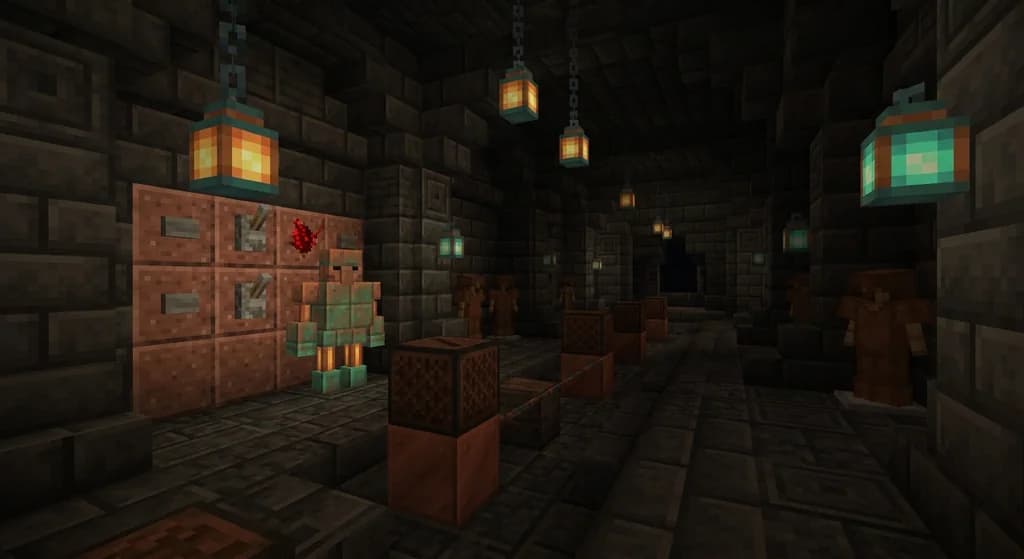
Note: All mechanics in this guide are sourced directly from the Java Edition 26.1 (Tiny Takeover) and 1.21.9 (Copper Age) changelogs. Nothing here is speculative — every block, mob, and interaction described is live in the game right now.
TL;DR
Bored in Minecraft? Here's how to build a Copper Trumpet Stealth Heist Course — a fully playable mini-game that combines oxidation-based trumpet pitch alarms, Copper Golem random-button guards, Mannequin decoys, and classic redstone pulse extenders. By the end of this guide you'll have a multi-room heist gauntlet your friends can run, complete with difficulty tiers, scoring rules, and a satisfying alarm system that actually sounds different depending on how oxidized your copper is.
Table of Contents
- What is the Copper Trumpet Stealth Heist Course?
- How to Set Up Your Heist Course
- Best Strategies for the Heist Course
- Why This Concept Works
- How to Put This Into Practice on Gaia Legends
- Conclusion
- FAQ
What is the Copper Trumpet Stealth Heist Course?
You know that feeling. You've beaten the Ender Dragon, your storage is sorted, your base looks incredible — and you open Minecraft and just… stare at it. You need a new problem to solve, not a new biome to strip-mine.
The Copper Trumpet Stealth Heist Course is exactly that new problem.
The Copper Trumpet Stealth Heist Course is a player-built, room-by-room infiltration gauntlet where runners must navigate past Copper Golem guards, sidestep Mannequin decoys, and avoid triggering Note Block trumpet alarms — all while racing a clock. The twist? Each alarm sounds different based on the oxidation level of the copper block beneath the Note Block, giving builders a natural, musical language for communicating danger levels to the runner.
Think Ocean's Eleven meets Minecraft redstone engineering. The builder is the architect of tension; the runner is the thief who has to read the room.
The Three Pillars of the Heist
Every great heist course is built on three interlocking mechanics:
- Copper Trumpet Alarms — Note Blocks placed on Copper Blocks produce a trumpet sound in Java Edition 26.1. Crucially, the pitch of the trumpet changes based on the oxidation stage of the copper block beneath it. This means a fresh copper block sounds bright and sharp, while a fully oxidized (green) block produces a lower, more muffled tone — a built-in difficulty signal.
- Copper Golem Guards — Introduced in the 1.21.9 Copper Age drop, Copper Golems wander and randomly interact with buttons. This unpredictable behavior makes them perfect, chaotic guards: you never know exactly when one will press a button and trigger a connected alarm circuit.
- Mannequin Decoys — Also from 1.21.9, Mannequins are static NPC-like entities that can be dressed and posed. In a heist course, they serve as fake guards, visual noise, and psychological pressure — the runner has to distinguish a real Copper Golem from a posed Mannequin in a split second.
These three pillars create a gameplay loop that is tense, readable, and endlessly remixable. That's rare in vanilla Minecraft, and it's why this is one of the most exciting fun things to build in Minecraft when bored in 2026.
How to Set Up Your Heist Course
Materials Needed
Gather these before you start building. The quantities scale with your course size, but this is a solid baseline for a 3-room course:
- Copper Blocks (all four oxidation stages: fresh, exposed, weathered, oxidized) — at least 12 total, 3 per alarm zone
- Note Blocks — 1 per alarm tripwire, minimum 6 recommended
- Copper Golem Statue Blocks — to spawn your Golem guards (from 1.21.9)
- Mannequins — 4–8 for decoy placement
- Redstone Dust, Repeaters, and Comparators — for your pulse extender alarm circuits
- Pressure Plates (stone or weighted) — the primary tripwire trigger
- Tripwire Hooks and String — for elevated or mid-air triggers
- Copper Chest (optional but thematic) — as the heist objective container
- Slabs, Trapdoors, and Stairs — for cover geometry the runner can crouch behind
- Dispensers + Arrows — optional punishment for triggered alarms
World Settings
- Game Mode: Adventure mode for runners, Creative for the builder during construction
- Difficulty: Normal (so Copper Golems behave correctly)
- Gamerule:
/gamerule randomTickSpeed 3(default) keeps oxidation progressing naturally; increase to50if you want alarms to shift pitch mid-session for a dynamic course - Command Blocks: Enable if you want a proper timer and score display
Room-by-Room Blueprint
Build your course as a linear sequence of rooms, each with a distinct alarm tier. Here's the recommended 3-room structure:
Room 1 — The Lobby (Tutorial Tier)
This room uses fresh (unoxidized) copper blocks under its Note Blocks. The trumpet pitch here is bright and high — easy to identify as an alarm. Place 2 pressure plate tripwires and 2 Mannequins posed as guards. No live Copper Golem yet. This teaches the runner to read the alarm sound.
Room 2 — The Gallery (Mid Tier)
Introduce your first Copper Golem guard here. Use exposed or weathered copper blocks under the Note Blocks — the trumpet pitch drops noticeably. Add 3 Mannequins in varied poses (some standing, some crouching via armor stands as proxies) to create visual confusion. The Copper Golem's random button-pressing should be wired to a Note Block cluster so the runner hears it fire unpredictably.
Room 3 — The Vault (Elite Tier)
This is the payoff room. Use fully oxidized copper blocks — the trumpet here is low, muffled, almost foreboding. Place 2 Copper Golems and 4 Mannequins. The objective (a Copper Chest containing the "loot" — a named item or trophy) sits behind a final pressure plate gauntlet. Pulse extenders on every alarm circuit mean a single trigger keeps the trumpet blaring for 4–6 seconds, not just a single tick.
Wiring the Pulse Extender Alarm
Classic redstone pulse extenders are the backbone of your alarm system. Here's the exact circuit for each alarm zone:
- Place a pressure plate on the floor of a chokepoint.
- Run redstone dust from the plate into a repeater set to 4 ticks.
- Chain 3 repeaters in sequence (each at 4 ticks) — this extends your pulse to roughly 5 seconds of sustained alarm.
- Feed the final repeater output into the Note Block sitting on top of your chosen copper block.
- Branch a second output to a Dispenser (loaded with arrows) for optional punishment.
Pro Tip: Use a comparator in subtract mode fed from a Copper Chest to create an alarm that only silences once the chest is opened — perfect for the vault door reveal moment.
Best Strategies for the Heist Course
Difficulty Tiers at a Glance
| Tier | Copper Stage | Golems | Mannequins | Pulse Length | Runner Penalty |
|---|---|---|---|---|---|
| Casual | Fresh (bright pitch) | 0 | 2 | 2 seconds | None |
| Standard | Exposed/Weathered | 1 | 4 | 4 seconds | Slowness II potion |
| Hardcore | Oxidized (low pitch) | 2 | 6 | 6 seconds | Dispenser arrow burst |
| Nightmare | Mixed all 4 stages | 3 | 8 | 8 seconds | Trap door floor drop |
Solo Runner Strategies
If you're running the course alone (or practicing), these tips will save you:
- Listen before you move. Stand at each room entrance for 3 seconds. If a Copper Golem is about to press a button, you'll hear its clinking footsteps. Move only during the silence window.
- Identify Mannequins by shadow. Mannequins don't move. Watch for the subtle sway of a Copper Golem's idle animation — that's your real threat.
- Memorize the pitch map. The 4 oxidation stages produce 4 distinct trumpet pitches on the Note Block. Before your run, test each room's alarm sound so you know which pitch means which room has been triggered.
- Use cover geometry. Crouch (shift) behind slabs and stairs to reduce your movement profile. The course builder should reward routes that use cover — design narrow gaps that only crouching players can fit through.
Multiplayer Variations
The heist course becomes a completely different game with two or more players:
- Roles Run: One player is the Thief (navigating the course), one is the Guard Commander (watching via a spectator-mode overview map and manually triggering bonus alarms via levers). This asymmetric setup is endlessly replayable.
- Competitive Sprint: Two thieves run simultaneously through parallel versions of the same course. First to open the Copper Chest wins. Alarm triggers add 10 seconds to your time.
- Relay Heist: Each player is responsible for one room. They pass a "baton" item (dropped on the floor) to the next runner at the room boundary. Combined alarm count is your team score.
Scoring System
Track performance with these metrics:
- Base Score: 1000 points for completing the heist
- Alarm Deductions: -100 points per alarm triggered
- Time Bonus: +10 points per second under the par time
- Ghost Run Bonus: +500 points for zero alarms triggered across all rooms
Note: The 4 oxidation stages of copper each produce a unique trumpet pitch — use this as an in-world scoring display. A fully oxidized (low-pitch) alarm costs double points, signaling to runners that the vault room is the most precious zone to protect.
Advanced Builder Tricks
- Oxidation Drift: Set
randomTickSpeedhigher during a session to let copper blocks gradually shift oxidation stage mid-run. Alarms that started bright will slowly deepen in pitch — the course literally gets harder as time passes. - Golem Clustering: Place 3 Copper Golems near a single button bank. The probability that one presses a button in any given 10-second window is dramatically higher with 3 golems vs. 1 golem — use this for your hardest rooms.
- Mannequin Mind Games: Dress some Mannequins in copper armor (available from 1.21.9) so they visually resemble Copper Golems from a distance. The runner's split-second threat assessment becomes genuinely difficult.
Pro Tip: Wire a Copper Golem Statue Block into your reset circuit. When the heist ends (win or fail), a command block can re-place the statue to respawn a fresh Golem guard — no manual resetting needed between runs.
Why This Concept Works
The Mechanic Synergy Is Real
What makes this build special isn't any single mechanic — it's how cleanly the three pillars reinforce each other.
The Copper Trumpet's oxidation-based pitch gives the course a built-in information layer. Runners aren't just reacting to a generic alarm sound; they're decoding which room was triggered, how serious the alert is, and whether they have time to abort. That's game design sophistication you'd normally need mods to achieve.
The Copper Golem's random button interaction introduces genuine unpredictability. Unlike pressure plates (which only trigger when you step on them), a Golem can fire an alarm at any moment. This turns the stealth challenge from a pure memorization puzzle into a dynamic, read-the-room skill test. The randomness is the difficulty slider — more Golems equals more chaos, not more complexity to build.
The Mannequin decoy system adds psychological pressure without any redstone at all. It's pure visual design. A well-placed Mannequin in copper armor, positioned near a button, will make a runner hesitate for 2–3 precious seconds. That hesitation is the mechanic.
Why Classic Pulse Extenders Still Shine
Redstone pulse extenders are old tech, but they're the perfect fit here. A single-tick Note Block trigger is too brief — it sounds like a blip, not an alarm. Extending the pulse to 4–8 seconds transforms the Note Block trumpet into a genuine, sustained alert that communicates urgency. The builder controls tension through pulse length alone. That's elegant.
Replayability by Design
This course is replayable because its three sources of variation are independent:
- Oxidation drift changes the alarm soundscape over time
- Copper Golem randomness means no two runs have the same guard timing
- Mannequin repositioning (which the builder can do between runs in seconds) refreshes the visual puzzle
Most Minecraft challenges get stale after 3–4 runs. This one doesn't, because the course itself is alive.
How to Put This Into Practice on Gaia Legends
The Copper Trumpet Stealth Heist Course is already a blast in a private world — but on Gaia Legends, it becomes a progression system.
Gaia Legends features a server-wide Stealth skill tree, and here's the key detail: the Stealth tree includes abilities that allow players to bypass the Copper Trumpet's detection radius. In practice, this means a high-Stealth player can move past a triggered pressure plate without setting off the Note Block alarm — not because they avoided the plate, but because their character has genuinely leveled up their infiltration skills.
This transforms the heist course from a pure puzzle into an Agility XP farm. Every successful room cleared without an alarm triggered rewards Stealth XP. Every Ghost Run (zero alarms, all rooms) gives a bonus XP multiplier. Builders on Gaia can publish their heist courses to the community, and runners can use them specifically to grind their Stealth tree — creating a player-driven economy of course design and speed-running.
The Gaia community also runs seasonal Heist Leagues where the top Ghost Run times across all published courses are ranked on a server leaderboard. If you've ever wanted your Minecraft build to be a competitive venue, this is it.
Gaia Legends is free to join, non-pay-to-win, and supports Java + Bedrock crossplay.
Join at gaialegends.pro and remix your Minecraft experience today.
Conclusion
The Copper Trumpet Stealth Heist Course is proof that Minecraft in 2026 has more creative depth than ever — you just need the right lens to see it.
Here are your three takeaways:
- Oxidation-based pitch is a game design tool, not just an aesthetic detail. Use it to communicate danger levels to your players without a single sign or text prompt.
- Copper Golems are the best random encounter generator in vanilla Minecraft — their unpredictable button-pressing turns any static puzzle into a dynamic challenge.
- Mannequins are free psychological difficulty. A well-placed decoy is worth more than three extra pressure plates.
Try building your first 3-room heist course tonight. Run it with a friend. Time yourselves. Share your Ghost Run scores. The course will surprise you — and it'll surprise them.
FAQ
What are fun things to build in Minecraft when bored in 2026?
The Copper Trumpet Stealth Heist Course is one of the best fun things to build in Minecraft when bored in 2026. It combines the new oxidation-based trumpet Note Block sounds from Java Edition 26.1, Copper Golem guard mechanics from 1.21.9, and Mannequin decoys into a fully playable mini-game. It's creative, technical, and immediately replayable — exactly what bored Minecraft players need.
What is the Copper Trumpet mechanic and how does it work?
The Copper Trumpet is a Note Block instrument introduced in Java Edition 26.1. When a Note Block is placed on top of a Copper Block, it produces a trumpet sound instead of the default harp. The pitch of the sound changes depending on the oxidation stage of the copper block beneath it — fresh copper produces a bright, high tone, while fully oxidized copper produces a lower, muffled tone. This makes it perfect for multi-tier alarm systems.
How does the Copper Golem interact with buttons in a heist course?
Copper Golems, added in the 1.21.9 Copper Age update, wander randomly and will occasionally press nearby buttons. This behavior is intentionally unpredictable — you cannot control exactly when a Golem will interact with a button. In a heist course, this is a feature: Golems wired to alarm Note Block circuits become dynamic, chaotic guards that keep runners on their toes even after memorizing the room layout.
What is a Mannequin decoy and how do I use one effectively?
Mannequins are static, poseable NPC-like entities introduced in the 1.21.9 update. In a heist course, you dress them in copper armor to make them visually resemble Copper Golems from a distance. Because they don't move, an experienced runner can spot the difference — but under time pressure, a well-placed Mannequin near a button will cause critical hesitation. Place them in doorways, near alarm tripwires, and in shadowy alcoves for maximum effect.
What to do when bored in Minecraft if I don't have friends to play with?
Solo heist course building and running is genuinely satisfying. Build the course in Creative, then switch to Adventure mode and run it yourself with a timer. Challenge yourself to beat your own Ghost Run (zero alarms) record. You can also use the Copper Golem's randomness as your "opponent" — since Golem guard timing is never the same twice, every solo run feels fresh. On Gaia Legends, solo runs also earn Stealth skill tree XP.
Do I need command blocks or mods to build a Copper Trumpet Stealth Heist Course?
No mods are required — all mechanics are vanilla Java Edition. Command blocks are optional but recommended for a proper timer and score display. The core alarm system (pressure plates → redstone pulse extenders → Note Blocks on copper blocks) works entirely with standard redstone. The Copper Golems, Mannequins, and copper oxidation are all base-game features from the 1.21.9 and 26.1 updates.
Recommended
Frequently Asked Questions
What are fun things to build in Minecraft when bored in 2026?
The Copper Trumpet Stealth Heist Course is one of the best fun things to build in Minecraft when bored in 2026. It combines the new oxidation-based trumpet Note Block sounds from Java Edition 26.1, Copper Golem guard mechanics from 1.21.9, and Mannequin decoys into a fully playable mini-game. It's creative, technical, and immediately replayable — exactly what bored Minecraft players need.
What is the Copper Trumpet mechanic and how does it work?
The Copper Trumpet is a Note Block instrument introduced in Java Edition 26.1. When a Note Block is placed on top of a Copper Block, it produces a trumpet sound. The pitch changes depending on the oxidation stage of the copper block beneath it — fresh copper produces a bright, high tone, while fully oxidized copper produces a lower, muffled tone. This makes it perfect for multi-tier alarm systems in a heist course.
How does the Copper Golem interact with buttons in a heist course?
Copper Golems, added in the 1.21.9 Copper Age update, wander randomly and will occasionally press nearby buttons. This behavior is intentionally unpredictable — you cannot control exactly when a Golem will interact with a button. In a heist course, Golems wired to alarm Note Block circuits become dynamic, chaotic guards that keep runners on their toes even after memorizing the room layout.
What is a Mannequin decoy and how do I use one effectively?
Mannequins are static, poseable NPC-like entities introduced in the 1.21.9 update. In a heist course, dress them in copper armor to make them visually resemble Copper Golems from a distance. Because they don't move, an experienced runner can spot the difference — but under time pressure, a well-placed Mannequin near a button will cause critical hesitation. Place them in doorways, near alarm tripwires, and in shadowy alcoves for maximum effect.
What to do when bored in Minecraft if I don't have friends to play with?
Solo heist course building and running is genuinely satisfying. Build the course in Creative, switch to Adventure mode, and run it yourself with a timer. Challenge yourself to beat your own Ghost Run (zero alarms) record. The Copper Golem's randomness acts as your opponent — since guard timing is never the same twice, every solo run feels fresh. On Gaia Legends, solo runs also earn Stealth skill tree XP.
Do I need command blocks or mods to build a Copper Trumpet Stealth Heist Course?
No mods are required — all mechanics are vanilla Java Edition. Command blocks are optional but recommended for a proper timer and score display. The core alarm system uses pressure plates, redstone pulse extenders, and Note Blocks on copper blocks — all standard redstone. The Copper Golems, Mannequins, and copper oxidation are base-game features from the 1.21.9 and 26.1 updates.
Related guides
How to Build a Copper Golem Baby Mob Racing Circuit 2026 Guide
Build a Copper Golem baby mob racing circuit in Minecraft 2026. Use Golden Dandelion age-locking, oxidation trumpet lap timers & Gaia Legends betting arenas.
How to Build an Oxidizing Copper Escape Room: 2026 Guide
Discover the best minecraft redstone escape room ideas for 2026: build an oxidizing copper escape room using Trumpet Note Blocks, Copper Golem timers, and baby mob sound cues.
How to Master the Perpetual Tiny Mob Copper Orchestra 2026
Discover the ultimate Minecraft gameplay challenge for bored players: build a Perpetual Tiny Mob Copper Orchestra using Golden Dandelions, Copper Golems, and Oxidized Trumpets in 2026.
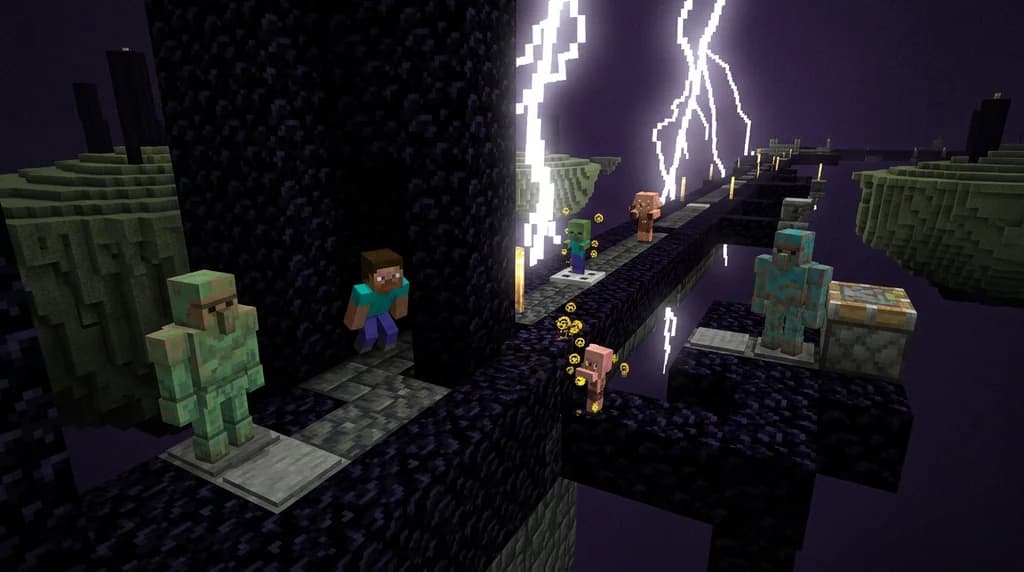
How to Build a Copper Golem Flash-Stealth Trial in Minecraft 2026
Bored in Minecraft? Build a Copper Golem Flash-Stealth Trial using The End's flashing skylight, Golden Dandelion obstacles, and randomized redstone traps. Fresh 2026 gameplay ideas inside.
Have a question or another approach?
Compare notes with other readers. Include your edition and version when discussing mechanics.