What is the Altar SMP Plugin? A Guide for Minecraft Servers 2026
Filed under Minecraft Server Guides & Reviews · How we create content
Key Takeaways
| Point | Details |
|---|---|
| Altar SMP Defined | The Altar SMP plugin lets players craft ritual altars that accept item offerings in exchange for powerful buffs, debuffs, or random world events. |
| Risk vs. Reward | Every altar activation carries a chance of a negative outcome — curses, explosions, or server-wide events — making resource management critical. |
| Server Compatibility | The plugin runs on Paper and Spigot servers (1.20+) and pairs well with other SMP plugins like Lifesteal and economy mods. |
| Unstable SMP Simulator | Some altar configurations unlock an 'unstable' mode that triggers chaotic server-wide effects, popularized by content creators. |
| Fair Play Matters | The best Altar SMP servers balance altar power so no single player can dominate — check for P2W safeguards before joining. |
| Try It Live | Gaia Legends hosts curated Altar SMP servers where you can experience the mechanic without needing to configure anything yourself. |
Table of Contents
- What is the Altar SMP Plugin?
- How Do Minecraft Altar Mechanics Work?
- What is the Unstable SMP Simulator Mode?
- Best Altar SMP Plugin Configurations for Servers
- How to Choose an Altar SMP Server to Join
- How to Put This Into Practice on Gaia Legends
- Conclusion
- Frequently Asked Questions
- Recommended
If you've been watching Minecraft SMP content lately, you've almost certainly seen someone scream as their base gets swallowed by a server-wide curse — all because a rival player activated an altar. The Altar SMP plugin is behind that chaos, and it's one of the most talked-about Minecraft server plugins heading into 2026.
This guide breaks down exactly what the plugin does, how its mechanics work, what the "unstable" mode actually means, and how to find a server worth playing on. Whether you're a server owner considering adding it or a player wanting to know what you're walking into, you'll leave here with everything you need.
What is the Altar SMP Plugin?
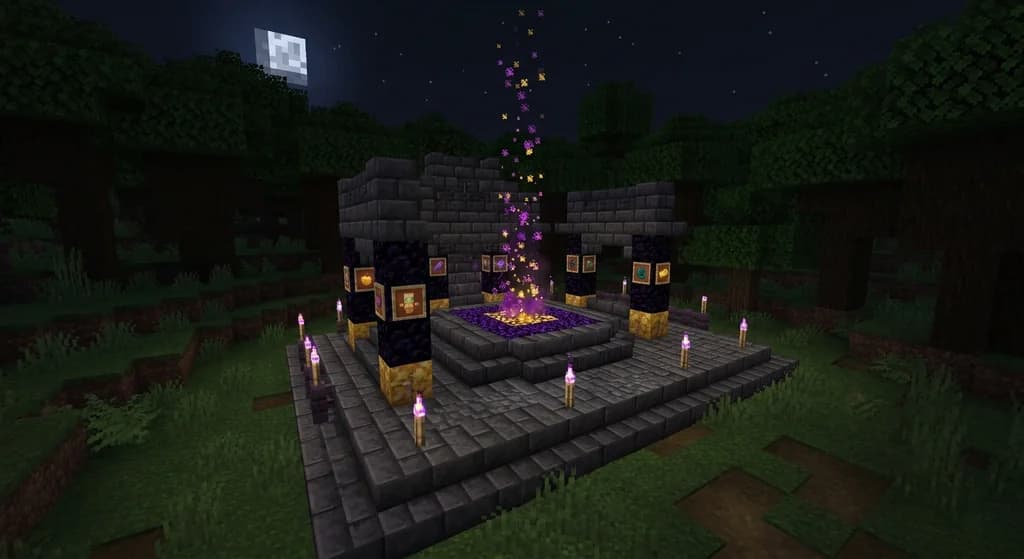
The Altar SMP plugin is a Minecraft server plugin that introduces craftable ritual altar blocks, which players can activate by offering specific items in exchange for powerful buffs, random world events, or devastating curses. It transforms standard survival gameplay into a high-stakes economy where every decision about what to sacrifice — and when — carries real consequences.
The plugin was popularized by Minecraft content creators running "unstable SMP" series, where the unpredictability of altar outcomes creates constant drama and emergent storytelling. Unlike straightforward gear upgrades, altars introduce a layer of RNG-driven risk that keeps even veteran players on edge.
Core Features at a Glance
- Craftable altars built from specific block recipes (often deepslate, obsidian, or gilded variants)
- Item offerings that are consumed to trigger an effect
- Tiered outcomes — common buffs, rare boons, and catastrophic curses
- Server-wide events that can affect all online players simultaneously
- Configurable YAML files letting server admins control every outcome's probability and power
Note: The plugin is not an official Mojang product. It's a third-party server plugin distributed through platforms like Modrinth and CurseForge, and it requires a Paper or Spigot server running Minecraft 1.20 or later.
How Do Minecraft Altar Mechanics Work?
Altar mechanics follow a straightforward loop: build → offer → activate → survive the outcome. But the depth comes from how server admins configure each step.
Building Your Altar
Most Altar SMP plugin configurations require players to gather rare or mid-game materials to construct the altar multiblock structure. This acts as a natural progression gate — you can't spam altar effects from day one. Common required blocks include crying obsidian, gilded blackstone, and deepslate tiles.
Making Offerings
Once built, you interact with the altar and place items into its inventory. The plugin checks your offering against a configured list of accepted items and their associated outcomes. Higher-value offerings generally unlock more powerful (and more dangerous) effects.
Outcome Tiers
Most configurations sort outcomes into three tiers:
| Tier | Example Buff | Example Curse |
|---|---|---|
| Common | Speed II for 10 minutes | Hunger debuff for 5 minutes |
| Rare | Permanent +1 max health | Nearby mobs aggro all players |
| Legendary | Server-wide Haste II | Random player loses all inventory |
Warning: Legendary-tier activations can affect players who had nothing to do with the offering. If you're on a competitive server, activating a high-tier altar without allies nearby is a serious tactical risk.
Cooldowns and Charges
Altars typically have a cooldown period between uses — often 30 minutes to several hours in default configs. This prevents a single wealthy player from chain-activating effects and dominating the server economy.
What is the Unstable SMP Simulator Mode?
The unstable SMP simulator is a specific configuration of the Altar SMP plugin — or a standalone variant — that dramatically increases the frequency and severity of chaotic server-wide events, making every altar activation a potential catastrophe for the entire server.
Content creators popularized this mode because it generates unpredictable, dramatic moments. Think: a random player gets struck by lightning, all inventories shuffle between online players, or a boss mob spawns at the most active altar. The "unstable" label refers to the server state itself becoming genuinely hard to predict.
What Makes It Different from Standard Altar Mode?
- Higher curse weight — negative outcomes are more likely than in default configs
- Server-wide reach — effects rarely stay isolated to the activating player
- Cascading events — one activation can trigger a chain of secondary effects
- Shorter cooldowns — altars recharge faster, meaning chaos compounds quickly
If you enjoy the unpredictability of Lifesteal SMP mechanics, unstable mode will feel immediately familiar — it's the same philosophy of high-stakes consequences applied to a ritual system.
Best Altar SMP Plugin Configurations for Servers
Not every Altar SMP setup is created equal. Here's what separates a well-tuned server from a frustrating one.
Balanced Probability Tables
The best configurations weight outcomes so that roughly 60% of activations produce a net-positive result for the offering player, while keeping the remaining 40% genuinely threatening. Pure chaos (50/50 or worse) burns players out fast.
Progression Gating
Requiring mid-to-late-game materials for high-tier altars keeps early gameplay fair. New players shouldn't be able to trigger legendary curses on day one. If you're evaluating a server, check whether the altar recipe requires materials like netherite fragments or ancient debris — that's a sign of thoughtful design.
Admin Logging
Reputable servers log every altar activation with player name, offering, and outcome. This creates accountability and lets admins roll back genuinely game-breaking events. It's also a green flag that the server takes fair, non-pay-to-win gameplay seriously.
Pro Tip: Before joining any Altar SMP server, ask in their Discord whether altar outcomes can be purchased with real money. If premium currency can influence altar RNG, that's a pay-to-win red flag — walk away.
How to Choose an Altar SMP Server to Join
Finding the right server matters as much as understanding the plugin. A poorly configured Altar SMP can feel oppressive; a well-run one feels electric.
Key Questions to Ask
- Are altar outcomes fully RNG, or can they be influenced by donations?
- What's the cooldown between activations?
- Does the server have a rollback policy for catastrophic events?
- How active is the moderation team?
What to Look For in the Community
A healthy Altar SMP community treats altar drama as fun content, not a griefing tool. Look for servers with active Discord channels, public changelogs, and a history of balanced updates. Our guide on how to find the best Minecraft SMP server for you in 2026 walks through a full vetting checklist you can apply directly.
Also consider server performance. Altar events — especially server-wide ones — can spike TPS if the plugin isn't optimized. A server running on underpowered hardware will rubber-band and lag every time a legendary altar fires. Check our guide to reducing Minecraft server lag for the technical benchmarks worth asking about.
Quick Comparison: Altar SMP vs. Other SMP Plugin Types
| Plugin Type | Core Loop | Risk Level | Best For |
|---|---|---|---|
| Altar SMP | Offer items → RNG outcome | Medium–High | Drama, strategy |
| Lifesteal SMP | Kill players → steal hearts | High | PvP, competition |
| Economy SMP | Trade, farm, build wealth | Low–Medium | Builders, traders |
| Unstable SMP | Chaos altar mode | Very High | Content creators |
How to Put This Into Practice on Gaia Legends
Gaia Legends maintains a curated directory of high-performance servers running the Altar SMP plugin — so you can jump into the experience without spending hours vetting server lists or configuring plugins yourself.
Every Altar SMP server in the Gaia Legends directory is checked for three things: balanced outcome tables (no P2W influence on RNG), stable TPS (so altar events don't crash the game), and active moderation (so griefing through altar abuse gets addressed fast).
You'll also find servers that combine Altar SMP with complementary plugins — economy layers, land claiming, and even Lifesteal — giving the altar mechanic real strategic weight rather than pure chaos. If you want to experience the unstable simulator mode specifically, Gaia Legends flags which servers run that configuration so you can self-select.
Gaia Legends is free to join, non-pay-to-win, and supports Java + Bedrock crossplay. Whether you're a solo player hunting for your first altar activation or a group of friends ready to coordinate legendary offerings, there's a server in the directory sized for your play style.
Join at gaialegends.pro and start your legend today.
Conclusion
The Altar SMP plugin is one of the most creative additions to the modern Minecraft SMP scene — and understanding it gives you a real edge whether you're playing or building a server.
Here are the three things worth remembering:
- Altars are risk-reward engines. Every offering is a gamble, and the best players treat them as strategic tools, not slot machines.
- Configuration is everything. A well-tuned server balances chaos with fairness; a poorly tuned one just frustrates players.
- Unstable mode is a specific, creator-friendly variant — not the default experience, and not for everyone.
Give it a try on a live server before committing to hosting your own. The mechanic clicks much faster when you feel the stakes in real time.
Ready to play? Join Gaia Legends today — no pay-to-win, Java + Bedrock crossplay.
- Java:
join.gaialegends.pro - Bedrock:
join.gaialegends.pro— Port19132
Further reading
These references were recorded with the article; specific claims have not been matched to source excerpts.
Frequently Asked Questions
What is the Altar SMP plugin in Minecraft?
The Altar SMP plugin is a third-party Minecraft server plugin that lets players craft ritual altar structures, offer items to them, and receive randomized buffs, curses, or server-wide events in return. It adds a risk-reward RNG layer on top of standard survival gameplay and runs on Paper or Spigot servers running Minecraft 1.20 or later.
Is the Altar SMP plugin free to download?
Most versions of the Altar SMP plugin are available for free on platforms like Modrinth and CurseForge. Some premium forks with additional features may have a paid tier, but the core plugin functionality is widely available at no cost. Always download from official plugin repositories to avoid malicious versions.
What is unstable SMP simulator mode and how does it differ from normal Altar SMP?
Unstable SMP simulator mode is a high-chaos configuration of the Altar SMP plugin where negative outcomes are more frequent, effects reach all online players, and events can cascade into chains of secondary effects. It's popularized by content creators for its dramatic, unpredictable moments. Standard Altar SMP is more balanced, with the majority of activations producing net-positive outcomes.
Can the Altar SMP plugin be used with other SMP plugins like Lifesteal?
Yes — the Altar SMP plugin is designed to work alongside other popular SMP plugins. Combining it with Lifesteal, economy plugins, or land-claiming mods is common and adds strategic depth. Server admins should test plugin compatibility on a staging server first, since altar events that affect all players can interact unexpectedly with heart or economy systems.
How do server admins configure altar outcomes and probabilities?
Altar outcomes are controlled through YAML configuration files bundled with the plugin. Admins define which items are accepted as offerings, which effects each offering can trigger, and the probability weight for each outcome. Most plugins support tiered outcome tables — common, rare, and legendary — with separate probability pools for each tier.
What should I look for in a good Altar SMP server to join?
Look for servers with balanced outcome tables (no pay-to-win influence on RNG), active moderation, clear cooldown policies, and a rollback plan for catastrophic events. A public Discord with transparent changelogs is a strong green flag. Avoid servers where premium currency can affect altar results — that undermines the fair-play spirit the mechanic is built on.
Related guides
The Role of Volunteer Moderators in the Minecraft Forum Community
Explore how the Minecraft Forum is run by over 100 volunteer moderators, its community-driven history, and what this means for players seeking a trusted...
How to Use Geyser to Join Java Minecraft Servers on Bedrock 2026
Learn how to use Geyser to join Java Minecraft servers on Bedrock in 2026. Step-by-step setup, Floodgate tips, and crossplay troubleshooting in one guide.

How to Reduce Minecraft Server Lag: 2026 Multiplayer Guide
Learn how to reduce Minecraft server lag in 2026. Fix high ping, TPS drops, and rubber-banding with proven multiplayer optimization tips for Java and Bedrock.
What is a Minecraft SMP? How to Choose the Best Server in 2026
Learn what a Minecraft SMP is, the different types, and exactly how to choose the best server in 2026. Find safe, high-quality SMPs worth your time.
Have a question or another approach?
Compare notes with other readers. Include your edition and version when discussing mechanics.