Minecraft survival mode: essentials, strategies, mastery
Filed under Minecraft Tips & Tricks · How we create content
TL;DR:
- Survival mode combines resource management, strategic planning, and progression to create a challenging gameplay experience.
- Effective management of health, hunger, and experience is crucial for thriving beyond basic survival.
- Long-term success relies on automation, building systems, and treating setbacks as feedback for improvement.
Most players jump into Minecraft survival mode thinking it's basically a fancy game of dodge-the-creeper. They punch a tree, build a dirt box, and assume they've got it figured out. But survival mode is so much more than staying alive through the first night. It's a layered system of resource management, strategic planning, and deliberate progression that rewards the players who actually think ahead. Whether you're brand new to survival or you've been playing for a while and keep hitting the same walls, this guide breaks down every core system, every major milestone, and the advanced tactics that separate players who just survive from those who genuinely thrive. Let's get into it.
Table of Contents
- What is Minecraft survival mode?
- Key mechanics: Health, hunger, and experience
- Game progression: From shelter to the End
- Advanced survival strategies and pitfalls
- Building a sustainable survival experience
- A seasoned perspective: What most players miss about survival
- Ready to take survival to the next level?
- Frequently asked questions
Key Takeaways
| Point | Details |
|---|---|
| Survival mode essentials | Managing health, hunger, and resources is crucial for lasting in Minecraft survival mode. |
| Progression is structured | You need to follow step-by-step milestones from shelter building to defeating the Ender Dragon. |
| Mechanics mastery matters | Understanding hunger, experience, and automation dramatically improves performance and enjoyment. |
| Pro strategies prevent failure | Advanced tactics and avoiding common pitfalls make surviving and thriving possible even for experienced players. |
| Sustainability ensures longevity | Building automated systems and adapting your play keeps survival mode engaging over time. |
What is Minecraft survival mode?
Survival mode is Minecraft's primary gameplay challenge, and it's built around a deceptively simple premise: stay alive and build a life in a randomly generated world. Every world is different, every spawn is different, and the game gives you absolutely nothing to start with. No tools, no food, no shelter. Just you and a world full of resources and dangers.
What makes survival mode distinct is that it layers multiple systems on top of each other simultaneously. You're not just managing one thing at a time. You're tracking your health, your hunger, your experience points, the time of day, your inventory, and your surroundings all at once. Survival mode features health and hunger bars, experience collection, and progression through combat, mining, and building as its core pillars.
Here's how survival mode stacks up against the other main gameplay modes:
| Feature | Survival | Creative | Adventure |
|---|---|---|---|
| Health bar | Yes | No | Yes |
| Hunger bar | Yes | No | Yes (limited) |
| Resource gathering | Required | Unlimited | Limited |
| Mob damage | Yes | No | Yes |
| Experience/enchanting | Yes | Accessible | Limited |
| Death consequences | Item loss | None | Varies |
Creative mode hands you infinite resources and makes you invincible. Adventure mode restricts what you can interact with. Survival is the only mode that forces you to earn everything.
Here are the key differences that make survival stand out:
- Resources are finite and require active gathering to replenish
- Mobs are genuinely dangerous and can end your run if you're unprepared
- Hunger depletes constantly, meaning you can't just stand still and expect to be fine
- Progression is earned, not given, pushing you through natural milestones
- Death has stakes, including dropping all your items on the ground
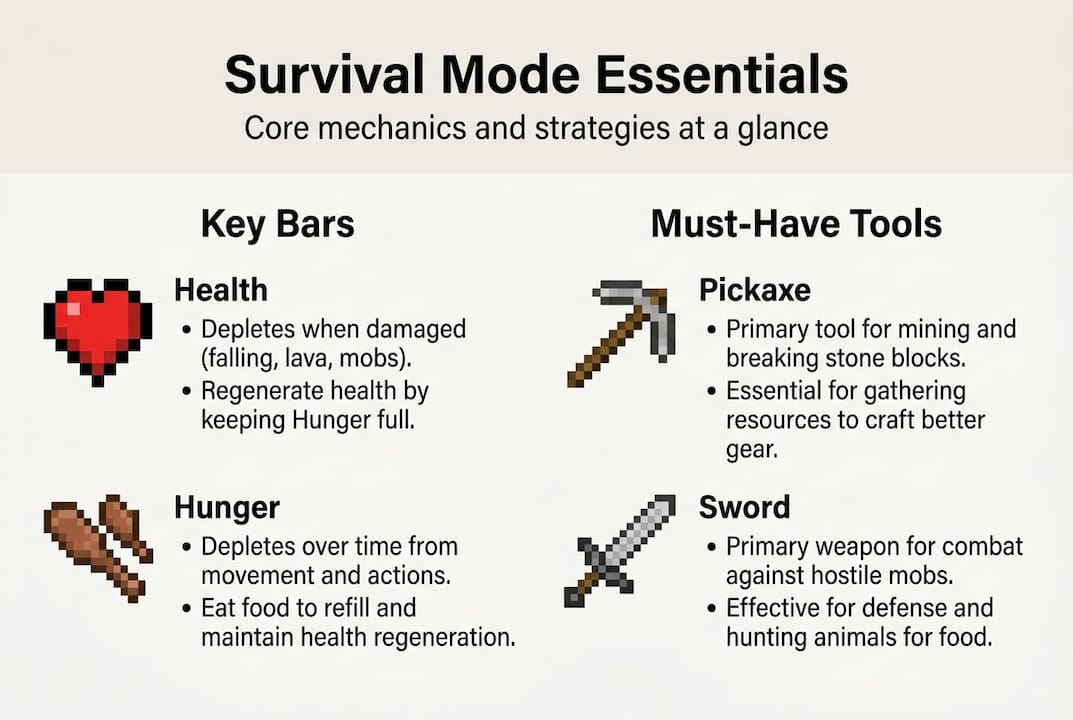
One quick stat worth knowing: your hunger bar contains 20 hunger points, displayed as 10 drumstick icons. Every action you take slowly drains those points, and the rate depends on what you're doing. Sprint across a field and you'll burn through food much faster than if you're standing still crafting at a table. Understanding that relationship early changes how you approach Minecraft survival progression in every stage of the game.
Key mechanics: Health, hunger, and experience
With the basics in place, you'll need to understand how each mechanic affects survival if you want to thrive. These three systems are constantly interacting, and ignoring any one of them will get you killed.
Health is represented by 10 hearts, or 20 HP. It decreases when mobs attack you, when you fall from heights, when you stand in fire or lava, when you drown, or when your hunger drops too low. The tricky part is that health only regenerates passively when your hunger bar is high enough. No food, no healing. It's that direct.
Hunger is the engine behind everything. Sprinting, mining, and fighting deplete hunger and affect health regeneration or risk starvation. At 6 hunger points or below, you lose the ability to sprint. At 0, you start taking starvation damage. On normal difficulty, starvation will bring you down to half a heart but won't kill you. On hard difficulty, it will finish the job completely.
Here's a breakdown of how different actions affect your core stats:
| Activity | Hunger impact | Health impact | XP gain |
|---|---|---|---|
| Sprinting | High drain | Reduces healing | None |
| Mining blocks | Low drain | Neutral | None |
| Fighting mobs | Medium drain | Risk of damage | Yes (on kill) |
| Swimming | Medium drain | Risk of drowning | None |
| Sleeping | None | No change | None |
| Eating food | Replenishes | Enables healing | None |
| Killing mobs | Low drain | Risk of damage | Yes |
Experience functions differently from health and hunger. It doesn't directly keep you alive, but it unlocks enchanting, which is the single biggest power multiplier in the game. XP is earned by killing mobs, mining certain ores, smelting, fishing, and trading with villagers. Accumulating XP lets you enchant your gear at an enchanting table, making your weapons, armor, and tools dramatically more effective.
Here's a simple Day 1 routine to keep your bars in check:
- Punch trees immediately and collect at least 20 wood logs before doing anything else
- Craft a crafting table and build wooden tools, starting with a pickaxe
- Find and kill two or three animals for raw meat before nightfall
- Locate or dig into a hillside to create your first shelter
- Build a furnace, cook your meat, and eat before your hunger bar drops below 6 points
- Place torches inside and around your shelter entrance to block mob spawns
Pro Tip: Don't wait until you're starving to eat. Top off your hunger bar before any risky activity like caving or fighting, since full hunger enables passive health regeneration and keeps your sprint available when you need to escape.
Managing these three bars well is what separates chaotic survival from controlled play. For more survival tips and tricks that cover these systems in greater depth, we've got dedicated guides ready for you. And if you need help with finding food in survival mode early on, knowing which biomes spawn the most animals is a game changer.
Game progression: From shelter to the End
Understanding the mechanics sets the stage for purposeful progression. Let's map out what you need to do, and when, across each phase of the game.
Minecraft survival has a natural arc that most veteran players follow instinctively. Day 1 priorities are shelter, food, and light; progression moves to iron, farming, diamonds, enchanting, the Nether, and finally defeating the Ender Dragon. That's the full journey in one sentence, but each phase has its own demands.
Day 1 to Day 3: Immediate survival
- Gather wood and craft basic tools within the first few minutes
- Find animals or crops for food and secure a meal before night
- Build a shelter before the sun sets, even if it's just a dirt box with a door
- Mine stone to upgrade your tools to stone tier
- Smelt your ore and food overnight while you're safe inside
Early game: Establishing a base
This phase is about getting iron. Iron tools and armor are a massive step up from stone and represent your first real investment in durability. Set up a proper farm here too, because reliable food is more valuable than any weapon early on.

Mid game: Diamonds and enchanting
Once you have iron, start pushing for diamonds. Diamond gear and an enchanting setup changes everything. You'll also want to build a Nether portal during this phase and start gathering blaze rods for brewing.
Here are the major milestones every survival player should hit:
- Iron tools and armor: Survivability jumps dramatically
- Established farm: Wheat, carrots, potatoes, or animals for passive food
- Enchanting table: Unlocks gear upgrades using accumulated XP
- Nether portal: Access to blaze rods, Nether fortresses, and new biomes
- Brewing stand: Potions add a major combat and utility edge
- End portal: Found in a stronghold, activated with Eyes of Ender
- Ender Dragon defeat: The technical finale of vanilla survival
If you want a detailed look at managing your first 100 days in survival, we cover that in a full dedicated guide. And for a complete breakdown of each phase, our detailed survival progression guide walks through every step.
"The players who rush straight to diamonds without establishing food and shelter first are the same ones who lose their best gear to a creeper three minutes later."
Advanced survival strategies and pitfalls
Once you know the journey, mastering advanced strategies is the edge between surviving and thriving. Most players get comfortable after iron and diamond gear, then stall. The real game starts when you shift from reactive to proactive play.
Automation is the single biggest unlock in long-term survival. Expert players scale from basics to automation, using probability and caution to maximize survival and resource efficiency. Farms that run passively while you're doing other things, villager trading halls that give you enchanted books on demand, and mob farms that generate XP and drops overnight are what separate a grind from a thriving survival world.
Navigating the Nether is one of the most dangerous transitions in the game. The Nether introduces fire, lava lakes, Ghasts, and Piglins, all within a red and orange hellscape that's genuinely disorienting. Here's what matters most going in: bring enough blocks to bridge and wall off hazards, carry fire resistance potions if you have them, and don't fight Piglins unless you're wearing gold armor. Blaze rods from Nether fortresses are non-negotiable for advancing to the End, so learn to locate Nether fortresses by following the fortress structure generation pattern along the X axis.
Here are the five biggest pitfalls most players fall into:
- Under-lighting their base, allowing mobs to spawn inside walls and floors at night
- Overextending in caves, going too deep without enough food, torches, or a clear exit plan
- Skipping armor upgrades, assuming weapons are more important than protection
- Ignoring villagers, missing one of the best passive economies in the game
- Not backing up their spawn point, wandering too far without a bed and losing their respawn anchor
Pro Tip: Never enter a cave system without at least a stack of torches and enough food to fill your hunger bar three times over. Caves are where most early and mid-game deaths happen, and they happen fast.
For encounters with beating tough boss mobs, preparation matters more than reflexes. And the best Minecraft survival tricks we've compiled cover exactly how to make automation work in your favor.
Building a sustainable survival experience
Mastery isn't just about defeating the bosses. It's about building a world that's genuinely enjoyable to live in for the long haul. That shift in mindset is what takes players from feeling like they're constantly fighting the game to feeling like they own it.
Sustainability in survival mode is reached through automation and adapting play based on in-game probabilities and resource availability. Once you've beaten the Ender Dragon, the game doesn't end. For many players, that's actually where it begins.
A sustainable survival world runs on systems. You want a farm that feeds you passively, a villager trading network that supplies enchanted gear without you grinding mobs for hours, and a storage system organized well enough that you can find anything in under ten seconds. That kind of infrastructure is what lets you focus on the parts of the game you actually enjoy.
Here are secondary goals that make survival genuinely rewarding beyond just progression:
- Architectural projects: Build something that impresses you. A castle, a village, a megabase.
- Exploration: Map out biomes, find rare structures, and collect every advancement
- Specialized farms: Bamboo, sugarcane, kelp, and mob farms each have unique setups worth learning
- Villager ecosystems: Build a trading hall with specialized villagers for a reliable gear economy
- Community play: Multiplayer survival adds a social dimension that solo play simply can't replicate
- Redstone projects: Automation opens up deeply satisfying engineering challenges
For players who want to go deep on automation, learning to master Redstone for survival is one of the highest-leverage skills you can develop. And if you want to add some powerful passive income to your playtime, our guide on fishing and enchanting tips shows you how fishing can be a surprisingly efficient way to collect enchanted books.
The players who genuinely love survival mode long-term are the ones who give themselves permission to play at their own pace. You don't have to sprint for the Ender Dragon if you're happiest building an underground city. Survival mode accommodates every style, and the mechanics are deep enough to reward any focus you choose.
A seasoned perspective: What most players miss about survival
After years of managing a 200-player SMP server and watching thousands of survival runs play out, here's the honest truth: most players are playing survival mode wrong, and not in the way they think.
The common mistake isn't dying too much or skipping gear upgrades. It's approaching survival like it's a race. Players grind toward the Ender Dragon as if the credits are the point, and then they don't know what to do with themselves once the dragon falls. The game feels empty because they spent the whole time fighting the world instead of building within it.
Real mastery in survival comes from treating setbacks as information, not failure. Died to a creeper and lost your diamonds? That tells you something about your lighting setup or your situational awareness. Base got raided by mobs on night five? That's feedback about your perimeter. The players who improve fastest are the ones who ask why something happened instead of just reloading and repeating.
Automation and system-building aren't just efficiency tools. They're what make survival feel like your world rather than a world you're trying to stay alive in. When your farms, trades, and storage all run smoothly, you stop grinding and start creating. That's when the game opens up.
We see this play out constantly in our server community strategies, where players who invest in systems early consistently outperform and outlast those who focus purely on combat. Build the infrastructure first. The fun follows naturally.
Ready to take survival to the next level?
If this guide has sparked some ideas, you're already thinking differently about survival mode. That's exactly the first step. Knowing the mechanics, understanding the progression, and recognizing the pitfalls puts you miles ahead of where most players are when they first enter a survival world.
At Gaia Legends Blog, we publish in-depth advanced Minecraft survival guides every single day, covering everything from first-night strategies to Redstone automation and boss encounter prep. We pull from real experience on our SMP server alongside data from the Minecraft Wiki to make sure every guide is both accurate and actually useful in practice. Whether you're still figuring out your first shelter or optimizing a full villager trading hall, there's a guide here built for exactly where you are. Come explore the full library and connect with a community of players who take survival just as seriously as you do.
Frequently asked questions
What is the main goal in Minecraft survival mode?
The main goal is to survive by managing health, hunger, and resources, while advancing through key milestones like gear upgrades, exploring the Nether, and defeating the Ender Dragon. Game progression moves from shelter and food all the way to conquering the End.
How does the hunger bar affect survival?
Your hunger bar depletes as you perform actions and will prevent sprinting and health regeneration if it drops too low, making consistent food management one of the most important survival skills.
What should you prioritize on the first day in survival mode?
Focus on gathering wood, crafting basic tools, finding food, building shelter before nightfall, and placing torches to block mob spawns. Day 1 priorities are shelter, food, light, and tools, in roughly that order.
How do you make survival sustainable long-term?
Automate resource gathering through farms, and use villager trading to establish a steady supply of food, gear, and enchanted items so you spend less time grinding and more time building.
Recommended
Related guides
How to Obtain Mending in Minecraft
Learn how to get Mending in Minecraft. Discover the best methods: trading with librarian villagers, fishing, and looting chests. Includes mechanics and...
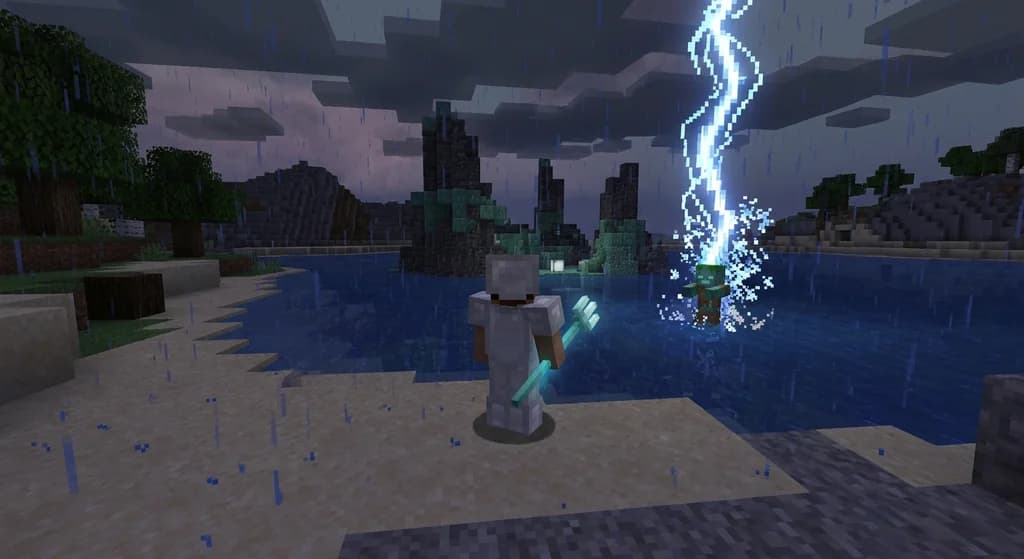
How to Use the Trident in Minecraft: Riptide, Channeling & Impaling
Learn how to use the trident in Minecraft with our quick reference guide. Covers Riptide, Channeling, Impaling enchantments, throwing mechanics, and...
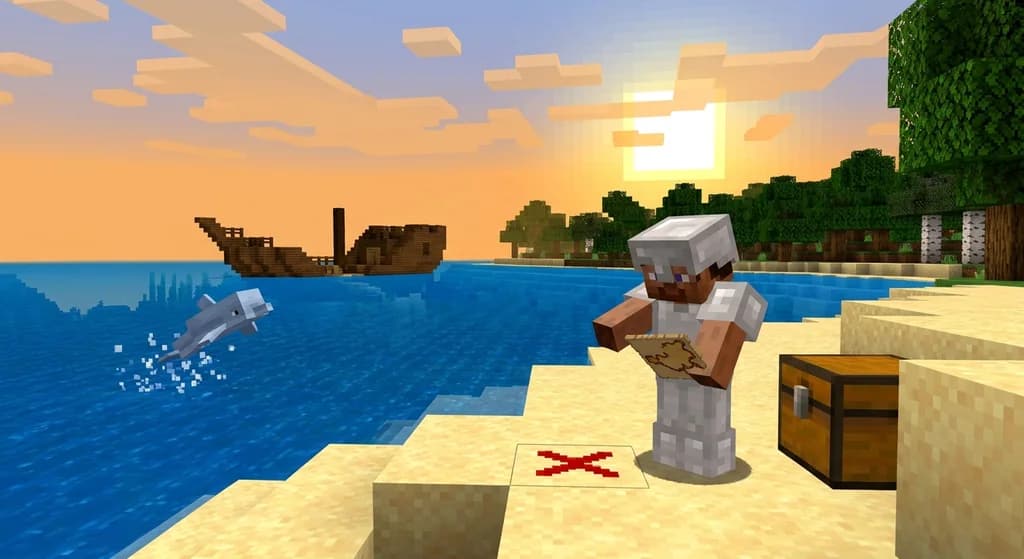
How to Find Buried Treasure in Minecraft 2026: Maps & Tips
Master how to find buried treasure in Minecraft with our 2026 guide. Find treasure maps in shipwrecks & ruins, follow the X, and collect rare loot like...
Minecraft Combat Tips That Win Every Fight in 2026
Master Minecraft combat tips to dominate every fight in 2026! Learn essential strategies for weapons, timing, and terrain to become unbeatable.
Have a question or another approach?
Compare notes with other readers. Include your edition and version when discussing mechanics.