10 Best Minecraft Guide Book Tips Every Player Needs in 2026
Filed under Minecraft Tips & Tricks · How we create content
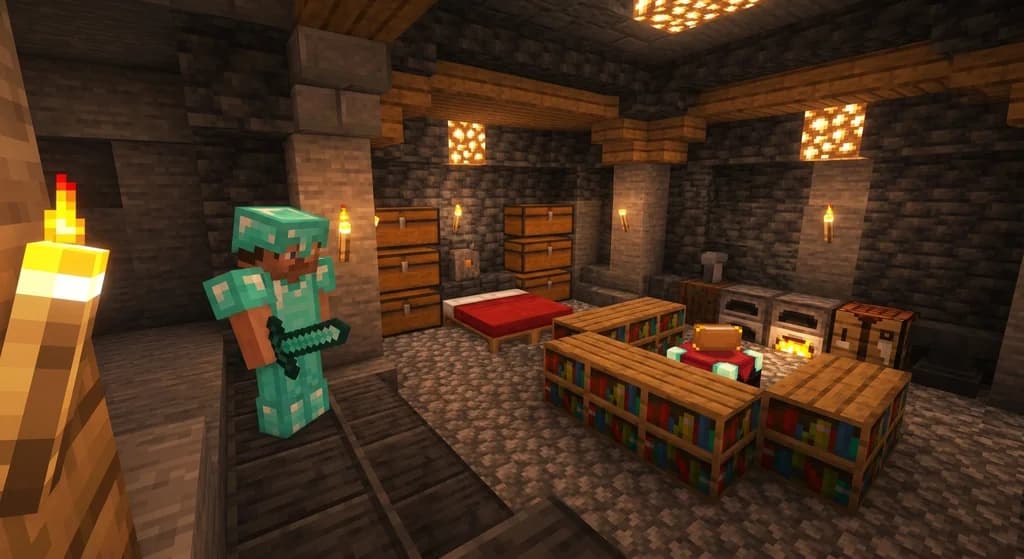
Key Takeaways
| Point | Details |
|---|---|
| First night survival | Punch trees immediately on spawn, craft a crafting table, and get underground before dark — mobs spawn when light drops below level 0. |
| Mine at Y=-58 | The 1.18 cave update moved the best diamond layer to Y=-58, not Y=12 — most beginners still mine at the wrong depth. |
| Food is your lifeline | Keep your hunger bar above 6 icons to trigger passive health regeneration, or you can't heal in a fight. |
| Enchanting needs bookshelves | Surround your enchanting table with 15 bookshelves at a distance of exactly 1 block to unlock level-30 enchantments. |
| Beds are your respawn anchor | Sleeping skips the night AND sets your spawn point — always sleep in a bed before exploring far from home. |
| Potion brewing multiplies your power | A single Strength II potion adds +6 attack damage per hit, turning tough fights into manageable ones. |
Table of Contents
- What Is a Minecraft Guide Book?
- How to Survive Your First Night
- Best Early-Game Resources to Gather First
- How to Mine at the Right Depth in 2026
- Tips for Managing Food and Hunger
- How to Set Up Enchanting Correctly
- Best Potion Brewing Basics Every Player Should Know
- Tips for Building a Safe Base
- How to Use Beds Strategically
- Top Mistakes Beginners Make (And How to Avoid Them)
- How to Put This Into Practice on Gaia Legends
- Conclusion
- Frequently Asked Questions
- Recommended
Most players die on their first Minecraft night not because the game is hard — but because nobody told them the rules. A solid minecraft guide book doesn't just list items; it explains why the mechanics work, so you can adapt when things go sideways. Whether you're brand new in 2026 or returning after a long break, these 10 tips will fast-track your survival and keep you out of the respawn screen.
What Is a Minecraft Guide Book?
A Minecraft guide book is a structured reference — physical or digital — that explains the game's core mechanics, crafting recipes, biomes, and survival strategies in a logical order. Unlike random wiki searches, a good guide walks you through progression: from punching your first tree to defeating the Ender Dragon.
This post is your 2026 digital edition. Each tip below is a chapter in your personal survival manual.
How to Survive Your First Night
The first night is Minecraft's hazing ritual. You have roughly 10 real-time minutes before darkness falls and hostile mobs spawn.
Your First-Night Checklist
Follow these steps in order:
- Punch oak or birch trees for at least 12 wood logs immediately on spawn.
- Open your inventory and craft wooden planks, then a crafting table.
- Place the crafting table and craft a wooden pickaxe first, then a wooden sword.
- Find a hillside and dig a 3-block-deep shelter into it — don't build out in the open.
- Seal the entrance with dirt or planks, leaving a 1-block gap you can peek through.
- Craft a furnace and start smelting logs into charcoal for torches.
Warning: Never spend your first night wandering. Even a dirt hole in a hillside beats being caught in the open when creepers and skeletons spawn.
If you want a deeper breakdown of early-game priorities, the Minecraft Legends Beginner Guide 2026 covers resource gathering and base-building fundamentals that transfer directly to survival mode.
Best Early-Game Resources to Gather First
Not all resources are equal in the early game. Here's what to prioritize:
| Resource | Why It's Critical | Where to Find It |
|---|---|---|
| Wood | Crafting table, tools, sticks | Any forest biome |
| Cobblestone | Stone tools, furnace, base walls | Dig 3+ blocks down |
| Coal / Charcoal | Torches, smelting fuel | Stone veins or smelt logs |
| Food (any) | Keeps hunger bar full | Animals, crops, fishing |
| Iron | Armor, buckets, better tools | Caves, Y=15 to Y=232 |
Get wood first, stone second, iron third. That's the entire early-game loop.
How to Mine at the Right Depth in 2026
This is the tip that separates veterans from beginners. Since the Caves & Cliffs Part II update (Java 1.18), the world generates all the way down to Y=-64. Diamond ore now generates most densely around Y=-58, according to the Minecraft Wiki.
Pro Tip: Press F3 (Java Edition) to open the debug screen and check your Y-coordinate. Strip-mine horizontally at Y=-58 for the best diamond yield per hour.
Most players still mine at Y=12 out of old habit — and wonder why they find so few diamonds. Don't be that player.
For a complete breakdown of survival progression milestones, check out Minecraft survival mode: essentials, strategies, mastery — it covers everything from early iron to Nether entry.
Tips for Managing Food and Hunger
Hunger is the silent killer in Minecraft. Your hunger bar has 20 half-points (10 full icons). Here's what the numbers mean for you:
- Above 18 hunger (9 icons): Health regenerates passively — you heal automatically.
- Below 6 hunger (3 icons): You can't sprint.
- At 0 hunger: You take damage over time (on Normal difficulty, down to 1 heart).
Best Early Food Sources
- Cooked chicken or steak restore 6 hunger points each — always cook your meat.
- Bread is easy to craft from wheat and restores 5 hunger points.
- Carrots require no cooking and restore 3 hunger points — great for quick snacks.
Keep a stack of cooked food in your hotbar at all times. Running out of food mid-cave is how players lose everything.
How to Set Up Enchanting Correctly
Enchanting is one of Minecraft's biggest power spikes — and most beginners set it up wrong.
The enchanting table is a block that lets you spend experience levels and lapis lazuli to add magical properties to tools, weapons, and armor. To unlock the maximum level-30 enchantments, you need exactly 15 bookshelves placed within 2 blocks of the table (with a 1-block air gap between the shelf and the table).
Bookshelf Placement Rules
- Place bookshelves in a ring around the enchanting table, 1 block away.
- Leave the block directly adjacent to the table empty (air only).
- You need 45 leather and 135 paper to craft all 15 bookshelves — start farming sugarcane and cows early.
Note: Torches, slabs, or any block placed between a bookshelf and the enchanting table will block that bookshelf's bonus. Keep the gap clean.
Best Potion Brewing Basics Every Player Should Know
Potions feel intimidating until you understand the three-step formula: water bottle → awkward potion → final potion.
According to the Minecraft Wiki, a Strength II potion adds +6 attack damage per hit, which effectively doubles your early-game sword damage output. That's the difference between a 3-hit kill and a 6-hit kill on most mobs.
For every recipe, modifier, and ingredient combination, the How to Brew Every Minecraft Potion: The Complete 2026 Guide has you covered. Start with Healing and Strength potions — they're the highest-impact brews for survival.
Essential Brewing Ingredients
- Nether Wart → creates Awkward Potion (base for almost everything)
- Glistering Melon Slice → Potion of Healing
- Blaze Powder → Potion of Strength (and fuels the brewing stand)
- Spider Eye → Potion of Poison
Tips for Building a Safe Base
Your base isn't just storage — it's your respawn safety net. A good base has:
- Lighting everywhere (light level 0 is where mobs spawn — torches, lanterns, or sea lanterns prevent this)
- A perimeter of at least a 2-block-tall wall or fence
- A bed placed and slept in so your respawn point is set
- Multiple chests organized by category: food, building blocks, ores, tools
Pro Tip: Build your base near a village early on. Villages have beds, farms, and blacksmiths with free loot — and you can trade with villagers for emeralds and gear.
For more base-building and safety strategies, Essential Minecraft Survival Tips: Stay Safe, Thrive, and Succeed is a great next read.
How to Use Beds Strategically
Beds do two critical things: skip the night, and set your spawn point. Most beginners only think about the first one.
Strategic Bed Placement
- Always sleep in your base bed before any long expedition — if you die, you'll respawn there, not at the world spawn.
- Carry a bed when exploring far from home. Place it, sleep, and reset your spawn in the new area.
- In the Nether, never place a bed. Beds explode in the Nether and the End — this mechanic is actually used intentionally by speedrunners to deal massive damage to the Ender Dragon.
Top Mistakes Beginners Make (And How to Avoid Them)
Even experienced players slip up on these. Here's your quick-reference mistake list:
- Mining straight down — you'll fall into lava or a cave. Always mine in a staircase pattern.
- Skipping food — never leave your base with less than a full stack of food.
- Fighting creepers up close — back up, hit, back up again. Creepers need 1.5 seconds to explode after hissing.
- Carrying all your diamonds at once — if you die, you lose everything. Store diamonds at base before continuing.
- Ignoring the Nether — the Nether has blaze rods (for brewing), nether wart (for potions), and fast travel (1 Nether block = 8 Overworld blocks).
- Not using shields — a shield completely blocks most melee and projectile damage when you right-click. Craft one as soon as you have iron.
Warning: Never dig straight down — it's the single most common cause of sudden death for new players, whether into lava pools or into a mob-filled cavern below.
How to Put This Into Practice on Gaia Legends
Everything in this guide comes alive on a server where you're playing alongside real people. Gaia Legends is a beginner-friendly survival SMP built specifically for players who want to apply these mechanics in a fair, welcoming environment.
Here's how Gaia's features map to what you've learned:
- Survival Realms: Gaia's survival worlds use standard Minecraft mechanics — your Y=-58 diamond mining, hunger management, and enchanting knowledge all apply directly from day one.
- Community Trading: Once you've stocked up on resources, Gaia's player-driven economy lets you trade surplus materials for gear you need — a perfect use for your early farming surplus.
- Crossplay Support: Whether you're on Java or Bedrock, you can jump in and practice these tips alongside hundreds of other players.
Gaia Legends is free to join, non-pay-to-win, and supports Java + Bedrock crossplay. Join at gaialegends.pro and start your legend today.
Conclusion
Minecraft rewards players who understand its systems — and punishes those who don't. Here are the three most important things to take away from this guide:
- Mine at Y=-58 for diamonds, not Y=12 — the cave update changed everything.
- Keep your hunger bar high so passive health regeneration keeps you alive through fights.
- Set your spawn with a bed before every major adventure — dying without a bed respawn is how players lose hours of progress.
Now go punch some trees. The rest follows naturally.
Ready to play? Join Gaia Legends today — no pay-to-win, Java + Bedrock crossplay.
- Java:
join.gaialegends.pro - Bedrock:
join.gaialegends.pro— Port19132
Further reading
These references were recorded with the article; specific claims have not been matched to source excerpts.
Frequently Asked Questions
What is a Minecraft guide book and do I need one as a beginner?
A Minecraft guide book is a structured reference that explains the game's core mechanics, crafting recipes, and survival strategies in a logical progression. Beginners benefit enormously from one because Minecraft teaches almost nothing in-game — there's no tutorial for enchanting, potion brewing, or optimal mining depth. A guide cuts your learning curve from weeks to hours.
What Y level should I mine at for diamonds in 2026?
Mine at Y=-58 for the best diamond density in 2026. Since the Caves & Cliffs Part II update in Java 1.18, the world generates down to Y=-64, and diamonds peak around Y=-58. Press F3 on Java Edition to check your coordinates. Most beginners still mine at Y=12 from old guides — that's why they find so few diamonds.
How do I keep my Minecraft character from starving to death?
Always carry a full stack of cooked food — cooked chicken, steak, or bread are the most efficient early-game options. Keep your hunger bar above 6 icons (3 full food icons) to maintain sprinting ability, and above 9 icons to trigger passive health regeneration. Never leave your base without food in your hotbar.
How many bookshelves do I need for max enchantments in Minecraft?
You need exactly 15 bookshelves placed within 2 blocks of your enchanting table, with a 1-block air gap between each shelf and the table, to unlock level-30 enchantments. Blocking that gap with torches or slabs disables the bookshelf's bonus. Each bookshelf requires 3 books and 6 wooden planks to craft.
What are the most common Minecraft survival mistakes beginners make?
The biggest beginner mistakes are: mining straight down (fall into lava), skipping food management, fighting creepers at melee range without backing up, carrying all valuables at once without storing them, and ignoring the Nether. Also — not using a shield. A shield blocks most incoming damage for free when you right-click, and it's one of the most underused items in the game.
What is the best Minecraft survival tip for your very first night?
Dig a small shelter into a hillside before darkness falls — you have about 10 real-time minutes from spawn. Collect wood first, craft a crafting table and pickaxe, then dig in and seal the entrance. Don't build exposed above ground. Craft torches from charcoal (smelt logs in a furnace) to light your shelter and prevent mob spawns inside.
Related guides
15 Essential Minecraft Tips and Tricks for New Players in 2026
Master Minecraft faster with 15 essential tips and tricks for beginners in 2026. Survival, combat, building, and exploration advice every new player needs.
How to Master Minecraft Survival: 12 Best Tips for Beginners 2026
Master Minecraft survival in 2026 with 12 beginner tips covering shelter, food, mining, enchanting, and more. Your complete minecraft tips for beginners...
15 Best Minecraft Tips and Tricks for Survival Success (2026)
Master survival with 15 essential Minecraft tips and tricks for 2026. From day-one shelter to late-game farms, this guide covers everything beginners and...
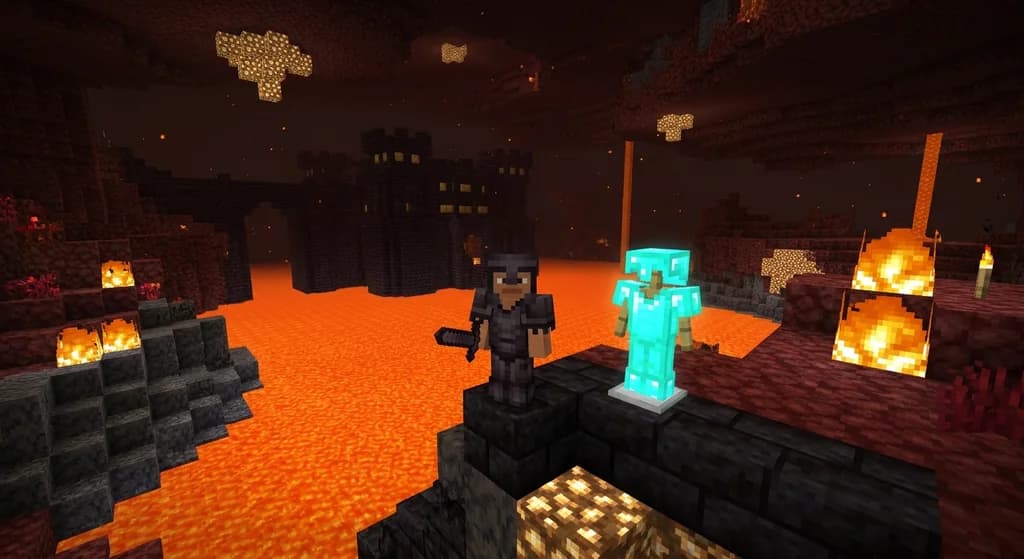
Netherite vs Diamond Armor: A Stats Comparison
Compare the stats, durability, and knockback resistance of Netherite and Diamond armor in Minecraft. Learn the costs, upgrade process, and which set is right for your playstyle.
Have a question or another approach?
Compare notes with other readers. Include your edition and version when discussing mechanics.