Minecraft combat mastery: strategies for survival and PvP
Filed under Minecraft Tips & Tricks · How we create content
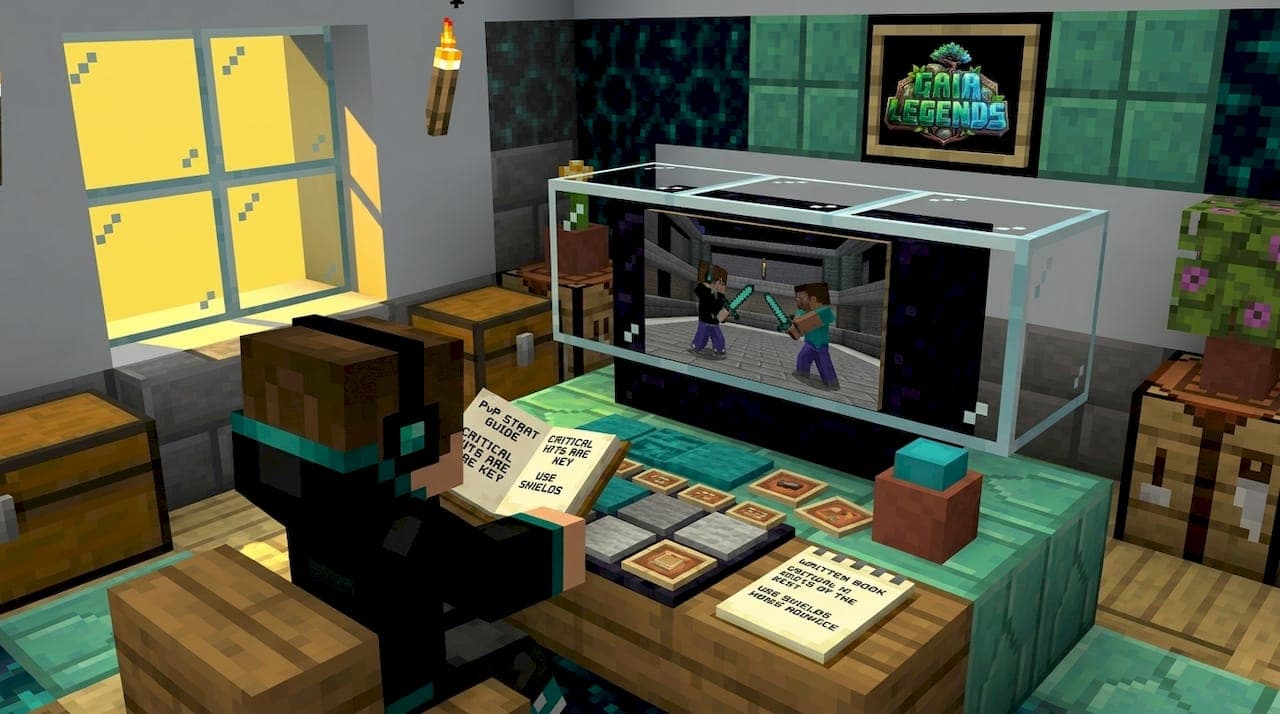
TL;DR:
- Mastering Minecraft combat requires understanding attack cooldowns, critical hits, knockback, and armor mechanics rather than relying solely on speed. Effective tactics involve strategic positioning, environmental control, and adaptable weapon choices like swords for crowd control or axes for shield-breaking in PvP. Recent 2026 updates have refined AI and hit registration, emphasizing mobility and proactive play over static defenses for success.
Most players assume Minecraft combat is simple: click fast, hit hard, and hope for the best. That mindset gets you killed on your first night and humiliated in your first PvP match. The truth is that Minecraft's combat system rewards careful timing, smart positioning, and equipment knowledge far more than raw clicking speed. Whether you're trying to survive a cave full of skeletons or hold your own on a competitive server, understanding the mechanics underneath the surface is the difference between winning and respawning.
Table of Contents
- Understanding the basics: Core components of Minecraft combat
- Comparing weapons and tools: Which should you use?
- Advanced combat tactics: Timing, positioning, and environmental control
- Facing mobs and bosses: Survival strategies across enemy types
- Recent updates and how they transformed combat in 2026
- The hidden art of Minecraft combat: What most guides miss
- Boost your Minecraft skills with our complete guides
- Frequently asked questions
Key Takeaways
| Point | Details |
|---|---|
| Learn core combat mechanics | Understanding timing, movement, and equipment boosts your survival in every Minecraft fight. |
| Choose weapons strategically | Selecting the right weapon for each encounter is essential for maximizing your combat performance. |
| Apply advanced tactics | Master techniques like dodging, positioning, and environmental control to overcome tougher opponents. |
| Stay updated with new changes | Adapting to Minecraft's latest combat updates ensures you always have the upper hand. |
| Practice and experiment | Skill comes from trying new strategies and analyzing your battles to learn and improve. |
Understanding the basics: Core components of Minecraft combat
Now that you know why mastering combat matters, let's reveal the basic system elements you need to understand before jumping into battle.
The single most important mechanic introduced in the Java Edition 1.9 Combat Update is the attack cooldown. Each weapon has a "recharge time" shown by the sword icon in your hotbar. Swinging before this meter fills deals drastically reduced damage. Waiting for a full charge before swinging is the foundation of effective combat. It sounds slow. It saves lives.
Critical hits are your best friend for burst damage. Jump and hit an enemy while you're falling, and you'll deal 150% of your base damage. The timing becomes second nature after a few sessions, and combining a fully charged swing with a critical hit is one of the most powerful moves in the game. Every experienced player uses this constantly.
Knockback pushes enemies away when you hit them. This sounds straightforward, but it plays a massive tactical role. Knocking a creeper off a cliff prevents the explosion entirely. Pushing a zombie into lava ends the fight instantly. Understanding that knockback is a tool, not just a side effect, changes how you approach every fight.
Hitboxes are the invisible collision zones around every entity. Mobs don't take damage because you "hit them" visually. You deal damage when your attack connects with their hitbox. This matters for understanding how to hit spiders at awkward angles, reach a flying Blaze, or land shots on fast-moving players. Mob behavior tips explain how different hitbox sizes affect your combat approach against various enemy types.
Armor reduces incoming damage through its armor points value and toughness rating. A full set of diamond armor absorbs significantly more damage than iron. The shield deserves special attention: right-clicking with a shield blocks almost all frontal damage from melee and projectiles. Many newer players ignore shields, and it costs them dearly in tougher encounters.
Here's a quick overview of how armor affects damage reduction:
| Armor type | Armor points | Toughness | Estimated damage reduction |
|---|---|---|---|
| Leather | 7 | 0 | ~28% |
| Iron | 15 | 0 | ~60% |
| Diamond | 20 | 8 | ~80%+ |
| Netherite | 20 | 12 | ~84%+ |
Key combat fundamentals to build on:
- Always wait for your attack cooldown to fill before striking.
- Use critical hits by attacking while falling from a jump.
- Keep a shield in your off-hand whenever possible in survival mode.
- Stay aware of your surroundings to use knockback intentionally.
- Reference the survival essentials guide for armor progression strategies.
Pro Tip: If you're struggling to time your attacks, watch your hotbar. The sword icon animating back to full means your cooldown is reset. Train yourself to wait for that moment before every swing, and your damage output will jump significantly.
Comparing weapons and tools: Which should you use?
Having established the core mechanics, it's critical to know how your choice of weapon influences your combat style and success.
The sword vs axe debate is one of the most common discussions in the Minecraft community, and the answer isn't simple. Swords attack faster and deal consistent damage with the sweeping edge ability in Java Edition, which damages multiple enemies in a horizontal arc. This makes swords excellent for crowd control. Axes deal higher damage per hit, and they have a chance to disable shields for five seconds, making them essential in PvP situations where your opponent is turtling behind a shield. Axes are slower though, and missing with one hurts your rhythm.
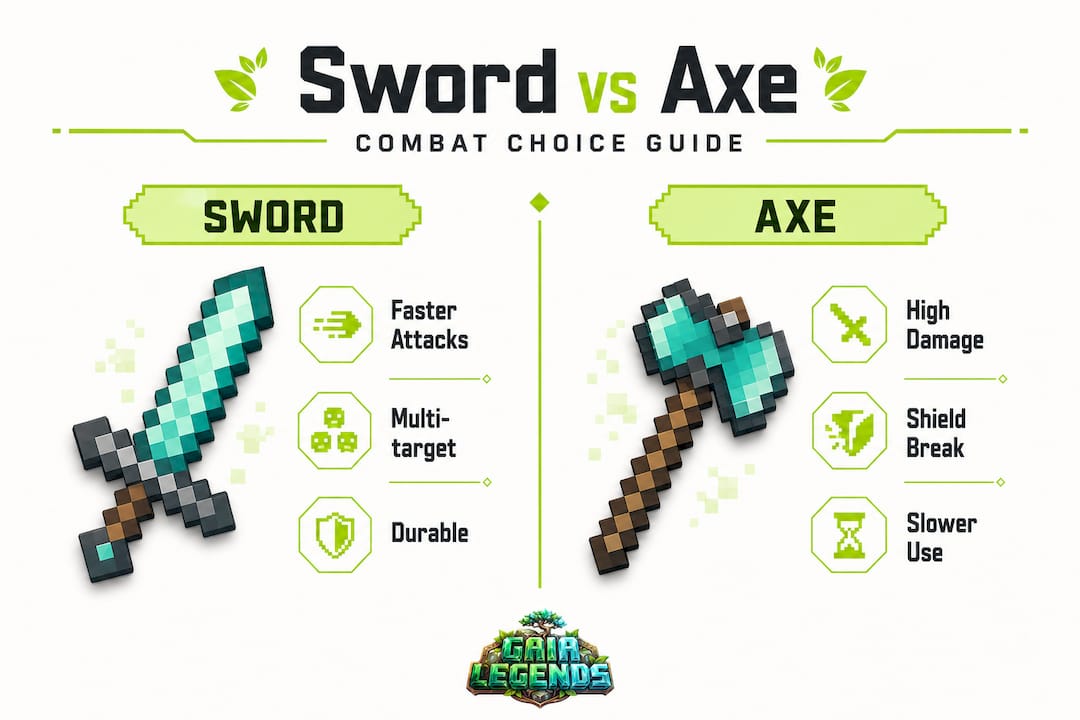
Here's a direct stat comparison for netherite weapons at base level:
| Weapon | Damage per hit | Attack speed | Special ability |
|---|---|---|---|
| Netherite sword | 8 damage | 1.6 hits/sec | Sweeping edge |
| Netherite axe | 10 damage | 1.0 hits/sec | Disables shields |
| Trident (melee) | 9 damage | 1.1 hits/sec | Thrown projectile |
| Bow (charged) | Up to 10 damage | Charged shot | Ranged, versatile |
Ranged weapons open up entirely different strategies. A fully charged bow can deal up to 10 damage from a safe distance, keeping you out of a mob's melee range entirely. Crossbows load slower but hit harder per shot and can be loaded with Firework Rockets for area damage. Tridents are unique because they work both at range and in melee, and with Riptide enchantment they become a mobility tool in rain or water. The best Minecraft tips recommend keeping a bow in your inventory even when you're building a melee-focused loadout.
Enchantments multiply your effectiveness dramatically. Here are the ones worth prioritizing:
- Sharpness (up to V): Adds flat damage to swords and axes.
- Power (up to V): Increases bow damage per shot.
- Looting (up to III): More drops from mobs, useful for farming.
- Unbreaking (up to III): Increases weapon durability significantly.
- Mending: Repairs your weapon using experience orbs, essentially making it last forever.
- Smite (up to V): Greatly boosts damage against undead mobs, perfect for dungeon runs.
The boss combat strategies detail which enchantment loadouts work best against specific bosses.
Stat callout: A netherite axe with Sharpness V deals roughly 13.5 damage per hit in ideal conditions, compared to a netherite sword with Sharpness V at about 11 damage per hit. However, the sword's faster attack speed means its sustained DPS over ten seconds is still competitive, especially with a skilled player using critical hits.
The bottom line: use a sword for PvE crowd control, switch to an axe for PvP when you need to punch through shields, and always carry a bow for long-range pressure.
Advanced combat tactics: Timing, positioning, and environmental control
While weapon choice is vital, true mastery comes from understanding how to apply advanced tactics against both mobs and players.
The most skilled players follow a disciplined sequence in combat. They don't just swing randomly. Following the combat mastery tips for advanced play, here's a reliable attack sequence to internalize:
- Jump into range to set up a critical hit as you land.
- Strike on the way down for the critical damage bonus.
- Wait for the full cooldown to reset.
- Use knockback to manage spacing before your next attack.
- Block with your shield if the enemy counters, then resume.
- Retreat briefly if your health drops below half to eat food and heal.
Strafing is moving side to side while attacking, and it's essential for avoiding damage. Most mob AI tracks you in a straight line, so circling to the side of a zombie or skeleton breaks their aim. In PvP, strafing makes you a harder target for arrows and melee attacks alike. Combined with sprinting, it also builds speed for a sprint attack bonus.
"Positioning wins battles before the first swing."
Terrain is your best free weapon. High ground gives you a reach advantage and forces enemies to climb toward you, interrupting their attack patterns. Narrow corridors prevent multiple mobs from surrounding you. Lava, cacti, and cliffs can finish fights you started. The combat commands guide explores how server-level mechanics interact with terrain-based strategies in more complex setups.
Pro Tip: When facing ranged mobs like skeletons or Pillagers, raise your shield the moment you hear an arrow sound. A well-timed shield raise blocks the shot completely, and the brief stun window lets you close the distance and switch to melee. Timing this response becomes instinctive with practice.
Kiting means dealing damage while staying just outside the enemy's reach, then backing away when they lunge. This is especially powerful against slow mobs like zombies and husks. Hit, back up, wait for cooldown, hit again. It's methodical, and it keeps you from taking unnecessary damage on easy encounters.

Facing mobs and bosses: Survival strategies across enemy types
Equipped with advanced techniques, it's time to tackle the most common and most dangerous enemies you'll face throughout your Minecraft world.
Different mobs require entirely different approaches. One strategy does not work for all of them, and that's what trips up players who only learn "the basics." Strong understanding of mob spawning control helps you prepare before fights even start by minimizing surprise encounters.
Zombies are slow but hit hard and can group up quickly. Their danger comes in numbers. Keep them at one block's distance, use sweeping sword attacks, and knock them off ledges whenever you can. At night, avoid enclosed spaces where they funnel toward you from multiple directions.
Skeletons are the most irritating mob for newer players because of their ranged attack and accurate aim. Close the distance fast using sprint and shield-blocking. Once you're inside their melee range, they struggle to aim properly. Never fight a skeleton from a distance unless you have a bow of your own.
Creepers demand strict discipline. Never let a creeper get within three blocks without acting. Sprint-hit them once, back up immediately, and let them de-aggro before striking again. The sprint-hit-back approach sends them flying away without triggering the explosion. Getting greedy and following up leads to explosions and death.
Spiders become passive during daylight, which many players forget. At night, they're quick, can climb walls, and hit faster than zombies. Keep your back against a wall to prevent them from jumping over you, and use a sword's sweeping ability if you're surrounded by multiple spiders.
Pro Tip: When facing crowds, back into a doorway or one-block-wide corridor. Mobs can only reach you one at a time in those spaces, turning an overwhelming swarm into a manageable queue. This tactic is invaluable in dungeon clearing and cave exploration.
Boss mob encounters require preparation that regular mob fights don't. For the boss battle guide, here's what you should always bring to any boss fight:
- Full diamond or netherite armor with Protection IV.
- Several stacks of food, ideally golden apples or cooked meat.
- A spare weapon in case your primary breaks or runs low on durability.
- Potions of Strength, Speed, and Healing for sustained fights.
- A bow with Power V for high-damage ranged phases.
The Wither, for example, is far easier when fought underground, where its dash attack is limited by the ceiling. The Ender Dragon requires understanding its attack pattern, safe zones, and the priority of destroying End Crystals first. As noted in our coverage of Minecraft mob types, learning the behavior pattern of each enemy type is what separates reactive players from proactive ones.
Recent updates and how they transformed combat in 2026
Combat in Minecraft never stands still. Let's look at what's new in 2026, and how your tactics should adapt.
The 2026 update insights reveal that this year's patches have introduced some of the most significant combat-relevant changes in years. Hit registration has been refined to better handle lag compensation on multiplayer servers, which means those frustrating "ghost hits" where you clearly landed a blow but took no damage are far less common. This makes aggressive melee play more reliable on servers with moderate ping.
Mob AI has also been overhauled in key ways. Zombies now attempt to flank players rather than charging directly forward, making the simple "back into a corner" strategy less effective than it used to be. Skeletons are smarter about retreating when you close range, forcing you to be faster and more committed in your rush. These behavioral changes make how 2026 updates transform gameplay essential reading for any serious player.
Here's a comparison of pre-2026 versus post-2026 combat dynamics:
| Mechanic | Pre-2026 behavior | Post-2026 behavior |
|---|---|---|
| Zombie movement AI | Straight-line chase | Flanking and pathfinding |
| Skeleton retreat AI | Minimal backing up | Actively retreats when cornered |
| Hit registration | Server-side lag issues | Improved lag compensation |
| Shield timing window | Generous block window | Slightly tighter input window |
| Crossbow reload speed | Standard timing | Marginally faster with new item |
Strategies that have become outdated or less effective:
- Standing in a corner to funnel zombies is now less reliable due to flanking AI.
- Camping behind a shield indefinitely is harder because axes disable it faster in 2026 tuning.
- Pure arrow-spam against skeletons no longer interrupts their retreat logic as easily.
New best practices for 2026:
- Use more active movement during zombie encounters instead of relying on static positioning.
- Combine shield use with immediate counterattacks rather than holding the block indefinitely.
- Practice the axe-shield disable combo more heavily in PvP since the tuning favors aggressive axe play.
- Learn the updated retreat triggers for skeletons so you can predict their movement and cut them off.
The 2026 changes reward players who stay mobile and adaptive over those who rely on memorized patterns.
The hidden art of Minecraft combat: What most guides miss
Most combat guides focus entirely on numbers and mechanics. Damage values, enchantment tiers, weapon comparisons. Those things matter, but they only explain why a player can win. They don't explain why the best players consistently do win, even when they're outgeared.
The players who truly dominate combat, whether in PvP or late-game PvE, treat every fight as a strategic mind game. They're reading the situation before the first swing lands. Are they in the right position? Is the mob AI doing something predictable? Is the opponent telegraphing their shield timing? Great combat in Minecraft is chess, not button mashing.
Here's the uncomfortable truth: losing is the most effective teacher in this game. We've learned more from getting demolished by a well-timed axe counter than from any guide. Every death carries information. Why did that creeper explode? You got greedy. Why did that skeleton land five consecutive arrows? You stopped strafing. When you analyze losses with genuine curiosity instead of frustration, your improvement rate accelerates dramatically.
One thing we specifically encourage is breaking the "meta" mindset. Yes, netherite swords with Sharpness V and Protection IV armor are statistically optimal. But experimenting with trident builds, shield-less aggressive axe styles, or bow-focused kiting strategies forces you to understand the game more deeply. Players who only follow meta loadouts stop thinking creatively when the meta fails them.
If you want to explore creative, unconventional approaches, the lifesteal SMP strategies offer a fascinating look at how high-stakes survival formats force players to develop original, adaptive combat styles. The mindset shifts in that content are as valuable as any mechanical tip.
The best advice we can give is this: fight more, analyze more, and experiment without fear. Your most effective combat style won't come from copying anyone. It'll come from discovering what clicks for you and refining it through real experience.
Boost your Minecraft skills with our complete guides
Ready to go further? Everything we've covered here, from cooldown timing to boss preparation to 2026 AI changes, is just the beginning of what sharp Minecraft combat looks like.

Frequently asked questions
What is the best weapon for combat in Minecraft?
The best weapon depends on the situation, but axes deal more damage per hit and disable shields, making them excellent in PvP, while swords offer faster attacks and sweeping edge for mob crowd control.
How do you perform a critical hit in Minecraft?
Jump and strike your enemy while you're falling to land a critical hit, which deals 150% of your base damage. This critical hit mechanic works best when combined with a fully recharged attack cooldown.
What has changed in Minecraft combat in 2026?
Updates in 2026 have improved hit registration, tightened shield timing windows, and introduced smarter mob AI with flanking behavior and skeleton retreat patterns, as detailed in the 2026 combat changes coverage.
How can I survive against boss mobs in Minecraft?
Bring full enchanted armor, healing items, and spare weapons, then use terrain to create safe zones and limit the boss's movement options. Reading the mob types and survival guide helps you understand each boss's behavioral patterns before you engage.
What is the role of shields in combat?
Shields block incoming melee and ranged attacks from the front, reducing damage significantly and granting a critical defensive edge in both PvP and PvE. According to survival mode combat strategy, pairing a shield in your off-hand with an axe or sword creates a highly versatile combat loadout.
Recommended
Related guides
How to Obtain Mending in Minecraft
Learn how to get Mending in Minecraft. Discover the best methods: trading with librarian villagers, fishing, and looting chests. Includes mechanics and...
How to Use the Trident in Minecraft: Riptide, Channeling & Impaling
Learn how to use the trident in Minecraft with our quick reference guide. Covers Riptide, Channeling, Impaling enchantments, throwing mechanics, and...
How to Find Buried Treasure in Minecraft 2026: Maps & Tips
Master how to find buried treasure in Minecraft with our 2026 guide. Find treasure maps in shipwrecks & ruins, follow the X, and collect rare loot like...
Minecraft Combat Tips That Win Every Fight in 2026
Master Minecraft combat tips to dominate every fight in 2026! Learn essential strategies for weapons, timing, and terrain to become unbeatable.
Have a question or another approach?
Compare notes with other readers. Include your edition and version when discussing mechanics.