How to Write a Minecraft Server Code of Conduct in 2026
Filed under Minecraft Community & Social Play · How we create content
Key Takeaways
| Point | Details |
|---|---|
| Context matters | A code of conduct must fit your server's culture and playstyle, not just be copied. |
| Core content | Include chat, building, PvP, griefing, exploits, and staff behavior sections. |
| Write rules positively | Explain the 'why' behind each rule and use second person to keep player-friendly. |
| Enforce consistently | Track every warning automatically and apply the same penalty for the same offense. |
| Automate moderation | Use plugins and server-side penalties to offload repetitive tasks. |
| Keep it living | Update rules as your community grows; a static code decays trust. |
Table of Contents
- Why a Code of Conduct Matters
- What Should a Minecraft Code of Conduct Include?
- How Do You Write Rules That Players Actually Follow?
- How to Enforce a Minecraft Server Code Without Burning Out
- What Common Mistakes Kill a Server Rules Posts?
- How to Put This Into Practice on Gaia Legends
- Conclusion
- Frequently Asked Questions
- Recommended
Ever watched a brilliant Minecraft build get nuzzled in ten minutes because one player thought 'griefing' meant anything goes? You're not alone. Learning how to write a Minecraft server code of conduct in 2026 is the most important step you can take to prevent chaos and keep the fire alive. Beyond just knowing a list of rules, this guide shows you how to turn a bulletin board into a living community contract.
Whether you’re running a cozy 10-player Hermitcraft-style world or a massive SMP with hundreds of new players, a clear code of conduct protects everyone—including you.
Why a Code of Conduct Matters
A structured code of conduct is your first protection layer against griefers, toxic chat, and player disputes that can burn out your admin team.
Most servers launch with a simple “have fun, no griefing” in the MOTD, and that’s nowhere near enough. You need to write out what “friendly” means. Without a code, every argument becomes a “he said / she said” mess. Your staff end up policing whims instead of guiding. Worse, players who don’t know the rules get punished for for and leave.
There’s a practical side too: In the default server.properties, the view distance is set to 10 chunks (via Minecraft Wiki). Similarly, spawn protection is a radius of 16 blocks. Neutral, but the world is huge—your spawn protection won’t cover the whole map. That’s where the code fills the gap.
Pro Tip: Start with the phrase “The goal is to protect the fun” in your code. It sets a positive chromosome.
Also, a code of conduct reduces your workload on the first day a new member joins. A new player can see the rules, screenshot them, and know that how to act.
What Should a Minecraft Code of Conduct Include?
Your code must cover chat behavior, building and claims, PvP consent, griefing, exploits, and staff procedure—plus the reasons behind each rule.
(The “Code of Conduct” is a set of explicit expectations that governs how an in-game player body behaves.)
Every community has different buttons, but a writeup that covers these six categories has no major gaps:
- Chat etiquette: No harassment, spam, hate speech, or sharing personal info outside the rules.
- Building sovereignty: Explain how claims work, where players can build, and whether you allow ruins.
- PvP policy: Is it always off? Only in an arena? Only in specific worlds?
- Griefing and stealing: Zero tolerance and mention that rollbacks are done via CoreProtect.
- Exploits and hacks: X-ray, forcefield, and any form of cheating is banned, always.
- Staff behavior: How players report a moderator, and what happens if staff break rules.
A quick naming: your Minecraft username maxes out at 16 characters, (via Minecraft Player) — That’s the game’s code restructure, not something you choose. But this helps you explain why you can’t remember every Nickname.
How to present them
People remember rules when they are instantly visible. The best servers put the essential rules in the server’s Discord and in a plink link /rules. A well-organized wiki page can hold the full version. Create a Minecraft server community wiki so players can search, bookmark, and add questions.
A table comparing display methods works well:
| Method | Best for | Example |
|---|---|---|
| Chat command | Fast reference | /rules shows 5 bullet points |
| Wiki page | Deep details | Full law book pages with images |
| Discord sticky | New players | Pinned in #welcome |
Also include a “How to report” section: give a format (time, player, screenshot) and link your Discord ticket bot.
How Do You Write Rules That Players Actually Follow?
Your rules should be positive, short, and explain the 'why' — a player who knows the reason is far more likely to comply.
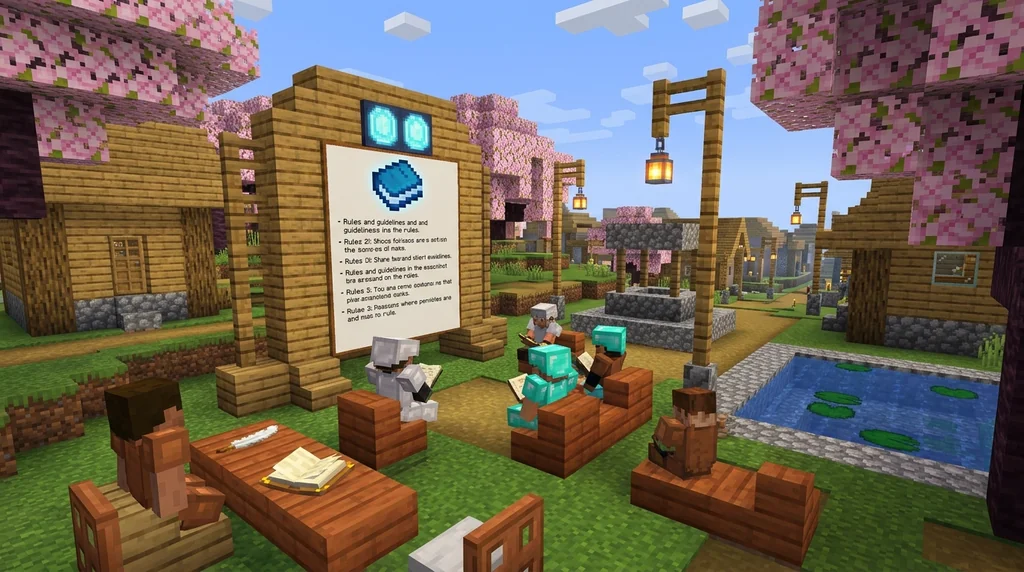
Instead of “Don’t break others blocks”, say “Respect builds as if they were your own.” Positive rules change the vibe from punishment to cooperation.
- Define the “why” for each rule. Example: “No x-ray because it ruins the fun of exploring.”
- Keep it short. On screens, under few words. Use a full page only for details.
- Use a instance: “In PvP, attacking while in the same team’s Home Base is NVC.”
- Use a sticky language — “You can place blocks up to 100 blocks from your claim.”
You can automate the visibility with plugins that show the rules once upon join. And when players do have a minor misunderstanding, guide them to Mediate Player Disputes.
If you’re building a roleplay-heavy server, show positive examples for how to act in character, and point to the “Character Back gotcha” post.
How to Enforce a Minecraft Server Code Without Burning Out
Enforcement is about consistency: log warning, escalate step-up, and automate with plugins so you don’t become the enemy.
You don’t need ot player-stroke for every little rule. Use the same penalty for the same offense each time. Here’s a free framework that works for 95% of cases:
- Step 1: Warning – visible, /msg and a note in staff channel.
- Step 2: 1 Day Mute or clear a temporary ban.
- Step 3: 7-Day Ban for repeated/reckless behavior.
- Step 4: Permanent Ban if it’s a known griefing/trolling.
For common grief, you should always use a logging plugin like CoreProtect, then roll back the block changes. We go deeper in this anti-griefing guide.
Automate where possible. Many servers use a plugin that auto-warns if someone says banned words. And Minecraft game the game runs at a fixed rate of 20 ticks per second, so (via Minecraft Wiki) means each tick is 0.05 seconds—a good reason why timed bans should be listed in ticks, not hours.
Warning: Never hand out a permanent ban for a first offense that isn’t obviously malicious. It teaches new members that mistakes are fatal and they’ll abandon you.
Pro Tip: Use spam-level caps. The game engine gives you a server.properties file with over 50 configurable values (via Minecraft Wiki, so you can also automatically remove blocks at a 60% retention.
To handle fairness without burn-out, program staff: each misconduct gets a 3-strike system. Applying the same 100% like our players can trust reps. Need better system? Read our Staff Application Form.
What Common Mistakes Break a Server Rules Post?
The single biggest mistake is copying rules from a bigger server; You inevitably end up with an “accepted” rule that don’t fit your playstyle.
Common patterns that kill engagement:
- Overly legalese language – players stop reading.
- Too many rules (over 10) – let’s note: short memory exists.
- Hidden rules – players caught with no notice blame you.
- Unenforced admin exemption – staff acting above the anthem.
Another failure is ignoring community signals. If every week someone breaks the same rule, it probably needs a clearer example. Many tips are in our newsletter about Player Newspapers, so you can measure the mood.
Pro Tip one final time: track which rules actually resolve disputes: a 30-day log into how many tickets are “grief” vs “chat” vs “other” can tell you if your code is driving the desired behavior.
How to Put This Into Practice on Gaia Legends
Writing a code of conduct helps any creative community, and on Gaia Legends we put it all into practice. Every rule exists to secure that free-for-all tangle that makes survival servers unstable. You’ll see it in four places:
- Custom
/rulescommand with precise icons from our Code of Conduct editor. - A visible moderation queue in Discord: warnings and bans are logged without one admin clicking.
- Automated disable messages when a player hits the “end of the line” tier.
Gaia Legends is free to join, non-pay-to-win, and supports Java + Bedrock crossplay. Each Stringify the builds you love, because we didn’t – you get tools to match your skill.
Join the conversation
Use our code of conduct template on our site to spread the “keep it fun” space. Learn from the community’s success stories, and when you come aboard, join the working /discord channel to swap new rulesets.
Conclusion
- A code of conduct is the single most important risk management decision you can make as a server owner. It prevents blocking, grief, and staff burnout.
- Keep your players safe by focusing on positive framing, visibility, and fair enforcement.
- Turn listening to a living document: measure incidents, update the code, and show your growth &op in the server console.
The hardest part – once the code exists – is sticking, but you don’t have to do it. Try writing a small 3-rule code tonight, test it on your friends next evening, and see how much sara. You’ll be amazed at what a few paragraphs can do.
Now go build that fond Myth-quiet SMP to hope you their in —[ends]
Ready to play? Join Gaia Legends today — no pay-to-win, Java + Bedrock crossplay.
- Java:
join.gaialegends.pro - Bedrock:
join.gaialegends.pro— Port19132
Further reading
These references were recorded with the article; specific claims have not been matched to source excerpts.
Frequently Asked Questions
How do I write a Minecraft server code of conduct without scaring off new players?
Use a friendly tone, explain the why, and keep the rules to a few bullet points. Avoid threats. Start with 'We want a fun place' and only list consequences in as short warnings. Also, display the code in a place players see naturally on join, like a sign or welcome message.
What are the most important rules to include in a Minecraft server code?
At minimum, include chat behavior, building/claims, PvP, griefing, cheating/exploits, and staff conduct. This prevents 90% of server trauma. Keep each rule to one sentence with an example. A separate 'staff rules' section is also recommended.
How do I enforce my Minecraft server rules fairly?
Punishments should follow a clear escalation: warning → mute → short ban → permanent ban. Use moderation plugins that keep a log, and don't ever use a staff says different. You can automate some tasks with plugins like CoreProtect. Always apply the same consequence to the same offense.
Can I use a Minecraft server rules template from the internet?
You can, but never copy line-by. Every server has a different playstyle. Adjust the template to your clan. Replace large paragraphs with your own examples and make sure the language is casual and friendly. Otherwise you'll have content that players will ignore.
How often should I update my Minecraft server code of conduct?
Review every 3–6 months, or when a common dispute shows you a gap. Track the reasons players get banned. If you see a new pattern, update the rule and announce it in a server log. Outdated codes feel like founders abandon the community.
Should a Minecraft server code of conduct be formatted as a single paragraph or list?
Always use a list. Players don't read paragraphs. Use bold bullets for each rule and a short sentence explaining why it matters. Keep it under two screens of text. For longer versions, link out to a wiki page or a pastebin.
Related guides
Minecraft Community Challenges in Official Events: An Analysis
Explore the Garden Awakens community challenges, their Java and Bedrock rewards, and Mojang's separate live event server.
How to Find the Best Minecraft Community for You in 2026
Learn how to find a Minecraft community that fits your playstyle in 2026. Compare server types, spot toxic signs, and discover active servers with our...
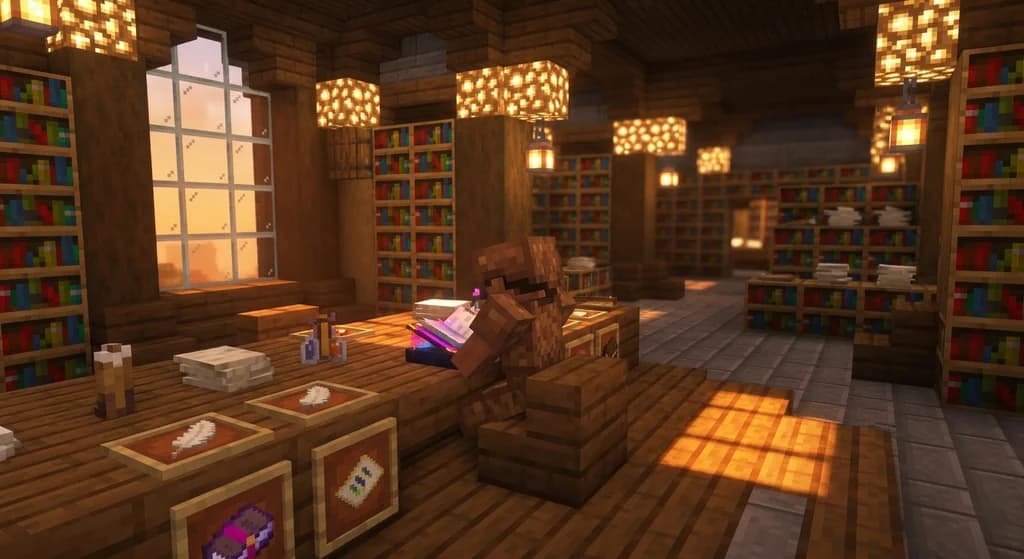
How to Create a Minecraft Server Community Wiki in 2026
Learn how to create a Minecraft server community wiki in 2026 with this step-by-step guide. Covering platforms, plugins, structure, and ways to keep...
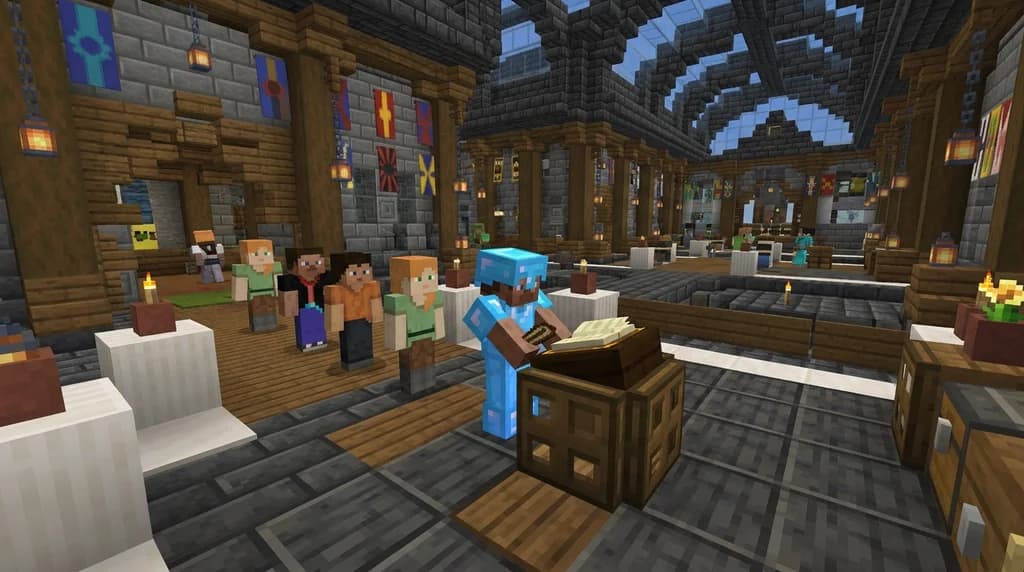
How to Create a Minecraft Server Staff Application Form (2026)
Learn how to create a Minecraft server staff application form that attracts qualified candidates. Step-by-step guide with template, questions, and review...
Have a question or another approach?
Compare notes with other readers. Include your edition and version when discussing mechanics.