How to Use Wind Charges in Minecraft Combat: Best 2026 Pro Tips
Filed under Minecraft Boss Hunting & Combat · How we create content
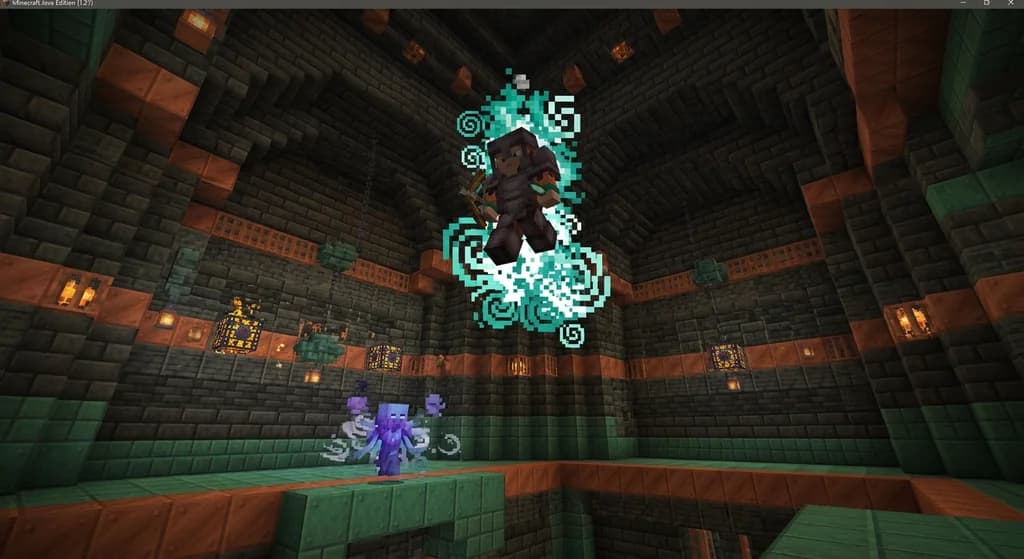
Key Takeaways
| Point | Details |
|---|---|
| Wind Charge Definition | A wind charge is a throwable projectile dropped by Breezes that launches entities and players skyward on impact, dealing no direct damage but massive knockback. |
| Breeze Rod Source | Breeze rods drop exclusively from Breeze mobs inside Trial Chambers, making Trial Chamber runs the only reliable way to stock up on wind charges. |
| Self-Launch Trick | Throwing a wind charge directly beneath your feet launches you upward without taking fall damage if you land correctly — the core of vertical mobility in combat. |
| Knockback Combo | Wind charges interact with the Mace's Wind Burst enchantment, letting you chain a launch into a smash attack for devastating fall-damage multipliers on enemies. |
| Cooldown Awareness | Wind charges share a use cooldown after throwing, so timing your throws in multi-mob fights or PvP is critical — panic-spamming wastes your window. |
| Vertical Arenas | In multi-level combat arenas, a single well-placed wind charge can flip the fight by repositioning you above your opponent, where gravity becomes your weapon. |
Table of Contents
- What Is a Wind Charge in Minecraft?
- How Do You Get Wind Charges and Breeze Rods?
- Best Wind Charge Combat Tactics for 2026
- Why Wind Charges Change Everything in Vertical Fights
- How to Combine Wind Charges With the Mace
- Tips for Wind Charge Jumping Without Taking Fall Damage
- Wind Charge vs. Other Mobility Tools: Quick Comparison
- How to Put This Into Practice on Gaia Legends
- Conclusion
- Frequently Asked Questions
Most players throw a wind charge once, watch themselves fly, and then never think tactically about it again. That's a massive mistake — and it's exactly why they keep losing fights they should win.
Wind charge combat tactics in 2026 represent one of the deepest skill gaps in all of Minecraft PvP and boss hunting. The players who truly understand the mechanic aren't just bouncing around for fun. They're controlling elevation, chaining combos with the Mace, and repositioning faster than any ender pearl can manage. This guide breaks down everything: how wind charges work mechanically, where to farm them, and the specific techniques that separate casual throwers from players who dominate vertical arenas.
What Is a Wind Charge in Minecraft?
A wind charge is a throwable projectile that creates a burst of wind energy on impact, launching nearby entities — including the thrower — upward and outward with significant knockback.
Wind charge is an item introduced alongside the Breeze mob in the 1.21 update (Tricky Trials). Unlike most combat items, it deals zero direct damage on its own. Its power is entirely positional: it moves things. You, your enemies, mobs, even dropped items — everything in the blast radius gets shoved.
The wind burst travels in a straight line from your throw angle, detonates on contact with any block or entity, and produces a spherical knockback explosion. The radius is small but the force is substantial (via Minecraft Wiki).
Note: Wind charges do NOT deal fall damage to the player who threw them if you land the self-launch correctly. This is what makes them so powerful for mobility — they're essentially a free upward rocket with no health cost.
How Do You Get Wind Charges and Breeze Rods?
Wind charges come exclusively from Breeze mobs, which spawn inside Trial Chambers — making Trial Chamber farming your only reliable supply chain for this item.
Breezes drop breeze rods on death, and breeze rods are the crafting material for wind charges. One breeze rod crafts three wind charges (via Minecraft Wiki). That's a reasonable yield, but it means you need a steady pipeline of Trial Chamber runs to keep your supply up.
Breeze mobs spawn from trial spawners labeled for Breezes specifically — they don't appear in the open world. If you're grinding for breeze rods, check out the full breakdown in our ominous trials combat guide, which covers spawner locations and efficient clear routes.
How Many Wind Charges Should You Carry?
For a serious combat session, carry at least 16–32 wind charges. That's roughly 5–11 breeze rods worth of material. In a prolonged boss fight or PvP skirmish, you can burn through 6–8 charges in under a minute if you're repositioning aggressively.
Pro Tip: Stack wind charges in your hotbar slot 2 or 3 — right next to your primary weapon. The faster you can swap to a charge and throw, the more combat options you have mid-fight.
Best Wind Charge Combat Tactics for 2026
The three core wind charge combat tactics are: the self-launch escape, the ledge-push knockback, and the elevation-gain opener — each requiring a different throw angle and timing.
The Self-Launch Escape
Point your crosshair straight down at your feet and throw. You'll rocket upward, creating instant distance between you and a melee attacker. This is your panic button. Use it when you're cornered, low on health, or need to break a combo string.
The key detail: throw it slightly in front of your feet, not directly under them, to avoid the charge hitting your own hitbox before it reaches the ground.
The Ledge-Push Knockback
Aim at the block just in front of an opponent standing near a ledge or drop. The wind burst will shove them back without you needing to close melee distance. This is devastating in multi-level arenas where a 10-block fall means serious damage.
Warning: If you throw a wind charge too close to yourself while an enemy is between you and a wall, the reflected knockback can send you flying instead. Always check your surroundings before throwing in tight corridors.
The Elevation-Gain Opener
Before engaging a boss or elite mob, throw a wind charge beneath you to gain high ground. From above, your sword crits deal more damage (via downward momentum), and you can control when to re-engage. This pairs especially well with boss fights like the Elder Guardian, where vertical positioning limits its beam attack windows — see our ocean monument guide for how elevation plays into that fight.
Why Wind Charges Change Everything in Vertical Fights?
Wind charges flip the fundamental rule of Minecraft combat — that horizontal movement is the primary axis — by making vertical repositioning instant, repeatable, and cost-free in health terms.
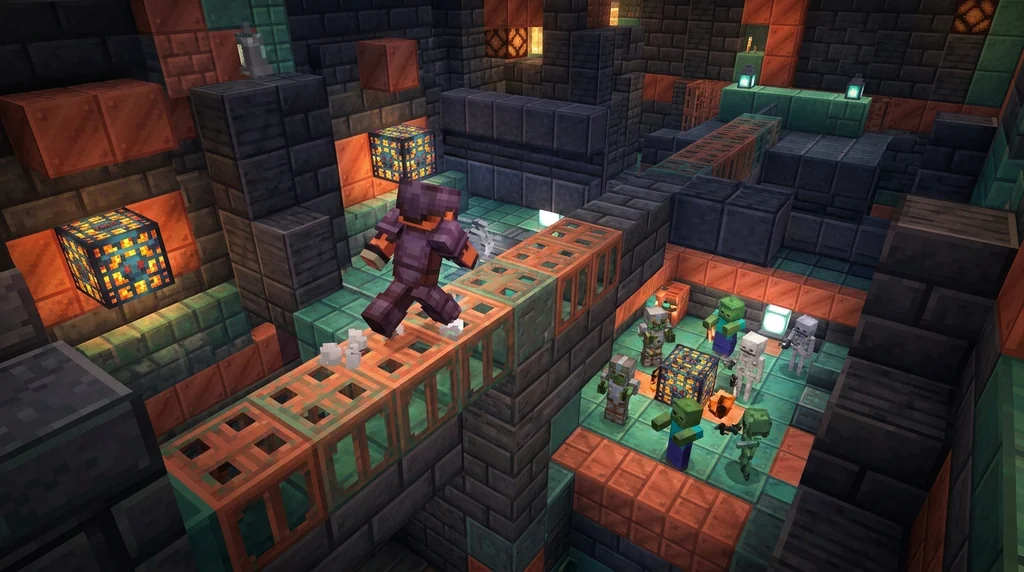
Traditional Minecraft PvP is flat. You strafe, you sprint, you circle. Wind charges add a Z-axis to every engagement. Players who master vertical movement can:
- Attack from above for increased crit angles
- Escape grounded combos instantly
- Force ground-level opponents to deal with an airborne target they can't easily track
- Deny chokepoints by simply going over them
This is especially relevant in structured combat arenas and raid scenarios. Our Minecraft raid tactics guide covers how elevation control reduces raid wave damage by keeping you out of melee range of multiple attackers simultaneously.
How to Combine Wind Charges With the Mace?
The Mace's Wind Burst enchantment triggers a wind explosion on kill, which stacks with a thrown wind charge to create a two-stage knockback chain that can clear entire groups of mobs.
This is the combo that top-tier players are running in 2026. Here's the sequence:
- Throw a wind charge beneath your feet to launch yourself upward
- While airborne, switch to your Mace (enchanted with Wind Burst)
- Fall onto a target — the Mace's smash attack damage scales with fall distance (via Minecraft Wiki)
- On kill, Wind Burst triggers a second wind explosion, launching nearby mobs away
The fall damage multiplier on the Mace smash attack makes this combo absurdly powerful against clustered enemies. For a deep dive on Mace mechanics and enchantment priorities, read our Mace boss hunting guide.
You'll also want strong armor for the landings. Check our hardest boss mobs guide for the gear loadouts that survive the fights where this combo shines most.
Tips for Wind Charge Jumping Without Taking Fall Damage
You avoid fall damage from wind charge self-launches by landing in water, on hay bales, on slime blocks, or by timing a second wind charge throw just before impact to cushion your descent.
Fall damage is the biggest risk of aggressive wind charge use. Here's how to manage it:
- Water landing: Any water source cancels fall damage entirely. In outdoor fights, always note the nearest water body.
- Slime block landing: Bounces you back up — useful for sustained aerial mobility.
- Second charge cushion: Throw another wind charge at the ground just before you land. The upward burst partially cancels your downward velocity. Timing takes practice but becomes muscle memory fast.
- Feather Falling IV boots: Reduces fall damage by 48% (via Minecraft Wiki), giving you a massive safety net for mistimed landings.
- Hay bale landing: Reduces fall damage by 80% (via Minecraft Wiki) — not always available in combat, but worth placing in arenas you control.
If you're running ominous trial chambers where fall hazards are everywhere, these techniques are non-negotiable. Our ominous trials loot guide covers the chamber layouts where fall damage is most likely to catch you off guard.
Wind Charge vs. Other Mobility Tools: Quick Comparison
Wind charges outperform ender pearls for short-range vertical repositioning but lose to pearls for long-distance horizontal teleportation — choose based on fight geometry.
| Tool | Range | Cooldown | Damage to Self | Best Use Case |
|---|---|---|---|---|
| Wind Charge | Short–Medium | Brief throw delay | None (if landed right) | Vertical repositioning, knockback |
| Ender Pearl | Long | 1-second cooldown | 2.5 hearts on land | Long-distance escape or gap close |
| Elytra + Firework | Very Long | Firework supply | None | Open-world travel |
| Slime Block Jump | Short | None | None | Static arena setups |
The wind charge wins on repeatability in a confined fight. You're not burning through expensive pearls or fireworks — just breeze rods, which you can farm in bulk during Trial Chamber runs.
For the most demanding fights in the game where every mobility tool matters, check our ancient city loot guide — the Swift Sneak enchantment found there pairs well with wind charge mobility for stealth-to-burst combat openings.
How to Put This Into Practice on Gaia Legends
Gaia Legends runs dedicated combat event arenas specifically designed with vertical geometry — multi-level platforms, open shafts, and elevated spawn points that reward exactly the kind of wind charge mastery this guide covers. When you drop into a Gaia combat event, you'll immediately see why elevation control is the meta.
The server's Trial Chamber-style PvE zones give you a consistent breeze rod supply, so you're never short on wind charges before a big event. And with Java + Bedrock crossplay, the wind charge mechanics work identically regardless of your platform — no hidden behavior differences to worry about.
Gaia also runs weekly boss hunting challenges where wind charge + Mace combos are practically the optimal loadout. Players who've internalized the self-launch and smash sequence consistently top the damage leaderboards.
Gaia Legends is free to join, non-pay-to-win, and supports Java + Bedrock crossplay. Join at gaialegends.pro and start your legend today.
Conclusion
Wind charges are one of the most skill-expressive items Minecraft has ever added. Here's what to lock in:
- Self-launch for escape: Throw beneath your feet to instantly break out of any grounded situation — no cooldown penalty, no health cost.
- Mace combo for burst damage: Chain a wind charge launch into a Mace smash attack for the highest single-target damage output available in 2026 combat.
- Fall damage management is non-negotiable: Feather Falling IV, water landings, and the cushion-throw technique keep you alive through aggressive repositioning.
Practice these three things in a low-stakes environment first. Once they're muscle memory, you'll approach every fight — whether it's a boss, a raid, or a PvP skirmish — with a tool that most players completely underutilize.
Ready to play? Join Gaia Legends today — no pay-to-win, Java + Bedrock crossplay.
- Java:
join.gaialegends.pro - Bedrock:
join.gaialegends.pro— Port19132
Further reading
These references were recorded with the article; specific claims have not been matched to source excerpts.
Frequently Asked Questions
What are the best wind charge combat tactics in 2026 for Minecraft PvP?
The best wind charge combat tactics in 2026 are the self-launch escape (throw beneath your feet to gain height), the ledge-push knockback (aim at blocks near opponents to shove them off edges), and the elevation-gain opener (launch yourself above enemies before engaging). Combining wind charges with a Mace enchanted with Wind Burst creates the highest-damage combo currently in the game.
How do you get wind charges in Minecraft?
Wind charges are crafted from breeze rods, which drop exclusively from Breeze mobs inside Trial Chambers. One breeze rod crafts three wind charges. Breeze mobs only spawn from trial spawners inside Trial Chambers — they don't appear in the open world — so regular Trial Chamber runs are your only reliable source of breeze rods and wind charges.
Do wind charges hurt you when you throw them at your own feet?
No — wind charges deal no direct damage and don't cause fall damage on their own. The risk is the fall *after* the launch. If you land on a hard surface from a great height without Feather Falling boots or a water landing, you'll take fall damage. The wind charge itself is safe; the landing is what you need to manage.
How does the wind charge and Mace combo work in Minecraft?
Throw a wind charge beneath your feet to launch yourself upward, then switch to a Mace with Wind Burst enchantment and fall onto a target. The Mace's smash attack scales damage with fall distance, and Wind Burst triggers a second wind explosion on kill. This two-stage combo delivers massive damage and area knockback in a single sequence.
What is the breeze rod used for in Minecraft?
A breeze rod is a crafting material dropped by Breeze mobs in Trial Chambers. It crafts wind charges (1 rod = 3 charges) and is also used to craft the Mace weapon when combined with a heavy core. Breeze rods are exclusively obtained from Breeze mob drops — there is no other source in vanilla Minecraft.
How do you avoid fall damage when using wind charges for jumping?
Land in water (cancels all fall damage), on hay bales (reduces fall damage by 80%), or on slime blocks (bounces you safely). Feather Falling IV boots reduce fall damage by 48%. You can also throw a second wind charge at the ground just before impact to cushion your descent — this takes timing practice but is highly effective once mastered.
Related guides
How to Beat the Breeze in Minecraft 2026: Combat Guide
Master the Minecraft Breeze combat guide 2026: learn best weapons, how to avoid wind charges, Breeze Rod farming, and wind-based gear advantage on Gaia...
How to Conquer Minecraft Ominous Trials: Pro Combat Tips 2026
Master the Minecraft ominous trials guide for 2026. Learn breeze rod farming, heavy core drop rates, ominous trial spawner tips, and pro combat loadouts.
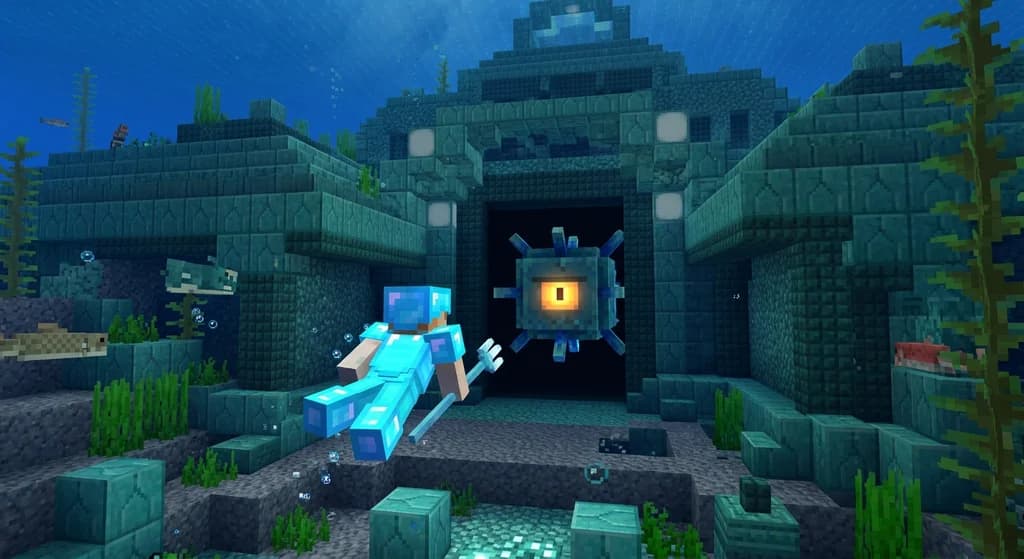
Elder Guardian Weaknesses Quick Reference
Learn the specific weaknesses of the Elder Guardian in Minecraft, including shield counters, Impaling enchantment damage, invisibility exploits, and arena tactics for Ocean Monuments.
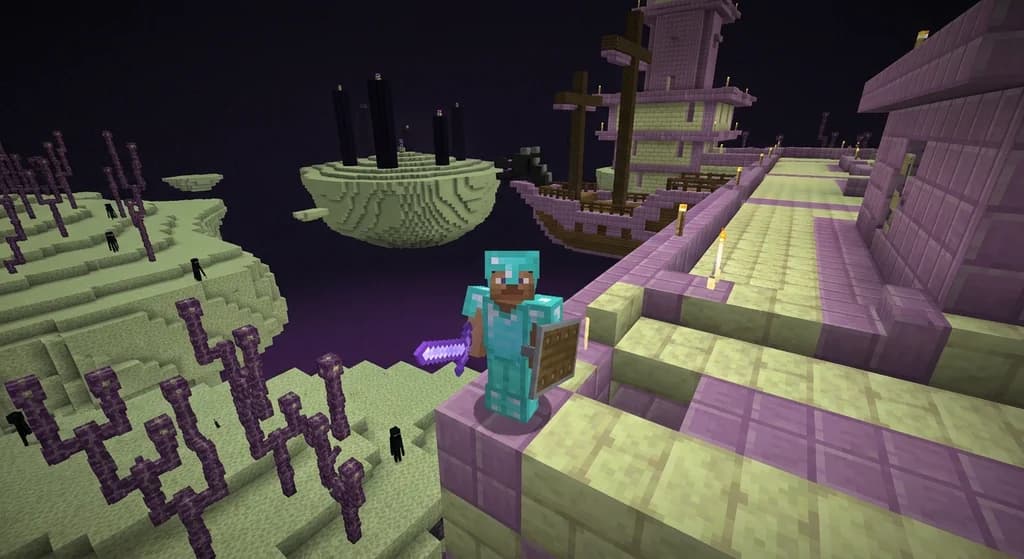
Key Combat Changes in the 1.9 Update
Discover the major combat overhaul in Minecraft Java Edition 1.9: attack cooldown, shields, dual wielding, and the revamped End. A quick reference for players returning or adapting.
Have a question or another approach?
Compare notes with other readers. Include your edition and version when discussing mechanics.