How to Survive Minecraft Bedrock Hardcore: 7 Essential 2026 Tips
Filed under Hardcore Survival & Permadeath · How we create content
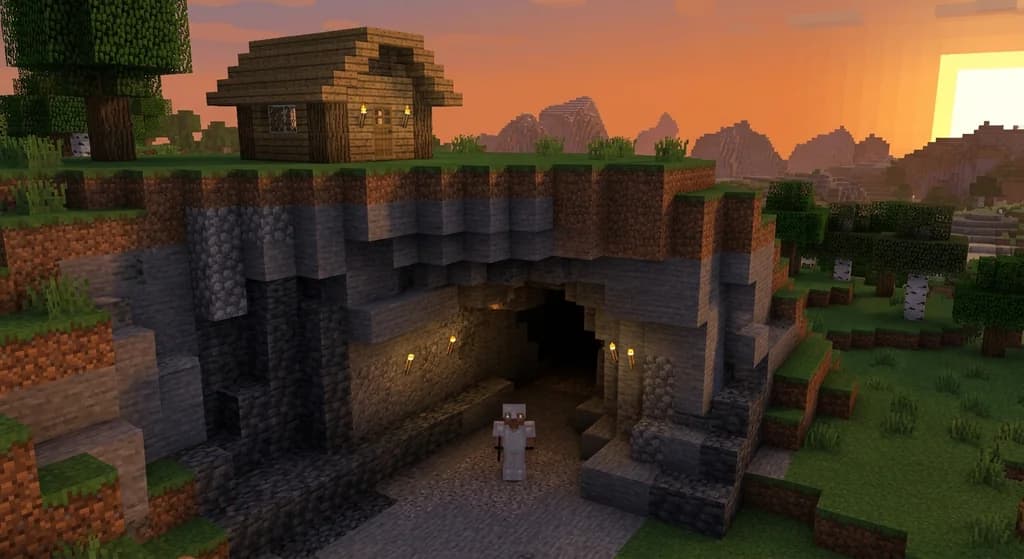
Key Takeaways
| Point | Details |
|---|---|
| Ghost damage is real | Bedrock's tick-rate behavior can register fall or mob damage a split second after you think you're safe — always heal before moving on. |
| Iron by day 5 | Reaching full iron armor before your first cave dive is the single highest-impact survival milestone in any Bedrock hardcore run. |
| Nether prep is non-negotiable | Fire Resistance potions and a mapped portal location prevent the two most common Nether deaths — lava and disorientation. |
| Lag kills | Server-side latency spikes cause desync deaths that no skill can prevent — choose low-latency servers or singleplayer for serious runs. |
| Sleep every night | Phantoms spawn after 3 in-game nights without sleep and their swooping attacks are especially deadly early in a Bedrock hardcore run. |
| Backup your mindset | Permadeath is permanent on Bedrock hardcore — treat every decision as irreversible and never rush a fight you're not geared for. |
Table of Contents
- What Is Minecraft Bedrock Hardcore Mode?
- Why Bedrock Hardcore Is Harder Than You Think
- Tip 1: Nail Your First Night Routine
- Tip 2: Reach Full Iron Armor Before Day 5
- Tip 3: Understand and Avoid Ghost Damage
- Tip 4: Sleep Every Single Night
- Tip 5: Prepare Properly for the Nether
- Tip 6: Choose Your Server Environment Carefully
- Tip 7: Build a Death-Proof Decision Framework
- Bedrock vs Java Hardcore: Key Differences
- How to Put This Into Practice on Gaia Legends
- Conclusion
- Frequently Asked Questions
- Recommended
Most Bedrock hardcore runs don't end at the Ender Dragon. They end on day 7, at the bottom of a cave, because of a mechanic the player didn't know existed. Minecraft Bedrock hardcore punishes ignorance fast and forgives nothing. If you've been treating it like a harder version of Survival mode, that's the first mistake. This guide gives you 7 targeted tips built specifically for Bedrock's quirks in 2026 — ghost damage, tick-rate desync, phantom aggression, and the Nether traps that claim even experienced players.
What Is Minecraft Bedrock Hardcore Mode?
Minecraft Bedrock hardcore mode is a permadeath survival experience where your world is permanently deleted — or locked to spectator — the moment you die. Unlike Java Edition, where hardcore has been a native game mode for years, Bedrock's implementation has platform-specific behaviors that affect hit registration, mob AI timing, and server tick rates. Understanding these differences isn't optional. It's the foundation every surviving run is built on.
Note: As of 2025, Bedrock hardcore mode is available across Windows, mobile, console, and Xbox platforms. Confirm your platform's version supports the mode before starting a serious run.
Why Bedrock Hardcore Is Harder Than You Think
Bedrock and Java share the same biomes and mobs, but they don't share the same engine. Bedrock uses a different codebase that handles physics, hit detection, and chunk loading differently. This matters enormously in a permadeath context.
Three Bedrock-specific dangers stand out:
- Ghost damage — damage registered server-side after you've visually moved to safety
- Input latency on mobile/console — slower response windows during combat
- Chunk loading behavior — mobs can "teleport" slightly when chunks load unevenly
These aren't excuses. They're variables you can plan around. Let's get into how.
Tip 1: Nail Your First Night Routine
Your first night sets the tone for everything. Panic-building a dirt shack wastes time. Sprinting to a village is a gamble. The optimal Bedrock hardcore first night looks like this:
- Punch trees immediately — collect at least 20 wood logs before dusk
- Craft a crafting table, wooden pickaxe, and wooden sword in the first 3 minutes
- Find stone — mine 15–20 cobblestone before night falls
- Build a sealed shelter — 5×5 is enough; add a door and two torches inside
- Craft a furnace and smelt any raw food you collected
Pro Tip: Dig two blocks down into the ground and roof over yourself if you can't build a proper shelter in time. Mobs can't reach you, and you lose nothing by waiting out the night underground.
Skipping the furnace on night one is a common mistake. Hunger kills you slowly but surely — especially on Bedrock where the hunger drain rate is identical to Java but early-game food sources feel scarcer on some seeds.
Tip 2: Reach Full Iron Armor Before Day 5
Iron armor is your first real checkpoint. Full iron armor reduces incoming damage significantly, and in hardcore that margin is the difference between surviving a creeper surprise and watching your world lock to spectator.
Target this gear milestone by day 5:
| Day | Goal |
|---|---|
| 1 | Shelter + wooden/stone tools |
| 2 | Stone sword + first cave exploration |
| 3 | Iron pickaxe + iron ore stockpile |
| 4 | Full iron armor + iron sword |
| 5 | Shield crafted + food supply stable |
The shield is underrated in Bedrock hardcore. It blocks 100% of melee damage from the front when raised at the right moment. Craft it on day 4 or 5 alongside your armor.
For a deeper look at early-game pacing, check out How to Survive 100 Days in Hardcore Minecraft: 2026 Pro Guide — the day-by-day milestone breakdown applies directly to Bedrock runs.
Tip 3: Understand and Avoid Ghost Damage
Ghost damage is one of the most frustrating Bedrock-specific phenomena in hardcore. It occurs when the server registers a hit — from a fall, a mob, or lava — slightly after your client shows you as safe. You step back from a creeper explosion, your screen looks fine, and then your health drops anyway.
Why Ghost Damage Happens
Bedrock's client-server architecture processes certain physics events asynchronously. On high-latency connections, the gap between what you see and what the server records widens. In singleplayer this is rare. On multiplayer servers with poor tick rates, it becomes a run-ending hazard.
How to Minimize Ghost Damage
- Always heal to full health before entering any dangerous area — don't enter a cave at 15 hearts
- After a fall or near-miss, stand still for one full second before moving on
- On multiplayer, check your ping before committing to dangerous fights
- Avoid playing on servers with tick rates below 20 TPS (ticks per second)
Warning: Never assume you're safe just because your screen looks clear. Ghost damage can register up to 1–2 seconds after the visual event on a lagging server. In hardcore, that delay is fatal.
Tip 4: Sleep Every Single Night
Phantoms spawn after you skip 3 in-game nights without sleeping. According to the Minecraft Wiki, phantoms spawn at a height above the player and swoop down in attack patterns that are particularly punishing in open areas. Their burn damage in daylight doesn't help you — they've already done their damage overnight.
In Bedrock hardcore, phantom attacks are especially dangerous because:
- They interrupt your movement mid-task (building, farming, mining at surface level)
- Their swoop hitbox can catch you off guard if you're focused on another task
- Multiple phantoms spawn simultaneously, scaling with nights missed
Sleep in a bed every single night. No exceptions. If you don't have a bed yet, make one your priority on day 2 — three wool from sheep and three planks.
Tip 5: Prepare Properly for the Nether
The Nether is where most surviving hardcore runs end. Lava lakes, ghast fireballs, and getting lost without a mapped portal location are the three main killers. For a full pre-Nether checklist, read How to Prepare for the Nether in Hardcore Minecraft (2026).
The non-negotiable items before you step through any portal:
- Fire Resistance potion — one active potion and two backups in your hotbar
- Full iron armor minimum — diamond is better; never enter in leather
- Written coordinates of your portal location (or a lodestone compass)
- Golden apples — at least two for emergency healing
- A mapped exit strategy — know which direction to run if things go wrong
Pro Tip: Place a distinctive block (like a jack-o-lantern) directly on top of your Nether portal. In the chaotic Nether landscape, portals are easy to lose. That single block has saved countless hardcore runs.
Tip 6: Choose Your Server Environment Carefully
If you're playing Bedrock hardcore on a multiplayer server, your survival depends partly on infrastructure you don't control. Server lag, TPS drops, and packet loss create the conditions for ghost damage and desync deaths — deaths that no amount of skill can prevent.
According to the Minecraft Wiki, the standard server tick rate is 20 TPS (ticks per second). When a server drops below 20 TPS under heavy load, game physics and mob AI begin to desync from what players see on their screens. In a permadeath context, that desync is catastrophic.
What to look for in a hardcore-safe server:
- Consistent 20 TPS under normal load
- Low average ping (under 80ms for your region)
- Active moderation to prevent griefing near your base
- Crossplay support if you're on a non-Java platform
For more on surviving the social and technical challenges of shared worlds, see How to Survive a Minecraft Hardcore SMP: 2026 Expert Tactics — it covers lag prevention and death-proof base design in detail.
Tip 7: Build a Death-Proof Decision Framework
The single mindset shift that separates long-running hardcore players from short ones: treat every decision as irreversible. Because in hardcore, it is.
Before any risky action, ask three questions:
- Am I geared for this? If you'd hesitate in normal survival, don't do it in hardcore.
- Do I have an escape route? Always know where the nearest exit is — from caves, from the Nether, from a fight.
- What's the worst case? If the worst case is death and you're not prepared for it, wait.
This framework sounds simple. Applying it under pressure — when you're excited about a diamond vein or chasing a rare mob — is where it gets hard. Build the habit early.
Bedrock vs Java Hardcore: Key Differences
Understanding the gaps between editions helps you adapt your strategy rather than copying Java tactics wholesale.
| Feature | Bedrock Hardcore | Java Hardcore |
|---|---|---|
| Ghost damage risk | Higher (async physics) | Lower |
| Input response | Slower on mobile/console | Faster on keyboard |
| Chunk loading | Can cause mob teleports | More consistent |
| Crossplay | Yes (Java + Bedrock) | Java only |
| Native hardcore mode | Yes (post-2024 update) | Yes (long-standing) |
| Phantom spawn trigger | 3 nights skipped | 3 nights skipped |
For a comprehensive tactical breakdown of the Bedrock-specific survival meta, How to Survive Minecraft Bedrock Hardcore: 2026 Tactical Guide goes deep on gear milestones and anti-ghost-damage strategies.
How to Put This Into Practice on Gaia Legends
Everything in this guide becomes more meaningful when your server environment isn't working against you. That's where Gaia Legends comes in.
Gaia Legends runs dedicated infrastructure optimized for consistent 20 TPS performance — the exact tick-rate stability that prevents the ghost damage and desync deaths covered in Tips 3 and 6. Regional node routing keeps ping low for players across North America, Europe, and beyond, so your hardcore run lives or dies on your decisions, not your connection.
Beyond performance, Gaia offers:
- Java + Bedrock crossplay — play hardcore on your platform of choice without switching servers
- Non-pay-to-win economy — no purchased gear advantages that would undermine the hardcore spirit
- Active community — experienced players who share routes, seed info, and survival strategies
Gaia Legends is free to join, non-pay-to-win, and supports Java + Bedrock crossplay. Join at gaialegends.pro and start your legend today.
Conclusion
Surviving Minecraft Bedrock hardcore comes down to three things: knowing the platform's quirks, hitting gear milestones early, and making decisions like every one could be your last. The most important takeaways from this guide:
- Ghost damage is Bedrock's hidden killer — always heal before moving on and give yourself a second after any near-miss
- Iron armor by day 5 is your survival checkpoint — don't enter serious caves without it
- Server quality matters as much as skill — lag-related deaths are real and preventable
Pick one tip from this list and apply it on your next run tonight. Small habit changes compound into runs that last 100 days and beyond.
Ready to play? Join Gaia Legends today — no pay-to-win, Java + Bedrock crossplay.
- Java:
join.gaialegends.pro - Bedrock:
join.gaialegends.pro— Port19132
Further reading
These references were recorded with the article; specific claims have not been matched to source excerpts.
Frequently Asked Questions
What is Minecraft Bedrock hardcore mode and how does it work?
Minecraft Bedrock hardcore mode is a permadeath survival experience where your world is permanently locked to spectator view — or deleted — the moment you die. It uses the same Bedrock engine as standard survival but with one life only. Introduced natively to Bedrock after the 2024 updates, it shares the same biomes and mobs as Java but has platform-specific behaviors like ghost damage and async physics that make it uniquely challenging.
Why do I keep dying to ghost damage in Bedrock hardcore?
Ghost damage in Bedrock hardcore happens because the client and server process certain physics events asynchronously. On lagging servers, your screen shows you as safe while the server still registers the hit. The fix: always heal to full before entering danger zones, pause for one second after any near-miss, and play on servers with stable 20 TPS performance. Singleplayer eliminates this risk entirely.
How do I survive my first night in Bedrock hardcore mode?
Punch trees immediately, collect 20 wood logs, craft a crafting table and basic tools, mine 15–20 cobblestone, then build a sealed shelter before dark. If night catches you in the open, dig two blocks down and roof over yourself. Craft a furnace and start smelting food before you sleep. This routine keeps you alive and sets up your day-2 iron hunt.
What gear should I have before entering the Nether in Bedrock hardcore?
At minimum: full iron armor, a Fire Resistance potion (with two backups), written portal coordinates or a lodestone compass, and at least two golden apples for emergency healing. Diamond armor is strongly preferred. Never enter the Nether in leather gear on a hardcore run — a single ghast fireball or lava splash without Fire Resistance is almost always fatal.
Does server lag really cause deaths in Bedrock hardcore multiplayer?
Yes. When a server drops below 20 TPS under load, mob AI, physics, and hit detection desync from what you see on screen. This creates ghost damage scenarios where you take hits after visually escaping danger. On a permadeath run, these deaths are completely unavoidable through skill alone. Always check server TPS and your ping before committing to dangerous situations on multiplayer.
How are phantoms different in Bedrock hardcore compared to normal survival?
Phantoms behave the same mechanically — they spawn after 3 skipped nights and swoop at the player — but in hardcore their threat level is dramatically higher because any mistake is permanent. Their swoop attacks can interrupt building or farming at surface level, and multiple phantoms spawn simultaneously as missed nights increase. Sleep every night without exception; it's the simplest rule with the highest survival payoff.
Related guides
How to Survive a Pillager Raid in Hardcore Minecraft (2026)
Learn proven strategies to survive pillager raids in hardcore Minecraft. Pre-raid prep, defensive bunkers, iron golems, and retreat tactics—read the 2026...
Best Enchantments for Hardcore Minecraft Survival (Non-Negotiable List)
Discover the best enchantments for hardcore Minecraft survival: essential armor, weapon, and tool enchants that prevent permadeath. Master the must-have...
How to Survive Minecraft Hardcore Mode in 2026: The Ultimate First Week Guide
Master how to survive minecraft hardcore mode with our ultimate first week guide. From day 1 shelter to Nether prep, learn permadeath survival and see how...
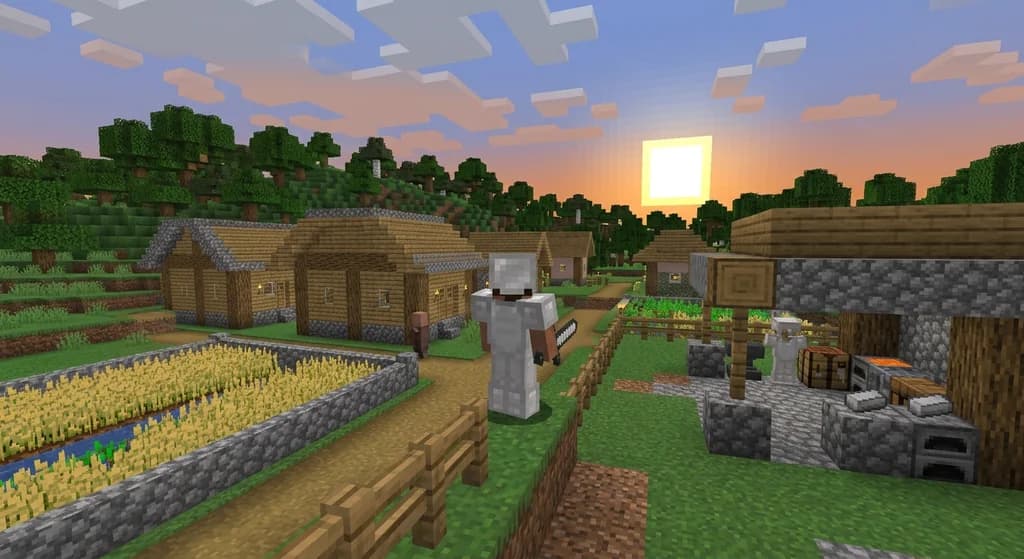
7 Best Minecraft Hardcore Seeds for a Safe Survival Start in 2026
Discover the 7 best Minecraft hardcore seeds for a safe survival start in 2026 — with villages, shields, and resources near spawn.
Have a question or another approach?
Compare notes with other readers. Include your edition and version when discussing mechanics.