How to Survive Minecraft Bedrock Hardcore: 2026 Tactical Guide
Filed under Hardcore Survival & Permadeath · How we create content
Key Takeaways
| Point | Details |
|---|---|
| Ghost damage is real | Bedrock's tick-rate behavior means lag spikes can register hits you visually dodged — play on low-latency servers or single-player. |
| Gear before caves | Rush iron armor before entering any cave system; unarmored cave deaths are the #1 cause of early hardcore resets. |
| Beds are your best weapon | Exploding the Ender Dragon's end crystals and using a bed explosion at the right moment skips the riskiest fight phases. |
| Spawn-proof your base | Every unlit surface within 24 blocks of your base is a potential creeper spawn point — light everything to light level 1 or above (Bedrock uses a different spawn threshold than Java). |
| Carry a water bucket always | Lava, fall damage, and fire are the top three non-combat killers in Bedrock hardcore — a single water bucket counters all three. |
| Backup your mindset | Every hardcore run ends eventually; treat each death as data, not failure, and your next run will go further. |
Table of Contents
- What Is Minecraft Bedrock Hardcore?
- How Bedrock Hardcore Differs from Java Hardcore
- Best Early-Game Survival Tactics for Bedrock Hardcore
- How to Build a Death-Proof Base in Bedrock Hardcore
- Tips for Surviving the Nether and End in Bedrock Hardcore
- Why Ghost Damage Kills Bedrock Hardcore Runs
- How to Put This Into Practice on Gaia Legends
- Conclusion
- Frequently Asked Questions
- Recommended
One wrong step. One lag spike. One creeper you didn't hear. That's all it takes in Minecraft Bedrock hardcore — and unlike Java, Bedrock has its own set of platform-specific traps that catch even experienced players off guard. This guide is built for 2026: updated mechanics, Bedrock-specific quirks, and tactics that actually hold up when permadeath is on the line.
Whether you're starting your very first hardcore run or trying to finally crack 100 days, every section below gives you a concrete edge.
What Is Minecraft Bedrock Hardcore?
Minecraft Bedrock hardcore is a survival mode variant where you play on Hard difficulty with a single life — die once, and your world is locked. Unlike Java Edition, Bedrock doesn't have a native "Hardcore" toggle in the world creation menu as a dedicated mode label, but players replicate it by setting difficulty to Hard and committing to a self-imposed permadeath rule (or using add-ons that enforce it). The result is the same white-knuckle experience: every decision matters, and there's no respawning to retrieve your items.
Note: As of 2025, Bedrock Edition does not have an official built-in Hardcore mode with a locked difficulty button the way Java does. Confirm your world settings before starting so difficulty can't be accidentally changed mid-run.
How Bedrock Hardcore Differs from Java Hardcore
Understanding the platform gap is half the battle. Bedrock and Java share the same world, but they don't share the same rules.
Key Mechanical Differences
| Feature | Java Edition | Bedrock Edition |
|---|---|---|
| Mob spawning light level | Light level 0 only | Light level 0 only (changed in 1.18 for both) |
| Knockback mechanics | Standard | Slightly different — shields behave differently |
| Tick rate consistency | Generally stable | Can vary on lower-end devices and servers |
| Redstone timing | Consistent | Quasi-connectivity quirks still present |
| Raid mechanics | Standard | Some wave compositions differ |
The biggest practical difference for hardcore players is tick rate consistency. On underpowered hardware or a congested server, Bedrock's tick rate can stutter — and that stutter is what causes ghost damage (covered in detail below).
For a full breakdown of how daily milestones map to both editions, check out our 100 Days Hardcore Minecraft: The Ultimate 2026 Survival Roadmap.
Best Early-Game Survival Tactics for Bedrock Hardcore
The first three in-game days decide whether your run lasts a week or ends in minutes. Move fast, waste nothing.
Day 1 Priority Order
- Punch trees immediately — get at least 20 wood before doing anything else.
- Craft a crafting table and wooden pickaxe within the first two minutes.
- Mine stone for a stone sword and stone pickaxe before nightfall.
- Find sheep — two beds worth of wool before your first night is the goal.
- Sleep through every night for the first five days. No exceptions.
Pro Tip: In Bedrock, phantoms begin spawning after you skip three consecutive nights of sleep. They deal real damage fast — sleep every night until you have full iron armor.
The Iron Rush
Your single most important early milestone is full iron armor. Don't enter any cave system without it. Surface iron from exposed ravines or mountain faces gets you there faster than deep mining. Once you have a full iron set, your survivability against most overworld mobs increases dramatically.
According to the Minecraft Wiki, iron armor provides a total of 15 armor points (7.5 armor bars) when wearing a full set, reducing incoming damage by roughly 60% before other modifiers. That margin is the difference between surviving a creeper blast and losing your run.
How to Build a Death-Proof Base in Bedrock Hardcore
Your base isn't just storage — it's your resurrection insurance policy.
Spawn-Proofing Essentials
Every unlit surface within 24 blocks of your base is a potential mob spawn point. In Bedrock, mobs spawn at light level 0, so your goal is to eliminate every dark block within that radius. Use torches, lanterns, or sea lanterns liberally — don't leave gaps.
- Light the roof of your base (mobs can spawn on top).
- Light the floor of any cave entrances nearby.
- Use slabs or carpets on flat surfaces where you can't place torches — half-slabs prevent spawning entirely.
Base Location Strategy
Underground bases are safer than surface ones in hardcore because they eliminate creeper surprises from above. Carve into a mountain or dig down at least 10 blocks. Add an iron door with a button — zombies can't operate buttons, so they can't breach your entrance.
Warning: Never use a wooden door as your main entrance in hardcore. Zombies on Hard difficulty can break wooden doors, and a single breach while you're AFK can end your run.
For deeper base design philosophy that applies across both editions, our guide on How to Survive a Minecraft Hardcore SMP: 2026 Expert Tactics covers death-proof layouts in detail.
Tips for Surviving the Nether and End in Bedrock Hardcore
Late-game is where most experienced hardcore players die. Overconfidence after 50 days of smooth survival is the real killer.
Nether Survival Checklist
- Never enter the Nether without fire resistance potions. Lava lakes are everywhere, and a single misstep without fire resistance is an instant death.
- Bring at least 8 obsidian to rebuild your portal if it gets destroyed by a ghast.
- Wear gold armor (at minimum one gold piece) to prevent piglin aggression — they attack on sight otherwise.
- Avoid building bridges over lava. Use scaffolding or build wide paths with walls.
Killing the Ender Dragon Safely
The Ender Dragon fight is the highest-risk moment of any hardcore run. Here's the safest approach:
- Destroy all end crystals before engaging the dragon directly.
- Bring at least 12 ender pearls for emergency repositioning.
- Use a bed explosion to deal massive damage when the dragon perches — this is the fastest and most damage-efficient kill method.
- Keep 20+ golden apples in your hotbar for the fight.
Pro Tip: The bed explosion trick works in the End because you can't set a spawn point there. Place the bed, right-click it while the dragon is perched, then immediately back away. Timing is everything — practice the motion in a creative world first.
For a day-by-day progression map leading up to the End fight, see How to Survive Your First 100 Days in Hardcore Minecraft (2026).
Why Ghost Damage Kills Bedrock Hardcore Runs
Ghost damage is the informal term for hits that register on the server before your client visually processes them. You see yourself dodge a skeleton's arrow — but you still take the damage. Your health drops. You didn't see it coming. In normal survival, this is annoying. In hardcore, it's a run-ender.
This happens because of server-client desynchronization: when your ping is high or the server's tick rate drops, the game's damage calculations run ahead of what your screen shows. Bedrock is more susceptible to this than Java on underpowered or overcrowded servers because of how Bedrock's netcode handles position updates.
The fix is simple but non-negotiable: play on a low-latency connection. For single-player, this means a device that can maintain a stable 20 ticks per second. For multiplayer, it means choosing a server with consistent, low-ping infrastructure.
How to Put This Into Practice on Gaia Legends
Everything in this guide becomes significantly easier when your server infrastructure isn't fighting against you. Gaia Legends runs on high-performance hardware specifically tuned to maintain stable tick rates — the direct fix for the ghost damage problem that ends so many Bedrock hardcore runs.
Here's what makes Gaia the right home for your hardcore attempt:
- Low-latency server nodes keep tick rates consistent, eliminating the desync that causes ghost damage during combat.
- Bedrock + Java crossplay means you can run hardcore alongside friends regardless of their platform — no one gets left out.
- Non-pay-to-win economy means your survival depends on your skill, not your wallet. Every advantage you earn is real.
Gaia Legends is free to join, non-pay-to-win, and supports Java + Bedrock crossplay. Whether you're grinding your first iron set or prepping for the Ender Dragon fight, you deserve a server that won't lag you to death.
Join at gaialegends.pro and start your legend today.
Conclusion
Surviving Minecraft Bedrock hardcore in 2026 comes down to three things:
- Respect the early game. Full iron armor before any cave. Sleep every night. Don't rush.
- Build defensively. Spawn-proof everything, use iron doors, and never underestimate a creeper.
- Control your environment. Ghost damage is real — play on stable hardware or a low-latency server to keep your run fair.
Every hardcore run teaches you something. The players who go the furthest aren't the ones who never make mistakes — they're the ones who made those mistakes on a previous run and adapted. Start your next run with these tactics, and you'll go further than ever before.
Frequently Asked Questions
Recommended
- Best Minecraft Speedrun Seeds for Set Seed Glitchless 2026
- Top 7 Minecraft Chest and Storage Mods for Vanilla+ Play 2026
- How to Master the Ultimate Minecraft Progression Guide in 2026
- How to Use Natural Palettes: A 2026 Minecraft Build Guide
Ready to play? Join Gaia Legends today — no pay-to-win, Java + Bedrock crossplay.
- Java:
join.gaialegends.pro - Bedrock:
join.gaialegends.pro— Port19132
Further reading
These references were recorded with the article; specific claims have not been matched to source excerpts.
Frequently Asked Questions
Does Minecraft Bedrock hardcore mode exist as an official feature?
As of 2025, Minecraft Bedrock Edition does not have a dedicated Hardcore mode toggle like Java Edition does. Bedrock players replicate the experience by setting difficulty to Hard and committing to a self-imposed permadeath rule, or by using community add-ons that enforce it. Always lock your world settings before starting so difficulty can't be changed accidentally mid-run.
What is ghost damage in Bedrock hardcore and how do I prevent it?
Ghost damage occurs when server-client desynchronization causes hits to register before your screen catches up — you visually dodge an attack but still take the damage. It's most common on high-latency connections or underpowered servers with unstable tick rates. Prevent it by playing single-player on capable hardware or choosing a low-latency multiplayer server that maintains a stable 20 ticks per second.
What light level do mobs spawn at in Bedrock Edition?
Since the Caves and Cliffs Part II update, hostile mobs in Bedrock Edition spawn only at light level 0, matching Java Edition's behavior. This means torches and lanterns placed anywhere nearby are very effective at preventing spawns — you no longer need light level 8 or higher like in older versions. Slabs and carpets on surfaces also block spawning entirely regardless of light level.
How do I survive the Nether in Bedrock hardcore without dying?
Never enter the Nether without fire resistance potions — lava is everywhere and a single fall ends your run instantly. Bring at least one piece of gold armor to prevent piglin aggression, carry 8 obsidian to rebuild your portal if a ghast destroys it, and avoid building narrow bridges over lava lakes. Move slowly, hug walls, and never rush through unfamiliar terrain.
How is Bedrock hardcore different from Java hardcore survival?
The biggest practical differences are tick rate consistency, shield mechanics, and the lack of a native Hardcore mode label in Bedrock. Bedrock's netcode handles position updates differently, making ghost damage more likely on unstable connections. Redstone behaves differently too, affecting traps and farms. Otherwise, core survival principles — gear progression, mob behavior, biome generation — are largely the same between editions.
What are the most common causes of death in Bedrock hardcore?
The top killers in Bedrock hardcore are: lava (especially in the Nether and during cave mining), fall damage, creeper explosions at the base or while caving, ghost damage from lag, and overconfidence during the Ender Dragon fight. Carrying a water bucket at all times counters lava, falls, and fire simultaneously. Most deaths happen in the first 10 days or during the End fight — both phases demand the most caution.
Related guides
How to Defeat the Wither in Hardcore Minecraft (2026 Guide)
Learn how to defeat the Wither in hardcore Minecraft with our 2026 guide. Get the best gear, build a Wither-proof arena, and master the fight—permadeath-free.
How to Survive Minecraft Bedrock Hardcore: 7 Essential 2026 Tips
Master Minecraft Bedrock hardcore with 7 essential 2026 tips — from ghost damage prevention to lag-proof strategies that keep your permadeath run alive.
Ravager Mechanics and Defense in Minecraft
Learn how ravagers attack, how shields block their charges, and how to survive them in raids. Quick reference for Java and Bedrock Edition mechanics.
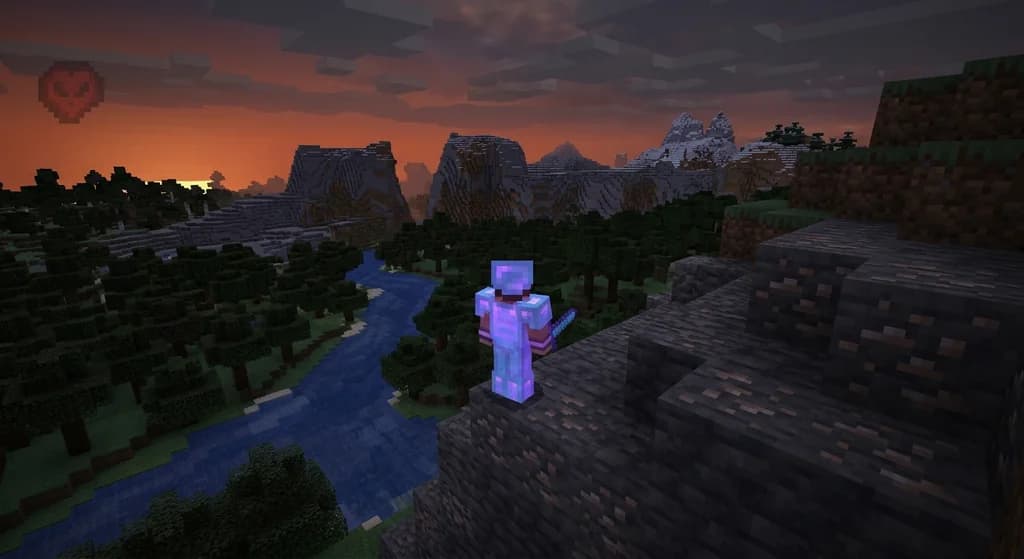
What Is Hardcore Mode in Minecraft?
Discover everything about Hardcore Mode in Minecraft: permadeath, Hard difficulty, how to enable it, death mechanics, multiplayer rules, and tips for surviving the ultimate challenge.
Have a question or another approach?
Compare notes with other readers. Include your edition and version when discussing mechanics.