How to Master the Golden Dandelion Micro-Mob Challenge (2026)
Filed under Minecraft Gameplay Remix · How we create content
TL;DR
Bored in Minecraft? Here's how to turn the Golden Dandelion's age-freezing mechanic into a full-blown collector's obsession. The minecraft micro-mob challenge combines baby mob breeding variation, Golden Dandelion specimen preservation, and Copper Golem automated feeding circuits into one long-term display project. Read this guide and you'll have a ranked, leaderboard-ready frozen baby mob zoo running by tonight.
Table of Contents
- What is the Golden Dandelion Micro-Mob Challenge?
- How to Set Up Your Micro-Mob Museum
- Best 5 Strategies for the Micro-Mob Challenge
- Why the Micro-Mob Challenge Works
- How to Put This Into Practice on Gaia Legends
- Conclusion
- FAQ
What is the Golden Dandelion Micro-Mob Challenge?
You know that feeling. You've built the mega base. You've killed the Ender Dragon three times. You've strip-mined entire mountain ranges for diamonds. And now you're standing in your perfectly lit living room, staring at a blank wall, wondering what on earth to do next.
Here's your answer: become a specimen collector.
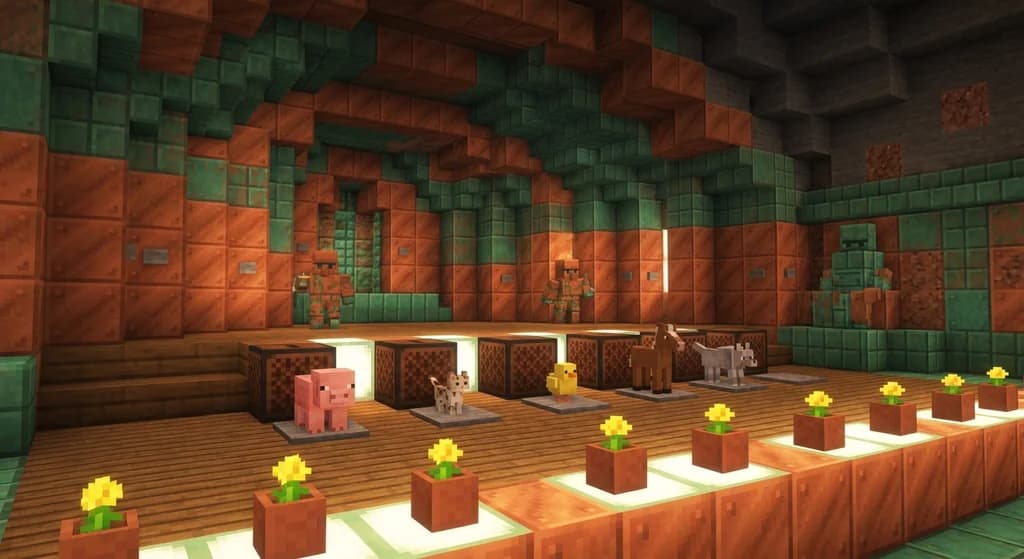
The Golden Dandelion Micro-Mob Challenge is a long-term collection and display project introduced by the Minecraft 26.1 "Tiny Takeover" drop. The goal is simple to describe and brutally satisfying to execute — breed, freeze, and display the rarest possible baby mob variants in a purpose-built museum, then automate their care using Copper Golem feeding circuits.
The Golden Dandelion Micro-Mob Challenge is a competitive Minecraft gameplay format where players use the Golden Dandelion flower to permanently pause the aging of baby mobs, then curate those frozen specimens into a ranked display collection, scored by rarity of sound variant, breeding combination, and exhibit presentation quality.
This isn't just a fun thing to do in Minecraft — it's a full design discipline. You're part zookeeper, part museum curator, part automation engineer.
The Core Mechanic Loop
The challenge runs on three interlocking systems:
- Breed — Use classic animal breeding to produce baby mobs, hunting for rare sound variants assigned randomly at birth.
- Freeze — Interact with a baby mob while holding a Golden Dandelion to stop it from aging. Green particles drifting downward confirm the freeze is active.
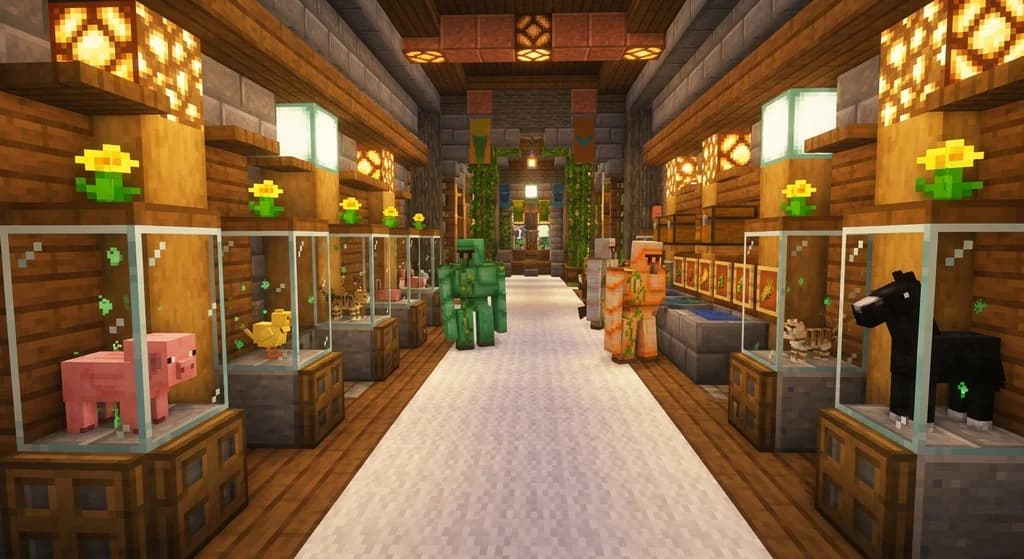
- Display & Automate — House each specimen in a glass exhibit cell. Wire up Copper Golem feeding circuits to keep the animals fed without manual intervention.
Each system feeds the next. Breeding gives you candidates. Freezing locks in your rarest finds. Automation lets your collection scale without becoming a full-time job.
Note: Interacting with an already-frozen baby mob while holding a Golden Dandelion will resume its aging — so handle your specimens carefully. One accidental right-click on your rarest piglet and the clock starts ticking again.
How to Set Up Your Micro-Mob Museum
Materials Checklist
Before you place a single glass pane, gather these essentials:
- Golden Dandelions — at least a full stack to start; you'll use more than you expect
- Glass blocks — for exhibit cells (tinted glass for premium displays)
- Name Tags — one per specimen; named mobs cannot despawn
- Copper Golems — at least 2–4 for your first automated feeding wing
- Copper Blocks — in varying oxidation states for golem interaction variety
- Dispensers — for automated food delivery in each cell
- Observers + Redstone — to trigger dispenser pulses on a timer
- Breeding materials — wheat, seeds, carrots, and golden apples depending on your target species
- Leads — for safely transporting baby mobs to their exhibit cells
World & Server Settings
- Play on Java Edition 26.1 or later — the Golden Dandelion and Tiny Takeover baby sounds are exclusive to this drop.
- Enable mob griefing if you want Copper Golems to interact naturally with the environment.
- Set the world to Normal or Hard difficulty — the challenge loses its edge on Peaceful.
- For multiplayer, designate a museum zone with claimed land to prevent accidental mob removal by other players.
Step-by-Step Setup
- Choose your biome. Build your museum in a biome that complements your collection theme — a Meadow for pastoral specimens, a Bamboo Jungle for exotic ones.
- Design your exhibit grid. Plan cells of at least 3×3×3 blocks each. Leave a 2-block service corridor behind each row for Copper Golem access.
- Install your feeding circuit. Place a Dispenser loaded with the appropriate food item in the back wall of each cell. Wire it to an Observer and a Redstone Clock set to fire every 5–10 minutes.
- Station your Copper Golems. Position one Copper Golem per wing. They'll interact with the dispensers and surrounding copper blocks, adding a living, mechanical energy to the exhibit.
- Begin breeding. Set up a dedicated breeding pen outside the museum. Breed your target species repeatedly — each baby has a randomly assigned sound variant from the new pool added in 26.1.
- Identify rare variants. Listen carefully. Cats, pigs, cows, and chickens all have new sound variants in 26.1. The "classic" variant is one of the pool options — but the new variants are what collectors prize.
- Freeze your specimen. Once you've identified a rare variant, equip your Golden Dandelion and right-click the baby. Watch for the green downward particles — that's your confirmation the freeze is locked in.
- Name and transfer. Immediately apply a Name Tag. Then lead the frozen baby to its exhibit cell.
- Log your collection. Keep a written record (or use a Lectern + Book and Quill in-museum) of each specimen's species, variant, and acquisition date.
Pro Tip: Build a "staging area" between your breeding pen and the museum — a small glass room where you can safely freeze and name-tag specimens before the risky transport leg. Losing a rare variant to a creeper on the way to the exhibit hall is a tragedy that never needs to happen.
Best 5 Strategies for the Micro-Mob Challenge
Difficulty Tiers
| Tier | Name | Rules | Scoring |
|---|---|---|---|
| Casual | The Petting Zoo | Any baby mob, any variant, no automation required | 1 point per frozen specimen |
| Standard | The Specimen Vault | Only new sound variants count; basic Copper Golem feeding required | 3 points per rare variant |
| Hardcore | The Rarity Index | Only non-"classic" variants; full Copper Golem automation; no manual feeding allowed | 10 points per specimen + bonus for full species set |
| Insane | The Eternal Menagerie | All of the above + museum must be fully themed, lit, and labeled; Gaia leaderboard submission required | Leaderboard-ranked score |
Strategy 1 — The Sound Sniper
Focus on a single species and breed it obsessively until you've collected every sound variant in that species' pool. Pigs, for example, have two new sound variants plus the classic — meaning a complete pig wing requires at least 3 frozen specimens. This focused approach lets you become the definitive expert on one mob before expanding.
Strategy 2 — The Grand Tour Collection
Go wide instead of deep. Collect one frozen baby of each eligible species — Wolf, Cat, Pig, Horse, Chicken, Cow — and build a Grand Tour exhibit where visitors can walk through and hear every new sound. This is the most visually impressive approach for multiplayer servers.
Strategy 3 — The Copper Golem Automation Race
Make the automation itself the challenge. Set a timer: you have 60 minutes to design and build a fully automated feeding circuit for at least 6 exhibit cells using only Copper Golems and redstone. Speed, elegance, and reliability are all judged. Note that the trumpet sound from a Note Block placed on a Copper Block changes based on oxidation level — use this to build an ambient soundscape that evolves as your golems age.
Strategy 4 — The Variant Hunt Speedrun
How fast can you obtain one of every non-classic sound variant across all eligible species? This is a pure RNG race — breeding as fast as possible, listening for new sounds, freezing immediately. Competitive players on Gaia Legends can submit their completion times to the server leaderboard.
Strategy 5 — The Living Diorama
The most creative tier. Instead of a sterile museum grid, build themed dioramas around each frozen baby mob — a tiny farmstead for the piglets, a cozy cottage for the kittens, a miniature stable for the foals. The frozen baby at the center of each scene becomes a piece of living art. Copper Golems serve as mechanical staff tending each diorama.
Why the Micro-Mob Challenge Works
The Game Design Behind the Obsession
The best long-term Minecraft gameplay ideas share a specific structure: a random variable that creates genuine excitement, a preservation mechanic that makes your finds feel permanent, and a display system that gives your progress meaning. The Micro-Mob Challenge has all three.
The random sound variant assignment — introduced in 26.1 across Cats, Pigs, Cows, Chickens, and more — means every breeding attempt is a lottery ticket. You're not grinding for a fixed reward; you're hunting for something genuinely rare. That unpredictability is what keeps completionists coming back.
The Golden Dandelion solves the biggest frustration of any baby mob project: time. Before 26.1, you couldn't stop a baby from growing up. Your carefully bred specimen would inevitably become an adult, losing its tiny, precious form. Now, one right-click with a Golden Dandelion locks a baby mob in place permanently — or until you choose to release it. That sense of preservation transforms a fleeting moment into a permanent trophy.
The Copper Golem, introduced in the 1.21.9 "Copper Age" drop, closes the loop. Without automation, a large collection becomes a chore — you'd spend half your playtime hand-feeding dozens of animals. Copper Golems, wired to dispensers via redstone, handle that entirely. Your job becomes curation, not maintenance.
What Makes It Replayable
- Expanding species pool — as Mojang adds new mobs with sound variants in future updates, your collection can grow indefinitely.
- Competitive leaderboards — on servers like Gaia Legends, your rarity score is always being challenged by other collectors.
- Creative evolution — the museum itself is a build project that never has to stop. New wings, new themes, new automation designs.
- Multiplayer dynamics — trading rare frozen specimens with other players, or racing to be the first to complete a full species set, adds a social layer that solo play can't replicate.
How Recent Updates Make It Possible
This challenge literally could not have existed before 2026. The Golden Dandelion (26.1) provides the preservation mechanic. The Copper Golem (1.21.9) provides the automation layer. The new baby sound variants (26.1) provide the rarity system. Three updates, three mechanics, one deeply satisfying challenge format. That's the beauty of remixing Minecraft's evolving toolset — the game keeps handing you new ingredients, and it's your job to cook something extraordinary.
How to Put This Into Practice on Gaia Legends
The Golden Dandelion Micro-Mob Challenge is already compelling in singleplayer — but on Gaia Legends, it becomes something else entirely.
Gaia runs server-wide leaderboards that track and rank the rarest collections of frozen baby mobs across the entire community. Your Rarity Index score — calculated from the number of non-classic sound variants you've preserved, the completeness of your species sets, and the automation quality of your exhibit — is visible to every player on the server. That public ranking transforms a personal project into a living competition.
The server's claim system protects your museum from griefing, so your painstakingly assembled collection stays exactly as you left it. And because Gaia supports Java + Bedrock crossplay, your friends on either platform can visit your exhibit hall and hear those rare baby sounds for themselves.
Gaia also runs seasonal collection events where specific rare variants are worth bonus leaderboard points for a limited time — creating urgent, time-limited hunts that energize the entire community.
Gaia Legends is free to join, non-pay-to-win, and supports Java + Bedrock crossplay.
Join at gaialegends.pro and remix your Minecraft experience today.
Conclusion
The Golden Dandelion Micro-Mob Challenge is one of the most satisfying long-term Minecraft gameplay ideas to emerge from the 2026 update cycle. Here's what to take away:
- The Golden Dandelion gives you permanent control over baby mob aging — one right-click freezes a specimen forever, turning a fleeting baby into a lifelong trophy.
- Random sound variants across Cats, Pigs, Cows, Chickens, and more create a genuine rarity system that makes every breeding session feel like a treasure hunt.
- Copper Golem automation scales your collection from a small hobby into a grand museum without turning maintenance into a second job.
Try the micro-mob challenge tonight. Breed your first litter, listen for a variant you've never heard before, and freeze it the moment you find one. Then share your rarest specimen in the Gaia Legends community — because the best collections deserve an audience.
FAQ
What is the Minecraft micro-mob challenge and how does it work?
The minecraft micro-mob challenge is a collection-focused gameplay format introduced alongside the 26.1 "Tiny Takeover" update. Players breed baby mobs, identify rare sound variants assigned randomly at birth, then use the Golden Dandelion to permanently freeze those babies in their juvenile form. The frozen specimens are displayed in a purpose-built museum, with Copper Golems handling automated feeding. It's scored by rarity and collection completeness.
What should I do when I'm bored in Minecraft and want a long-term project?
If you're bored in Minecraft and want something with real depth, the micro-mob challenge is one of the best things to do in Minecraft right now. It combines breeding RNG, preservation mechanics, redstone automation, and museum building into a single project that can expand indefinitely. Unlike a one-time build or boss fight, your collection grows every session and can be shared with or competed against the broader multiplayer community.
How exactly does the Golden Dandelion age-freezing mechanic work?
Equip a Golden Dandelion in your hand and right-click any baby mob. You'll see green particles drifting downward — that's the confirmation that aging has been paused. The baby will stay in its juvenile form indefinitely. Right-clicking the same frozen baby again with a Golden Dandelion will resume aging, so be careful during exhibit transfers. Always name-tag your specimen before moving it to prevent accidental despawning.
Which baby mobs have new sound variants in the 26.1 update?
The 26.1 "Tiny Takeover" update added new baby sounds for Wolf, Cat, Pig, Horse, and Chicken. Additionally, adult sound variants were added for Cats (one new variant), Pigs (two new variants), Cows (one new variant), and Chickens (one new variant). Each animal is randomly assigned one of the new variants or the original "classic" variant at spawn — making the non-classic variants the prized targets for serious collectors.
Do I need Copper Golems for the micro-mob challenge, or can I do it without automation?
Copper Golems are optional at the Casual tier — you can hand-feed your specimens and still enjoy the collection aspect. However, at Standard tier and above, full Copper Golem automation is required by the challenge rules. More practically, once your museum grows beyond 6–8 specimens, manual feeding becomes genuinely tedious. Copper Golems wired to dispensers via redstone handle feeding automatically, letting you focus on breeding, hunting variants, and expanding your exhibit design.
Can I do the micro-mob challenge on a multiplayer server?
Absolutely — multiplayer is where the challenge truly shines. On a server like Gaia Legends, server-wide leaderboards rank every player's collection by rarity score, turning your personal museum into a competitive project. You can also trade frozen specimens with other players, race to complete full species sets first, and visit each other's exhibits. The social layer adds urgency and creativity that singleplayer simply can't replicate. Make sure your museum zone is claimed to protect your collection.
Recommended
Frequently Asked Questions
What is the Minecraft micro-mob challenge and how does it work?
The minecraft micro-mob challenge is a collection-focused gameplay format introduced alongside the 26.1 "Tiny Takeover" update. Players breed baby mobs, identify rare sound variants assigned randomly at birth, then use the Golden Dandelion to permanently freeze those babies in their juvenile form. The frozen specimens are displayed in a purpose-built museum, with Copper Golems handling automated feeding. It's scored by rarity and collection completeness.
What should I do when I'm bored in Minecraft and want a long-term project?
If you're bored in Minecraft and want something with real depth, the micro-mob challenge is one of the best things to do in Minecraft right now. It combines breeding RNG, preservation mechanics, redstone automation, and museum building into a single project that can expand indefinitely. Unlike a one-time build or boss fight, your collection grows every session and can be shared with or competed against the broader multiplayer community.
How exactly does the Golden Dandelion age-freezing mechanic work?
Equip a Golden Dandelion in your hand and right-click any baby mob. You'll see green particles drifting downward — that's the confirmation that aging has been paused. The baby will stay in its juvenile form indefinitely. Right-clicking the same frozen baby again with a Golden Dandelion will resume aging, so be careful during exhibit transfers. Always name-tag your specimen before moving it to prevent accidental despawning.
Which baby mobs have new sound variants in the 26.1 update?
The 26.1 "Tiny Takeover" update added new baby sounds for Wolf, Cat, Pig, Horse, and Chicken. Additionally, adult sound variants were added for Cats (one new variant), Pigs (two new variants), Cows (one new variant), and Chickens (one new variant). Each animal is randomly assigned one of the new variants or the original "classic" variant at spawn — making the non-classic variants the prized targets for serious collectors.
Do I need Copper Golems for the micro-mob challenge, or can I do it without automation?
Copper Golems are optional at the Casual tier — you can hand-feed your specimens and still enjoy the collection aspect. However, at Standard tier and above, full Copper Golem automation is required by the challenge rules. More practically, once your museum grows beyond 6–8 specimens, manual feeding becomes genuinely tedious. Copper Golems wired to dispensers via redstone handle feeding automatically, letting you focus on breeding, hunting variants, and expanding your exhibit design.
Can I do the micro-mob challenge on a multiplayer server?
Absolutely — multiplayer is where the challenge truly shines. On a server like Gaia Legends, server-wide leaderboards rank every player's collection by rarity score, turning your personal museum into a competitive project. You can also trade frozen specimens with other players, race to complete full species sets first, and visit each other's exhibits. The social layer adds urgency and creativity that singleplayer simply can't replicate. Make sure your museum zone is claimed to protect your collection.
Related guides
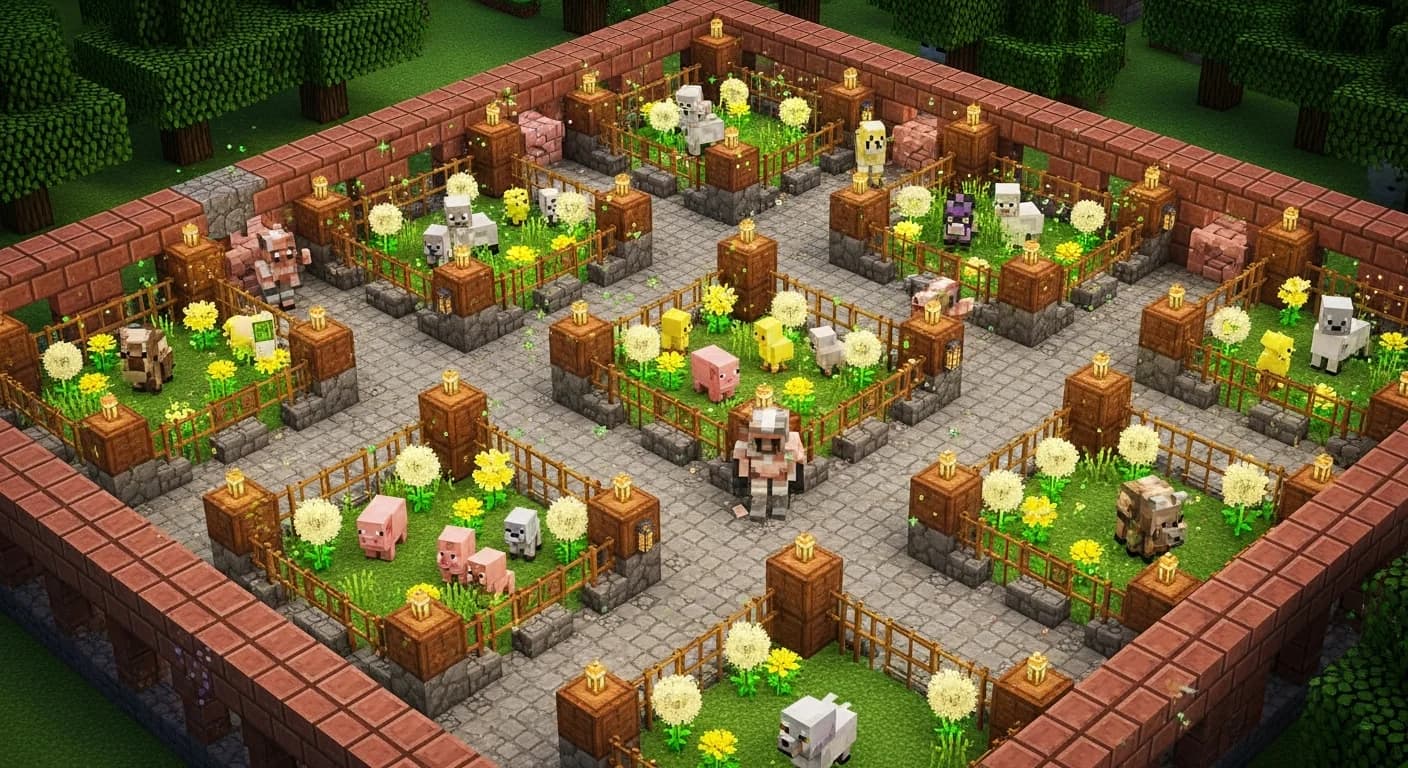
How to Build a Perpetual Baby Mob Zoo: 2026 Innovation Guide
Bored in Minecraft in 2026? Build a perpetual baby mob zoo using Golden Dandelions, Copper Golem automation, and Trumpet Note Blocks for a fresh, replayable challenge.
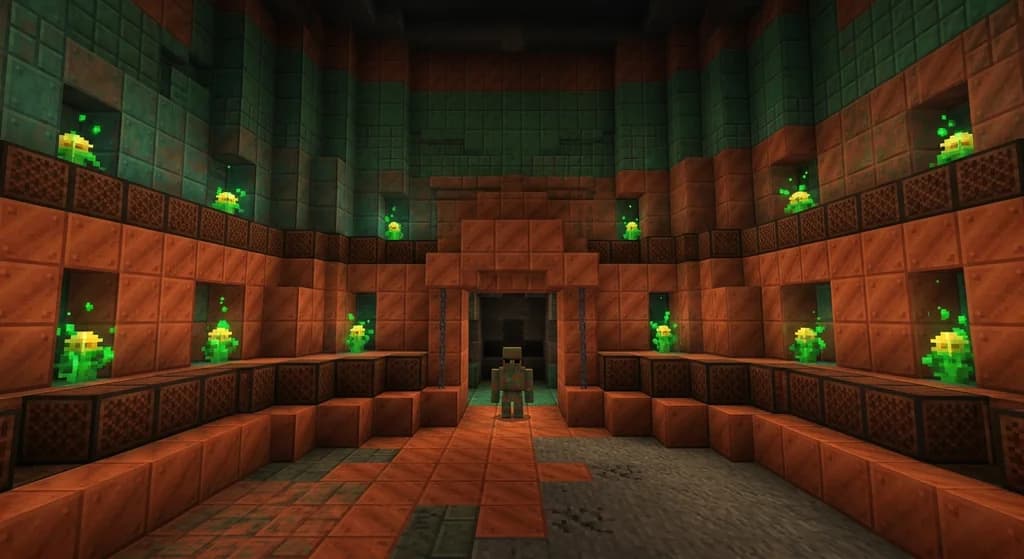
How to Create a Sound-Locked Copper Vault: 2026 Pro Guide
Discover the best new Minecraft gameplay ideas 2026: build a Sound-Locked Copper Vault using oxidized Trumpet Note Blocks, Golden Dandelion alarms, and Copper Golem security.
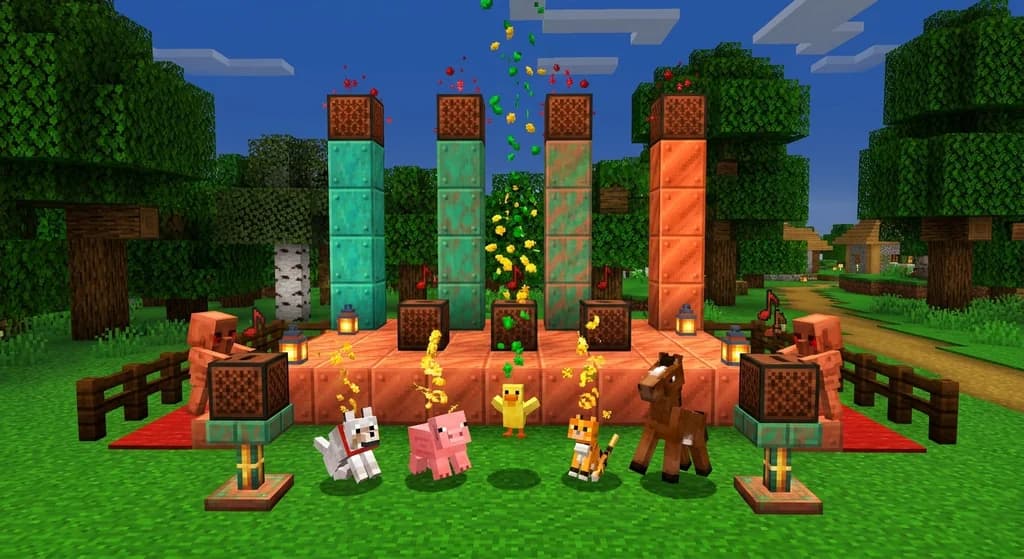
How to Build an Oxidation-Tuned Baby Mob Musical Relay 2026
Discover the best new Minecraft gameplay challenges 2026: build an Oxidation-Tuned Baby Mob Musical Relay using golden dandelion mechanics, copper trumpet note blocks, and copper golem automation.
How to Master the Eternal Baby Mob Copper Orchestra (2026)
Discover innovative Minecraft gameplay ideas for 2026: build an Eternal Baby Mob Copper Orchestra using Golden Dandelion age-freezing, oxidation trumpet pitches, and Copper Golem automation.
Have a question or another approach?
Compare notes with other readers. Include your edition and version when discussing mechanics.