How to Improve Your MCSR Ranked ELO: Competitive Guide 2026
Filed under Speedrunning & Competitive Minecraft · How we create content
Key Takeaways
| Point | Details |
|---|---|
| Fix your worst split first | Identify whether your ELO losses come from nether routing, stronghold entry, or End execution — then drill that segment in isolation. |
| Bastion routing consistency beats speed | A reliable, repeatable bastion route wins more matches than an aggressive route you fail 40% of the time. |
| Track your splits every session | Players who log their personal bests per segment improve measurably faster than those who run blind. |
| Blind portal math is a learnable skill | Mastering nether coordinate math for blind travel reduces stronghold search time dramatically in competitive matches. |
| Mental resets cost ELO | Surrendering winnable matches after one bad split is one of the most common ELO-stalling habits in MCSR Ranked. |
| Seed knowledge compounds over time | Studying top SSG seeds and their spawn structures trains your eye to read random seeds faster in ranked play. |
Table of Contents
- What Is MCSR Ranked ELO?
- Why Most Players Stop Improving
- How to Analyze Your Splits and Find Your Weakest Segment
- How to Practice Bastion Routing Effectively
- Best Strategies for Stronghold Entry and the End
- Tips for MCSR Ranked Matchmaking and Mental Game
- How to Put This Into Practice on Gaia Legends
- Conclusion
- Frequently Asked Questions
- Recommended
If you've been grinding MCSR Ranked and your ELO refuses to budge, you're not alone. Learning how to improve your MCSR Ranked ELO is one of the most searched topics in competitive Minecraft speedrunning — and for good reason. Most players hit a plateau not because they lack raw speed, but because they're practicing the wrong things. This guide breaks down exactly where ELO is won and lost in 2026, how to drill each segment with purpose, and how to build the mental habits that separate climbers from stagnators.
What Is MCSR Ranked ELO?
MCSR Ranked ELO is a numerical rating system used by the Minecraft Speedrun Ranked (MCSR) platform to match competitive players against opponents of similar skill. Every match you play adjusts your ELO: win and it rises, lose and it falls. The amount it shifts depends on the ELO difference between you and your opponent — beating a higher-rated player earns more points than beating someone below you.
MCSR Ranked uses a head-to-head format where both players race the same random seed in real time. The first player to kill the Ender Dragon wins the match. This format rewards consistency above all else. A player who finishes 80% of their runs beats a player who gets incredible splits 50% of the time — every time.
Note: MCSR Ranked runs use random seed any% glitchless rules by default. If you're practicing set seed routes, that knowledge still transfers, but you'll need to adapt to reading seeds on the fly.
Understanding how the ELO system rewards consistency is the first mindset shift. You're not trying to get a personal best every match. You're trying to finish more often than your opponent.
Why Most Players Stop Improving
The 400–600 ELO range is the most crowded bracket in MCSR Ranked. Players here usually have the mechanics — they know how bastions work, they understand triangulation — but they stall for predictable reasons:
- Reset addiction: Restarting runs after a bad overworld instead of pushing through. In ranked, a slow overworld can still win if your opponent also struggles.
- No split tracking: Running without logging times means you never know which segment is actually costing you ELO.
- Copying top-runner routes without the consistency: Watching Dream or Brentilda and copying aggressive strats that require near-perfect execution.
- Ignoring the End: Many mid-ELO players lose matches they should win because their End fight is slow or sloppy.
Warning: Don't copy a route from a world-record run until you can execute it at 90%+ consistency in practice. An aggressive bridge or tower strat that fails costs you 30–60 seconds — often the entire match.
How to Analyze Your Splits and Find Your Weakest Segment
Before you can fix anything, you need data. Use a split timer like LiveSplit to track your time at every major checkpoint:
- First log (wood + tools)
- Nether entry
- Bastion clear
- Fortress blaze rods
- Nether exit
- Stronghold entry
- End portal lit
- Dragon kill
After ten ranked matches, look at your splits. Which segment has the highest variance? That's your target. Drilling your worst segment for one week produces more ELO gain than general grinding for a month.
Why Split Variance Matters More Than Average Time
A segment where you average 3:30 but sometimes hit 5:00 is more dangerous than a segment where you average 3:50 consistently. Ranked is about not handing your opponent free wins. Variance is the enemy.
Pro Tip: Export your LiveSplit history to a spreadsheet once a week. Sort by your worst segment. You'll immediately see a pattern — most players have one or two segments that account for 70% of their time losses.
How to Practice Bastion Routing Effectively
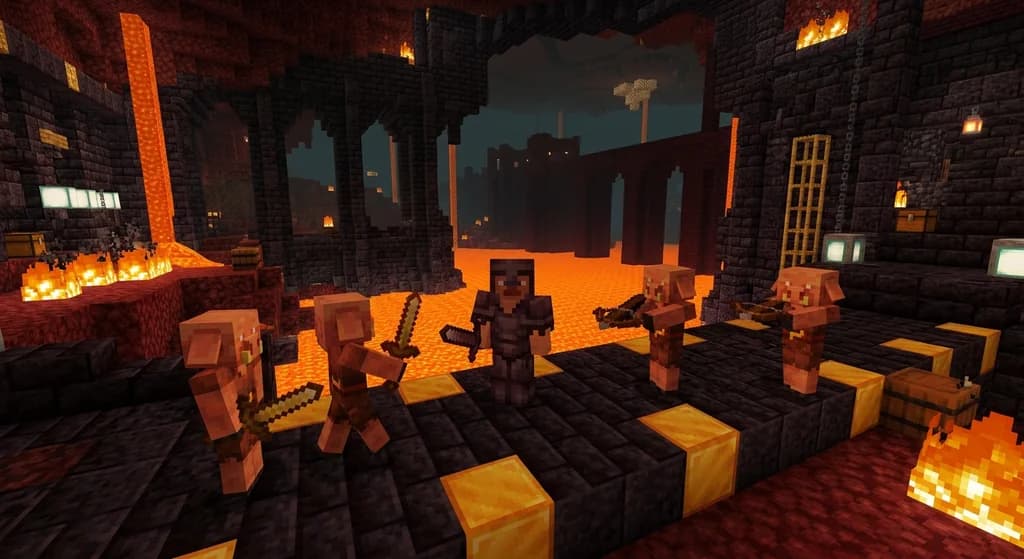
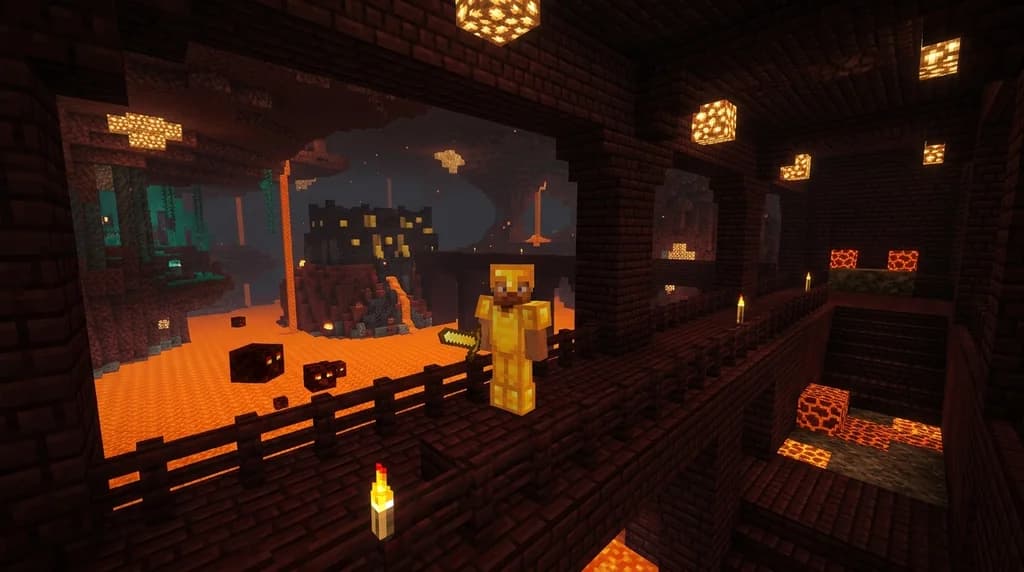
Bastion routing is the process of navigating a bastion remnant to collect enough gold and blaze rods (via bartering or looting) to progress through the run efficiently. It's the segment where mid-ELO players lose the most time.
There are four bastion types in Minecraft: bridge, hoglin stables, housing, and treasure. Each has a different optimal route. According to the Minecraft Wiki, bastions generate in all Nether biomes except basalt deltas, meaning you'll encounter them frequently in ranked seeds.
How to Build a Repeatable Bastion Route
- Pick one bastion type to master first. Most competitive runners prioritize bridge or housing bastions for their predictable layouts.
- Run that type in creative mode until you can navigate it blindfolded.
- Practice in survival on a fixed seed that spawns your chosen type.
- Time yourself from nether entry to bastion exit. Aim for consistency, not speed.
- Gradually add pressure by setting a timer and forcing yourself to commit to routes even when the loot feels suboptimal.
For deeper seed-reading skills that carry over into bastion recognition, check out our guide on Best Minecraft Speedrun Seeds for Set Seed Glitchless 2026 — understanding how structures generate helps you read bastions faster on random seeds.
Best Strategies for Stronghold Entry and the End
Your nether-to-stronghold transition is where close matches are decided. A clean blind portal followed by fast triangulation can swing a match by 45–90 seconds.
Blind Portal and Triangulation
The blind portal technique uses nether coordinate math to travel to the approximate overworld location of a stronghold before building your portal. The key formula: multiply your nether X and Z coordinates by 8 to get your approximate overworld position. Strongholds generate in rings around the world origin, so landing close to a ring boundary before exiting saves enormous search time.
For a full breakdown of the coordinate math and triangulation steps, our companion post How to Master Blind Portals for Minecraft Speedrunning in 2026 covers every calculation in detail.
End Fight Efficiency
Don't neglect the End. A clean dragon fight involves:
- Pre-placing beds near the portal for burst damage
- Targeting exposed crystals immediately on entry
- Knowing when to bed-bomb vs. when to wait for the dragon to perch
Many runners at 500–700 ELO lose matches because they arrive at the End first but take 90+ seconds on the fight. Practice your End fight in creative mode on a flat world with a pre-spawned dragon.
Tips for MCSR Ranked Matchmaking and Mental Game
Competitive Minecraft speedrunning in 2026 is as much a mental game as a mechanical one. Here's how to approach matchmaking strategically:
| Habit | Low-ELO Behavior | High-ELO Behavior |
|---|---|---|
| Bad overworld | Immediately reset | Push through — opponent may also struggle |
| Lost bastion | Tilt and rush | Adapt route, stay composed |
| Behind at nether exit | Give up match | Play for opponent mistake |
| Stronghold miss | Panic spiral | Execute triangulation calmly |
| End fight | Improvise | Use practiced, repeatable strat |
How to Build Ranked Match Momentum
- Play sessions of 5–10 matches maximum. Fatigue causes tilt, and tilt causes ELO loss.
- After a loss, review the split where you fell behind — not to punish yourself, but to identify one fixable thing.
- Set a weekly ELO target of +25 to +50 points, not a daily one. Variance is normal.
For a broader strategic framework on climbing the ranked ladder, our deep-dive How to Climb MCSR Ranked ELO: 2026 Competitive Strategy Guide covers matchmaking psychology and long-term progression planning in full detail.
How to Put This Into Practice on Gaia Legends
Drilling competitive speedrun segments requires a server environment that doesn't add lag to your execution. That's where Gaia Legends comes in.
Gaia Legends provides high-performance server instances with low-latency connections, meaning your practice sessions reflect true mechanical performance — not server jitter. You can spin up dedicated practice worlds for bastion routing, stronghold triangulation, and End fight repetition without the overhead of a local server setup.
Specific features that benefit competitive runners:
- Dedicated practice world instances — run the same seed hundreds of times without world corruption or lag spikes interfering with your splits.
- Java + Bedrock crossplay — practice alongside friends regardless of platform, useful for co-op split analysis sessions.
- Non-pay-to-win environment — no rank advantages, so your practice reflects real competitive conditions.
Gaia Legends is free to join, non-pay-to-win, and supports Java + Bedrock crossplay. Join at gaialegends.pro and start your legend today.
Conclusion
Improving your MCSR Ranked ELO comes down to three things:
- Find your worst split using a timer and fix it with isolated practice before moving on.
- Build consistent, repeatable routes — especially for bastions and blind portals — rather than chasing aggressive strats you can't sustain.
- Protect your mental game by capping session length, reviewing losses constructively, and setting realistic weekly ELO targets.
The gap between 500 ELO and 900 ELO isn't raw speed. It's the player who finishes more runs. Start tracking your splits today, drill your weakest segment this week, and watch your ELO respond.
Ready to play? Join Gaia Legends today — no pay-to-win, Java + Bedrock crossplay.
- Java:
join.gaialegends.pro - Bedrock:
join.gaialegends.pro— Port19132
Further reading
These references were recorded with the article; specific claims have not been matched to source excerpts.
Frequently Asked Questions
How do I improve my MCSR Ranked ELO as a beginner?
To improve your MCSR Ranked ELO as a beginner, start by installing a split timer like LiveSplit and tracking your time at each major checkpoint — nether entry, bastion clear, fortress, stronghold, and dragon kill. After 10 matches, identify your slowest segment and drill only that in practice worlds. Consistency in finishing runs beats chasing fast splits you can't sustain.
What ELO range is considered good in MCSR Ranked?
In MCSR Ranked, the majority of active players sit between 400 and 700 ELO. Reaching 800+ puts you in the top tier of consistent competitive runners. ELO above 1000 represents elite-level play. Don't benchmark against top streamers — focus on your own week-over-week trend. A steady +25 to +50 ELO per week is excellent progress for most players.
What is the best bastion type to learn first for speedrunning?
Most competitive runners recommend learning the bridge bastion or housing bastion first because their layouts are more predictable than hoglin stables or treasure bastions. Start in creative mode on a fixed seed, memorize the optimal loot path, then transfer that knowledge to survival. Mastering one type deeply beats knowing four types poorly.
How does blind portal technique work in MCSR Ranked?
The blind portal technique involves building your nether portal at coordinates calculated to land near a stronghold in the overworld. Multiply your nether X and Z by 8 to get your approximate overworld position, then aim for a known stronghold ring radius from the world origin. This reduces your surface search time significantly compared to exiting at a random location.
How many ranked matches should I play per session to improve fastest?
Most experienced MCSR runners recommend capping sessions at 5–10 ranked matches. Beyond that, mental fatigue leads to tilt — a state where you make impulsive decisions like resetting winnable runs or rushing segments. Short, focused sessions with post-match split review produce faster ELO gains than marathon grinding sessions.
Does practicing set seed runs help with random seed MCSR Ranked?
Yes, significantly. Set seed practice trains your eye to recognize structure layouts, bastion types, and fortress geometry faster when you see them on random seeds. It also builds muscle memory for routing decisions without the cognitive overhead of reading a new seed simultaneously. The pattern recognition transfers directly into faster real-time decision-making in ranked matches.
Related guides
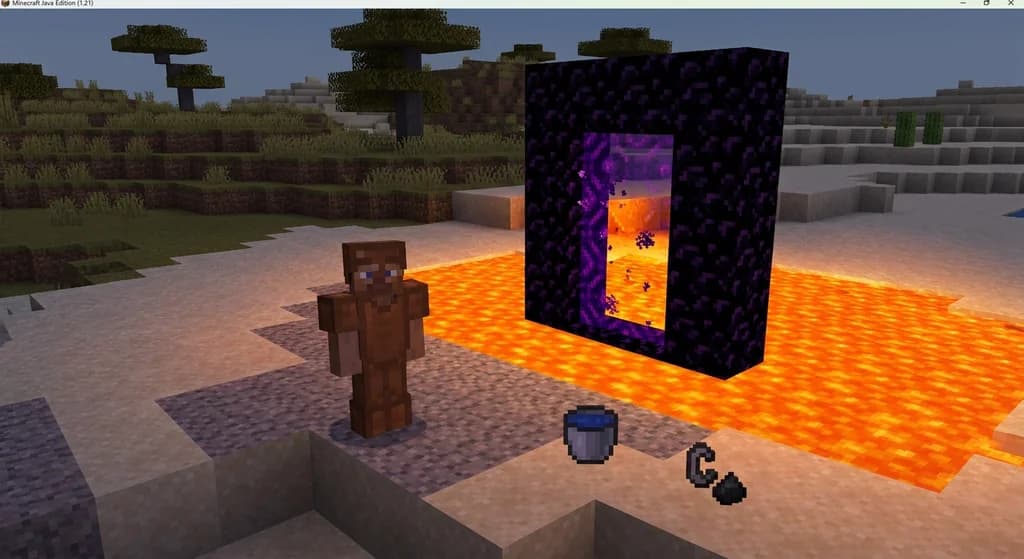
How to Build a Minecraft Speedrun Portal Fast: 2026 Pro Methods
Master the fastest Minecraft speedrun portal methods in 2026. Learn lava pool construction, bucket techniques, and pro tips to shave seconds off every run.
How to Climb MCSR Ranked ELO: 2026 Competitive Strategy Guide
Learn how to climb MCSR Ranked ELO in 2026 with proven strategies, practice methods, matchmaking tips, and competitive Minecraft speedrun tactics.
How to Speedrun Minecraft in 2026: The Complete Beginner's Guide
Learn how to speedrun Minecraft in 2026 with this complete beginner's guide. Master categories, portal building, bastion routing, and practice methods to...
7 Best Minecraft Speedrun Practice Maps for Pro Training 2026
Discover the 7 best Minecraft speedrun practice maps for 2026. Train bastion routing, nether travel, and dragon mechanics to cut your run time fast.
Have a question or another approach?
Compare notes with other readers. Include your edition and version when discussing mechanics.