How to Build an Automated Copper Symphony in Minecraft 2026
Filed under Minecraft Gameplay Remix · How we create content
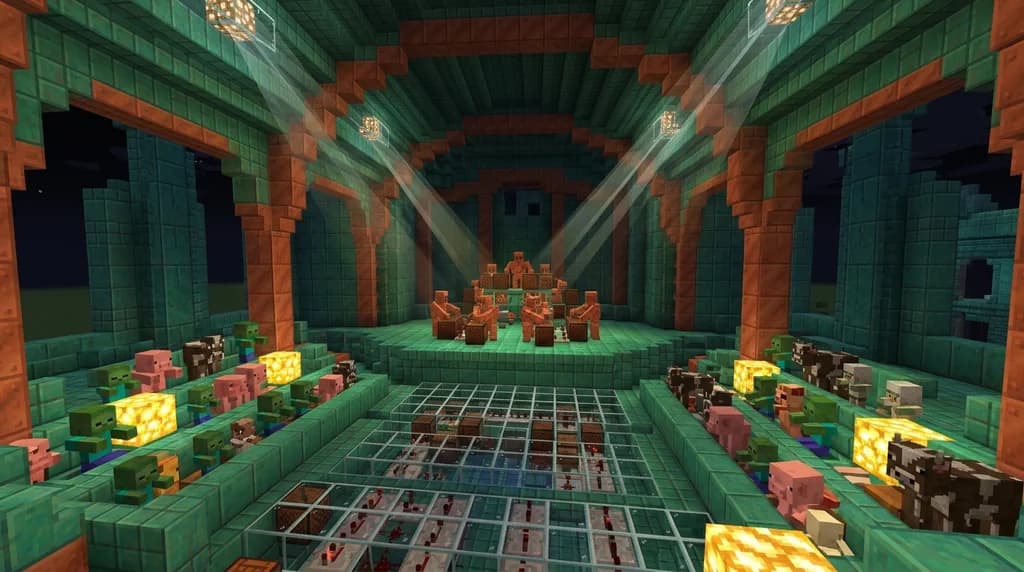
TL;DR
Bored in Minecraft? Here's how to build a fully automated Copper Symphony using the game's newest mechanics. Combine Copper Golem autonomous redstone activation, copper trumpet note blocks with oxidation-based pitch shifting across four tonal tiers, and Golden Dandelion-preserved baby mobs as living stage performers. By the end of this guide you'll have a working, self-playing concert hall that sounds different every oxidation cycle.
Table of Contents
- What is the Automated Copper Symphony?
- How to Set Up Your Copper Symphony Hall
- Best Strategies for Mastering the Copper Symphony
- Why the Copper Symphony Works
- How to Put This Into Practice on Gaia Legends
- Conclusion
- FAQ
What is the Automated Copper Symphony?
You know that feeling — you log into Minecraft, stare at your fully lit base, your sorted chests, your mob farm humming away, and think: now what? The world feels complete. Finished. Dead.
The Automated Copper Symphony is the answer to that feeling, and it's one of the most creative things to do in Minecraft right now.
The Automated Copper Symphony is a self-playing musical installation that uses Copper Golems as autonomous performers, oxidized copper blocks as pitch-shifting instrument platforms, and Golden Dandelion-frozen baby mobs as living, sound-emitting audience members — all wired together into a concert hall that evolves its own sound over time as copper oxidizes.
This isn't just a redstone music box. It's a living instrument. The symphony changes as your world ages. A freshly placed copper trumpet note block rings bright and sharp. Weeks later, the same block — now fully oxidized — produces a deeper, mellower tone. Your concert hall literally grows old gracefully, and the music shifts with it.
This is one of those Minecraft gameplay ideas that sits at the intersection of technical building, redstone engineering, and genuine artistic expression. It's replayable because no two oxidation timelines are identical, and it's shareable because the results are genuinely beautiful to listen to.
The Core Mechanic Trio
Three mechanics from the 2025–2026 update cycle make this possible:
- Copper Trumpet Note Blocks (Java 26.1, March 2026): Place a note block on top of any copper block and it plays a trumpet sound. The pitch and timbre vary based on the oxidation level of the copper block beneath it — four distinct tonal stages from fresh copper to fully oxidized.
- Copper Golems (Java 1.21.9, September 2025): These autonomous mechanical companions wander and press buttons and note blocks on their own. They are the self-playing "hands" of your symphony.
- Golden Dandelion Baby Mobs (Java 26.1, March 2026): Feed a baby mob a Golden Dandelion and it stops aging permanently. These eternally young creatures emit their new baby-specific sounds, becoming living ambient instruments in your hall.
Together, these three mechanics create something no single mechanic could achieve alone.
How to Set Up Your Copper Symphony Hall
Materials You'll Need
Gather these before you start building:
- Copper Blocks — at least 64, ideally 128+ (mix of fresh, exposed, weathered, and oxidized for instant tonal variety)
- Note Blocks — one per copper block you want as an instrument (match quantities)
- Copper Golems — minimum 4, ideally 8–12 for a full ensemble feel
- Copper Golem Statue Blocks — to place and activate your golems
- Golden Dandelions — one per baby mob you want to freeze
- Baby mobs of choice — Baby Wolves, Cats, Pigs, Horses, or Chickens all have unique new sound variants from the 26.1 update
- Redstone, Observers, Comparators — for timing circuits and golem guidance channels
- Waxed Copper Blocks — to lock specific sections of your hall at a chosen oxidation stage
- Glass Panes or Slabs — for audience seating areas and sight lines
- Leads and Fence Posts — to position baby mob performers
World Settings and Server Requirements
- Play on Java Edition 26.1 or later to access all three core mechanics
- Set your world to Normal or Hard difficulty — Copper Golems need mobs enabled
- Disable mob griefing via
/gamerule mobGriefing falseif you want golems to press note blocks only (prevents other mob interactions from disrupting your build) - For multiplayer: designate a Sound Director role — one player who manages oxidation timing and waxing decisions
Note: Copper Golems are autonomous but not perfectly predictable. Build your stage so that any note block press is musically valid — that way the golem's randomness becomes jazz, not noise.
Step-by-Step Build Guide
Follow these steps in order for the cleanest build experience:
-
Lay your stage floor using a mix of copper block oxidation stages. A recommended layout: fresh copper on the left wing, exposed copper center-left, weathered copper center-right, and oxidized copper on the right wing. This creates a natural pitch gradient from high to low across the stage.
-
Place note blocks on top of every copper block in your instrument zone. Right-click each note block to tune it — each oxidation tier already shifts the base trumpet timbre, so you're layering pitch tuning on top of tonal color.
-
Deploy your Copper Golems using Copper Golem Statue Blocks at the back of the stage. Place them in groups of 2–3 per stage wing so they naturally drift toward the note blocks in their zone.
-
Build audience pens on either side of the main stage using fence posts and leads. This is where your Golden Dandelion baby mobs will live.
-
Spawn and freeze your baby mobs. Spawn baby versions of Wolves, Cats, Pigs, Horses, and Chickens. Each species now has randomized adult sound variants, but in baby form they use the new baby-specific sounds added in 26.1. Hold a Golden Dandelion and interact with each baby mob — you'll see green particles drifting downward, confirming they are now age-locked forever.
-
Wire your timing circuit. Use a simple clock circuit (observer chain or repeater loop) to send periodic redstone pulses through the stage. This doesn't force the golems — it supplements them, triggering additional note block presses on a rhythm your golems can improvise around.
-
Wax your chosen sections. Decide which oxidation stages you want to preserve permanently and apply honeycomb to wax those copper blocks. Leave others unwaxed so they continue aging. This is your first major artistic decision as a Symphony Architect.
-
Test and listen. Stand in the center of the hall, close your eyes (metaphorically), and let it play. Adjust golem placement, note block tuning, and timing circuits until the result feels musical rather than random.
Pro Tip: Name your Copper Golems using name tags before deploying them — "Viola," "Cello," "Brass," etc. It makes debugging golem behavior feel like conducting, not troubleshooting.
Best Strategies for Mastering the Copper Symphony
Difficulty Tiers
| Tier | Name | Setup | Challenge |
|---|---|---|---|
| Casual | The Busker | 1 golem, 8 note blocks, 2 baby mobs | Just vibe — no timing circuit required |
| Standard | The Ensemble | 4 golems, 32 note blocks, 5 baby mob species | Add a repeater clock for rhythm backbone |
| Hardcore | The Orchestra | 8+ golems, 64+ note blocks, all 5 species frozen | Full oxidation gradient, no waxing allowed — let it evolve |
| Insane | The Maestro | 12 golems, 128 note blocks, 10+ baby mobs | Gaia server-side sound dampening required for clean audio |
Strategy 1 — The Oxidation Timeline Score
Instead of building a static symphony, treat your copper hall as a living composition. Document the sound of your hall on Day 1, Day 30, and Day 90 of your world. Each oxidation stage produces a noticeably different trumpet timbre, so your symphony literally writes new music as time passes.
Leave all copper blocks unwaxed for the first month. Then, when you find the sound you love most, wax everything in place. You've just composed a permanent piece of music locked in copper.
Strategy 2 — Species Choir Zoning
Each baby mob species in 26.1 has distinct new sounds. Use this to your advantage:
- Baby Wolves — high, plaintive calls; place near the treble note block zone (fresh copper)
- Baby Cats — bright, chirpy sounds; pair with exposed copper mid-range trumpets
- Baby Chickens — rapid, percussive clucks; use as a rhythm section near your timing clock output
- Baby Pigs — warm, round tones; pair with weathered copper for a mid-bass blend
- Baby Horses — resonant, airy whinnies; anchor the oxidized copper bass section
This Species Choir Zoning strategy turns your baby mob audience into a genuine second instrument layer beneath the copper trumpets.
Strategy 3 — The Conductor's Podium
Build a raised platform at the center of the hall with a single lever. Wiring this lever to a master kill-switch on your timing circuit lets you "conduct" the symphony — flipping it pauses the clock pulses, leaving only the Copper Golems playing freely. Flip it back and the full rhythm returns. This gives you real-time performance control over your automated build.
Pro Tip: Use a Comparator in subtraction mode to detect when a Copper Golem presses a note block and feed that signal back into a secondary lighting circuit. Your hall will pulse with light every time a golem plays — turning the whole room into a visual equalizer.
Strategy 4 — Multiplayer Symphony Battles
For servers, run a Symphony Showdown: two teams each build a Copper Symphony hall in adjacent rooms. After 30 minutes of build time, a neutral judge walks through both halls and scores them on:
- Tonal variety (number of oxidation stages used)
- Baby mob species diversity
- Golem choreography (how naturally the golems move through the space)
- Emotional impact (yes, this is subjective — that's the point)
This is one of the best Minecraft challenges you can run on a server with friends who love both redstone and creativity.
Why the Copper Symphony Works
The Design Logic
Most Minecraft music builds are static. You wire a note block sequence, it plays the same loop forever, and after ten minutes you've heard everything it has to offer. The Copper Symphony breaks this pattern in three ways.
First, Copper Golems introduce genuine unpredictability. They don't follow a script. They wander, they press note blocks at irregular intervals, and their behavior changes based on their environment. The result is music that never repeats exactly — it has a character, not just a pattern.
Second, oxidation-based pitch shifting means the instrument itself evolves. The four oxidation stages of copper each produce a distinct trumpet timbre from the note block above. A symphony hall built today will sound measurably different in three months of real-world play. That's a build with a lifespan — something almost no other Minecraft construction can claim.
Third, Golden Dandelion baby mobs add organic ambient texture. These aren't decorations. Each baby mob species has unique new sounds introduced in Java 26.1, and with each baby mob species offering multiple randomized sound variants, no two audiences sound the same. The randomized variant assigned to each mob at spawn means your audience section is acoustically unique to your world.
What Makes It Replayable
- Every new world has different mob sound variant assignments — your choir is always fresh
- Copper oxidation is a one-way clock you can't rush or rewind (without commands), making each playthrough a unique timeline
- Golem behavior is semi-random, so the "performance" is never identical
- Waxing decisions are permanent artistic choices — you can't undo them without scraping
The Numbers That Matter
The trumpet note block system supports 4 distinct oxidation tiers — fresh, exposed, weathered, and fully oxidized — each with its own tonal character. Your Copper Golems can service a stage area of roughly 9×9 blocks before they start drifting off-stage, which defines your optimal instrument density. And with 5 baby mob species each carrying randomized sound variants, a fully stocked audience section can produce dozens of unique ambient sound combinations per session.
How to Put This Into Practice on Gaia Legends
Building a Copper Symphony on a solo world is deeply satisfying. Building one on Gaia Legends is a whole other experience.
Gaia's server infrastructure is purpose-built for exactly this kind of complex, sound-heavy technical build. The advanced server-side sound dampening system means that when your 12 Copper Golems are all pressing note blocks simultaneously alongside 10 frozen baby mobs producing ambient sound, the audio stack stays clean. No overlapping noise artifacts. No audio-processing lag. Just music.
Beyond the technical advantage, Gaia's player community includes a dedicated Technical Builders guild where Symphony Architects share schematics, compete in monthly build showcases, and collaborate on multi-room concert halls that span entire server districts.
The server's Wilderness zones add an extra layer of discovery — rare copper deposits and naturally spawning Copper Golems can be found in the wild, meaning your symphony materials feel earned, not just crafted.
Gaia Legends is free to join, non-pay-to-win, and supports Java + Bedrock crossplay — so your friends on any platform can attend your concert.
Join at gaialegends.pro and remix your Minecraft experience today.
Conclusion
The Automated Copper Symphony is proof that Minecraft in 2026 has more creative depth than ever. Three mechanics — Copper Golem automation, copper trumpet oxidation pitch-shifting, and Golden Dandelion baby mob preservation — combine into something that feels genuinely new.
Here are your three takeaways:
- Start simple: One golem, eight note blocks, two frozen baby mobs. Get the sound first, then scale.
- Embrace the timeline: Don't wax everything immediately. Let your hall age, listen to it change, then decide what to preserve.
- Make it a performance: The Conductor's Podium and Symphony Showdown formats turn your build into a social experience, not just a solo project.
Try the Copper Symphony tonight and share your results — screenshot your oxidation gradient stage layout and tag it #CopperSymphony so the community can hear what you've built.
FAQ
What is a minecraft copper golem music guide and how does this build use it?
A minecraft copper golem music guide teaches you to use Copper Golems — autonomous redstone-pressing companions added in Java 1.21.9 — as self-playing musicians. In the Copper Symphony build, golems wander a stage lined with trumpet note blocks placed on copper blocks of varying oxidation levels, pressing them unpredictably and creating music that never loops the same way twice.
What should I do when I'm bored in Minecraft and have already built everything?
The Copper Symphony is one of the best answers to Minecraft boredom for experienced players. It combines technical redstone work, architectural design, acoustic experimentation, and long-term world progression (via copper oxidation) into a single project. It's not a one-session build — it's a living installation that rewards you for logging back in weeks later.
How does oxidation affect copper trumpet note blocks?
Note blocks placed on top of copper blocks play a trumpet instrument sound, introduced in Java 26.1. The specific timbre and tonal character of that trumpet sound shifts depending on the oxidation stage of the copper block beneath it — fresh copper produces one tone, exposed copper another, weathered a third, and fully oxidized copper a fourth. This gives you four distinct instrument voices from a single block type.
How do Golden Dandelions work with baby mobs in this build?
Introduced in Java 26.1, the Golden Dandelion stops a baby mob from aging when you interact with it while holding the flower. Green particles drifting downward confirm the effect. In the Copper Symphony, you use this mechanic to create a permanent "audience" of baby mobs whose unique new baby sounds — added in the same update — contribute ambient tonal texture to your hall indefinitely.
Do I need a server to build the Copper Symphony, or can I do it solo?
You can absolutely build the Copper Symphony in a solo survival or creative world on Java Edition 26.1 or later. However, large-scale builds with 8+ Copper Golems and many simultaneous note block triggers can produce audio overlap issues on standard clients. A server like Gaia Legends with dedicated sound dampening handles this cleanly, making it the better environment for full-scale orchestra builds.
How many Copper Golems do I need for a functional Copper Symphony?
A minimum of 4 Copper Golems is enough to create a musically interesting automated performance. Each golem naturally covers a roughly 9×9 block area of stage before drifting, so plan your instrument layout around that range. For a full orchestral experience across a wide stage with multiple oxidation zones, 8–12 golems is the sweet spot — enough for genuine ensemble behavior without the golems crowding each other out.
Recommended
Frequently Asked Questions
What is a minecraft copper golem music guide and how does this build use it?
A minecraft copper golem music guide teaches you to use Copper Golems — autonomous redstone-pressing companions added in Java 1.21.9 — as self-playing musicians. In the Copper Symphony build, golems wander a stage lined with trumpet note blocks placed on copper blocks of varying oxidation levels, pressing them unpredictably and creating music that never loops the same way twice.
What should I do when I'm bored in Minecraft and have already built everything?
The Copper Symphony is one of the best answers to Minecraft boredom for experienced players. It combines technical redstone work, architectural design, acoustic experimentation, and long-term world progression via copper oxidation into a single project. It's not a one-session build — it's a living installation that rewards you for logging back in weeks later to hear how the sound has evolved.
How does oxidation affect copper trumpet note blocks?
Note blocks placed on top of copper blocks play a trumpet instrument sound, introduced in Java 26.1. The timbre and tonal character shifts depending on the oxidation stage of the copper block beneath — fresh copper produces one tone, exposed copper another, weathered a third, and fully oxidized copper a fourth. This gives you four distinct instrument voices from a single block type, making oxidation a built-in pitch-shifting system.
How do Golden Dandelions work with baby mobs in the Copper Symphony build?
Introduced in Java 26.1, the Golden Dandelion stops a baby mob from aging when you interact with it while holding the flower — confirmed by green particles drifting downward. In the Copper Symphony, you use this to create a permanent audience of baby mobs whose unique new baby sounds contribute ambient tonal texture to your hall indefinitely. Each baby mob species has distinct sounds, making species placement an artistic choice.
Do I need a server to build the Copper Symphony, or can I do it solo?
You can build the Copper Symphony in a solo survival or creative world on Java Edition 26.1 or later. However, large-scale builds with 8+ Copper Golems and many simultaneous note block triggers can produce audio overlap issues on standard clients. A server like Gaia Legends with dedicated sound dampening handles this cleanly, making it the better environment for full-scale orchestra builds with 64 or more note blocks active.
How many Copper Golems do I need for a functional Copper Symphony?
A minimum of 4 Copper Golems is enough for a musically interesting automated performance. Each golem naturally covers a roughly 9×9 block stage area before drifting, so plan your instrument layout around that range. For a full orchestral experience across a wide stage with multiple oxidation zones, 8–12 golems is the sweet spot — enough for genuine ensemble behavior without the golems crowding each other out or missing note blocks entirely.
Related guides
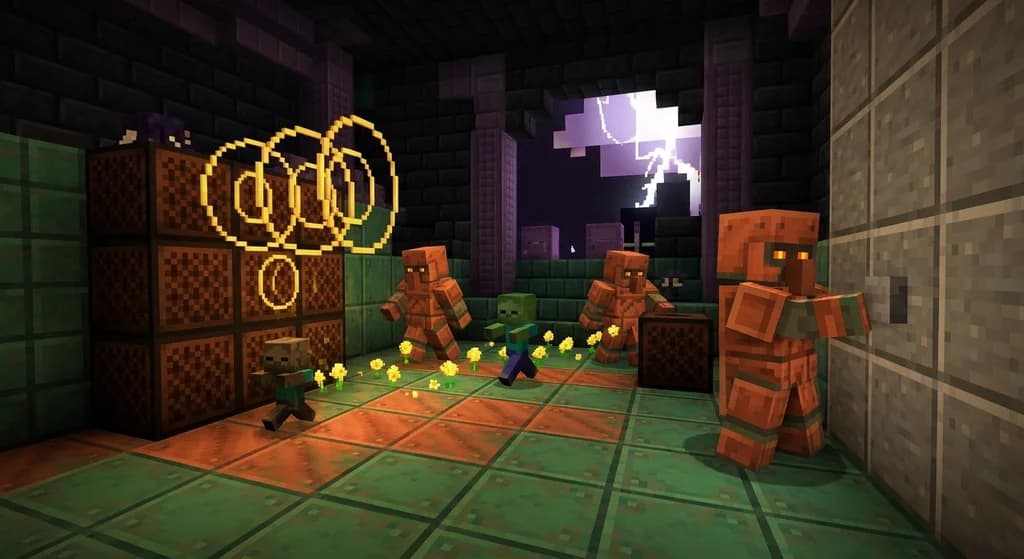
How to Build a Rhythmic Copper Golem Tiny Mob Dungeon 2026
Discover unique Minecraft game ideas 2026: build a Rhythmic Copper Golem Tiny Mob Dungeon using trumpet pitch oxidation, Golden Dandelion stasis, and End flashing skylight cues.
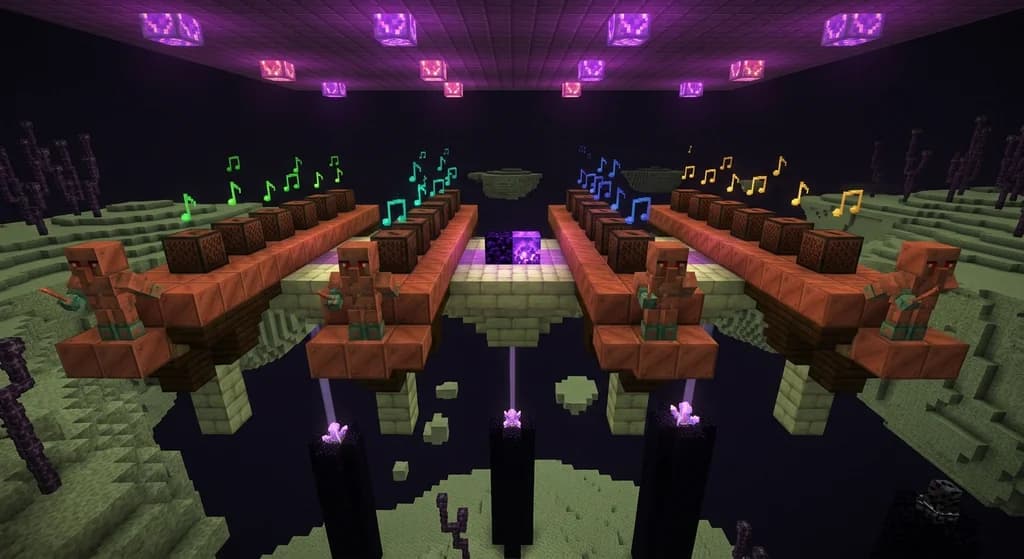
How to Build a Flash-Sync Copper Trumpet Rhythm Trial 2026
Master minecraft redstone challenges 2026: build a Flash-Sync Copper Trumpet Rhythm Trial using copper trumpet pitch oxidation and The End's flashing skylight.
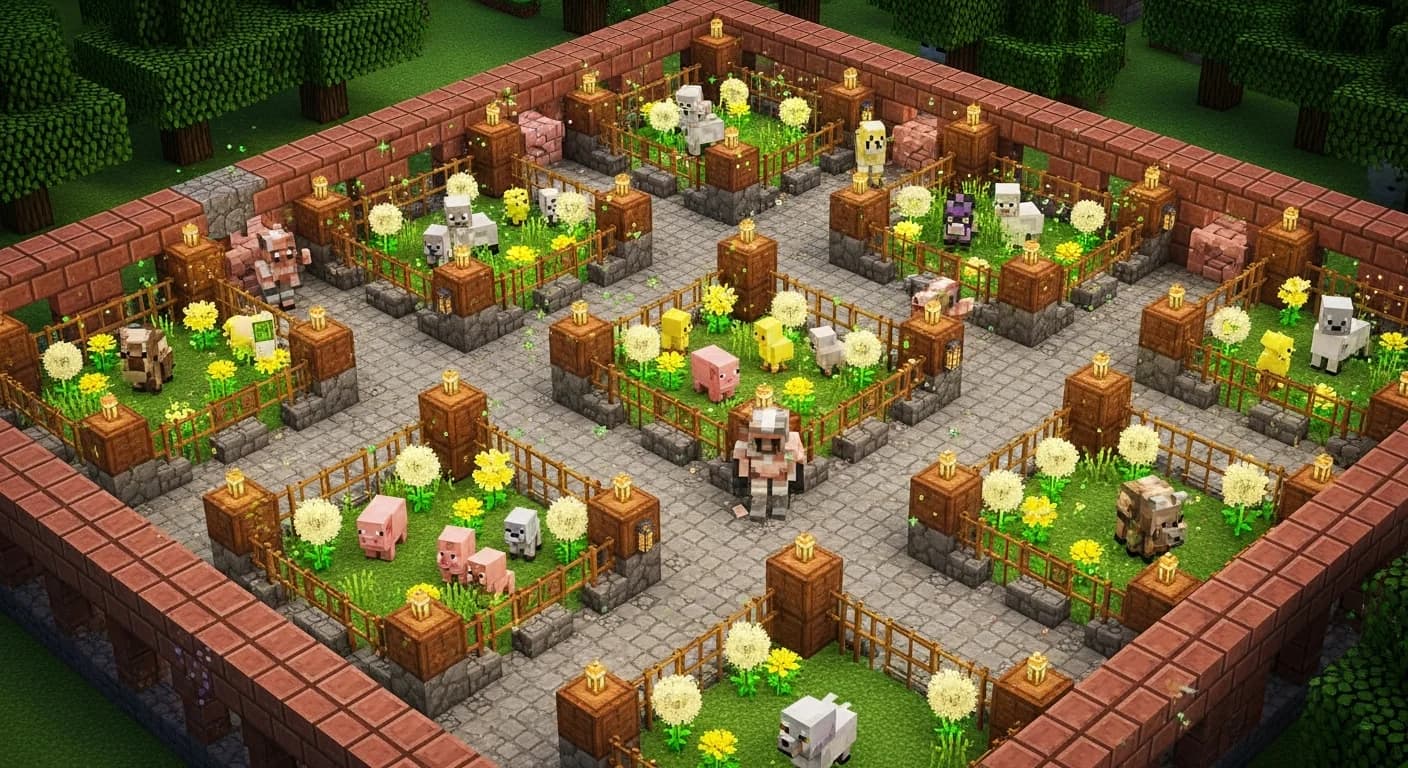
How to Build a Perpetual Baby Mob Zoo: 2026 Innovation Guide
Bored in Minecraft in 2026? Build a perpetual baby mob zoo using Golden Dandelions, Copper Golem automation, and Trumpet Note Blocks for a fresh, replayable challenge.
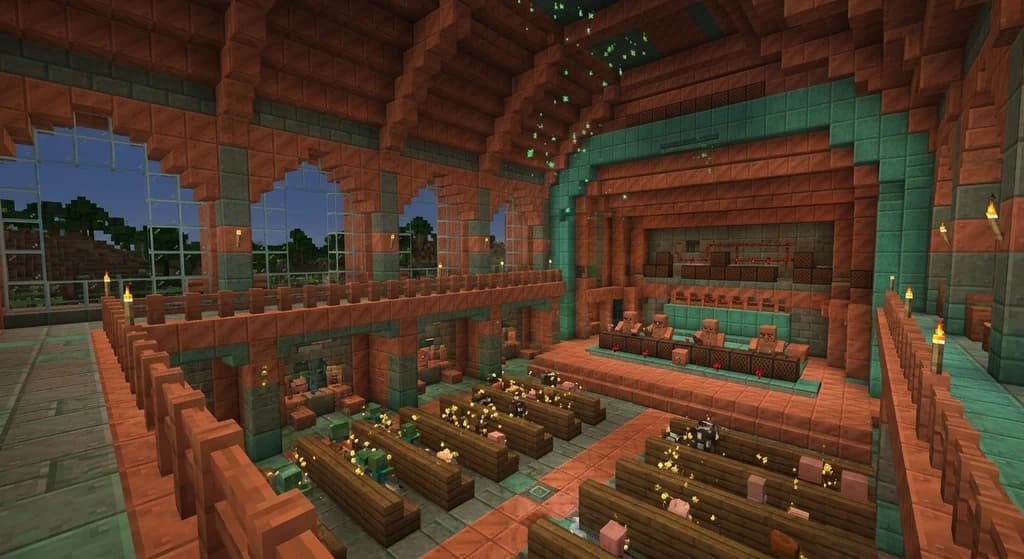
How to Master the Perpetual Tiny Mob Copper Orchestra 2026
Discover the ultimate Minecraft gameplay challenge for bored players: build a Perpetual Tiny Mob Copper Orchestra using Golden Dandelions, Copper Golems, and Oxidized Trumpets in 2026.
Have a question or another approach?
Compare notes with other readers. Include your edition and version when discussing mechanics.