How to Manage Decision Fatigue in Hardcore Minecraft (2026)
Filed under Hardcore Survival & Permadeath · How we create content
Key Takeaways
| Point | Details |
|---|---|
| Pre-commit your rules | Decide your retreat thresholds, fight criteria, and no-go zones before you enter a dangerous area — not while you're in one. |
| Decision fatigue is real | Every choice you make depletes your judgment quality, so reduce the number of micro-decisions you face each session. |
| The retreat rule saves runs | If you drop below half health with no clear escape route, leaving is always the correct call in hardcore. |
| Risk assessment beats courage | Evaluating mob count, terrain, and gear before engaging prevents the impulsive moves that end most hardcore runs. |
| Seed selection matters | Starting with a seed that gives you early resources cuts hundreds of small survival decisions in the first 20 minutes. |
| Routine builds confidence | Consistent daily routines — same mining pattern, same base layout — free up mental bandwidth for genuinely dangerous moments. |
Table of Contents
- What Is Decision Fatigue in Hardcore Minecraft?
- Why Does Decision Fatigue Kill Hardcore Runs?
- How to Build a Pre-Committed Decision Tree
- Best Risk Assessment Habits for Hardcore Survival
- How Do You Know When to Retreat in Hardcore Minecraft?
- Tips for Reducing Daily Micro-Decisions
- How to Put This Into Practice on Gaia Legends
- Conclusion
- Frequently Asked Questions
- Recommended
Hardcore Minecraft doesn't kill most players with a single catastrophic mistake. It kills them with the fifteenth small decision made on a tired brain — the split-second call to push one more cave chamber, to fight instead of flee, to skip the armor repair "just this once." Avoiding decision fatigue in hardcore is the difference between a run that ends at Day 12 and one that stretches past Day 200.
This guide breaks down the psychology behind in-game judgment, gives you concrete pre-commitment frameworks, and shows you exactly when the correct answer is always to run.
What Is Decision Fatigue in Hardcore Minecraft?
Decision fatigue is the measurable decline in judgment quality that follows a long chain of choices — and in hardcore Minecraft, it's the invisible mechanic that ends more runs than the Warden ever will.
The term comes from behavioral psychology, but its effects are brutally visible in hardcore gameplay. Every time you choose a route, evaluate a mob, weigh a resource trade-off, or decide whether to eat now or later, you spend a small amount of mental energy. That energy is finite per session. After an hour of continuous play, your ability to accurately assess risk drops — and you start making bets you'd never accept at the start of a session.
In a normal Minecraft world, a bad bet costs you some items. In hardcore, it costs you everything.
Note: Decision fatigue doesn't mean you feel tired. You can feel engaged and excited while your risk-assessment accuracy is already degraded. That's what makes it dangerous.
Why Does Decision Fatigue Kill Hardcore Runs?
Most hardcore deaths happen not because players lack knowledge, but because they apply the right knowledge too slowly — or override it entirely — after hours of accumulated small choices.
Think about the last time a hardcore run ended. Chances are you knew the situation was risky. You saw the mob count, you noticed your health bar, you registered the unfamiliar terrain. But you pushed anyway. That's decision fatigue at work: the cost-benefit calculation your brain runs gets lazier and lazier, and the "just go for it" impulse wins more often.
The Minecraft Wiki documents that a Warden deals 22.5 hearts of damage on a single melee hit on Hard difficulty (via Minecraft Wiki). A fatigued player who "decides to check if it's safe" in a Deep Dark is not making a rational choice — they're making an exhausted one. Pair that with the Ancient City's loot pressure, and you have a recipe for a run-ending mistake. For a full breakdown of how to approach that biome with a clear head, see How to Loot an Ancient City in Hardcore Minecraft (2026 Tactics).
The Compounding Effect
Each session, your decision quality follows a curve:
| Session Phase | Mental State | Risk of Fatal Mistake |
|---|---|---|
| First 30 min | Sharp, cautious | Low |
| 30–90 min | Engaged, slightly bolder | Moderate |
| 90–150 min | Fatigued, overconfident | High |
| 150+ min | Depleted, impulsive | Very High |
This isn't a weakness — it's human neurology. The fix isn't willpower. It's systems.
How to Build a Pre-Committed Decision Tree
A pre-committed decision tree is a set of rules you write before you play, so that in-the-moment pressure never gets a vote on the outcome.
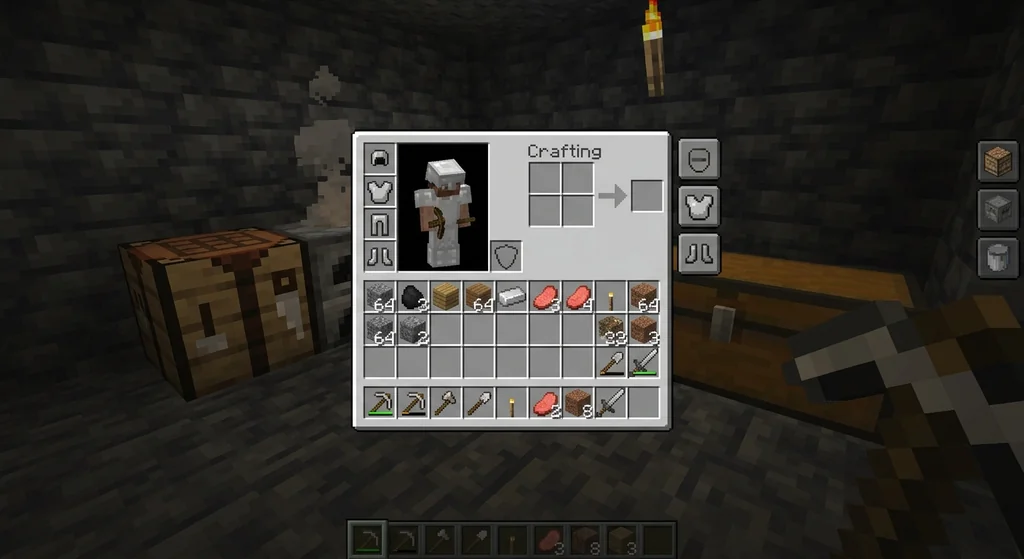
The core idea: replace real-time judgment calls with pre-made rules. A rule requires zero decision energy to execute. "I retreat when I drop below 8 hearts" costs nothing in the moment. "Should I retreat right now given my current health, mob count, terrain, and loot?" costs enormous cognitive load — and gets answered worse and worse as the session goes on.
Building Your Personal Rule Set
Start with three categories:
- Health thresholds — at what HP do you stop engaging and start escaping? Most experienced hardcore players use 8 hearts (half health) as a hard floor.
- Gear gates — which areas require which gear before you enter? No Nether without full iron and a shield. No Ancient City without Protection IV armor and Feather Falling IV boots.
- No-go zones — which situations are never worth engaging regardless of context? Creeper at point-blank in a cave. Multiple Endermen in a small room. Any mob fight when you're more than 100 blocks from your bed.
Write these down outside the game. Seriously. A physical list or a notes app. The act of writing them before you play reinforces them as rules, not suggestions.
Pro Tip: Before each session, spend 60 seconds reviewing your rule set. This "primes" the rules in your working memory, making them far more likely to fire automatically when you need them.
Choosing a seed that removes early-game resource scarcity also dramatically cuts your decision load in the first 20 minutes. Fewer desperate choices early means more mental bandwidth later. Check out 7 Best Minecraft Hardcore Seeds for a Safe Survival Start in 2026 for seeds specifically chosen to reduce that opening-hours pressure.
Best Risk Assessment Habits for Hardcore Survival
Reliable hardcore risk assessment means evaluating four variables — mob count, terrain, gear condition, and escape route — before every engagement, every time.
Make this a habit so automatic it happens in under three seconds. Here's the checklist:
- Mob count: How many enemies, and what types? Two zombies in an open corridor is manageable. Two zombies plus a skeleton in a tight cave is a different calculation entirely.
- Terrain: Do you have room to strafe, to back up, to jump? Tight corridors remove your dodge options and turn every fight into a damage trade.
- Gear condition: Are your weapons and armor above 50% durability? Each armor piece in Minecraft loses 1 durability point per hit absorbed, meaning a full set of iron armor has limited hits before it fails (via Minecraft Wiki). Fighting on degraded gear in hardcore is gambling with no upside.
- Escape route: Can you see a clear path out right now? If the answer is no, you don't fight — you create one first.
Applying This to the Nether
The Nether is where risk assessment habits get stress-tested hardest. Ghasts, Blazes, and Piglins all require different responses, and the terrain punishes mistakes with lava and void. The mental load of Nether navigation is genuinely higher than the Overworld. For a full preparation checklist before you cross that portal, read How to Prepare for the Nether in Hardcore Minecraft (2026).
Warning: Never enter the Nether mid-session when your decision energy is already depleted. The Nether demands your sharpest judgment. Schedule it for the start of a session, not the end.
How Do You Know When to Retreat in Hardcore Minecraft?
The retreat rule is simple: if you drop below 8 hearts with no guaranteed escape route visible, you leave — no exceptions, no "just one more hit."
This is the hardest rule to follow because Minecraft's combat feels winnable right up until it isn't. The game rewards aggression in normal mode, so your instincts push you to fight. In hardcore, those instincts will get you killed.
Here's a practical retreat trigger list:
- Health drops below 8 hearts (half bar) during any engagement
- You hear a mob you can't see in a tight space
- You're more than 3 blocks from a safe exit and taking damage
- Your food bar is below 6 shanks (you'll lose regeneration and can't sustain a prolonged fight)
- You've been underground for more than 90 minutes without resurfacing
The food bar mechanic is critical here: natural health regeneration only occurs when your hunger bar is at 18 or higher (9 full shanks) on Normal and Hard difficulty (via Minecraft Wiki). A fatigued player who skips eating because they're "focused on the fight" is quietly disabling their own regeneration.
Surviving 100 days requires applying this retreat discipline consistently from Day 1, not just in the late game. The habits you build early become the instincts that save you later — see How to Survive 100 Days in Hardcore Minecraft: 2026 Pro Guide for the full day-by-day framework.
Tips for Reducing Daily Micro-Decisions
Reducing micro-decisions in hardcore means standardizing your routines so that routine situations never consume the mental energy you need for genuine emergencies.
Every time you have to think "where should I put this item?" or "which direction should I mine?" you're spending decision currency. Standardize everything you can.
Practical Routines That Save Mental Energy
- Fixed inventory layout: Always keep food in slot 1, sword in slot 2, pickaxe in slot 3, blocks in slot 4. You should never have to look for a tool in a fight.
- Consistent base structure: Build every base with the same layout — bed, chests, furnaces, crafting table in the same positions. Muscle memory handles navigation; your brain stays free.
- Mining patterns: Use a single, consistent branch-mining pattern (e.g., every 3 blocks). No decisions about where to dig next.
- Session time limits: Hard-cap your sessions at 90 minutes of active play. Log off before fatigue hits, not after.
- End-of-session checklist: Before logging off, repair gear, restock food, and note your position. Starting the next session with zero setup decisions keeps your early-session sharpness intact.
Minecraft's shield blocks 100% of melee damage from the front when raised (via Minecraft Wiki), making it one of the highest-value items in early hardcore — but only if it's already in your hotbar when you need it. A fatigued player fumbling through their inventory during a fight is a dead player.
Playing on Bedrock adds its own layer of complexity, including ghost damage from lag that can bypass your careful planning entirely. See How to Survive Minecraft Bedrock Hardcore: 7 Essential 2026 Tips for platform-specific strategies.
For players on SMP servers, the social layer adds even more decision points — alliances, shared resources, PvP risk. Managing that mental overhead is its own skill set, covered in depth at How to Survive a Minecraft Hardcore SMP: 2026 Expert Tactics.
Pro Tip: Keep a simple session log — just three lines: what you accomplished, your current gear state, and one risk you avoided. Reviewing it before the next session takes 30 seconds and dramatically sharpens your situational awareness.
How to Put This Into Practice on Gaia Legends
Gaia Legends runs a competitive hardcore leaderboard that tracks the longest-lived players across the server — which makes the mental frameworks above directly visible in the rankings. The players at the top aren't always the most mechanically skilled. They're the most disciplined about decision management.
Three Gaia features make this easier to apply in practice:
- Community leaderboards show you exactly where other players' runs ended and, often, why — giving you real data on which situations are most dangerous, not just theoretically but for actual players on the same server.
- Java + Bedrock crossplay means you can practice your decision routines on whichever platform you're most comfortable with, then carry those habits into competitive play.
- Non-pay-to-win progression keeps the playing field honest — your run length reflects your decision-making, not your wallet.
Gaia Legends is free to join, non-pay-to-win, and supports Java + Bedrock crossplay. Join at gaialegends.pro and start your legend today.
Conclusion
Managing decision fatigue in hardcore Minecraft comes down to three things:
- Pre-commit your rules before you need them — health thresholds, gear gates, and no-go zones that require zero in-the-moment judgment to execute.
- Retreat early and often — the 8-heart rule isn't cowardice, it's the single most reliable predictor of run longevity.
- Standardize your routines — fixed inventory, consistent base layouts, and session time limits protect your mental energy for the moments that actually matter.
The players who survive longest in hardcore aren't fearless. They're systematic. Build your decision tree, trust your rules, and the game stops feeling like a gamble.
Frequently Asked Questions
What does avoiding decision fatigue in hardcore Minecraft actually mean in practice?
Avoiding decision fatigue in hardcore Minecraft means replacing real-time judgment calls with pre-made rules you commit to before your session starts. Instead of deciding mid-fight whether to retreat, you've already decided: below 8 hearts, you leave. Instead of evaluating every cave entrance fresh, you have a gear checklist. Rules cost zero mental energy to execute; improvised decisions cost a lot.
How do I know when I'm experiencing decision fatigue during a Minecraft session?
The clearest signs are taking risks you'd normally skip, feeling impatient with cautious play, and making "just this once" exceptions to rules you normally follow. If you notice yourself thinking "I'll probably be fine" more than usual, that's a signal your judgment is degraded. Hard session time limits — 90 minutes of active play — are the most reliable prevention.
What is the best retreat threshold for hardcore Minecraft survival?
Most experienced hardcore players use 8 hearts (half health) as their hard retreat floor. Below that threshold, a single bad hit or an unexpected mob can finish you before you can respond. Combined with a visible escape route check, this rule prevents the "almost made it" deaths that end the majority of long runs.
How does hardcore Minecraft risk assessment differ from normal mode?
In normal mode, a bad risk costs you items and a respawn. In hardcore, it costs the entire run, so the expected cost of any mistake is infinitely higher. This means the correct risk tolerance in hardcore is dramatically more conservative — situations that are "probably fine" in normal mode are genuinely not worth attempting in hardcore unless your gear, health, and escape route all check out.
Does playing on a hardcore SMP make decision fatigue worse?
Yes. Multiplayer adds social decision points — watching what other players are doing, responding to chat, evaluating PvP threats — on top of the standard survival decisions. This accelerates mental depletion. On an SMP, shorter sessions and stricter pre-committed rules matter even more than in single-player hardcore.
How do I build better Minecraft hardcore survival psychology over time?
Keep a brief session log noting your gear state, what risks you avoided, and what decisions felt hardest. Review it before the next session. Over time, patterns emerge — you'll notice which situations consistently tempt you into bad decisions and can build specific rules to handle them. Deliberate reflection between sessions builds the mental habits that automatic in-game judgment can't.
Recommended
- What is the Homestead Minecraft Modpack? Complete 2026 Guide | Gaia Legends
- 7 Best Minecraft Speedrun Practice Maps for Pro Training 2026 | Gaia Legends
- How to Use the Smithing Table for Custom Gear Upgrades in 2026 | Gaia Legends
- How to Establish a Minecraft Player Government: Social Guide 2026 | Gaia Legends
Ready to play? Join Gaia Legends today — no pay-to-win, Java + Bedrock crossplay.
- Java:
join.gaialegends.pro - Bedrock:
join.gaialegends.pro— Port19132
Further reading
These references were recorded with the article; specific claims have not been matched to source excerpts.
Frequently Asked Questions
What does avoiding decision fatigue in hardcore Minecraft actually mean in practice?
Avoiding decision fatigue in hardcore Minecraft means replacing real-time judgment calls with pre-made rules you commit to before your session starts. Instead of deciding mid-fight whether to retreat, you've already decided: below 8 hearts, you leave. Instead of evaluating every cave entrance fresh, you have a gear checklist. Rules cost zero mental energy to execute; improvised decisions cost a lot.
How do I know when I'm experiencing decision fatigue during a Minecraft session?
The clearest signs are taking risks you'd normally skip, feeling impatient with cautious play, and making 'just this once' exceptions to rules you normally follow. If you notice yourself thinking 'I'll probably be fine' more than usual, that's a signal your judgment is degraded. Hard session time limits — 90 minutes of active play — are the most reliable prevention.
What is the best retreat threshold for hardcore Minecraft survival?
Most experienced hardcore players use 8 hearts (half health) as their hard retreat floor. Below that threshold, a single bad hit or an unexpected mob can finish you before you can respond. Combined with a visible escape route check, this rule prevents the 'almost made it' deaths that end the majority of long runs.
How does hardcore Minecraft risk assessment differ from normal mode?
In normal mode, a bad risk costs you items and a respawn. In hardcore, it costs the entire run, so the expected cost of any mistake is infinitely higher. This means the correct risk tolerance in hardcore is dramatically more conservative — situations that are 'probably fine' in normal mode are genuinely not worth attempting in hardcore unless your gear, health, and escape route all check out.
Does playing on a hardcore SMP make decision fatigue worse?
Yes. Multiplayer adds social decision points — watching what other players are doing, responding to chat, evaluating PvP threats — on top of the standard survival decisions. This accelerates mental depletion. On an SMP, shorter sessions and stricter pre-committed rules matter even more than in single-player hardcore.
How do I build better Minecraft hardcore survival psychology over time?
Keep a brief session log noting your gear state, what risks you avoided, and what decisions felt hardest. Review it before the next session. Over time, patterns emerge — you'll notice which situations consistently tempt you into bad decisions and can build specific rules to handle them. Deliberate reflection between sessions builds the mental habits that automatic in-game judgment can't.
Related guides
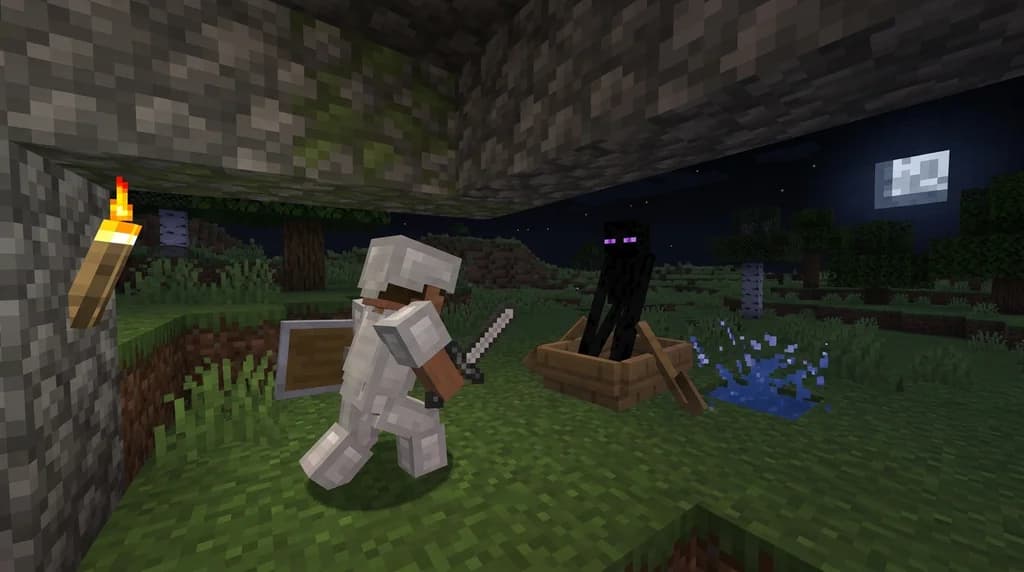
How to Kill Your First Enderman in Hardcore Minecraft (2026)
Learn how to kill your first Enderman in hardcore Minecraft safely with boat traps, water buckets, and two-block ceilings. Essential permadeath tactics.
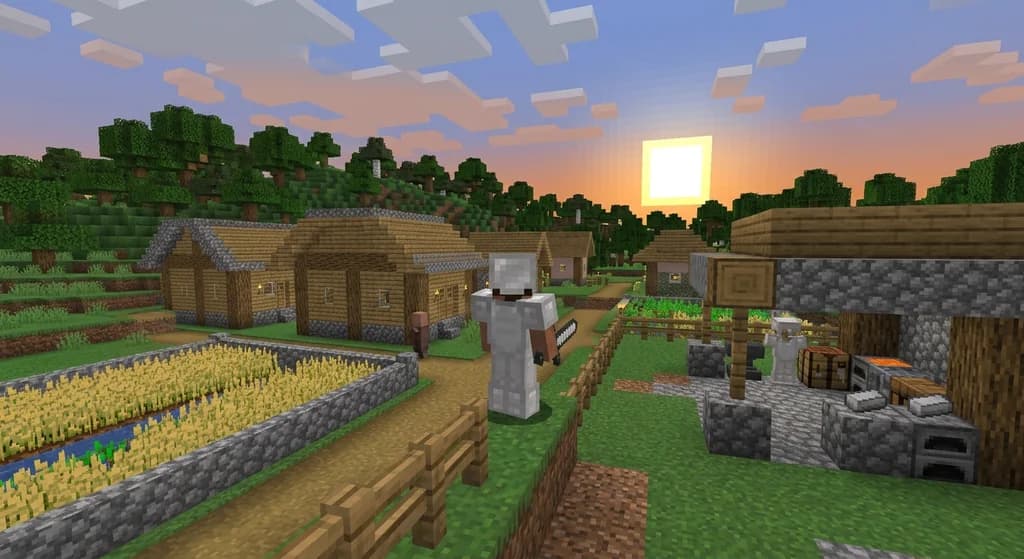
7 Best Minecraft Hardcore Seeds for a Safe Survival Start in 2026
Discover the 7 best Minecraft hardcore seeds for a safe survival start in 2026 — with villages, shields, and resources near spawn.
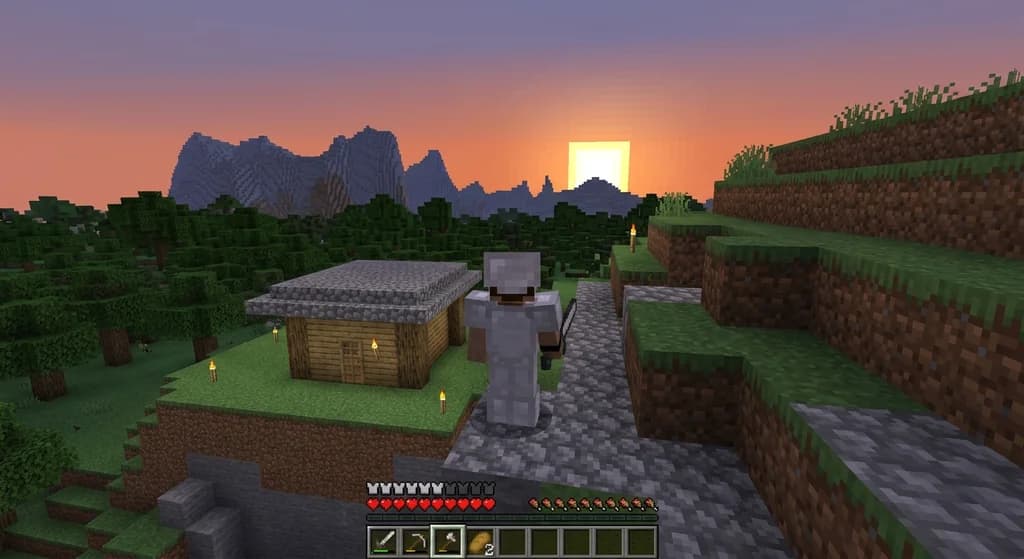
How to Survive 100 Days in Hardcore Minecraft: 2026 Pro Guide
Learn how to survive 100 days in hardcore Minecraft with pro 2026 tactics — from day-1 shelter to Nether prep, gear milestones, and permadeath-proof habits.
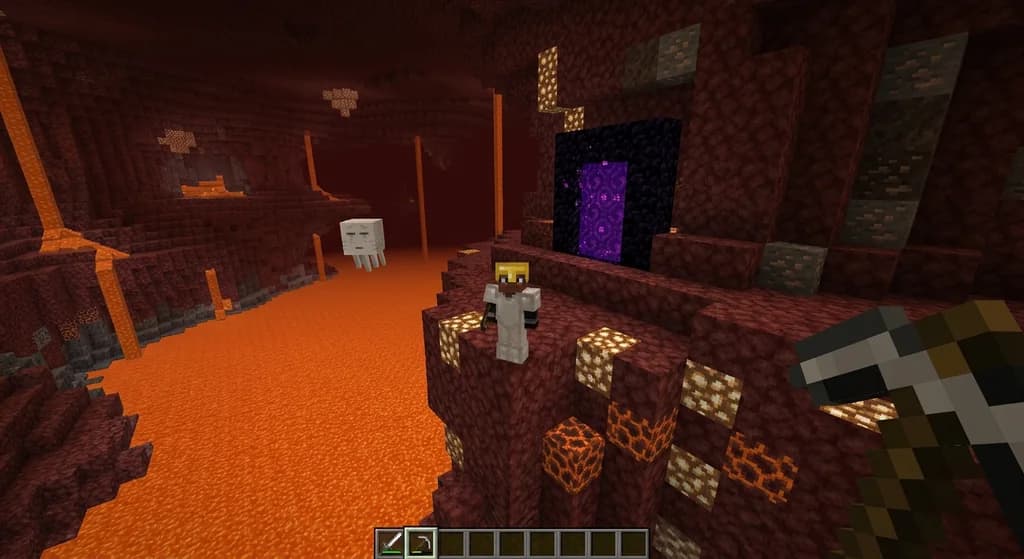
How to Prepare for the Nether in Hardcore Minecraft (2026)
Learn how to prepare for the Nether in hardcore Minecraft with gear checklists, mob strategies, and survival tactics that keep your world alive in 2026.
Have a question or another approach?
Compare notes with other readers. Include your edition and version when discussing mechanics.